
Dualism Vs. Physicalism
Are we just minds in bodies or more than mere matter?
How Do You Learn Best?
Learn by Reading
Immerse yourself in the 10-minute visual lesson for a comprehensive understanding of the topic.
Learn by Reviewing
Jump directly to the key facts, timeline, and vocabulary lists to build a solid foundation of details.
Learn by Doing
Challenge yourself! Jump straight into the interactive games to learn by trial, error, and discovery.
Dualism Vs. Physicalism in 10 Minutes

Introduction
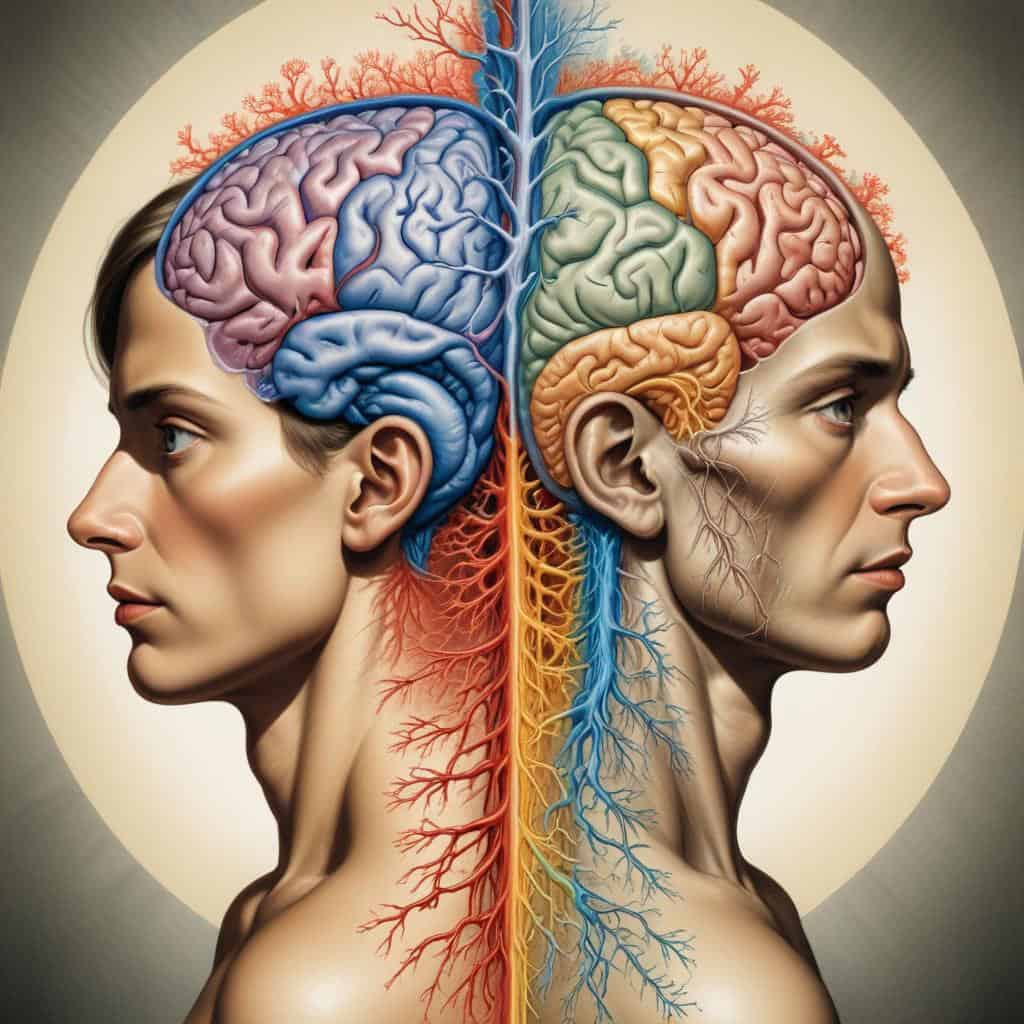
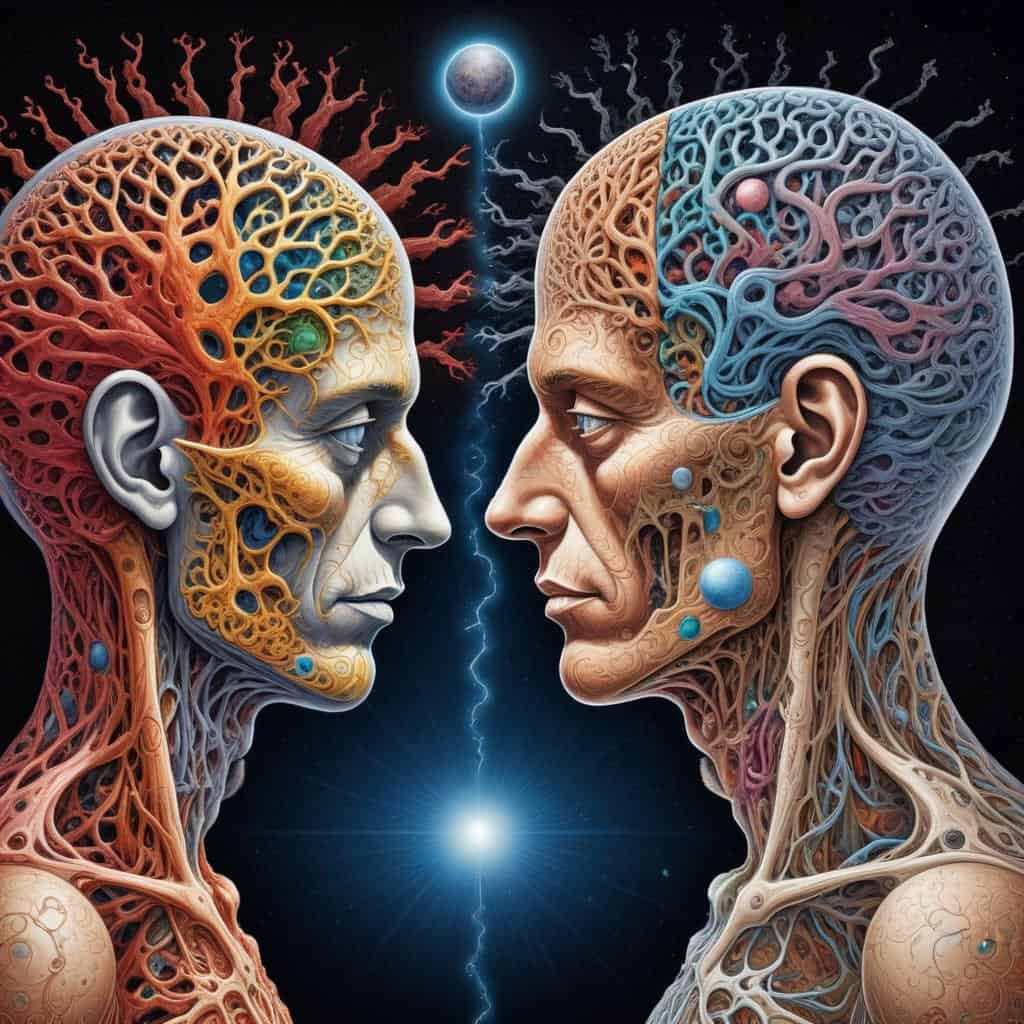

Descartes

Thomas Hobbes
John Searle
Gilbert Ryle

The Ultimate Showdown: Dualism vs. Physicalism Summary
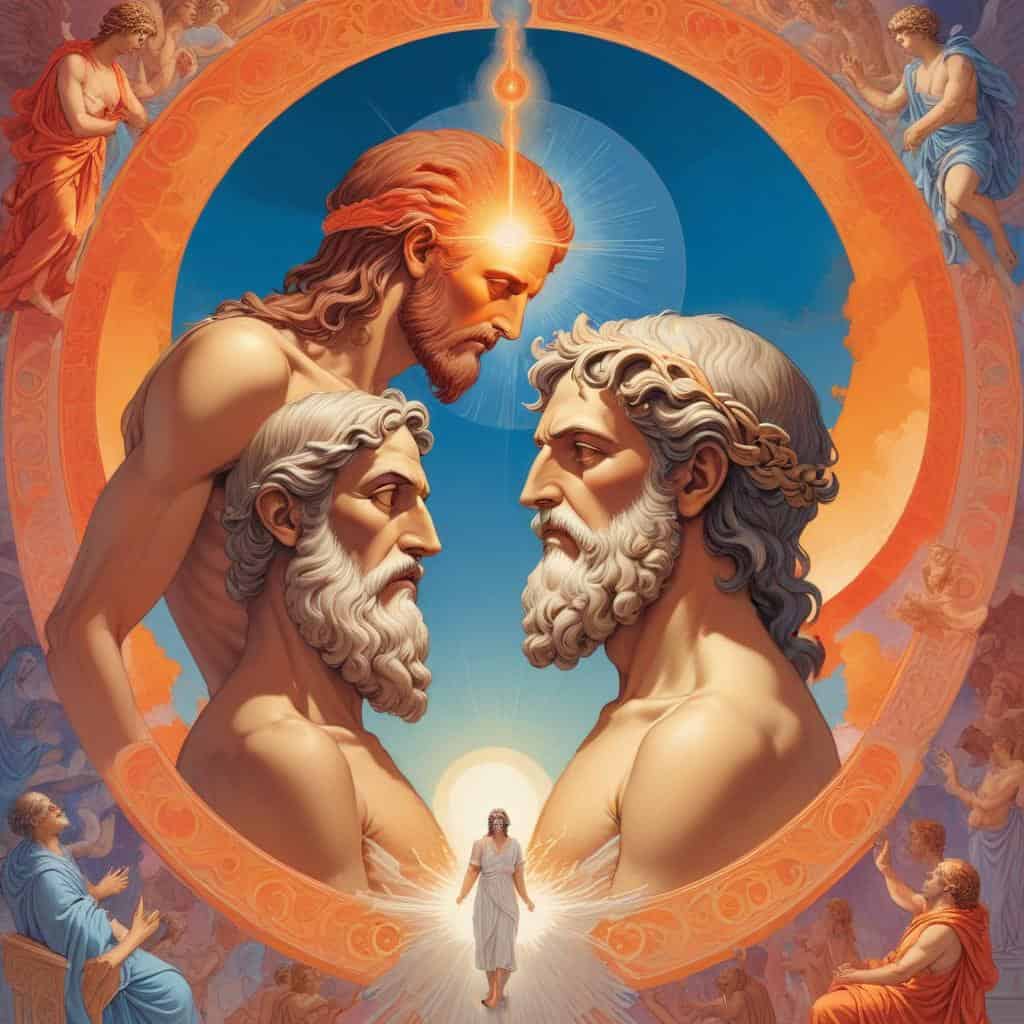
Dualism
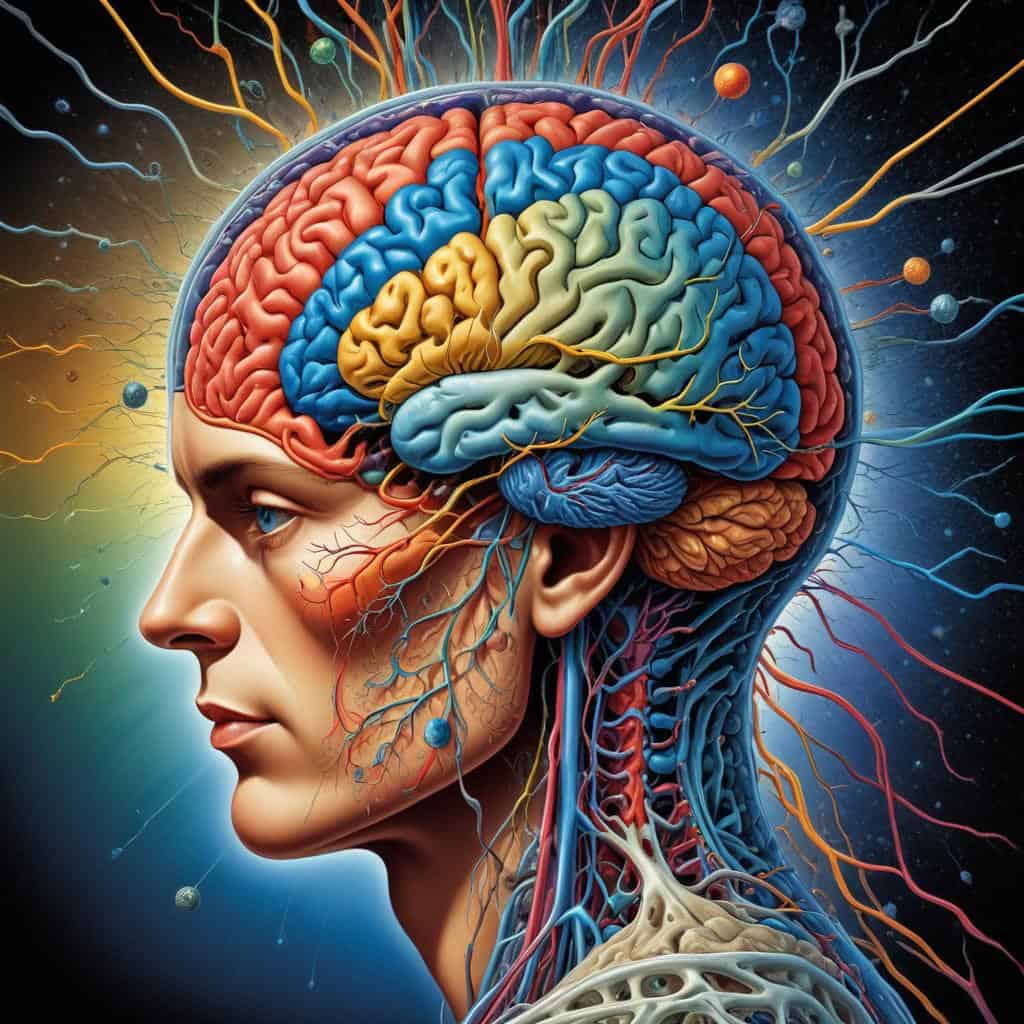
Physicalism

Arguments for Dualism
Arguments for Physicalism

Objections to Dualism
Objections to Physicalism

Implications of Dualism
Implications of Physicalism
Lesson Details & Resources
In a Nutshell
- Concept: The debate between the existence of two distinct substances - mind and body, versus the idea that everything can be explained in terms of physical processes.
- Thinkers: René Descartes and Gilbert Ryle for Dualism, and Daniel Dennett and David Chalmers for Physicalism. 17th-21st Century.
- Central Question: How do mental phenomena relate to physical phenomena? What is the nature of consciousness?
- Core Implication: Dualism suggests that the mind and body are fundamentally different and separate entities, while Physicalism argues that mental states are ultimately reducible to physical states.
Timeline of Dualism Vs. Physicalism
Descartes introduces mind-body dualism in his Meditations on First Philosophy
Spinoza criticizes Descartes' dualism and introduces his own form of monism
Leibniz proposes a form of parallelism between mind and body
Kant argues against materialism and dualism in his Critique of Pure Reason
Hegel develops a dialectical approach to mind-body problem in his Phenomenology of Spirit
Feuerbach criticizes dualism and argues for materialism in The Essence of Christianity
Brentano introduces the concept of intentionality as a way to bridge dualism and physicalism
James argues for a pragmatic approach to the mind-body problem in his Principles of Psychology
Russell introduces neutral monism as a middle ground between dualism and physicalism
Wittgenstein criticizes the idea of a private language in his Philosophical Investigations
Putnam argues against the idea of multiple realizability in his Multiple Realizability Revisited
Davidson proposes the anomalous monism as a solution to the mind-body problem
Searle criticizes functionalism and argues for biological naturalism in Intentionality
Kim argues for a reductionist approach to the mind-body problem in his Mind in a Physical World
Chalmers introduces the concept of philosophical zombies to challenge physicalism in The Conscious Mind
Block argues for a higher-order theory of consciousness in his On a Confusion About a Function of Consciousness
Papineau defends physicalism against dualist arguments in his Thinking about Consciousness
Churchland argues for a neuroscientific approach to understanding consciousness in Neurophilosophy at Work
Flanagan proposes a naturalized account of consciousness in The Problem of the Soul
Gennaro defends a version of physicalism known as neo-Cartesianism in The Consciousness Paradox
Vocabulary List
- Dualism
- Descartes famously argued for dualism, claiming that the mind and body are distinct entities.
- Physicalism
- Physicalism rejects the idea of a non-physical mind and asserts that all mental phenomena can be reduced to physical properties.
- Mind-body problem
- The mind-body problem has been a central concern in philosophy for centuries, with different theories attempting to explain the nature of the mind and its relationship to the body.
- Materialism
- Materialism is often contrasted with dualism, as it denies the existence of any non-physical entities.
Key Facts
Analysis & Significance
The Core Argument
Dualism posits that the mind and body are distinct entities, with the mind being non-physical and the body being physical. Physicalism, on the other hand, argues that everything, including the mind, can be explained in terms of physical processes. This debate raises fundamental questions about the nature of consciousness and the relationship between mind and body.
Criticisms and Counterarguments
Critics of dualism argue that it faces the problem of interactionism – how can a non-physical mind interact with a physical body? Physicalists criticize dualism for lacking empirical evidence and being inconsistent with scientific explanations of the mind-body relationship. On the other hand, critics of physicalism question its ability to account for subjective experiences and qualia.
Modern Relevance
The debate between dualism and physicalism has implications for modern neuroscientific research, artificial intelligence development, and ethical considerations surrounding topics like personal identity and the nature of consciousness. Understanding the implications of these philosophical positions can help navigate complex ethical dilemmas related to emerging technologies and the ethical treatment of sentient beings.
Dualism Vs. Physicalism Games


Take Your Learning Offline
Want a convenient, print-ready study guide for this lesson? Become a Memory Wizards Pro member to unlock the downloadable " Memory Scrolls" for this topic and our entire library!
- ✓ Complete Vocabulary Lists
- ✓ Key Facts & Timelines
- ✓ Beautifully Formatted for Print & Mobile