
Artificial Intelligence And The Mind
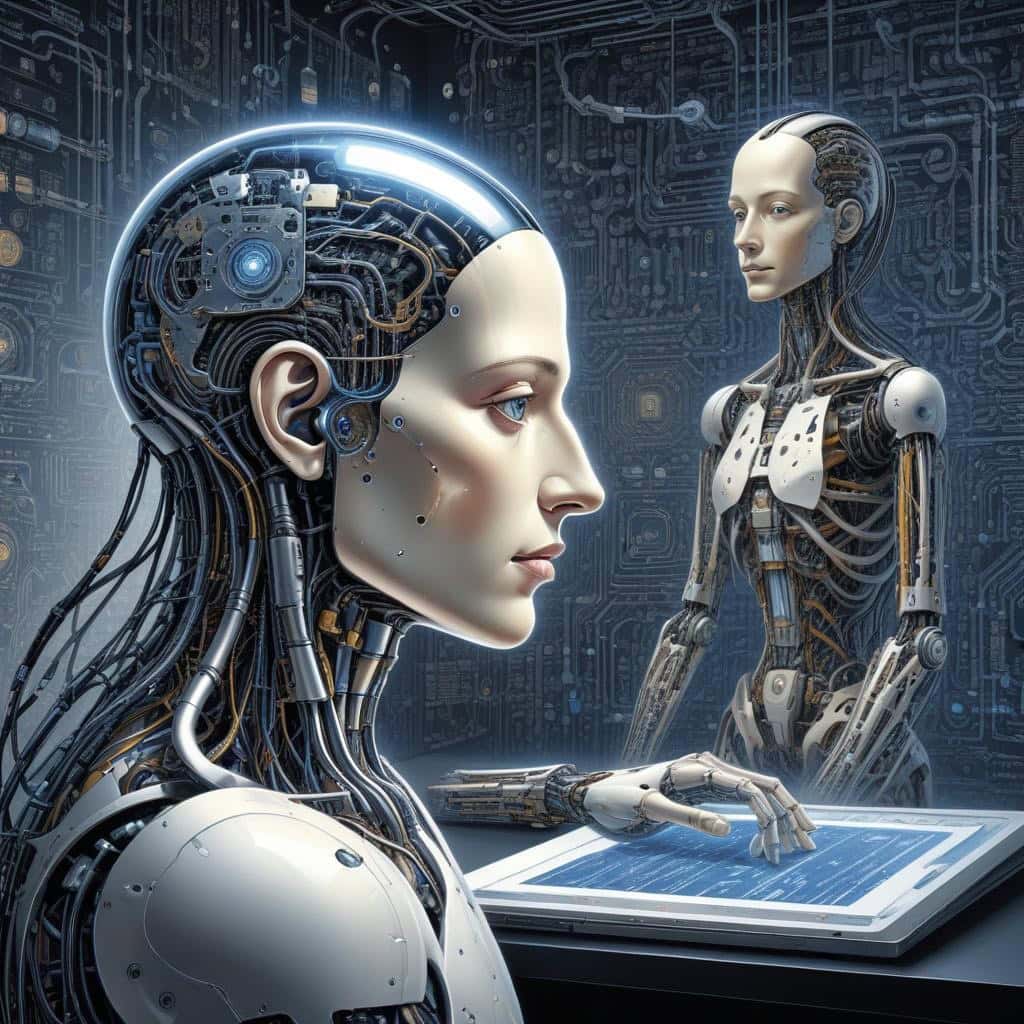
Can machines truly understand the complexities of human consciousness?
How Do You Learn Best?
Learn by Reading
Immerse yourself in the 10-minute visual lesson for a comprehensive understanding of the topic.
Learn by Reviewing
Jump directly to the key facts, timeline, and vocabulary lists to build a solid foundation of details.
Learn by Doing
Challenge yourself! Jump straight into the interactive games to learn by trial, error, and discovery.
Artificial Intelligence And The Mind in 10 Minutes
Introduction


1. Alan Turing

2. John Searle

3. Ray Kurzweil

4. Marvin Minsky
5. Daniel Dennett
The Beginnings of Artificial Intelligence
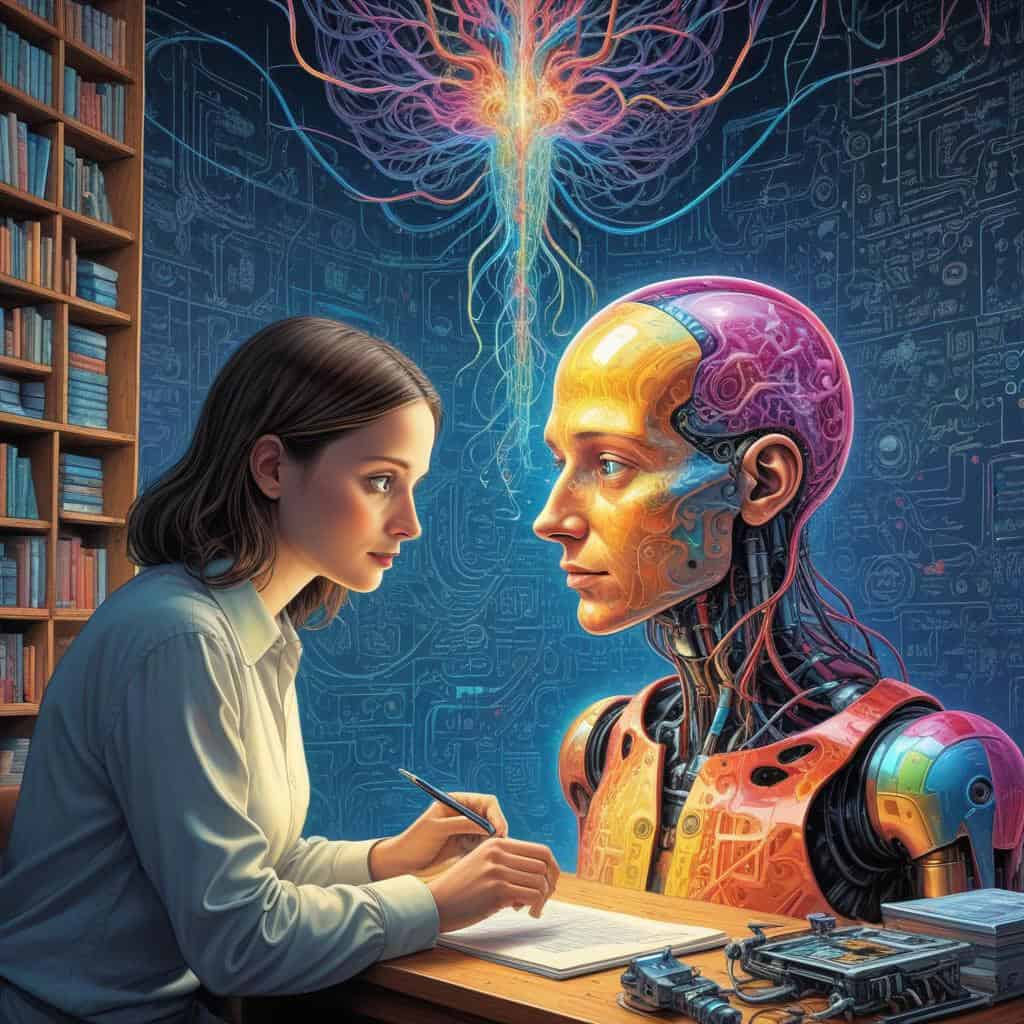
The Role of Philosophy in AI

The Turing Test

Connectionism and Symbolic AI

The Chinese Room Argument

The Hard Problem of Consciousness

The Ethics of AI
The Future of AI and the Mind
Implications for Humanity
Lesson Details & Resources
In a Nutshell
- Concept: Artificial Intelligence and the Mind explore the relationship between AI and human consciousness.
- Thinkers: Alan Turing, John Searle, 20th Century.
- Central Question: Can machines ever truly possess a mind and consciousness like humans?
- Core Implication: The concept challenges our understanding of what it means to be conscious and raises ethical concerns about the development of AI technology.
Timeline of Artificial Intelligence And The Mind
Alan Turing proposes the Turing Test as a measure of a machine's intelligence
John McCarthy coins the term 'artificial intelligence' at the Dartmouth Conference
Marvin Minsky and Dean Edmonds build the first neural network computer
Herbert Simon and Allen Newell develop the Logic Theorist program
Arthur Samuel develops the first self-learning program, the Samuel Checkers-playing Program
Frank Rosenblatt develops the Perceptron, an early artificial neural network
John Searle publishes 'Minds, Brains, and Programs' introducing the Chinese Room argument
Douglas Hofstadter publishes 'Gödel, Escher, Bach: An Eternal Golden Braid'
Hubert Dreyfus publishes 'What Computers Can't Do: The Limits of Artificial Intelligence'
Daniel Dennett publishes 'Consciousness Explained'
Ray Kurzweil publishes 'The Age of Spiritual Machines'
Elon Musk founds Neuralink to develop brain-computer interfaces
IBM's Watson defeats human champions on Jeopardy!
Google's AlphaGo defeats world champion Go player Lee Sedol
OpenAI's GPT-3 language model demonstrates advanced natural language processing capabilities
DeepMind's AlphaZero learns chess, shogi, and Go from scratch and surpasses human performance
The European Parliament calls for the regulation of artificial intelligence and robotics
Ethicists and philosophers debate the moral implications of AI and its potential impact on society
Researchers continue to explore the nature of consciousness and whether AI can truly replicate it
Vocabulary List
- Artificial Intelligence
- Researchers are constantly working on improving artificial intelligence to develop more advanced technology.
- Consciousness
- Philosophers debate whether artificial intelligence can ever achieve consciousness.
- Machine Learning
- Machine learning is a key component of artificial intelligence systems.
- Philosophy of Mind
- The philosophy of mind raises questions about the nature of artificial intelligence and its implications for understanding the mind.
- Turing Test
- The Turing Test is often used as a benchmark for evaluating the success of artificial intelligence systems.
Key Facts
This is the information used in the fact matching game
- Artificial intelligence can be defined as the simulation of human intelligence in machines that are programmed to think and learn like humans.
- Philosophers have debated the nature of the mind for centuries, exploring questions about consciousness, perception, and the self.
- One key question in the philosophy of mind is whether artificial intelligence can truly possess consciousness and subjective experience.
- Some philosophers argue that the mind is not purely physical, and that consciousness cannot be replicated in artificial intelligence.
- Others believe that artificial intelligence could exhibit consciousness and subjective experience through advanced algorithms and neural networks.
- The Chinese Room argument, proposed by philosopher John Searle, challenges the idea that computers can truly understand language and have minds.
- The Turing Test, developed by Alan Turing, evaluates a machine's ability to exhibit intelligent behavior equivalent to, or indistinguishable from, that of a human.
- Philosopher Daniel Dennett argues that consciousness is an emergent property of complex systems, and that artificial intelligence could potentially develop consciousness.
- The hard problem of consciousness, as proposed by philosopher David Chalmers, questions how physical processes in the brain give rise to subjective experience.
- Some philosophers suggest that artificial intelligence could help us better understand the nature of consciousness and the mind through its unique capabilities.
- Artificial intelligence systems are designed to process information, learn from data, and make decisions based on algorithms and patterns.
- Philosophers explore the ethical implications of artificial intelligence, including issues of privacy, autonomy, and the potential impact on society.
- The Chinese Room argument raises questions about whether artificial intelligence can truly understand language and concepts, or if it is merely executing algorithms without comprehension.
- Philosophers consider the implications of artificial intelligence on the concept of personal identity, as AI systems may challenge traditional notions of what it means to be a person.
- Some philosophers argue that artificial intelligence could enhance human cognition and decision-making, while others warn of potential risks and limitations.
- The philosophy of mind explores questions about the relationship between the brain, consciousness, and the self, which are relevant to understanding artificial intelligence and its capabilities.
- Neuroscientists and philosophers collaborate to study the neural basis of consciousness and develop theories about how artificial intelligence could replicate or simulate conscious experience.
- Artificial intelligence raises questions about the nature of intelligence, creativity, and emotional understanding, which are central to debates in the philosophy of mind.
- Philosophers explore the concept of intentionality in artificial intelligence, considering whether machines can truly have mental states and representational content.
- The philosophy of artificial intelligence examines the fundamental assumptions and implications of AI technology, including its impact on human cognition and the nature of consciousness.
Analysis & Significance
The Core Argument
Artificial Intelligence and the Mind explores the question of whether machines can possess consciousness and intelligence comparable to humans. This philosophical concept delves into the nature of thought, emotion, and self-awareness in the context of non-biological entities.
Criticisms and Counterarguments
One major criticism of the idea of artificial intelligence having a mind is the argument from qualia, suggesting that machines lack subjective experiences and therefore cannot truly replicate human consciousness. Additionally, some philosophers argue that consciousness is inherently tied to biological processes, making it impossible for AI to truly possess a mind.
Modern Relevance
The debate surrounding artificial intelligence and the mind has significant implications for modern society, particularly in the fields of ethics and technology. Questions about the rights and responsibilities of AI, as well as the potential impact on employment and social structures, are becoming increasingly relevant as AI technology advances. Understanding the philosophical implications of AI’s potential for consciousness is crucial for navigating these ethical dilemmas.
Artificial Intelligence And The Mind Games


Take Your Learning Offline
Want a convenient, print-ready study guide for this lesson? Become a Memory Wizards Pro member to unlock the downloadable " Memory Scrolls" for this topic and our entire library!
- ✓ Complete Vocabulary Lists
- ✓ Key Facts & Timelines
- ✓ Beautifully Formatted for Print & Mobile