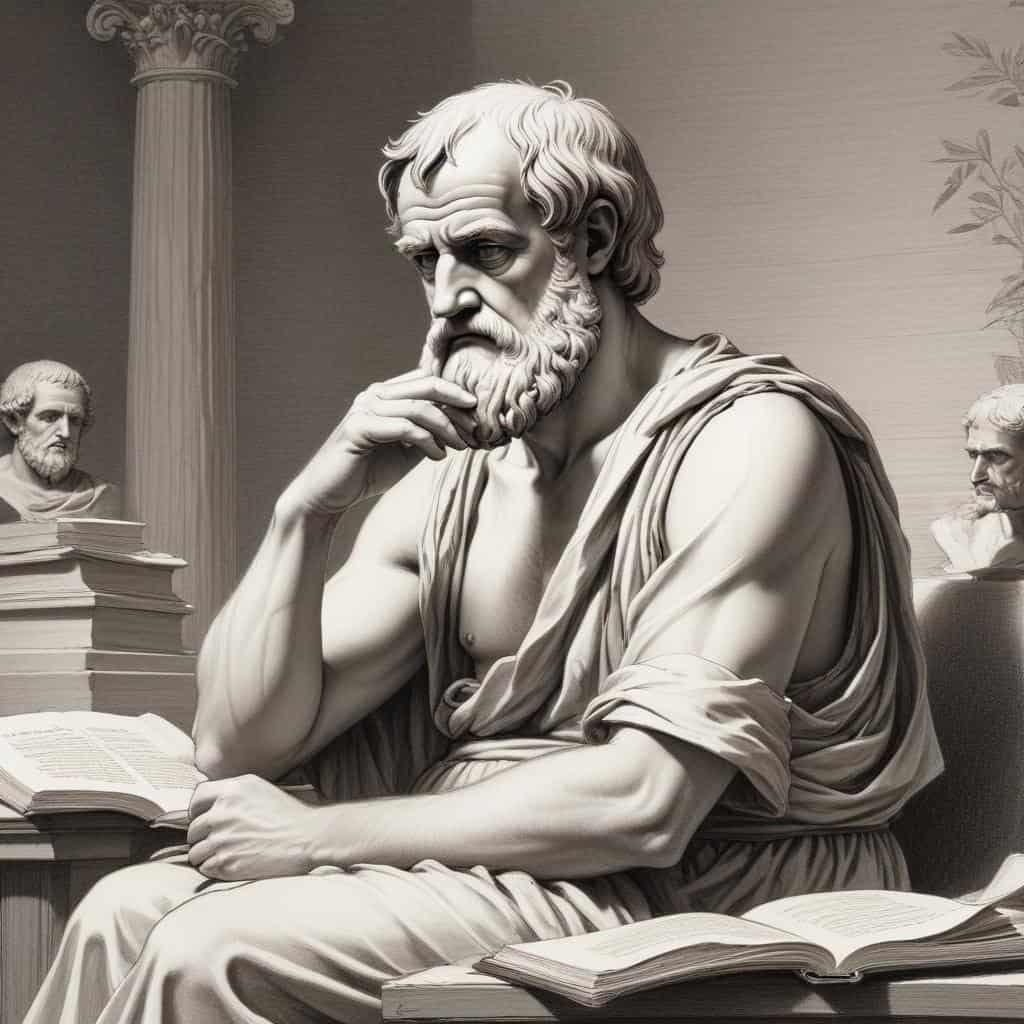
Substance And Accident

Unraveling reality: What defines true essence from mere appearance?

How Do You Learn Best?

Note: You can explore any or all of these paths in any order you prefer!

Substance And Accident in 10 Minutes

Introduction

Introduction

Have you ever pondered the true nature of things, beyond their appearances? In the realm of philosophy, the concepts of substance and accident delve deep into the essence of existence. This article will explore the fundamental ideas behind substance and accident, shedding light on their significance in understanding the world around us.

From ancient Greek philosophers to modern thinkers, the distinction between substance and accident has been a central theme in philosophical discourse. Substance refers to the underlying essence or nature of something, while accident pertains to its incidental or non-essential attributes. By unraveling the relationship between these two concepts, we can gain a deeper insight into the true nature of reality.

Through a summative analysis of substance and accident, we will uncover the philosophical implications of these concepts across various schools of thought. Whether discussing metaphysics, ontology, or epistemology, the interplay between substance and accident shapes our understanding of the world and our place within it. Join us on this intellectual journey as we unveil the essence behind the complex interplay of substance and accident in philosophy.

Aristotle

Aristotle

Aristotle, a Greek philosopher, introduced the concept of Substance and Accident in his philosophical works. He believed that substance is the underlying essence of an object or being, while accidents are the superficial qualities that can change without altering the substance itself.

Thomas Aquinas

Thomas Aquinas

Thomas Aquinas, a medieval theologian, further developed Aristotle's ideas on Substance and Accident within the context of Christian theology. He argued that accidents are dependent on substance for their existence, and that substance is the primary reality of an object.

Rene Descartes

Rene Descartes

Rene Descartes, a French philosopher, challenged the traditional understanding of Substance and Accident by emphasizing the importance of the mind as the primary substance. He argued that the mind is the only thing that cannot be doubted, while physical objects and accidents are subject to skepticism.

Defining Substance and Accident

Defining Substance and Accident

Substance and accident are two fundamental concepts in philosophy that have been debated for centuries. Substance refers to the underlying essence or nature of an object, while accident refers to the properties or characteristics that are not essential to the object's existence.

Aristotles Contribution

Aristotles Contribution

Aristotle was one of the first philosophers to delve into the concept of substance and accident. He argued that substance is the primary reality, while accidents are secondary and dependent on the substance.

Medieval Debates

Medieval Debates

During the Middle Ages, philosophers like Thomas Aquinas further explored the relationship between substance and accident. Aquinas posited that accidents are manifestations of the underlying substance.

Modern Interpretations

Modern Interpretations

In modern philosophy, the debate over substance and accident continues. Some philosophers argue that substance is simply a bundle of accidents, while others maintain that substance has a distinct existence apart from accidents.

Metaphysical Implications

Metaphysical Implications

The concept of substance and accident has profound metaphysical implications. It raises questions about the nature of reality, existence, and identity.

Philosophical Applications

Philosophical Applications

Substance and accident are not just abstract concepts—they have practical applications in various fields of philosophy, including ethics, metaphysics, and epistemology.

Challenges and Criticisms

Challenges and Criticisms

Despite its long history in philosophy, the concept of substance and accident has faced criticism. Some philosophers argue that the distinction between substance and accident is artificial and arbitrary.

Contemporary Relevance

Contemporary Relevance

Even in the 21st century, the debate over substance and accident continues to be relevant. Philosophers and scholars continue to explore these concepts and their implications for our understanding of the world.

In conclusion, substance and accident are fundamental concepts in philosophy that help us understand the nature of existence. Substance refers to the underlying essence or nature of a thing, while accident refers to its incidental or non-essential characteristics. By examining the relationship between these two concepts, philosophers seek to uncover the true nature of reality.

Through the study of substance and accident, we are able to delve deeper into the essence of things and explore the underlying principles that govern the world around us. This philosophical inquiry allows us to question our understanding of existence and gain a deeper insight into the nature of being.

1 / 19

Lesson Details & Resources

In a Nutshell

  • Concept: A philosophical concept that distinguishes between the essential nature of a thing (substance) and its non-essential properties (accidents).
  • Thinkers: Aristotle, Thomas Aquinas, and other medieval philosophers, ancient and medieval period.
  • Central Question: What is the true nature of something, and what are its incidental qualities?
  • Core Implication: The essence of a thing is what defines it, while accidents are incidental properties that can change without altering its fundamental nature.

Timeline of Substance And Accident

No timeline events found.

Vocabulary List

No vocabulary terms found.

Key Facts

This is the information used in the fact matching game

    No key facts found.

Analysis & Significance

The Core Argument

The concept of Substance and Accident dates back to Aristotle and deals with the distinction between essential attributes (substance) and contingent properties (accidents) of an object. Substance refers to the underlying essence or nature of something, while accidents are qualities that can change without altering the core identity.

Criticisms and Counterarguments

Critics argue that the distinction between substance and accident is not always clear-cut, leading to ambiguity in defining what truly constitutes the essence of an object. Additionally, some philosophers challenge the idea that accidents are truly separable from substance, suggesting that they are more intertwined than Aristotle’s framework implies.

Modern Relevance

The philosophical concept of Substance and Accident remains relevant in debates about personal identity, moral responsibility, and social justice. Understanding the difference between essential characteristics and superficial attributes can help individuals navigate complex ethical dilemmas and societal issues. By examining what is truly fundamental versus what is merely incidental, we can make more informed decisions and cultivate a deeper understanding of ourselves and the world around us.

Substance And Accident Games

Was This Lesson Helpful?

Please log in or sign up to rate this lesson. 

Take Your Learning Offline

Want a convenient, print-ready study guide for this lesson? Become a Memory Wizards Pro member to unlock the downloadable " Memory Scrolls" for this topic and our entire library!

  • ✓ Complete Vocabulary Lists
  • ✓ Key Facts & Timelines
  • ✓ Beautifully Formatted for Print & Mobile
Upgrade to Pro

You must be logged in to provide feedback. Please log in or create a free account.

Scroll to Top