Ontological Pluralism

Does reality exist in multiple forms simultaneously?

How Do You Learn Best?

Note: You can explore any or all of these paths in any order you prefer!

Ontological Pluralism in 10 Minutes

Introduction
Introduction

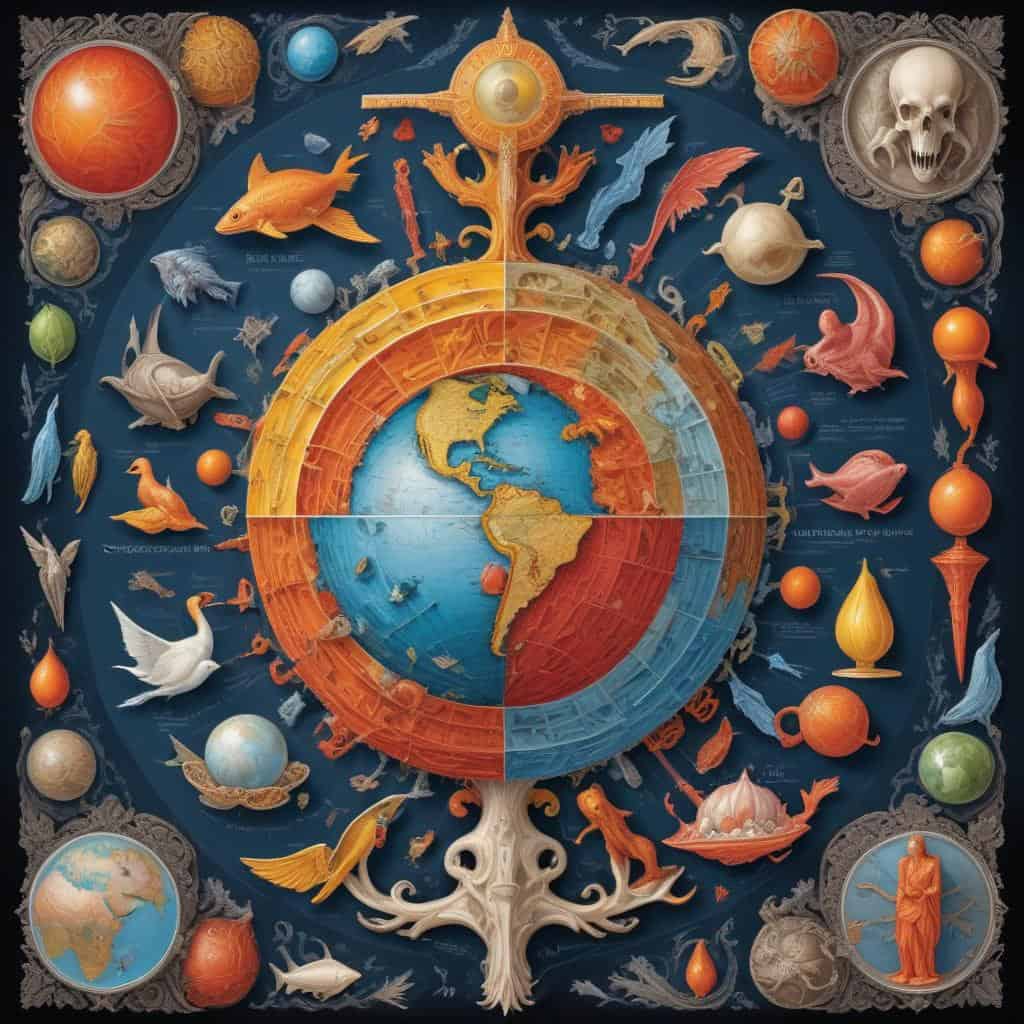
Ontological pluralism is a fascinating concept in philosophy that challenges traditional views on the nature of reality. In this article, we will explore the key ideas behind ontological pluralism and how it differs from more conventional theories.

By examining the idea that there are multiple ways of categorizing and understanding the world around us, ontological pluralism opens up new possibilities for how we think about existence. This perspective encourages us to consider the diverse ways in which objects, concepts, and entities can be classified and interpreted.

Through a quick overview of ontological pluralism, we will delve into the implications of this philosophical stance and how it can enrich our understanding of the complexities of reality. Join us as we unlock the intriguing world of ontological pluralism and its implications for our perception of the world.

William James

William James

William James was an American philosopher who explored the concept of ontological pluralism in his work. He argued that reality is not limited to a single fixed set of categories, but rather is diverse and complex, with multiple layers of existence.

Graham Harman

Graham Harman

Graham Harman is a contemporary philosopher known for his development of object-oriented ontology, which embraces the idea of ontological pluralism. He believes that objects have their own unique reality and cannot be reduced to mere representations or manifestations of a single underlying substance.

Isabelle Stengers

Isabelle Stengers

Isabelle Stengers is a Belgian philosopher and science studies scholar who has written extensively on the topic of ontological pluralism. She emphasizes the importance of recognizing the diverse ontological perspectives that exist within different cultures and worldviews, and advocates for a more inclusive and open-minded approach to understanding reality.

1. What is Ontological Pluralism?

1. What is Ontological Pluralism?

Ontological pluralism is a philosophical theory that argues for the existence of multiple, equally valid ways of categorizing and understanding the world. This means that there is not just one correct way to describe reality, but rather a variety of perspectives that can all be considered legitimate.

2. Origins of Ontological Pluralism

2. Origins of Ontological Pluralism

The idea of ontological pluralism can be traced back to ancient Greek philosophy, but it has been further developed and refined by contemporary philosophers. Some proponents of ontological pluralism include Graham Priest, J.C. Beall, and David Armstrong.

3. Key Concepts in Ontological Pluralism
3. Key Concepts in Ontological Pluralism

One key concept in ontological pluralism is the idea of ontological commitment, which refers to the fundamental beliefs or assumptions about what exists in the world. Another important concept is the notion of truth pluralism, which suggests that there can be multiple truths that are equally valid.

4. Criticisms of Ontological Pluralism
4. Criticisms of Ontological Pluralism

One common criticism of ontological pluralism is that it can lead to relativism, where all beliefs are considered equally valid and there is no objective truth. Critics also argue that ontological pluralism can be overly complex and make it difficult to make sense of the world.

5. Applications of Ontological Pluralism
5. Applications of Ontological Pluralism

Ontological pluralism has been applied to various areas of philosophy, including metaphysics, epistemology, and philosophy of language. It has also been used to challenge traditional views of reality and encourage a more open-minded approach to understanding the world.

6. Ontological Pluralism and Science

6. Ontological Pluralism and Science

Some philosophers have argued that ontological pluralism can help bridge the gap between science and philosophy by acknowledging the diversity of perspectives within both disciplines. By embracing multiple ways of understanding reality, ontological pluralism can encourage interdisciplinary collaboration and innovation.

7. The Future of Ontological Pluralism

7. The Future of Ontological Pluralism

As philosophy continues to evolve, ontological pluralism is likely to remain a topic of ongoing debate and discussion. Philosophers will continue to explore the implications of ontological pluralism for our understanding of reality and the nature of truth.

Overall, ontological pluralism offers a unique perspective in philosophy by acknowledging the existence of multiple ways of understanding reality. By embracing the idea that there are various ontological categories, philosophers can explore the complexity and diversity of existence.

In conclusion, ontological pluralism challenges traditional notions of a singular reality and encourages thinkers to consider the multitude of perspectives that shape our understanding of the world. By recognizing the richness of ontological diversity, philosophers can continue to push the boundaries of knowledge and expand our collective understanding of existence.

1 / 19

Lesson Details & Resources

In a Nutshell

  • Concept: Ontological Pluralism acknowledges the existence of multiple, equally valid ways of conceptualizing reality.
  • Thinkers: Hilary Putnam, 20th Century.
  • Central Question: How can we reconcile the diverse perspectives and frameworks through which individuals understand the world?
  • Core Implication: The idea that there are various legitimate ways of interpreting and representing reality challenges the notion of a single, objective truth.

Timeline of Ontological Pluralism

No timeline events found.

Vocabulary List

No vocabulary terms found.

Key Facts

This is the information used in the fact matching game

    No key facts found.

Analysis & Significance

The Core Argument

Ontological pluralism posits that there are multiple ways of being or existing in the world, beyond a single, unified reality. This concept challenges the traditional notion of a singular, objective reality and suggests that different entities or systems may have their own unique modes of existence.

Criticisms and Counterarguments

Critics argue that ontological pluralism can lead to relativism and a lack of objective truth, as it allows for multiple conflicting perspectives to coexist. They also question the practicality of navigating a world with multiple ontologies, raising concerns about coherence and consistency in understanding the nature of reality.

Modern Relevance

In a rapidly changing and diverse world, ontological pluralism becomes increasingly relevant as people encounter different belief systems, cultural practices, and ways of understanding the world. This concept can help individuals navigate the complexities of multicultural societies, fostering empathy, understanding, and tolerance for diverse perspectives and experiences.

Ontological Pluralism Games

Was This Lesson Helpful?

Please log in or sign up to rate this lesson. 

Take Your Learning Offline

Want a convenient, print-ready study guide for this lesson? Become a Memory Wizards Pro member to unlock the downloadable " Memory Scrolls" for this topic and our entire library!

  • ✓ Complete Vocabulary Lists
  • ✓ Key Facts & Timelines
  • ✓ Beautifully Formatted for Print & Mobile
Upgrade to Pro

You must be logged in to provide feedback. Please log in or create a free account.

Scroll to Top