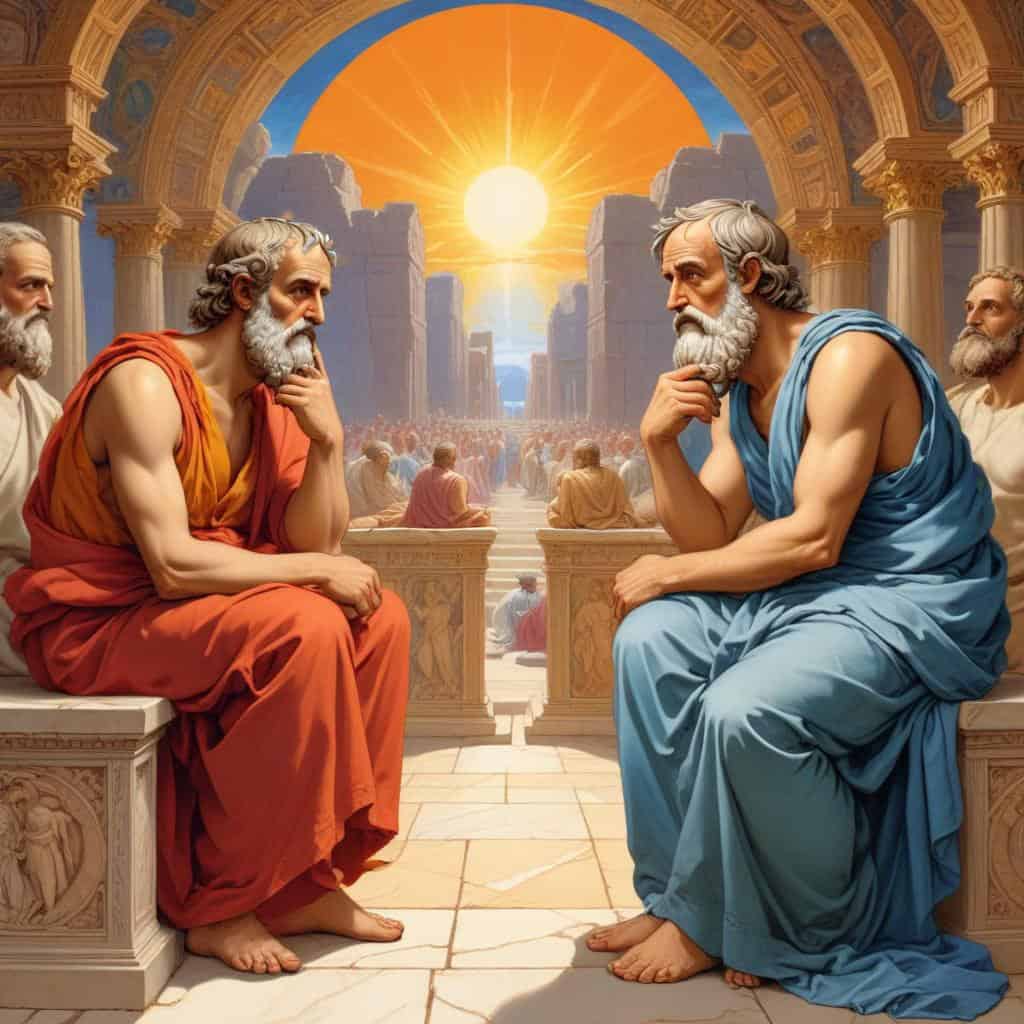
Ontological Nominalism Vs. Realism

Are concepts like 'red' real or just in our minds?

How Do You Learn Best?

Note: You can explore any or all of these paths in any order you prefer!

Ontological Nominalism Vs. Realism in 10 Minutes

Introduction
Introduction

Are universals real entities that exist independent of our minds, or are they merely conceptual constructs that we use to make sense of the world? This age-old debate between ontological nominalism and realism has been a central focus in the field of philosophy for centuries.

Ontological nominalism argues that only particular objects exist in reality, while universals are merely names or labels that we use to categorize things. On the other hand, realism posits that universals have a real existence and are not just figments of our imagination.

In this summary article, we will explore the key arguments and implications of both ontological nominalism and realism. By examining the strengths and weaknesses of each position, we hope to shed light on this complex and fascinating philosophical debate.

Ontological Nominalism

Ontological Nominalism

Ontological Nominalism is a philosophical stance that denies the existence of abstract objects, such as numbers and properties, viewing them as mere names or labels. Some notable proponents of Ontological Nominalism include William of Ockham, Nelson Goodman, and Saul Kripke.

Realism

Realism

Realism, on the other hand, asserts that abstract objects have an independent existence, separate from the minds that conceive of them. Philosophers like Plato, Aristotle, and Immanuel Kant are known for their support of Realism, arguing for the objective reality of universals and abstract entities.

The Ultimate Showdown: Ontological Nominalism vs. Realism Summary
The Ultimate Showdown: Ontological Nominalism vs. Realism Summary

Ontological Nominalism and Realism are two opposing philosophical views that have been debated for centuries. The main difference between the two lies in their beliefs about the nature of existence.

Event 1: Ontological Nominalism

Event 1: Ontological Nominalism

Ontological Nominalism argues that abstract concepts such as numbers and properties do not have an independent existence. Instead, they are simply labels or names that we use to categorize things in the world.

Event 2: Realism

Event 2: Realism

Realism, on the other hand, posits that abstract entities have a real existence outside of human thought. This view holds that things like numbers and properties exist independently of our minds.

Event 3: Arguments for Nominalism

Event 3: Arguments for Nominalism

Supporters of Ontological Nominalism point to the problem of universals, which are abstract entities that are said to exist in multiple places at once. Nominalists argue that this concept is illogical and unnecessary.

Event 4: Arguments for Realism

Event 4: Arguments for Realism

Those who support Realism argue that abstract entities must exist in order to explain the regularities and patterns that we observe in the world. They believe that these entities provide a foundation for understanding reality.

Event 5: The Role of Language

Event 5: The Role of Language

One key point of contention between Nominalism and Realism is the role of language in shaping our understanding of the world. Nominalists believe that language constructs our reality, while Realists argue that language reflects an underlying reality.

Event 6: Historical Perspectives

Event 6: Historical Perspectives

Throughout history, philosophers such as Plato and Aristotle have grappled with the question of ontology and the nature of existence. Their differing views on Nominalism and Realism have influenced generations of thinkers.

Event 7: Contemporary Debate

Event 7: Contemporary Debate

In modern philosophy, the debate between Ontological Nominalism and Realism continues to be a lively and contentious topic. Scholars continue to explore the implications of each view for various fields of study.

Event 8: Practical Implications

Event 8: Practical Implications

The choice between Nominalism and Realism can have practical implications in fields such as science, ethics, and aesthetics. Each view offers a different framework for understanding the world and our place in it.

Event 9: Finding Common Ground

Event 9: Finding Common Ground

While Ontological Nominalism and Realism may seem like opposing forces, some philosophers have attempted to find common ground between the two views. They argue that both perspectives offer valuable insights into the nature of existence.

Event 10: The Philosophical Quest

Event 10: The Philosophical Quest

Ultimately, the debate between Ontological Nominalism and Realism reflects a broader philosophical quest to understand the fundamental nature of reality. Both views offer unique perspectives on the nature of existence and the role of abstract entities in shaping our understanding of the world.

In conclusion, the debate between ontological nominalism and realism in philosophy is a complex one that has been ongoing for centuries. While nominalists believe that only individual objects exist, realists argue that there are universal properties that exist independently of our thoughts. Both sides have compelling arguments, and the ultimate choice between the two perspectives will depend on one's own philosophical beliefs and interpretations.

Ultimately, the debate between ontological nominalism and realism highlights the fundamental questions about the nature of reality and existence. Whether one aligns more with nominalism or realism, it is important to engage in thoughtful reflection and discussion to further explore and understand the complexities of these philosophical perspectives.

1 / 19

Lesson Details & Resources

In a Nutshell

  • Concept: A philosophical debate about the nature of reality and existence, specifically concerning whether universals (abstract entities) exist independently of particulars (individual objects).
  • Thinkers: William of Ockham in the 14th century, but the debate has continued through various philosophers.
  • Central Question: Do abstract concepts such as "beauty" or "justice" have a real existence, or are they merely names we give to collections of individual objects?
  • Core Implication: Ontological Nominalism asserts that only individual objects exist, while Realism argues that universals have an independent existence beyond our thoughts and language.

Timeline of Ontological Nominalism Vs. Realism

No timeline events found.

Vocabulary List

No vocabulary terms found.

Key Facts

This is the information used in the fact matching game

    No key facts found.

Analysis & Significance

The Core Argument

Ontological Nominalism posits that only individual objects exist, while Realism contends that there are abstract entities that have an independent existence. This debate centers around the question of whether universals, like ‘redness’ or ‘beauty,’ have a real existence beyond particular instances.

Criticisms and Counterarguments

Critics of Nominalism argue that it fails to account for the shared characteristics among objects, leading to a fragmentation of reality. Realists, on the other hand, face the challenge of explaining how abstract entities can have a concrete existence outside of human perception.

Modern Relevance

The debate between Nominalism and Realism continues to influence contemporary discussions in fields such as ethics and metaphysics. In a world where concepts like justice and equality are central to societal debates, understanding the nature of universals and their existence can provide insights into how we understand and navigate complex ethical dilemmas.

Ontological Nominalism Vs. Realism Games

Was This Lesson Helpful?

Please log in or sign up to rate this lesson. 

Take Your Learning Offline

Want a convenient, print-ready study guide for this lesson? Become a Memory Wizards Pro member to unlock the downloadable " Memory Scrolls" for this topic and our entire library!

  • ✓ Complete Vocabulary Lists
  • ✓ Key Facts & Timelines
  • ✓ Beautifully Formatted for Print & Mobile
Upgrade to Pro

You must be logged in to provide feedback. Please log in or create a free account.

Scroll to Top