
How Do You Learn Best?
Learn by Reading
Immerse yourself in the 10-minute visual lesson for a comprehensive understanding of the topic.
Learn by Reviewing
Jump directly to the key facts, timeline, and vocabulary lists to build a solid foundation of details.
Learn by Doing
Challenge yourself! Jump straight into the interactive games to learn by trial, error, and discovery.
The Masterpiece: The Fight Between Carnival And Lent Pieter Bruegel The Elder
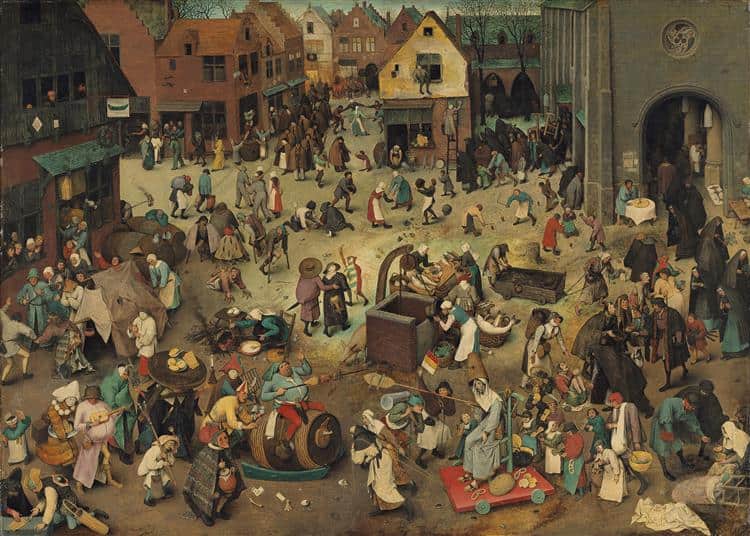
Deconstructing the Masterpiece
Contrasting Figures
The juxtaposition of lively carnival characters and somber Lenten figures symbolizes the contrast between indulgence and austerity.
Crowded Composition
The densely packed scene with numerous characters and activities creates a sense of chaos and festivity, inviting viewers to explore the intricate details.
Vertical Division
The artwork is divided vertically into two halves, with Carnival on the left and Lent on the right, representing the struggle between worldly pleasures and spiritual devotion.
Pieter Bruegel the Elder: An Analysis in 10 Minutes
Early Life and Education
Travel to Italy
Return to the Netherlands
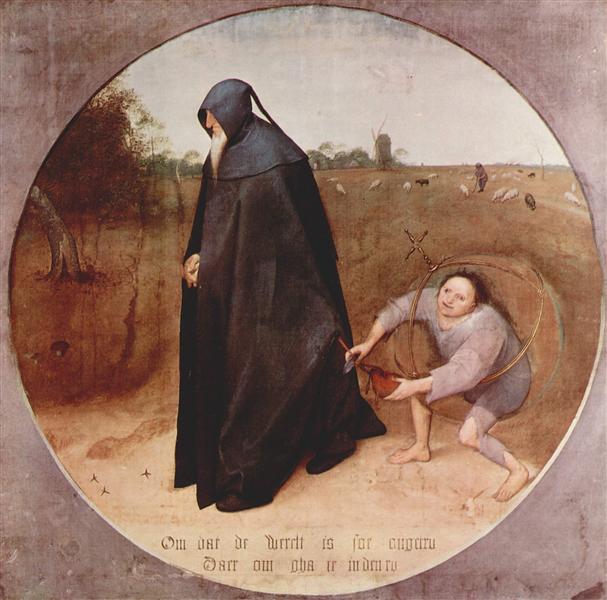
Artistic Style
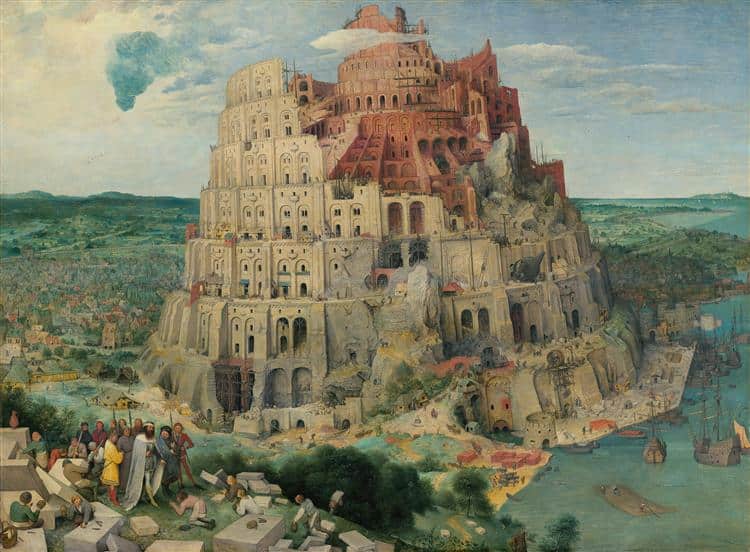
Popular Works
Legacy
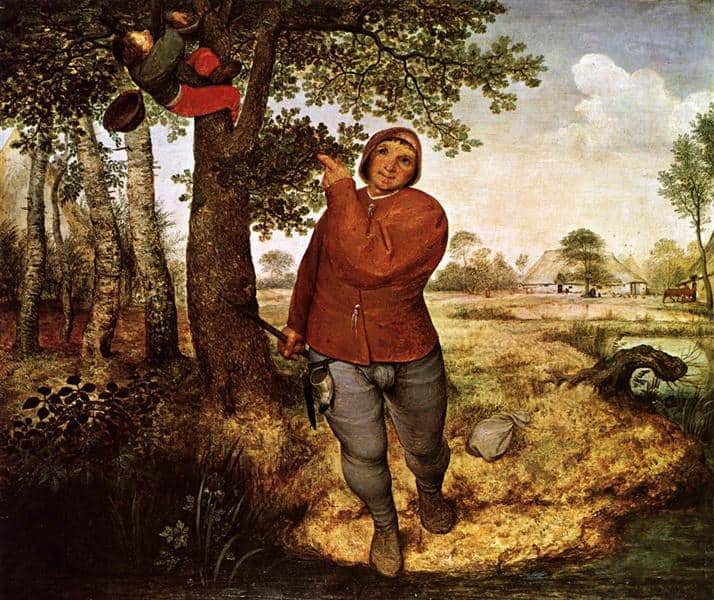
Death and Influence
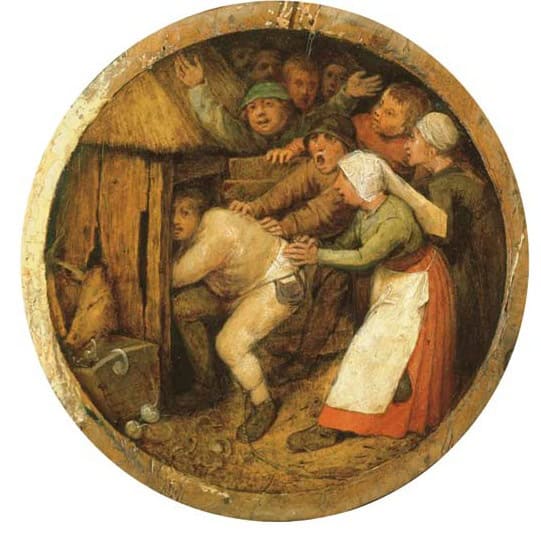
Artistic Achievements
Artistic Themes
Bruegels Influence
Lesson Details & Resources
In a Nutshell
- Artist: Pieter Bruegel the Elder
- Year: 1565
- Medium: Oil on wood
- Location: Kunsthistorisches Museum, Vienna
Vocabulary List
- Landscape
- Bruegel was known for his detailed and realistic landscapes in his paintings.
- Genre painting
- Bruegel often depicted scenes of everyday life in his genre paintings.
- Peasants
- Many of Bruegel's works featured peasants and common people as the main subjects.
- Symbolism
- Bruegel's paintings were filled with symbolic elements and hidden meanings.
- Proverbs
- Bruegel's paintings often included visual representations of popular proverbs.
- Detail
- Bruegel paid great attention to detail in his paintings, capturing even the smallest elements.
- Satire
- Bruegel used satire in his artwork to critique society and human behavior.
- Religious themes
- Bruegel also painted religious scenes and themes, often with a unique twist.
- Harmony
- Bruegel's compositions often achieved a sense of harmony and balance.
- Crowded scenes
- Many of Bruegel's paintings featured crowded scenes with numerous figures.
- Color palette
- Bruegel used a rich and vibrant color palette in his paintings.
- Folklore
- Bruegel drew inspiration from folklore and traditional stories in his artwork.
- Perspective
- Bruegel experimented with different perspectives in his paintings, creating depth and dimension.
- Humanism
- Bruegel's artwork reflected humanist ideals and beliefs.
- Allegory
- Bruegel often incorporated allegorical elements in his paintings.
- Social commentary
- Bruegel's artwork was often a form of social commentary on the world around him.
- Nature
- Bruegel's paintings often featured nature as a prominent element.
- Moral lessons
- Bruegel's paintings sometimes conveyed moral lessons or warnings.
- Everyday life
- Bruegel's paintings captured scenes of everyday life in the 16th century Netherlands.
- Innovation
- Bruegel was known for his innovative approach to painting and composition.
Timeline of Pieter Bruegel the Elder: An Analysis
Key Facts
This is the information used in the fact matching game
- Pieter Bruegel the Elder was a Flemish painter known for his landscapes and peasant scenes.
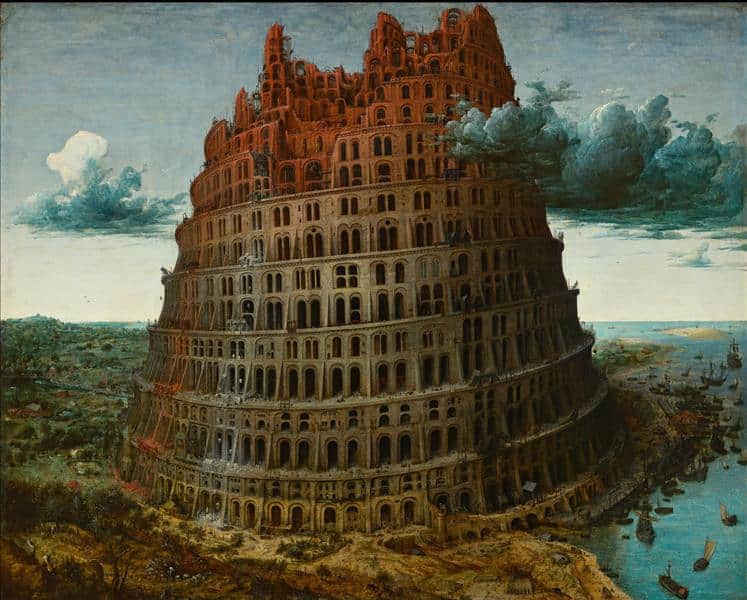
- Bruegel's most famous works include 'The Peasant Wedding' and 'The Tower of Babel'.
- He is often referred to as 'Peasant Bruegel' due to his focus on depicting the lives of ordinary people.
- Bruegel's paintings often contain moral and religious themes, reflecting the influence of the Reformation in Northern Europe.
- He was one of the first artists to paint landscapes as the main subject of his works.
- Bruegel's use of vibrant colors and intricate details set him apart from his contemporaries.
- He was influenced by the work of Hieronymus Bosch, incorporating fantastical elements into his paintings.
- Bruegel's painting 'The Fall of the Rebel Angels' is a prime example of his use of imaginative and otherworldly imagery.
- He traveled extensively throughout Europe, drawing inspiration from different cultures and landscapes.
- Bruegel's 'The Harvesters' is a masterful depiction of rural life, showcasing his skill in capturing everyday scenes.
- He was known for his ability to convey a sense of movement and activity in his paintings.
- Bruegel's 'The Triumph of Death' is a chilling portrayal of the inevitability of death, with skeletons wreaking havoc on the living.
- He was a master of capturing the human experience, from joyous celebrations to somber reflections on mortality.
- Bruegel's works have been interpreted as social commentary on the political and religious turmoil of his time.
- He was a highly sought-after artist during his lifetime, with patrons including royalty and nobility.
- Bruegel's 'The Hunters in the Snow' is considered one of the greatest winter landscapes in Western art.
- He was a member of the Antwerp painters' guild, which allowed him to establish his reputation as a respected artist.
- Bruegel's legacy lives on through the influence he had on later artists, such as Peter Paul Rubens.
- He passed away in 1569, leaving behind a body of work that continues to captivate audiences centuries later.
- Bruegel's paintings are characterized by their attention to detail and rich narrative content, drawing viewers into the world he created.
Analysis & Significance
Artistic Innovation
Pieter Bruegel the Elder’s intricate and detailed landscapes, such as “The Hunters in the Snow,” revolutionized the genre of landscape painting. His ability to capture the essence of everyday life with a sense of realism and depth was unprecedented in his time, setting a new standard for landscape artists.
Influence on Art History
Bruegel’s work had a profound impact on later artists, inspiring the Dutch Golden Age painters and the development of genre painting. His unique blend of naturalistic detail and narrative storytelling paved the way for future artists to explore themes of ordinary life and the human experience.
Cultural Significance Today
Today, Pieter Bruegel the Elder’s works are celebrated as masterpieces of Renaissance art. His paintings continue to captivate audiences with their rich storytelling, intricate details, and timeless themes. Bruegel’s influence can be seen in the work of countless artists and his legacy as one of the greatest painters of his time remains intact.
Pieter Bruegel the Elder: An Analysis Games


Take Your Learning Offline
Want a convenient, print-ready study guide for this lesson? Become a Memory Wizards Pro member to unlock the downloadable " Memory Scrolls" for this topic and our entire library!
- ✓ Complete Vocabulary Lists
- ✓ Key Facts & Timelines
- ✓ Beautifully Formatted for Print & Mobile