
How Do You Learn Best?
Learn by Reading
Immerse yourself in the 10-minute visual lesson for a comprehensive understanding of the topic.
Learn by Reviewing
Jump directly to the key facts, timeline, and vocabulary lists to build a solid foundation of details.
Learn by Doing
Challenge yourself! Jump straight into the interactive games to learn by trial, error, and discovery.
The Masterpiece: The Arnolfini Wedding Jan Van Eyck
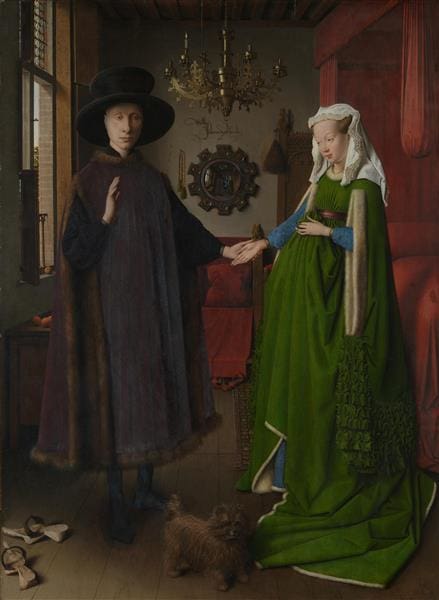
Deconstructing the Masterpiece
Mirror Reflection
The convex mirror reflects the backs of the couple and two mysterious figures, potentially symbolizing witnesses or spiritual presence.
Symbolic Objects
Various objects, such as the dog symbolizing fidelity and the oranges symbolizing wealth, add layers of meaning to the scene.
Rich Textures
Van Eyck's meticulous attention to details, such as the intricate patterns on clothing and carpets, enhances the sense of luxury and realism.
Spatial Depth
The use of linear perspective and architectural elements create a sense of depth and spatial coherence within the composition.
Jan van Eyck: An Analysis in 10 Minutes
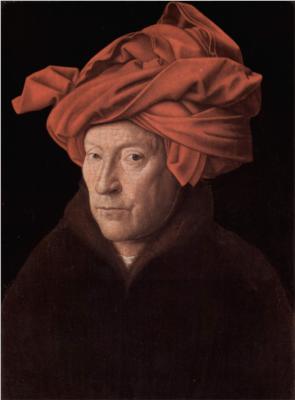
Early Life and Training
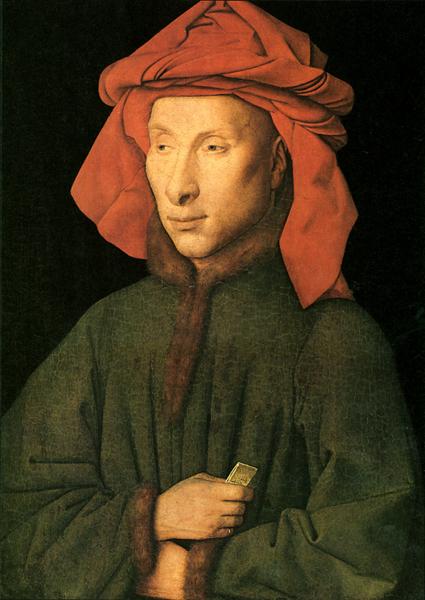
Innovations in Oil Painting
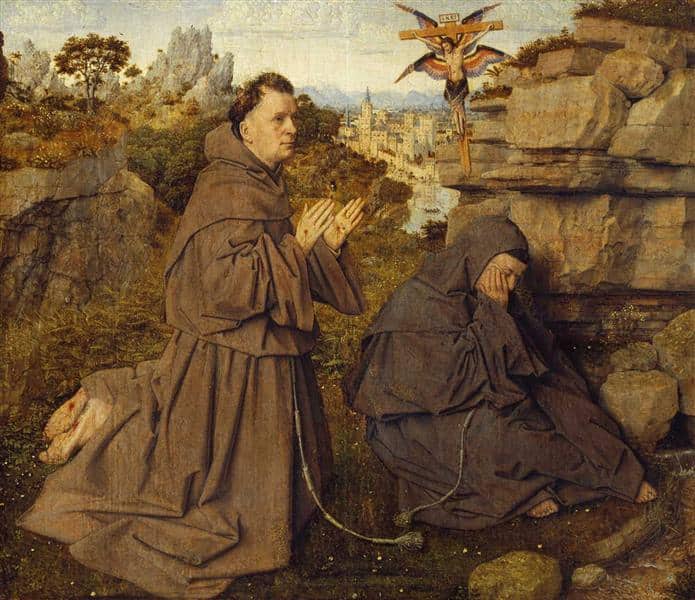
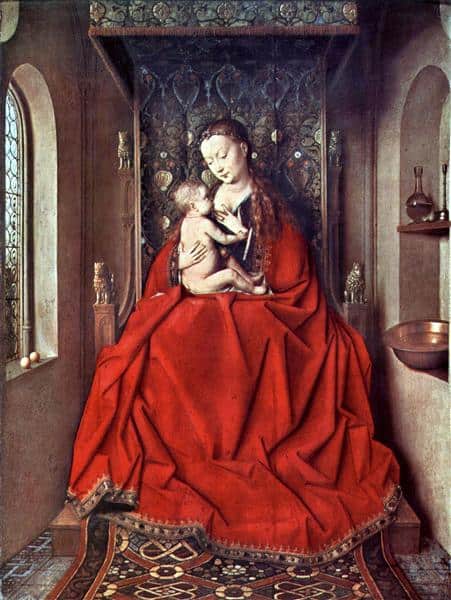
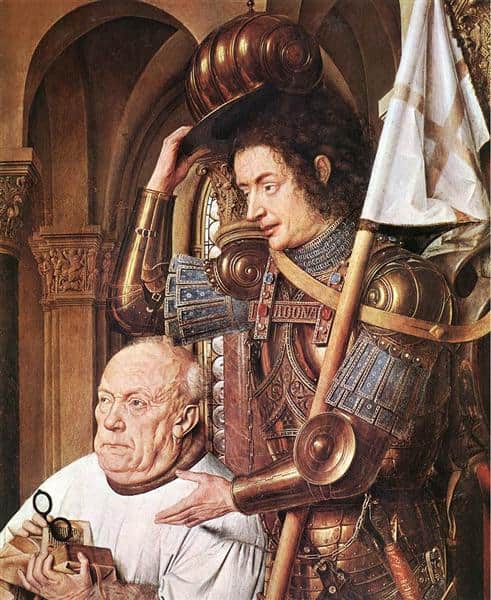
Portraiture and Religious Works
Marriage of Giovanni Arnolfini and His Bride
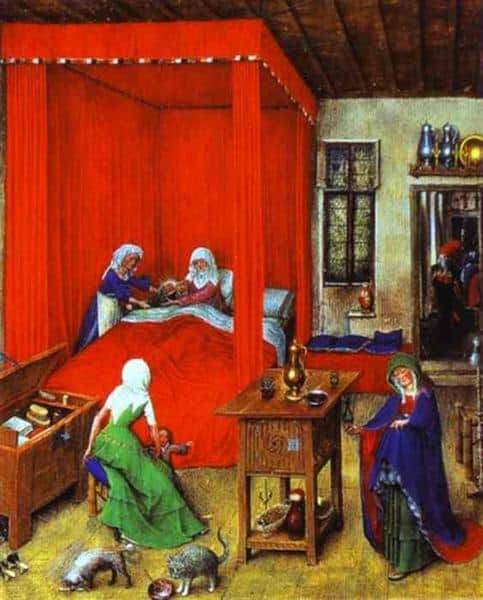
Allegorical and Biblical Themes
International Recognition
Legacy and Influence
Rediscovery and Appreciation

Van Eycks Lasting Impact
Celebrating a Master
Lesson Details & Resources
In a Nutshell
- Artist: Jan van Eyck
- Year: 1434
- Medium: Oil on oak panel
- Location: National Gallery, London
Vocabulary List
Timeline of Jan van Eyck: An Analysis
Jan van Eyck is born in the Dutch town of Maaseik
Jan van Eyck becomes a recognized painter in the court of John of Bavaria
Jan van Eyck travels to Portugal as a painter for Philip the Good, Duke of Burgundy
Jan van Eyck is appointed official court painter by Philip the Good
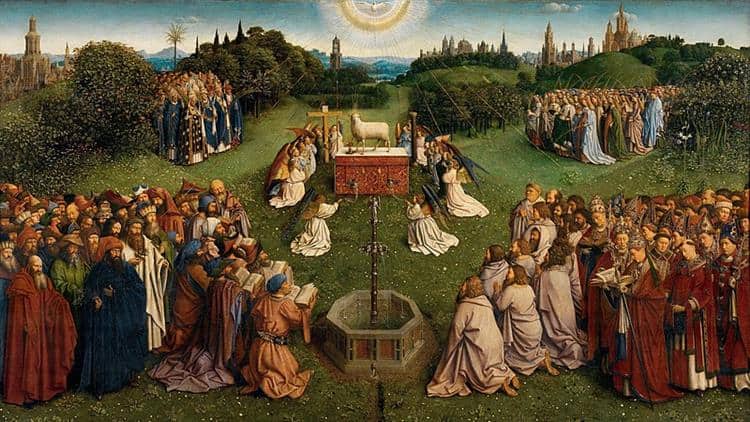
Jan van Eyck completes the Ghent Altarpiece
Jan van Eyck travels to Italy on behalf of Philip the Good
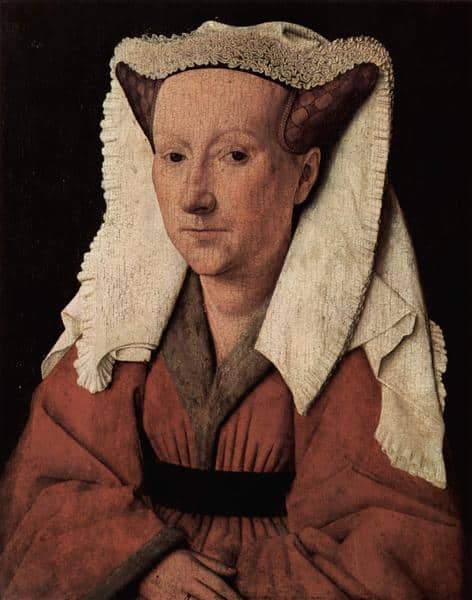
Jan van Eyck marries Margareta, who may have been his employer's daughter
Jan van Eyck completes the Arnolfini Portrait
Jan van Eyck is commissioned to paint the Madonna of Chancellor Rolin
Jan van Eyck is appointed as a member of the Brotherhood of Our Lady in Bruges
Jan van Eyck completes the Madonna of Chancellor Rolin
Jan van Eyck is commissioned to paint the Madonna with Canon van der Paele
Jan van Eyck completes the Madonna with Canon van der Paele
Jan van Eyck dies in Bruges
Key Facts
Analysis & Significance
Artistic Innovation
Jan van Eyck’s meticulous attention to detail and use of oil paint revolutionized the art of Northern Europe in the 15th century. His ability to capture light, texture, and realism with unparalleled precision set a new standard for naturalism in painting. The intricate symbolism and rich colors in his works added layers of meaning and depth, elevating his art to a level of sophistication previously unseen.
Influence on Art History
Van Eyck’s technical mastery and innovative approach to painting had a profound impact on the development of the Northern Renaissance. His use of oil paint techniques influenced generations of artists, including his contemporaries and successors. The heightened realism and attention to detail in his work inspired a shift towards a more naturalistic style in European art, paving the way for future artistic movements.
Cultural Significance Today
Today, Jan van Eyck’s works are celebrated as masterpieces of art history and continue to captivate audiences around the world. His iconic painting, “The Arnolfini Portrait,” is considered one of the most significant works of the Northern Renaissance. Van Eyck’s contributions to the art world are recognized for their technical brilliance, artistic innovation, and enduring influence on the trajectory of Western art.
Jan van Eyck: An Analysis Games


Take Your Learning Offline
Want a convenient, print-ready study guide for this lesson? Become a Memory Wizards Pro member to unlock the downloadable " Memory Scrolls" for this topic and our entire library!
- ✓ Complete Vocabulary Lists
- ✓ Key Facts & Timelines
- ✓ Beautifully Formatted for Print & Mobile