
How Do You Learn Best?
Learn by Reading
Immerse yourself in the 10-minute visual lesson for a comprehensive understanding of the topic.
Learn by Reviewing
Jump directly to the key facts, timeline, and vocabulary lists to build a solid foundation of details.
Learn by Doing
Challenge yourself! Jump straight into the interactive games to learn by trial, error, and discovery.
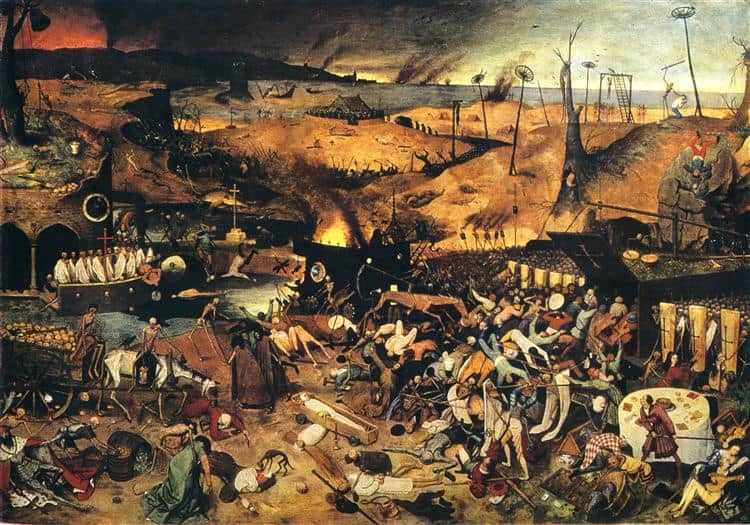
The Masterpiece: The Triumph Of Death Pieter Bruegel The Elder
Deconstructing the Masterpiece
Crowded Composition
The multitude of figures and chaotic arrangement creates a sense of overwhelming despair and hopelessness.
Foreshortened Figures
The use of foreshortening adds depth and realism to the scene, drawing the viewer into the gruesome events.
Vivid Color Palette
The vibrant colors contrast with the dark subject matter, emphasizing the stark contrast between life and death.
Symbolic Imagery
Various symbolic elements such as skeletons, hourglasses, and coffins reinforce the theme of mortality and the inevitability of death.
Disguised Symbolism: An Analysis in 10 Minutes

Decoding Disguised Symbolism in Northern Renaissance Art
Religious Symbolism
Social Commentary
Political Symbolism
Humanism and Classical Symbolism
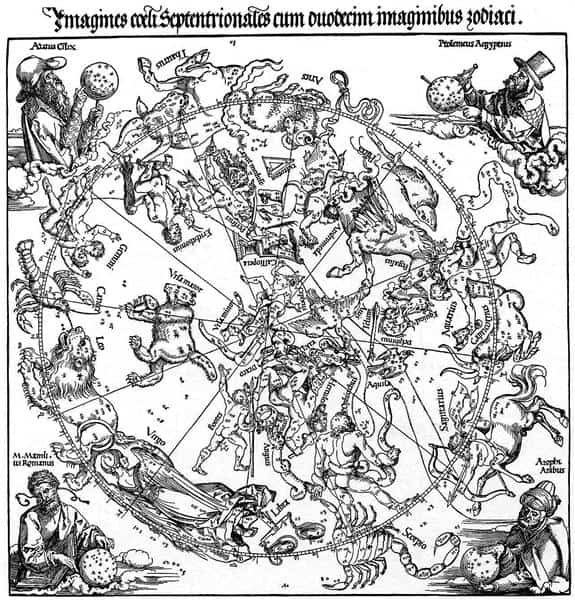
Alchemy and Science
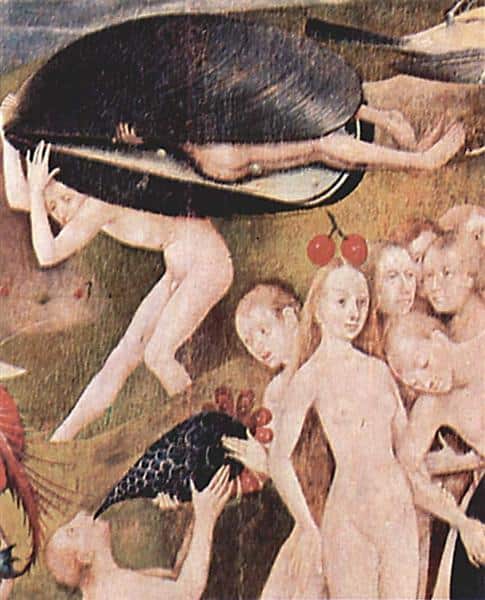
Hidden Messages
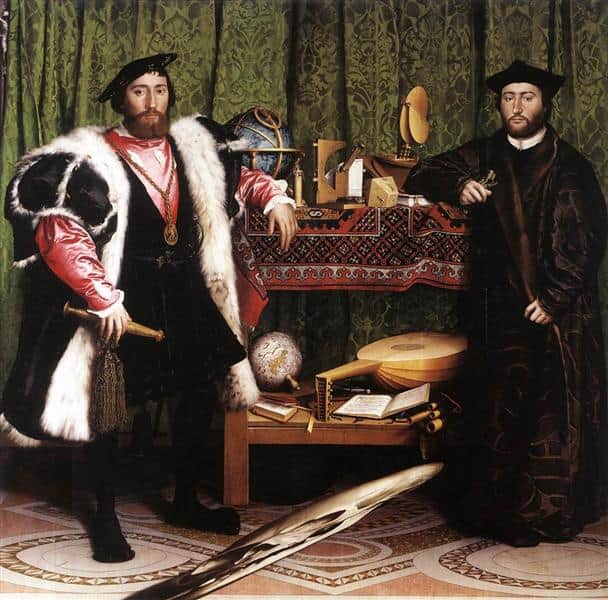
Symbolic Colors and Objects
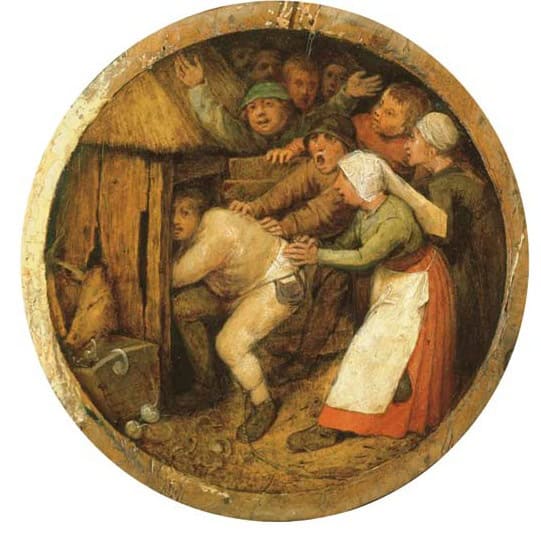
Interpretation and Analysis
Legacy of Disguised Symbolism
Lesson Details & Resources
In a Nutshell
<ul>
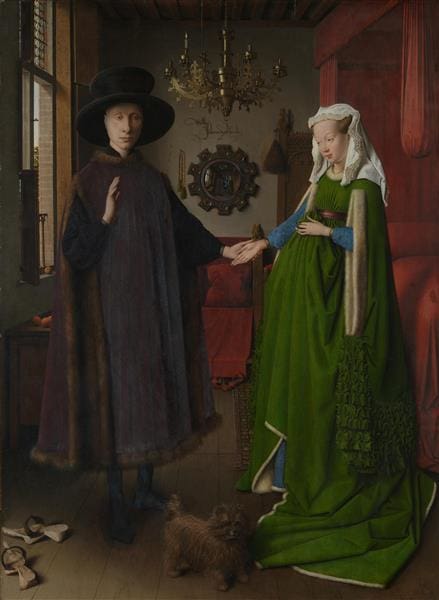
<li>Jan van Eyck’s “Arnolfini Portrait” – the mirror in the background symbolizes the presence of God, while the dog at the couple’s feet represents fidelity.</li>
<li>Hans Holbein the Younger’s “The Ambassadors” – the distorted skull at the bottom of the painting represents the fleeting nature of life</li>
<li>Hieronymus Bosch’s “The Garden of Earthly Delights” – the bizarre creatures and fantastical landscapes are symbolic of sin, temptation, and the consequences of indulgence</li>
<li>Pieter Bruegel the Elder’s “The Tower of Babel” – the unfinished tower in the background represents human ambition and the futility of trying to reach the heavens</li><li>Hans Holbein the Younger’s “The Ambassadors” – The distorted skull at the bottom of the painting symbolizes the inevitability of death.</li>
</ul>
Vocabulary List
- Vanitas
- The painting featured various objects symbolizing the brevity of life and the inevitability of death, a common theme in vanitas art.
- Memento mori
- The skull depicted in the painting was a memento mori, reminding viewers of their mortality.
- Allegory
- The painting was an allegory for the passage of time and the transience of worldly pleasures.
- Emblem
- The artist used the emblem of a broken mirror to symbolize vanity and the illusion of beauty.
- Sphinx
- The sphinx in the painting represented the enigmatic nature of life and the unknowable future.
- Chimera
- The chimera in the artwork symbolized the dangers of unchecked imagination and hubris.
- Heraldry
- The intricate heraldic symbols in the painting hinted at the noble lineage of the subject.
- Hieroglyph
- The artist incorporated hieroglyphs into the background of the painting, adding layers of hidden meaning.
- Ciphers
- The ciphers hidden in the artwork revealed a secret message known only to a select few.
- Esoteric
- The painting contained esoteric symbols that only scholars of the occult could decipher.
- Transmutation
- The alchemical process of transmutation was depicted in the painting as a metaphor for spiritual transformation.
- Arcane
- The painting was filled with arcane symbols and cryptic references that puzzled art historians for centuries.
- Occult
- The artist's interest in the occult was evident in the hidden symbols and esoteric imagery of the painting.
- Iconography
- The iconography of the painting included symbols of death, rebirth, and renewal.
- Allegorical
- The artwork was a complex allegorical composition that required close scrutiny to fully understand.
- Astrological
- The painting featured astrological symbols that hinted at the influence of the stars on human destiny.
- Ciphered
- The ciphered message hidden in the painting was finally decoded by a dedicated art historian.
- Rosicrucian
- The painting bore the hallmarks of Rosicrucian symbolism, hinting at a deeper spiritual significance.
- Esoterica
- The artist's fascination with esoterica was evident in the intricate symbols and cryptic references of the painting.
- Allegorically
- The painting was interpreted allegorically, with each element symbolizing a deeper philosophical or spiritual concept.
Timeline of Disguised Symbolism: An Analysis
Hans Holbein the Younger incorporates disguised symbolism in his portrait of Henry VIII, such as the prominent placement of a Tudor rose and a girdle.
Albrecht Dürer uses disguised symbolism in his engraving 'Melencolia I', featuring various objects with hidden meanings related to melancholy and creativity.
Jan van Eyck includes disguised symbolism in his painting 'Arnolfini Portrait', such as the reflection in the mirror showing two additional figures.
Hieronymus Bosch uses disguised symbolism in his triptych 'The Garden of Earthly Delights', depicting various surreal and symbolic elements.
Leonardo da Vinci incorporates disguised symbolism in his painting 'The Last Supper', with various elements representing the betrayal of Jesus.
Pieter Bruegel the Elder includes disguised symbolism in his painting 'The Fall of the Rebel Angels', featuring bizarre creatures and symbols of sin.
Lucas Cranach the Elder uses disguised symbolism in his painting 'Judith with the Head of Holofernes', with the sword representing Judith's triumph over tyranny.
Albrecht Altdorfer incorporates disguised symbolism in his painting 'The Battle of Issus', featuring hidden references to the victory of Alexander the Great.
Jean Fouquet includes disguised symbolism in his portrait of Charles VII of France, with various objects symbolizing the king's power and authority.
Hugo van der Goes uses disguised symbolism in his altarpiece 'The Portinari Triptych', with various flowers and plants symbolizing religious themes.
Geertgen tot Sint Jans incorporates disguised symbolism in his painting 'The Adoration of the Magi', with hidden references to the birth of Christ.
Master of the Legend of Saint Lucy uses disguised symbolism in his painting 'The Martyrdom of Saint Lucy', with various objects symbolizing her Christian faith.
Quentin Matsys includes disguised symbolism in his painting 'The Moneylender and His Wife', with various objects representing greed and materialism.
Joachim Patinir uses disguised symbolism in his landscape paintings, with the natural elements symbolizing spiritual and moral themes.
Pieter Aertsen incorporates disguised symbolism in his painting 'The Meat Stall', with various food items symbolizing the transience of life.
Jacques Daret includes disguised symbolism in his portrait of Margaret of York, with various objects symbolizing her royal status and lineage.
Jheronimus Bosch uses disguised symbolism in his painting 'The Haywain Triptych', with various scenes symbolizing the folly of human desires.
Lucas van Leyden incorporates disguised symbolism in his engraving 'The Temptation of Saint Anthony', with various demons symbolizing temptation and sin.
Ambrosius Benson includes disguised symbolism in his painting 'The Magdalen Reading', with various objects symbolizing the contemplative life of Mary Magdalene.
Pieter Coecke van Aelst uses disguised symbolism in his tapestries, with various motifs symbolizing religious and mythological themes.
Key Facts
This is the information used in the fact matching game
- Disguised symbolism is a common feature in Northern Renaissance art, where artists often used hidden meanings in their works.
- Artists in the Northern Renaissance used symbols to convey religious, political, or personal messages in their artwork.
- Disguised symbolism allowed artists to express ideas that may have been controversial or forbidden at the time.
- Common symbols used in Northern Renaissance art include animals, plants, colors, and objects with specific meanings.
- Artists often incorporated allegorical figures or scenes into their paintings to convey deeper meanings.
- Northern Renaissance artists sometimes included hidden messages or symbols that only a select few could understand.
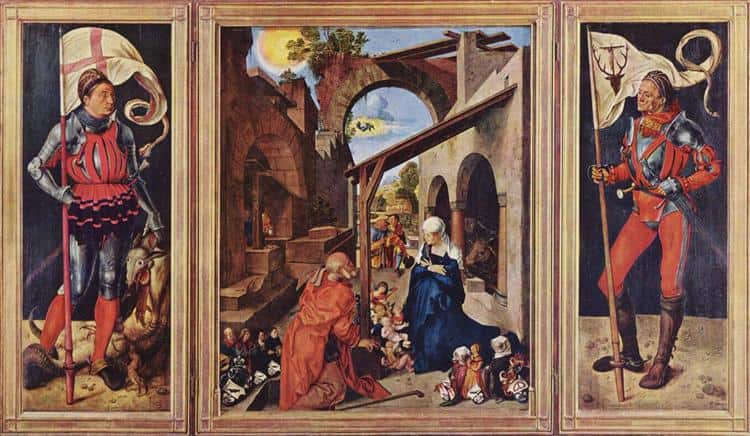
- The use of disguised symbolism in art was influenced by humanism and the desire to communicate complex ideas through visual means.
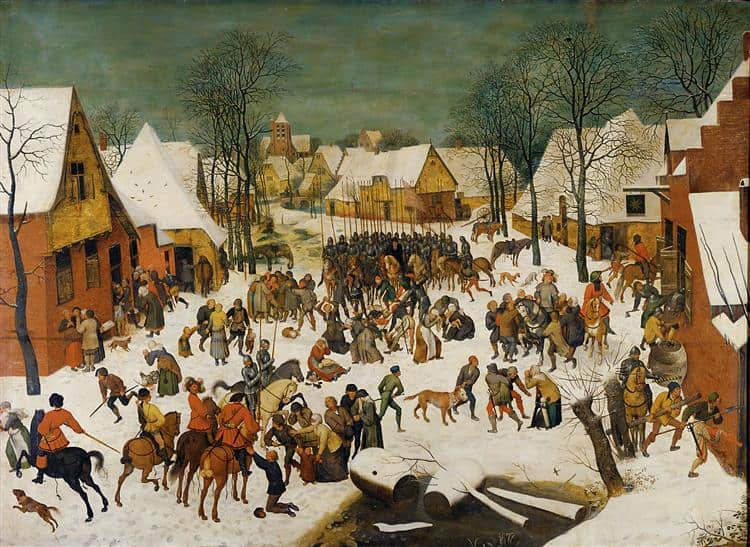
- Some artists in the Northern Renaissance used symbols to critique social or political issues of their time.
- Disguised symbolism allowed artists to express their own personal beliefs or values without overtly stating them.
- Symbols in Northern Renaissance art were often drawn from classical mythology, biblical stories, or medieval allegories.
- Artists sometimes used symbols to create visual puzzles or challenges for viewers to decipher.
- Disguised symbolism was also used in decorative arts and architecture of the Northern Renaissance period.
- Some symbols in Northern Renaissance art had universal meanings that were easily recognizable, while others were more obscure and required knowledge of specific cultural or historical contexts.
- Artists often used symbols to create layers of meaning in their works, allowing viewers to interpret the artwork on multiple levels.
- Some symbols in Northern Renaissance art were borrowed from earlier traditions, such as medieval manuscript illumination or Byzantine iconography.
- The use of disguised symbolism in art reflected the intellectual and cultural climate of the Northern Renaissance, where scholars and artists sought to explore complex ideas and express them through visual language.
- Symbols in Northern Renaissance art were sometimes used to convey moral lessons or philosophical concepts in a subtle or allegorical manner.
- Disguised symbolism in art allowed artists to engage with their viewers in a more interactive and thought-provoking way, inviting them to explore the hidden meanings within the artwork.
- Some symbols in Northern Renaissance art were used to convey specific emotions or psychological states, adding a layer of depth and complexity to the artwork.
- Artists in the Northern Renaissance often used symbols to create visual metaphors or analogies that enriched the overall meaning of their works.
Analysis & Significance
Artistic Innovation
The ‘Disguised Symbolism’ artwork introduced a new approach to conveying hidden meanings and messages through seemingly innocuous images. By using subtle visual cues and symbols, the artist was able to communicate complex ideas and critiques in a covert manner, challenging viewers to look beyond the surface and decipher the deeper layers of meaning within the work.
Influence on Art History
This work paved the way for a new genre of symbolic art that would later influence movements such as Surrealism and Conceptual Art. Artists began to explore the power of hidden symbols and allegorical imagery to convey social, political, and personal messages, expanding the possibilities of visual storytelling and interpretation in the art world.
Cultural Significance Today
The ‘Disguised Symbolism’ artwork continues to intrigue and captivate audiences today, sparking discussions about the role of symbolism in art and the power of hidden messages. Its enigmatic and thought-provoking nature has solidified its place as a masterpiece that challenges viewers to engage with art on a deeper, more introspective level, making it a timeless and enduring work of art.
Disguised Symbolism: An Analysis Games


Take Your Learning Offline
Want a convenient, print-ready study guide for this lesson? Become a Memory Wizards Pro member to unlock the downloadable " Memory Scrolls" for this topic and our entire library!
- ✓ Complete Vocabulary Lists
- ✓ Key Facts & Timelines
- ✓ Beautifully Formatted for Print & Mobile