
How Do You Learn Best?
Learn by Listening
Start with the 3-minute audio summary to get the key facts and narrative highlights quickly.
Learn by Reading
Immerse yourself in the 10-minute visual lesson for a comprehensive understanding of the topic.
Learn by Reviewing
Jump directly to the key facts, timeline, and vocabulary lists to build a solid foundation of details.
Learn by Doing
Challenge yourself! Jump straight into the interactive games to learn by trial, error, and discovery.
The Masterpiece: The Sorrow of Telemachus
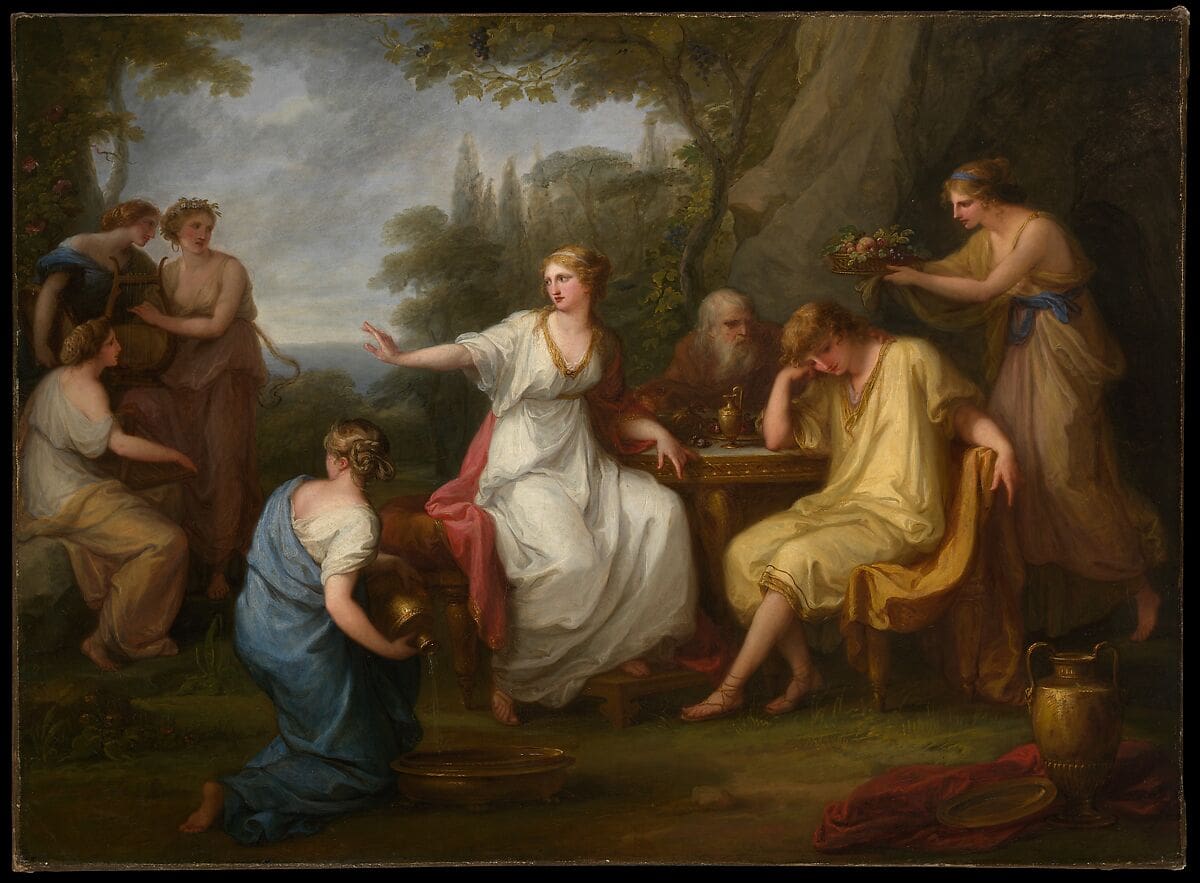
Deconstructing the Masterpiece
Classical Mythology
Incorporating figures from Greek mythology, symbolizing wisdom, heroism, and virtue.
Emotional Expression
Facial expressions and gestures convey deep emotions, reflecting the Neoclassical emphasis on sentiment and moral values.
Harmonious Composition
Balanced arrangement of figures and objects, evoking a sense of order and beauty in line with Classical ideals.
Soft Color Palette
Pastel colors and gentle tones create a serene atmosphere, enhancing the emotional impact of the scene.
Audio Library
As one of our featured lessons, this topic includes premium audio guides.
Unlock the Wizard's Cram Session
This powerful audio study guide is a Pro-exclusive feature. Upgrade to Memory Wizards Pro to access this and all of our premium learning tools.
Upgrade to ProAngelica Kauffman: An Analysis in 10 Minutes
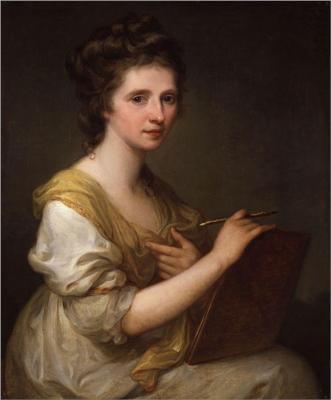
Introduction
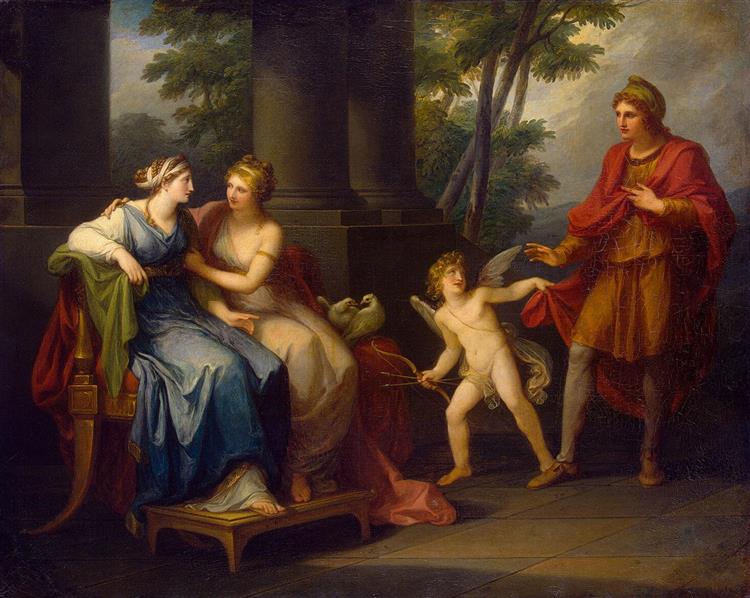
Early Life and Education
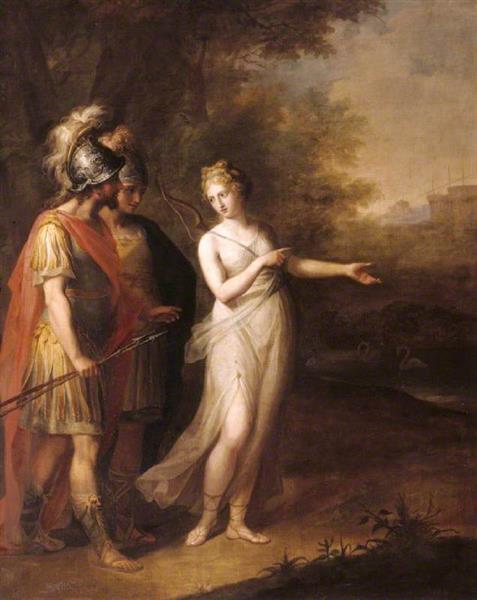
Rise to Fame
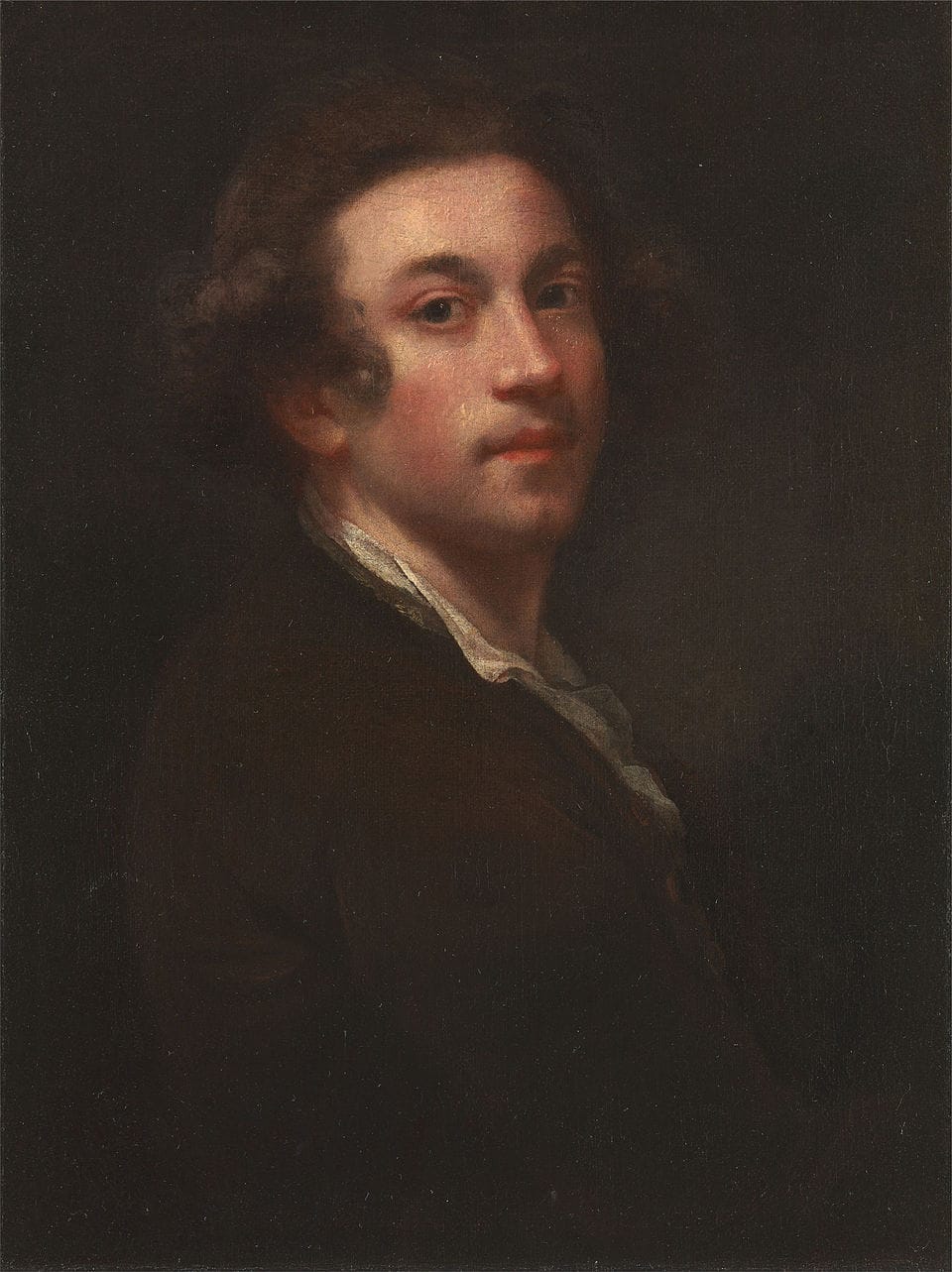
Collaboration with Joshua Reynolds
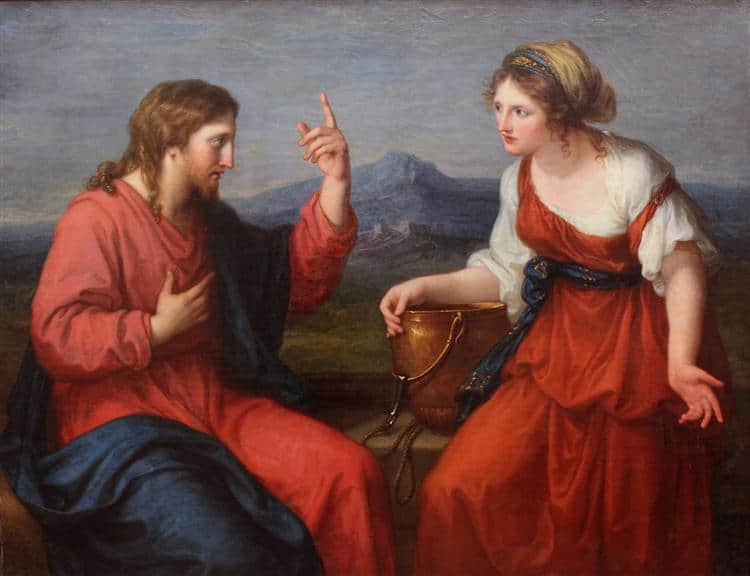
Travel to Rome
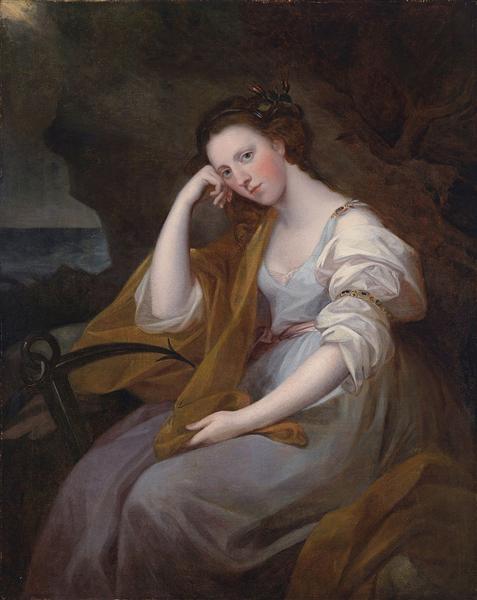
Return to London
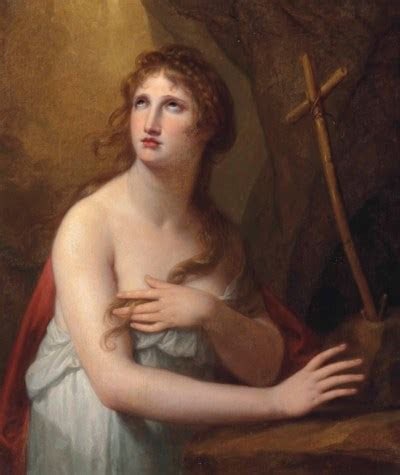
Legacy
Lesson Details & Resources
In a Nutshell
- Birthdate: Angelica Kauffman was born on October 30, 1741.
- Nationality: She was born in Switzerland but later became a British citizen.
- Artistic Talent: Kauffman was a talented painter who specialized in portraits and historical scenes.
- Education: She received formal art training in Italy and was influenced by famous artists of the time.
- Success: Kauffman was one of the few female artists to achieve international fame during her lifetime.
- Legacy: Her works are still admired today for their beauty and emotional depth.
Vocabulary List
- Neoclassicism
- Angelica Kauffman was a prominent figure in the Neoclassical art movement.
- Portraiture
- Kauffman was known for her skill in portraiture, capturing the likeness and personality of her subjects.
- Allegory
- Many of Kauffman's works feature allegorical themes, conveying deeper symbolic meanings.
- Mythology
- Kauffman often drew inspiration from classical mythology in her artwork.
- Frescoes
- Kauffman was commissioned to create frescoes in many prominent buildings throughout Europe.
- Rococo
- Kauffman's early works show influence from the Rococo style, characterized by ornate decoration and pastel colors.
- Engraving
- Kauffman was skilled in engraving, creating detailed prints of her paintings.
- Salon
- Kauffman exhibited her work at the Paris Salon, a prestigious art exhibition.
- Palladianism
- Kauffman's architectural paintings often feature elements of Palladianism, a style inspired by the designs of Andrea Palladio.
- Academy
- Kauffman was a member of several prestigious art academies, including the Royal Academy in London.
- Allegorical
- Kauffman's allegorical paintings often explore themes of virtue, beauty, and nature.
- Self-portrait
- Kauffman painted several self-portraits throughout her career, showcasing her talent as both an artist and a subject.
- History painting
- Kauffman's history paintings often depict scenes from classical mythology or historical events.
- Genre painting
- Kauffman also created genre paintings, depicting scenes from everyday life with a touch of elegance and charm.
- Virtuosity
- Kauffman was praised for her virtuosity as a painter, mastering various techniques and styles.
- Triptych
- Kauffman created several triptychs, a form of artwork consisting of three panels that are hinged together.
- Muse
- Kauffman's work was often inspired by her muses, including fellow artists, poets, and philosophers.
- Pastoral
- Kauffman's pastoral scenes often depict idyllic countryside settings, evoking a sense of peace and tranquility.
- Enlightenment
- Kauffman's art reflects the ideals of the Enlightenment, emphasizing reason, science, and humanism.
- Grand tour
- Kauffman's popularity grew as a result of the Grand Tour, a trip taken by young European aristocrats to study art and culture.
Timeline of Angelica Kauffman: An Analysis
Angelica Kauffman is born in Chur, Switzerland
Kauffman's family moves to Schwarzenberg, Austria
Kauffman begins her artistic training with her father, Joseph Johann Kauffman
Kauffman moves to Milan, Italy to further her artistic studies
Kauffman moves to Rome and becomes a successful portrait painter
Kauffman elected to the Roman Accademia di San Luca
Kauffman travels to London and becomes a founding member of the Royal Academy of Arts
Kauffman marries Venetian painter Antonio Zucchi
Kauffman travels to Paris and becomes a member of the French Académie Royale de Peinture et de Sculpture
Kauffman's husband Antonio Zucchi dies
Kauffman moves to Rome and focuses on historical and allegorical paintings
Kauffman dies in Rome at the age of 65
Kauffman's artworks continue to be highly regarded and exhibited in museums worldwide
Kauffman's portrait of herself painting the portrait of a lady is featured on the Swiss 50 franc banknote
A major retrospective exhibition of Kauffman's work is held at the Royal Academy of Arts in London
Key Facts
This is the information used in the fact matching game
- Angelica Kauffman was a Swiss Neoclassical painter.
- She was one of the two female founding members of the Royal Academy in London.
- Kauffman was known for her portraits and historical paintings.
- She was a contemporary of famous artists like Joshua Reynolds and Thomas Gainsborough.
- Kauffman was skilled in both painting and drawing.
- She was a successful artist during her lifetime and received many commissions.
- Kauffman traveled extensively throughout Europe, including Italy and England.
- She was influenced by the Neoclassical style, which emphasized simplicity and clarity.
- Kauffman's work often featured classical themes and mythology.
- She was a skilled portraitist and painted many prominent figures of her time.
- Kauffman was also known for her allegorical paintings with moral and philosophical themes.
- She was a member of various artistic societies and academies in Europe.
- Kauffman's work was highly sought after by collectors and patrons.
- She was a close friend of the writer Johann Wolfgang von Goethe.
- Kauffman was praised for her technical skill and attention to detail in her paintings.
- She was a leading female artist of her time and broke barriers for women in the art world.
- Kauffman's work is now housed in museums and collections around the world.
- She was married twice and had a daughter who also became an artist.
- Kauffman's legacy continues to inspire artists and art historians today.
- She was posthumously honored with exhibitions and retrospectives of her work.
Analysis & Significance
Artistic Innovation
Angelica Kauffman’s neoclassical style blended the emotional expressiveness of Rococo art with the classical restraint of the Enlightenment era, creating a harmonious balance between feeling and reason. Her emphasis on historical and mythological subjects depicted with grace and dignity set a new standard for female artists in the 18th century.
Influence on Art History
Kauffman’s success as a history painter challenged gender norms and paved the way for future generations of female artists to gain recognition in the male-dominated art world. Her international fame and artistic skill inspired a shift towards more diverse subject matter and elevated the status of women in the arts.
Cultural Significance Today
Today, Angelica Kauffman’s works are celebrated for their technical skill, emotional depth, and timeless beauty. Her legacy as a pioneering female artist continues to inspire contemporary artists and historians, highlighting the importance of gender equality and diversity in the art world. Kauffman’s contributions to neoclassicism and the advancement of women in the arts solidify her place as a master of her craft and a trailblazer for future generations.
Angelica Kauffman: An Analysis Games


Take Your Learning Offline
Want a convenient, print-ready study guide for this lesson? Become a Memory Wizards Pro member to unlock the downloadable " Memory Scrolls" for this topic and our entire library!
- ✓ Complete Vocabulary Lists
- ✓ Key Facts & Timelines
- ✓ Beautifully Formatted for Print & Mobile