
How Do You Learn Best?
Learn by Reading
Immerse yourself in the 10-minute visual lesson for a comprehensive understanding of the topic.
Learn by Reviewing
Jump directly to the key facts, timeline, and vocabulary lists to build a solid foundation of details.
Learn by Doing
Challenge yourself! Jump straight into the interactive games to learn by trial, error, and discovery.
Young Goodman Brown in 10 Minutes
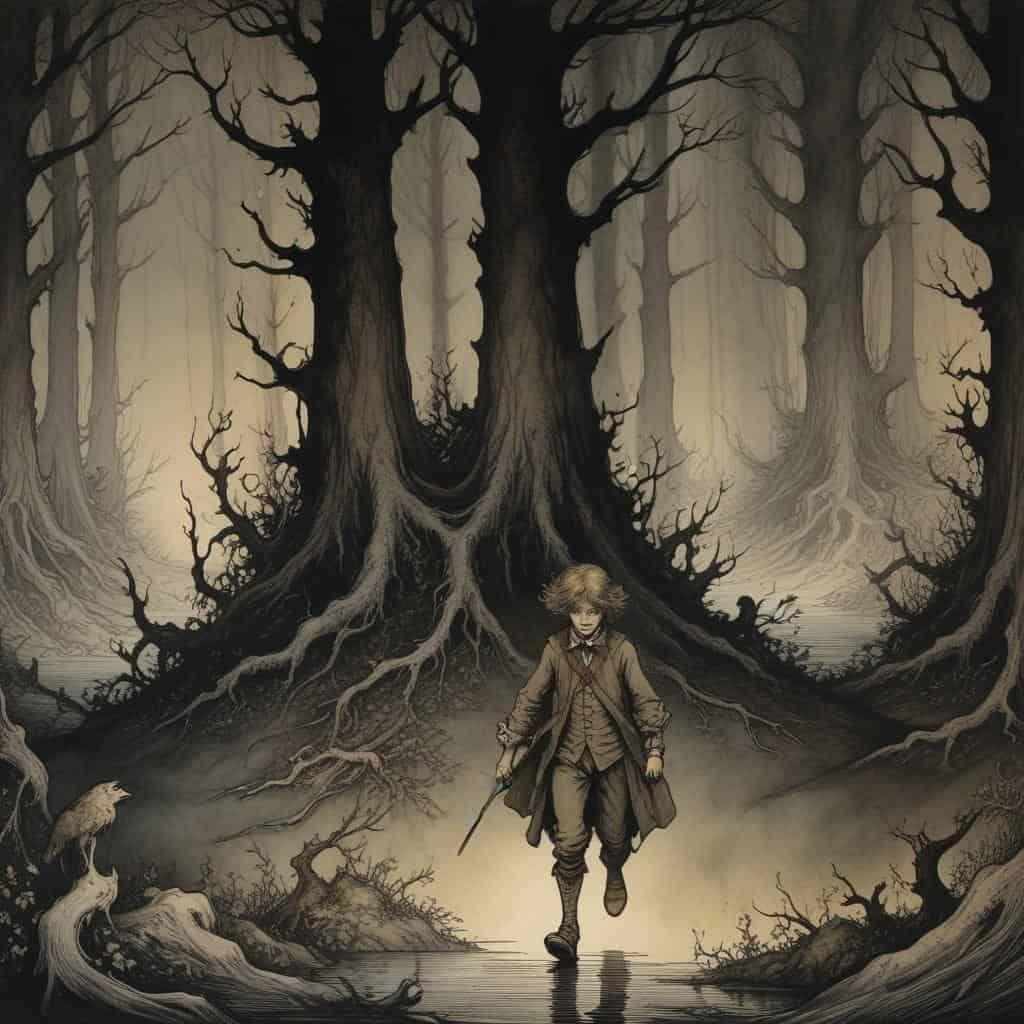
Introduction
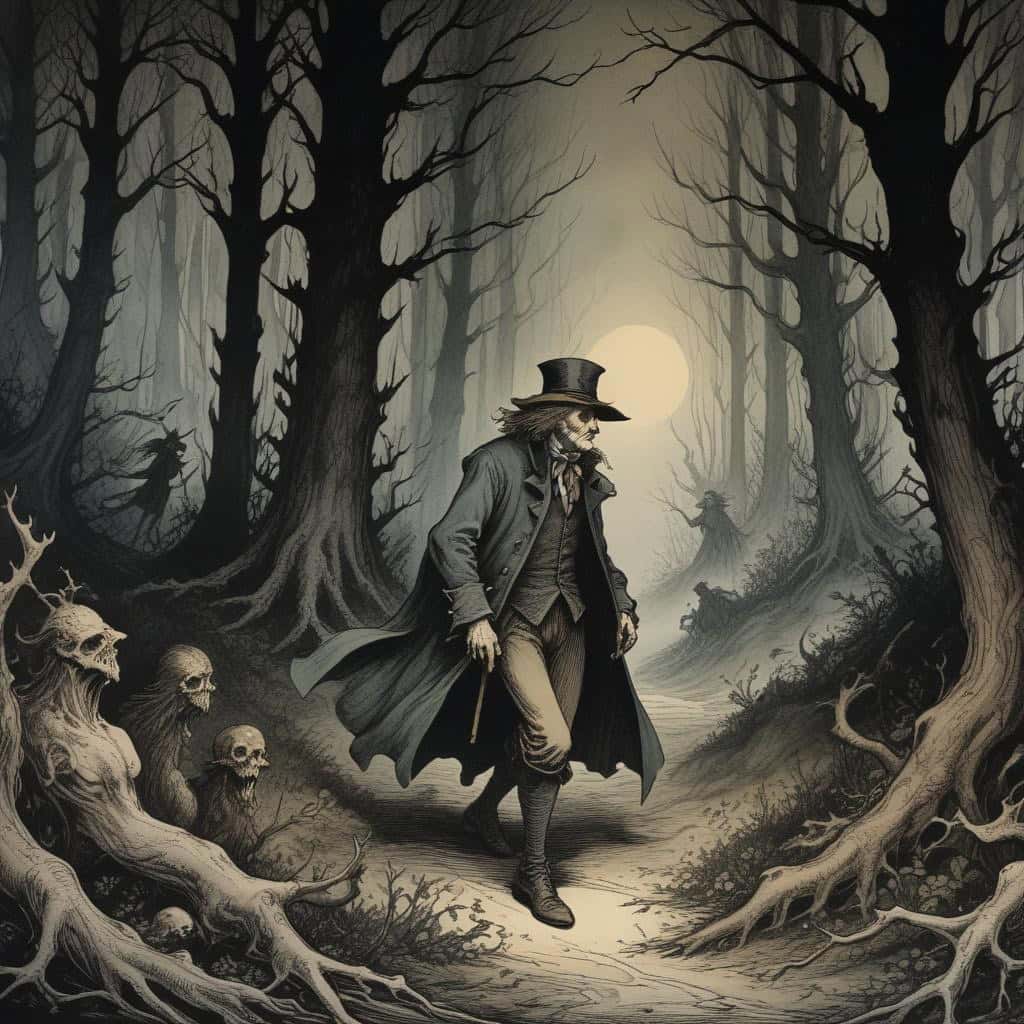
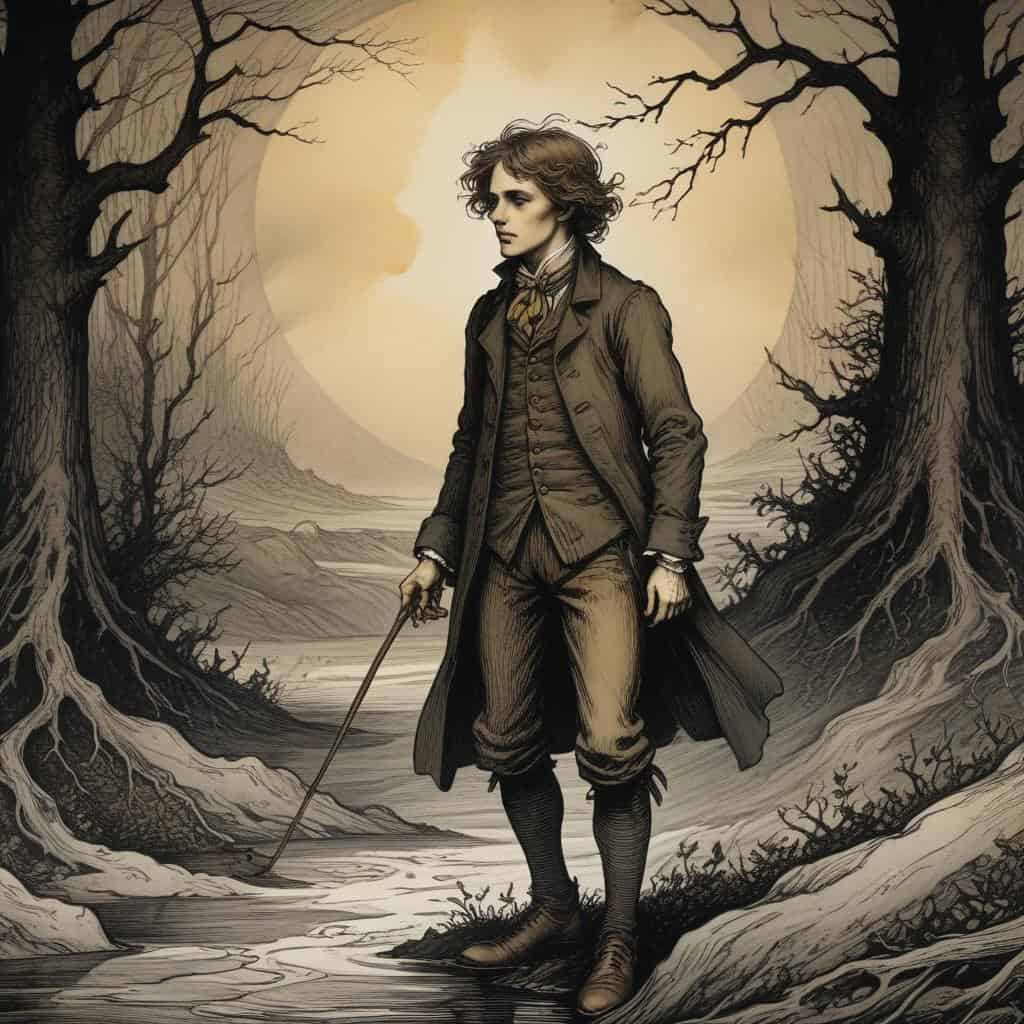

Young Goodman Brown

Faith

The Old Man / Devil

Goody Cloyse

Deacon Gookin
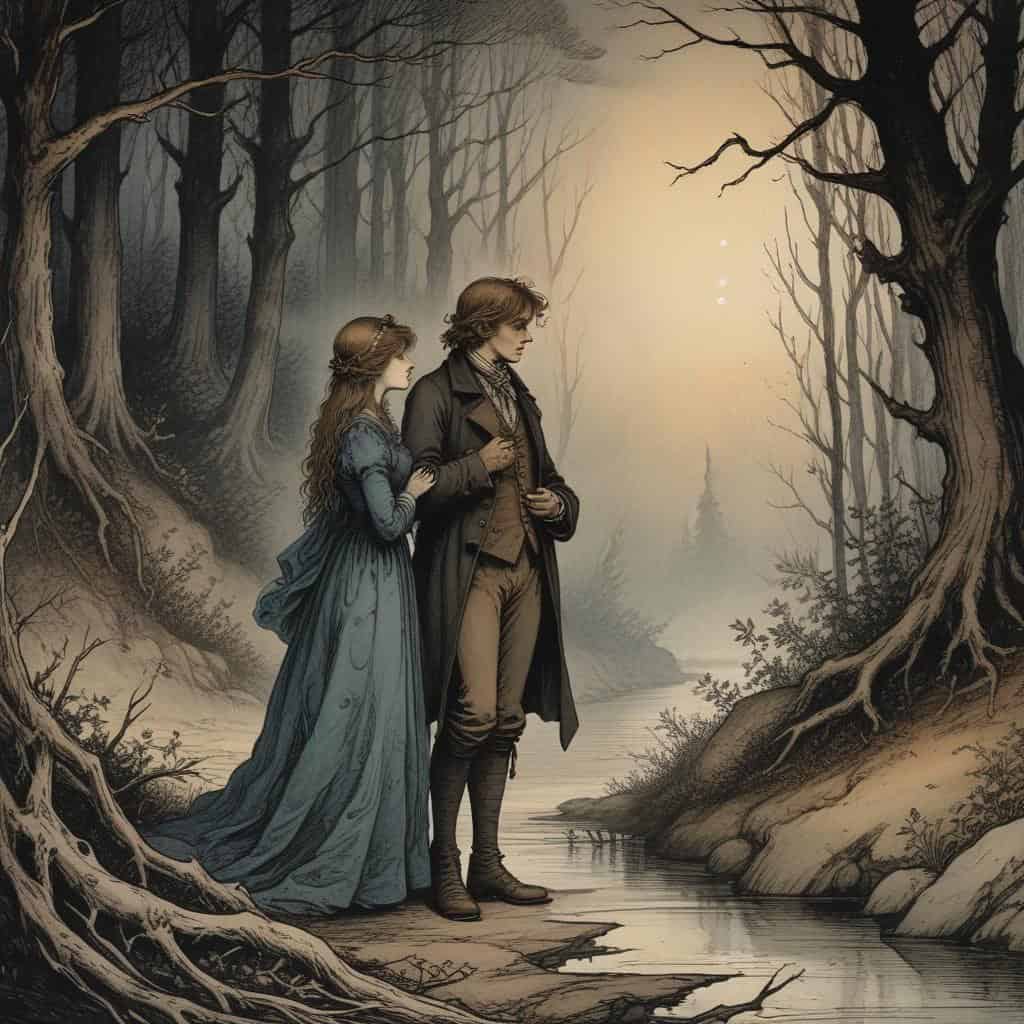
1. Young Goodman Browns Departure
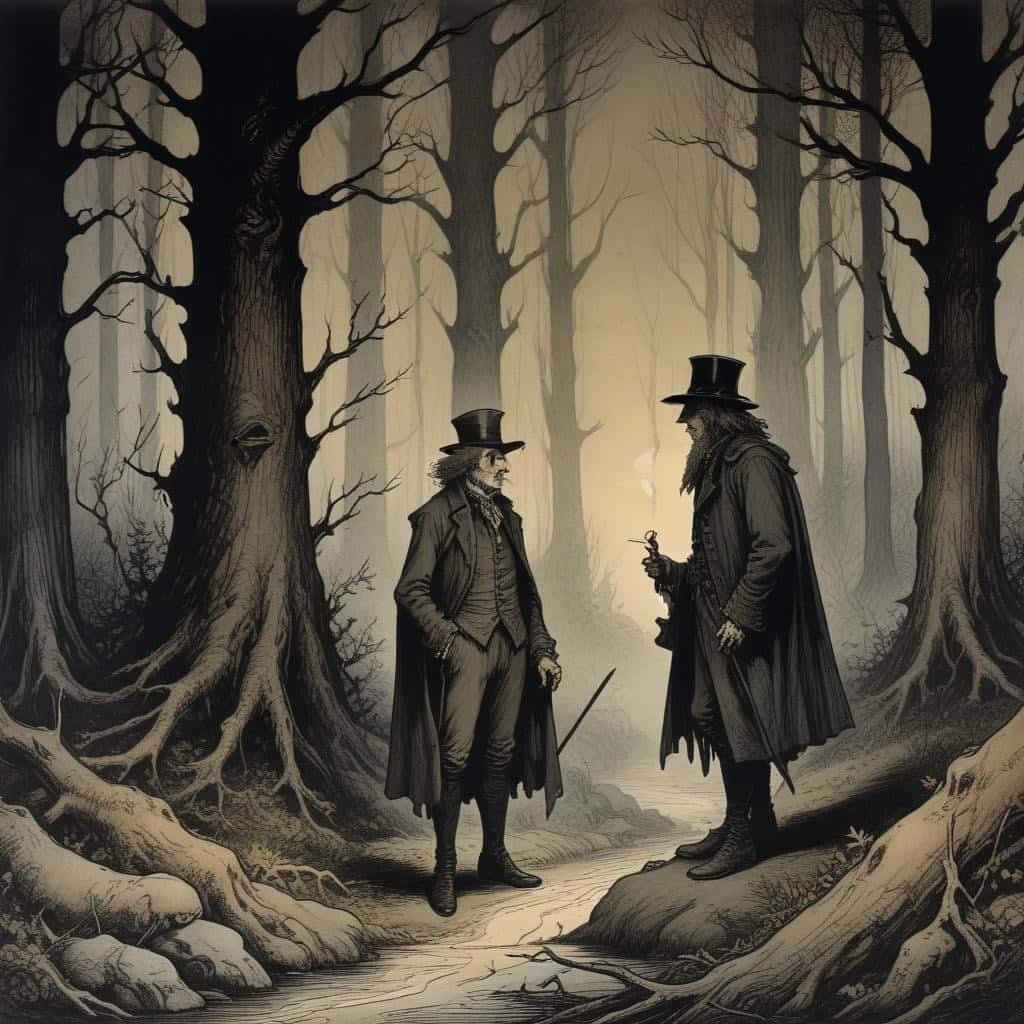
2. Meeting the Stranger in the Woods
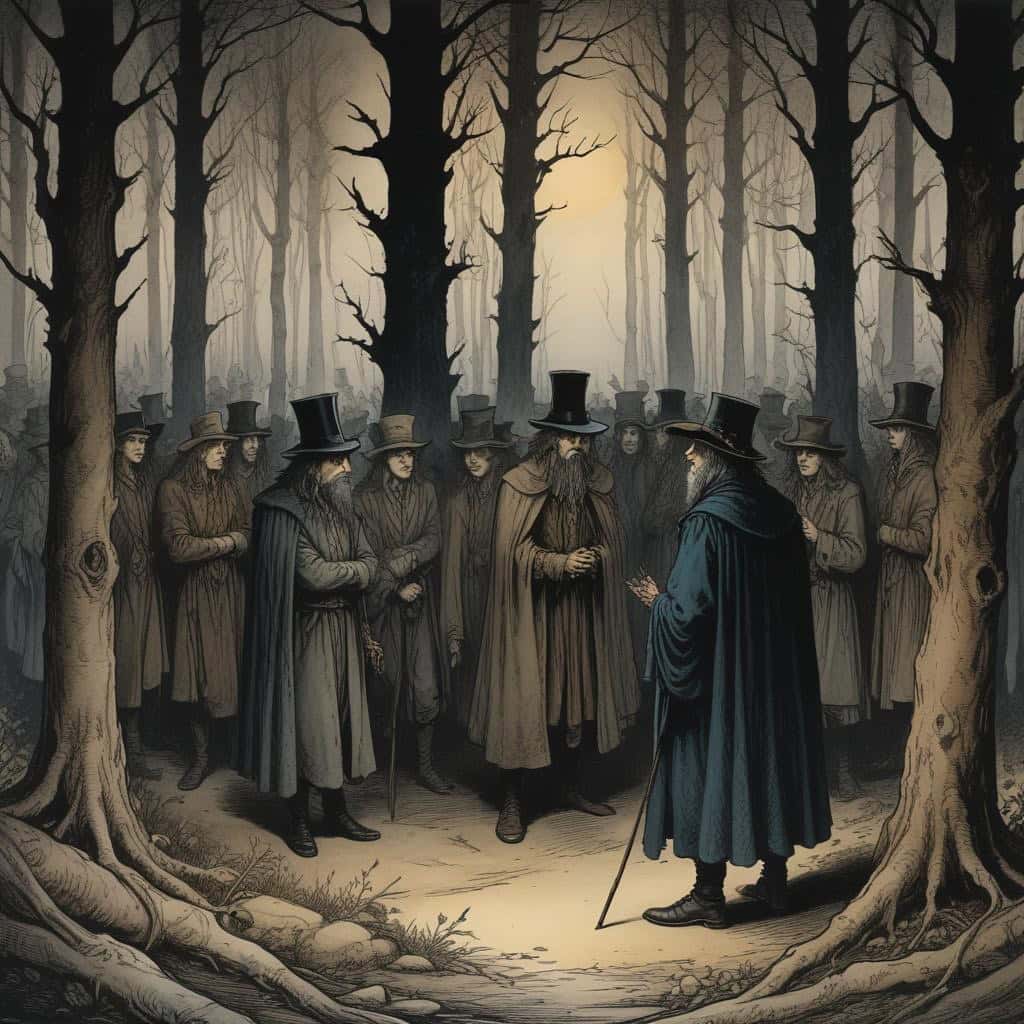
3. The Dark Revelations
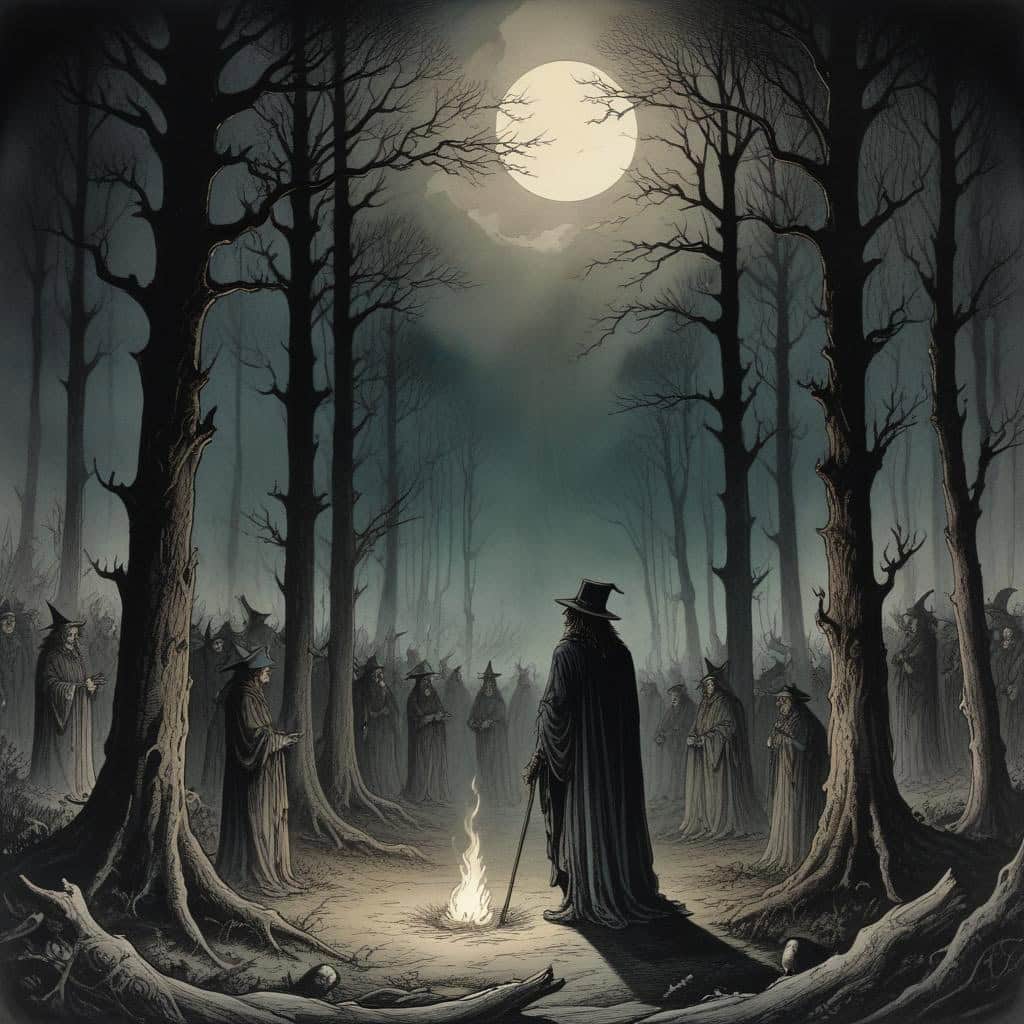
4. The Journey to the Witchs Sabbath
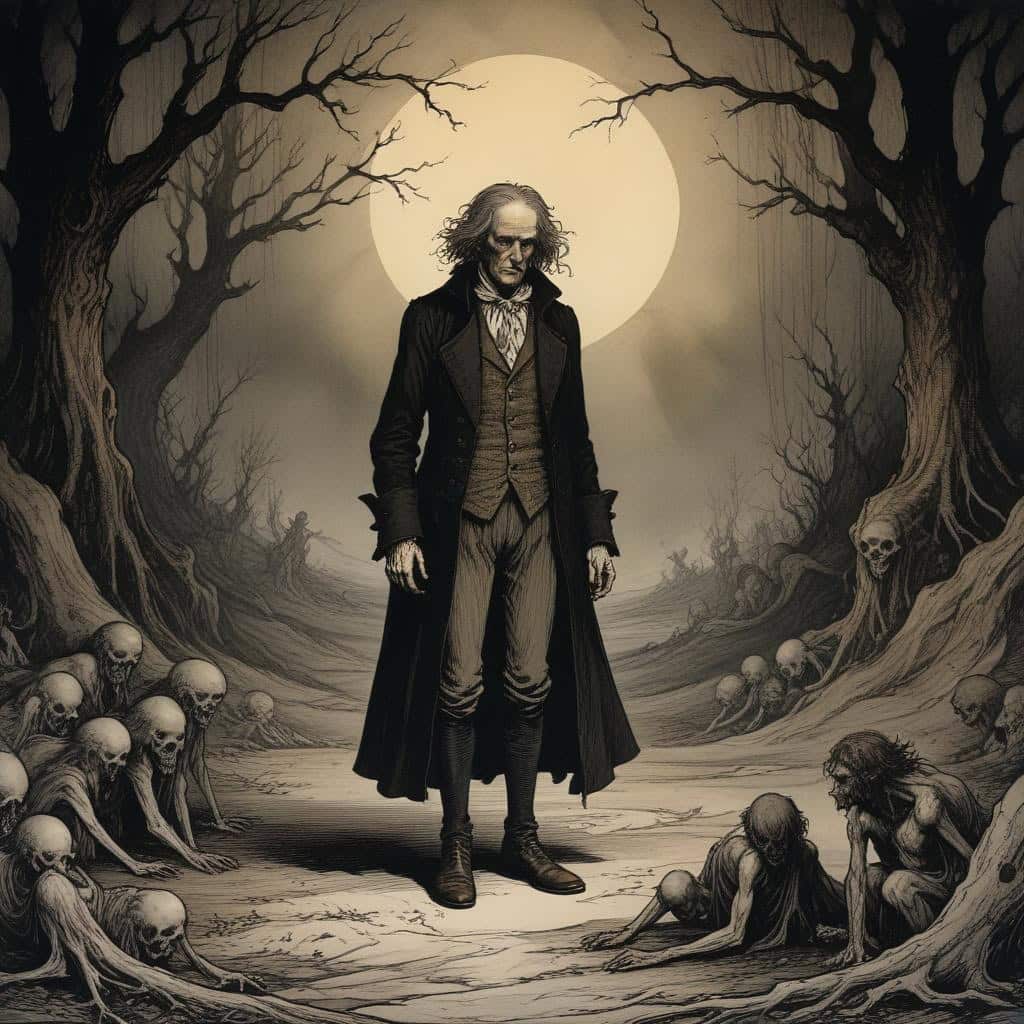
5. The Loss of Innocence
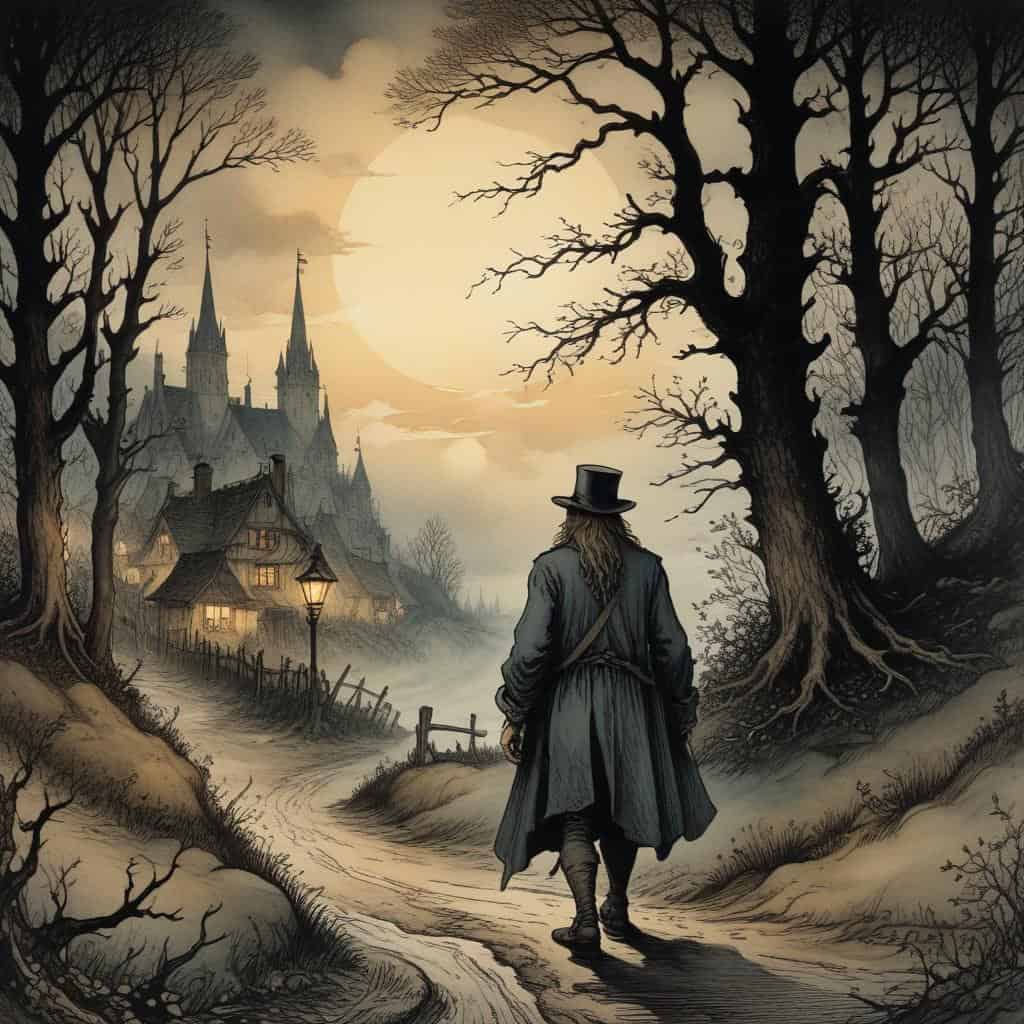
6. Returning to the Village
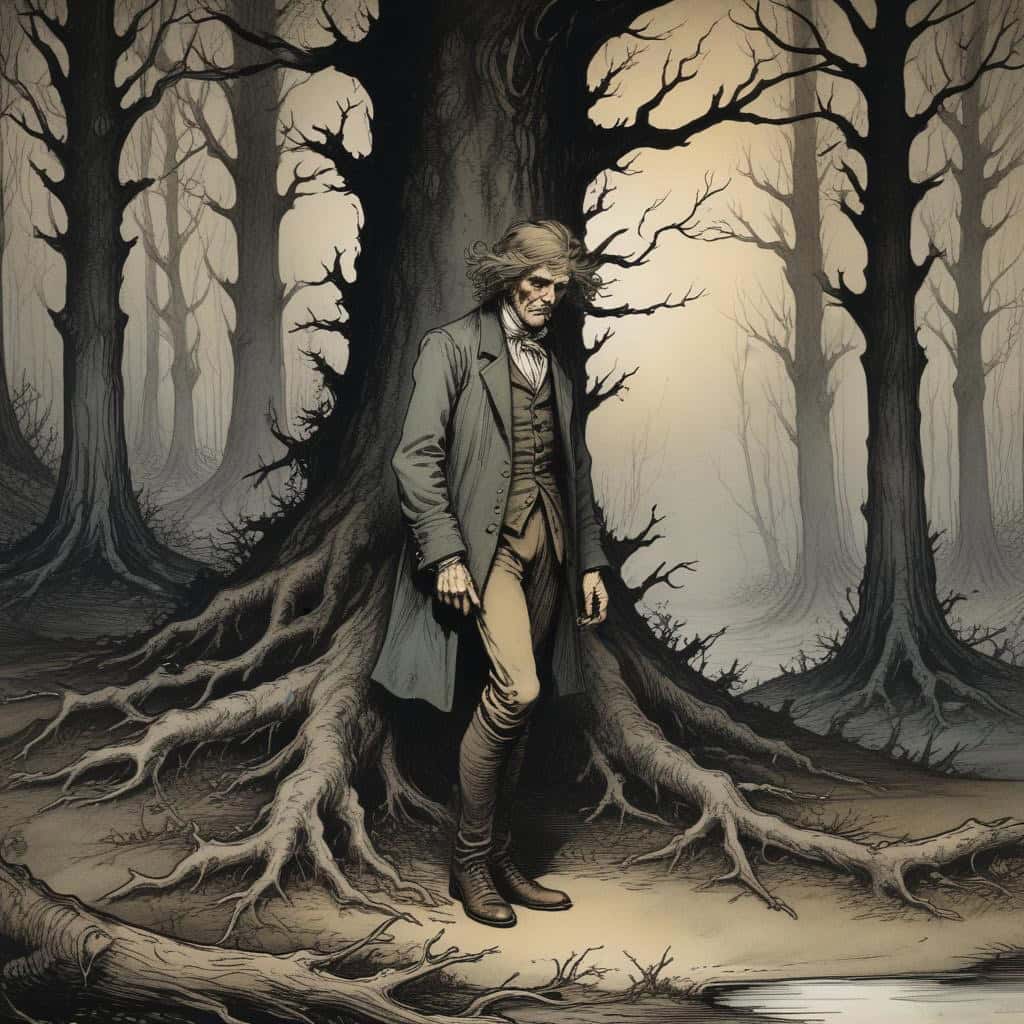
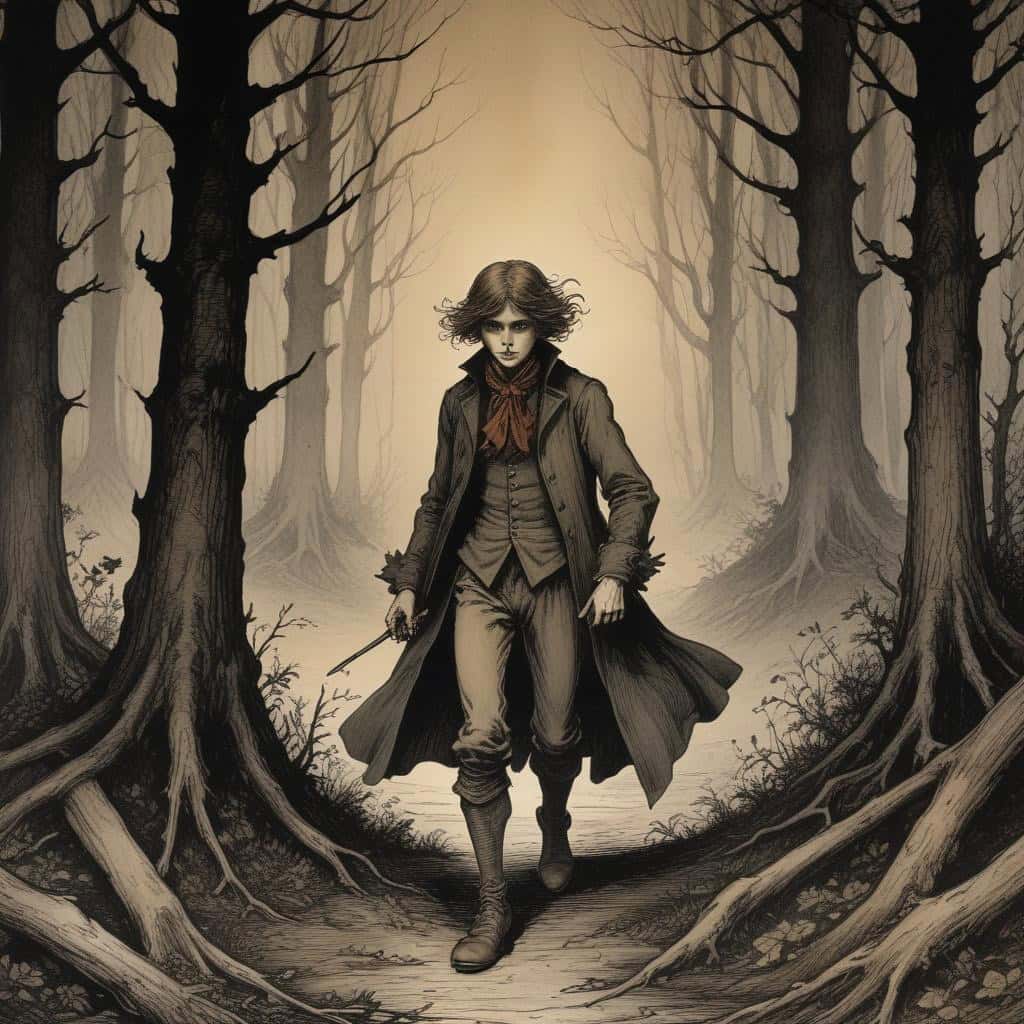
7. The Changed Goodman Brown
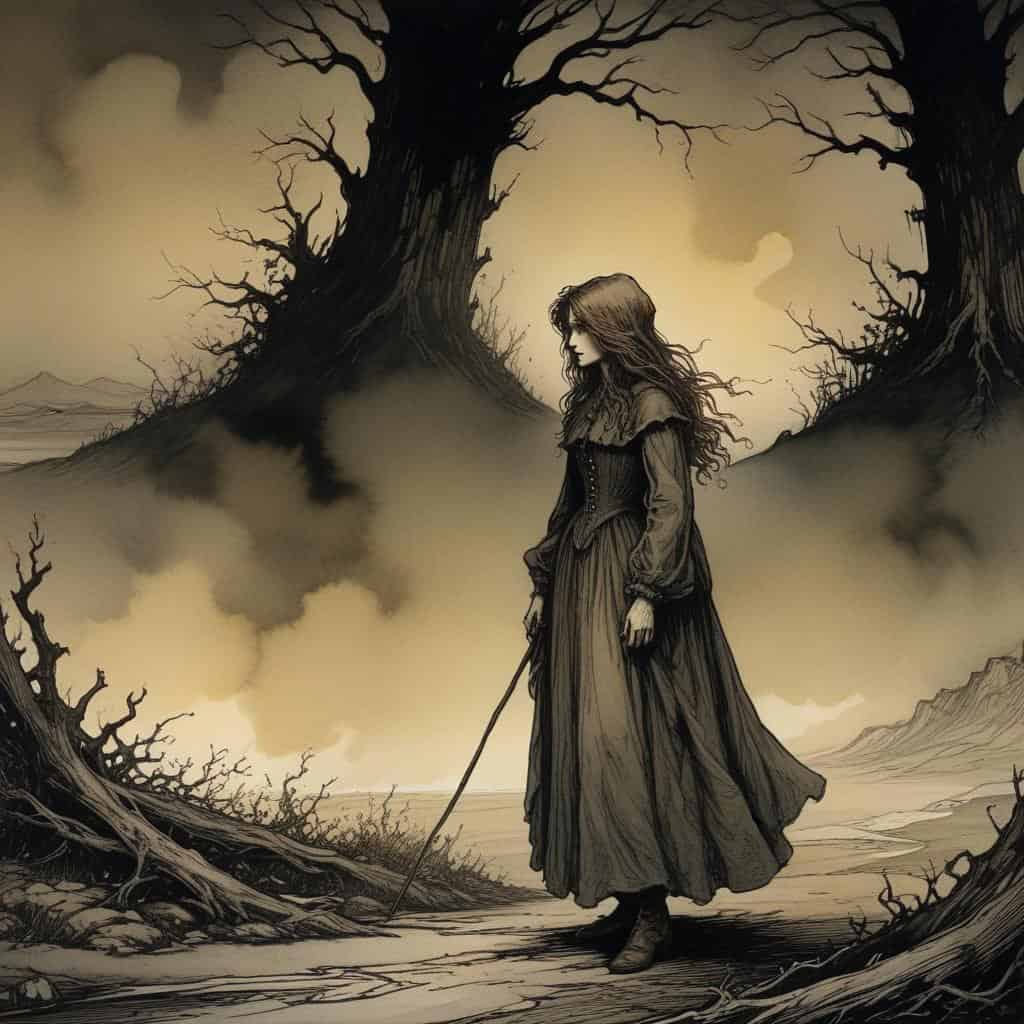
8. Faiths Changed Perception
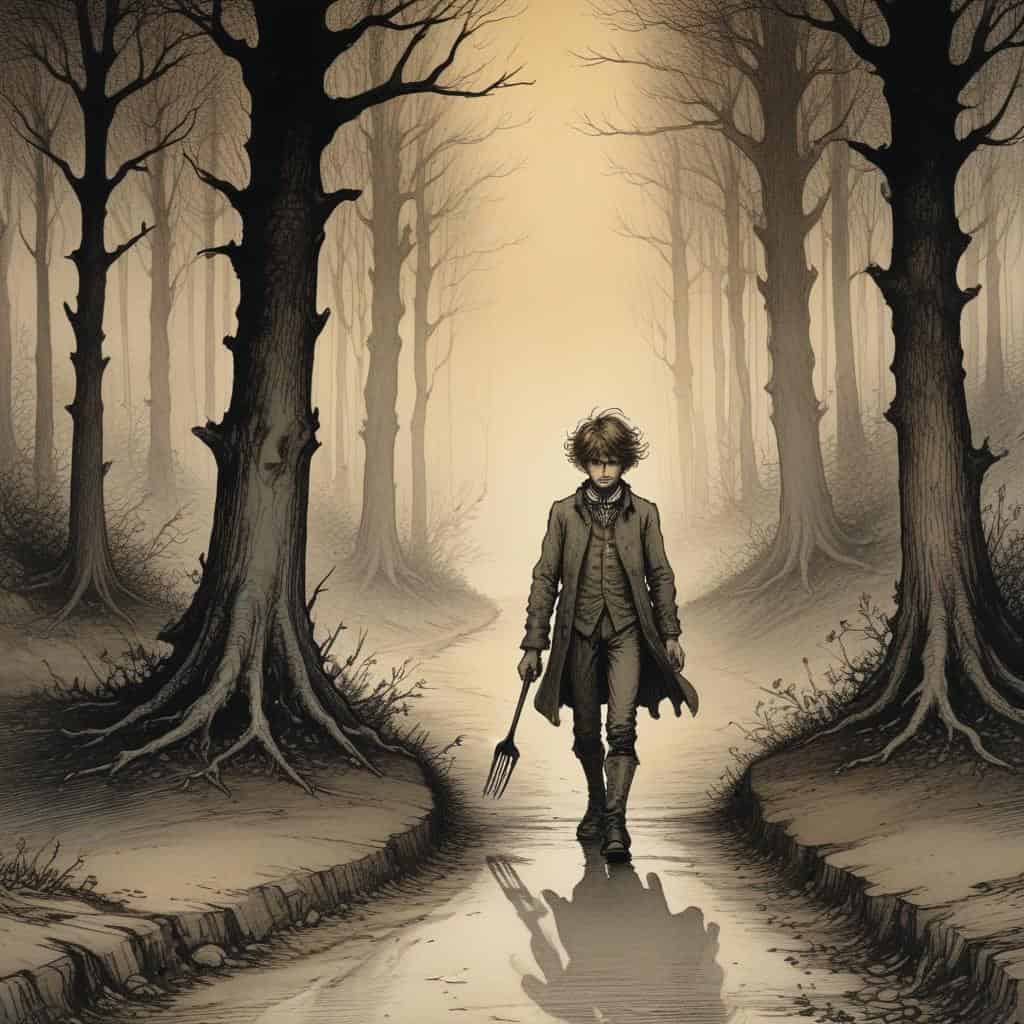
9. The Moral of the Story
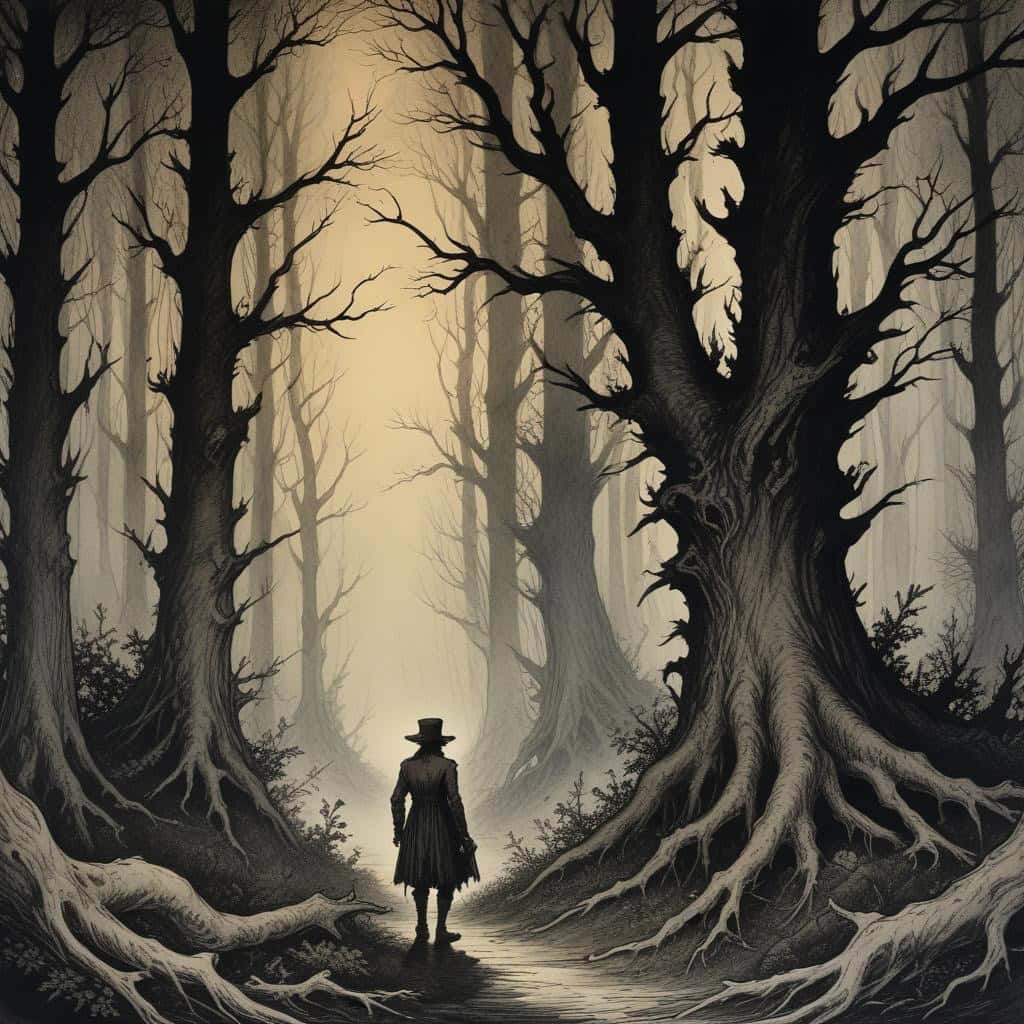
10. The Legacy of Young Goodman Brown
Lesson Details & Resources
In a Nutshell
- What: The short story ‘Young Goodman Brown’ by Nathaniel Hawthorne
- When: Written in the Romantic era
- Who: Young Goodman Brown
- Theme: The exploration of the nature of evil and the loss of innocence
List of Characters in Young Goodman Brown
-
Young Goodman Brown
Young Goodman Brown is the main character who embarks on a journey through the woods to confront his inner demons.
-
Faith
Faith is Goodman Brown's wife who symbolizes his faith and innocence.
-
The Old Man/Devil
The Old Man, who may also be the Devil, tempts Goodman Brown and leads him astray.
-
Goody Cloyse
Goody Cloyse is a respected member of the community who is revealed to be a witch during Goodman Brown's journey.
-
Deacon Gookin
Deacon Gookin is another respected member of the community who is also revealed to be involved in dark practices.
Timeline of Young Goodman Brown
Young Goodman Brown bids farewell to his wife, Faith, to go on a journey into the forest.
Goodman Brown encounters an older man in the forest who offers him his staff and leads him deeper into the woods.
Goodman Brown witnesses various townspeople, including his own wife Faith, participating in a dark ceremony in the forest.
Goodman Brown is horrified by what he sees and loses his faith in humanity.
Goodman Brown returns to the town the next morning and finds that everything seems different to him.
Goodman Brown becomes a bitter and distrustful man, unable to trust anyone, including his own wife.
Goodman Brown dies a lonely and despairing man, never able to regain his faith in humanity or in himself.
Vocabulary List
- Faith
- Young Goodman Brown's wife, named Faith, symbolizes his religious beliefs and innocence.
- Sin
- The presence of sin and temptation is a key theme in the story, as Young Goodman Brown is tempted by the devil.
- Devil
- The devil appears as a character in the story, tempting Young Goodman Brown to abandon his faith.
- Forest
- The dark and mysterious forest symbolizes the unknown and the temptation that Young Goodman Brown faces.
- Hypocrisy
- The story explores themes of hypocrisy and the hidden darkness that can exist within seemingly virtuous people.
- Puritan
- Young Goodman Brown is a Puritan character, and the story reflects the strict religious beliefs of Puritan society.
- Doubt
- Young Goodman Brown grapples with doubt and uncertainty about the goodness of those around him.
- Evil
- The story delves into the nature of evil and the ways in which it can corrupt individuals.
- Temptation
- Temptation plays a central role in the story, as Young Goodman Brown is tempted to abandon his faith.
- Darkness
- The darkness of the forest and the night symbolize the moral ambiguity and uncertainty that Young Goodman Brown faces.
Key Facts
This is the information used in the fact matching game
- Young Goodman Brown is a short story written by Nathaniel Hawthorne in 1835.
- The story is set in colonial New England during the Puritan era.
- The protagonist, Goodman Brown, embarks on a journey into the forest one night.
- Goodman Brown encounters a man who resembles his father in the forest.
- The man in the forest carries a staff that resembles a snake.
- Goodman Brown's wife, Faith, is symbolic of his faith in God and goodness.
- The story explores themes of sin, temptation, and the nature of evil.
- Goodman Brown witnesses many respected members of the community participating in a secret meeting in the forest.
- The story is often interpreted as a critique of Puritan society and its strict moral code.
- Hawthorne uses symbolism throughout the story, such as the forest representing the unknown and temptation.
- Goodman Brown's journey into the forest parallels a spiritual journey into the depths of his own soul.
- The story ends with Goodman Brown questioning the reality of his experience in the forest.
- Young Goodman Brown is considered one of Hawthorne's most famous works.
- The story is often studied for its complex symbolism and psychological depth.
- Hawthorne's use of allegory in Young Goodman Brown adds layers of meaning to the narrative.
- The story has been adapted into various forms of media, including film and theater.
- Young Goodman Brown explores the tension between individual conscience and societal expectations.
- Hawthorne's writing style in Young Goodman Brown is characterized by its allegorical and symbolic elements.
- The story has been analyzed by scholars for its commentary on human nature and morality.
- Young Goodman Brown is often taught in literature classes as an example of American Romanticism.
Analysis & Significance
Impact on Literature
‘Young Goodman Brown’ by Nathaniel Hawthorne is a seminal work of American literature that helped popularize the genre of dark romanticism. Its exploration of sin, guilt, and the human capacity for evil set a precedent for psychological depth in storytelling, influencing later writers such as Edgar Allan Poe and H.P. Lovecraft.
Enduring Themes
The themes of moral ambiguity, the conflict between good and evil, and the loss of innocence in ‘Young Goodman Brown’ continue to resonate with modern audiences. The story’s examination of the nature of sin and the fragility of faith remains relevant in a world where moral dilemmas are constantly present.
Cultural Significance Today
‘Young Goodman Brown’ has left a lasting legacy in popular culture, with its themes and characters being referenced in various adaptations and interpretations. The story’s exploration of the darker aspects of human nature continues to captivate readers and inspire new works that delve into the complexities of morality and the human psyche.
Young Goodman Brown Games


Take Your Learning Offline
Want a convenient, print-ready study guide for this lesson? Become a Memory Wizards Pro member to unlock the downloadable " Memory Scrolls" for this topic and our entire library!
- ✓ Complete Vocabulary Lists
- ✓ Key Facts & Timelines
- ✓ Beautifully Formatted for Print & Mobile