
How Do You Learn Best?
Learn by Reading
Immerse yourself in the 10-minute visual lesson for a comprehensive understanding of the topic.
Learn by Reviewing
Jump directly to the key facts, timeline, and vocabulary lists to build a solid foundation of details.
Learn by Doing
Challenge yourself! Jump straight into the interactive games to learn by trial, error, and discovery.
Twice-Told Tales in 10 Minutes
Introduction

Goodman Brown

Madame Rappaccini

Dr. Heidegger

Beatrice Rappaccini

Mr. Hooper
The Ministers Black Veil
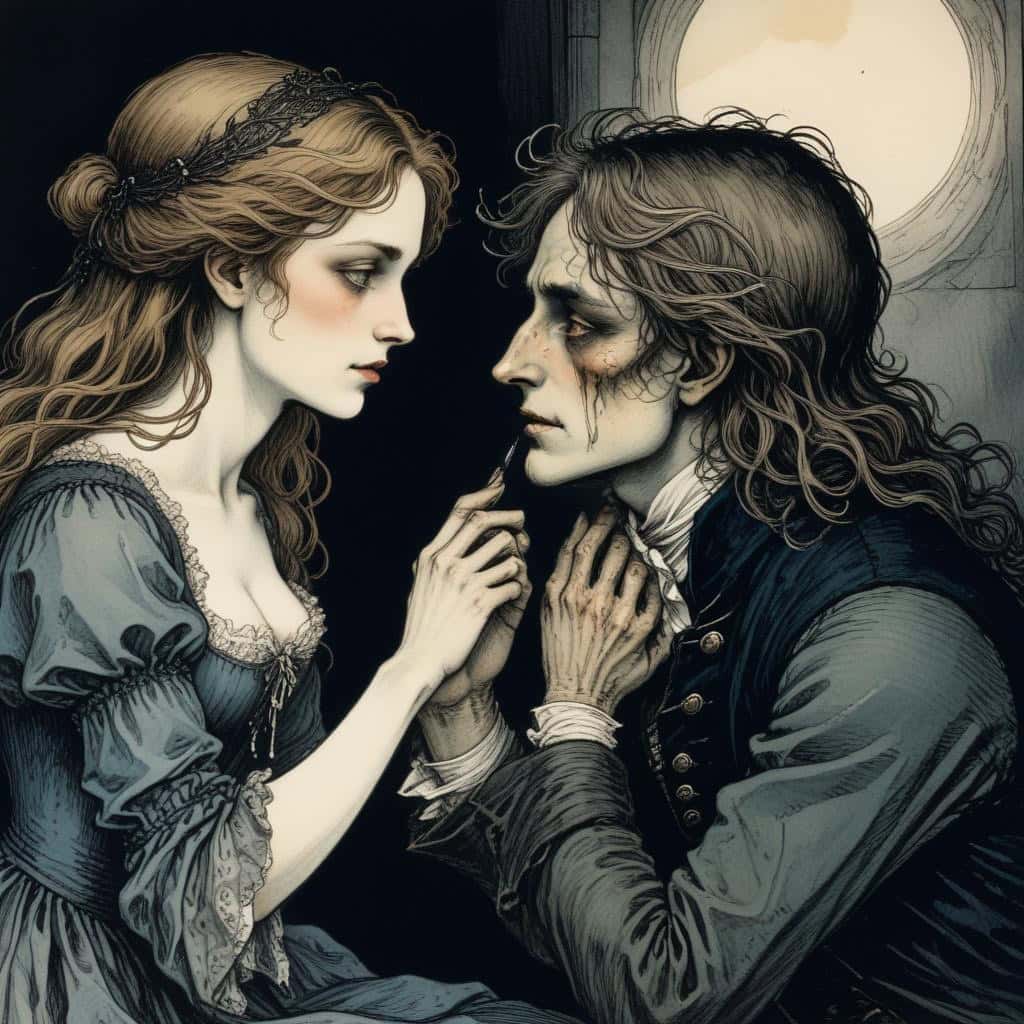
The Birthmark
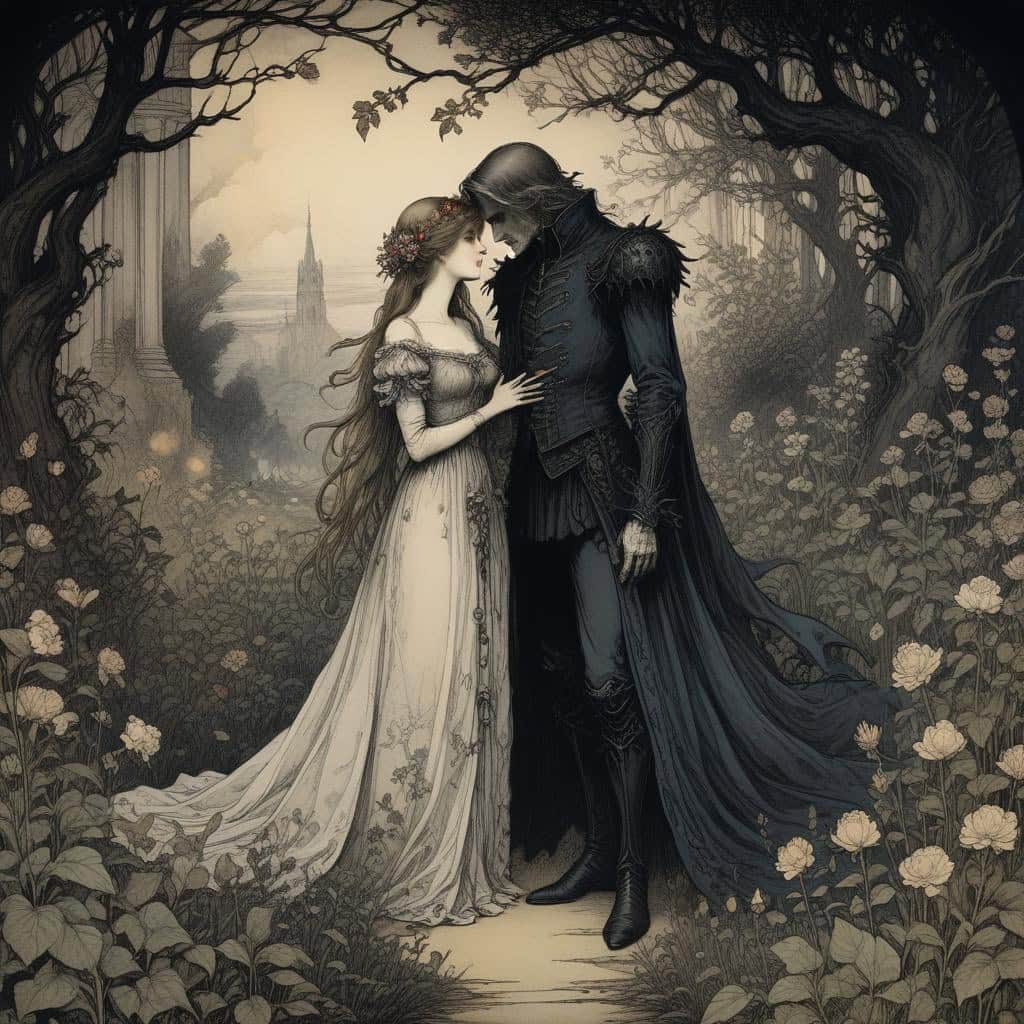
Rappaccinis Daughter
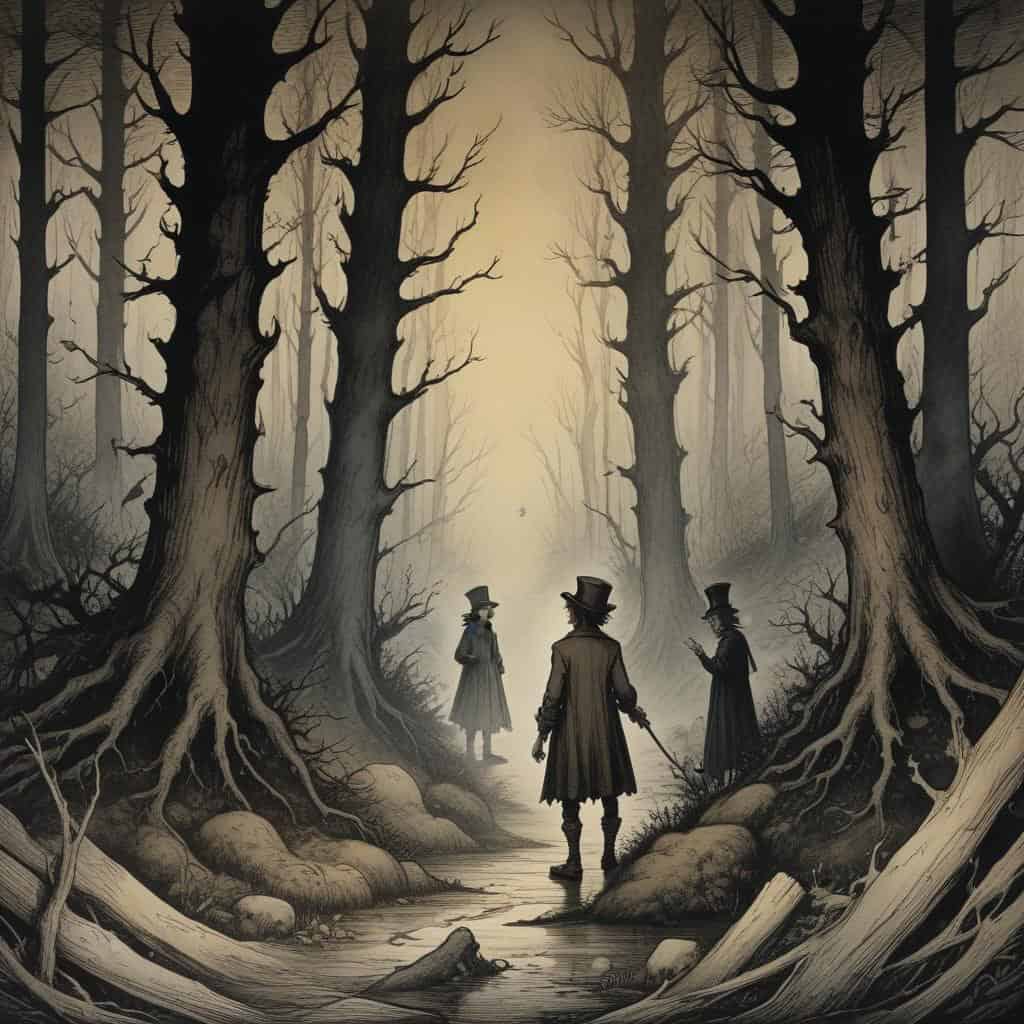
Young Goodman Brown
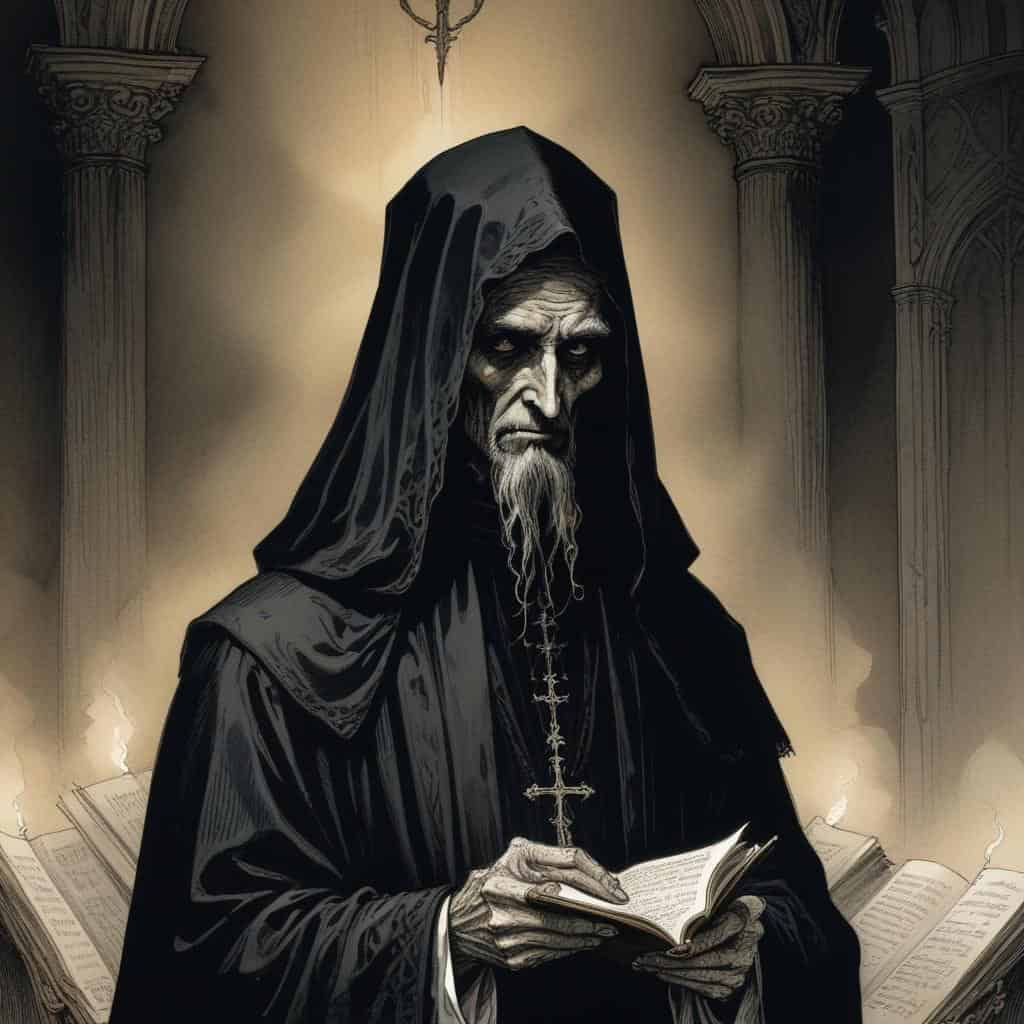
The Ministers Black Veil

The Birthmark
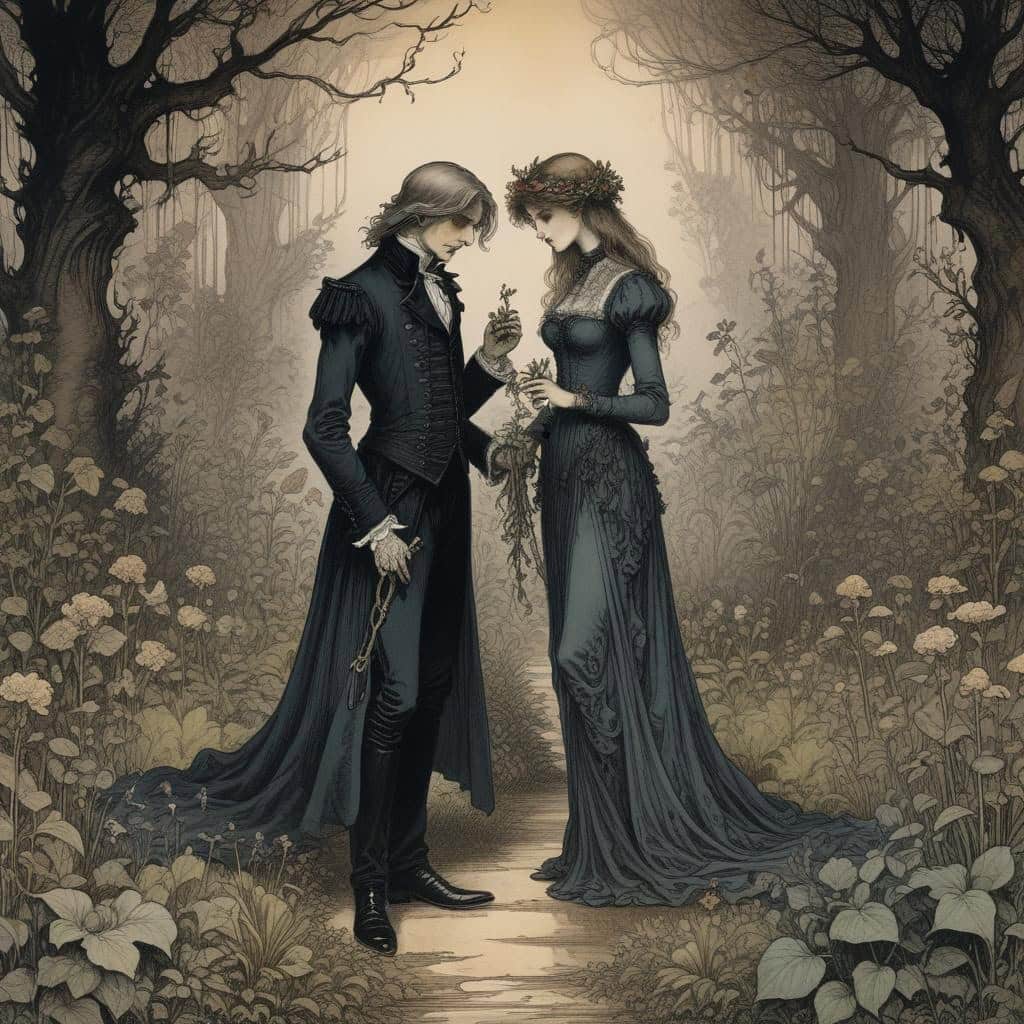
Rappaccinis Daughter
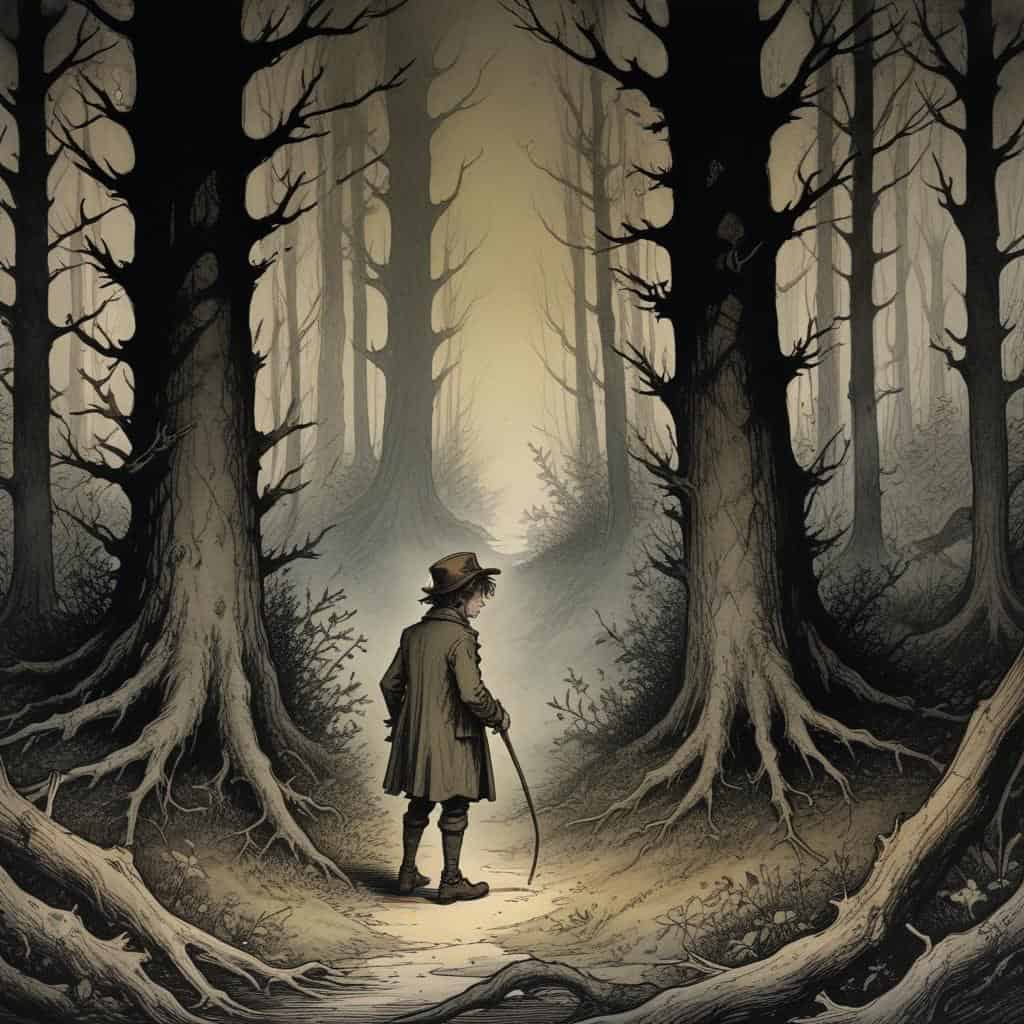
Young Goodman Brown
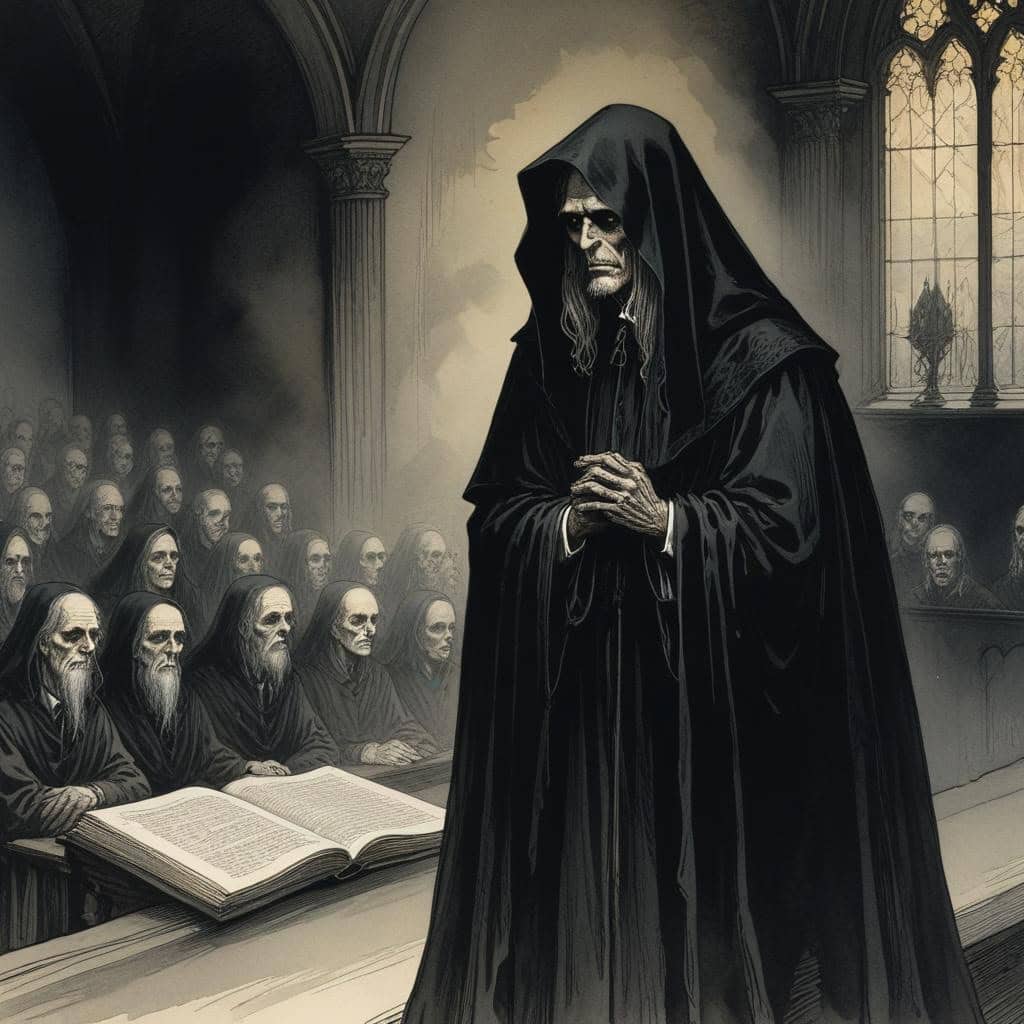
The Ministers Black Veil
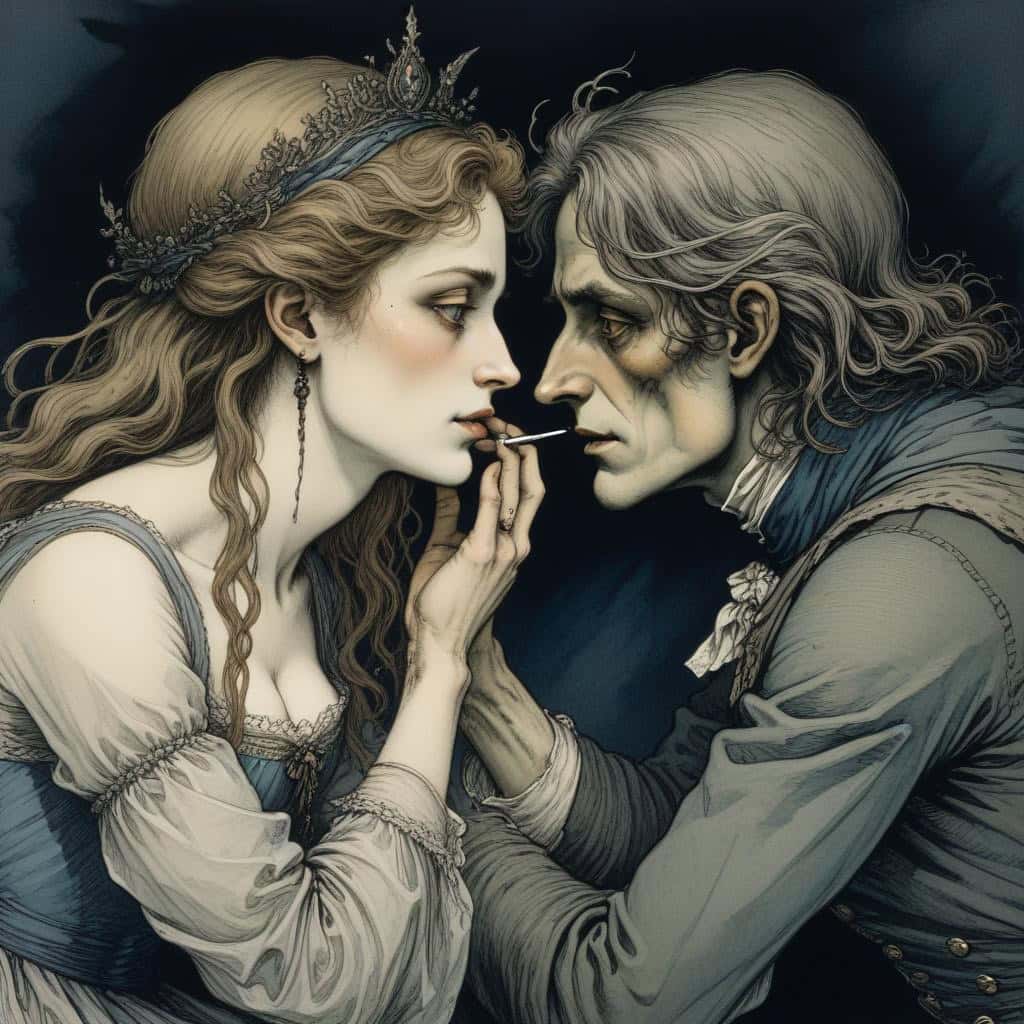
The Birthmark
Lesson Details & Resources
In a Nutshell
- What: ‘Twice-Told Tales’ by Nathaniel Hawthorne
- When: 19th century
- Who: Various characters in the collection of short stories
- Theme: Exploration of guilt, sin, and the supernatural
List of Characters in Twice-Told Tales
-
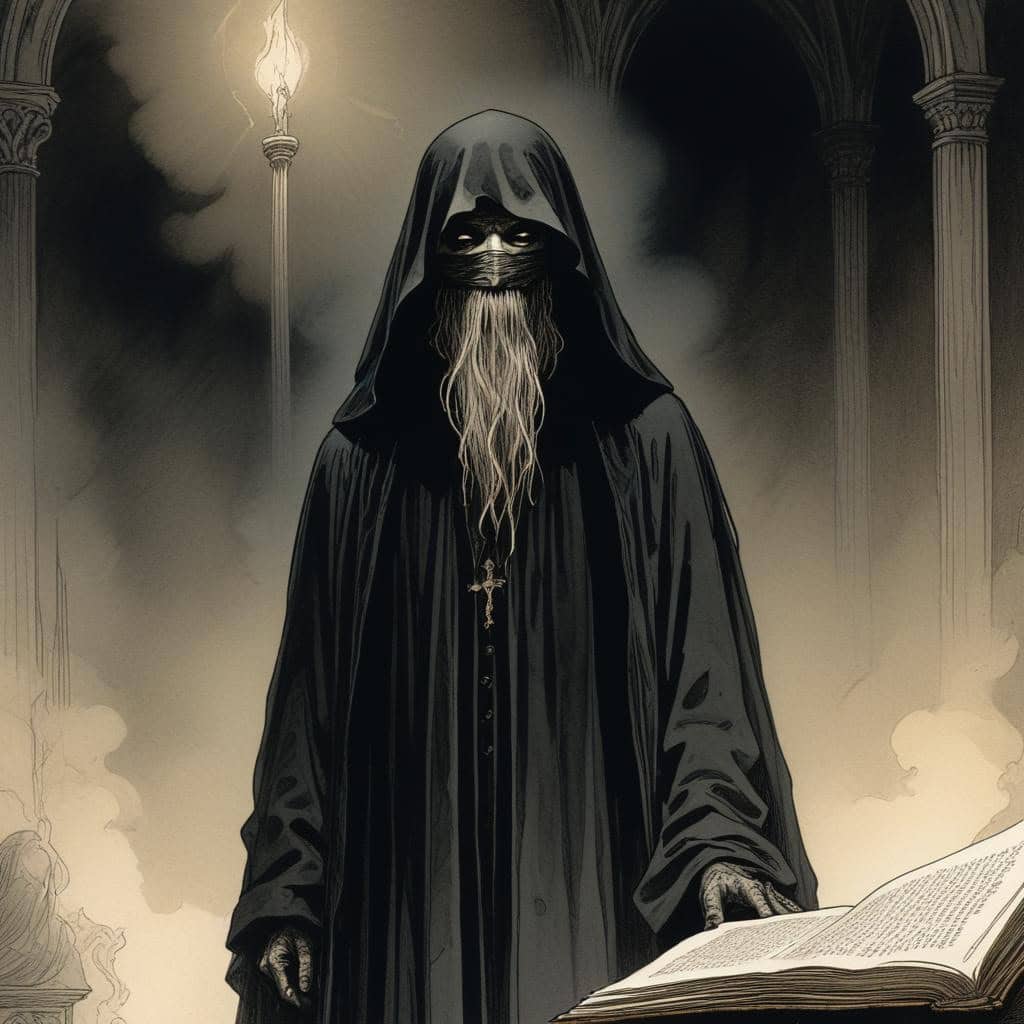
Mr. Hooper
Mr. Hooper is the protagonist of 'The Minister's Black Veil' who wears a black veil that symbolizes hidden sins.
-
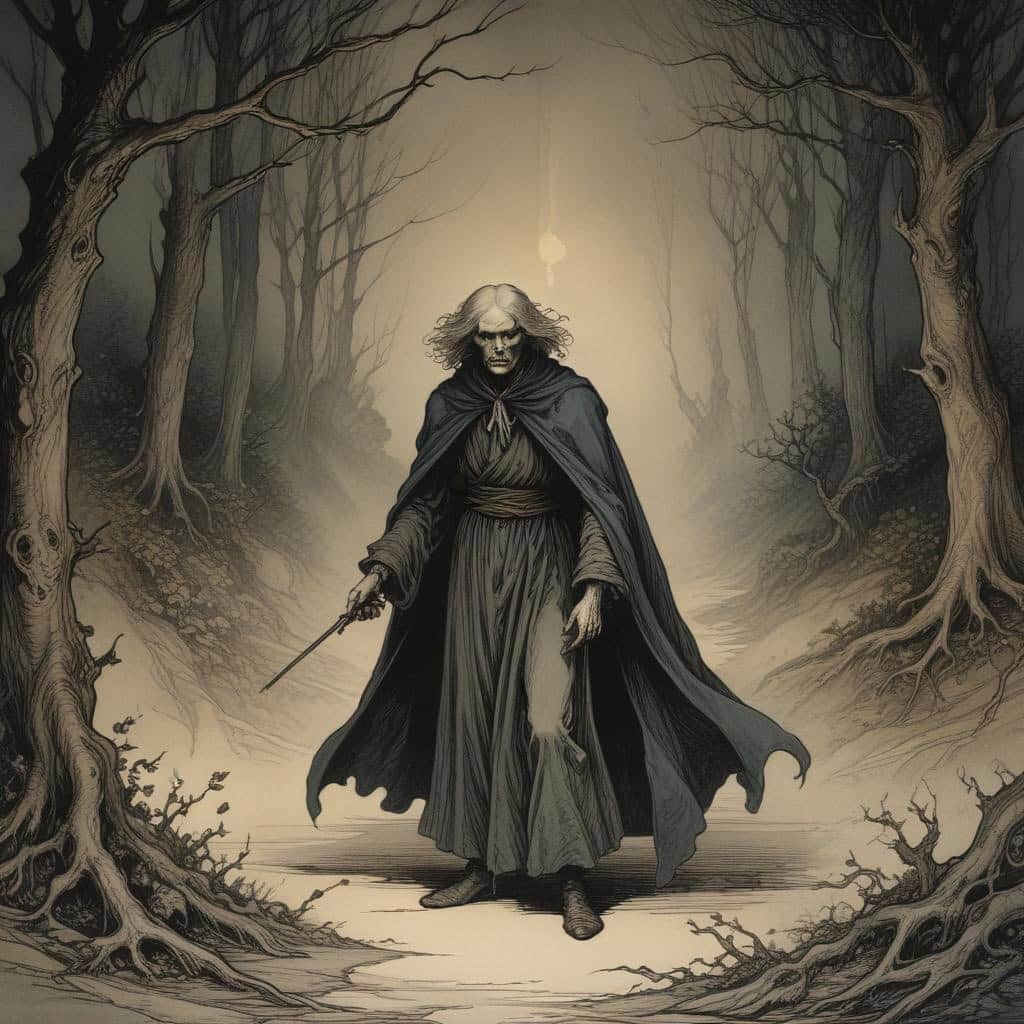
Goodman Brown
Goodman Brown is the protagonist of 'Young Goodman Brown' who encounters a mysterious figure in the forest.
-
Faith
Faith is Goodman Brown's wife in 'Young Goodman Brown' who symbolizes innocence and faith.
-
Eustace Bright
Eustace Bright is the storyteller in 'The Snow-Image' who tells a tale of a snow maiden coming to life.
-
Dr. Heidegger
Dr. Heidegger is a scientist in 'Dr. Heidegger's Experiment' who tests the effects of a magical elixir on his friends.
-
Lady Eleanore Rochcliffe
Lady Eleanore Rochcliffe is the protagonist of 'Lady Eleanore's Mantle' who experiences a tragic fate due to her vanity.
Timeline of Twice-Told Tales
A man named Mr. Pyncheon builds a grand house in the town of Salem, but mysteriously dies before he can move in.
Years later, his descendants still live in the house, haunted by the curse of their ancestor.
One of the descendants, Clifford Pyncheon, is released from prison after serving a wrongful sentence for murder.
Clifford returns to the house and is reunited with his sister, Hepzibah, who has been living in poverty and isolation.
The siblings struggle to rebuild their lives and come to terms with their family's dark past.
The house is visited by a mysterious guest who claims to be a descendent of the Pyncheon family and hopes to claim the family fortune.
As the guest's true motives are revealed, the Pyncheon family must confront their own demons and the legacy of their ancestors.
Vocabulary List
Key Facts
This is the information used in the fact matching game
- Twice-Told Tales was Nathaniel Hawthorne's first published work of fiction.
- The stories in Twice-Told Tales are a mix of allegory, romance, and the supernatural.
- Hawthorne drew inspiration for some of the stories in Twice-Told Tales from his own family history.
- Twice-Told Tales was published in 1837.
- The title of the book comes from a line in Shakespeare's play 'Macbeth'.
- Twice-Told Tales was well received by critics and readers alike upon its publication.
- Many of the stories in Twice-Told Tales explore themes of guilt, sin, and redemption.
- Hawthorne's use of allegory in Twice-Told Tales was influenced by his Puritan heritage.
- Twice-Told Tales includes stories such as 'The Minister's Black Veil' and 'Young Goodman Brown'.
- The stories in Twice-Told Tales often feature characters struggling with moral dilemmas.
- Hawthorne's writing style in Twice-Told Tales is characterized by its rich symbolism and intricate language.
- Twice-Told Tales is considered a classic work of American literature.
- The stories in Twice-Told Tales are set in colonial New England.
- Some of the stories in Twice-Told Tales were inspired by Hawthorne's time living in Salem, Massachusetts.
- Hawthorne's use of gothic elements in Twice-Told Tales was influenced by the works of Edgar Allan Poe.
- Twice-Told Tales has been adapted into various stage and screen productions over the years.
- Hawthorne's portrayal of women in Twice-Told Tales reflects the societal norms of his time.
- Twice-Told Tales has been praised for its exploration of the human psyche and its dark themes.
- Hawthorne's use of irony in Twice-Told Tales adds depth to the stories and characters.
- Twice-Told Tales is considered a precursor to the modern short story genre.
Analysis & Significance
Impact on Literature
‘Twice-Told Tales’ by Nathaniel Hawthorne is a seminal work in American literature, known for its exploration of dark romanticism and psychological themes. Hawthorne’s use of symbolism and allegory paved the way for future writers to delve into the complexities of human nature and the supernatural. The collection’s innovative narrative structure and haunting atmosphere have influenced generations of writers, including Edgar Allan Poe and H.P. Lovecraft.
Enduring Themes
The timeless themes of sin, guilt, and redemption found in ‘Twice-Told Tales’ continue to resonate with modern audiences. Hawthorne’s exploration of the human conscience and the consequences of moral transgressions remains relevant today, as readers grapple with ethical dilemmas and the complexities of human relationships. The collection’s examination of the darker aspects of human nature continues to captivate and provoke thought.
Cultural Significance Today
‘Twice-Told Tales’ has left a lasting legacy in literature and popular culture, with adaptations in film, television, and theater. The iconic characters and haunting imagery created by Hawthorne have inspired countless artists and storytellers to explore themes of guilt, isolation, and the supernatural. The collection’s enduring influence can be seen in works such as ‘The Scarlet Letter’ and ‘The House of the Seven Gables’, ensuring its place in the canon of American literature.
Twice-Told Tales Games


Take Your Learning Offline
Want a convenient, print-ready study guide for this lesson? Become a Memory Wizards Pro member to unlock the downloadable " Memory Scrolls" for this topic and our entire library!
- ✓ Complete Vocabulary Lists
- ✓ Key Facts & Timelines
- ✓ Beautifully Formatted for Print & Mobile