
How Do You Learn Best?
Learn by Reading
Immerse yourself in the 10-minute visual lesson for a comprehensive understanding of the topic.
Learn by Reviewing
Jump directly to the key facts, timeline, and vocabulary lists to build a solid foundation of details.
Learn by Doing
Challenge yourself! Jump straight into the interactive games to learn by trial, error, and discovery.
Rappaccini’s Daughter in 10 Minutes
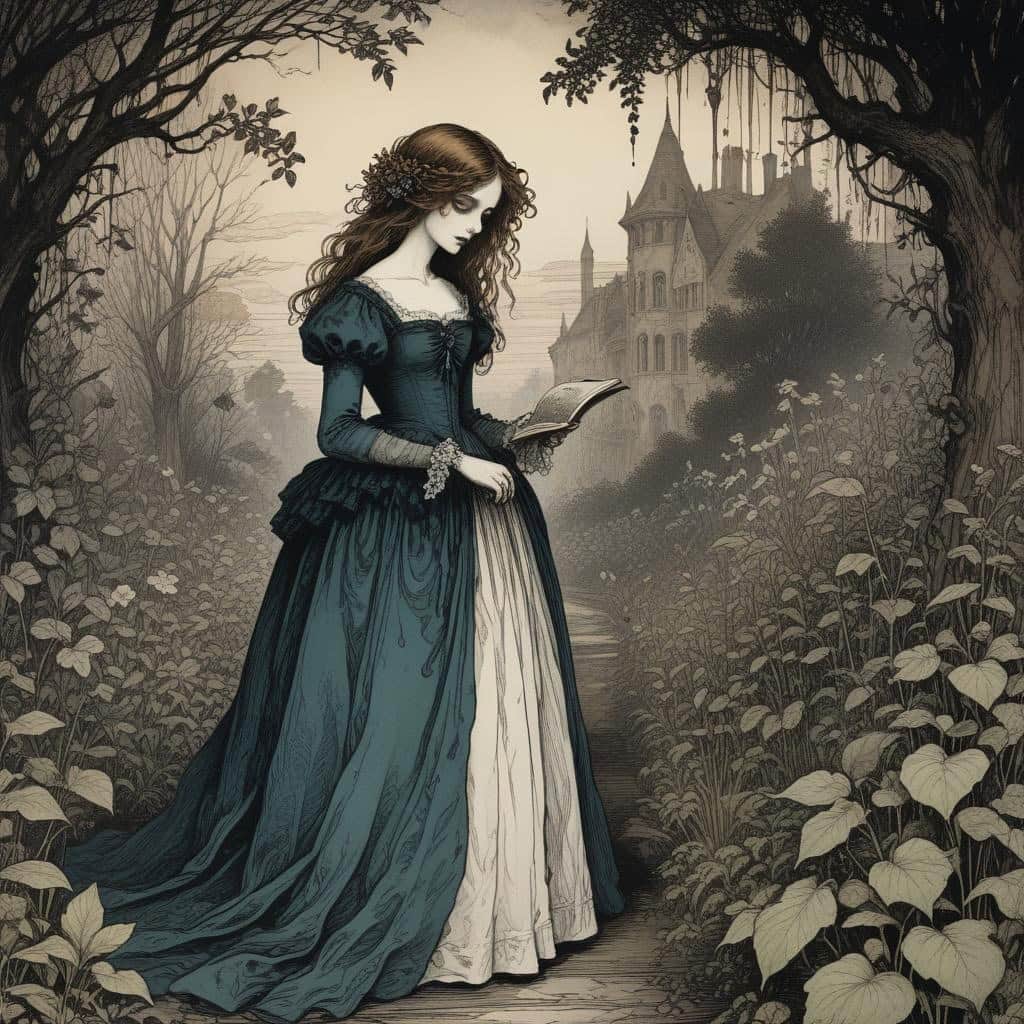
Introduction
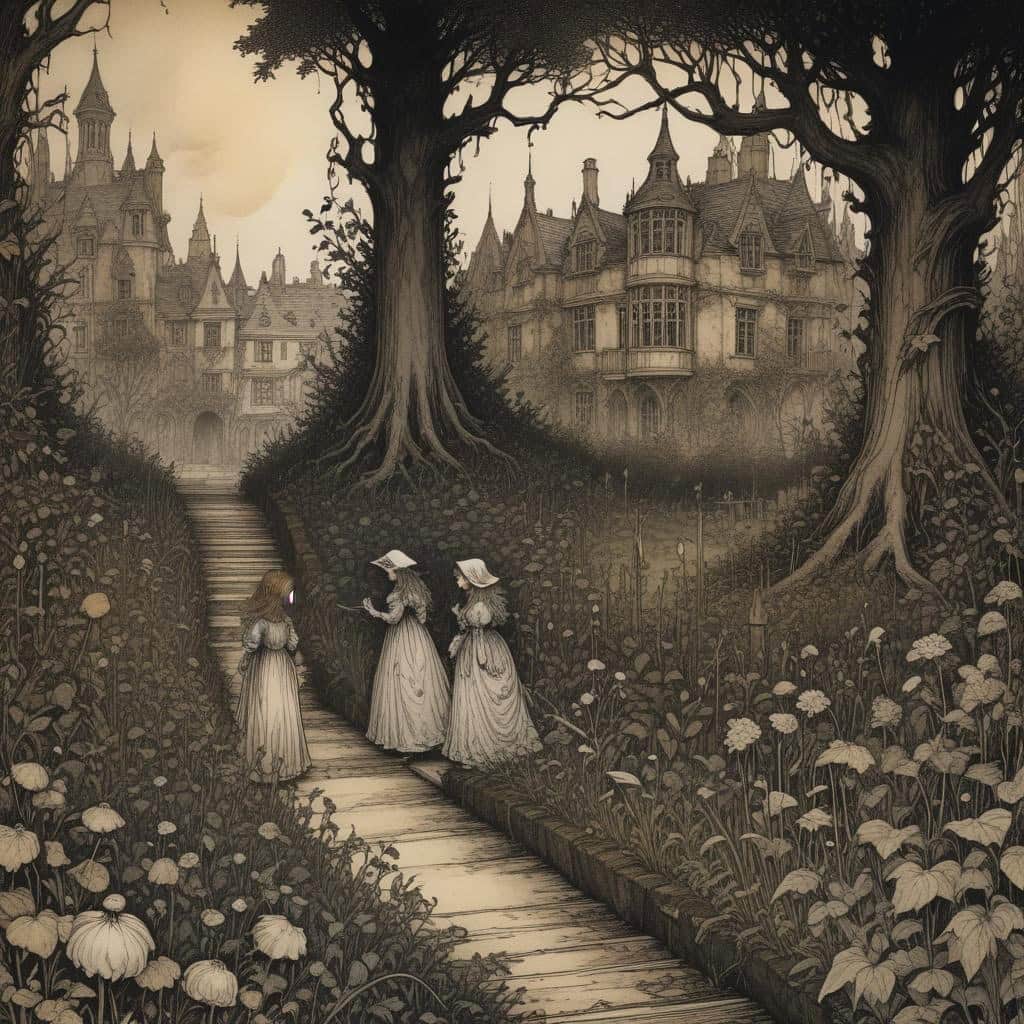
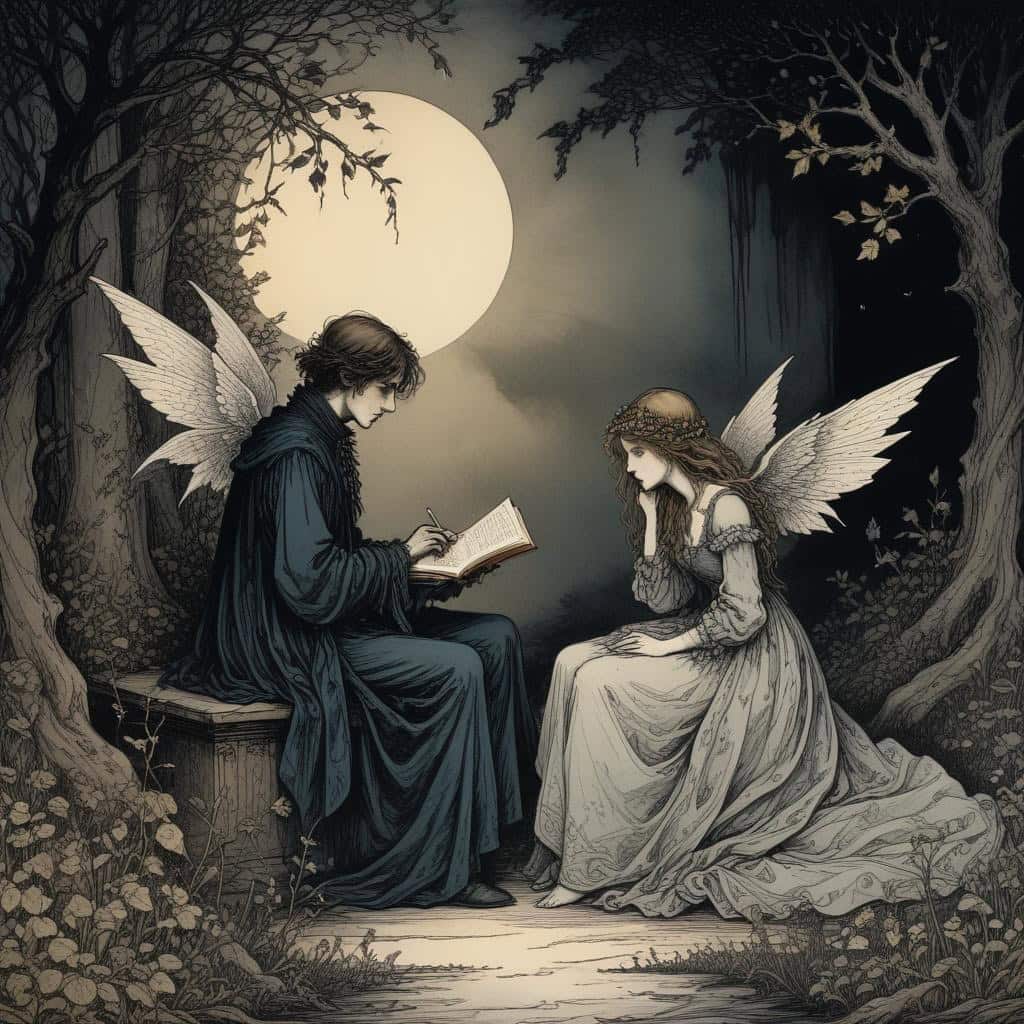
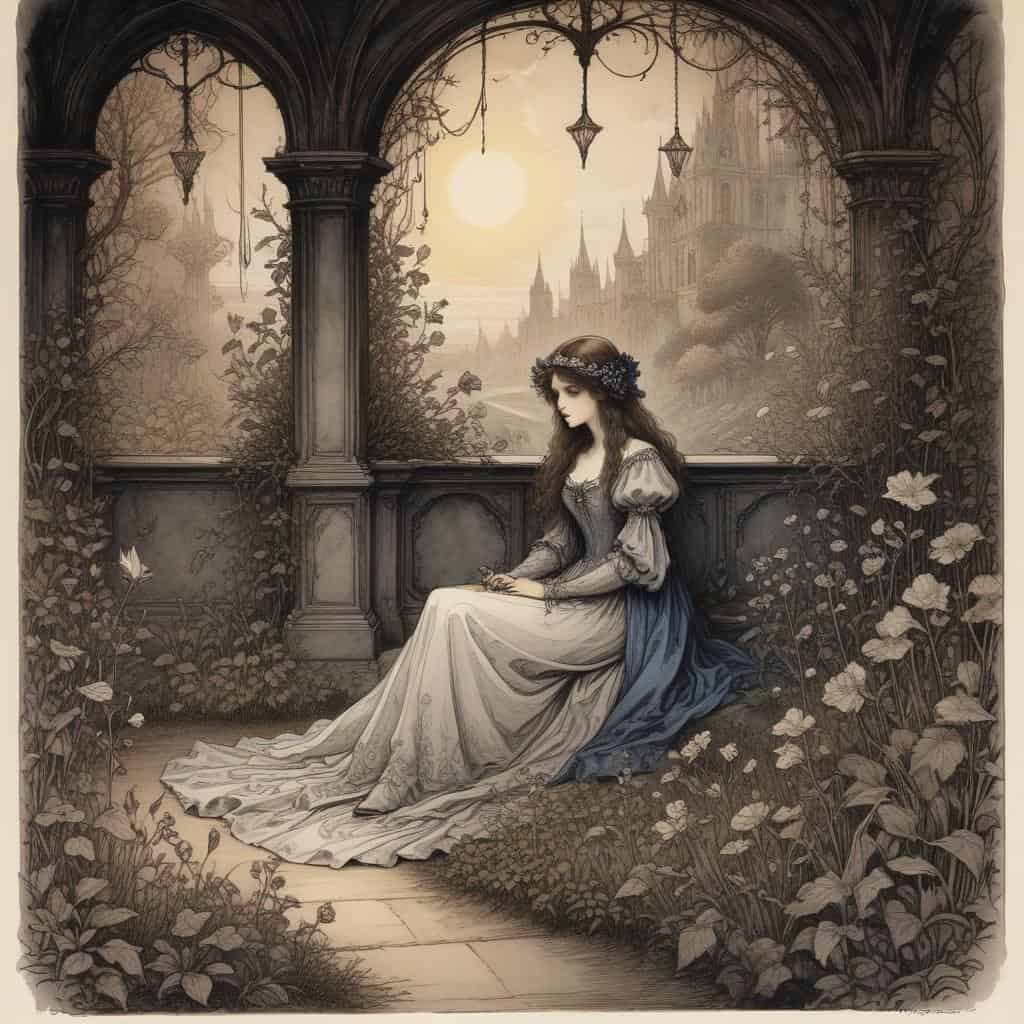
Giovanni Guasconti

Beatrice Rappaccini

Dr. Rappaccini

Baglioni
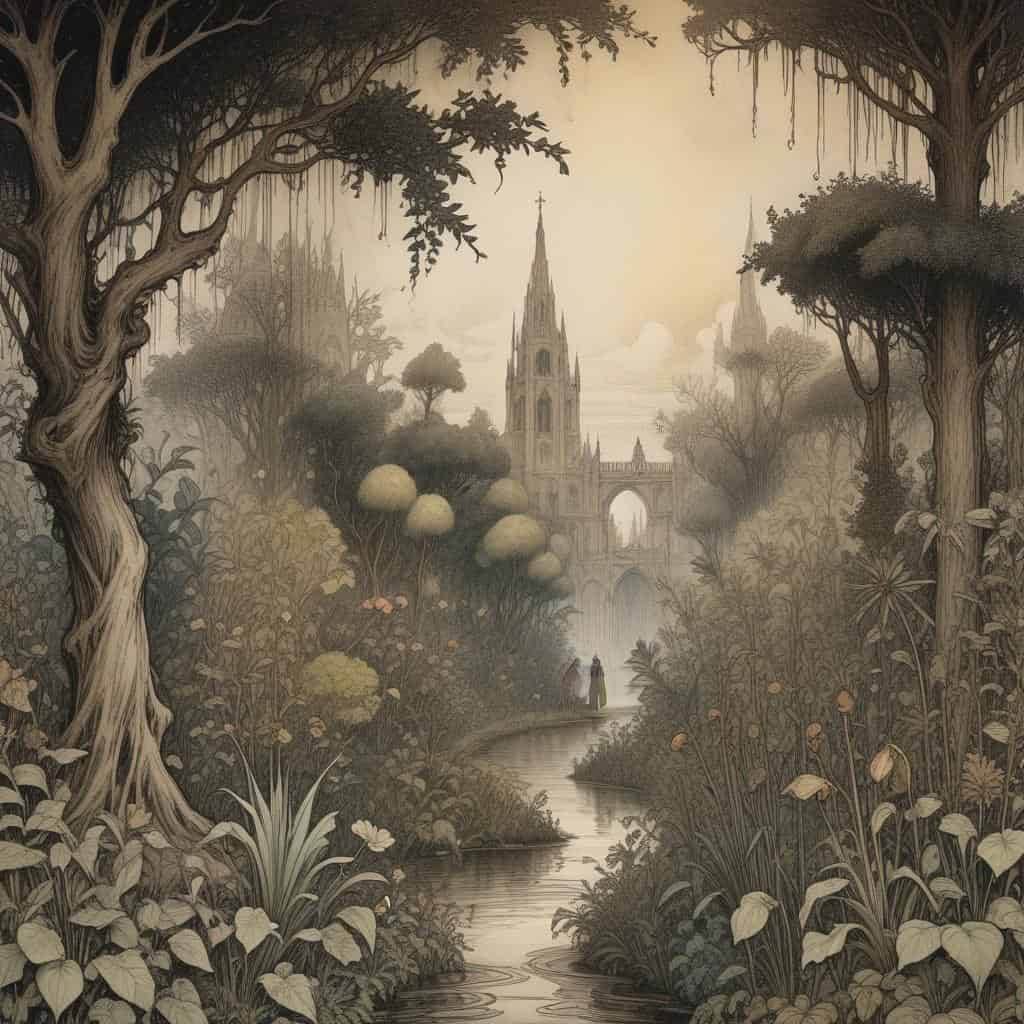
The Garden of Eden
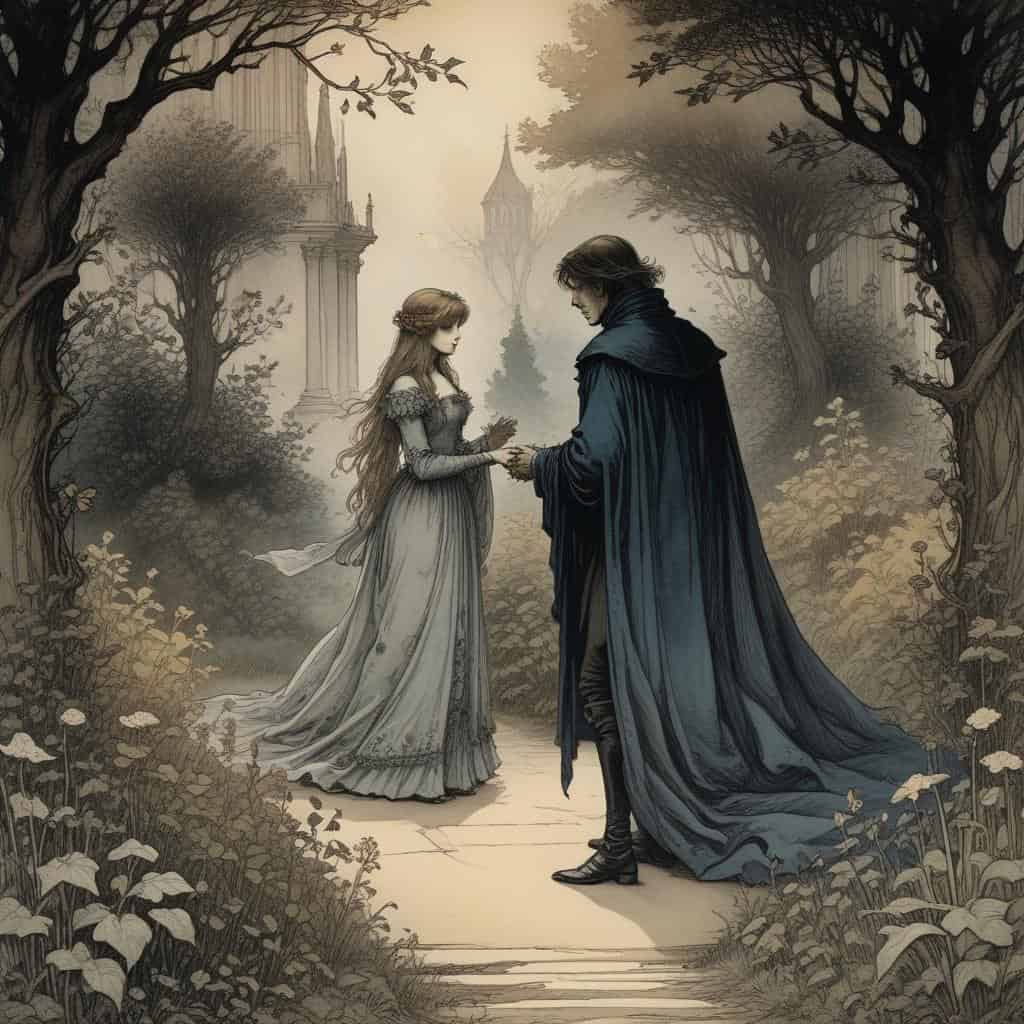
The Meeting
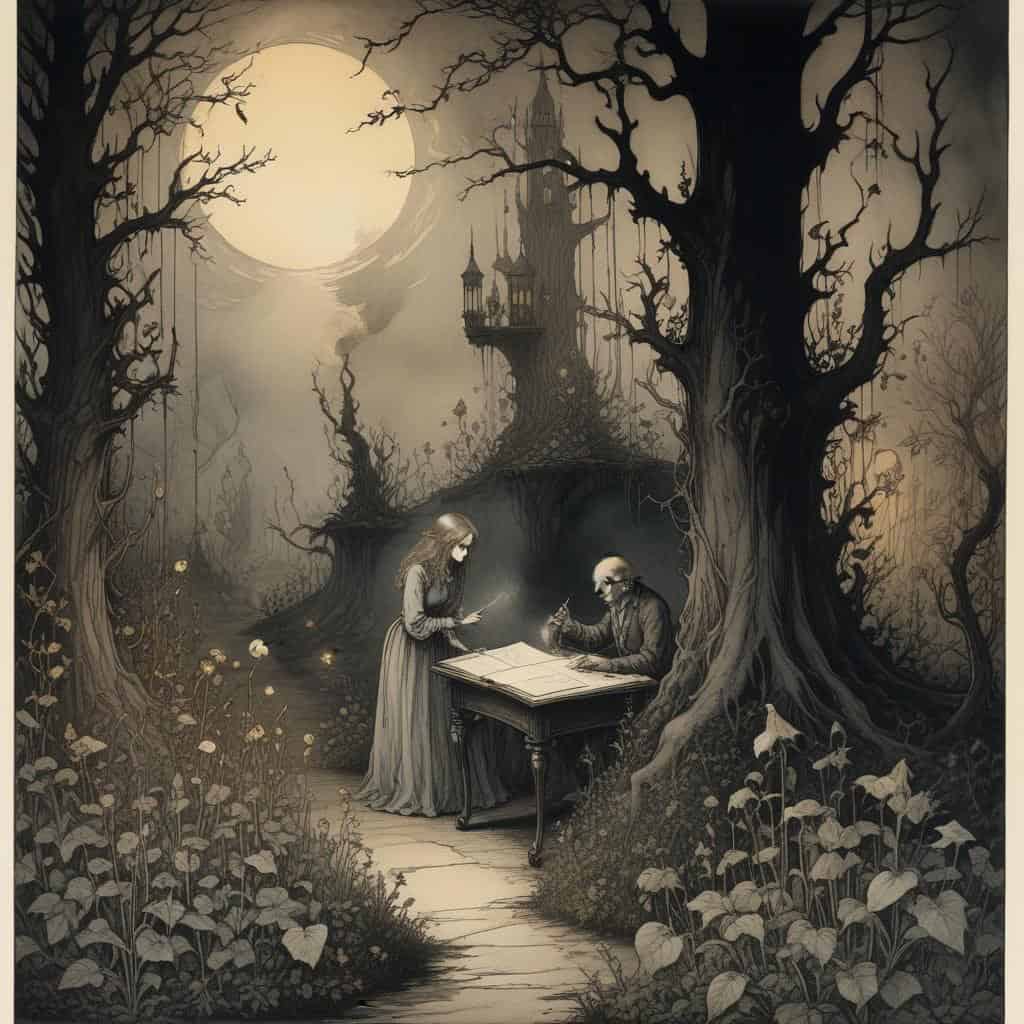
The Experiment
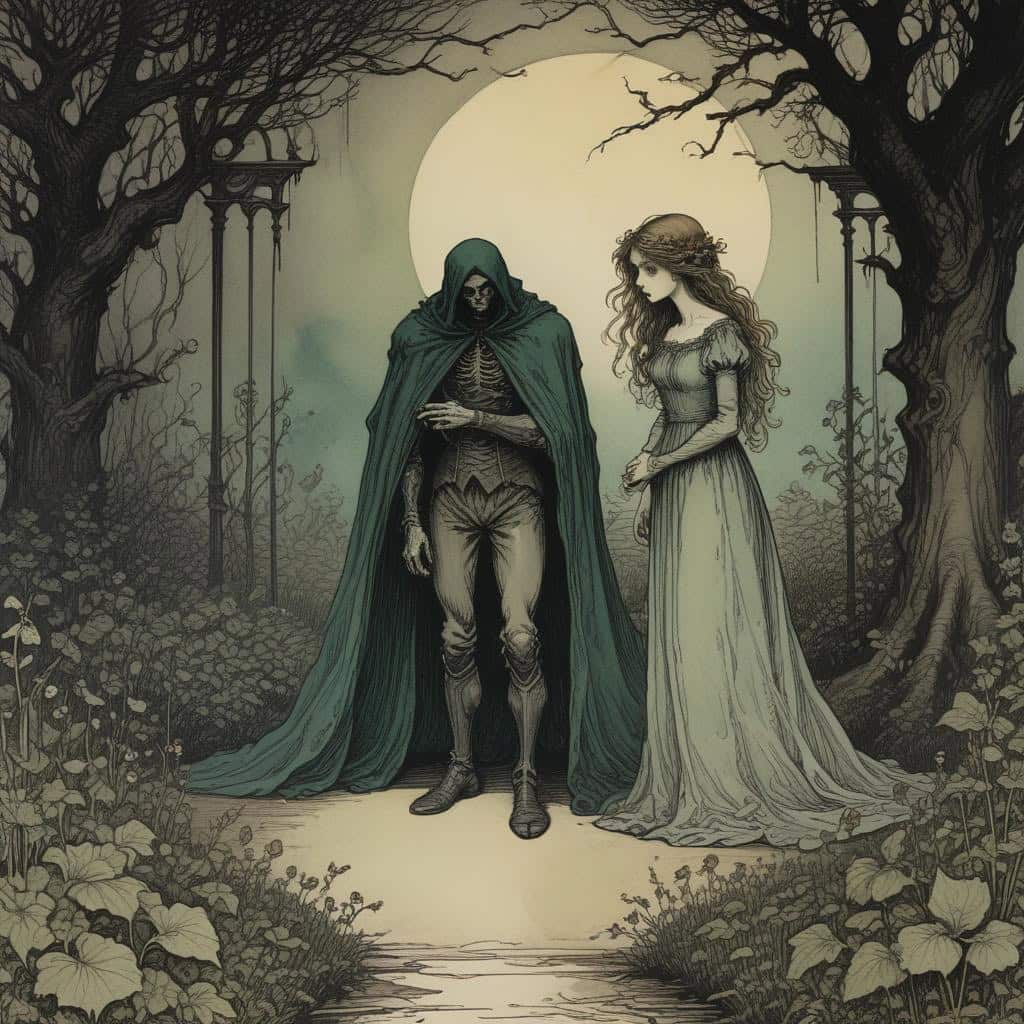
The Transformation
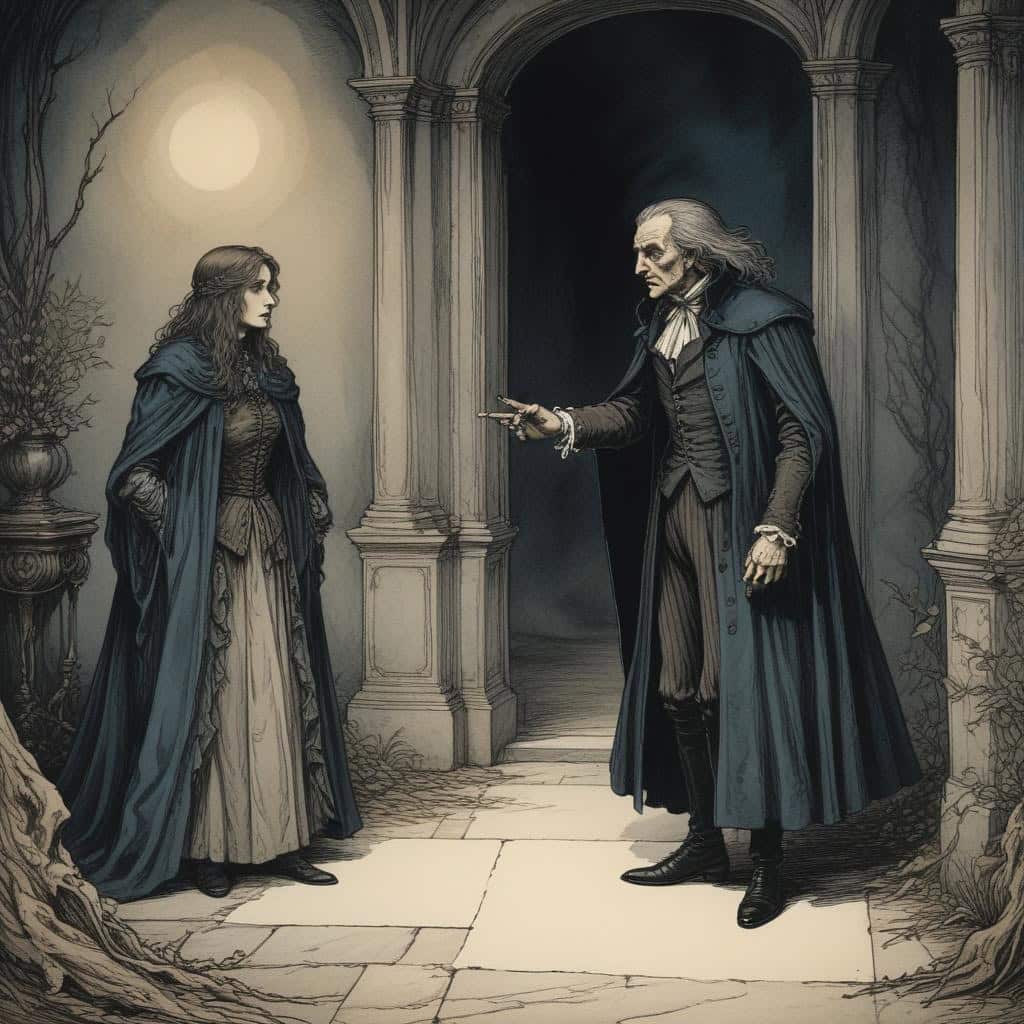
The Betrayal
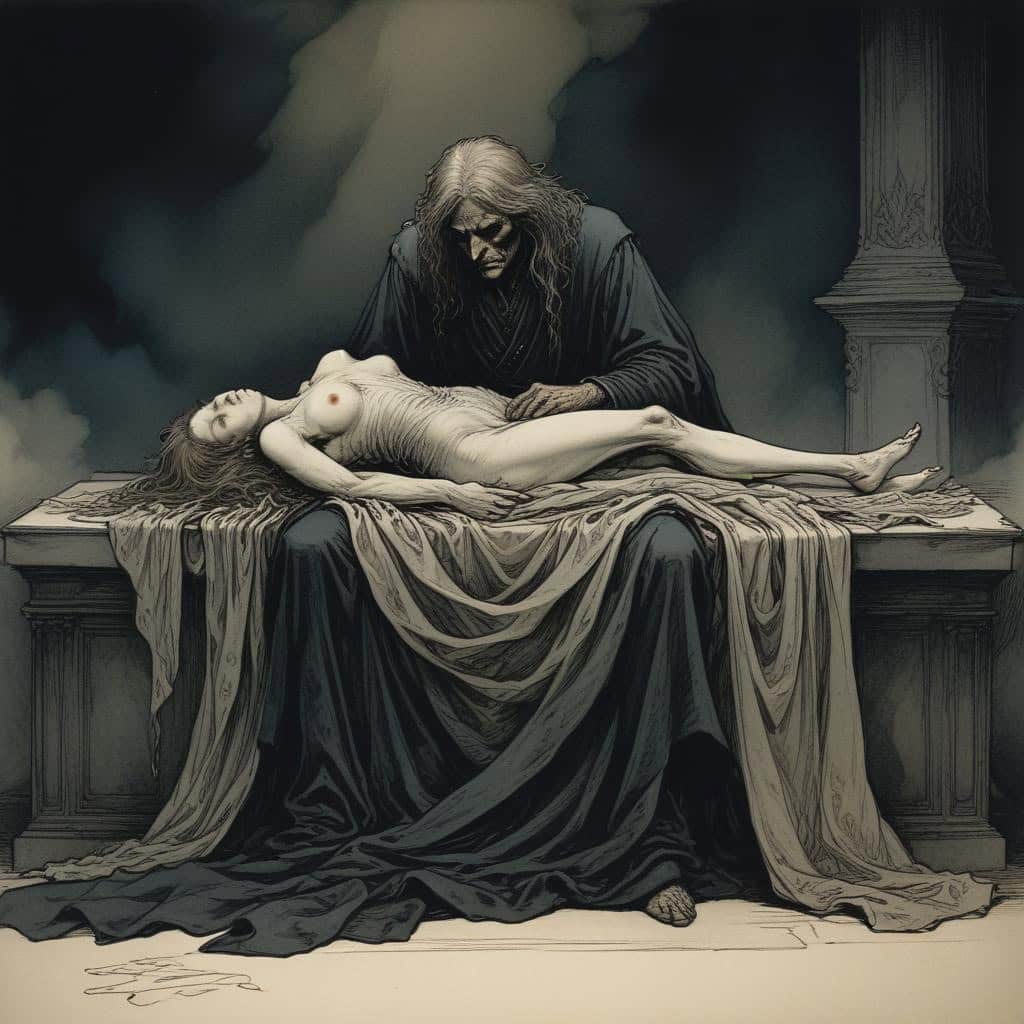
The Tragic End
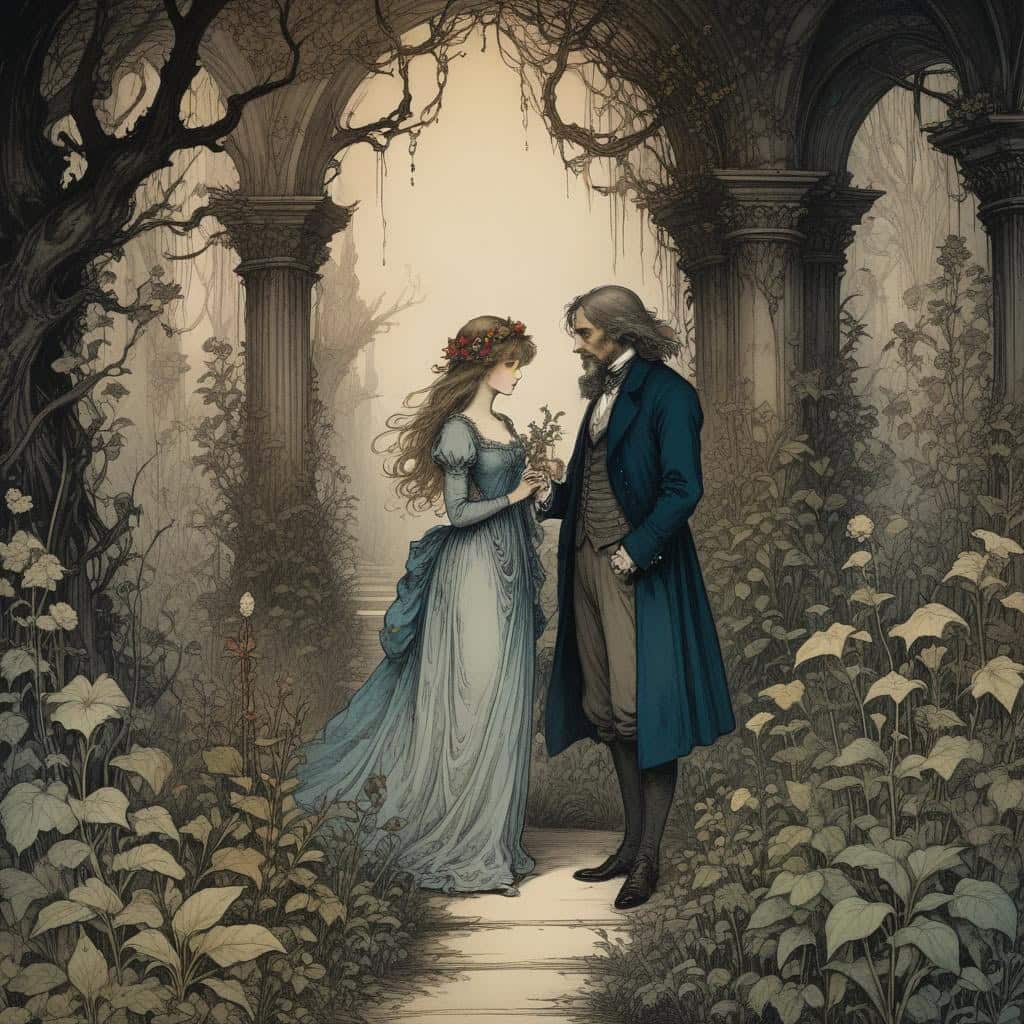
Lesson Details & Resources
In a Nutshell
- What: ‘Rappaccini’s Daughter’ by Nathaniel Hawthorne
- When: Written in the 19th century
- Who: Giovanni Guasconti, Beatrice Rappaccini, Dr. Rappaccini
- Theme: The consequences of pursuing knowledge and the dangers of isolation
List of Characters in Rappaccini’s Daughter
-
Beatrice
Beatrice is the beautiful daughter of Dr. Rappaccini, who has been raised in isolation and is poisonous to the touch.
-
Giovanni Guasconti
Giovanni Guasconti is a young student who falls in love with Beatrice and becomes entangled in the dark secrets of her family.
-
Dr. Rappaccini
Dr. Rappaccini is a brilliant scientist who experiments with poisonous plants and uses his daughter as a subject in his research.
Timeline of Rappaccini’s Daughter
Dr. Rappaccini, a brilliant scientist, creates a garden filled with poisonous plants in Padua, Italy.
Rappaccini's daughter, Beatrice, grows up in the garden and becomes immune to the toxins in the plants.
Giovanni Guasconti, a young student from Naples, moves into an apartment overlooking the garden and becomes infatuated with Beatrice.
Giovanni meets Beatrice and they begin a romantic relationship, despite warnings from his mentor, Professor Baglioni, about Rappaccini's sinister intentions.
Giovanni discovers that Beatrice has been contaminated by the poisonous plants and is toxic to touch.
Rappaccini reveals that he has been using his daughter as a subject in his experiments to create a being with perfect purity and poison.
Beatrice sacrifices herself to save Giovanni from her toxic touch, dying in the process.
Giovanni is left heartbroken and guilt-ridden, realizing too late the consequences of his love for Beatrice.
Professor Baglioni reveals that he has been using Giovanni as a pawn in his own plot to destroy Rappaccini.
The story ends with Giovanni consumed by his grief and regret, haunted by the memory of Beatrice and Rappaccini's twisted experiments.
Vocabulary List
- Rappaccini's Garden
- The main setting of the story, a mysterious garden where Dr. Rappaccini grows poisonous plants.
- Beatrice
- The daughter of Dr. Rappaccini, who is also tainted with poison and has a mysterious and alluring presence.
- Giovanni
- The protagonist of the story, a young man who becomes infatuated with Beatrice and ultimately suffers because of her poisonous touch.
- Isolation
- A recurring theme in the story, as the characters are often isolated from society and each other due to their respective circumstances.
- Science
- Dr. Rappaccini's profession and the driving force behind his experiments with poisonous plants.
- Nature
- The natural world plays a significant role in the story, as Dr. Rappaccini's experiments blur the line between science and nature.
- Poison
- A central element of the story, as Dr. Rappaccini's experiments with poisonous plants have lasting effects on the characters.
- Sin
- A moral theme in the story, as the characters grapple with the consequences of their actions and the sins of their past.
- Mystery
- The story is filled with mystery and intrigue, as the characters uncover the dark secrets of Rappaccini's garden and its inhabitants.
Key Facts
This is the information used in the fact matching game
- Rappaccini's Daughter was first published in 1844.
- The story is set in Padua, Italy.
- The protagonist, Giovanni Guasconti, falls in love with Beatrice Rappaccini.
- Beatrice is the daughter of the scientist Dr. Rappaccini, who tends a garden of poisonous plants.
- Dr. Rappaccini's garden symbolizes the dangers of unchecked scientific experimentation.
- Beatrice herself has been contaminated by the poisonous plants and is toxic to touch.
- Giovanni becomes obsessed with Beatrice, despite knowing the risks.
- Rappaccini's Daughter explores themes of love, isolation, and the consequences of meddling with nature.
- The story is considered a classic of American literature.
- Hawthorne's writing style in Rappaccini's Daughter is characterized by its rich symbolism and moral ambiguity.
- The character of Dr. Rappaccini has been interpreted as a representation of the dangers of unchecked ambition.
- The story has been adapted into various operas and plays.
- Rappaccini's Daughter is often studied in literature courses for its complex themes and narrative structure.
- The story has been analyzed for its portrayal of gender roles and power dynamics.
- Rappaccini's Daughter has been compared to other Gothic and Romantic works of the time, such as Mary Shelley's Frankenstein.
- The character of Beatrice has been interpreted as a tragic heroine who is ultimately doomed by her father's experiments.
- Hawthorne's use of allegory in Rappaccini's Daughter adds layers of meaning to the story.
- The story's ambiguous ending leaves readers questioning the morality of the characters' actions.
- Rappaccini's Daughter has been praised for its exploration of moral dilemmas and the consequences of scientific experimentation.
- The story's themes of forbidden love and toxic relationships continue to resonate with readers today.
Analysis & Significance
Impact on Literature
‘Rappaccini’s Daughter’ by Nathaniel Hawthorne is a classic work of American literature that has had a lasting impact on gothic fiction. Its exploration of the dangers of unchecked scientific ambition and the consequences of meddling with nature has influenced countless authors in the genre, including Mary Shelley and H.P. Lovecraft.
Enduring Themes
The themes of isolation, obsession, and the corrupting influence of knowledge in ‘Rappaccini’s Daughter’ still resonate with modern audiences. The story raises questions about the ethical implications of scientific experimentation and the pursuit of power, highlighting the timeless struggle between man and nature.
Cultural Significance Today
‘Rappaccini’s Daughter’ continues to be studied and adapted in various forms, from stage plays to operas. Its cautionary tale about the consequences of tampering with the natural order remains relevant in today’s world, where debates over genetic engineering and environmental conservation continue to be hot topics. Hawthorne’s work serves as a reminder of the importance of ethical responsibility in the pursuit of knowledge and power.
Rappaccini’s Daughter Games


Take Your Learning Offline
Want a convenient, print-ready study guide for this lesson? Become a Memory Wizards Pro member to unlock the downloadable " Memory Scrolls" for this topic and our entire library!
- ✓ Complete Vocabulary Lists
- ✓ Key Facts & Timelines
- ✓ Beautifully Formatted for Print & Mobile