
Summary of The Battle of Tinchebray
Uncover the forgotten clash that reshaped medieval Normandy.
How Do You Learn Best?
Learn by Listening
Start with the 3-minute audio summary to get the key facts and narrative highlights quickly.
Learn by Reading
Immerse yourself in the 10-minute visual lesson for a comprehensive understanding of the topic.
Learn by Reviewing
Jump directly to the key facts, timeline, and vocabulary lists to build a solid foundation of details.
Learn by Doing
Challenge yourself! Jump straight into the interactive games to learn by trial, error, and discovery.
Audio Library
As one of our featured lessons, this topic includes premium audio guides.
Unlock the Wizard's Cram Session
This powerful audio study guide is a Pro-exclusive feature. Upgrade to Memory Wizards Pro to access this and all of our premium learning tools.
Upgrade to ProThe Battle of Tinchebray in 10 Minutes
Introduction
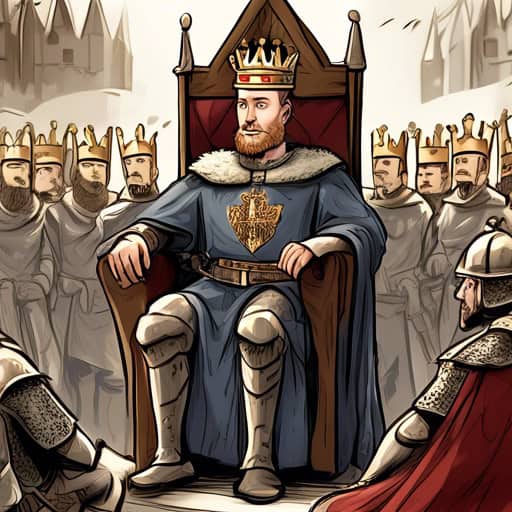
King Henry I of England
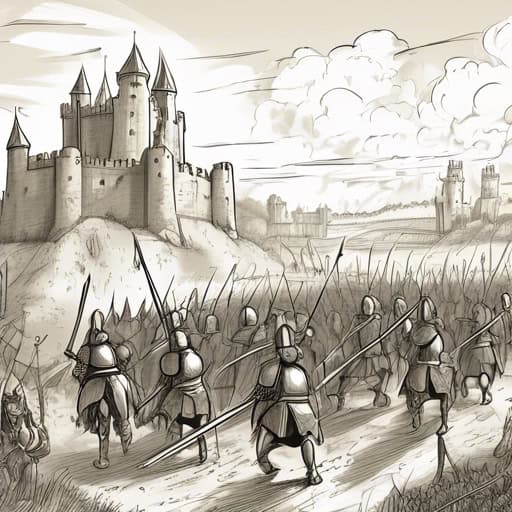
Robert Curthose
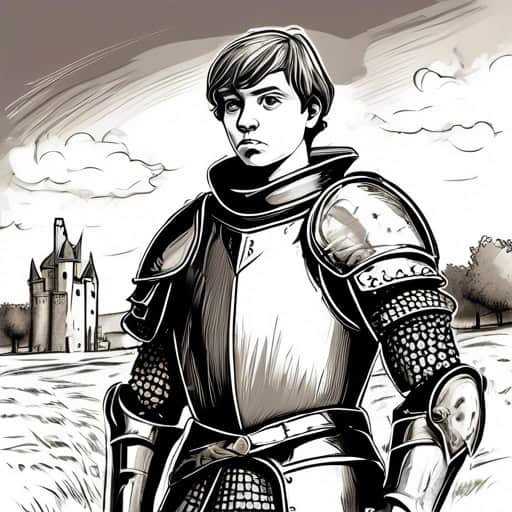
William Clito

The Background of the Battle

Henrys Claim to the Throne

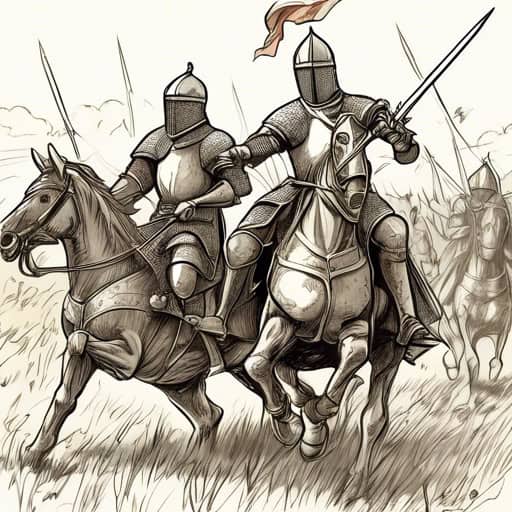
The Conflict Escalates

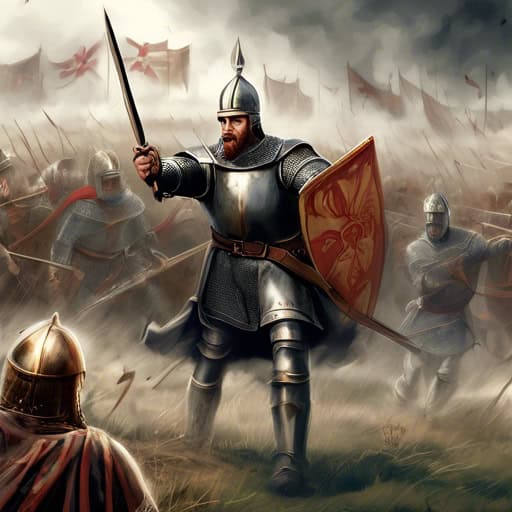
The Battle Begins

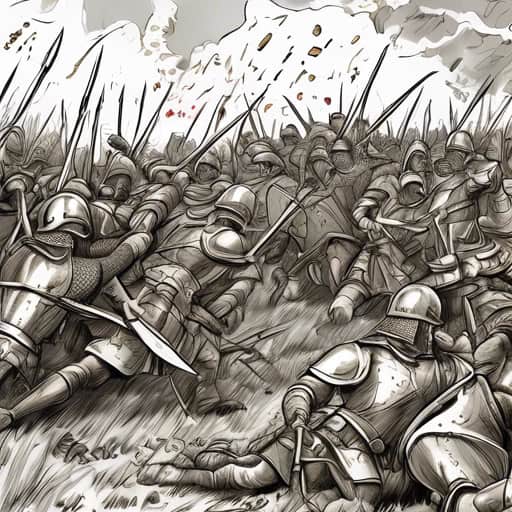
The Outcome of the Battle

The Aftermath of the Battle

The Impact of the Battle

Historical Significance

Legacy of the Battle
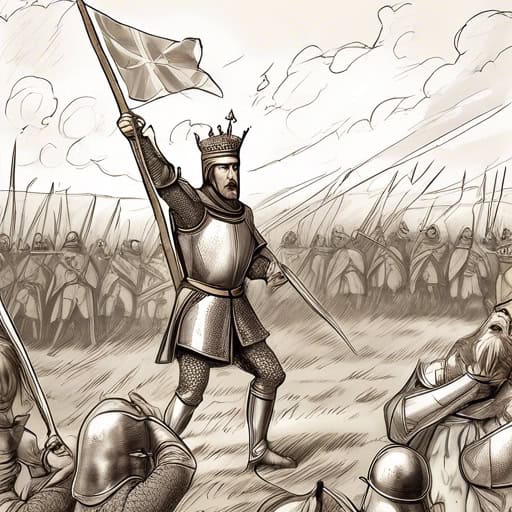
Lesson Details & Resources
In a Nutshell
- What: A significant battle in medieval history
- When: September 28, 1106
- Who: Henry I of England vs. Robert Curthose, Duke of Normandy
- Outcome: Decisive victory for Henry I, securing his hold on the English throne
Famous Figures in the The Battle of Tinchebray
-
William the Conqueror
A renowned military leader and the Duke of Normandy, he led the Norman army to victory in the Battle of Tinchebray.
-
Henry I of England
As the King of England, he played a crucial role in the Battle of Tinchebray, leading his forces against his brother and successfully claiming victory.
-
Robert, Duke of Normandy
The eldest son of William the Conqueror, he rebelled against his father's rule and fought in the Battle of Tinchebray to regain control of Normandy.
-
Geoffrey Plantagenet
A nobleman and military strategist, he supported his father-in-law, Henry I of England, in the Battle of Tinchebray, contributing to the victory.
-
Eustace, Count of Boulogne
A powerful nobleman and military leader, he allied with Henry I of England in the Battle of Tinchebray to defeat his cousin Robert and claim his territories.
-
Louis VI of France
The King of France during the Battle of Tinchebray, he supported Robert, Duke of Normandy, against the forces of Henry I of England.
-
Stephen, Count of Blois
A claimant to the English throne, he fought against Henry I of England in the Battle of Tinchebray but was eventually captured and imprisoned.
-
Helias, Count of Maine
As the Count of Maine, he joined forces with Henry I of England in the Battle of Tinchebray, helping secure the victory for the Norman forces.
-
William, Count of Mortain
A trusted companion of William the Conqueror, he played a significant role in the Battle of Tinchebray as the Count of Mortain.
-
Hugh, Earl of Chester
An influential nobleman and military commander, he fought alongside Henry I of England in the Battle of Tinchebray, contributing to the triumph.
Timeline of The Battle of Tinchebray
William the Conqueror becomes Duke of Normandy
William the Conqueror becomes King of England
William the Conqueror's sons rebel against him
Robert Curthose defeats Henry I at the Battle of Sainte-Susanne
Henry I captures Robert Curthose
Robert Curthose is released
Robert Curthose allies with King Philip I of France
Henry I invades Normandy
Battle of Tinchebray: Henry I defeats Robert Curthose
Robert Curthose is captured and imprisoned
Henry I establishes control over Normandy
Robert Curthose dies in captivity
Normandy remains under English control
English kings continue to hold the title Duke of Normandy
Normandy is lost to France during the Hundred Years' War
End of the Battle of Tinchebray era
Vocabulary List
- William the Conqueror
- The Battle of Tinchebray was fought between the forces of King Henry I of England and his brother, Duke Robert Curthose, who was the son of William the Conqueror.
- Norman Conquest
- The Battle of Tinchebray played a significant role in solidifying the Norman Conquest of England.
- Feudalism
- The Battle of Tinchebray was a clash between two feudal lords vying for power.
- Knights
- Both sides in the Battle of Tinchebray would have had knights as their primary armored cavalry.
- Siege warfare
- The Battle of Tinchebray may have involved elements of siege warfare, such as the use of siege engines or fortifications.
- Vassals
- The vassals of both King Henry I and Duke Robert would have played key roles in the Battle of Tinchebray, providing troops and support.
- Nobility
- The Battle of Tinchebray was a conflict between members of the nobility, each seeking to increase their power and influence.
- Medieval warfare
- The Battle of Tinchebray was a prime example of medieval warfare tactics and strategies.
- Feudal obligations
- The outcome of the Battle of Tinchebray may have been influenced by the fulfillment or betrayal of feudal obligations.
- Cavalry
- Cavalry would have been a crucial component of the Battle of Tinchebray, with armored horsemen charging into battle.
- Siege engine
- Siege engines such as trebuchets or battering rams may have been used during the Battle of Tinchebray to breach enemy defenses.
Key Facts
This is the information used in the fact matching game
- The Battle of Tinchebray took place on September 28, 1106.
- It was a decisive battle in the Norman Conquest of England.
- The battle was fought between the forces of King Henry I of England and his older brother, Duke Robert Curthose of Normandy.
- Henry I's forces consisted of English and Flemish troops.
- Duke Robert Curthose was supported by Louis VI of France.
- The battle took place near the town of Tinchebray in Normandy, France.
- Henry I's forces significantly outnumbered those of Duke Robert Curthose.
- The battle resulted in a decisive victory for Henry I.
- Duke Robert Curthose was captured and imprisoned for the rest of his life.
- Henry I effectively reunited Normandy and England under his rule.
- The battle marked the end of Norman independence from England.
- The conflict between Henry I and Robert Curthose was rooted in a dispute over the succession of their father, William the Conqueror.
- William the Conqueror had designated Robert Curthose as his heir to Normandy and Henry I as his heir to England.
- However, upon William's death, Henry I seized the English throne and Robert Curthose was left with only Normandy.
- The Battle of Tinchebray was part of Henry I's efforts to consolidate his rule over both England and Normandy.
- Henry I's victory at Tinchebray secured his position as the sole ruler of both territories.
- The battle was a significant event in medieval European history.
- It demonstrated Henry I's military prowess and strategic abilities.
- The battle also showcased the changing nature of warfare in the medieval period, with the increasing importance of professional soldiers.
- The Battle of Tinchebray is often considered the last major battle of the Norman Conquest.
- It effectively completed the process of Norman integration into English society.
- The battle had long-lasting consequences for the political and territorial structure of England and Normandy.
- Henry I's victory allowed him to implement administrative and legal reforms in both territories.
- The Battle of Tinchebray is mentioned in various contemporary chronicles and historical accounts.
- It is often cited as a key moment in the history of both England and Normandy.
- The battle is sometimes overshadowed by other famous medieval battles, such as the Battle of Hastings.
- However, its significance in the context of the Norman Conquest should not be underestimated.
- The Battle of Tinchebray is still studied and analyzed by historians and military strategists today.
- It offers valuable insights into medieval warfare, tactics, and the dynamics of power and succession.
- The battle has also inspired artistic representations, such as paintings and literary works.
- Several monuments and memorials commemorate the Battle of Tinchebray in Normandy.
Analysis & Significance
Immediate Consequences
The Battle of Tinchebray in 1106 resulted in the capture of Duke Robert Curthose of Normandy by his brother King Henry I of England. This decisive victory solidified Henry’s control over Normandy and strengthened his hold on the English crown.
Long-Term Impact
The long-term impact of the Battle of Tinchebray was significant as it marked the end of the Norman Conquest and the unification of England and Normandy under one ruler. This event paved the way for the establishment of the Angevin Empire and had lasting implications on the political landscape of medieval Europe.
Cultural Significance Today
The Battle of Tinchebray is remembered as a pivotal moment in English history that shaped the future of the monarchy and the relationship between England and Normandy. Its legacy can still be seen in the shared history and cultural ties between the two regions, as well as in the ongoing study and interpretation of medieval warfare and politics.
The Battle of Tinchebray Games


Take Your Learning Offline
Want a convenient, print-ready study guide for this lesson? Become a Memory Wizards Pro member to unlock the downloadable " Memory Scrolls" for this topic and our entire library!
- ✓ Complete Vocabulary Lists
- ✓ Key Facts & Timelines
- ✓ Beautifully Formatted for Print & Mobile