
Summary of Magna Carta
Unveiling the secrets behind the historic Magna Carta document.
How Do You Learn Best?
Learn by Listening
Start with the 3-minute audio summary to get the key facts and narrative highlights quickly.
Learn by Reading
Immerse yourself in the 10-minute visual lesson for a comprehensive understanding of the topic.
Learn by Reviewing
Jump directly to the key facts, timeline, and vocabulary lists to build a solid foundation of details.
Learn by Doing
Challenge yourself! Jump straight into the interactive games to learn by trial, error, and discovery.
Audio Library
As one of our featured lessons, this topic includes premium audio guides.
Unlock the Wizard's Cram Session
This powerful audio study guide is a Pro-exclusive feature. Upgrade to Memory Wizards Pro to access this and all of our premium learning tools.
Upgrade to ProMagna Carta in 10 Minutes

Introduction


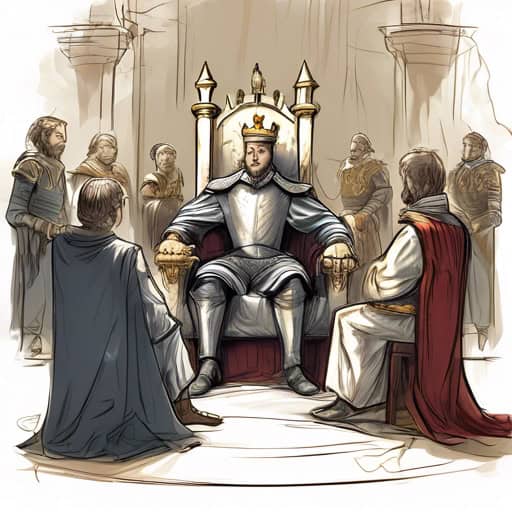
King John
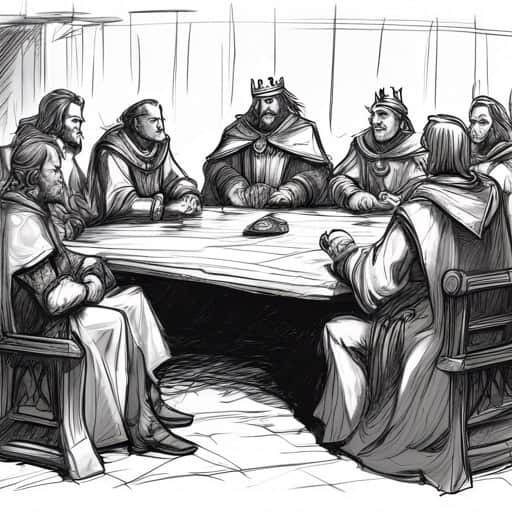
Barons
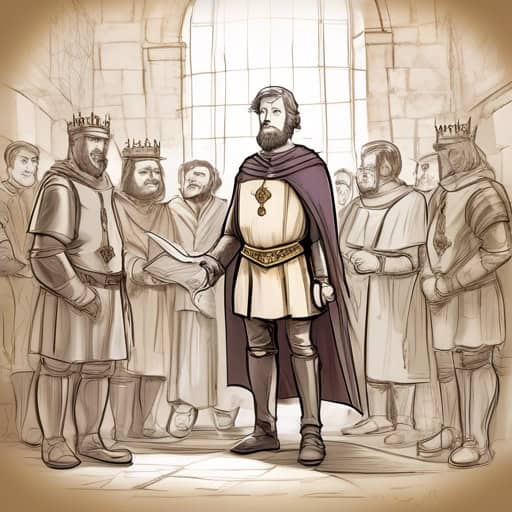
Stephen Langton
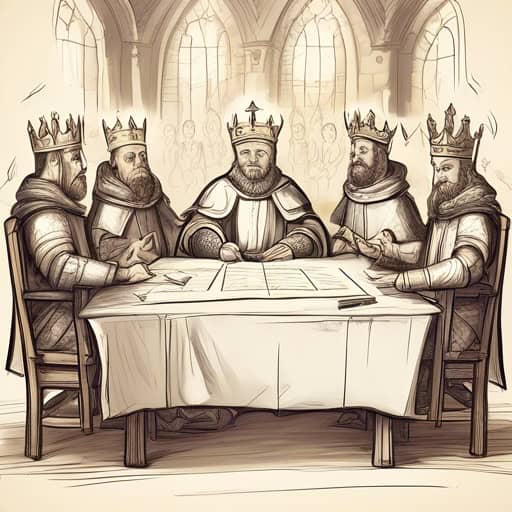
Magna Carta Witnesses

The Birth of Magna Carta
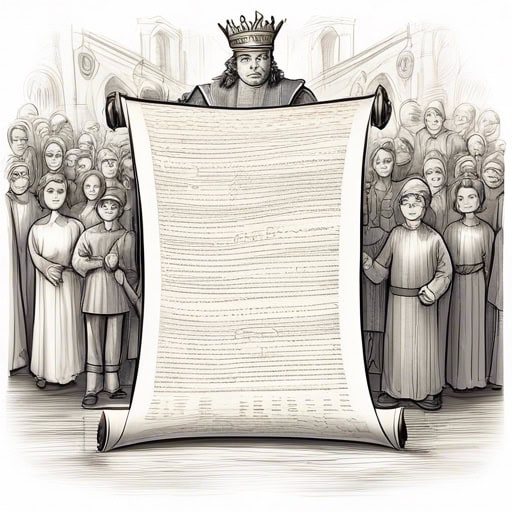
The Key Provisions

The Legacy of Magna Carta

Magna Carta in America

Impact on English Law

Revisions and Confirmations

Global Influence

Modern Significance

Anniversary Celebrations
Unlocking the Secrets

Lesson Details & Resources
In a Nutshell
- What: A foundational document in English legal history.
- When: June 15, 1215
- Who: King John of England, rebellious barons
- Outcome: Limited the power of the monarchy and established the principle that everyone, including the king, was subject to the law.
Famous Figures in the Magna Carta
-
King John
The person who issued the Magna Carta in 1215, after facing rebellion from his barons.
-
Stephen Langton
The Archbishop of Canterbury who played a crucial role in the negotiations and drafting of the Magna Carta.
-
William Marshal
A renowned knight and statesman who supported the barons in their struggle for rights and liberties.
-
Hubert de Burgh
A loyal advisor to King John, who helped secure the acceptance and implementation of the Magna Carta.
-
Pope Innocent III
The Pope who initially opposed the Magna Carta but later gave his consent, ensuring its legitimacy.
-
Barons
The group of powerful landowners who forced King John to sign the Magna Carta.
-
Knights
A class of warriors who supported the barons and played a significant role in the Magna Carta movement.
-
Clergy
The religious leaders who sided with the barons and advocated for their rights and freedoms.
-
Merchants
The group of traders and businessmen who joined the barons in their demand for fair treatment and economic liberty.
-
Freemen
The common people who sought protection and rights under the Magna Carta, ensuring broader societal influence.
Timeline of Magna Carta
King John ascends to the throne of England
1213: King John loses Normandy to the French
1214: King John signs the Charter of Liberties
1215: Magna Carta is drafted by the barons
June 15, 1215: King John seals Magna Carta at Runnymede
1216: King John dies and is succeeded by Henry III
1217: Magna Carta is reissued with revisions
1225: Magna Carta is reissued again with further revisions
1235: First known reference to Magna Carta as 'Magna Carta'
1253: Magna Carta is confirmed by Henry III
1297: Magna Carta is reissued by Edward I
14th century: Magna Carta becomes viewed as a symbol of English liberties
16th century: Magna Carta is invoked in debates over royal power
1628: Magna Carta influences the drafting of the Petition of Right
1689: Magna Carta is cited in the English Bill of Rights
18th century: Magna Carta gains importance in American colonial grievances
1776: Magna Carta influences the Declaration of Independence
1791: Magna Carta inspires the inclusion of a Bill of Rights in the United States Constitution
19th century: Magna Carta is celebrated as a cornerstone of constitutional law
20th century: Magna Carta continues to shape constitutional thinking worldwide
2009: Magna Carta's 800th anniversary is celebrated globally
Vocabulary List
- Charter
- Magna Carta is often referred to as a charter.
- Barons
- The barons played a significant role in the creation of Magna Carta.
- King
- Magna Carta limited the power of the king.
- Rights
- Magna Carta aimed to protect the rights of the people.
- Freedom
- Magna Carta sought to grant certain freedoms to the people.
- Law
- Magna Carta established principles of law.
- Justice
- Magna Carta emphasized the importance of justice.
- Liberties
- Magna Carta aimed to safeguard the liberties of the people.
- Constitution
- Magna Carta is considered an early constitutional document.
- Rebellion
- Magna Carta was a result of the barons' rebellion against the king.
Key Facts
This is the information used in the fact matching game
- The Magna Carta, also known as the Great Charter, was signed in 1215.
- It was a charter of rights agreed to by King John of England under pressure from his barons.
- The Magna Carta limited the power of the monarchy and established the principle that no one is above the law.
- It is considered one of the most important legal documents in the history of democracy.
- The Magna Carta contained 63 clauses, dealing with various aspects of feudal law and governance.
- One of the most famous clauses, Clause 39, established the right to due process of law.
- The Magna Carta provided protection for individual freedoms and property rights.
- It also set the foundation for the concept of habeas corpus, ensuring that no one could be imprisoned without a fair trial.
- The Magna Carta inspired the development of constitutional law in many countries.
- It influenced the creation of the United States Constitution and the Bill of Rights.
- The original Magna Carta was written in Latin and sealed by King John.
- Four original copies of the Magna Carta still exist today.
- The British Library holds two of the remaining copies of the Magna Carta.
- The Magna Carta is written on parchment and was sealed using wax.
- The term 'Magna Carta' means 'Great Charter' in Latin.
- The Magna Carta was not immediately successful in its intended purpose, but its significance grew over time.
- Some of the principles established in the Magna Carta are still relevant and upheld in modern legal systems.
- The Magna Carta influenced the development of the concept of constitutional monarchy.
- The Magna Carta has been used as a symbol of liberty and justice throughout history.
- The Magna Carta's principles have been echoed in other important documents, such as the Universal Declaration of Human Rights.
Analysis & Significance
Immediate Consequences
The signing of the Magna Carta in 1215 immediately led to a temporary peace between King John and his barons, averting a potential civil war. However, the king soon sought to annul the document, causing further unrest and conflict.
Long-Term Impact
The Magna Carta established the principle that the king was not above the law and laid the foundation for constitutional government. It influenced the development of legal systems and the concept of individual rights in England and beyond, shaping the course of democratic governance for centuries to come.
Cultural Significance Today
The Magna Carta remains a symbol of the struggle for liberty and justice. Its principles are echoed in modern legal systems and human rights declarations worldwide. The document continues to inspire movements for democracy and the rule of law, reminding us of the enduring importance of holding those in power accountable to the law and the people they govern.
Magna Carta Games


Take Your Learning Offline
Want a convenient, print-ready study guide for this lesson? Become a Memory Wizards Pro member to unlock the downloadable " Memory Scrolls" for this topic and our entire library!
- ✓ Complete Vocabulary Lists
- ✓ Key Facts & Timelines
- ✓ Beautifully Formatted for Print & Mobile