
Summary of The First Crusades
Uncover the epic saga of knights, kings, and holy wars.
How Do You Learn Best?
Learn by Listening
Start with the 3-minute audio summary to get the key facts and narrative highlights quickly.
Learn by Reading
Immerse yourself in the 10-minute visual lesson for a comprehensive understanding of the topic.
Learn by Reviewing
Jump directly to the key facts, timeline, and vocabulary lists to build a solid foundation of details.
Learn by Doing
Challenge yourself! Jump straight into the interactive games to learn by trial, error, and discovery.
Audio Library
As one of our featured lessons, this topic includes premium audio guides.
Unlock the Wizard's Cram Session
This powerful audio study guide is a Pro-exclusive feature. Upgrade to Memory Wizards Pro to access this and all of our premium learning tools.
Upgrade to ProThe First Crusades in 10 Minutes
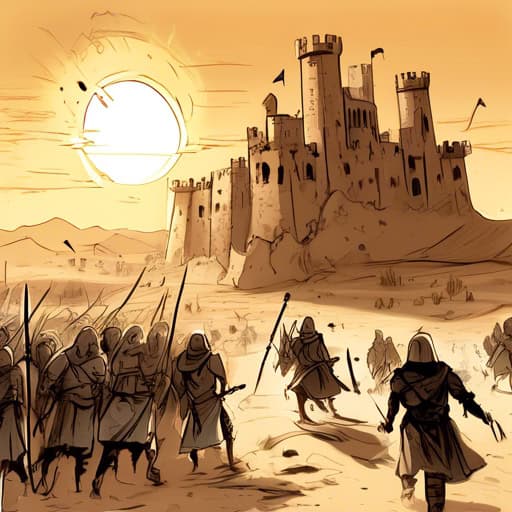
Introduction


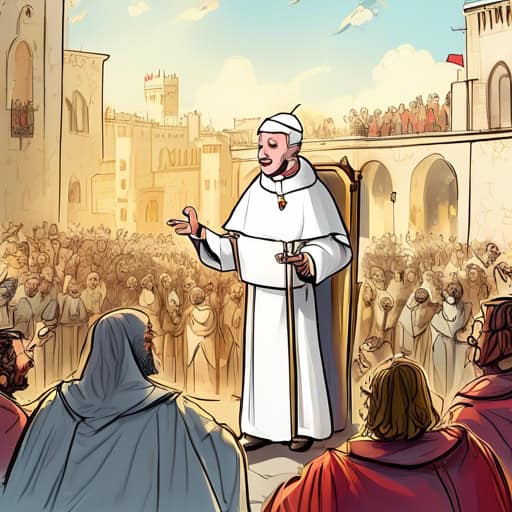
Pope Urban II
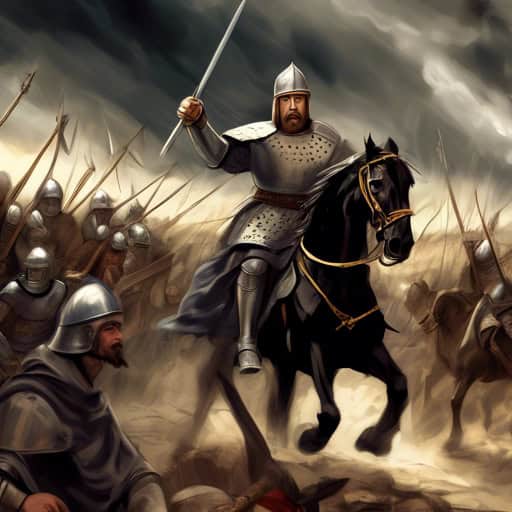
Godfrey of Bouillon
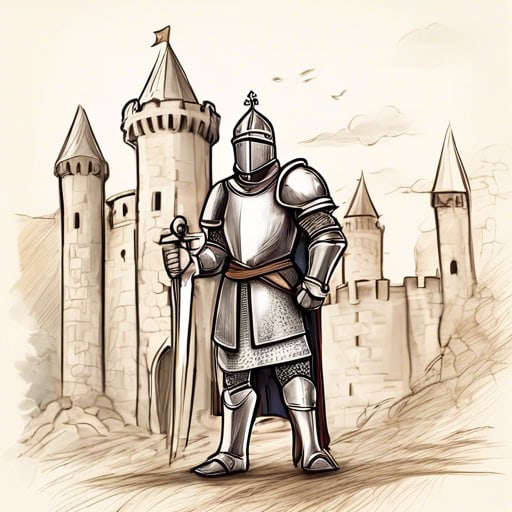
Baldwin I
Raymond IV of Toulouse
Tancred

The Call to Crusade

The Peoples Crusade

The Siege of Antioch

The Capture of Jerusalem

The Establishment of Crusader States

The Second Crusade
The Third Crusade

The Fourth Crusade

The Later Crusades

The Legacy of the First Crusades
Lesson Details & Resources
In a Nutshell
- What: A series of religious wars initiated by the Latin Church against the Islamic caliphates in the Levant.
- When: 1096-1099
- Who: European Christians and Islamic forces in the Holy Land.
- Outcome: The capture of Jerusalem in 1099 by the Crusaders.
Famous Figures in the The First Crusades
-
Pope Urban II
He was the Pope who called for the First Crusade, urging Christians to reclaim Jerusalem from Muslim control.
-
Godfrey of Bouillon
He was a prominent French nobleman who became one of the leaders of the First Crusade and later became the first ruler of the Kingdom of Jerusalem.
-
Raymond IV of Toulouse
As the Count of Toulouse, he played a significant role in the First Crusade and the subsequent establishment of the County of Tripoli.
-
Bohemond of Taranto
A Norman nobleman, he commanded the Crusaders during the Siege of Antioch and later became the Prince of Antioch.
-
Robert Curthose
As the Duke of Normandy, he participated in the First Crusade but returned to Europe before reaching Jerusalem.
-
Baldwin I of Jerusalem
He was a nobleman from Flanders who became the first Latin ruler of Jerusalem after the successful siege of the city.
-
Tancred
He was a Norman knight who played a prominent role in the First Crusade and was one of the main military leaders during the Siege of Jerusalem.
-
Peter the Hermit
He was a French priest who became a charismatic preacher and played a key role in inspiring the people to join the First Crusade.
-
Alexios I Komnenos
As the Byzantine Emperor, he requested assistance from the West to fight against the Seljuk Turks and regain lost territories.
-
Kilij Arslan I
He was the Seljuk Sultan of Rum who faced the Crusaders in several battles during the First Crusade.
Timeline of The First Crusades
Pope Urban II delivers the speech that launches the First Crusade
The crusaders set out from Europe
Crusaders capture Nicaea
Crusaders defeat the Seljuk Turks at the Battle of Dorylaeum
Crusaders capture Antioch
Crusaders successfully defend Antioch against a siege by the Turks
Crusaders march towards Jerusalem
Crusaders capture Jerusalem
Establishment of the Kingdom of Jerusalem
Crusaders defeat the Fatimid army at the Battle of Ascalon
Pope Paschal II recognizes the Knights Templar
Crusaders launch unsuccessful attacks on Egyptian cities
Crusaders suffer a major defeat at the Battle of Hattin
Jerusalem falls to Saladin
Third Crusade is launched to recapture Jerusalem
Crusaders capture the port of Acre
Richard the Lionheart and Saladin sign a truce
Saladin dies, weakening the Muslim forces
Crusaders fail to capture Jerusalem during the Third Crusade
Vocabulary List
- Crusades
- The First Crusades were a series of military campaigns launched by Western European Christians in the 11th century.
- Jerusalem
- The goal of the First Crusades was to capture the city of Jerusalem from the Muslims.
- Pope Urban II
- Pope Urban II called for the First Crusades in 1095, urging Christians to reclaim the Holy Land from the Muslims.
- Holy Land
- The Holy Land refers to the region in the Middle East that holds religious significance for Christians, Muslims, and Jews. It was the primary target of the First Crusades.
- Seljuk Turks
- The Seljuk Turks were a Muslim dynasty that controlled the Holy Land during the time of the First Crusades.
- Knights Templar
- The Knights Templar was a Christian military order formed during the First Crusades to protect Christian pilgrims traveling to the Holy Land.
- Siege
- During the First Crusades, many cities in the Holy Land were under siege by the Christian armies.
- Infidels
- The Christians viewed the Muslims as infidels during the First Crusades, considering them non-believers.
- Sack
- Some cities in the Holy Land were sacked and looted by the Crusaders during the First Crusades.
- Pilgrimage
- The First Crusades were often seen as a holy pilgrimage by the Christians, as they believed they were fighting for the liberation of sacred sites.
Key Facts
This is the information used in the fact matching game
- The First Crusades lasted from 1096 to 1099
- It was a series of military campaigns organized by Western European Christians
- The goal of the Crusades was to recapture the Holy Land, particularly Jerusalem, from Muslim control
- Pope Urban II called for the First Crusade in 1095 at the Council of Clermont
- The Crusaders were motivated by religious zeal, the promise of spiritual rewards, and the desire for adventure and wealth
- The Crusaders were primarily made up of knights, nobles, and peasants
- The First Crusade was divided into several separate armies led by various European leaders
- The Crusaders faced significant challenges during their journey, such as hunger, disease, and hostile encounters with local populations
- They achieved their first major victory at the Siege of Nicaea in 1097
- The Crusaders then captured Antioch in 1098 after a long and difficult siege
- The Crusaders faced extreme hardships during the winter of 1098-1099 while laying siege to Jerusalem
- On July 15, 1099, the Crusaders successfully captured Jerusalem, massacring its Muslim and Jewish inhabitants
- The establishment of Crusader states followed the success of the First Crusade, including the Kingdom of Jerusalem
- The Crusader states faced constant threats from Muslim forces and experienced internal conflicts
- The success of the First Crusade inspired subsequent Crusades in the following centuries
- The First Crusade marked a turning point in European history, leading to increased cultural exchange and trade with the Islamic world
- The Crusades had a lasting impact on the relationship between Christians and Muslims, fostering centuries of tension and conflict
- The Crusades also led to the expansion of European power and influence in the Middle East
- The long-term consequences of the Crusades include the decline of Byzantine Empire and the rise of the Ottoman Empire
- The First Crusades set a precedent for future religiously motivated military expeditions.
Analysis & Significance
Immediate Consequences
The First Crusades, launched in 1096, had immediate consequences such as the capture of Jerusalem in 1099 by the Crusaders. This victory led to the establishment of several Crusader states in the region, creating a new political landscape.
Long-Term Impact
The lasting impact of the First Crusades is seen in the religious and cultural tensions that still exist in the Middle East today. The Crusades set a precedent for religious conflict and shaped the relationship between the Christian and Islamic worlds for centuries to come.
Cultural Significance Today
The legacy of the First Crusades is still felt today in the form of ongoing conflicts and historical grievances in the Middle East. It serves as a reminder of the complexities of religious and political interactions and the importance of understanding the historical context of modern-day conflicts.
The First Crusades Games


Take Your Learning Offline
Want a convenient, print-ready study guide for this lesson? Become a Memory Wizards Pro member to unlock the downloadable " Memory Scrolls" for this topic and our entire library!
- ✓ Complete Vocabulary Lists
- ✓ Key Facts & Timelines
- ✓ Beautifully Formatted for Print & Mobile