
Summary of Battle Of Hastings
Uncover the epic clash that shaped English history for centuries to come.
How Do You Learn Best?
Learn by Listening
Start with the 3-minute audio summary to get the key facts and narrative highlights quickly.
Learn by Reading
Immerse yourself in the 10-minute visual lesson for a comprehensive understanding of the topic.
Learn by Reviewing
Jump directly to the key facts, timeline, and vocabulary lists to build a solid foundation of details.
Learn by Doing
Challenge yourself! Jump straight into the interactive games to learn by trial, error, and discovery.
Audio Library
As one of our featured lessons, this topic includes premium audio guides.
Wizards in Conversation
A deep-dive conversation exploring the enduring relevance and key themes of this topic. Also available on Spotify and Apple Podcasts.
Unlock the Wizard's Cram Session
This powerful audio study guide is a Pro-exclusive feature. Upgrade to Memory Wizards Pro to access this and all of our premium learning tools.
Upgrade to ProBattle Of Hastings in 10 Minutes

Introduction


William the Conqueror
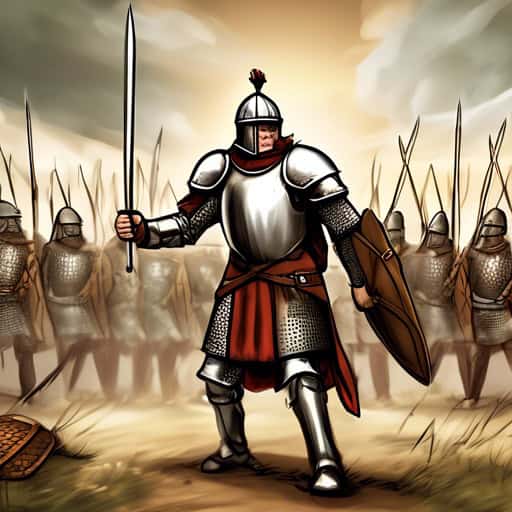
Harold Godwinson

Harald Hardrada

Harolds brothers, Gyrth and Leofwine
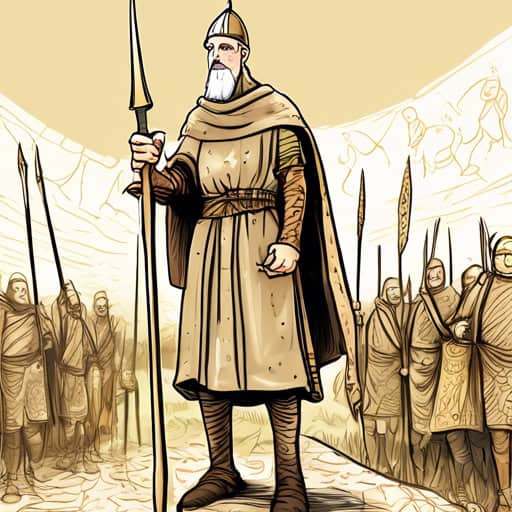
Odo, Bishop of Bayeux

The Norman Conquest

Harold Godwinsons Reign
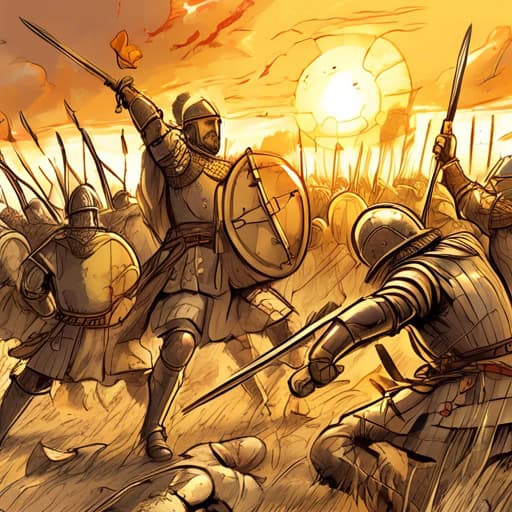
The Battle Begins

Death of Harold Godwinson

Norman Victory

Impact on England

Bayeux Tapestry

Legacy of William the Conqueror

Historical Significance

Remembering the Battle
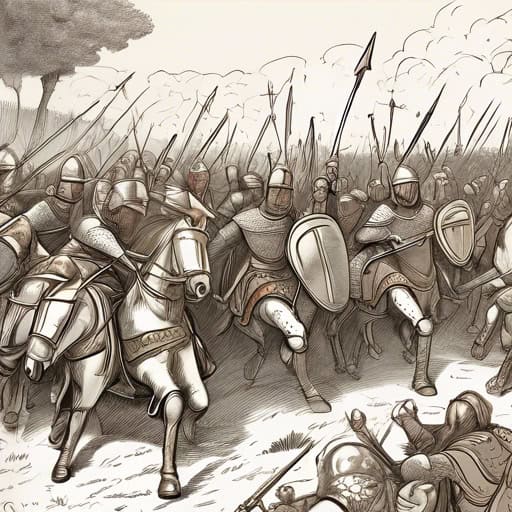
Lesson Details & Resources
In a Nutshell
- What: A decisive battle in the Norman conquest of England.
- When: October 14, 1066
- Who: William the Conqueror’s Norman army vs. King Harold Godwinson’s English army.
- Outcome: Decisive Norman victory; Harold Godwinson was killed, leading to William taking the English throne.
Famous Figures in the Battle Of Hastings
-
King Harold II
King Harold II was the last crowned Anglo-Saxon king of England, who led the English army in the Battle of Hastings against William the Conqueror.
-
William the Conqueror
William the Conqueror was the Duke of Normandy who defeated King Harold II in the Battle of Hastings, subsequently becoming the first Norman king of England.
-
Harald Hardrada
Harald Hardrada was the King of Norway who also claimed the English throne, leading the Norwegian army in an unsuccessful invasion of England prior to the Battle of Hastings.
-
Edgar the Ætheling
Edgar the Ætheling was a claimant to the English throne and the designated heir of Edward the Confessor, but his claim was overshadowed by the events of the Battle of Hastings.
-
Bishop Odo
Bishop Odo was the half-brother of William the Conqueror and played a prominent role in the Battle of Hastings, commanding the Norman infantry forces.
-
Earl Tostig
Earl Tostig was the younger brother of King Harold II and initially supported him in the Battle of Hastings but later switched sides, fighting against the English army.
Timeline of Battle Of Hastings
William the Conqueror invades England
Battle of Stamford Bridge
Harold Godwinson becomes King of England
Harold II defeats the Norwegians at the Battle of Stamford Bridge
Harold II marches south to face William's invasion
Battle of Hastings commences
Death of Harold II
William the Conqueror crowned King of England
Construction of the Tower of London begins
William suppresses rebellions in the north
William's forces devastate the countryside
Harrying of the North
Compilation of the Domesday Book begins
Norman castles built across England
Norman French becomes the language of the English court
William's death
Accession of William Rufus
Revolt of the Earls
Death of William Rufus
Accession of Henry I
Vocabulary List
- Feudalism
- A social system in which landowners granted land in return for military service or labor
- Normans
- The people who lived in Normandy, a region in northern France
- Anglo-Saxons
- The people who lived in England before the Norman Conquest
- Conquest
- The act of taking control of a country or territory by force
- Harold
- The last Anglo-Saxon king of England who was killed in the Battle of Hastings
- William the Conqueror
- The Duke of Normandy who led the Norman invasion of England and became its first Norman king
- Vassal
- A person who held land under the feudal system and swore loyalty to a lord in exchange for protection
- Feudal lord
- A nobleman who owned large amounts of land and had vassals under his control
- Archers
- Soldiers who used bows and arrows in battle
- Infantry
- Foot soldiers who fought on foot, usually armed with swords or spears
- Cavalry
- Soldiers who fought on horseback
- Knights
- Warriors who fought on horseback and served their lords in the feudal system
- Siege
- A military operation in which an army surrounds and attacks a fortified place, often lasting for an extended period of time
- Defeat
- To win a victory over an opponent in a battle or competition
- Strategy
- A plan of action designed to achieve a particular goal
- Tactics
- Actions taken during a battle to achieve a specific result
- Archery
- The practice or skill of using a bow and arrows
- Norman invasion
- The military campaign launched by William the Conqueror to conquer England in 1066
- Battle
- A violent confrontation between armed forces in warfare
- Conquer
- To take control or possession of a place or people by military force.
Key Facts
This is the information used in the fact matching game
- Harold II of England was the reigning king of England during the Battle of Hastings
- The battle took place on October 14, 1066
- It was fought between the Norman-French army led by William, Duke of Normandy, and the English army led by Harold II
- The battle took place near the town of Hastings in England
- The battle was a result of a claim to the English throne by William, Duke of Normandy
- Harold II was crowned as the King of England just nine months before the battle
- The English army consisted mainly of foot soldiers known as housecarls and fyrd
- The Normans had an advantage due to their superior cavalry
- The battle lasted for nearly nine hours
- Both leaders, Harold II and William, fought in the battle
- Harold II was killed during the battle, possibly by an arrow to the eye
- The battle marked the beginning of Norman rule in England
- The Norman victory resulted in significant changes in English society, culture, and language
- The English army was exhausted and weakened after their victory over the Norwegian army at the Battle of Stamford Bridge just a few days before the Battle of Hastings
- The English army held a defensive position on a ridge but was eventually broken by the Norman forces
- The Norman archers played a crucial role in the battle by using the longbow effectively
- The Norman knights wore chainmail armor, which offered them better protection compared to the English
- The Bayeux Tapestry, an embroidered cloth, depicts the events leading up to the Battle of Hastings
- William the Conqueror, as he was later known, was crowned as the King of England on Christmas Day, 1066
- The Battle of Hastings is considered one of the most important events in English history.
Analysis & Significance
Immediate Consequences
The Battle of Hastings in 1066 resulted in the death of King Harold II of England and the Norman Conquest led by William the Conqueror. This immediate aftermath saw a shift in power and the establishment of Norman rule in England, drastically altering the political landscape of the time.
Long-Term Impact
The Battle of Hastings had profound effects on English history, leading to the integration of Norman culture and language into English society. This event also laid the foundation for the centralized monarchy and feudal system in England, shaping the country’s governance for centuries to come.
Cultural Significance Today
The Battle of Hastings remains a pivotal moment in English history, symbolizing the end of Anglo-Saxon rule and the beginning of Norman influence in the country. Today, the battle is commemorated through reenactments, historical sites, and cultural references, highlighting its enduring legacy and impact on modern English identity.
Battle Of Hastings Games


Take Your Learning Offline
Want a convenient, print-ready study guide for this lesson? Become a Memory Wizards Pro member to unlock the downloadable " Memory Scrolls" for this topic and our entire library!
- ✓ Complete Vocabulary Lists
- ✓ Key Facts & Timelines
- ✓ Beautifully Formatted for Print & Mobile
Dive Deeper

1066: The Year of the Conquest
A brilliantly written and highly accessible narrative that brings the events of 1066 to life, making it the perfect starting point for anyone wanting to learn more.
View on AmazonTo help us keep Memory Wizards running and create more magical learning content, we are a participant in the Amazon Associates Program. If you make a purchase through the links on this page, we may earn a small commission at no extra cost to you. We only recommend resources we believe in.