
Summary of the Roman Tetrarchy
Unlock the secrets of power and politics in ancient Rome.
How Do You Learn Best?
Learn by Reading
Immerse yourself in the 10-minute visual lesson for a comprehensive understanding of the topic.
Learn by Reviewing
Jump directly to the key facts, timeline, and vocabulary lists to build a solid foundation of details.
Learn by Doing
Challenge yourself! Jump straight into the interactive games to learn by trial, error, and discovery.
the Roman Tetrarchy in 10 Minutes
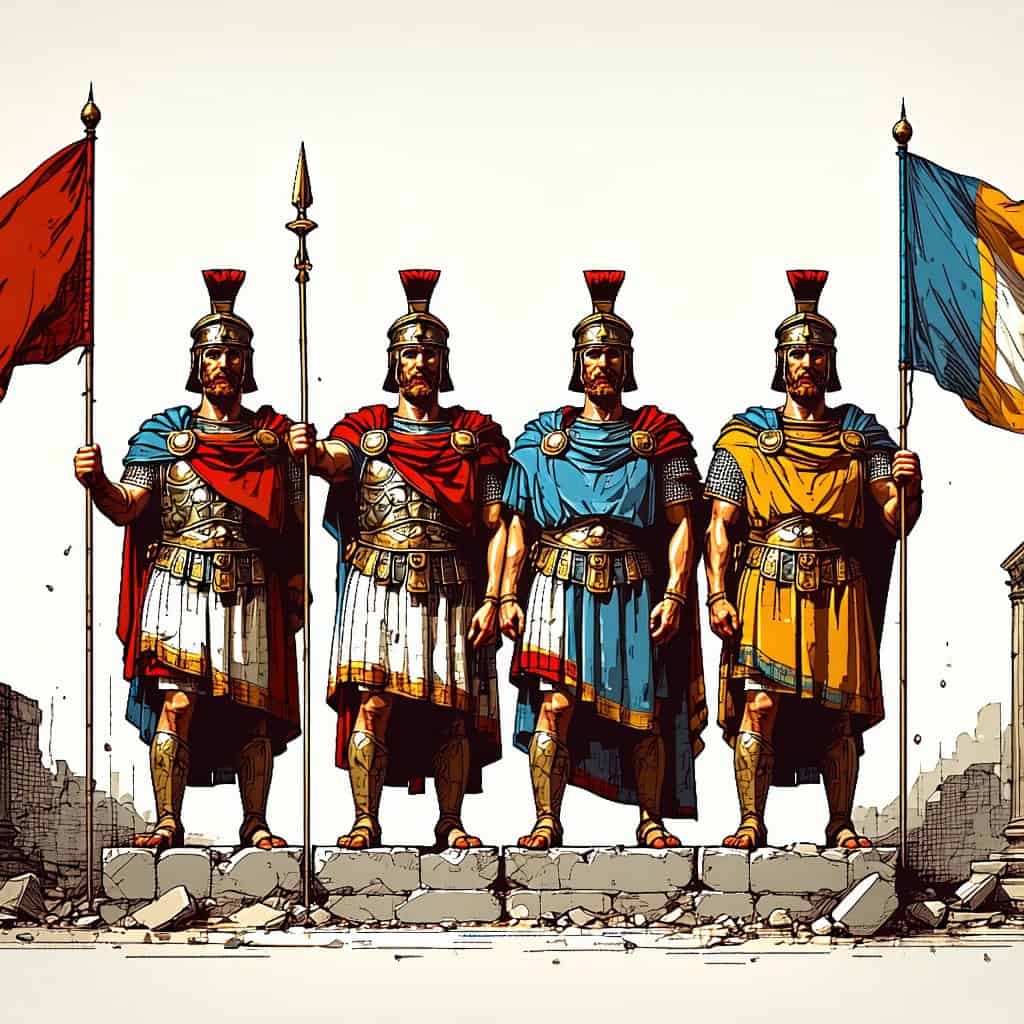
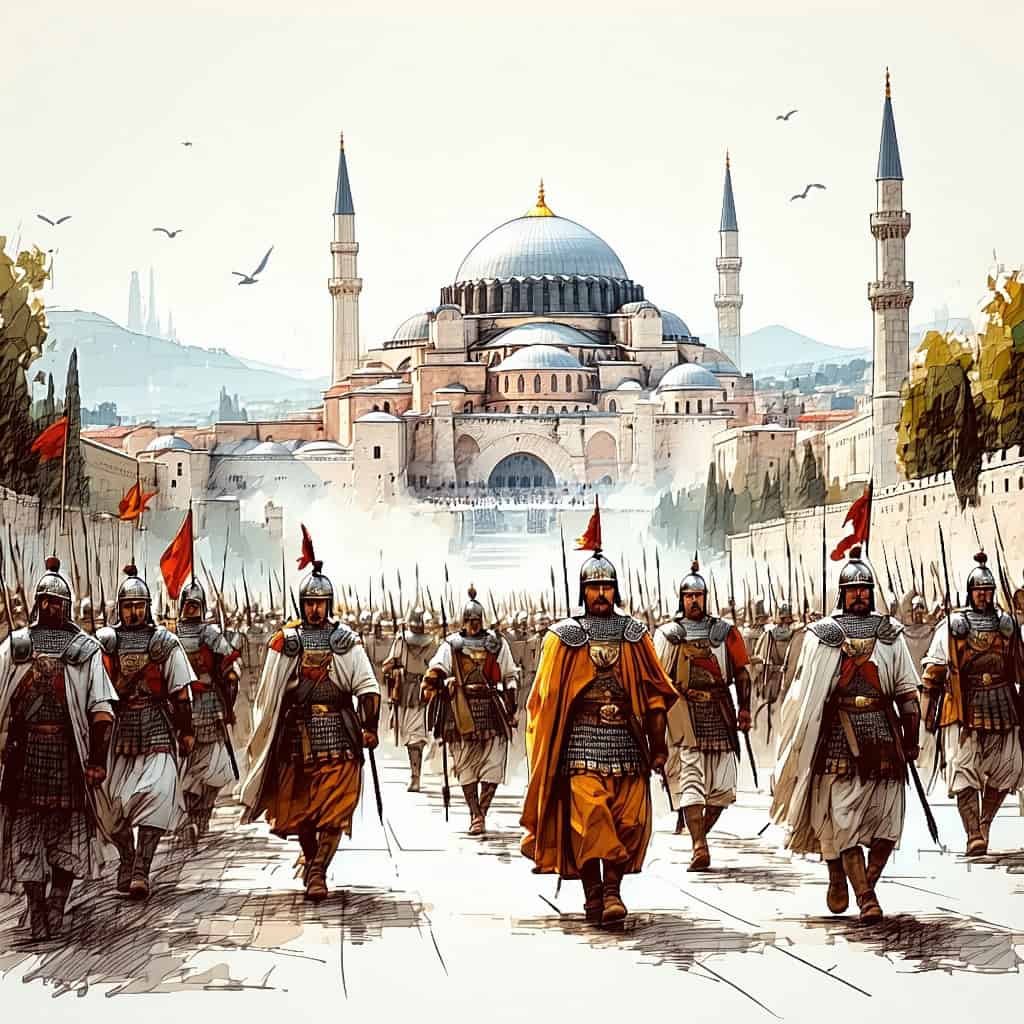
Introduction

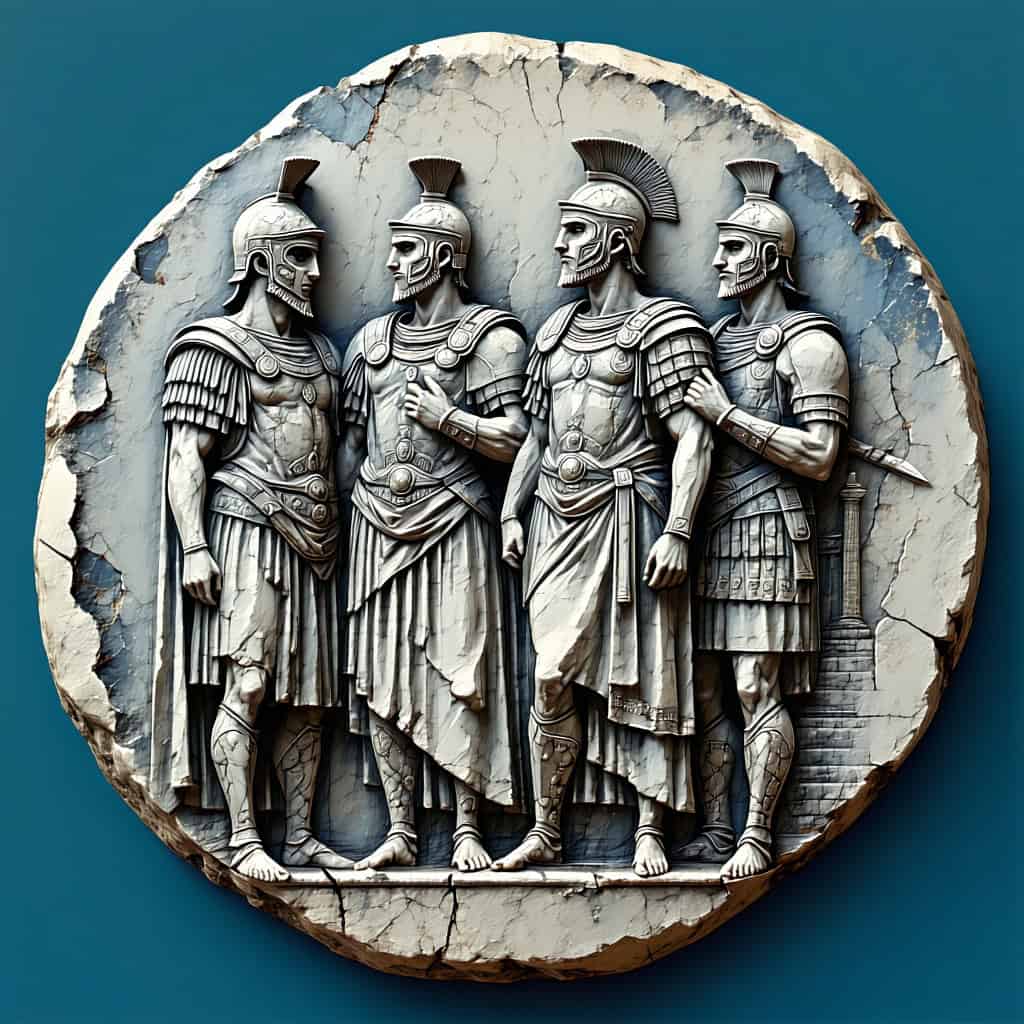
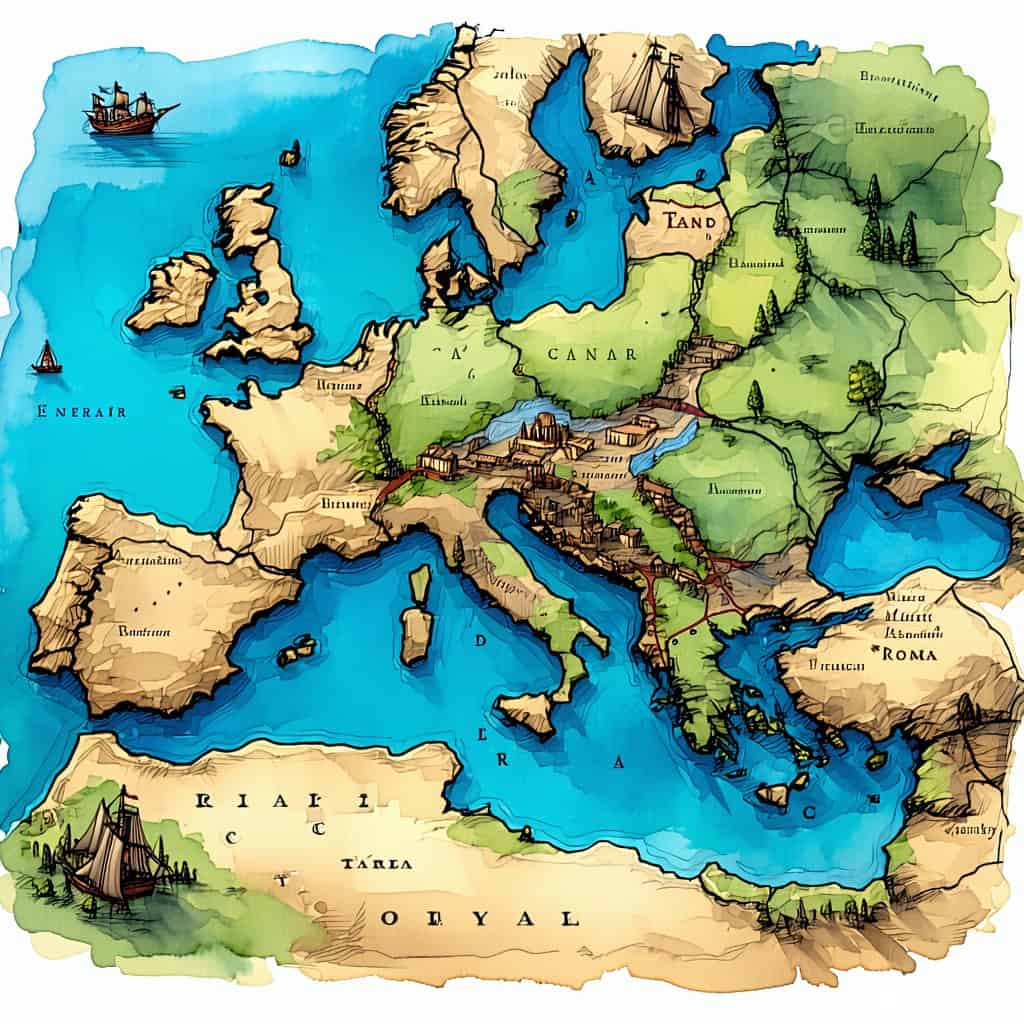
Diocletian
Maximian
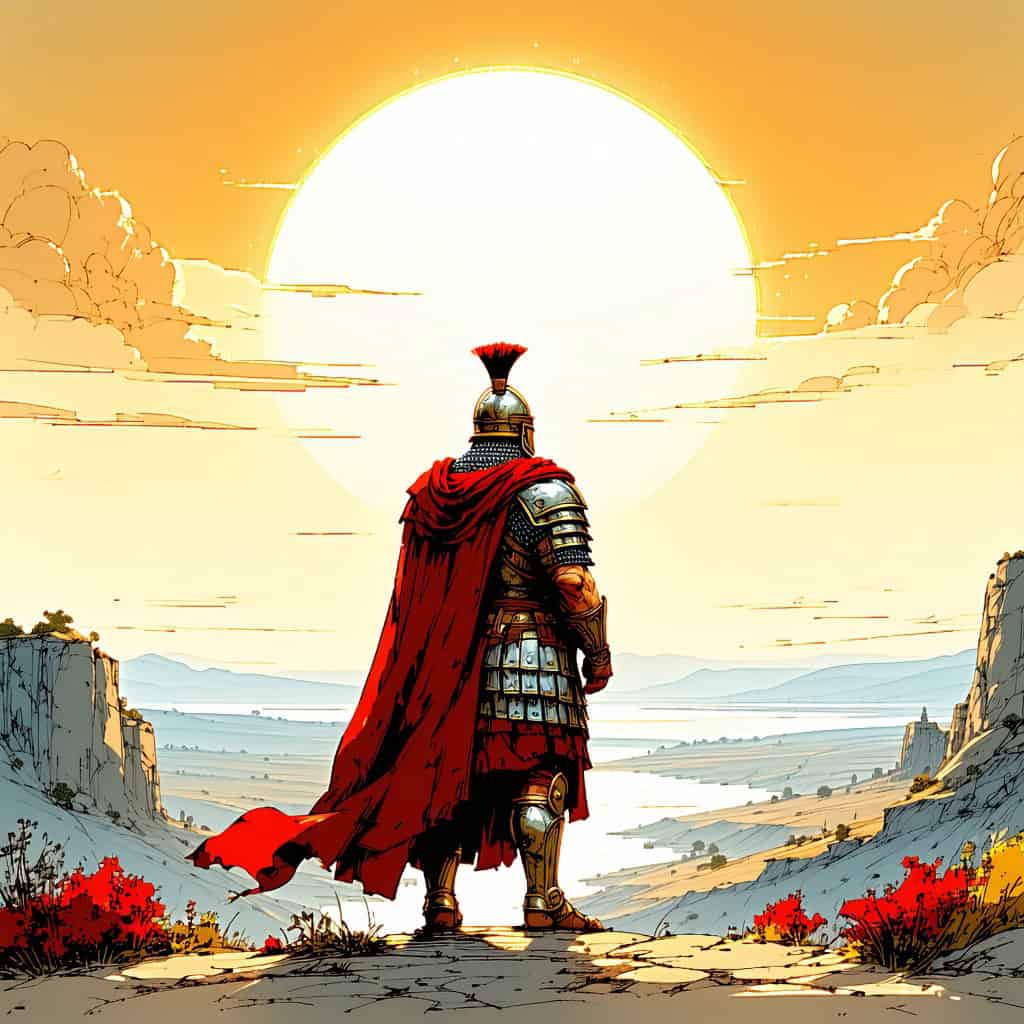
Galarius
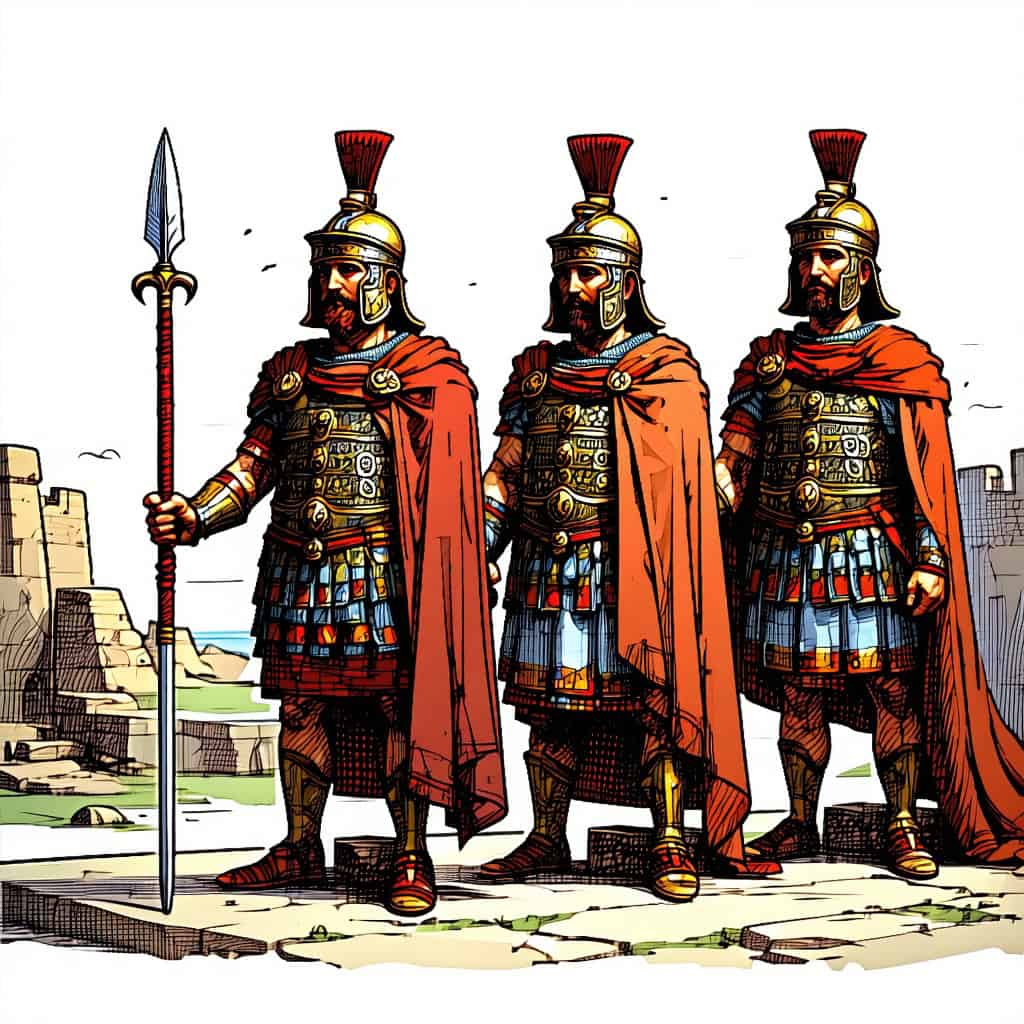
Constantius Chlorus
Lesson Details & Resources
In a Nutshell
- What: A system of government in ancient Rome where power was divided among four individuals.
- When: Established in AD 293 by Emperor Diocletian.
- Who: Emperor Diocletian, Emperor Maximian, and two junior emperors (Caesars).
- Outcome: The Roman Empire was divided into Eastern and Western regions, each ruled by a senior emperor and a junior emperor, leading to a more stable and efficient administration.
Famous Figures in the the Roman Tetrarchy
-
Diocletian
Diocletian: Roman emperor who initiated the Tetrarchy system and reigned from 284 to 305 AD.
-
Maximian
Maximian: Co-emperor with Diocletian in the Tetrarchy system, ruling from 286 to 305 AD.
-
Galerius
Galerius: Roman emperor who became Caesar in the Tetrarchy system and reigned from 305 to 311 AD.
-
Constantius Chlorus
Constantius Chlorus: Co-emperor with Galerius in the Tetrarchy system, ruling from 293 to 306 AD.
-
Maxentius
Maxentius: Roman emperor who declared himself as Augustus, opposing the Tetrarchy system from 306 to 312 AD.
-
Licinius
Licinius: Roman emperor who initially supported the Tetrarchy system but later became a rival to Constantine the Great, ruling from 308 to 324 AD.
Timeline of the Roman Tetrarchy
Formation of the Tetrarchy by Diocletian
Diocletian appoints Maximian as co-emperor
Maximian suppresses the Bagaudae rebellion in Gaul
Diocletian divides the Roman Empire into the Western and Eastern halves
Diocletian and Maximian create the office of Caesar, appointing Galerius and Constantius Chlorus
Diocletian and Maximian abdicate as Augusti, while Galerius and Constantius Chlorus become Augusti
Maximian attempts to regain power but is ultimately forced to commit suicide
Constantine the Great defeats Maxentius at the Battle of Milvian Bridge
Constantine becomes the sole ruler of the Western Roman Empire
Licinius, co-emperor in the East, is defeated by Constantine at the Battle of Chrysopolis
Constantine reunifies the Roman Empire under his rule
Death of Constantine the Great
Constantine's sons, Constantius II, Constans, and Constantine II, become Augusti
Constantine II dies, leaving Constantius II and Constans as co-emperors
Constans is assassinated, leaving Constantius II as the sole ruler
Constantius II dies, leading to a power struggle and the eventual division of the empire
Julian becomes the sole ruler of the Roman Empire
Death of Julian in battle against the Sassanid Empire
Jovian becomes the new emperor after Julian's death
The Tetrarchy officially comes to an end when Valentinian I becomes the sole ruler of the Western Roman Empire
Vocabulary List
- Tetrarchy
- The term 'Tetrarchy' refers to the system of government established by the Roman Emperor Diocletian in the late 3rd century CE, where power was divided among four co-emperors.
- Augustus
- In the Tetrarchy system, each co-emperor held the title of 'Augustus', which represented the highest rank and authority in the Roman Empire.
- Caesar
- Under the Tetrarchy, the two junior co-emperors were referred to as 'Caesars', holding a lower rank and assisting the Augusti in governing the empire.
- Diocletian
- Diocletian was the Roman Emperor who introduced the Tetrarchy system in 293 CE, aiming to provide a more efficient administration and secure succession.
- Dynasty
- The Tetrarchy marked a shift from the traditional Roman imperial dynasty, as it emphasized the importance of the system over individual rulers.
- Maximian
- Maximian was one of the co-emperors in the Tetrarchy, ruling alongside Diocletian as an Augustus and overseeing the Western Roman Empire.
- Galerius
- Galerius served as one of the Caesars in the Tetrarchy, assisting Diocletian and ruling over the Eastern Roman Empire.
- Constantine
- Constantine the Great, who eventually became the sole ruler of the Roman Empire, started his political career as a Caesar in the Tetrarchy.
- Division of power
- The Tetrarchy aimed to divide power and responsibilities among the co-emperors in order to effectively govern the vast Roman Empire and prevent succession crises.
- Abdication
- The Tetrarchy system allowed emperors to voluntarily step down from their positions, as seen in Diocletian's abdication in 305 CE.
Key Facts
This is the information used in the fact matching game
- Tetrarchy was a system of government introduced by the Roman Emperor Diocletian in the late 3rd century AD.
- The term 'Tetrarchy' means 'rule by four' in Greek.
- The Tetrarchy divided the Roman Empire into two halves, each ruled by two co-emperors known as Augusti and Caesars.
- Diocletian became the first Augustus of the Tetrarchy and ruled the Eastern half of the Roman Empire.
- Maximian became the second Augustus of the Tetrarchy and ruled the Western half of the Roman Empire.
- Galerius and Constantius Chlorus were appointed as Caesars by Diocletian and Maximian respectively.
- The Tetrarchy was established in order to increase the efficiency and stability of the Roman Empire.
- The Tetrarchy aimed to address the problem of succession and prevent civil wars over the imperial throne.
- Each Augustus of the Tetrarchy had a designated Caesar as their designated successor.
- The Tetrarchy marked a shift from the traditional Roman idea of a single ruler to a system of shared power.
- The Tetrarchy was not a hereditary system, as the Caesars were not necessarily the sons of the Augusti.
- The Tetrarchy brought relative stability to the Roman Empire for a short period of time.
- The Tetrarchy faced challenges such as internal power struggles and the threat of external invasions.
- After Diocletian's retirement, conflicts arose among the Tetrarchs, leading to the collapse of the system.
- The Tetrarchy had a significant impact on the administrative and territorial division of the Roman Empire.
- The Tetrarchy contributed to the decentralization of power within the Roman Empire.
- The Tetrarchy paved the way for the eventual split of the Roman Empire into the Western and Eastern Empires.
- The Tetrarchy system lasted from 293 AD until 313 AD.
- Constantine the Great, who emerged as the sole ruler after the collapse of the Tetrarchy, played a crucial role in the subsequent history of the Roman Empire.
- The Tetrarchy is considered a significant milestone in the late Roman Empire's transition towards the Byzantine Empire.
Analysis & Significance
Immediate Consequences
The Roman Tetrarchy, established by Emperor Diocletian in the late 3rd century AD, aimed to stabilize the empire by dividing power among four rulers. While initially successful in restoring order, it led to power struggles and instability as each ruler vied for control.
Long-Term Impact
The Roman Tetrarchy laid the groundwork for the eventual split of the Roman Empire into the Eastern and Western Empires. This division had profound effects on the future of Europe, shaping political, cultural, and religious developments for centuries to come.
Cultural Significance Today
The legacy of the Roman Tetrarchy can be seen in modern concepts of governance and power-sharing. It serves as a cautionary tale about the challenges of maintaining stability in a complex political system, and its influence can be found in discussions of leadership and statecraft to this day.
the Roman Tetrarchy Games


Take Your Learning Offline
Want a convenient, print-ready study guide for this lesson? Become a Memory Wizards Pro member to unlock the downloadable " Memory Scrolls" for this topic and our entire library!
- ✓ Complete Vocabulary Lists
- ✓ Key Facts & Timelines
- ✓ Beautifully Formatted for Print & Mobile