
Summary of Roman Empire Division into East and West
The split of an empire: How did the Roman Empire divide?
How Do You Learn Best?
Learn by Reading
Immerse yourself in the 10-minute visual lesson for a comprehensive understanding of the topic.
Learn by Reviewing
Jump directly to the key facts, timeline, and vocabulary lists to build a solid foundation of details.
Learn by Doing
Challenge yourself! Jump straight into the interactive games to learn by trial, error, and discovery.
Roman Empire Division into East and West in 10 Minutes
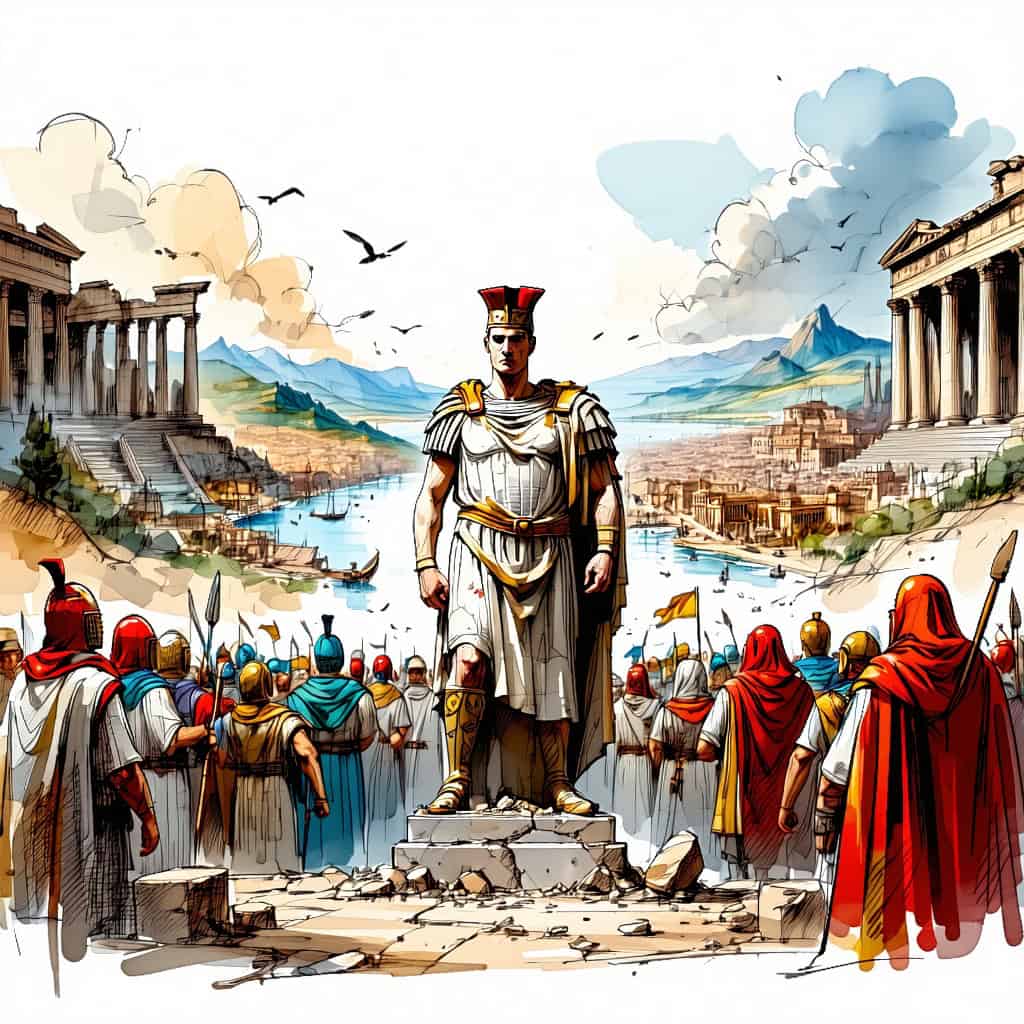
Introduction
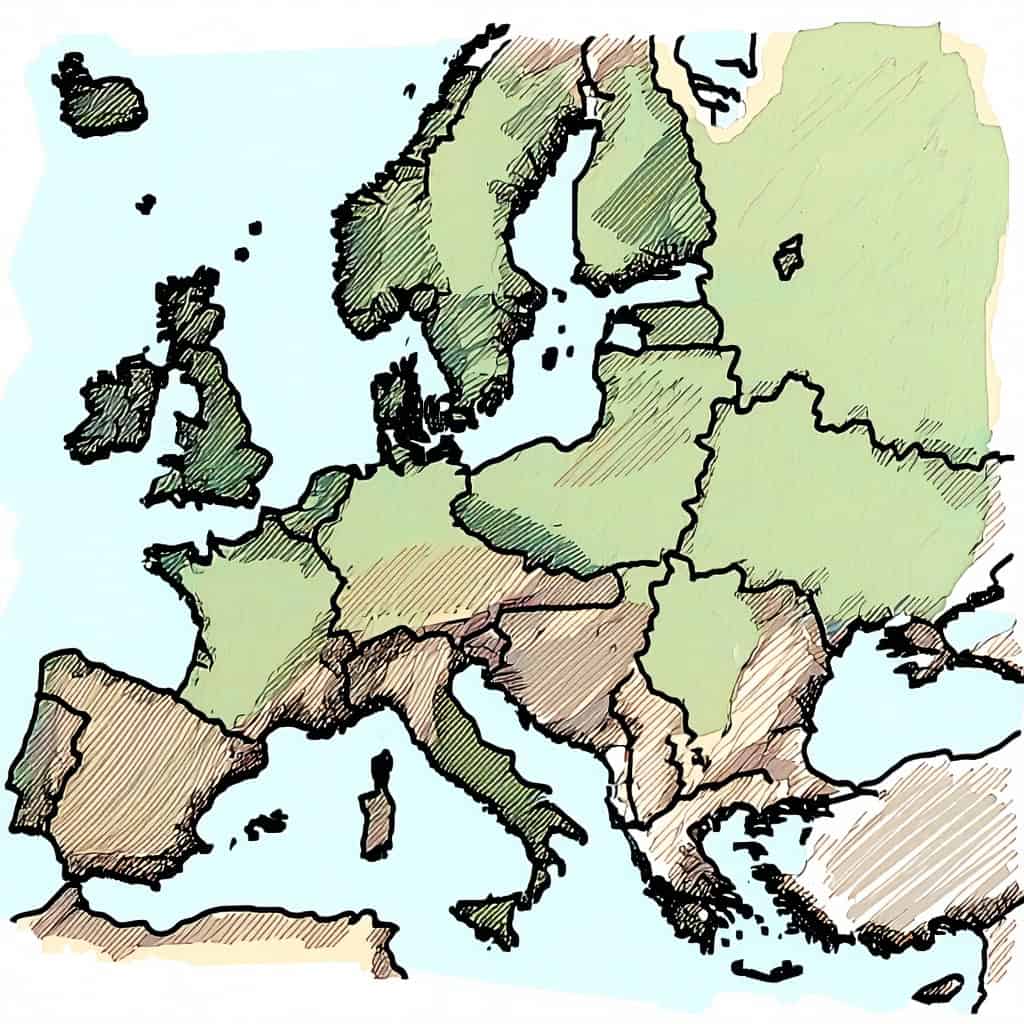
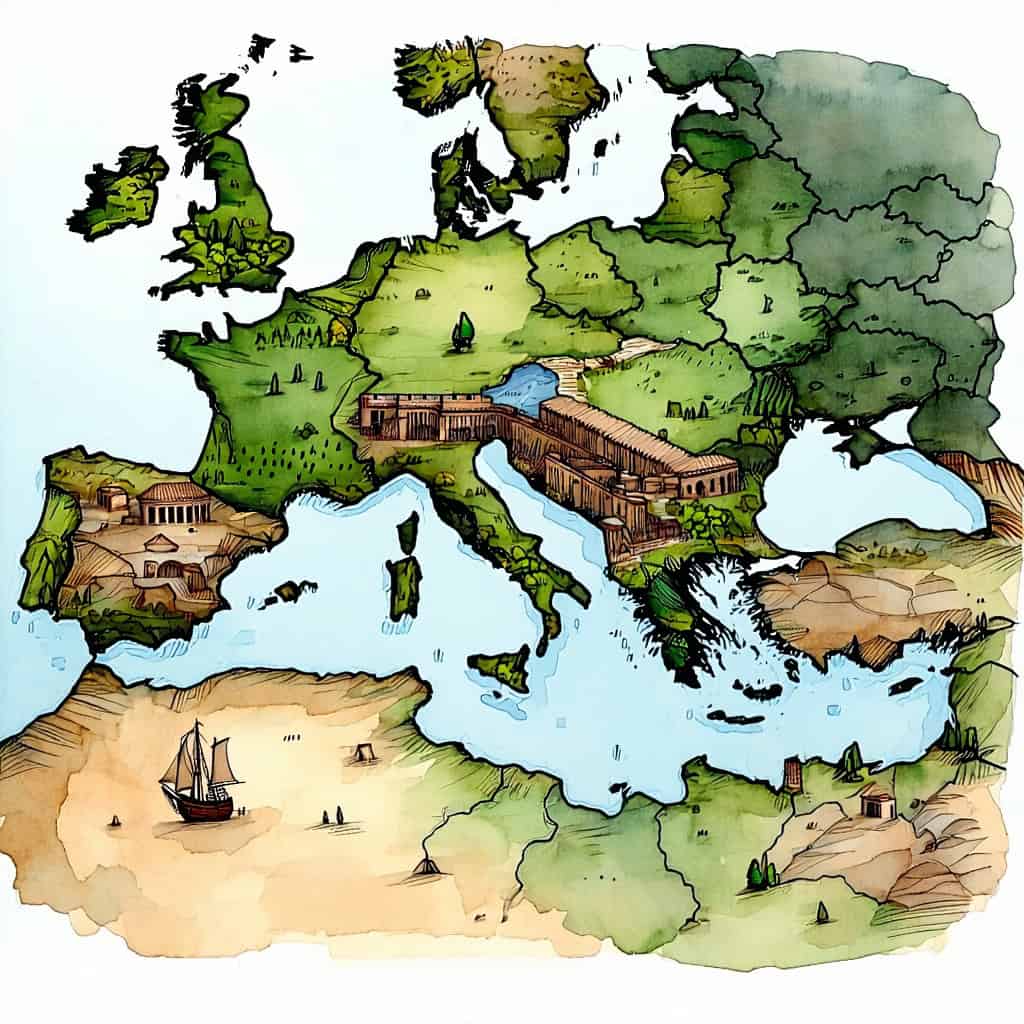
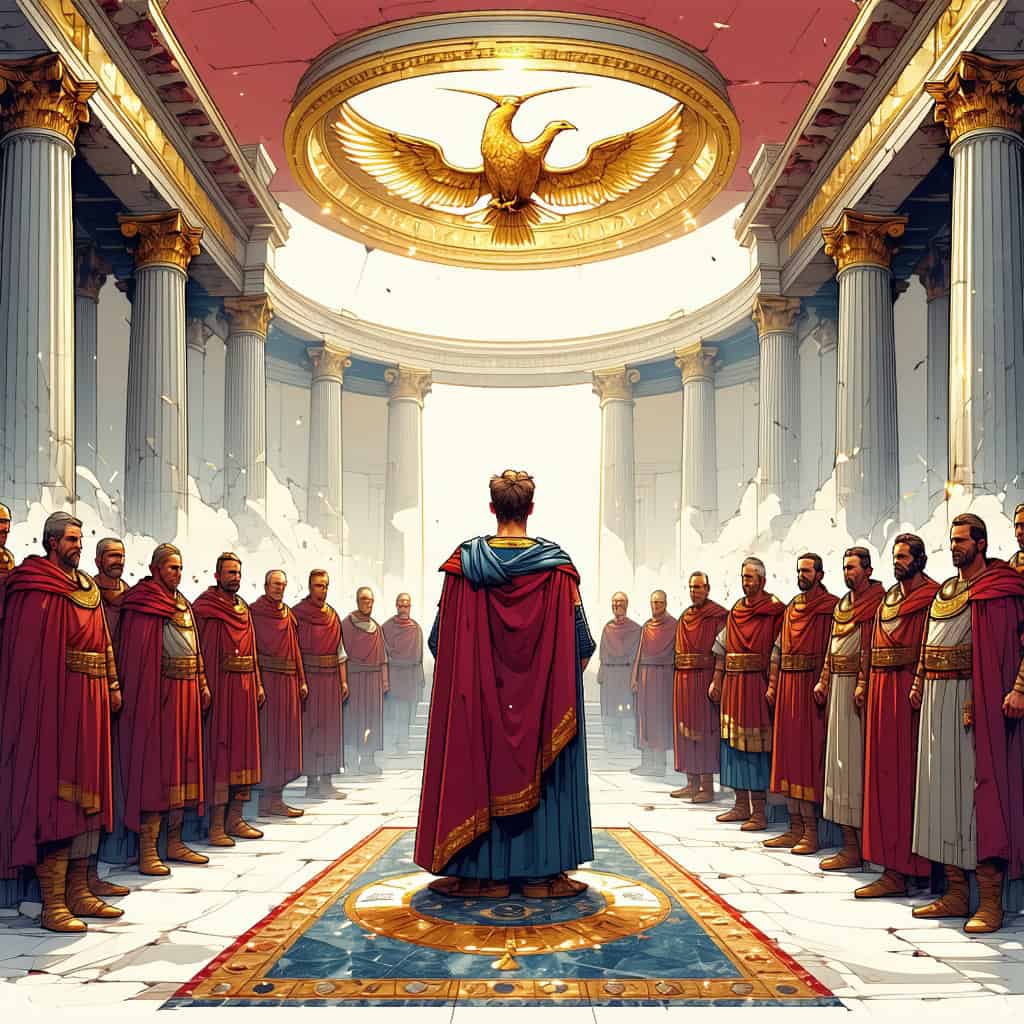
Emperor Diocletian
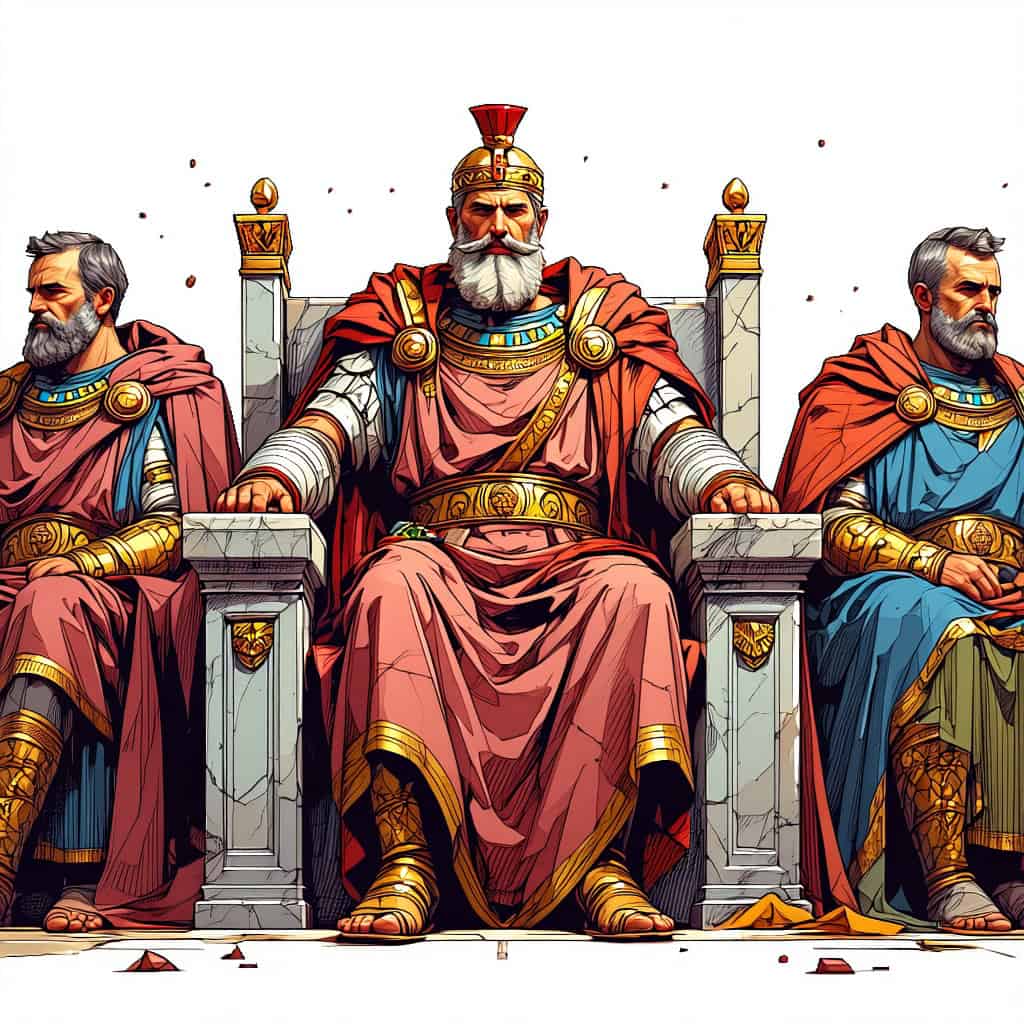
Emperor Maximian
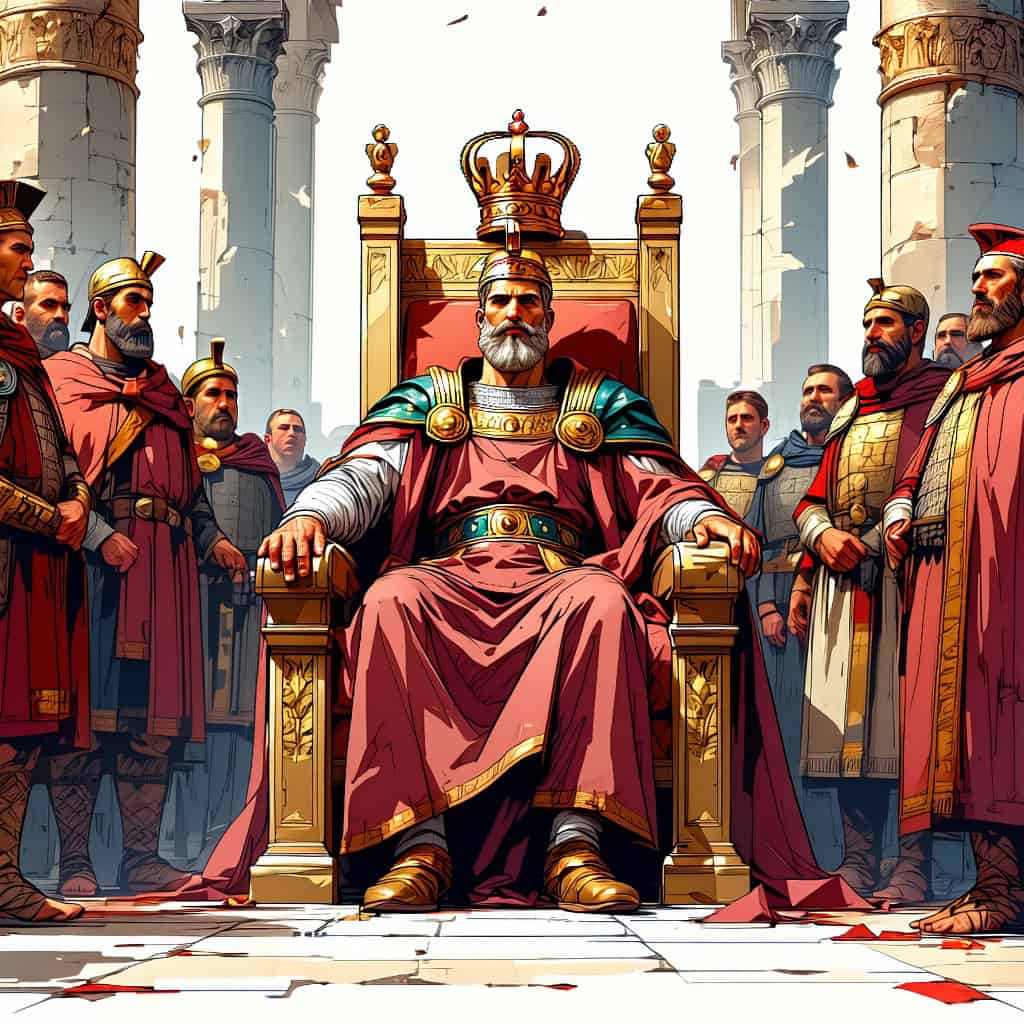
Emperor Galerius
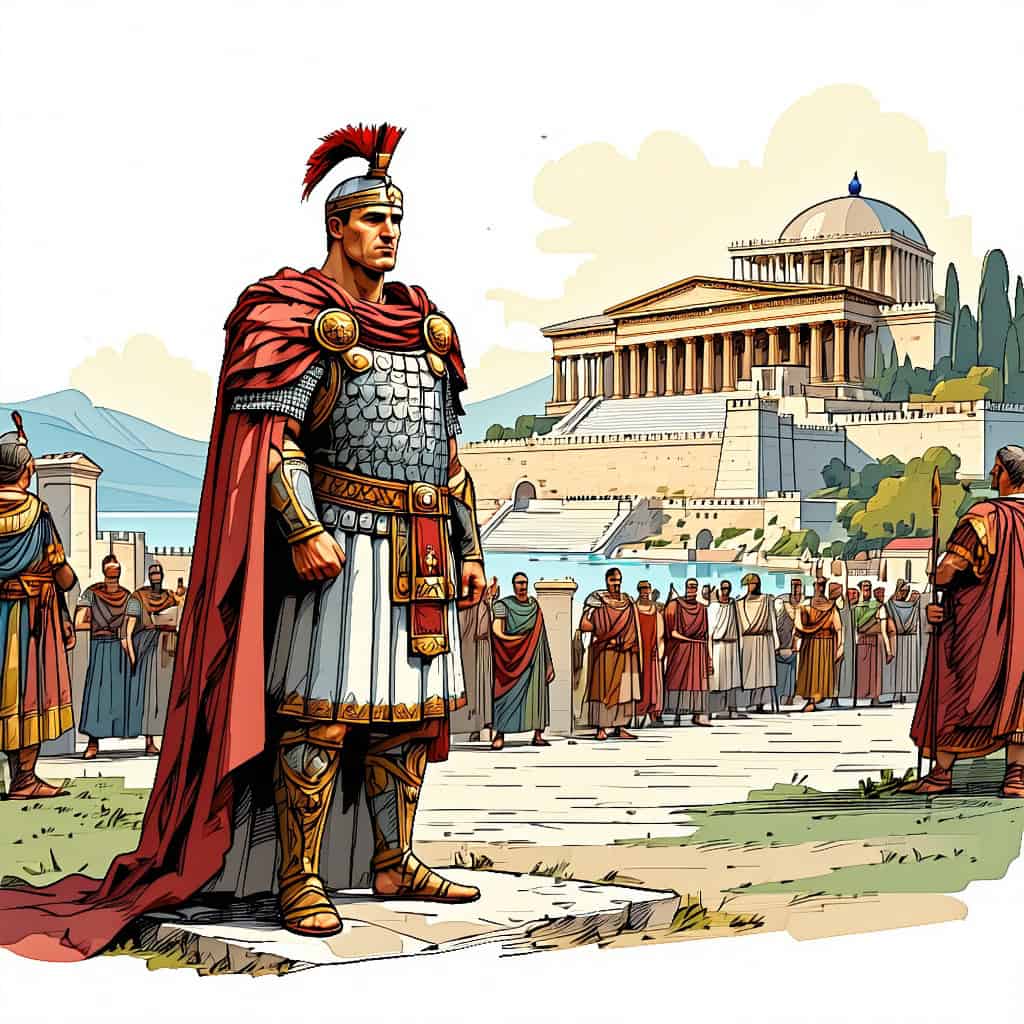
Emperor Constantius Chlorus

Diocletians Reign
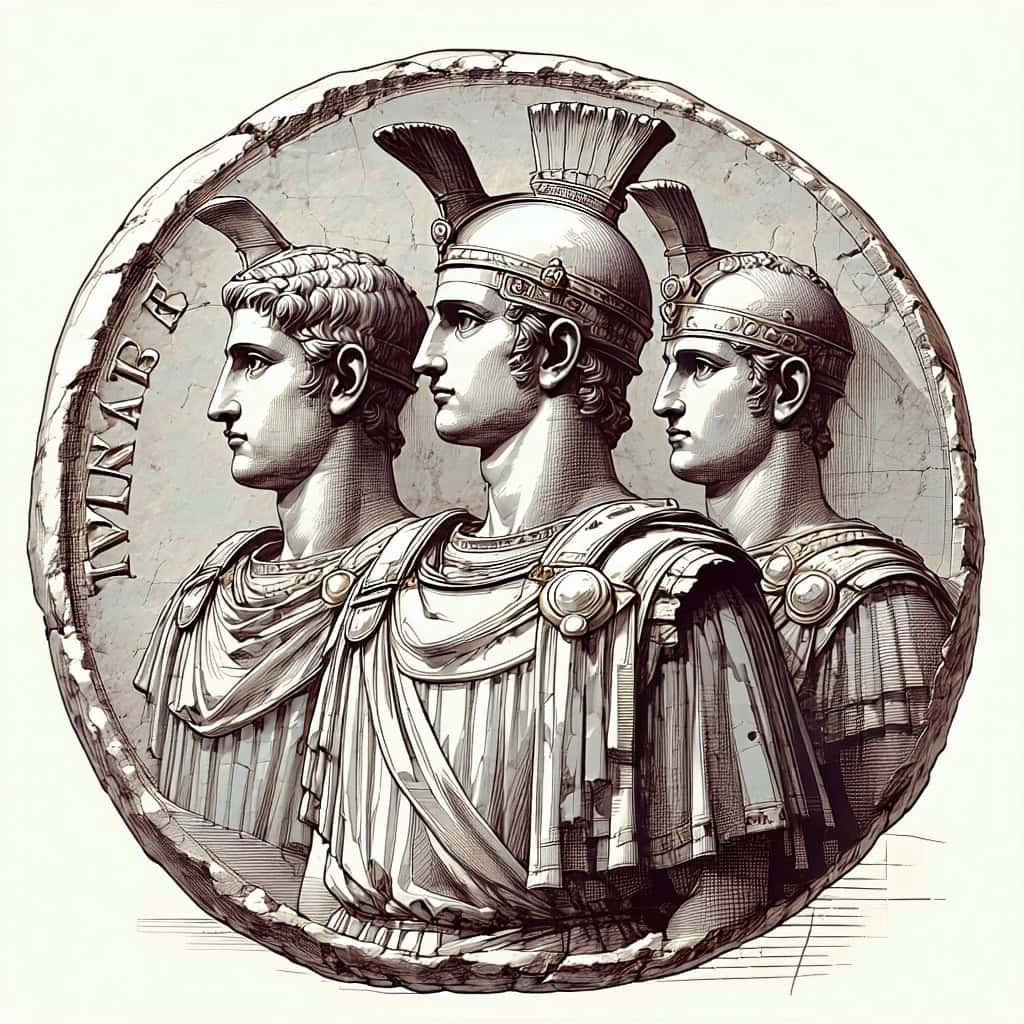
Tetrarchy System

Constantines Rise to Power

Constantinoples Establishment

Division of the Empire

Eastern and Western Empires

Impact on Governance

Legacy of the Division

End of an Era
Lesson Details & Resources
In a Nutshell
- What: Division of the Roman Empire into East and West
- When: 286 AD
- Who: Emperor Diocletian
- Outcome: Establishment of the Tetrarchy system to govern the empire
Famous Figures in the Roman Empire Division into East and West
-
Constantine the Great
Constantine the Great was the first Roman emperor to convert to Christianity and played a crucial role in the division of the Roman Empire.
-
Theodosius I
Theodosius I was the last emperor to rule over a unified Roman Empire, before it was permanently divided into East and West.
-
Valentinian I
Valentinian I was the emperor of the Western Roman Empire during the division in 286 AD.
-
Valens
Valens was the emperor of the Eastern Roman Empire during the division in 286 AD.
-
Gratian
Gratian was the co-emperor of the Western Roman Empire during the division in 286 AD.
-
Honorius
Honorius was the emperor of the Western Roman Empire during the division in 286 AD.
-
Arcadius
Arcadius was the emperor of the Eastern Roman Empire during the division in 286 AD.
-
Maximian
Maximian was a co-emperor of the Western Roman Empire and served alongside Diocletian during the Tetrarchy.
-
Diocletian
Diocletian was the Roman emperor who initiated the Tetrarchy system, dividing the empire into four parts.
-
Julian the Apostate
Julian the Apostate was the last pagan emperor of the Roman Empire and ruled during the division into East and West.
Timeline of Roman Empire Division into East and West
Diocletian becomes Roman Emperor and divides the empire into East and West
Constantine becomes Roman Emperor of the West
Constantine defeats Licinius and becomes sole ruler of the Roman Empire
Constantinople becomes the new capital of the Eastern Roman Empire
Theodosius I becomes Roman Emperor of the East
Theodosius I defeats the Western usurper Eugenius and reunites the empire
Theodosius I dies, leaving his two sons Arcadius and Honorius as emperors of the East and West respectively
Alaric and the Visigoths sack Rome
Constantinople becomes the sole capital of the Roman Empire
Romulus Augustulus is deposed by Odoacer, marking the end of the Western Roman Empire
The Eastern Roman Empire continues to exist as the Byzantine Empire
Justinian I becomes Byzantine Emperor and embarks on a campaign to reconquer the Western territories
Justinian I recaptures Italy and North Africa
The Byzantine Empire reaches its greatest territorial extent under Justinian I
The Byzantine Empire begins to decline due to external invasions and internal strife
The Arab conquests begin, leading to the loss of Byzantine territories in the Middle East and North Africa
The Byzantine Empire loses control of Italy to the Lombards
The Byzantine Empire experiences a revival under the Macedonian dynasty
The Byzantine Empire begins to decline again due to the Fourth Crusade and the rise of the Ottoman Turks
Vocabulary List
- Diocletian
- Emperor who divided the Roman Empire into East and West in 286 AD
- Tetrarchy
- System of government established by Diocletian with four rulers, two in the East and two in the West
- Constantinople
- Capital of the Eastern Roman Empire, founded by Constantine the Great
- Byzantium
- Original name of Constantinople before it was renamed by Constantine the Great
- Western Roman Empire
- The portion of the Roman Empire ruled from Rome after the division in 286 AD
- Eastern Roman Empire
- The portion of the Roman Empire ruled from Constantinople after the division in 286 AD
Key Facts
This is the information used in the fact matching game
- The division of the Roman Empire into East and West occurred in 286 AD under the rule of Emperor Diocletian.
- The Eastern Roman Empire, also known as the Byzantine Empire, had its capital in Constantinople (modern-day Istanbul).
- The Western Roman Empire had its capital in Rome.
- The division was made in an attempt to better govern the vast territory of the empire.
- The Western Roman Empire faced numerous invasions and internal conflicts, leading to its eventual collapse.
- The Eastern Roman Empire survived for nearly another thousand years after the division.
- The Western Roman Empire fell in 476 AD when the last Roman emperor, Romulus Augustulus, was deposed by the Germanic chieftain Odoacer.
- The Eastern Roman Empire continued to thrive and expand its territories under emperors like Justinian I.
- The division of the empire led to cultural and political differences between the Eastern and Western regions.
- The Eastern Roman Empire was known for its preservation of Greek and Roman culture, as well as its advancements in art, architecture, and law.
- The Western Roman Empire struggled with economic instability, invasions, and political corruption in the centuries following the division.
- The Western Roman Empire faced threats from various barbarian tribes, including the Visigoths, Vandals, and Huns.
- The division of the empire marked a significant turning point in the history of the Roman Empire and the ancient world.
- The Eastern Roman Empire played a crucial role in preserving and transmitting knowledge from the ancient world to the medieval period.
- The Western Roman Empire's collapse led to the beginning of the Middle Ages in Europe.
- The division of the empire contributed to the eventual rise of Christianity as the dominant religion in Europe.
- The Eastern Roman Empire faced threats from the Sassanid Empire in the east and the Arab Caliphates in the south.
- The Western Roman Empire was unable to effectively govern its vast territories due to political fragmentation and economic decline.
- The division of the empire had lasting effects on the political and cultural landscape of Europe and the Mediterranean region.
- The Eastern Roman Empire's legacy endured long after its fall, influencing the development of Byzantine, Ottoman, and Russian civilizations.
Analysis & Significance
Immediate Consequences
The division of the Roman Empire into East and West in 286 AD marked the beginning of a significant shift in power and administration. The Eastern Roman Empire, centered in Byzantium (later Constantinople), became increasingly distinct from the Western Roman Empire in terms of culture, language, and political structures. This division set the stage for a period of internal strife and external threats that would ultimately weaken the empire as a whole.
Long-Term Impact
The split of the Roman Empire into East and West had profound and lasting effects on the course of history. The Western Roman Empire faced continuous invasions and internal conflicts, ultimately leading to its fall in 476 AD. In contrast, the Eastern Roman Empire, known as the Byzantine Empire, endured for another thousand years, preserving Roman traditions and spreading Greek culture throughout the Mediterranean and beyond.
Cultural Significance Today
The division of the Roman Empire into East and West continues to influence our understanding of ancient history and the development of Western civilization. The legacy of the Roman Empire’s division can be seen in the lasting impact of Byzantine art, architecture, and political institutions. Additionally, the split between the Eastern Orthodox and Roman Catholic churches can be traced back to this division, highlighting its ongoing cultural and religious significance in modern times.
Roman Empire Division into East and West Games


Take Your Learning Offline
Want a convenient, print-ready study guide for this lesson? Become a Memory Wizards Pro member to unlock the downloadable " Memory Scrolls" for this topic and our entire library!
- ✓ Complete Vocabulary Lists
- ✓ Key Facts & Timelines
- ✓ Beautifully Formatted for Print & Mobile