
Summary of Battle of Adrianople
Uncover the secrets of the ancient Battle of Adrianople (AD 251).
How Do You Learn Best?
Learn by Reading
Immerse yourself in the 10-minute visual lesson for a comprehensive understanding of the topic.
Learn by Reviewing
Jump directly to the key facts, timeline, and vocabulary lists to build a solid foundation of details.
Learn by Doing
Challenge yourself! Jump straight into the interactive games to learn by trial, error, and discovery.
Battle of Adrianople in 10 Minutes
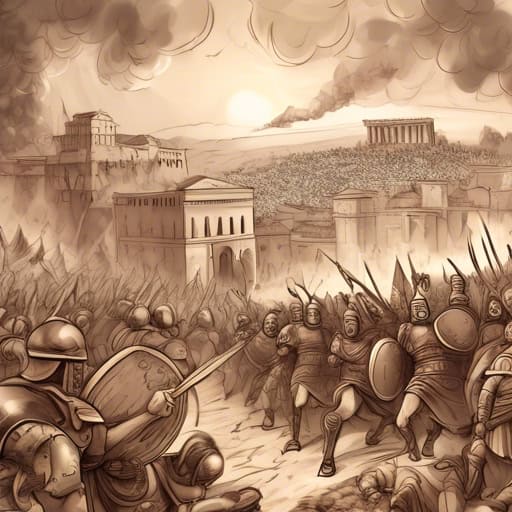
Introduction
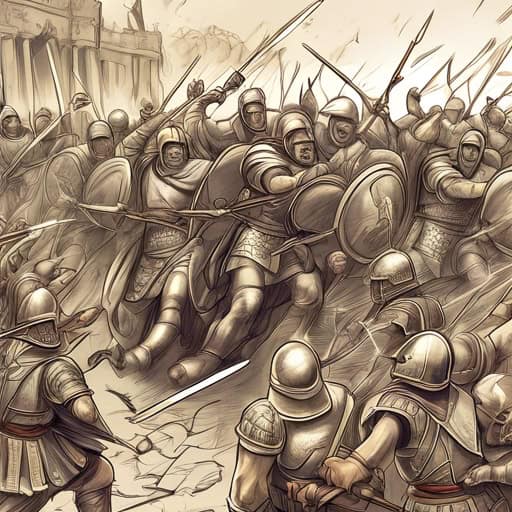

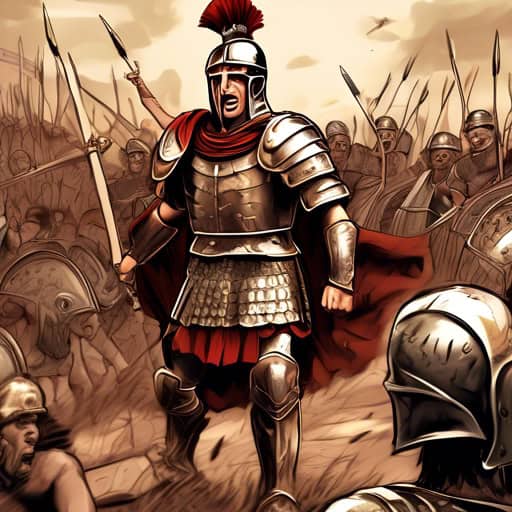
Emperor Trebonianus Gallus
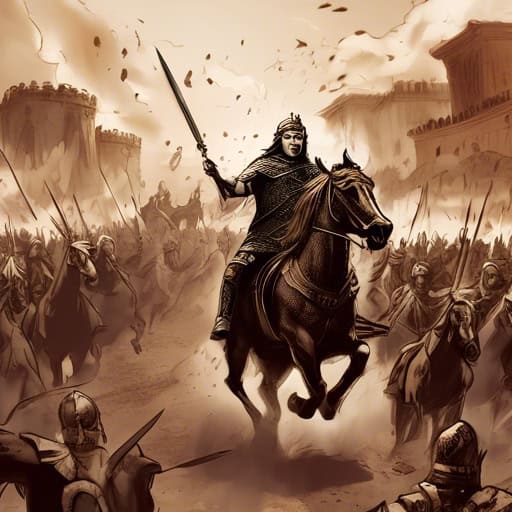
King Cniva of the Goths
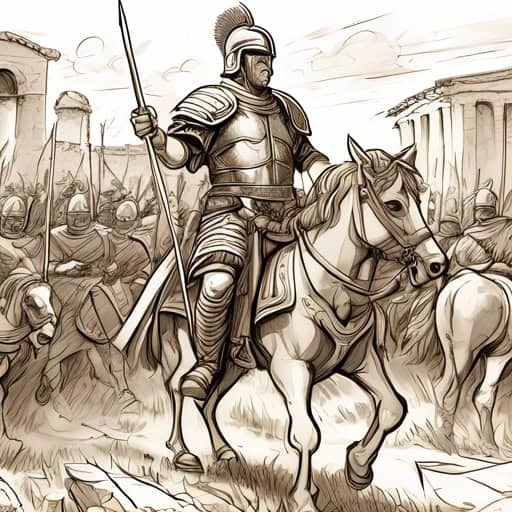
Decius
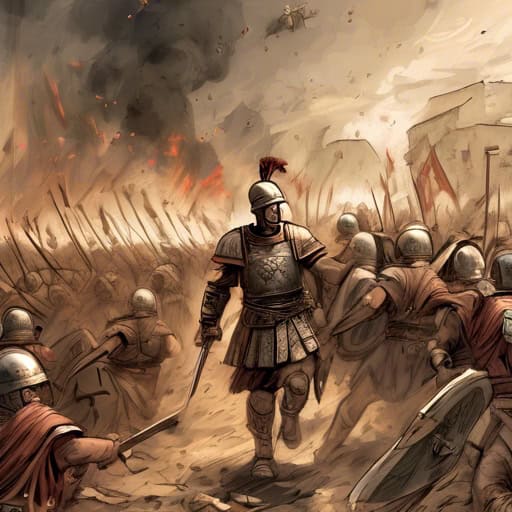
Valerian
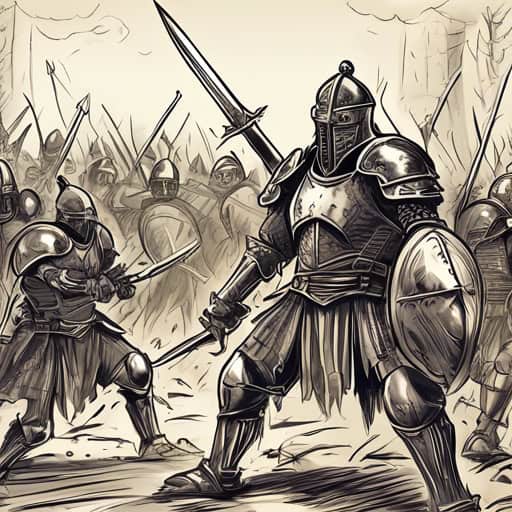
Gothic Warriors

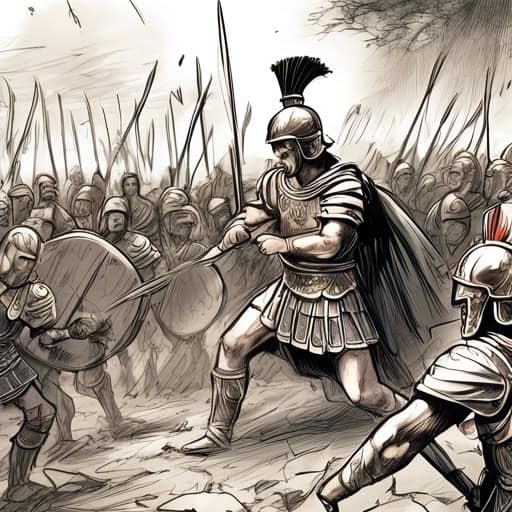
1. Roman Emperor Decius vs. Gothic King Cniva

2. Initial Roman Success

3. Gothic Victory

4. Decius Death

5. Roman Retreat

6. Impact on the Roman Empire

7. Goths Rise to Power
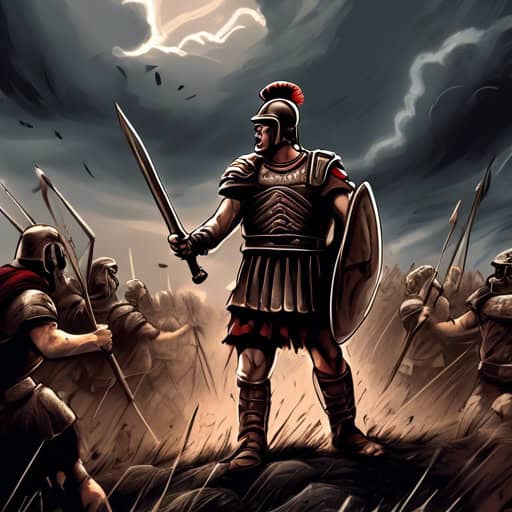
8. Legacy of the Battle

9. Lessons Learned

10. Remembering Adrianople
Lesson Details & Resources
In a Nutshell
- What: A significant battle during the Roman Empire’s Crisis of the Third Century.
- When: AD 251
- Who: Roman Emperor Decius vs. the Goths led by King Cniva
- Outcome: Decisive Gothic victory, resulting in the death of Emperor Decius and heavy losses for the Roman army.
Famous Figures in the Battle of Adrianople
-
Emperor Decius
Decius was the Roman Emperor at the time of the Battle of Adrianople.
-
Emperor Trebonianus Gallus
Trebonianus Gallus succeeded Decius as Emperor after his death at the battle.
-
Emperor Volusianus
Volusianus was the son of Trebonianus Gallus and co-ruled with his father.
-
Emperor Aemilianus
Aemilianus briefly ruled as Emperor after the death of Trebonianus Gallus and Volusianus.
-
Emperor Hostilian
Hostilian was another son of Trebonianus Gallus who briefly ruled as co-Emperor.
-
Emperor Valerian
Valerian was another Roman Emperor who reigned during the crisis of the third century.
-
Emperor Gallienus
Gallienus was the son of Valerian and ruled as Emperor after his father's capture by the Persians.
-
Emperor Claudius II
Claudius II, also known as Claudius Gothicus, succeeded Gallienus as Emperor.
-
Emperor Aurelian
Aurelian was a Roman Emperor known for his military successes, including defeating the Alamanni at the Battle of Placentia.
-
Emperor Probus
Probus was another Roman Emperor who reigned in the tumultuous period of the third century.
Timeline of Battle of Adrianople
Decius becomes Roman Emperor
Decius starts a persecution of Christians
Decius appoints his son Herennius Etruscus as Caesar
Decius and Herennius Etruscus march against the Goths
Battle of Beroe
Decius and Herennius Etruscus defeat the Goths
Death of Herennius Etruscus
Decius appoints his younger son Hostilian as Caesar
Decius and Hostilian continue campaign against the Goths
Battle of Abrittus
Death of Decius and Hostilian
Gallus becomes Roman Emperor
Gallus makes peace with the Goths
Gallus appoints his son Volusianus as Caesar
Gallus and Volusianus engage in a campaign against the Goths
Death of Gallus and Volusianus
Aemilianus becomes Roman Emperor
Aemilianus defeats the Goths
Death of Aemilianus
Battle of Adrianople
Vocabulary List
- Goths
- A Germanic tribe that played a significant role in the Battle of Adrianople
- Emperor Decius
- The Roman Emperor who led the Roman Army in the Battle of Adrianople
- Cavalry
- A military unit composed of soldiers who fight on horseback
- Infantry
- Foot soldiers who fight on foot
- Legion
- A large unit of the Roman Army, typically consisting of around 5,000 soldiers
- Barbarians
- A term used by the Romans to refer to non-Roman people, often considered uncivilized
- Pincer movement
- A military tactic where forces attack the enemy from two sides
- Spear
- A long, pointed weapon used for thrusting or throwing
- Shield
- A protective device carried by soldiers to block or deflect attacks
- Vanguard
- The leading part of an army or fleet in battle
- Retreat
- To withdraw from a battle or enemy forces
- Siege
- A military operation where a fortified place is surrounded and isolated to force surrender
- Casualties
- People who are killed, wounded, or missing during a battle or war
- Strategy
- A plan of action designed to achieve a long-term goal, especially in warfare
- Tactics
- The specific actions taken during a battle or military operation to achieve an immediate objective
- Flank
- The side or edge of a military formation
- Ambush
- A surprise attack by concealed forces
- Cataphract
- A heavily armored cavalry soldier
- Hoplite
- A heavily armed foot soldier in ancient Greek warfare
- Triarii
- The veteran soldiers who formed the third line of the Roman manipular legion.
Key Facts
This is the information used in the fact matching game
- The Battle of Adrianople, also known as the Battle of Abritus, took place in AD 251
- It was fought between the Roman Empire and the Goths
- The Roman Empire was led by Emperor Trajan Decius
- The Goths were led by their king, Cniva
- The battle occurred near the city of Adrianople, in modern-day Bulgaria
- It was one of the first major clashes between the Romans and the Goths
- The Roman army consisted of around 80,000 soldiers
- The Goth army numbered around 70,000 warriors
- The Romans were initially successful, causing heavy casualties among the Goths
- However, the situation quickly turned in favor of the Goths
- The Roman cavalry suffered a heavy defeat, leading to a chaotic retreat
- Emperor Trajan Decius and his son, Herennius Etruscus, were both killed in the battle
- This was the first time a Roman emperor had died in battle against a foreign enemy
- The Roman defeat at Adrianople led to a period of instability and territorial losses
- The Goths were able to plunder the Roman Empire following their victory
- The Battle of Adrianople marked a turning point in Roman-Goth relations
- The Goths would go on to establish their own kingdom in the region
- This battle also highlighted the vulnerability of the Roman Empire to external threats
- The defeat at Adrianople contributed to the decline of the Roman Empire
- The battle is considered significant in the history of the Roman military.
Analysis & Significance
Immediate Consequences
The Battle of Adrianople in AD 251 resulted in a devastating defeat for the Roman Empire, with Emperor Decius and his son losing their lives in the conflict. The Roman army suffered heavy casualties, and the defeat weakened the empire’s military power in the region.
Long-Term Impact
The Battle of Adrianople marked a turning point in the decline of the Roman Empire, as it exposed the vulnerability of the Roman military to barbarian invasions. This defeat paved the way for further incursions by barbarian tribes and contributed to the eventual fall of the Western Roman Empire.
Cultural Significance Today
The Battle of Adrianople is remembered as a significant event in Roman history, highlighting the challenges faced by large empires in maintaining their territories. It serves as a cautionary tale about the importance of military strength and strategic planning in the face of external threats, resonating with contemporary discussions on geopolitical challenges and defense strategies.
Battle of Adrianople Games


Take Your Learning Offline
Want a convenient, print-ready study guide for this lesson? Become a Memory Wizards Pro member to unlock the downloadable " Memory Scrolls" for this topic and our entire library!
- ✓ Complete Vocabulary Lists
- ✓ Key Facts & Timelines
- ✓ Beautifully Formatted for Print & Mobile