
Summary of Vandal Invasions of North Africa (429-534 AD)
The rise and fall of empires in the ancient desert sands.
How Do You Learn Best?
Learn by Reading
Immerse yourself in the 10-minute visual lesson for a comprehensive understanding of the topic.
Learn by Reviewing
Jump directly to the key facts, timeline, and vocabulary lists to build a solid foundation of details.
Learn by Doing
Challenge yourself! Jump straight into the interactive games to learn by trial, error, and discovery.
Vandal Invasions of North Africa in 10 Minutes
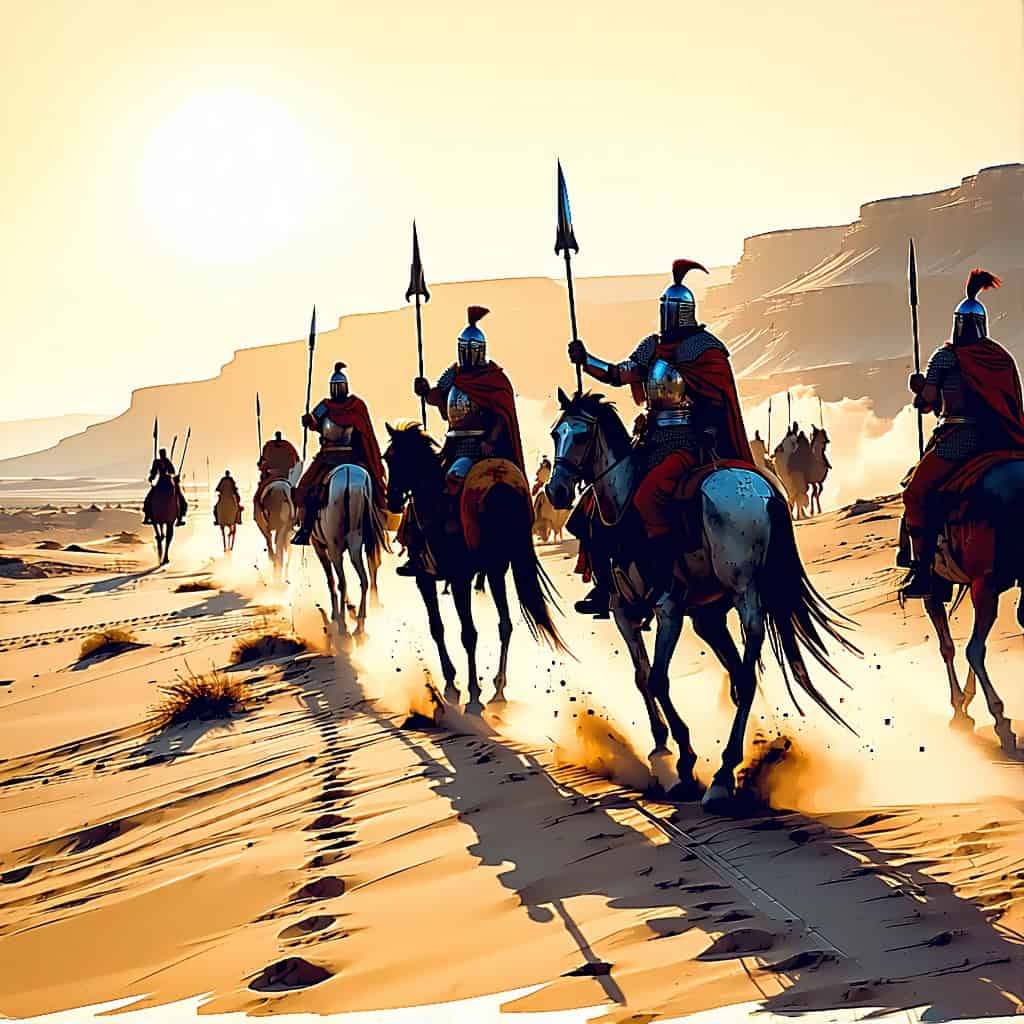
Introduction
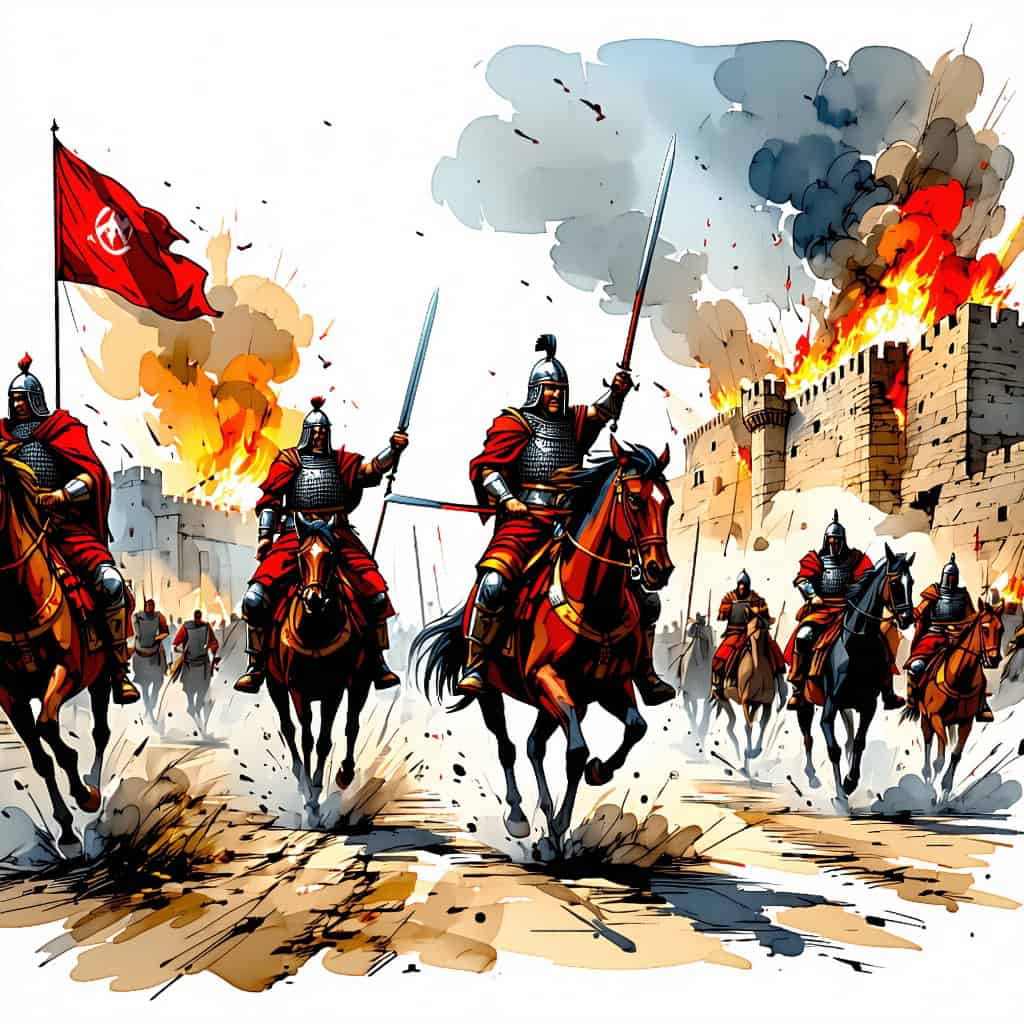


Gaiseric
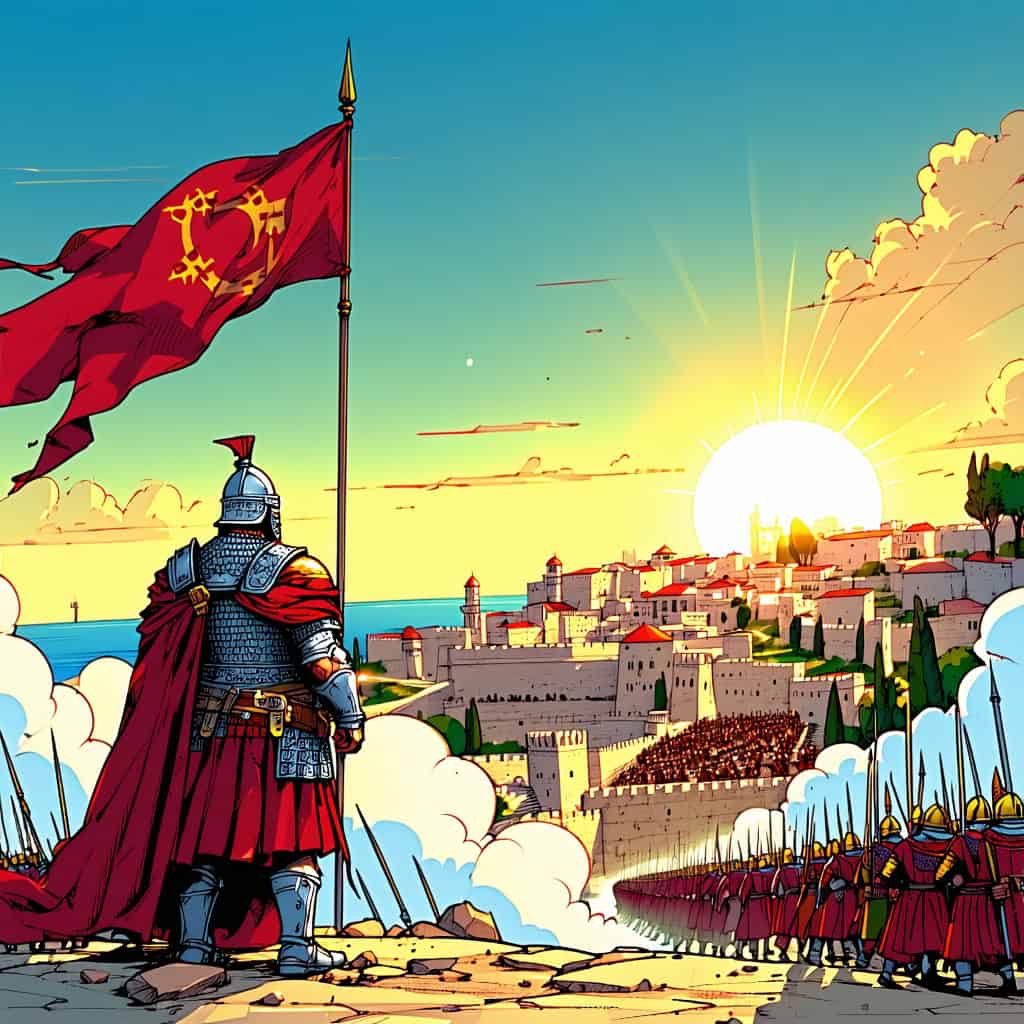
Belisarius

Hilderic

Justinian I

The Vandal Invasion (429 AD)

The Sack of Rome (455 AD)

The Kingdom of the Vandals (477 AD)

Religious Persecution (484 AD)

The Byzantine Reconquest (533 AD)

The End of Vandal Rule (534 AD)
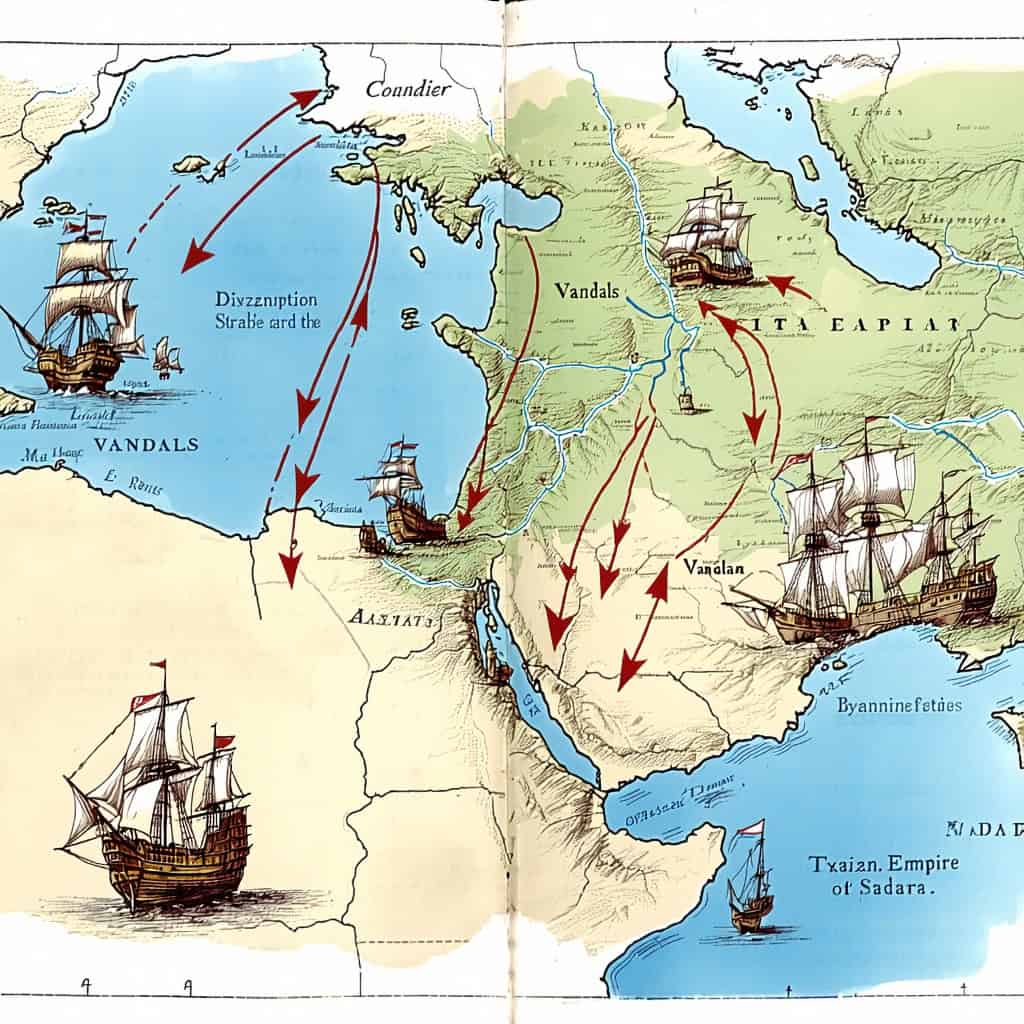
Lesson Details & Resources
In a Nutshell
- What: Vandal Invasions of North Africa (429-534 AD)
- When: 429-534 AD
- Who: Vandals
- Outcome: Establishment of the Vandal Kingdom in North Africa
Famous Figures in the Vandal Invasions of North Africa
-
Genseric
Genseric was the king of the Vandals and led the invasion of North Africa in 429 AD. He established the Vandal Kingdom and was known for his naval prowess and military victories.
-
Belisarius
Belisarius was a Byzantine general who played a significant role in the Vandal Invasions. He led the Byzantine forces in the reconquest of North Africa under the orders of Emperor Justinian I.
-
Boniface
Boniface was a Roman general who initially supported the Vandals but later switched sides and fought against them. He played a crucial role in the Byzantine reconquest of North Africa.
-
Huneric
Huneric was a Vandal king who ruled during the later years of the Vandal Invasions. He implemented religious persecution against Catholics and enforced Arianism as the state religion.
-
Thrasamund
Thrasamund was another Vandal king who ruled after Genseric's death. He continued the Vandal rule in North Africa and had a relatively peaceful reign compared to his predecessors.
-
Gelimer
Gelimer was the last king of the Vandals and ruled during the final years of the Vandal Kingdom. He was defeated by Belisarius in the Battle of Tricamarum, leading to the end of Vandal rule in North Africa.
Timeline of Vandal Invasions of North Africa
Vandals invade North Africa
Vandals capture Carthage
Vandals establish the Kingdom of the Vandals and Alans
Vandals raid Sicily
Vandals sack Rome
Vandals raid Corsica and Sardinia
Vandals conquer the Balearic Islands
Vandals raid Greece
Byzantine Empire launches unsuccessful campaigns against the Vandals
Vandals invade and conquer Tripolitania
Byzantine Empire launches a successful invasion of North Africa
Vandal king Gelimer surrenders to the Byzantine Empire
Vandal Kingdom is dissolved
North Africa becomes part of the Byzantine Empire
Vandal descendants assimilate into the local population
Vandalic language disappears
North Africa falls under Arab Muslim rule
Vandal presence in North Africa is completely erased
Vocabulary List
- Vandal
- The Vandals were a Germanic tribe that invaded North Africa in the 5th century AD.
- North Africa
- The region comprising present-day countries like Morocco, Algeria, Tunisia, Libya, and parts of Egypt, where the Vandal invasions took place.
- Invasion
- The act of forcefully entering and conquering a territory, often with the intent to establish control.
- Germanic tribe
- A group of people with Germanic origins who shared a common language, culture, and often engaged in migration and warfare.
- 5th century AD
- The time period between 401 AD and 500 AD, during which the Vandal invasions of North Africa occurred.
- Tribe
- A social group consisting of families or communities linked by shared culture, language, and leadership.
- Conquest
- The act of gaining control over a territory through military force or political means.
- Control
- The ability to influence or govern a territory, its people, and resources.
Key Facts
This is the information used in the fact matching game
- The Vandal invasions of North Africa began in 429 AD with the conquest of Carthage.
- The Vandals were a Germanic tribe that had previously settled in Spain before moving to North Africa.
- The Vandal king, Genseric, led the invasion of North Africa and established a kingdom that lasted until 534 AD.
- The Vandal kingdom in North Africa was known for its piracy and raids on Roman territories in the Mediterranean.
- The Vandals sacked Rome in 455 AD, causing widespread destruction and looting.
- The Vandal kingdom in North Africa was eventually conquered by the Byzantine Empire in 534 AD.
- The Vandal invasions of North Africa weakened the Western Roman Empire and contributed to its eventual collapse.
- The Vandals were Arian Christians, which set them apart from the Catholic Romans in North Africa.
- The Vandal kingdom in North Africa was centered around Carthage and included territories in modern-day Tunisia, Algeria, and Libya.
- The Vandals established a powerful navy that controlled the Mediterranean Sea and disrupted trade routes.
- The Vandals were known for their brutal treatment of the Roman population in North Africa, including massacres and enslavement.
- The Vandal kingdom in North Africa faced internal unrest and rebellions from the Roman population.
- The Vandals plundered Sicily and Sardinia before establishing themselves in North Africa.
- The Vandal kingdom in North Africa was a rival to the Byzantine Empire in the Mediterranean.
- The Vandals were eventually defeated by the Byzantine general Belisarius in the Vandalic War.
- After the fall of the Vandal kingdom, North Africa was reabsorbed into the Byzantine Empire.
- The Vandal invasions of North Africa had a lasting impact on the region, leading to economic decline and cultural changes.
- The Vandals were eventually assimilated into the local population of North Africa after the fall of their kingdom.
- The Vandal invasions of North Africa were part of the larger migrations of Germanic tribes that contributed to the fall of the Western Roman Empire.
- The Vandal kingdom in North Africa was one of the last Germanic kingdoms to fall in the Mediterranean region.
Analysis & Significance
Immediate Consequences
The Vandal invasions of North Africa from 429 to 534 AD resulted in widespread destruction, pillaging, and displacement of local populations. The Vandals’ conquests disrupted trade routes, leading to economic instability and social upheaval in the region.
Long-Term Impact
The Vandal invasions had a lasting impact on the history of North Africa. The Vandals established a kingdom that endured for over a century, influencing the political landscape of the region. Their rule also left a mark on the cultural and religious practices of the local population.
Cultural Significance Today
The Vandal invasions of North Africa are remembered as a significant chapter in the history of the region. The legacy of the Vandals continues to be studied by historians and archaeologists, shedding light on the complexities of migration, conquest, and cultural exchange in ancient times. The events of this period also serve as a reminder of the importance of resilience and adaptation in the face of adversity.
Vandal Invasions of North Africa Games


Take Your Learning Offline
Want a convenient, print-ready study guide for this lesson? Become a Memory Wizards Pro member to unlock the downloadable " Memory Scrolls" for this topic and our entire library!
- ✓ Complete Vocabulary Lists
- ✓ Key Facts & Timelines
- ✓ Beautifully Formatted for Print & Mobile