
Summary of the Reign of Romulus Augustulus
Witness the fall of an empire through the eyes of a boy king.
How Do You Learn Best?
Learn by Reading
Immerse yourself in the 10-minute visual lesson for a comprehensive understanding of the topic.
Learn by Reviewing
Jump directly to the key facts, timeline, and vocabulary lists to build a solid foundation of details.
Learn by Doing
Challenge yourself! Jump straight into the interactive games to learn by trial, error, and discovery.
the Reign of Romulus Augustulus in 10 Minutes
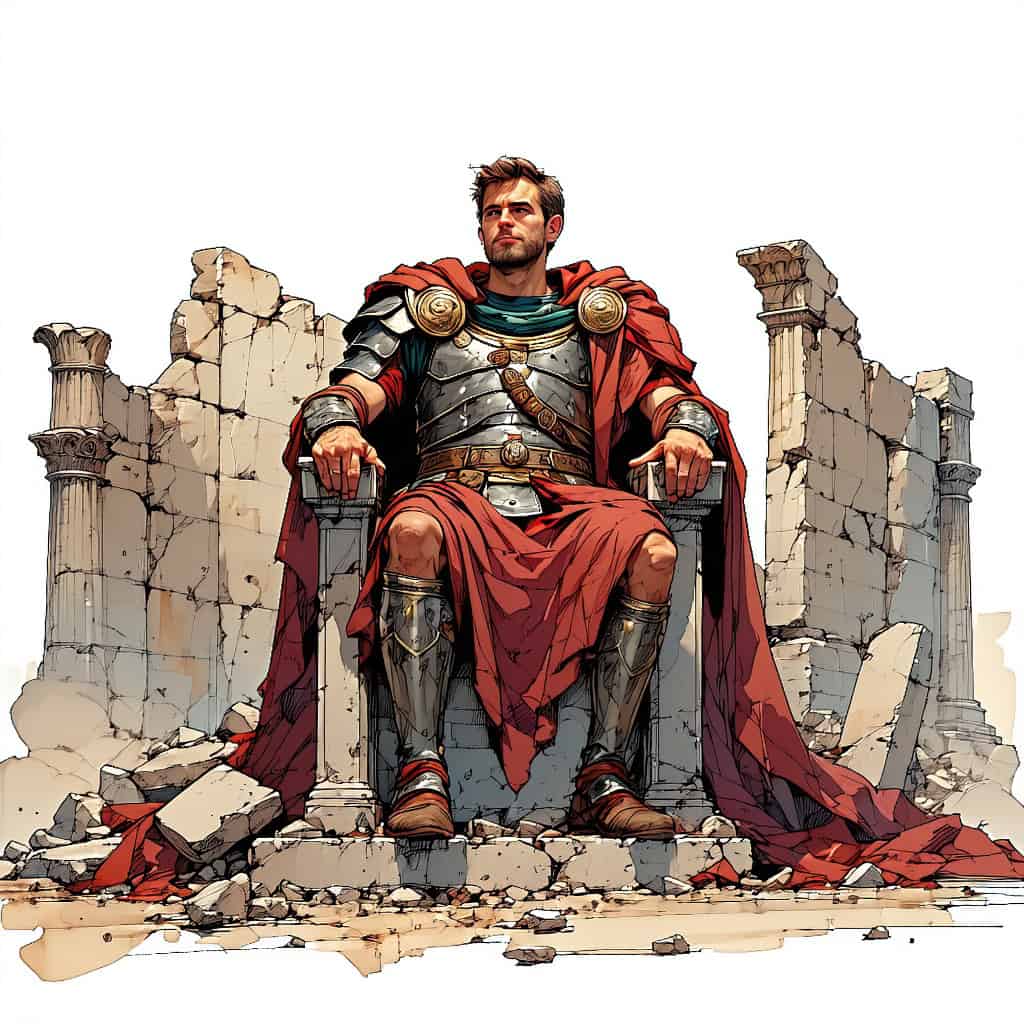
Introduction
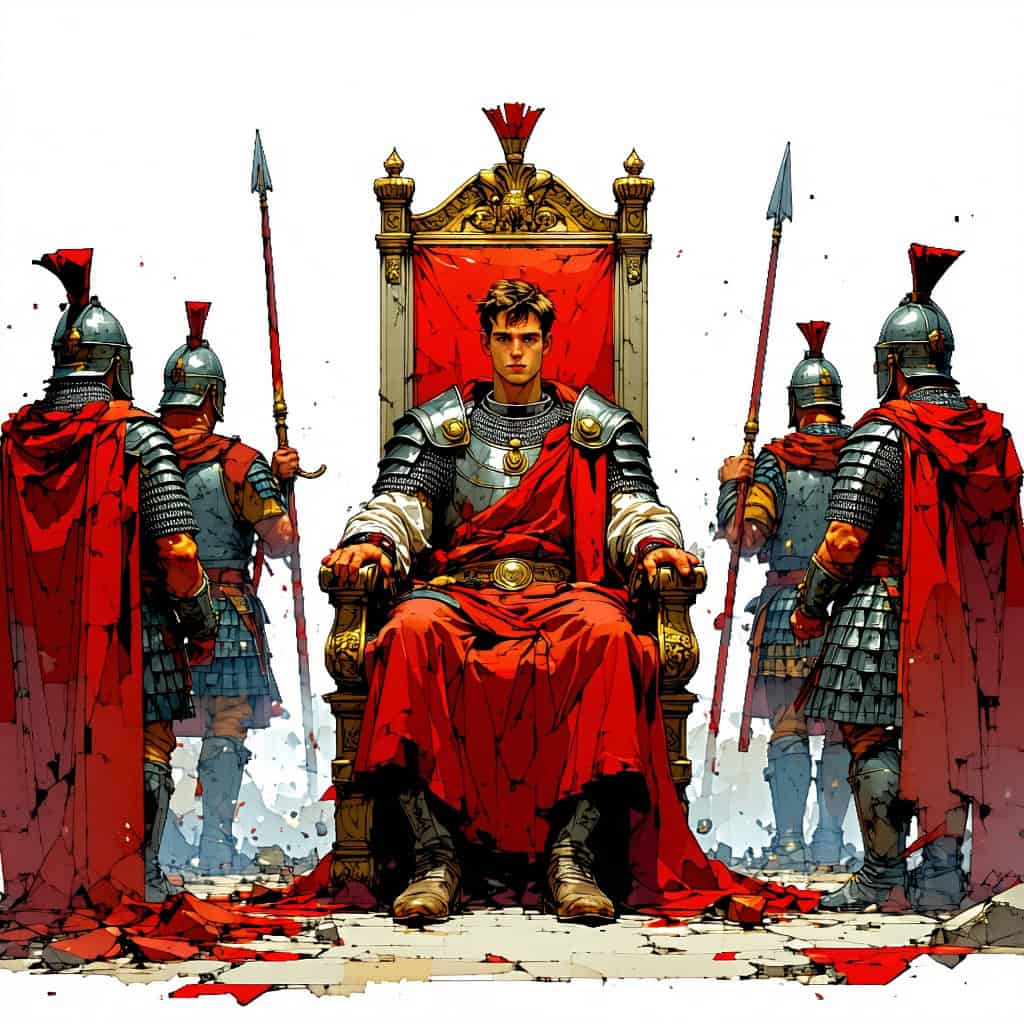
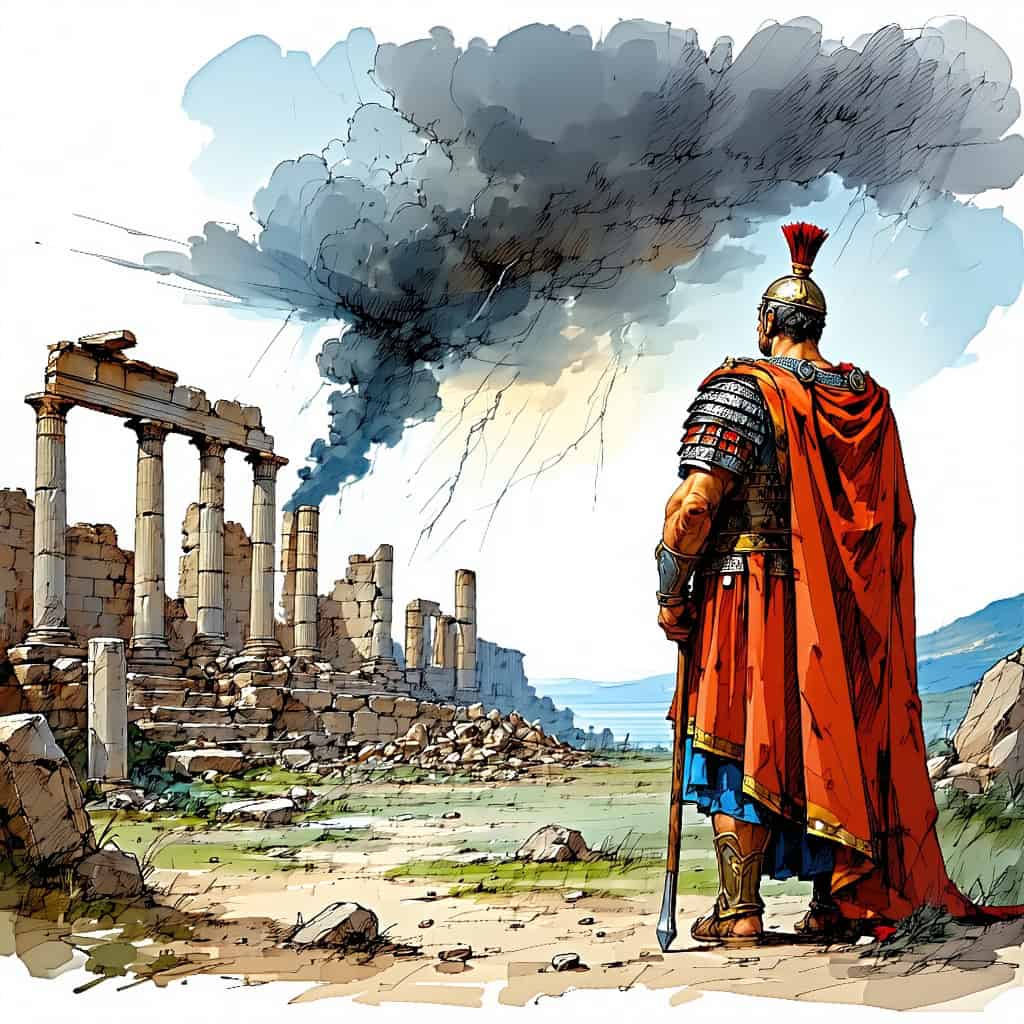
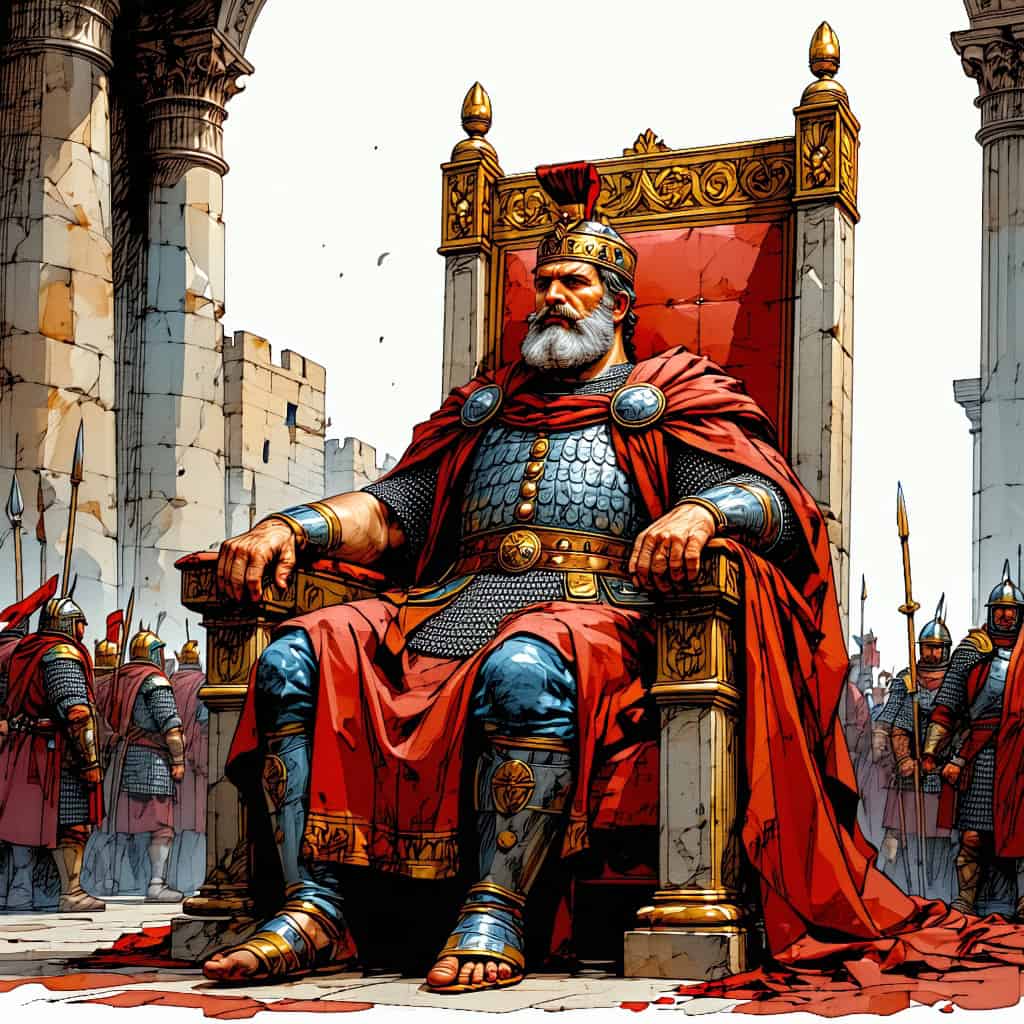
Emperor Romulus Augustulus
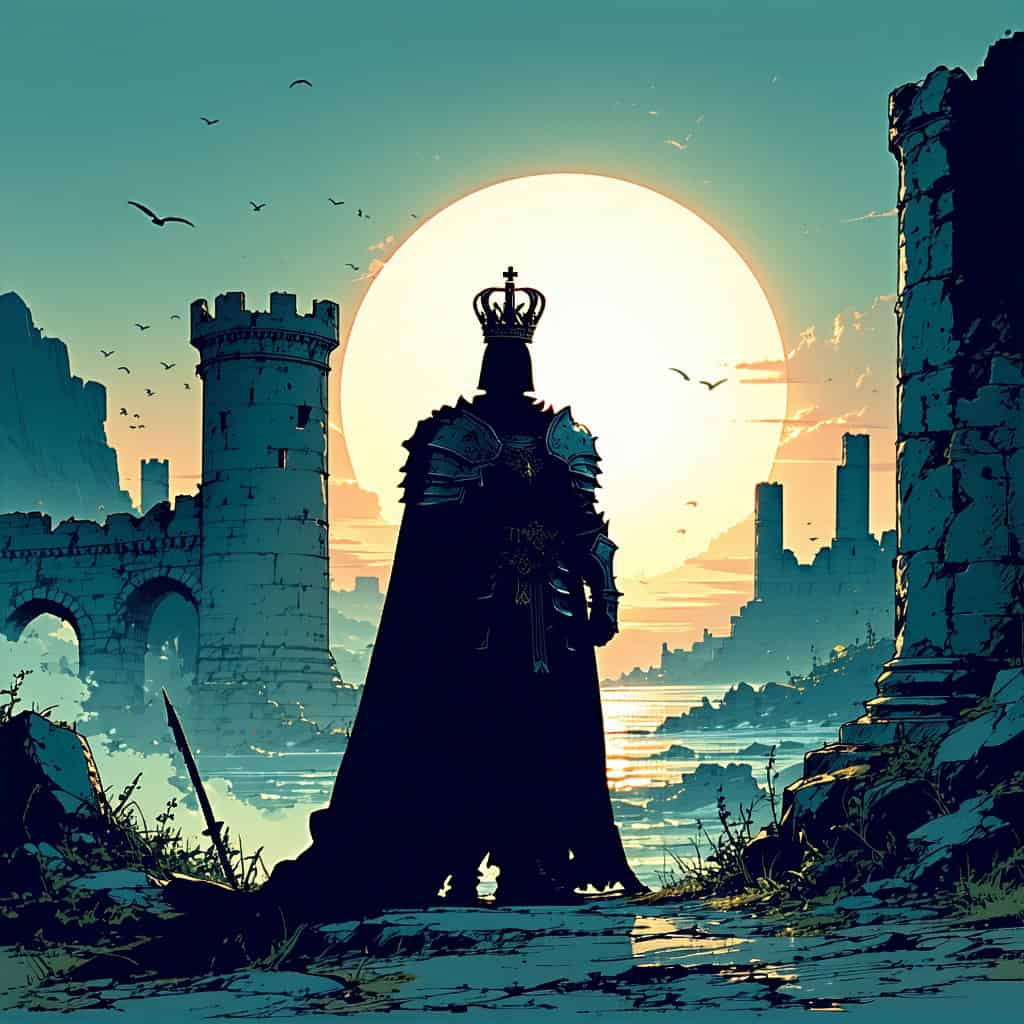
Odoacer
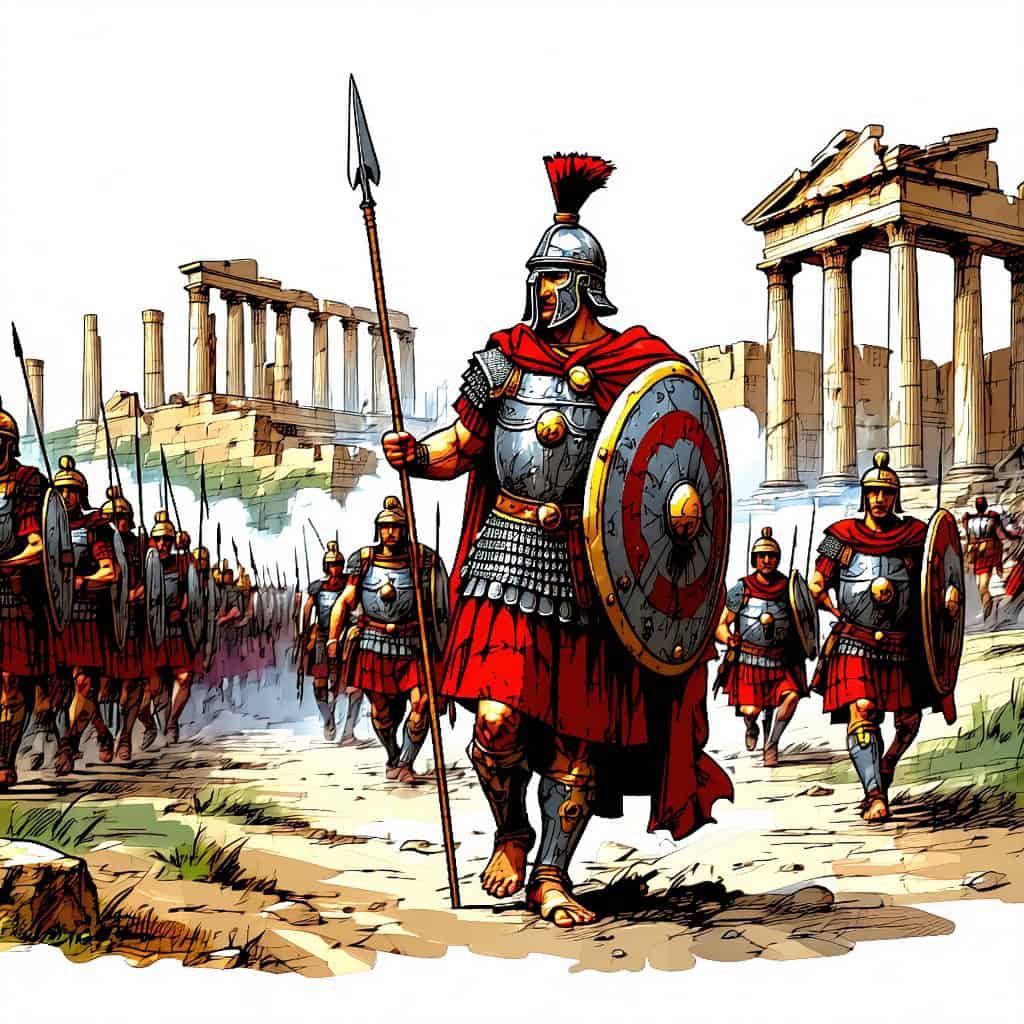
Flavius Orestes
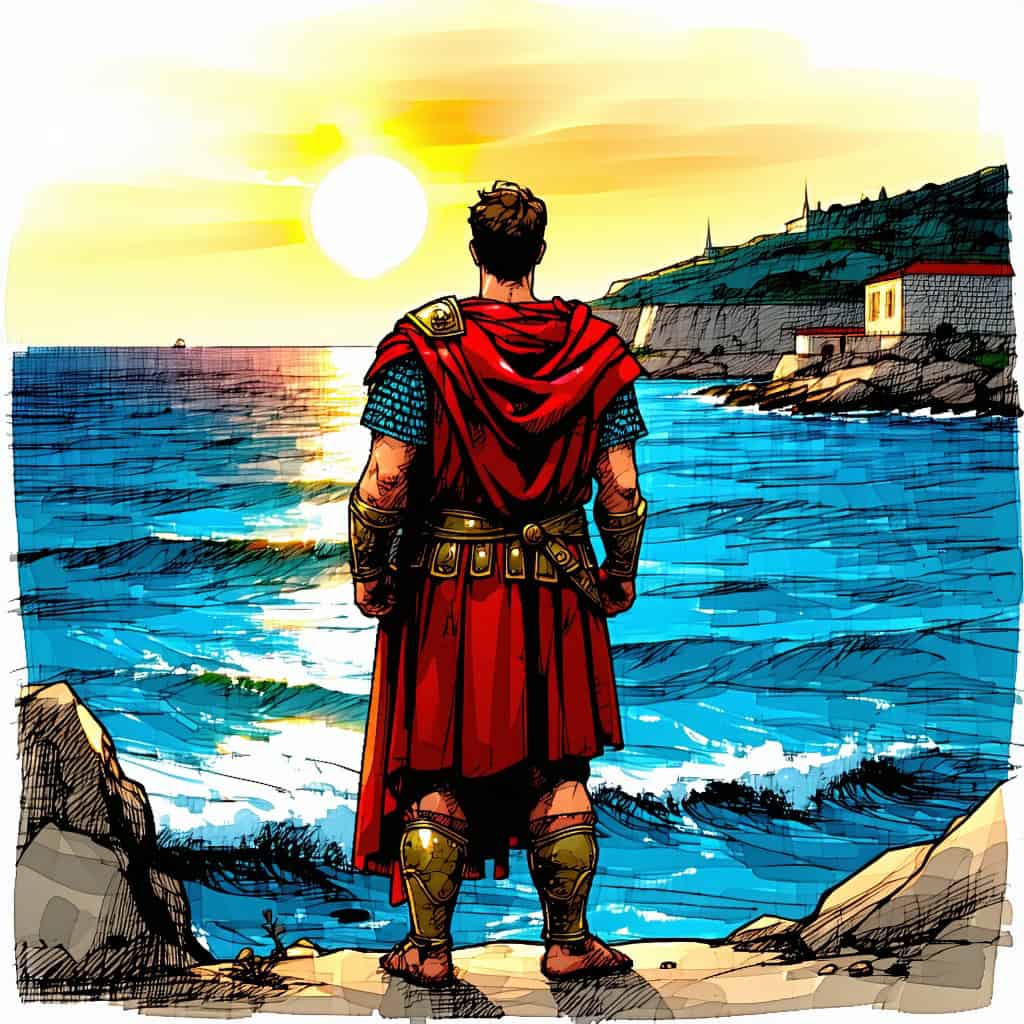
Julius Nepos

The Rise of Emperor Romulus Augustulus

Conflict with Odoacer

Abdication of the Throne

Exile to Campania

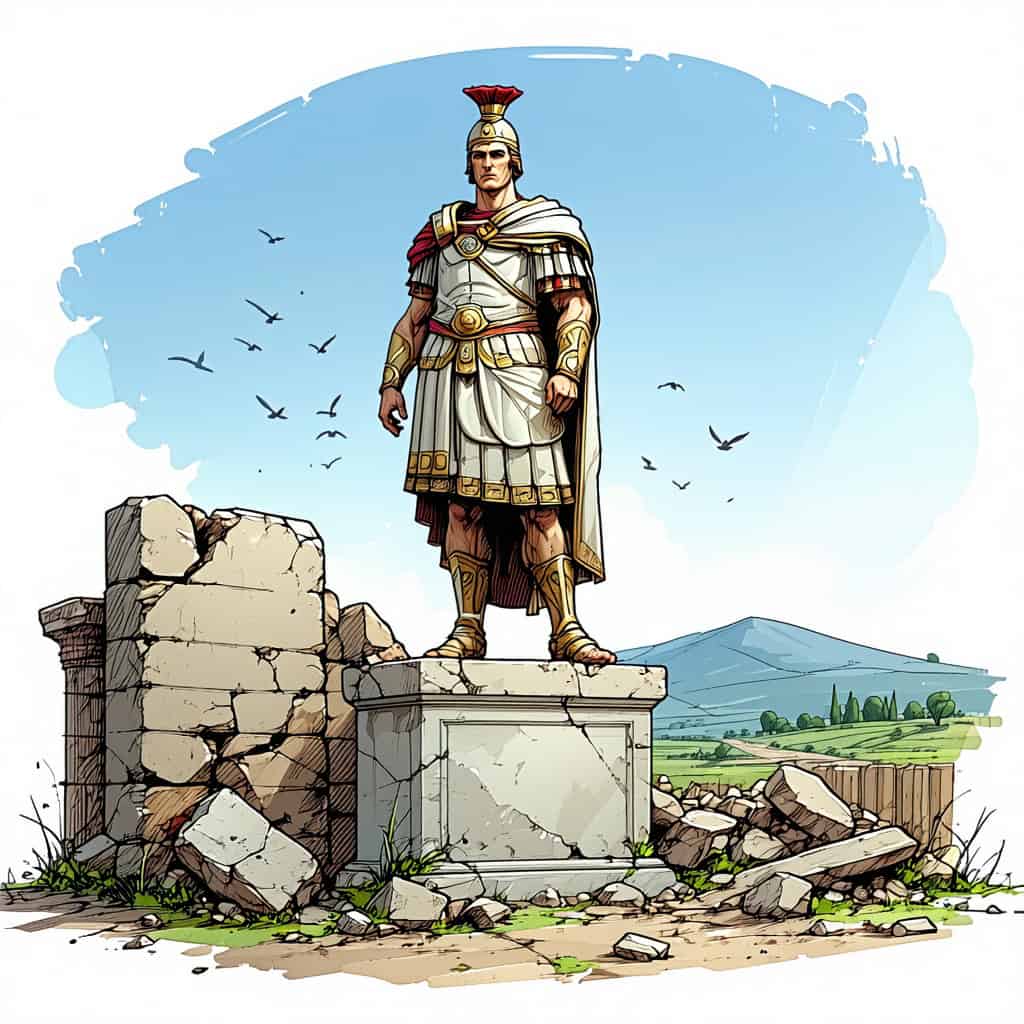
Legacy of Romulus Augustulus

Historical Significance

Impact on the Roman Empire

Transition to the Middle Ages

Historical Debate

Legacy of the Roman Empire
Lesson Details & Resources
In a Nutshell
- What: The reign of Emperor Romulus Augustulus
- When: 31 October 475 – 4 September 476 AD
- Who: Emperor Romulus Augustulus
- Outcome: Considered the last Roman emperor of the Western Roman Empire before it fell to Germanic tribes
Famous Figures in the the Reign of Romulus Augustulus
-
Romulus Augustulus
Romulus Augustulus was the last Roman emperor and his reign marked the end of the Western Roman Empire.
-
Odoacer
Odoacer was a Germanic chieftain who deposed Romulus Augustulus and became the first King of Italy.
-
Flavius Orestes
Flavius Orestes was a Roman statesman and father of Romulus Augustulus. He served as the magister militum and later became a puppet emperor.
Timeline of the Reign of Romulus Augustulus
Romulus Augustulus becomes the Western Roman Emperor
Orestes, father of Romulus Augustulus, becomes the de facto ruler of the Western Roman Empire
Orestes is overthrown by his own soldiers
Romulus Augustulus is forced to abdicate as Western Roman Emperor
End of the Western Roman Empire
Odoacer, a Germanic chieftain, becomes the ruler of Italy
Romulus Augustulus is exiled to Campania
Odoacer proclaims himself as King of Italy
Odoacer sends the imperial regalia to Constantinople, symbolizing the end of the Western Roman Empire
Romulus Augustulus disappears from historical records
The Visigoths sack Rome
The Vandals sack Rome
The Western Roman Empire loses control of Britannia
The Western Roman Empire loses control of Gaul
The Western Roman Empire loses control of Hispania
The Western Roman Empire loses control of North Africa
The Visigoths establish the Kingdom of Toulouse in Gaul
The Vandals establish the Vandal Kingdom in North Africa
The Ostrogoths establish the Ostrogothic Kingdom in Italy
The Suebi establish the Kingdom of the Suebi in Hispania
Vocabulary List
- Romulus Augustulus
- The last Roman emperor who ruled from 31 October 475 to 4 September 476 AD.
- Reign
- The period of time during which Romulus Augustulus was the emperor.
- Emperor
- The title given to the ruler of an empire, in this case, Romulus Augustulus.
- AD
- An abbreviation for Anno Domini, which means 'in the year of our Lord', used to refer to the years after the birth of Jesus Christ.
- October 31, 475
- The date when Romulus Augustulus ascended to the throne.
- September 4, 476
- The date when Romulus Augustulus was deposed as emperor, marking the end of the Western Roman Empire.
- Western Roman Empire
- The part of the Roman Empire that included territories in Western Europe and North Africa, which came to an end with the reign of Romulus Augustulus.
- Last Roman Emperor
- Romulus Augustulus is often referred to as the last Roman emperor.
- Ruler
- The person who has authority and power over a group of people or a territory, in this case, Romulus Augustulus.
- Decline
- The gradual deterioration or weakening of the Western Roman Empire, which led to the reign of Romulus Augustulus.
- Throne
- The seat of power and authority occupied by Romulus Augustulus during his reign.
- Ascend
- To rise to a position of power or authority, which Romulus Augustulus did on October 31, 475.
- Depose
- To remove or overthrow someone from a position of power, which happened to Romulus Augustulus on September 4, 476.
- Territories
- The regions and lands that were under the control of the Western Roman Empire during the reign of Romulus Augustulus.
- Empire
- A large and powerful political entity, comprising various territories and nations, ruled by an emperor or empress.
- Roman
- Related to the city of Rome or the ancient Roman Empire, such as Romulus Augustulus being a Roman emperor.
- Deterioration
- The process of becoming progressively worse or less valuable, as was the case with the Western Roman Empire leading up to Romulus Augustulus.
- Authority
- The power or right to give orders, make decisions, and enforce obedience, which Romulus Augustulus had as the emperor.
- Power
- The ability or capacity to control or influence others, wielded by Romulus Augustulus during his reign.
- North Africa
- The region of Africa that was part of the Western Roman Empire, which included territories such as modern-day Tunisia and Libya.
- Europe
- The continent where the Western Roman Empire had territories under its control during the reign of Romulus Augustulus.
- Birth of Jesus Christ
- The event from which the AD dating system starts, and which is used to refer to the years after the birth of Jesus Christ.
- Abbreviation
- A shortened form of a word or phrase, such as AD being the abbreviation for Anno Domini.
- Period of Time
- A specific length of time, referring to the duration of Romulus Augustulus' reign.
- End
- The conclusion or termination of something, like the end of the Western Roman Empire with the reign of Romulus Augustulus.
Key Facts
This is the information used in the fact matching game
- Romulus Augustulus was the last Roman emperor before the fall of the Western Roman Empire.
- He ascended the throne on 31 October 475 AD at the age of approximately 16.
- Romulus Augustulus was actually named Romulus, but his nickname 'Augustulus' means 'Little Augustus'.
- His reign is often considered as the end of ancient Rome and the beginning of the Middle Ages.
- Romulus Augustulus was a puppet emperor controlled by his father, Orestes, who was a general of the Roman army.
- He ruled for only 10 months before being deposed by Odoacer, a Germanic chieftain.
- After his deposition, Romulus Augustulus was exiled to the Castle of Lucullus in Campania, Italy.
- Despite being the last emperor, Romulus Augustulus lived a relatively long life and died in the 6th century.
- His deposition marked the end of the Western Roman Empire and the fall of Rome in 476 AD.
- Romulus Augustulus is sometimes referred to as the 'last Roman emperor' or the 'last emperor of the West'.
- He was overthrown due to political instability, economic decline, and pressure from barbarian tribes.
- Romulus Augustulus was replaced by Odoacer, who became the first Germanic king of Italy.
- His reign is considered a turning point in European history, marking the transition from the Roman Empire to the medieval period.
- Romulus Augustulus's father, Orestes, had previously served as the secretary of Attila the Hun.
- His reign saw the decline of Roman military power and the rise of Germanic tribes in Europe.
- The name 'Augustulus' given to Romulus Augustulus is a diminutive form of 'Augustus', the title used by Roman emperors.
- During his rule, the Roman Empire faced internal conflicts, economic crises, and external invasions.
- Romulus Augustulus was the son of the Western Roman Emperor Julius Nepos, who ruled briefly before being deposed.
- His deposition marked the end of the 1229-year-long Roman monarchy and the beginning of the Republic of Italy.
- The Roman Senate initially recognized Odoacer as the ruler of Italy after Romulus Augustulus's deposition.
Analysis & Significance
Immediate Consequences
Following the deposition of Romulus Augustulus, the Western Roman Empire officially came to an end, marking the culmination of a long period of decline. The deposition of the last Roman emperor by Odoacer, a Germanic chieftain, symbolized the final shift of power away from Rome and towards the barbarian tribes that had been encroaching on Roman territory for centuries.
Long-Term Impact
The fall of Romulus Augustulus and the Western Roman Empire had far-reaching consequences that reverberated throughout history. It marked the beginning of the Middle Ages in Europe, with the power vacuum left by the Romans leading to the rise of new kingdoms and the eventual formation of modern nation-states. The event also had a profound impact on the development of Western civilization, as the collapse of the Roman Empire ushered in a period of cultural and intellectual stagnation known as the Dark Ages.
Cultural Significance Today
The reign of Romulus Augustulus and the fall of the Western Roman Empire continue to be studied and remembered as a cautionary tale of the consequences of political corruption, economic instability, and military weakness. The event serves as a reminder of the fragility of even the most powerful empires and the importance of effective governance and leadership. The legacy of the fall of Rome can be seen in the modern world, as scholars and policymakers draw parallels between the decline of the Roman Empire and contemporary geopolitical challenges.
the Reign of Romulus Augustulus Games


Take Your Learning Offline
Want a convenient, print-ready study guide for this lesson? Become a Memory Wizards Pro member to unlock the downloadable " Memory Scrolls" for this topic and our entire library!
- ✓ Complete Vocabulary Lists
- ✓ Key Facts & Timelines
- ✓ Beautifully Formatted for Print & Mobile