
Summary of Battle of the Frigidus (394 AD)
The clash that shaped the fate of the Roman Empire.
How Do You Learn Best?
Learn by Reading
Immerse yourself in the 10-minute visual lesson for a comprehensive understanding of the topic.
Learn by Reviewing
Jump directly to the key facts, timeline, and vocabulary lists to build a solid foundation of details.
Learn by Doing
Challenge yourself! Jump straight into the interactive games to learn by trial, error, and discovery.
Battle of the Frigidus in 10 Minutes
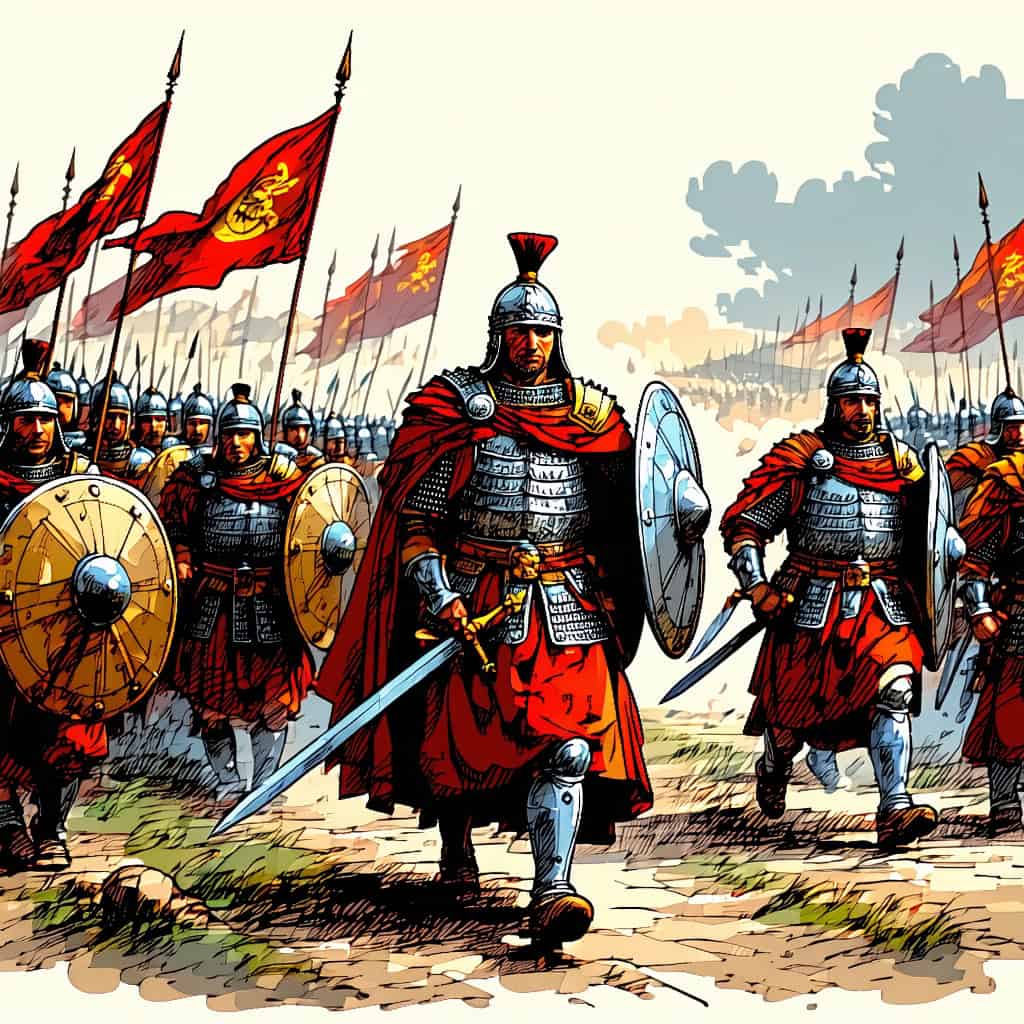
Introduction
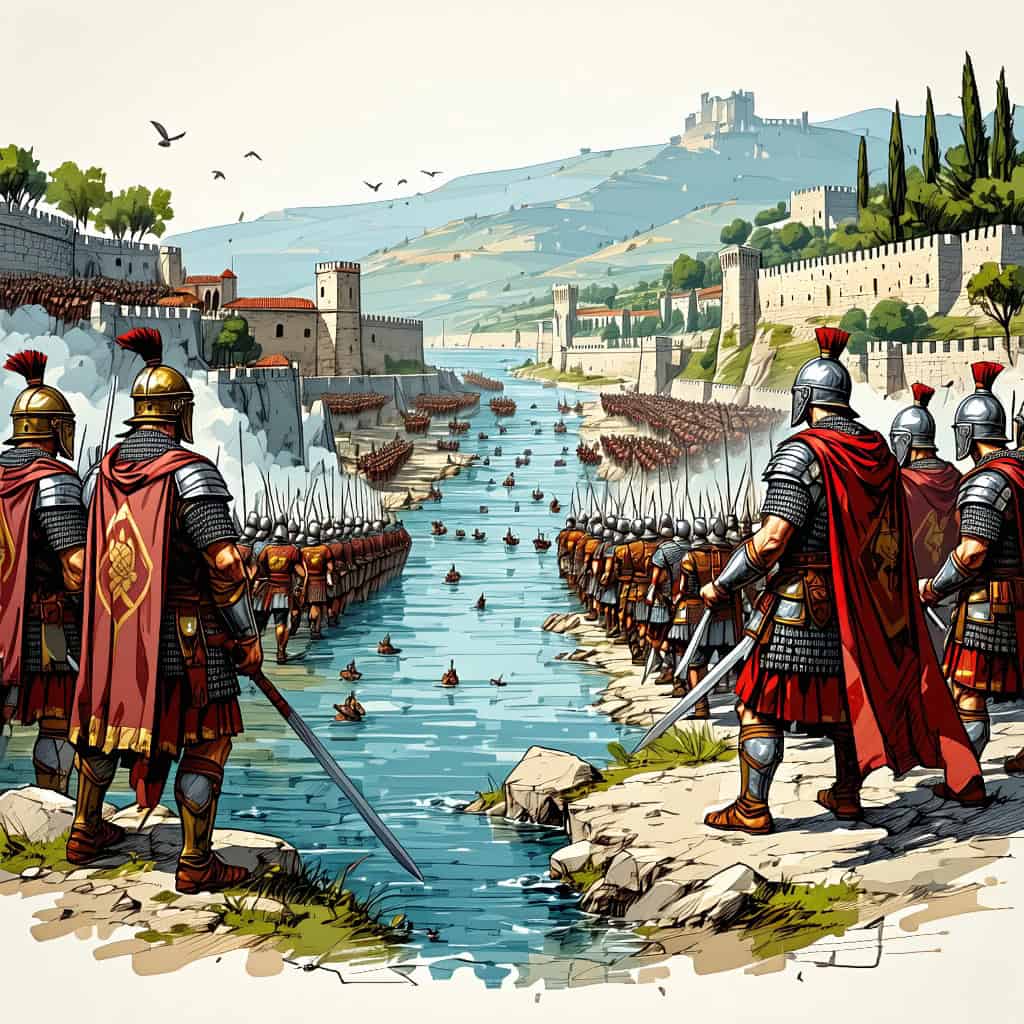
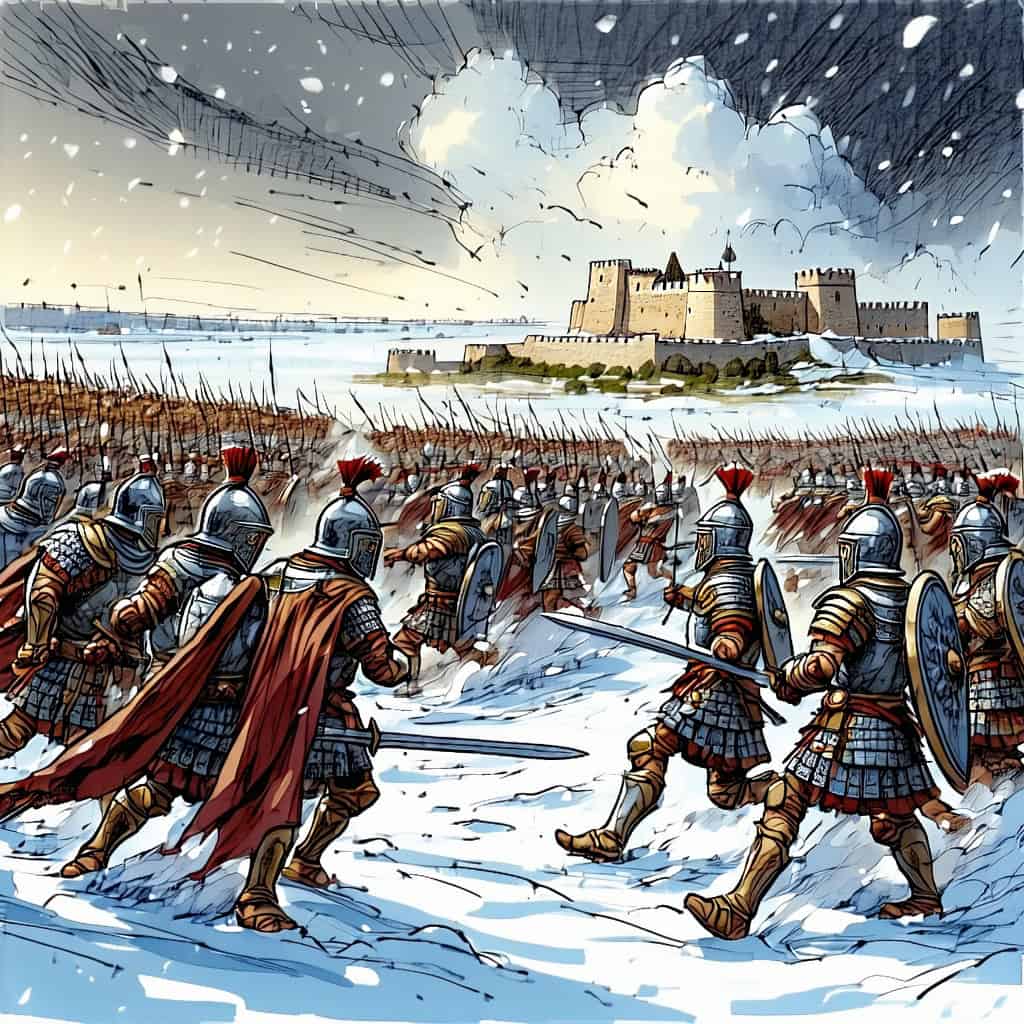
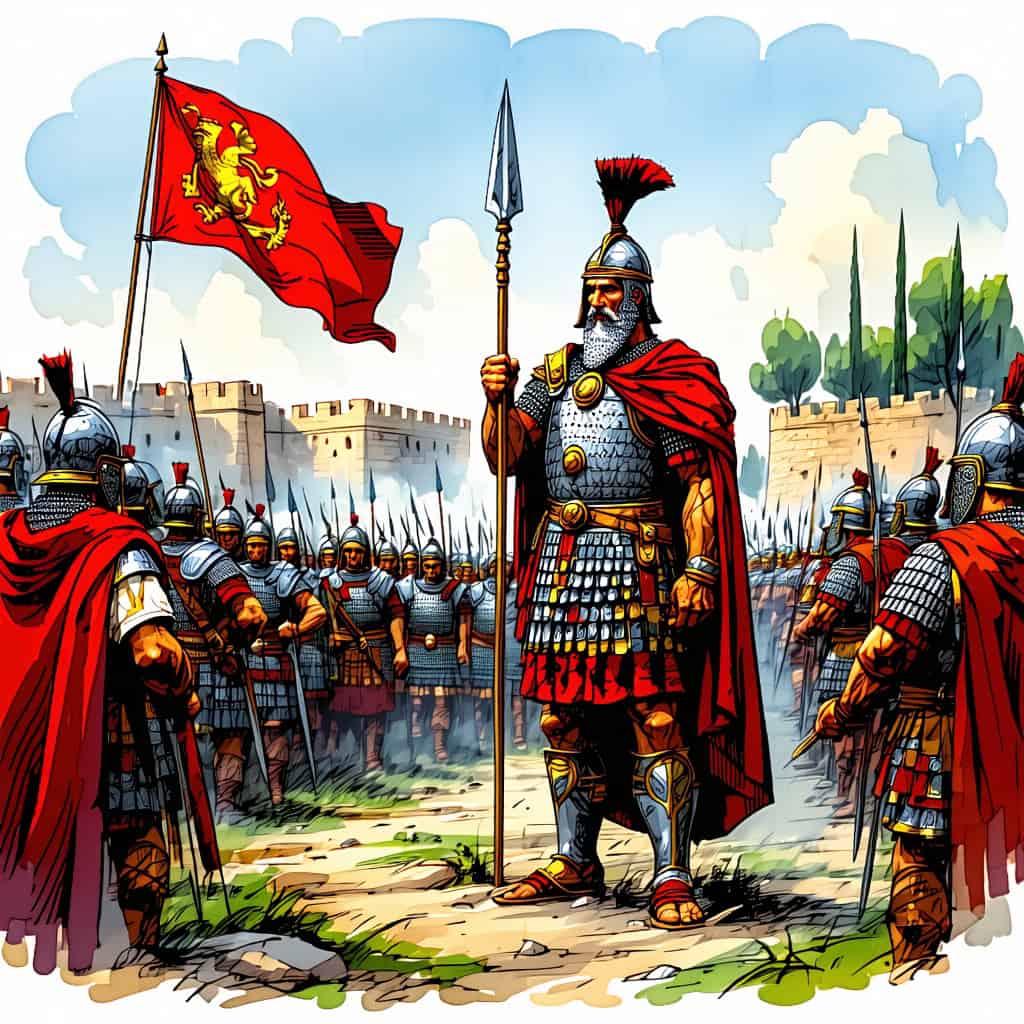
Emperor Theodosius I
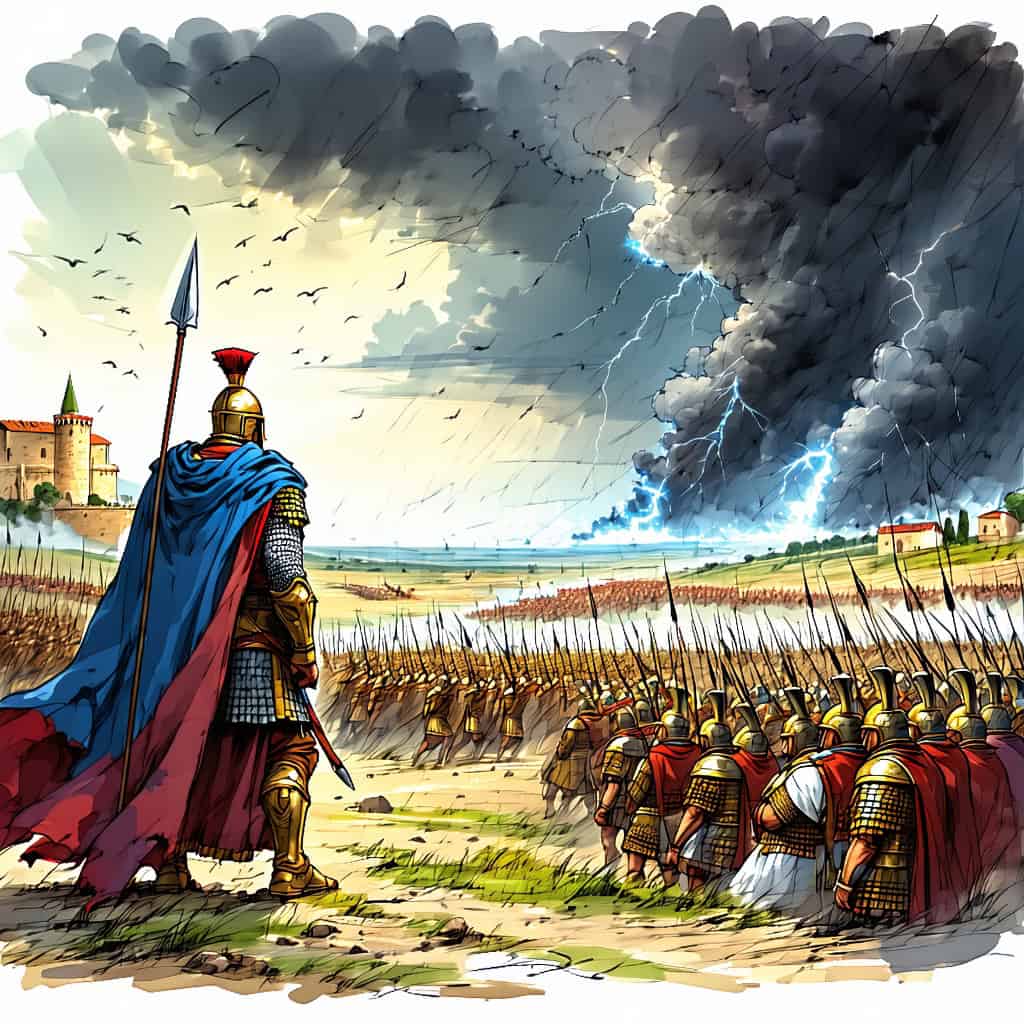
Eugenius
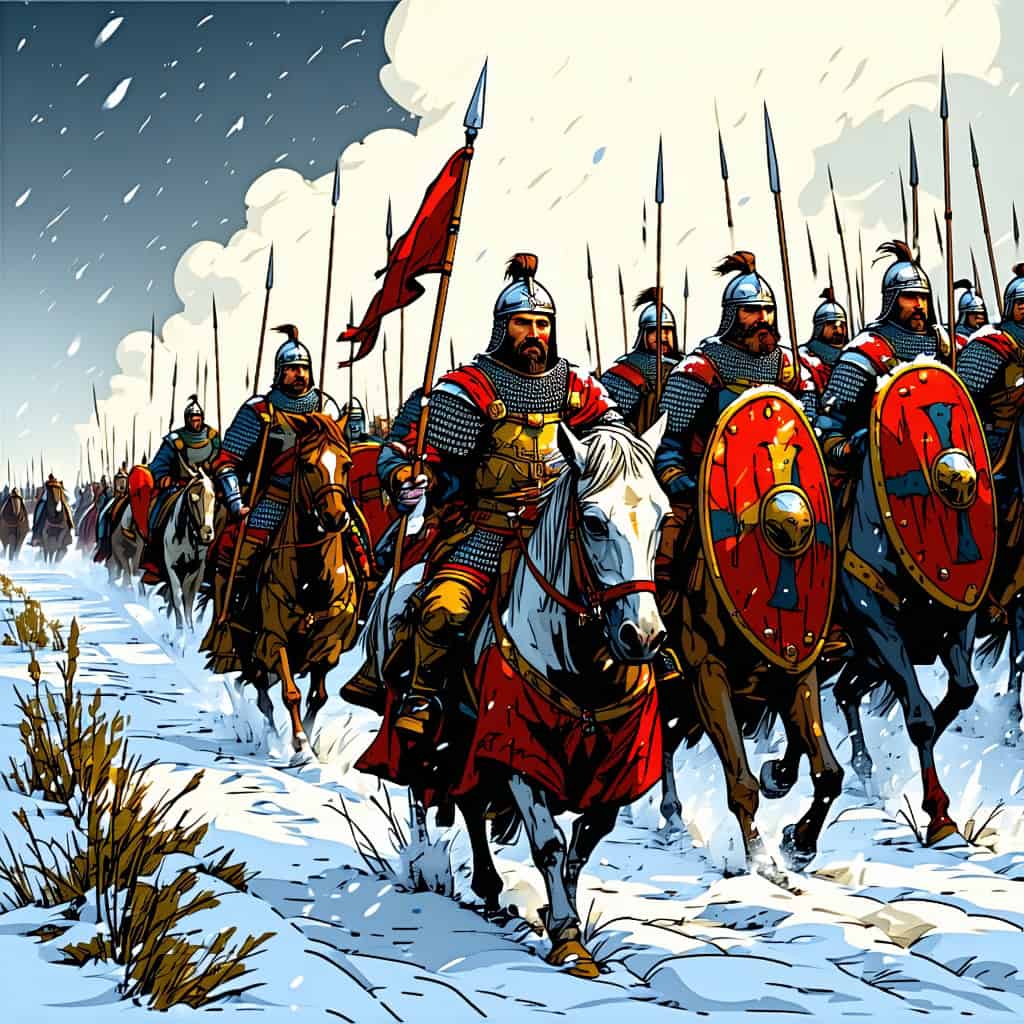
Arbogast
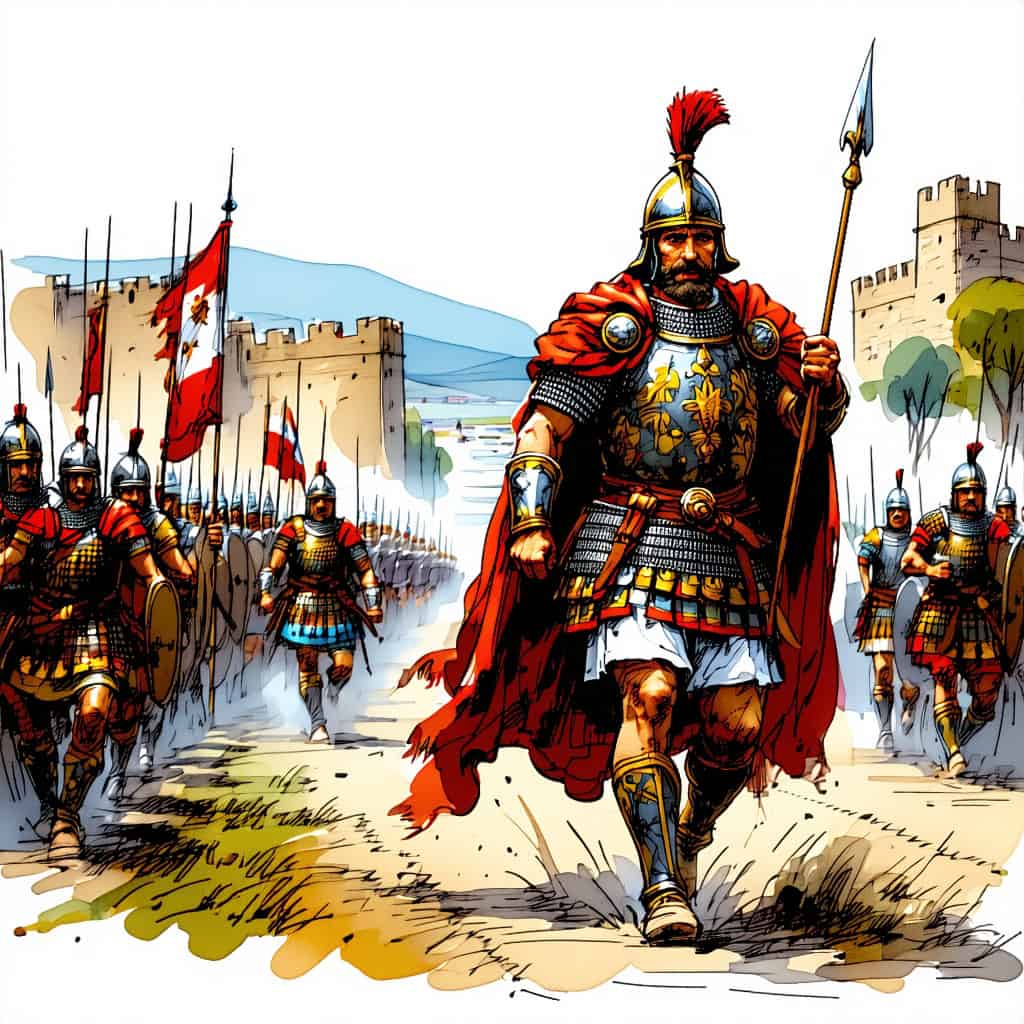
Stilicho

The Setting of the Battle
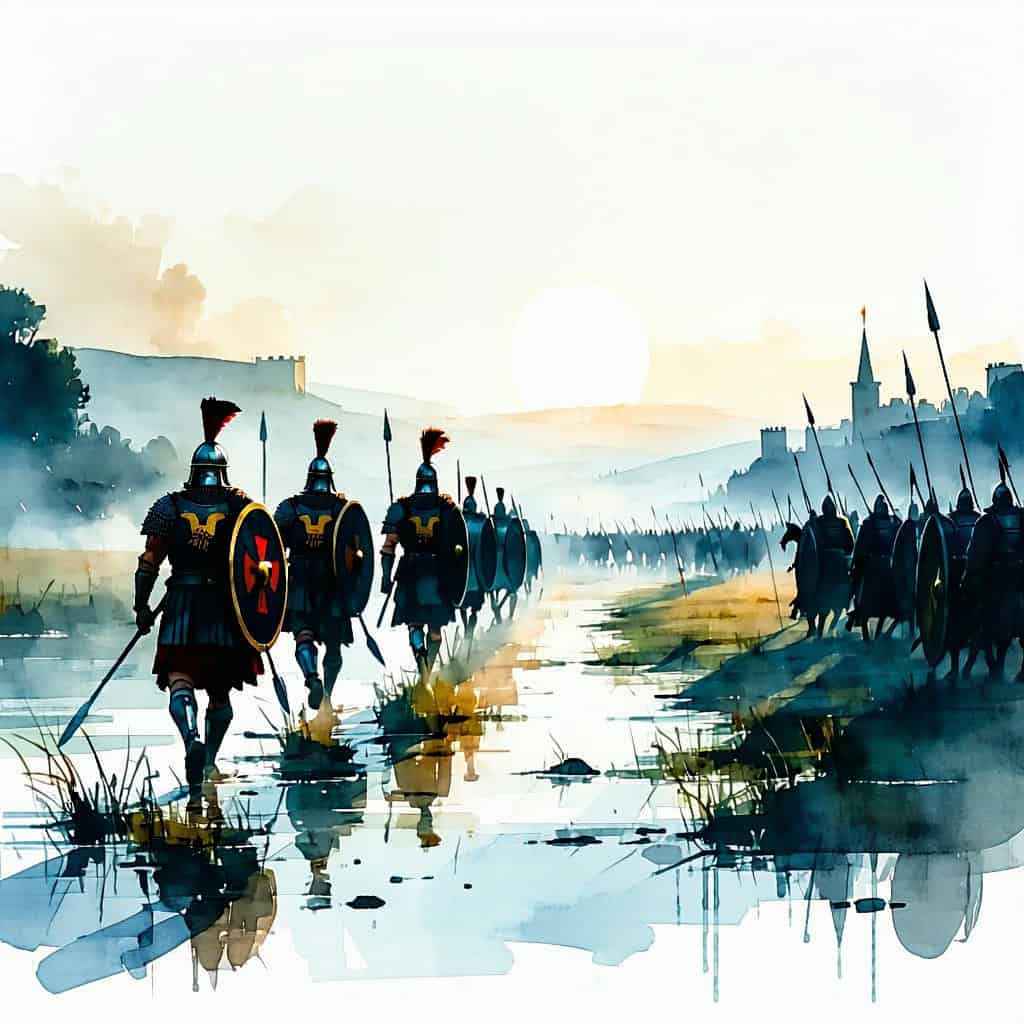
The March to the Frigidus River

The Battle Begins

The Role of Stilicho
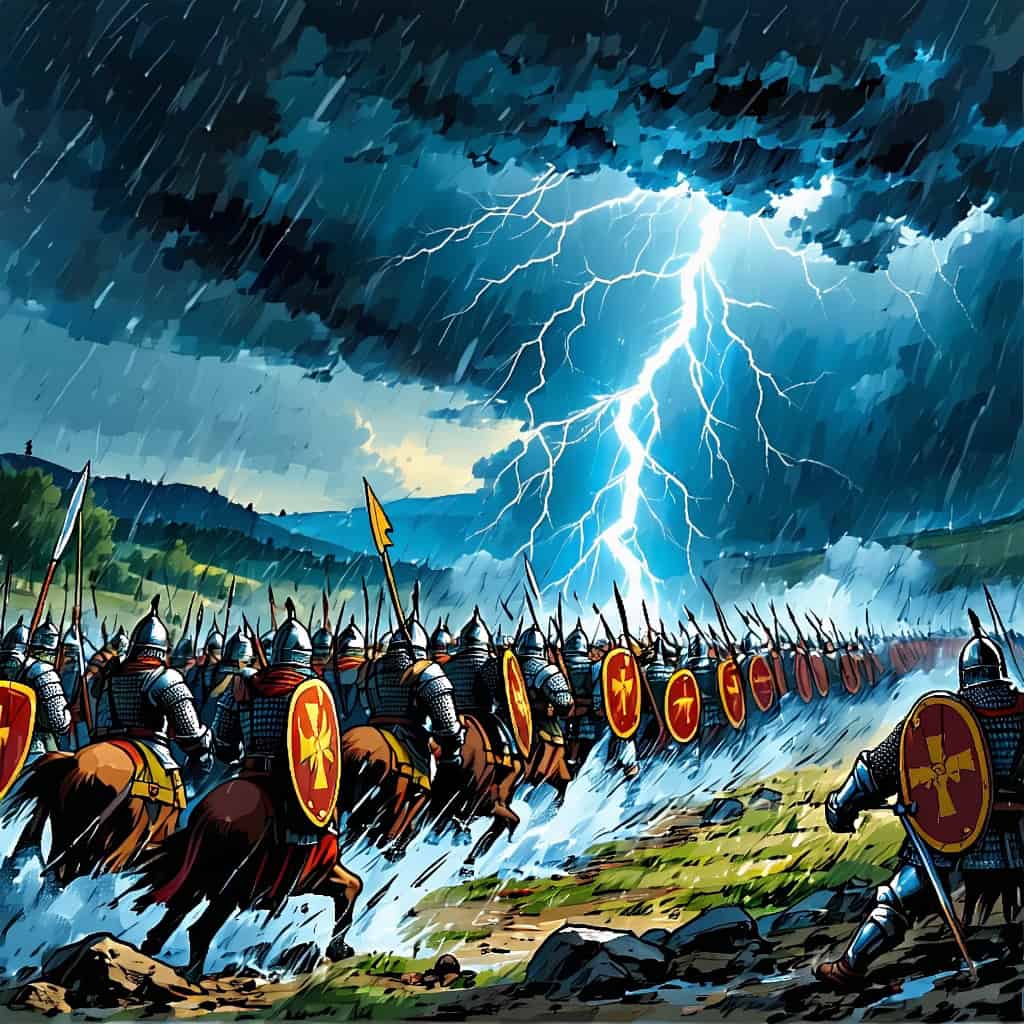
The Intervention of Nature

The Turning Point

The Death of Eugenius
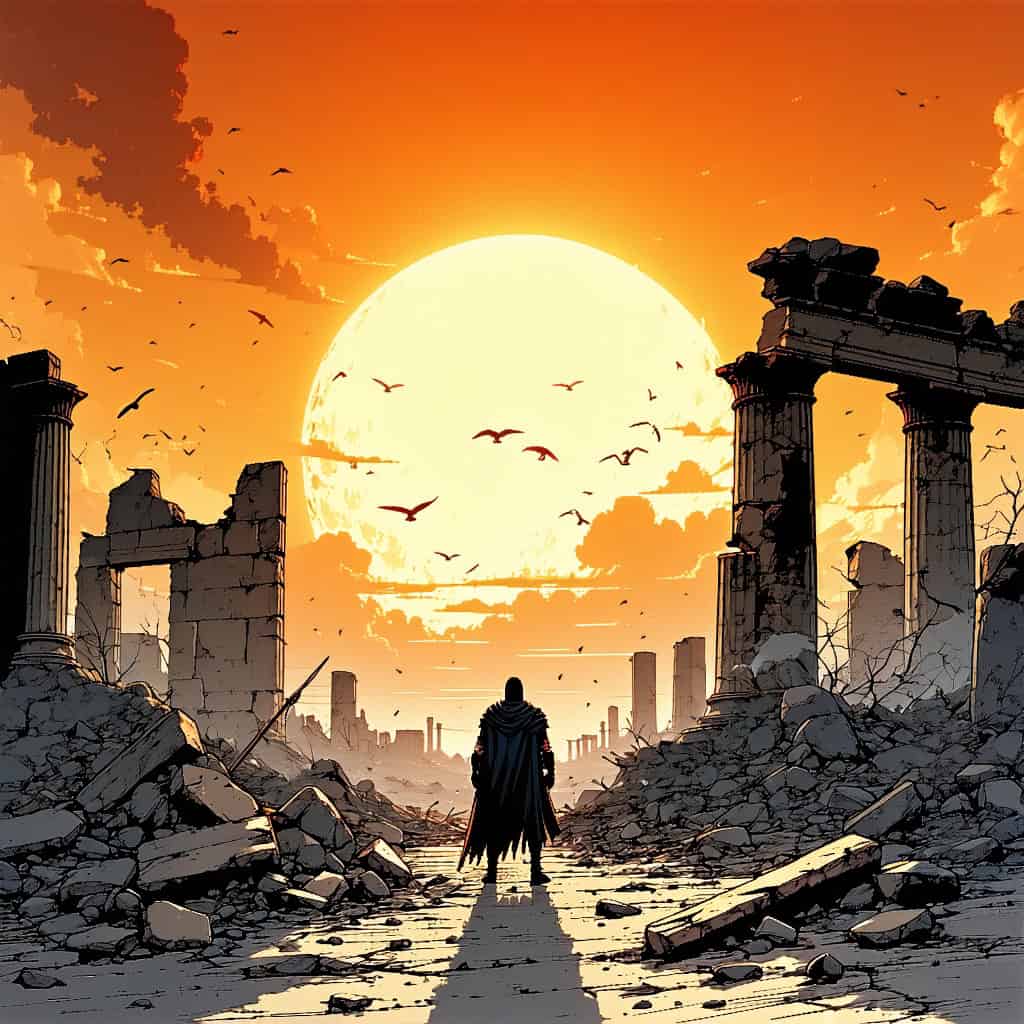
The Aftermath of the Battle

The Legacy of the Battle

The Impact on Roman Society
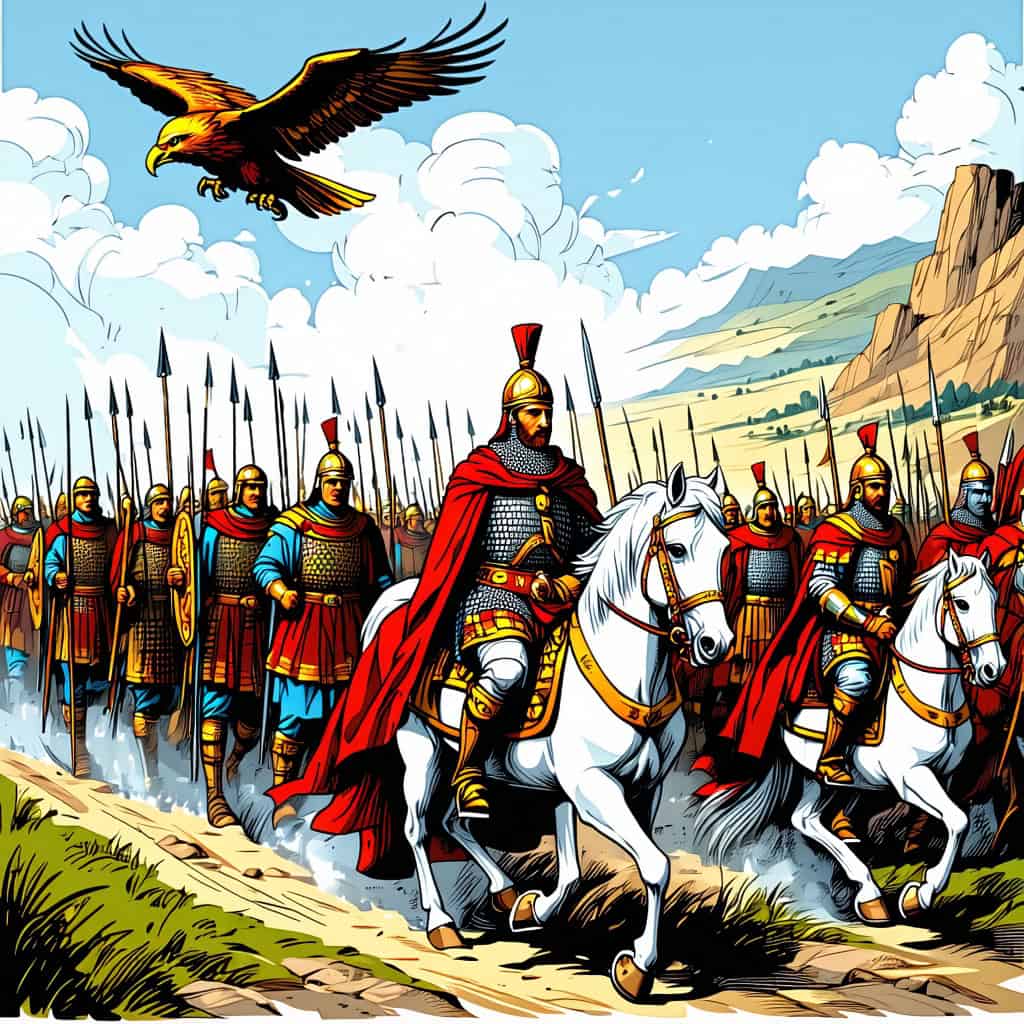
Lesson Details & Resources
In a Nutshell
- What: A significant battle fought in 394 AD
- When: 394 AD
- Who: The Roman Emperor Theodosius I vs. the usurper Eugenius
- Outcome: Theodosius I emerged victorious, solidifying his rule over the Roman Empire
Famous Figures in the Battle of the Frigidus
-
Theodosius I
Theodosius I: The Roman emperor who led the Eastern Roman Empire to victory in the Battle of the Frigidus, securing his rule over the entire Roman Empire.
-
Eugenius
Eugenius: A usurper who declared himself as Western Roman Emperor, opposing Theodosius I in the Battle of the Frigidus.
-
Arbogast
Arbogast: A Frankish general and ally of Eugenius, he played a crucial role in the Battle of the Frigidus as one of Eugenius' top commanders.
-
Stilicho
Stilicho: A prominent general and statesman of the Western Roman Empire, he served as the chief military advisor to Theodosius I in the Battle of the Frigidus.
-
Alaric I
Alaric I: A Visigothic king who was allied with Eugenius during the Battle of the Frigidus, leading a contingent of Gothic troops against Theodosius I.
Timeline of Battle of the Frigidus
Emperor Theodosius I dies
Battle of the Frigidus begins
Theodobert, son of Theodosius I, leads the Eastern Roman army
Alaric, King of the Visigoths, leads the Western Roman army
First day of the battle ends inconclusively
Second day of the battle
Heavy rain causes difficult conditions for both armies
Alaric's Visigoths make initial gains
Theodobert's Eastern Roman army launches counterattacks
Third day of the battle
Eastern Roman army gains the upper hand
Theodobert's troops push Alaric's Visigoths back
Fourth day of the battle
Eastern Roman army continues to advance
Alaric's Visigoths suffer heavy casualties
Fifth day of the battle
Theodobert's Eastern Roman army routs Alaric's Visigoths
Alaric is killed during the battle
Visigothic resistance collapses
Battle of the Frigidus ends
Vocabulary List
- Battle
- The Battle of the Frigidus was a significant military conflict that took place in 394 AD.
- Frigidus
- The Battle of the Frigidus derived its name from the Frigidus River, where the battle was fought.
- 394 AD
- The Battle of the Frigidus occurred in 394 AD, during the late Roman Empire.
- Military
- The Battle of the Frigidus was a major military engagement between the Eastern Roman Empire and the Western Roman Empire.
- Conflict
- The Battle of the Frigidus was a fierce conflict that determined the fate of the Roman Empire.
- Roman Empire
- The Battle of the Frigidus was a pivotal event in the decline and fall of the Roman Empire.
Key Facts
This is the information used in the fact matching game
- The Battle of the Frigidus was fought between the forces of the Roman Emperors Theodosius I and Eugenius in 394 AD.
- Theodosius I was the Eastern Roman Emperor, while Eugenius was the Western Roman Emperor during the battle.
- The battle took place near the Frigidus River, which is now known as the Vipava River in Slovenia.
- Theodosius I's army consisted mainly of Gothic soldiers, while Eugenius had a mixed army of Romans and barbarian mercenaries.
- The battle was a result of a conflict between Theodosius I, who was a Christian, and Eugenius, who was a promoter of paganism.
- Theodosius I's army was outnumbered by Eugenius' forces.
- The battle lasted for two days, from September 5 to September 6, 394 AD.
- Theodosius I's army was initially unsuccessful in breaking through Eugenius' lines on the first day of the battle.
- On the second day, Theodosius I's army launched a surprise attack on Eugenius' camp and achieved a decisive victory.
- Eugenius was captured and later executed, ending his short reign as Western Roman Emperor.
- Theodosius I became the sole ruler of the Roman Empire after the battle.
- The Battle of the Frigidus marked the final victory of Christianity over paganism in the Roman Empire.
- Theodosius I issued an edict after the battle banning paganism, closing pagan temples, and promoting Christianity.
- The Frigidus River became an important symbolic site for the Christian Church after the battle.
- The Battle of the Frigidus was one of the last major battles of the Western Roman Empire.
- Theodosius I's victory at the Frigidus River contributed to the decline of paganism and the rise of Christianity in Europe.
- The battle had significant political and religious implications for the Roman Empire.
- Theodosius I's victory secured his position as the last sole ruler of both the Eastern and Western Roman Empires.
- Theodosius I died in 395 AD, just a year after the Battle of the Frigidus.
- The Battle of the Frigidus marked the beginning of the end for the Western Roman Empire.
Analysis & Significance
Immediate Consequences
The Battle of the Frigidus in 394 AD marked the end of the Roman Civil Wars and solidified the rule of Theodosius I over the Roman Empire. The defeat of the usurper Eugenius and his Frankish allies ensured the unity of the empire and brought stability to a war-torn region.
Long-Term Impact
The victory at the Battle of the Frigidus had lasting effects on the Roman Empire, as it paved the way for the eventual division of the empire into the Eastern and Western Roman Empires. Theodosius I’s rule also set the stage for the rise of Christianity as the dominant religion in the Roman world.
Cultural Significance Today
The Battle of the Frigidus is a pivotal moment in Roman history that continues to be studied and remembered for its impact on the political and religious landscape of the time. The battle serves as a reminder of the power struggles and conflicts that shaped the ancient world, and its legacy can still be seen in the modern understanding of Roman history and culture.
Battle of the Frigidus Games


Take Your Learning Offline
Want a convenient, print-ready study guide for this lesson? Become a Memory Wizards Pro member to unlock the downloadable " Memory Scrolls" for this topic and our entire library!
- ✓ Complete Vocabulary Lists
- ✓ Key Facts & Timelines
- ✓ Beautifully Formatted for Print & Mobile