
Summary of Battle of Chalons (451 AD)
The legendary showdown that shaped the fate of ancient Europe.
How Do You Learn Best?
Learn by Reading
Immerse yourself in the 10-minute visual lesson for a comprehensive understanding of the topic.
Learn by Reviewing
Jump directly to the key facts, timeline, and vocabulary lists to build a solid foundation of details.
Learn by Doing
Challenge yourself! Jump straight into the interactive games to learn by trial, error, and discovery.
Battle of Chalons in 10 Minutes

Introduction
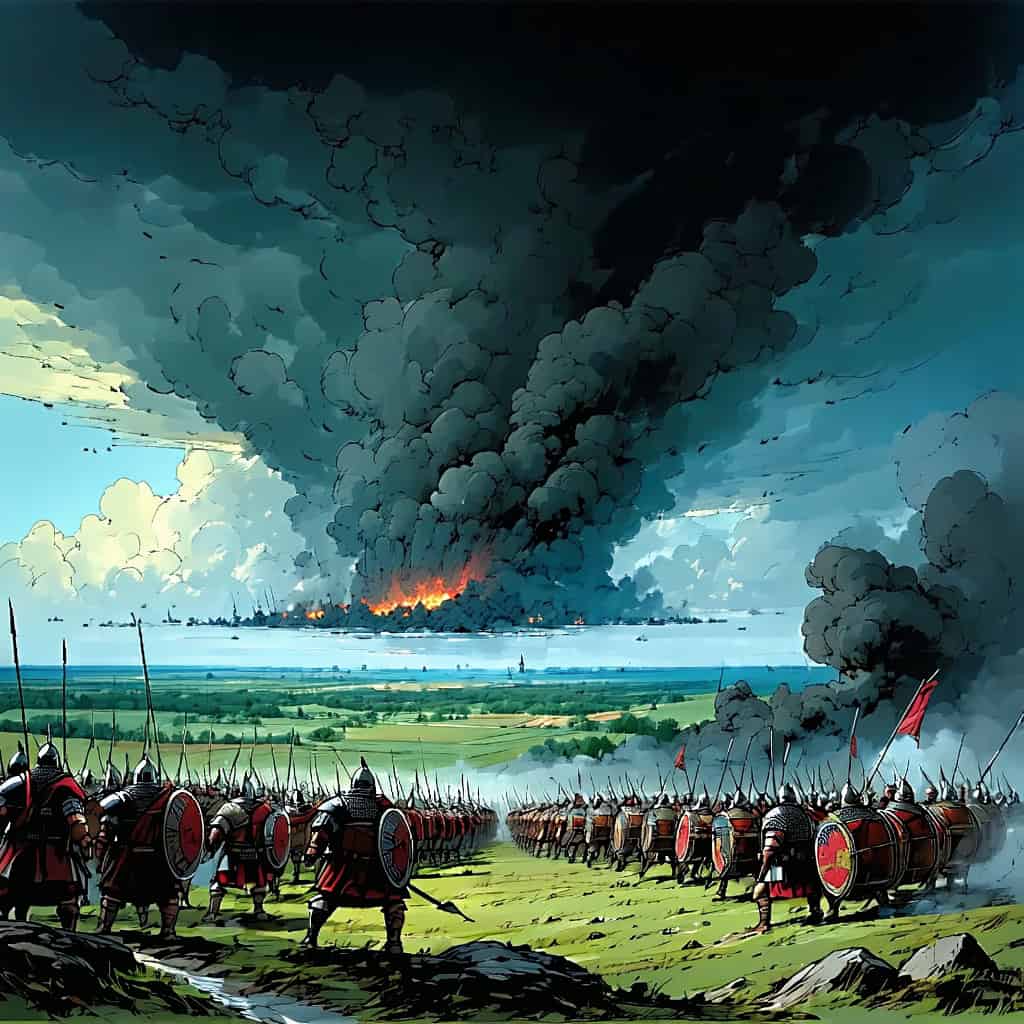
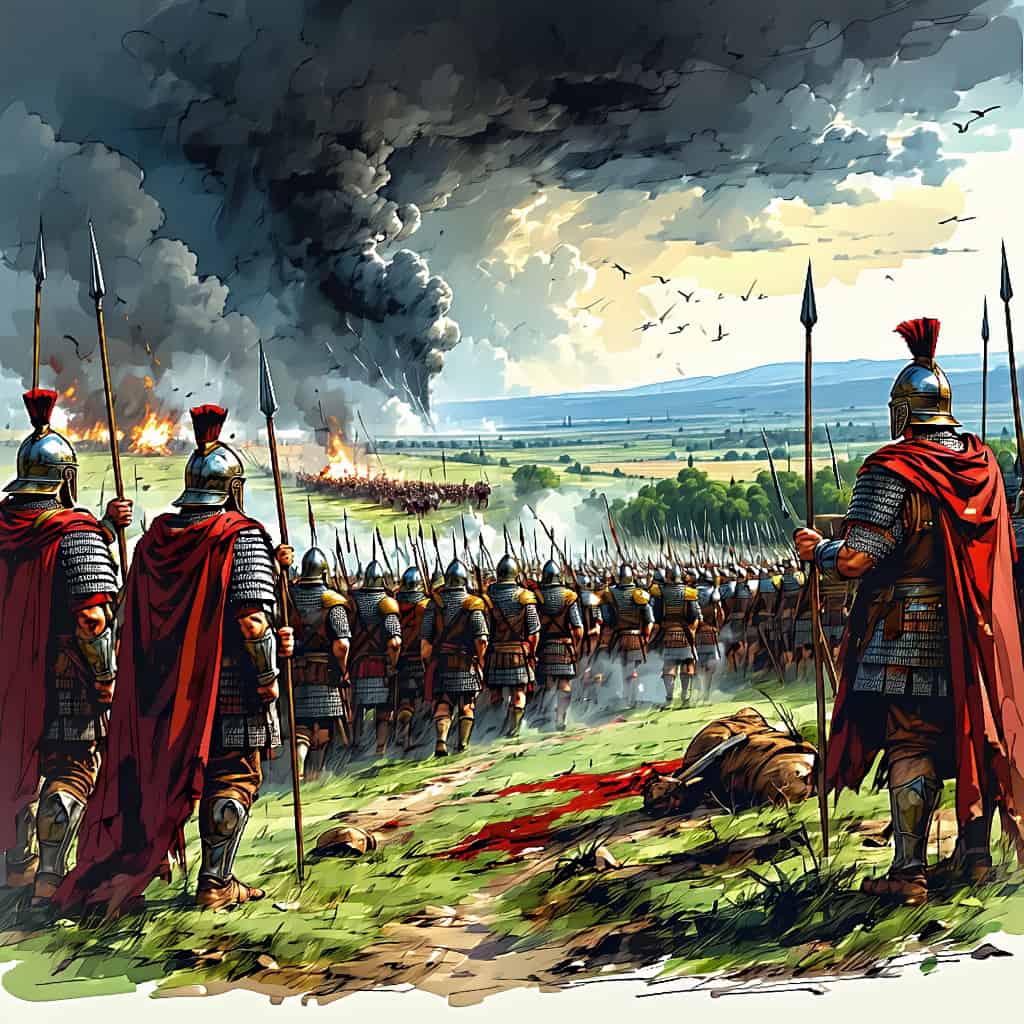
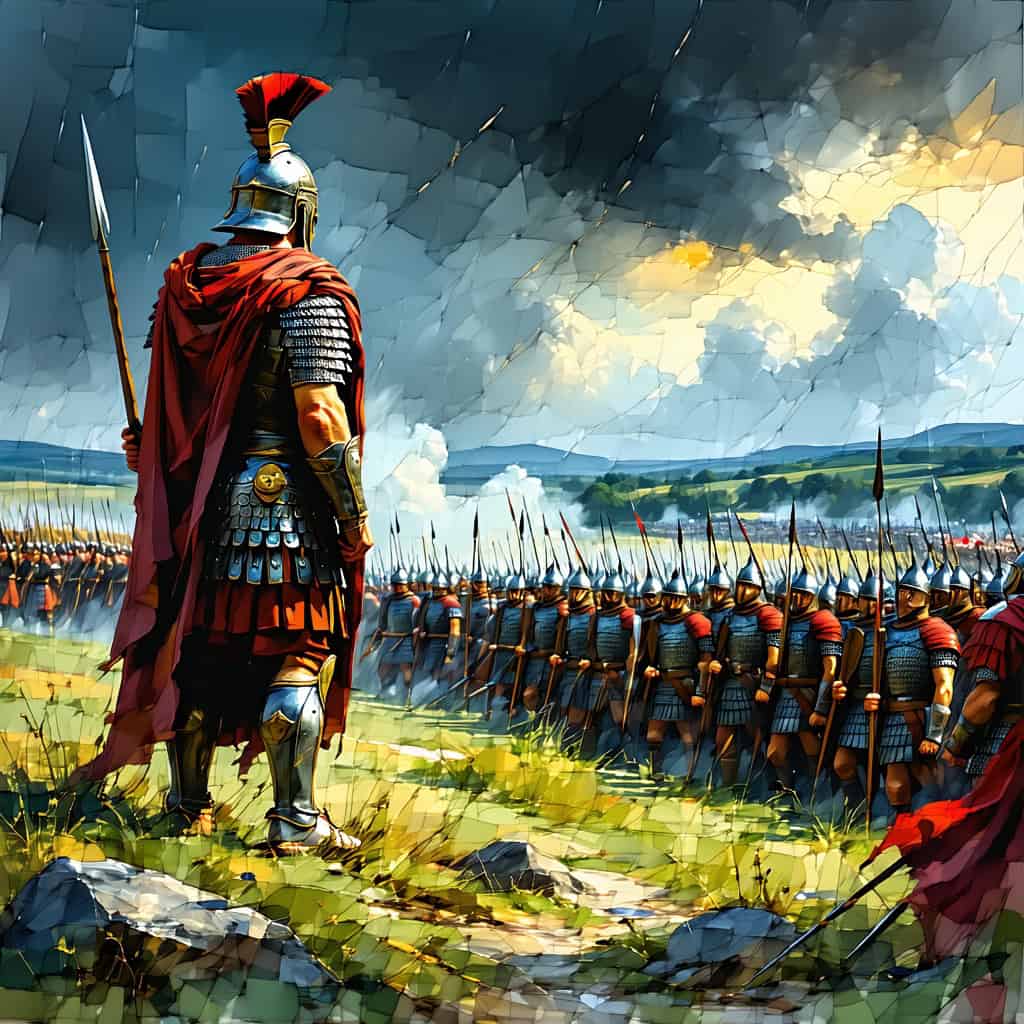
Flavius Aetius
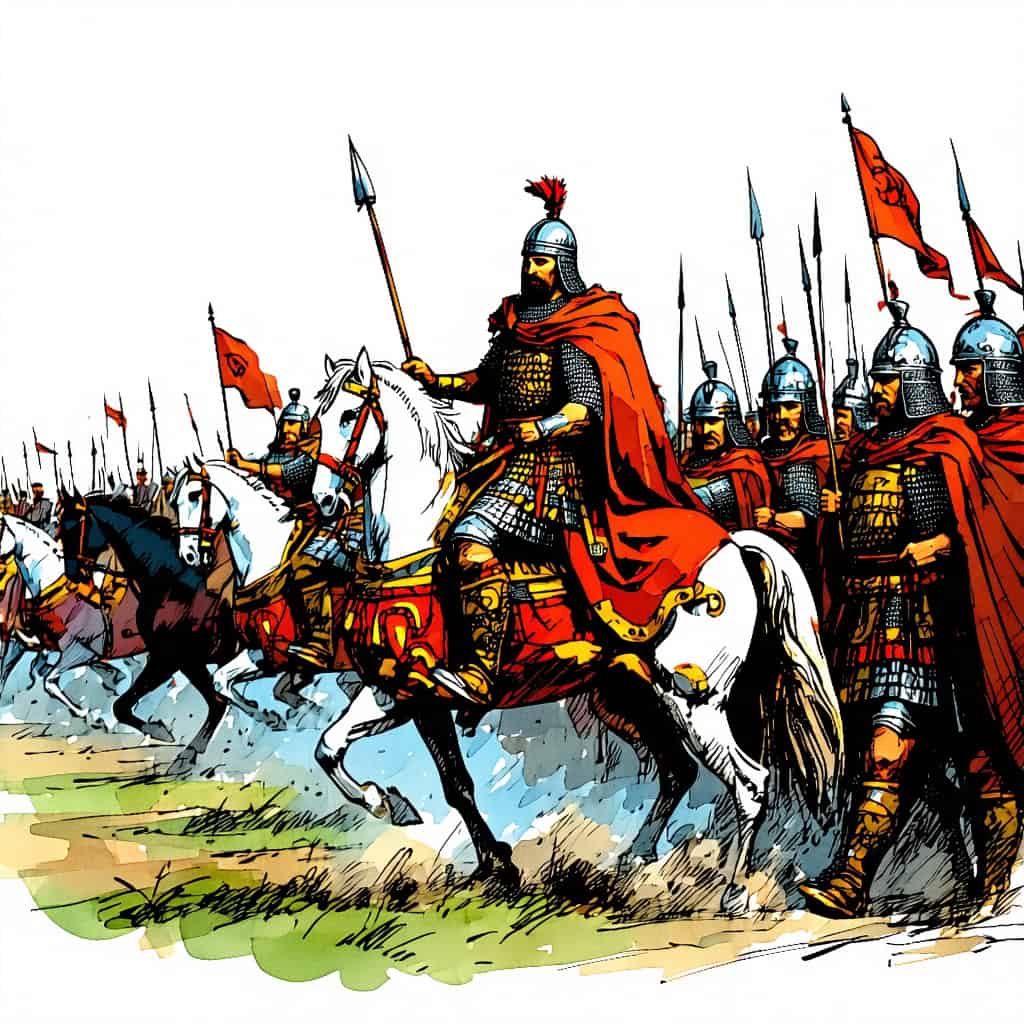
Attila the Hun
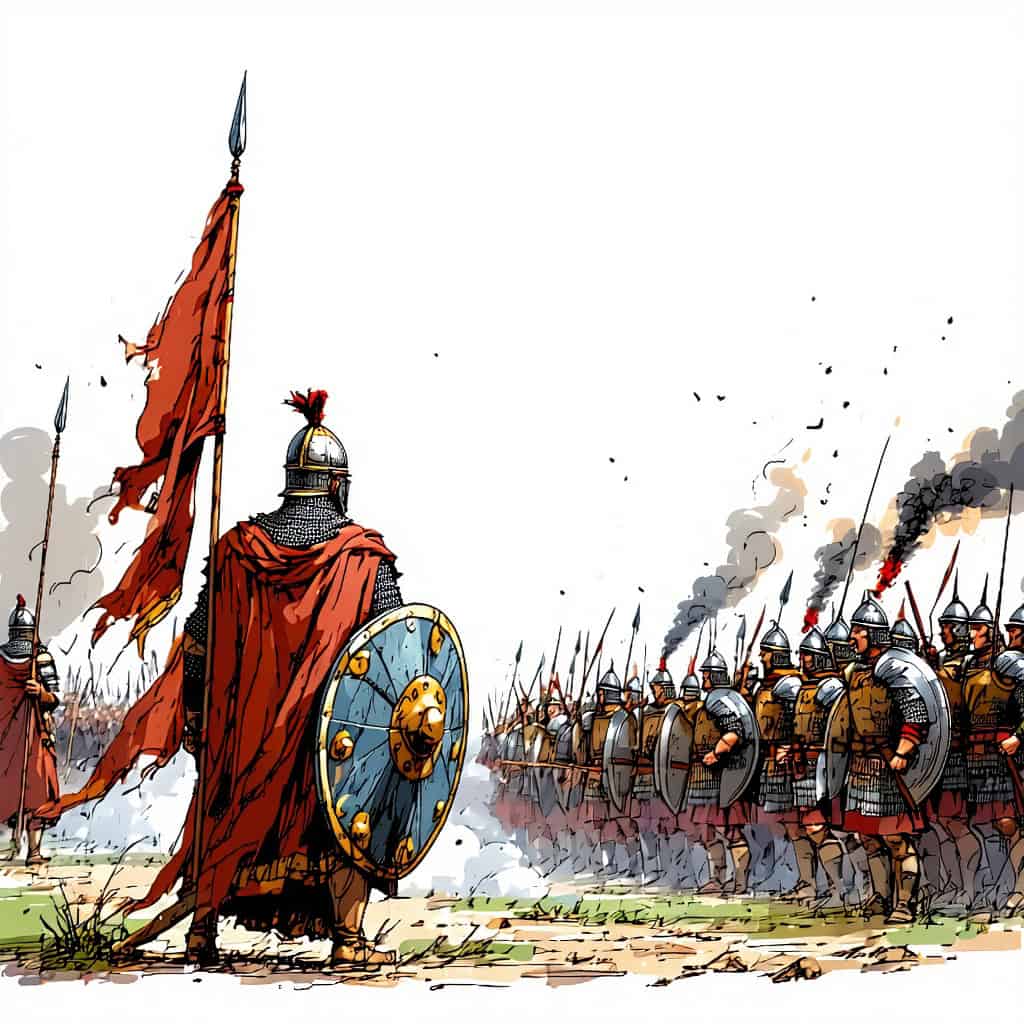
Theodoric I
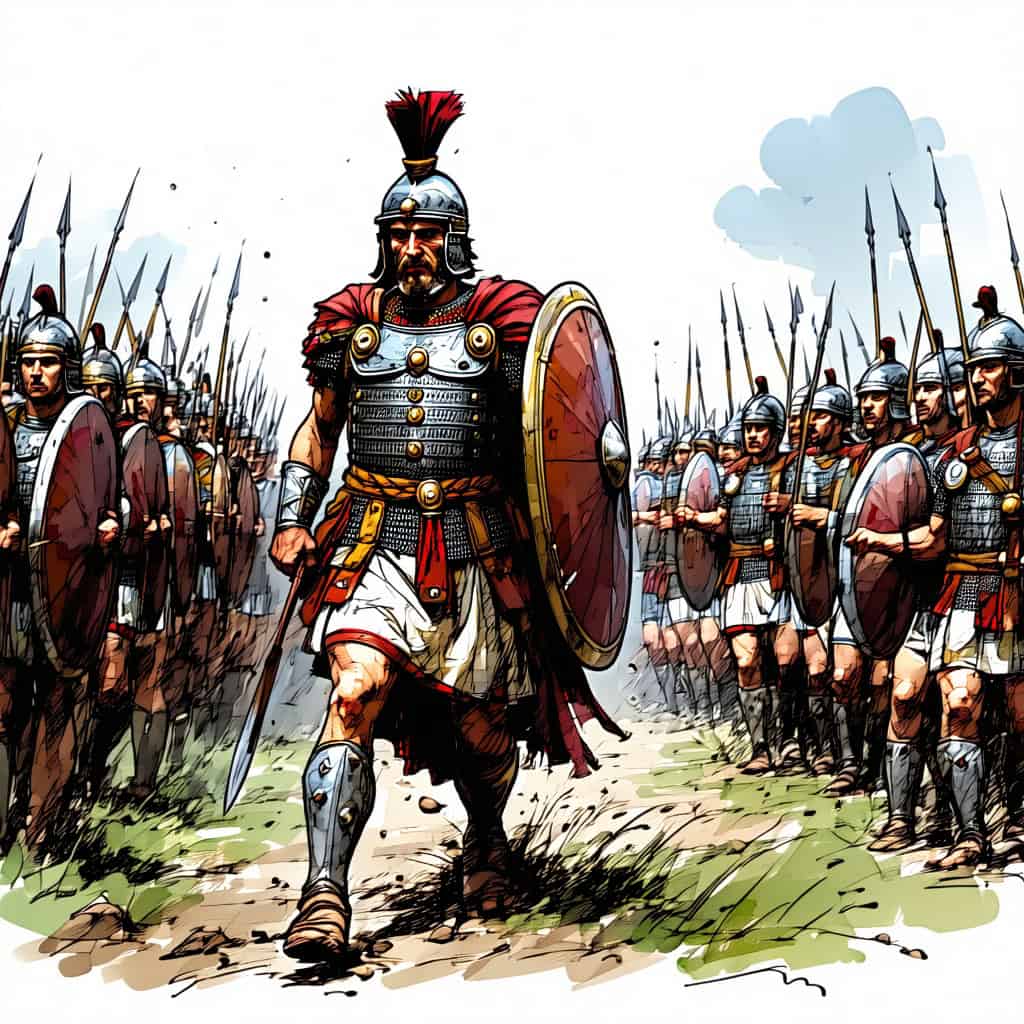
Mundus

The Gathering of Armies

The Battle Begins

The Turning Point

The Retreat of Attila

The Aftermath

The Legacy of Chalons
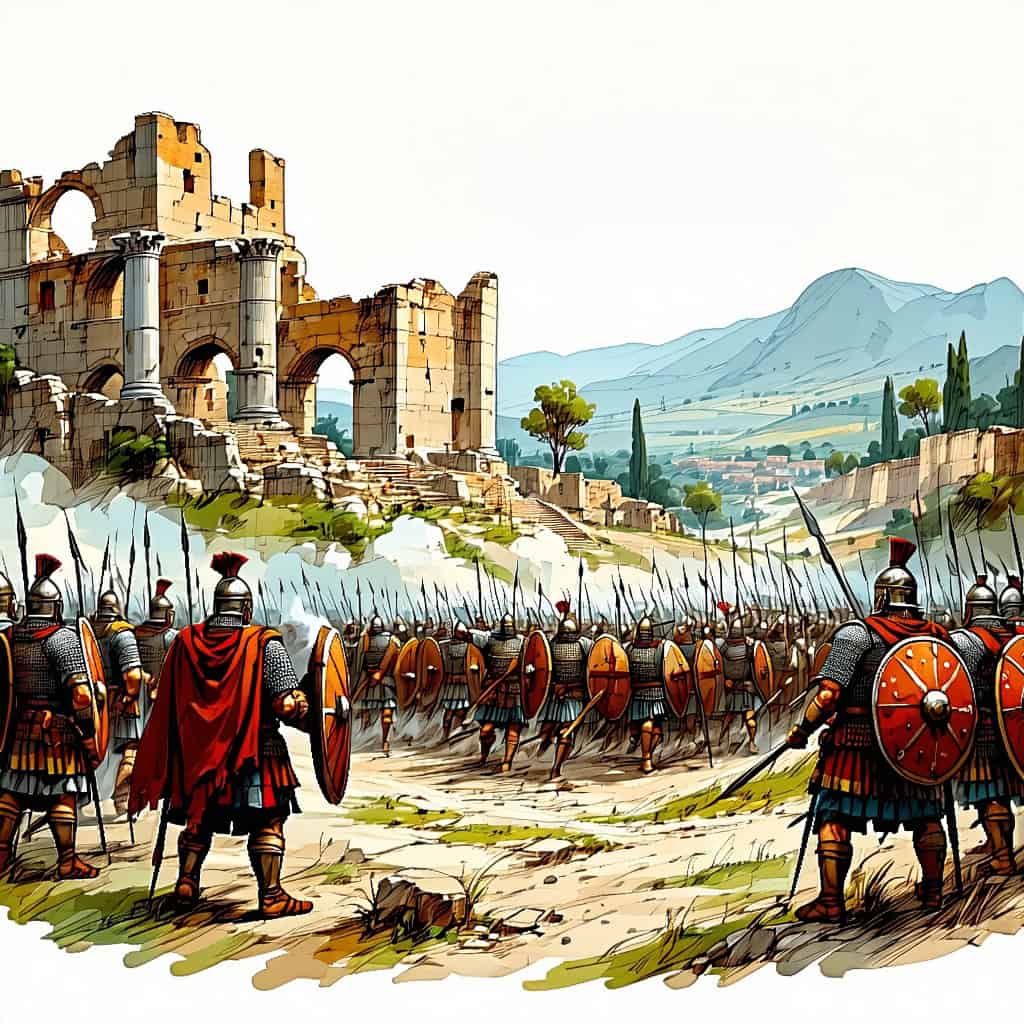
The Impact on Western Civilization

The End of an Era

The Historical Significance

The Lessons Learned
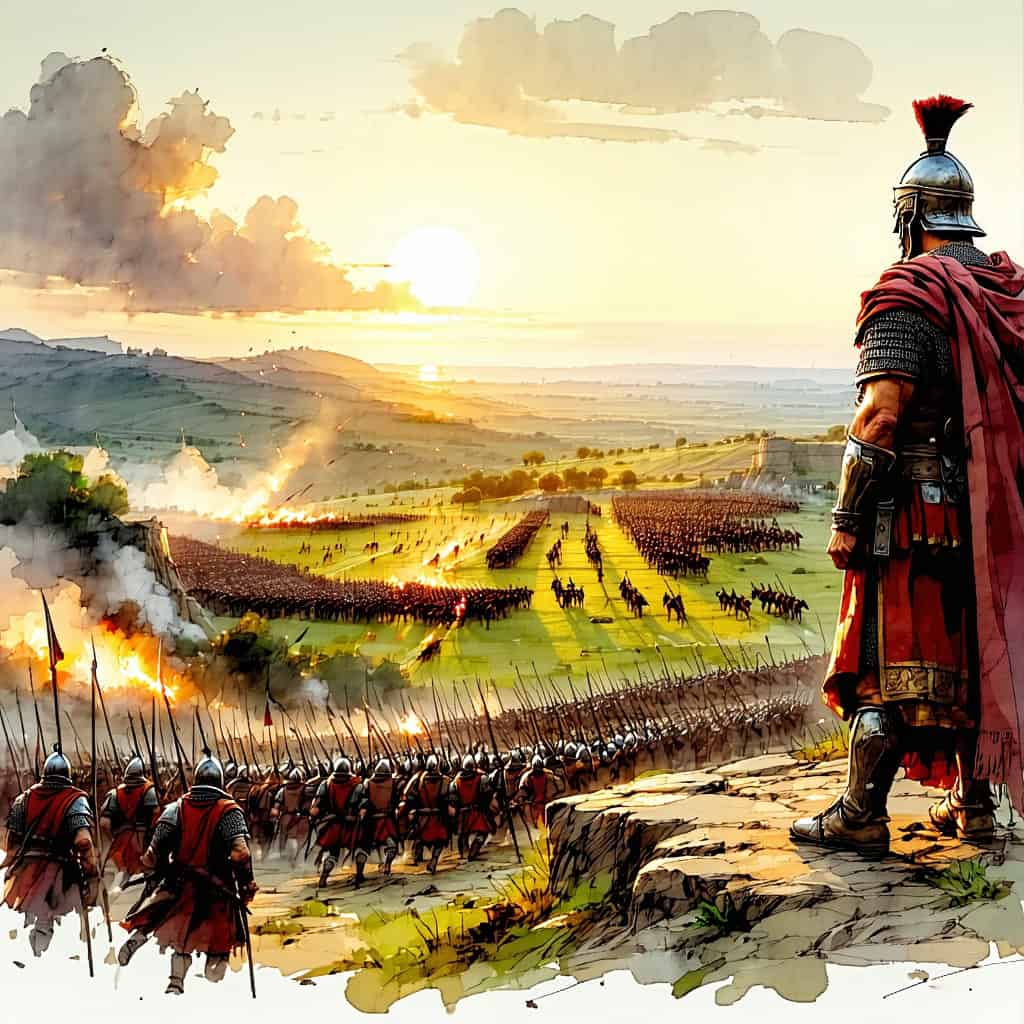
Lesson Details & Resources
In a Nutshell
- What: A pivotal battle between the Roman Army led by Flavius Aetius and the Hunnic Army led by Attila the Hun.
- When: 451 AD
- Who: Flavius Aetius, Attila the Hun
- Outcome: Decisive Roman victory, halting the advance of the Huns into Western Europe.
Famous Figures in the Battle of Chalons
-
Attila the Hun
Attila the Hun was the leader of the Huns, known for his role in the Battle of Chalons.
-
Flavius Aetius
Flavius Aetius was a Roman general who commanded the Roman forces in the Battle of Chalons.
-
Theodoric I
Theodoric I was the King of the Visigoths and fought alongside the Romans in the Battle of Chalons.
-
Merovech
Merovech was the founder of the Merovingian dynasty and participated in the Battle of Chalons.
-
Thorismund
Thorismund was a Visigothic prince who fought under his father Theodoric I in the Battle of Chalons.
-
Theodoric II
Theodoric II, son of Theodoric I, was a Visigothic king who participated in the Battle of Chalons.
-
Sangiban
Sangiban was a king of the Alans who allied with Attila the Hun in the Battle of Chalons.
-
Clodio
Clodio was a king of the Salian Franks, and some of his warriors fought in the Battle of Chalons.
-
Childeric I
Childeric I was a Frankish king who may have participated in the Battle of Chalons.
Timeline of Battle of Chalons
Attila the Hun invades Gaul with a massive army.
Aetius, the Roman general, gathers a coalition of Roman and Germanic forces to oppose Attila.
The Battle of Chalons takes place.
Aetius and Theodoric I of the Visigoths lead the coalition forces against Attila's army.
The battle is fought near the city of Chalons-en-Champagne in present-day France.
Theodoric I is killed in the battle, but the coalition forces manage to repel Attila's army.
Attila retreats and does not continue his invasion of Gaul.
The Battle of Chalons is considered a major turning point in Western European history.
The defeat at Chalons marks the end of Attila's ambitions to conquer Gaul.
Attila's defeat at Chalons helps to preserve the Roman influence in Western Europe.
The battle is also known as the Battle of the Catalaunian Plains.
The exact number of casualties in the battle is unknown, but it is estimated to be in the tens of thousands.
The Franks, Burgundians, and other Germanic tribes fight alongside the Romans in the battle.
The coalition forces successfully halt the Hunnic advance into Western Europe.
Attila's defeat at Chalons is one of the factors that lead to the decline of the Hunnic Empire.
The battle is described by the Roman historian Jordanes in his work 'Getica'.
The Battle of Chalons is considered one of the most significant battles of Late Antiquity.
The battle is often seen as a major victory for the Western Roman Empire and its allies.
The Battle of Chalons helps to stabilize the Western Roman Empire for a few more decades.
The battle is seen as a crucial event in preventing the complete collapse of the Western Roman Empire.
Vocabulary List
- Attila
- Attila the Hun was the leader of the Hunnic Empire and played a major role in the Battle of Chalons.
- Aetius
- Flavius Aetius was the Roman general who led the coalition army against the Huns in the Battle of Chalons.
- Visigoths
- The Visigoths were a Germanic tribe that allied with the Romans in the Battle of Chalons.
- Theodoric I
- Theodoric I was the king of the Visigoths who fought alongside Aetius in the Battle of Chalons.
- Burgundians
- The Burgundians were an East Germanic tribe that also fought alongside the Romans in the Battle of Chalons.
- Flavius Valerius Severus
- Flavius Valerius Severus was a Roman general who commanded a legion at the Battle of Chalons.
- Alan
- The Alans, an Iranian nomadic group, were part of the coalition army against the Huns in the Battle of Chalons.
- Suebi
- The Suebi, a Germanic people, were another tribe that joined the Romans in the Battle of Chalons.
- Roman Empire
- The Roman Empire was one of the major powers involved in the Battle of Chalons, led by General Aetius.
- Huns
- The Huns, led by Attila, were the main antagonists in the Battle of Chalons.
- Flavius Felix
- Flavius Felix was a Roman general who also fought against the Huns in the Battle of Chalons.
- Gallic Empire
- The Gallic Empire, a breakaway state from the Roman Empire, was also involved in the Battle of Chalons.
- Gaul
- Gaul, the region comprising present-day France, was the battleground for the Battle of Chalons.
- Battle of the Catalaunian Plains
- The Battle of Chalons is also known as the Battle of the Catalaunian Plains.
- Western Roman Empire
- The Western Roman Empire, led by Emperor Valentinian III, was part of the conflict in the Battle of Chalons.
- Ostrogoths
- The Ostrogoths, an East Germanic tribe, were in conflict with the Huns during the Battle of Chalons.
Key Facts
This is the information used in the fact matching game
- The Battle of Chalons, also known as the Battle of the Catalaunian Plains, took place in 451 AD.
- It was fought between a coalition of Roman and Visigoth forces led by Aetius against the Huns led by Attila.
- The battle was a pivotal clash between the declining Western Roman Empire and the rising Hunnic Empire.
- The Romans and Visigoths formed a defensive line to withstand the Hunnic assault.
- The battle was characterized by intense and brutal hand-to-hand fighting.
- The Hunnic cavalry initially gained an advantage but was eventually repulsed by the Roman and Visigoth infantry.
- Aetius, the Roman general, played a crucial role in leading the coalition forces to victory.
- Attila the Hun's forces suffered heavy casualties and were forced to retreat.
- The battle is considered a major turning point in halting the advance of the Huns into Western Europe.
- The loss at the Battle of Chalons weakened Attila's power and marked the beginning of the decline of the Hunnic Empire.
- The battle prevented the Huns from conquering Gaul (modern-day France) and potentially the Western Roman Empire.
- Both sides suffered heavy losses, with estimates ranging from 100,000 to 300,000 casualties.
- The exact location of the battle is still debated among historians.
- The alliance between the Romans and Visigoths was crucial in defeating the Huns.
- The Battle of Chalons was one of the last major military successes of the Western Roman Empire.
- The battle resulted in a strategic victory for the Roman Empire and its allies.
- The defeat of Attila the Hun at Chalons contributed to the stabilization of Western Europe.
- The battle is often depicted as a clash of civilizations between the Romans and the Huns.
- The Battle of Chalons is regarded as one of the most significant battles of late antiquity.
- The battle had long-lasting consequences on the power dynamics in Europe during the 5th century.
Analysis & Significance
Immediate Consequences
The Battle of Chalons in 451 AD resulted in a strategic victory for the Roman general Aetius and his allies against the invading Huns led by Attila. The immediate consequence was the prevention of Attila’s further advance into Western Europe, saving the Roman Empire from potential destruction.
Long-Term Impact
The outcome of the Battle of Chalons had a lasting impact on the balance of power in Europe. It marked the beginning of the decline of the Hunnic Empire and helped maintain the territorial integrity of the Roman Empire for a few more decades. The battle also set the stage for the eventual fall of the Western Roman Empire.
Cultural Significance Today
The Battle of Chalons is a significant event in history that is often overshadowed by other major battles. However, its legacy lives on as a crucial turning point in the struggle between the Roman Empire and the barbarian invasions. The battle is remembered for its role in shaping the future of Europe and influencing the course of Western civilization.
Battle of Chalons Games


Take Your Learning Offline
Want a convenient, print-ready study guide for this lesson? Become a Memory Wizards Pro member to unlock the downloadable " Memory Scrolls" for this topic and our entire library!
- ✓ Complete Vocabulary Lists
- ✓ Key Facts & Timelines
- ✓ Beautifully Formatted for Print & Mobile