
How Do You Learn Best?
Learn by Reading
Immerse yourself in the 10-minute visual lesson for a comprehensive understanding of the topic.
Learn by Reviewing
Jump directly to the key facts, timeline, and vocabulary lists to build a solid foundation of details.
Learn by Doing
Challenge yourself! Jump straight into the interactive games to learn by trial, error, and discovery.
Ulysses by James Joyce in 10 Minutes
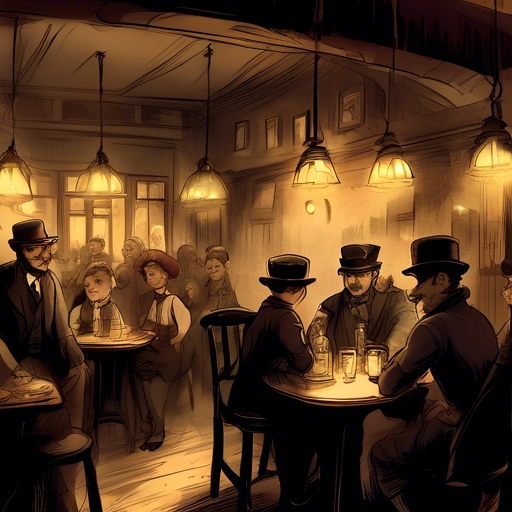
Introduction
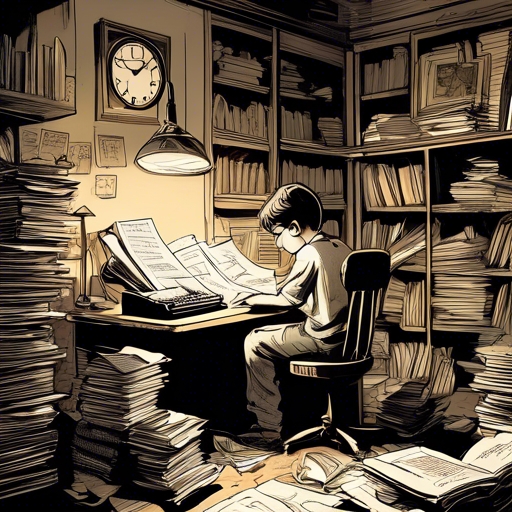
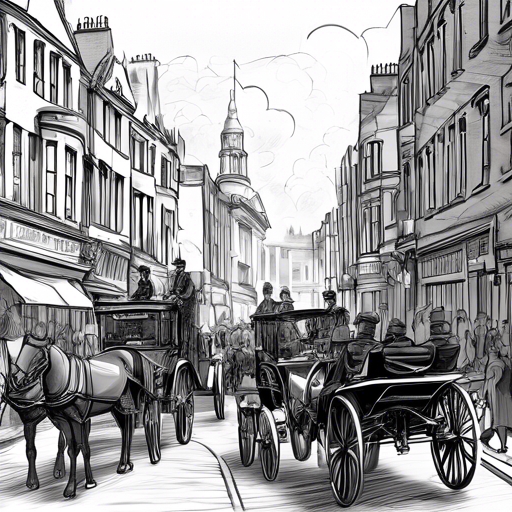

Leopold Bloom

Molly Bloom

Stephen Dedalus
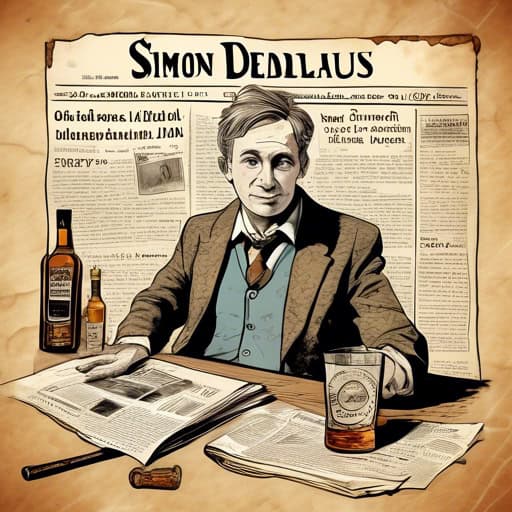
Simon Dedalus

Penelope Bloom
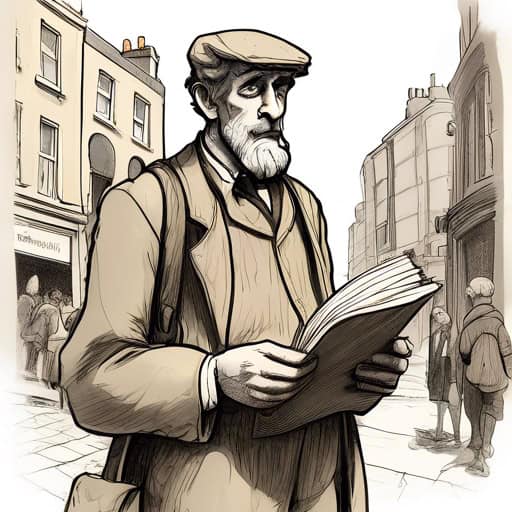
The Journey Begins
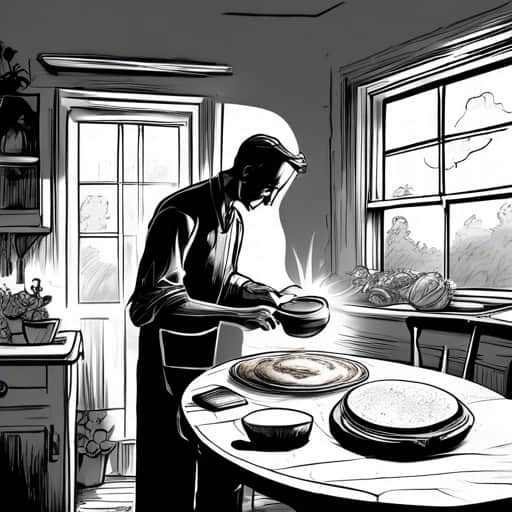
Breakfast with Bloom
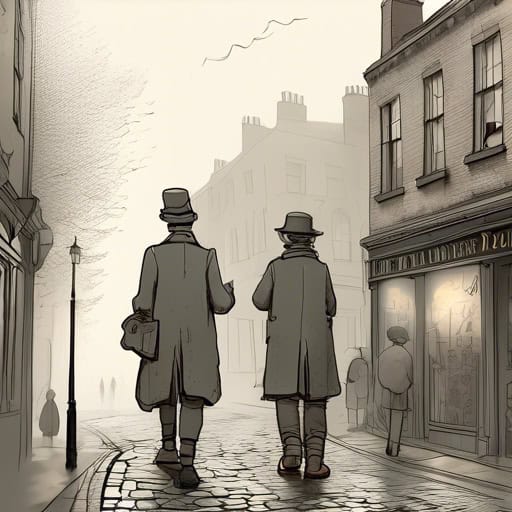
Encounter with Stephen Dedalus
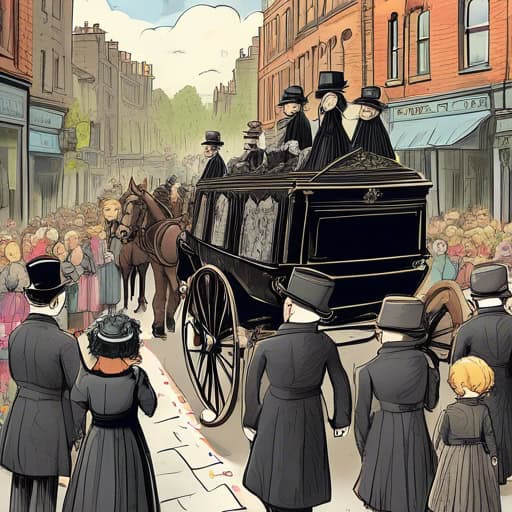
The Funeral Procession
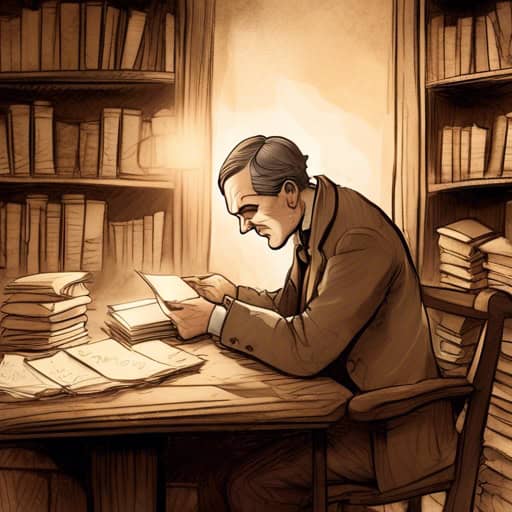
Visiting the Library
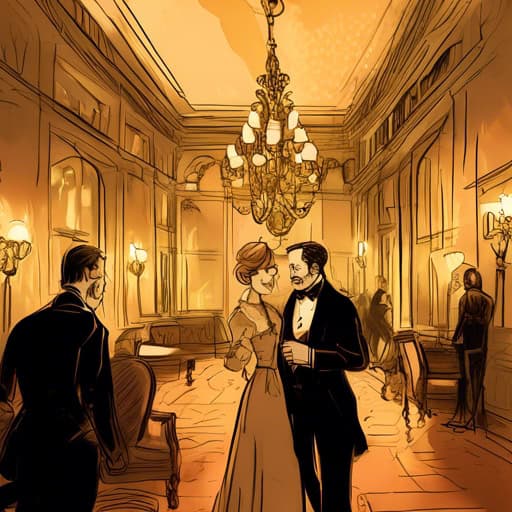
The Ormond Hotel Encounter
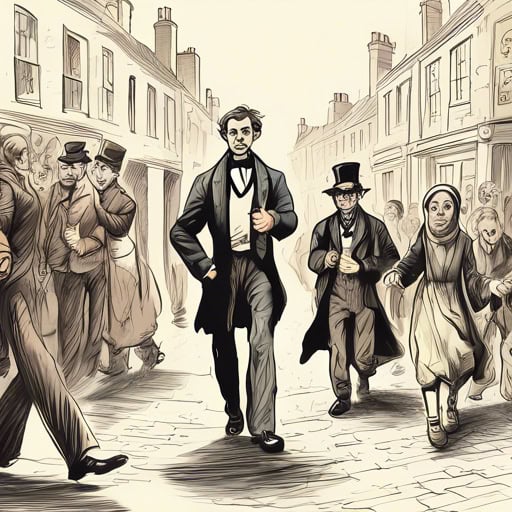
Drunk and Disorderly
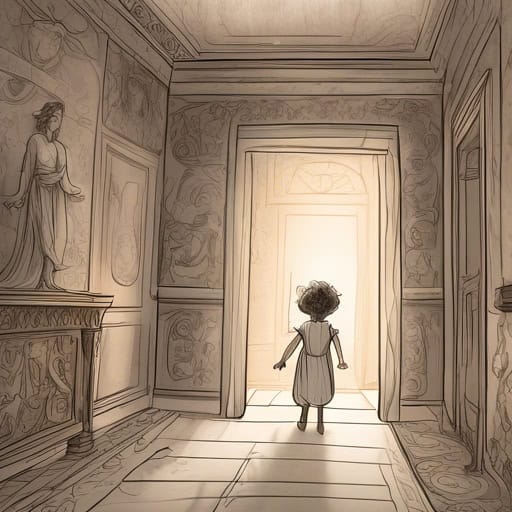
The Brothel Scene
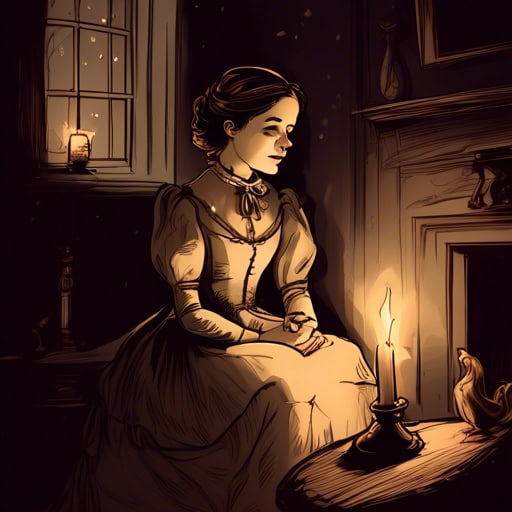
Mollys Monologue
Lesson Details & Resources
In a Nutshell
- What: 'Ulysses' by James Joyce
- When: Written in the early 20th century
- Who: Leopold Bloom, Molly Bloom, Stephen Dedalus
- Theme: Exploration of consciousness, modernism, and the human experience
List of Characters in Ulysses by James Joyce
-
Leopold Bloom
Leopold Bloom is the main character of Ulysses, a Jewish man living in Dublin who goes on a journey through the city on June 16th, 1904.
-
Molly Bloom
Molly Bloom is Leopold Bloom's wife, who has an affair with another man.
-
Stephen Dedalus
Stephen Dedalus is a young artist and intellectual who is a central figure in the novel.
-
Buck Mulligan
Buck Mulligan is a medical student and friend of Stephen Dedalus.
-
Simon Dedalus
Simon Dedalus is Stephen Dedalus' father, a former alcoholic who struggles with his past.
Timeline of Ulysses by James Joyce
1. Ulysses follows Leopold Bloom throughout one day in Dublin, June 16, 1904.
2. Ulysses opens with Stephen Dedalus teaching a history class at a boys' school.
3. Leopold Bloom prepares breakfast for his wife, Molly, and leaves the house for the day.
4. Bloom encounters various characters and has different experiences throughout the day.
5. Stephen Dedalus explores Dublin and meets various people.
6. Bloom and Dedalus eventually cross paths and have a conversation.
7. Bloom attends a funeral and visits a brothel.
8. Dedalus has a drunken night out and ends up staying at Bloom's house.
9. The novel concludes with Molly Bloom's famous soliloquy.
10. The day ends, and the characters reflect on their experiences.
11. Ulysses ends with a sense of renewal and hope for the future.
Vocabulary List
- Epiphany
- The novel is known for its stream-of-consciousness style and use of epiphanies to reveal the inner thoughts of the characters.
- Penelope
- Penelope is the wife of the main character, Leopold Bloom, and her story parallels that of the character Penelope in Homer's Odyssey.
- Cyclops
- In one episode of the novel, Bloom encounters a one-eyed man who is reminiscent of the Cyclops in Homer's Odyssey.
- Stream of consciousness
- James Joyce is known for his use of stream of consciousness narrative technique in Ulysses, which allows readers to experience the inner thoughts and feelings of the characters.
- Sirens
- The Sirens episode in Ulysses features a group of women who sing and seduce the main character, Leopold Bloom.
- Bloom
- Leopold Bloom is the protagonist of Ulysses, and his character is based on Odysseus from Homer's Odyssey.
- Martello tower
- The novel begins in a Martello tower in Dublin, where the character Buck Mulligan taunts Stephen Dedalus.
- Ulysses
- The title of the novel, Ulysses, refers to the Latin name for the Greek hero Odysseus, whose journey is paralleled in the story.
- Nymph
- In the Nausicaa episode, Gerty MacDowell is compared to a nymph as she watches Leopold Bloom from a distance.
- Cyclopean
- The novel features many references to the Cyclops episode in Homer's Odyssey, including descriptions of cyclopean architecture.
- Hades
- The Hades episode in Ulysses takes place in a funeral procession, where characters reflect on death and the afterlife.
- Circe
- The Circe episode in Ulysses features a hallucinatory sequence where Leopold Bloom is transformed into various animals.
- Calypso
- The Calypso episode in Ulysses takes place in Leopold Bloom's home, where he prepares breakfast and reflects on his life.
- Ireland
- Ulysses is set in Dublin, Ireland, and features many references to Irish history and culture.
- Odyssey
- Ulysses is often seen as a modern retelling of Homer's Odyssey, with Leopold Bloom's journey mirroring that of Odysseus.
- Homeric
- James Joyce's Ulysses is filled with allusions to Homer's epic poems, making it a highly Homeric work.
- Molly
- Molly Bloom is the wife of the main character, Leopold Bloom, and her soliloquy at the end of the novel is one of its most famous passages.
- Ireland
- The novel is deeply rooted in the culture and history of Ireland, with many references to Irish politics, literature, and folklore.
- Stephen dedalus
- Stephen Dedalus is a young artist and aspiring writer who serves as a counterpart to Leopold Bloom in the novel.
- Bloomsday
- Bloomsday is a holiday celebrated on June 16th, the day on which the events of Ulysses take place.
- Dublin
- The city of Dublin serves as the backdrop for Ulysses, with many of its streets, landmarks, and neighborhoods featured in the novel.
Key Facts
This is the information used in the fact matching game
- Ulysses is a novel by James Joyce, first published in 1922.
- The novel is set in Dublin, Ireland, and follows the events of a single day, June 16, 1904.
- The main character, Leopold Bloom, is loosely based on the hero of Homer's Odyssey, Odysseus.
- The novel is known for its experimental narrative style, including stream-of-consciousness writing and complex wordplay.
- Ulysses was initially banned in the United States and United Kingdom due to its explicit content.
- The novel is divided into 18 episodes, each of which corresponds to an episode in the Odyssey.
- Joyce worked on Ulysses for over seven years, starting in 1914 and finishing in 1921.
- Ulysses is considered one of the greatest works of modernist literature.
- The novel is known for its use of different literary styles and techniques, including parodies of various literary forms.
- Ulysses has been translated into numerous languages and continues to be studied and analyzed by scholars worldwide.
- The character Molly Bloom's famous soliloquy in the final chapter of the novel is considered one of the most iconic passages in modern literature.
- Ulysses has been adapted into various forms, including stage productions, films, and even graphic novels.
- The novel's title is a reference to the Latin name for Odysseus, the hero of Homer's epic poem.
- Ulysses has been praised for its rich symbolism and allusions to various mythological, historical, and literary works.
- Joyce's use of language in Ulysses has been lauded for its inventiveness and linguistic virtuosity.
- The novel has been the subject of controversy and censorship due to its explicit content and portrayal of sexuality.
- Ulysses is often cited as a landmark work in the development of the modern novel and is considered a masterpiece of 20th-century literature.
- The character Stephen Dedalus in Ulysses is based on Joyce himself, reflecting the author's own struggles and experiences.
- Ulysses is known for its complex narrative structure, which weaves together multiple perspectives and voices to create a rich tapestry of Dublin life.
- The novel's exploration of themes such as identity, memory, and the nature of reality have made it a subject of ongoing scholarly debate and interpretation.
Analysis & Significance
Impact on Literature
James Joyce’s ‘Ulysses’ is often regarded as one of the greatest works of modernist literature, revolutionizing the novel form with its stream-of-consciousness narrative style. Its experimental approach to storytelling has influenced countless writers and continues to be studied and celebrated for its innovative techniques.
Enduring Themes
‘Ulysses’ delves into universal themes such as identity, time, and the search for meaning in a seemingly chaotic world. Joyce’s exploration of these timeless topics still resonates with modern audiences, as readers continue to find parallels between the characters’ struggles and their own experiences.
Cultural Significance Today
The legacy of ‘Ulysses’ extends beyond literature, with the novel inspiring adaptations in various art forms, including theater, film, and music. Its influence can be seen in works across different genres and mediums, solidifying its place as a cultural touchstone that continues to captivate and inspire audiences worldwide.
Ulysses by James Joyce Games


Take Your Learning Offline
Want a convenient, print-ready study guide for this lesson? Become a Memory Wizards Pro member to unlock the downloadable " Memory Scrolls" for this topic and our entire library!
- ✓ Complete Vocabulary Lists
- ✓ Key Facts & Timelines
- ✓ Beautifully Formatted for Print & Mobile