
Summary of King James Bible Publication 1611
Unraveling the mysteries of the iconic King James Bible publication.
How Do You Learn Best?
Learn by Reading
Immerse yourself in the 10-minute visual lesson for a comprehensive understanding of the topic.
Learn by Reviewing
Jump directly to the key facts, timeline, and vocabulary lists to build a solid foundation of details.
Learn by Doing
Challenge yourself! Jump straight into the interactive games to learn by trial, error, and discovery.
King James Bible Publication 1611 in 10 Minutes

Introduction


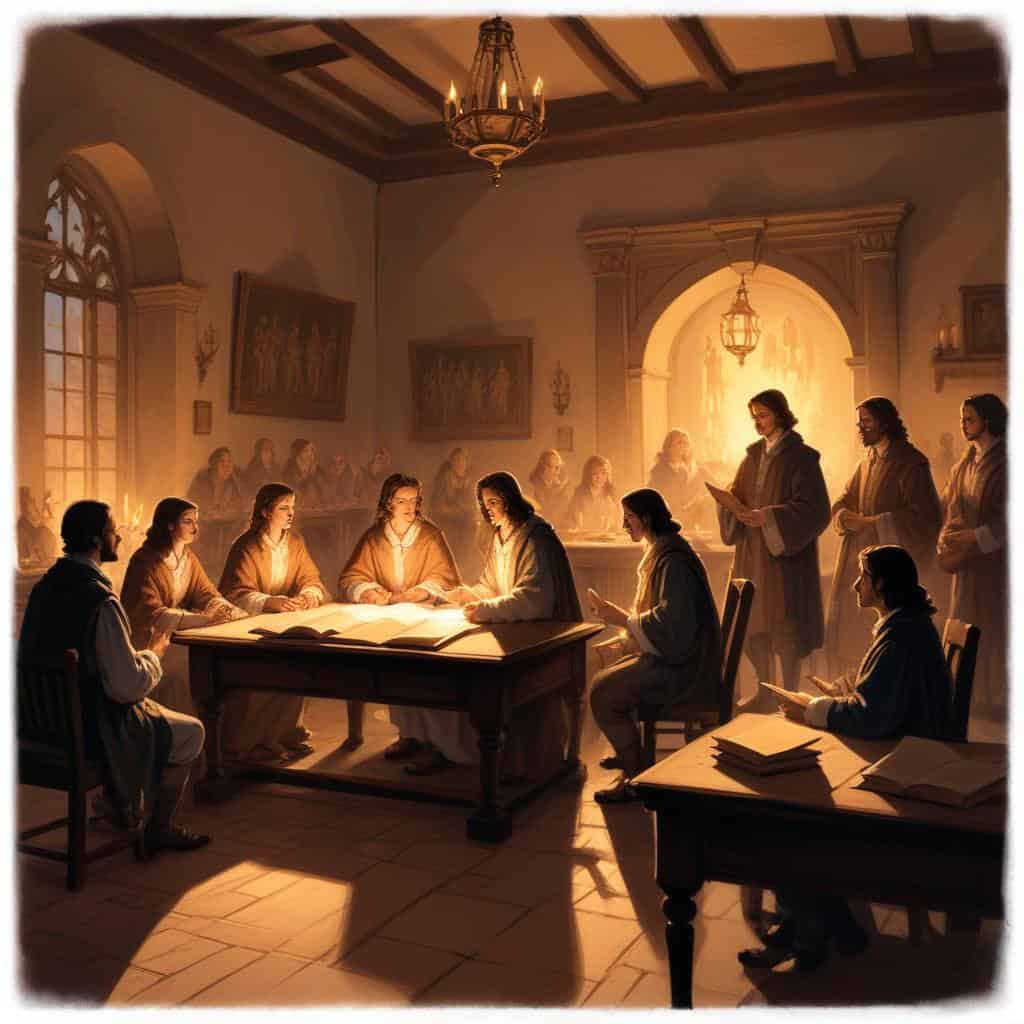
King James I

William Tyndale

Francis Bacon

John Rainolds

Richard Bancroft

The Request for a New Translation

The Translation Process

The Publication and Reception

The Language and Style

The Impact on English Literature

The Legacy of the King James Bible


Lesson Details & Resources
In a Nutshell
- What: The first publication of the King James Bible, also known as the Authorized Version.
- When: 1611
- Who: King James I of England, scholars from the Church of England
- Outcome: The King James Bible became one of the most widely read and influential English translations of the Bible.
Famous Figures in the King James Bible Publication 1611
-
King James I
King James I commissioned the translation of the King James Bible in 1611.
-
Francis Bacon
Francis Bacon was a key figure in the intellectual and political circles of the time, influencing the translation process.
-
John Donne
John Donne was a poet and clergyman who likely had some involvement in the translation of the King James Bible.
-
William Shakespeare
William Shakespeare's works are often referenced in the King James Bible.
-
Miles Smith
Miles Smith was one of the translators of the King James Bible.
-
Lancelot Andrewes
Lancelot Andrewes was a prominent clergyman who played a significant role in the translation process.
-
Sir Henry Savile
Sir Henry Savile was a scholar who may have contributed to the translation of the King James Bible.
-
George Abbot
George Abbot was an influential clergyman who supported the creation of the King James Bible.
-
Richard Bancroft
Richard Bancroft was the Archbishop of Canterbury at the time of the translation of the King James Bible.
-
William Tyndale
William Tyndale's earlier translations of the Bible laid the groundwork for the King James Version.
Timeline of King James Bible Publication 1611
King James I of England commissions a new English translation of the Bible
Work on the translation begins with 47 scholars divided into six groups
The translation is completed
The King James Bible is first published
The first edition of the King James Bible is printed
The King James Bible becomes the official version of the Church of England
The King James Bible is widely distributed and becomes popular among English-speaking Protestants
The King James Bible is revised and updated several times in the following centuries
The King James Bible remains a popular and influential version of the Bible
Vocabulary List
- Scriptures
- The King James Bible of 1611 is a collection of sacred Scriptures.
- Translation
- The King James Bible is a translation of the original Hebrew and Greek texts.
- Thou
- The King James Bible uses the archaic pronoun 'thou' to address individuals.
- Thee
- The King James Bible uses the archaic pronoun 'thee' to refer to individuals.
- Thy
- The King James Bible uses the archaic possessive pronoun 'thy' to indicate ownership.
- Thine
- The King James Bible uses the archaic possessive pronoun 'thine' to indicate ownership.
- Ye
- The King James Bible uses the archaic pronoun 'ye' to address groups of people.
- Behold
- The King James Bible often uses the term 'behold' to draw attention to something.
- Thee
- The King James Bible uses the archaic pronoun 'thee' to address individuals.
- Hath
- The King James Bible uses the archaic third person singular present indicative form of 'have' as 'hath'.
- Thine
- The King James Bible uses the archaic possessive pronoun 'thine' to indicate ownership.
Key Facts
Analysis & Significance
Immediate Consequences
Following the publication of the King James Bible in 1611, there was a surge in literacy rates as more people gained access to a standardized English translation of the Bible. This led to increased religious fervor and a greater understanding of Christian teachings among the general population.
Long-Term Impact
The King James Bible has had a lasting impact on English literature, language, and religious thought. Its poetic and majestic language influenced writers such as William Shakespeare and John Milton, shaping the development of English literature. The King James Version also became the most widely used English translation of the Bible and continues to be revered by many Christians around the world.
Cultural Significance Today
The publication of the King James Bible in 1611 is considered a landmark event in the history of Christianity and English language. Its legacy can be seen in the numerous phrases and idioms that have entered the English language, as well as its continued influence on religious worship and study. The King James Bible remains a symbol of cultural heritage and a testament to the enduring power of the written word.
King James Bible Publication 1611 Games


Take Your Learning Offline
Want a convenient, print-ready study guide for this lesson? Become a Memory Wizards Pro member to unlock the downloadable " Memory Scrolls" for this topic and our entire library!
- ✓ Complete Vocabulary Lists
- ✓ Key Facts & Timelines
- ✓ Beautifully Formatted for Print & Mobile