
What is philosophy?
Is reality just an illusion of the mind?
How Do You Learn Best?
Learn by Listening
Start with the 3-minute audio summary to get the key facts and narrative highlights quickly.
Learn by Reading
Immerse yourself in the 10-minute visual lesson for a comprehensive understanding of the topic.
Learn by Reviewing
Jump directly to the key facts, timeline, and vocabulary lists to build a solid foundation of details.
Learn by Doing
Challenge yourself! Jump straight into the interactive games to learn by trial, error, and discovery.
Audio Library
As one of our featured lessons, this topic includes premium audio guides.
Unlock the Wizard's Cram Session
This powerful audio study guide is a Pro-exclusive feature. Upgrade to Memory Wizards Pro to access this and all of our premium learning tools.
Upgrade to ProWhat is philosophy? in 10 Minutes

Introduction



Plato

Aristotle

Rene Descartes

Immanuel Kant

Friedrich Nietzsche
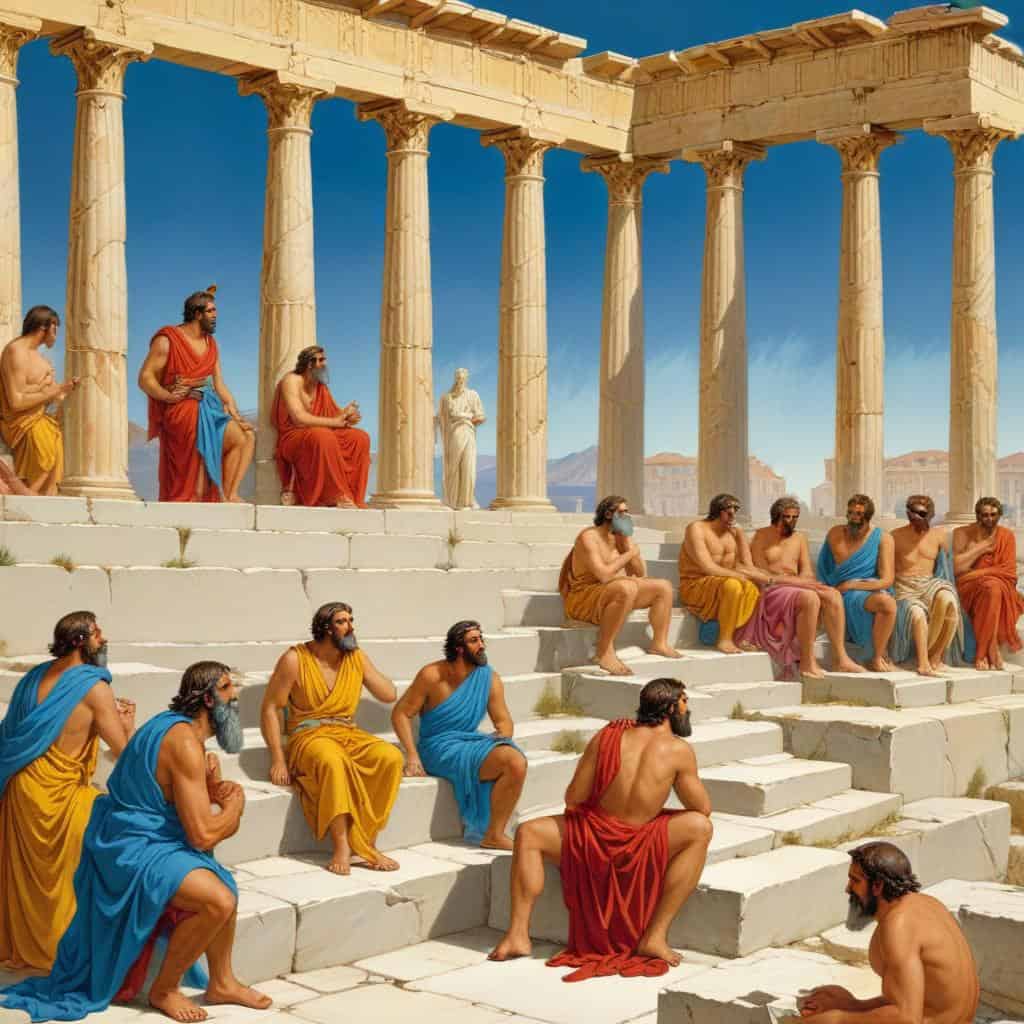
The Origins of Philosophy
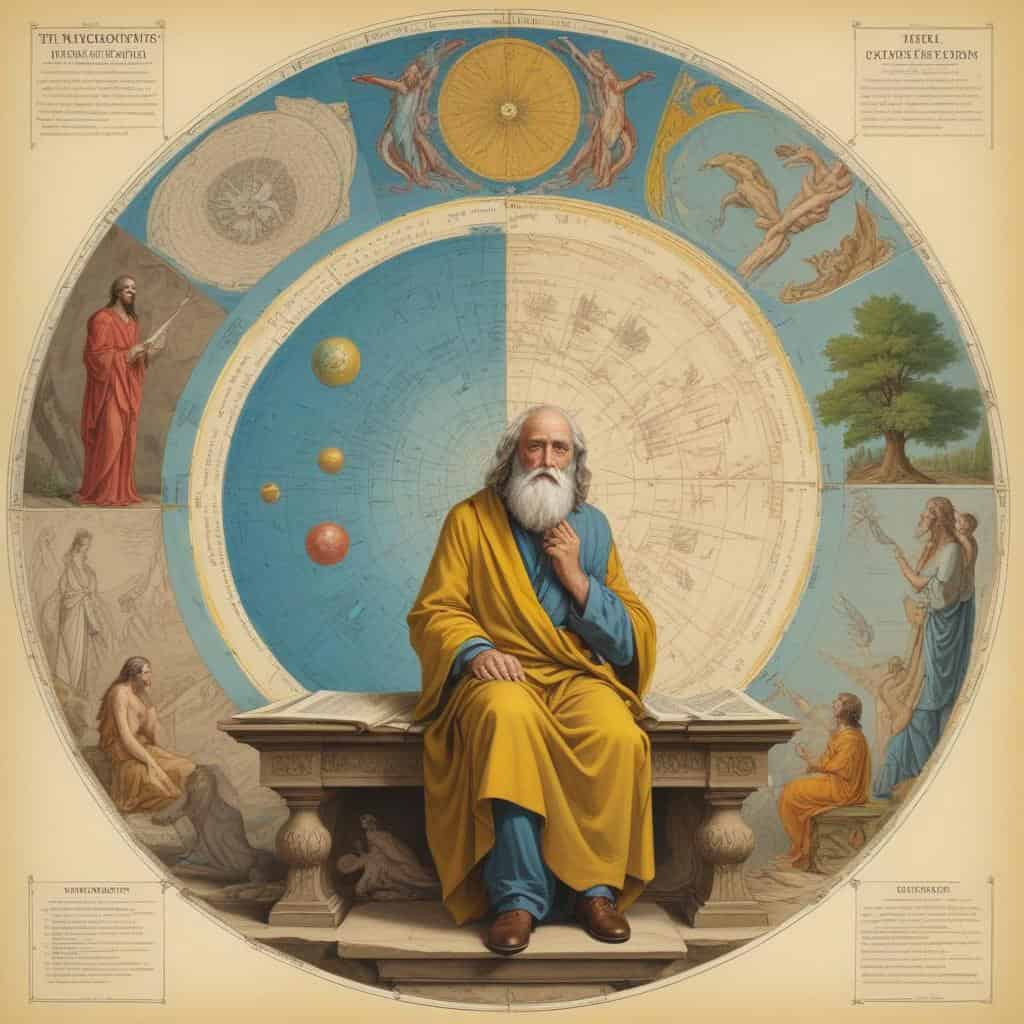
The Nature of Philosophy

The Branches of Philosophy

The Importance of Philosophy

The Philosophical Method

The Role of Philosophers

The Relationship Between Philosophy and Science

The Evolution of Philosophy

The Impact of Philosophy

The Future of Philosophy


Lesson Details & Resources
In a Nutshell
- Concept: The study of fundamental questions about existence, knowledge, values, reason, mind, and language.
- Thinkers: Socrates, Plato, Aristotle, Descartes, Kant, etc. Various time periods.
- Central Question: What is the nature of reality? What can we know? How should we live?
- Core Implication: Philosophy encourages critical thinking, self-reflection, and the exploration of different perspectives.
Timeline of What is philosophy?
Thales of Miletus is considered the first philosopher in Western tradition
Plato founds the Academy in Athens, one of the earliest institutions dedicated to the study of philosophy
Aristotle establishes his own school, the Lyceum, and writes extensively on various philosophical topics
Stoicism, founded by Zeno of Citium, becomes a popular philosophical school in Ancient Greece and Rome
Epicureanism, founded by Epicurus, gains followers in Ancient Greece and Rome
The Roman Emperor Marcus Aurelius writes his famous philosophical work 'Meditations'
Neoplatonism, a philosophical system based on the teachings of Plato, becomes prominent in late antiquity
The rise of Scholasticism in medieval Europe, blending Christian theology with Aristotelian philosophy
The Renaissance period sees a revival of interest in ancient Greek and Roman philosophy
The Age of Enlightenment promotes reason, science, and individualism as key philosophical values
Immanuel Kant publishes 'Critique of Pure Reason', a seminal work in modern philosophy
Existentialism emerges as a major philosophical movement in the 19th and 20th centuries
Analytic philosophy gains prominence in the English-speaking world, focusing on logic and language
Postmodernism challenges traditional philosophical assumptions and emphasizes the role of language and power
Contemporary philosophy explores a wide range of topics, including ethics, metaphysics, and the philosophy of mind
Vocabulary List
- Metaphysics
- Metaphysics is a key area of study in philosophy and seeks to answer fundamental questions about the nature of reality.
- Epistemology
- Epistemology explores questions about how we know what we know and the nature of truth and belief.
- Ethics
- Ethics examines questions about right and wrong, good and bad, and the nature of moral decision-making.
- Logic
- Logic is concerned with the principles of valid reasoning and the evaluation of arguments for their soundness and validity.
- Ontology
- Ontology examines questions about what it means to exist and the nature of reality in terms of existence.
Key Facts
This is the information used in the fact matching game
- Philosophy is the study of fundamental questions regarding existence, knowledge, values, reason, mind, and language.
- Philosophy seeks to understand the nature of reality and our place in it.
- Philosophy involves critical thinking, logic, and reasoning to analyze concepts and arguments.
- Philosophy explores ethical questions regarding right and wrong, good and evil, and the nature of morality.
- Philosophy examines the nature of knowledge, including how we acquire it and what we can know.
- Philosophy delves into the nature of consciousness, perception, and the mind-body relationship.
- Philosophy investigates the nature of language, communication, and the relationship between language and reality.
- Philosophy explores the nature of beauty, art, and aesthetics, and the role they play in our lives.
- Philosophy examines the nature of truth, belief, and justification, and the foundations of knowledge.
- Philosophy engages with questions about the nature of reality, including whether it is objective or subjective.
- Philosophy investigates the nature of existence, including the meaning of life, death, and our place in the universe.
- Philosophy explores the nature of time, space, causality, and the laws of nature.
- Philosophy examines the nature of free will, determinism, and the possibility of agency and choice.
- Philosophy investigates the nature of reality, including the distinction between appearance and reality.
- Philosophy explores the nature of identity, selfhood, and personal identity over time.
- Philosophy examines the nature of justice, democracy, rights, and political philosophy.
- Philosophy engages with questions about the nature of God, religion, faith, and the existence of the divine.
- Philosophy investigates the nature of science, reason, experimentation, and the limits of knowledge.
- Philosophy explores the nature of emotion, desire, and motivation, and the role they play in human behavior.
- Philosophy seeks to understand the nature of reality through systematic inquiry and critical reflection.
Analysis & Significance
The Core Argument
Philosophy is the systematic study of fundamental questions about existence, knowledge, values, reason, mind, and language. It seeks to understand the nature of reality, the purpose of life, and how we can know what we claim to know.
Criticisms and Counterarguments
Some critics argue that philosophy is irrelevant or impractical, as it often deals with abstract concepts that may not have direct applications in the real world. Others claim that philosophy is too subjective and lacks empirical evidence to support its arguments.
Modern Relevance
Despite these criticisms, philosophy remains relevant in modern society as it helps us to critically analyze and evaluate complex issues, make informed decisions, and question assumptions. It plays a crucial role in ethics, politics, and technology, guiding our moral reasoning and shaping our understanding of the world.
What is philosophy? Games


Take Your Learning Offline
Want a convenient, print-ready study guide for this lesson? Become a Memory Wizards Pro member to unlock the downloadable " Memory Scrolls" for this topic and our entire library!
- ✓ Complete Vocabulary Lists
- ✓ Key Facts & Timelines
- ✓ Beautifully Formatted for Print & Mobile