
Philosophy of mind and consciousness
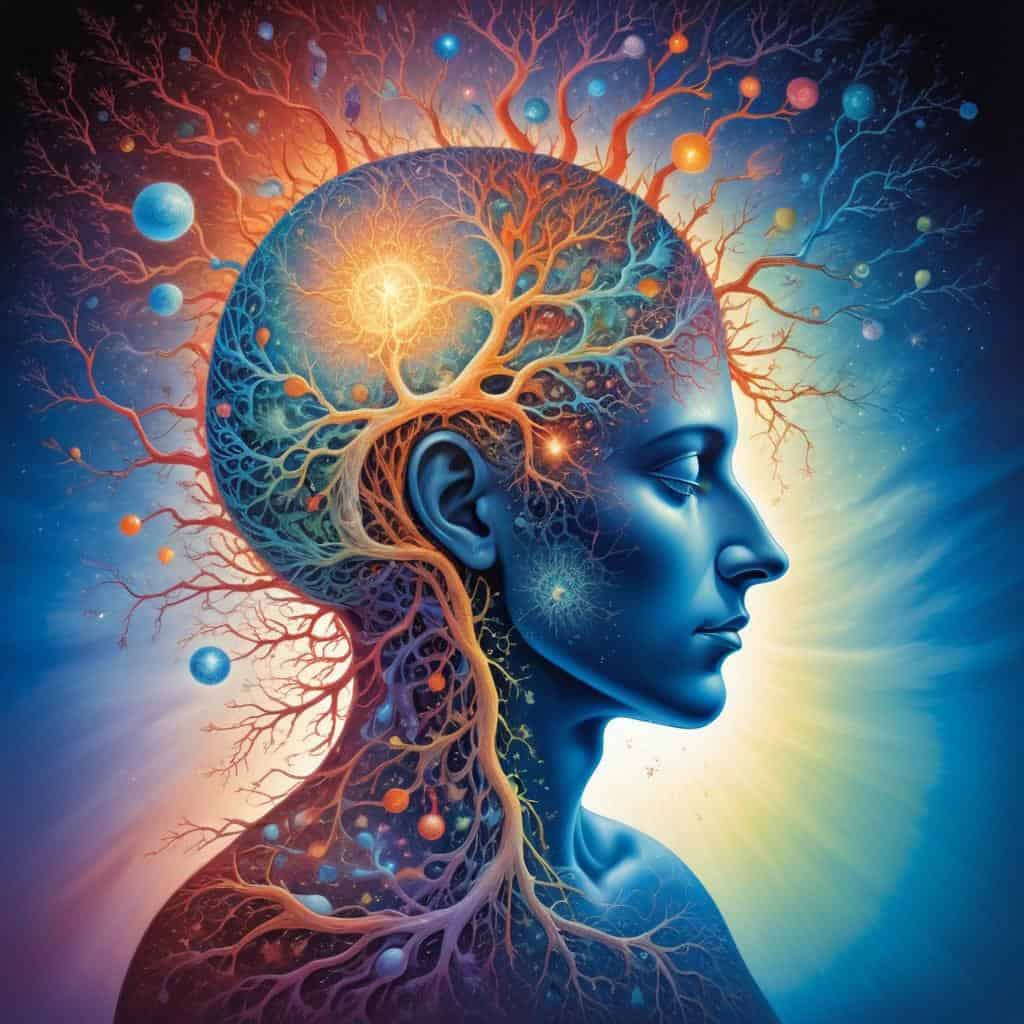
Do we truly understand the nature of our own consciousness?
How Do You Learn Best?
Learn by Listening
Start with the 3-minute audio summary to get the key facts and narrative highlights quickly.
Learn by Reading
Immerse yourself in the 10-minute visual lesson for a comprehensive understanding of the topic.
Learn by Reviewing
Jump directly to the key facts, timeline, and vocabulary lists to build a solid foundation of details.
Learn by Doing
Challenge yourself! Jump straight into the interactive games to learn by trial, error, and discovery.
Audio Library
As one of our featured lessons, this topic includes premium audio guides.
Unlock the Wizard's Cram Session
This powerful audio study guide is a Pro-exclusive feature. Upgrade to Memory Wizards Pro to access this and all of our premium learning tools.
Upgrade to ProPhilosophy of mind and consciousness in 10 Minutes
Introduction



René Descartes

David Chalmers

Thomas Nagel

Daniel Dennett

John Searle

Defining Consciousness
Philosophical Theories of Mind
The Mind-Body Problem

Qualia and Consciousness

The Problem of Free Will

Artificial Intelligence and Consciousness
Neuroscience and Consciousness

Eastern Philosophy and Consciousness

Ethical Implications of Consciousness

Future Directions in the Philosophy of Mind

Lesson Details & Resources
In a Nutshell
- Concept: The philosophical exploration of the nature of the mind and consciousness.
- Thinkers: René Descartes, David Chalmers, Daniel Dennett. 17th Century to present.
- Central Question: What is the relationship between the mind, consciousness, and the physical world?
- Core Implication: The mind and consciousness may not be reducible to physical processes, leading to debates about dualism and materialism.
Timeline of Philosophy of mind and consciousness
Plato introduces the concept of the soul and its relation to the body in 'Phaedo'
Aristotle discusses the nature of consciousness and perception in 'De Anima'
Descartes proposes the mind-body dualism in 'Meditations on First Philosophy'
Spinoza criticizes Descartes' dualism and presents a monist view in 'Ethics'
Leibniz introduces the concept of monads as the basic units of reality in 'Monadology'
Kant explores the nature of consciousness and the limitations of human knowledge in 'Critique of Pure Reason'
Hegel develops a dialectical approach to understanding consciousness in 'Phenomenology of Spirit'
Brentano distinguishes between mental and physical phenomena in 'Psychology from an Empirical Standpoint'
Freud introduces the concept of the unconscious mind in 'The Interpretation of Dreams'
Husserl establishes phenomenology as a method for studying consciousness in 'Logical Investigations'
Russell and Whitehead publish 'Principia Mathematica' discussing the foundations of mathematics and logic
Wittgenstein explores the nature of language and meaning in 'Tractatus Logico-Philosophicus'
Sartre introduces existentialist ideas about consciousness and freedom in 'Being and Nothingness'
Ryle criticizes Cartesian dualism and introduces the concept of the 'ghost in the machine' in 'The Concept of Mind'
Quine challenges the traditional distinction between analytic and synthetic statements in 'Two Dogmas of Empiricism'
Dennett develops the theory of multiple drafts model of consciousness in 'Consciousness Explained'
Chalmers proposes the 'hard problem' of consciousness in 'The Conscious Mind'
Block introduces the concept of phenomenal consciousness and access consciousness in 'On a Confusion about a Function of Consciousness'
Churchland explores the neural basis of consciousness in 'Neurophilosophy: Toward a Unified Science of Mind-Brain'
Fodor criticizes eliminative materialism and defends the existence of mental states in 'The Elm and the Expert'
Vocabulary List
- Mind-body problem
- One of the central issues in the philosophy of mind is the mind-body problem.
- Qualia
- Philosophers debate whether qualia can be fully explained by physical processes.
- Dualism
- Descartes famously advocated for a form of dualism in which the mind and body are separate substances.
- Materialism
- Many contemporary philosophers of mind are materialists who believe that mental states are ultimately physical states.
- Consciousness
- The study of consciousness is a central topic within the philosophy of mind.
- Intentionality
- Philosophers like Franz Brentano and Husserl have explored the concept of intentionality in depth.
- Functionalism
- Functionalism is a popular theory in the philosophy of mind that focuses on the computational aspects of mental processes.
Key Facts
This is the information used in the fact matching game
- The mind-body problem is a central issue in the philosophy of mind, exploring the relationship between the mind and the body.
- Dualism is the belief that the mind and body are distinct substances, while monism argues that they are ultimately one substance.
- Functionalism is a theory in the philosophy of mind that defines mental states in terms of their functions, rather than their physical properties.
- Behaviorism is a school of thought in psychology that suggests mental states can be understood through observable behaviors.
- The hard problem of consciousness refers to the challenge of understanding how and why physical processes give rise to subjective experiences.
- Epiphenomenalism is the view that mental states are byproducts of physical processes and do not causally influence the physical world.
- Phenomenal consciousness refers to the subjective experience of consciousness, such as sensations, emotions, and perceptions.
- Intentionality is the capacity of mental states to represent or be about objects, concepts, or states of affairs in the world.
- The Chinese Room argument, proposed by John Searle, challenges the idea that computers can truly understand and have consciousness.
- Panpsychism is the view that consciousness is a fundamental feature of the universe and is present in all things, not just humans or animals.
- The unity of consciousness refers to the experience of having a single, unified stream of consciousness, despite the diverse mental contents we may experience.
- Ned Block's distinction between phenomenal consciousness and access consciousness highlights the difference between conscious experience and cognitive access to that experience.
- David Chalmers introduced the concept of the 'hard problem' of consciousness to distinguish between the challenge of explaining how physical processes give rise to subjective experience.
- Physicalism is the view that everything that exists is physical, including mental states, which are ultimately reducible to physical processes.
- Qualia are the subjective, qualitative aspects of conscious experiences, such as the redness of red or the taste of chocolate.
- Daniel Dennett's multiple drafts model of consciousness challenges the idea of a single, unified stream of consciousness in favor of a more dynamic and distributed view.
- The Turing Test, proposed by Alan Turing, is a test of a machine's ability to exhibit intelligent behavior indistinguishable from that of a human.
- The philosophy of mind explores questions about the nature of mental states, consciousness, and the relationship between the mind and the body.
- Eliminative materialism is the view that common-sense mental states, such as beliefs and desires, do not exist and should be eliminated from our scientific understanding of the mind.
- The zombie argument challenges physicalism by proposing the existence of beings that are behaviorally indistinguishable from humans but lack conscious experiences.
Analysis & Significance
The Core Argument
The philosophy of mind and consciousness seeks to understand the nature of mental phenomena, such as thoughts, emotions, and perceptions, and their relationship to the physical brain. It delves into questions of whether the mind is separate from the body or if they are one and the same, and how consciousness arises from neural processes.
Criticisms and Counterarguments
Critics argue that the philosophy of mind faces challenges in explaining the subjective experience of consciousness and the “hard problem” of how physical processes give rise to qualia and self-awareness. Some philosophers propose alternative theories, such as panpsychism or dualism, to address these issues and provide a different perspective on the nature of the mind.
Modern Relevance
Understanding the philosophy of mind and consciousness is crucial in contemporary discussions on artificial intelligence, ethics, and personal identity. It influences debates on the ethical treatment of sentient beings, the implications of AI on human cognition, and the nature of personal identity in an increasingly digital world. Exploring these philosophical ideas offers valuable insights into the complexities of human consciousness and its impact on society.
Philosophy of mind and consciousness Games


Take Your Learning Offline
Want a convenient, print-ready study guide for this lesson? Become a Memory Wizards Pro member to unlock the downloadable " Memory Scrolls" for this topic and our entire library!
- ✓ Complete Vocabulary Lists
- ✓ Key Facts & Timelines
- ✓ Beautifully Formatted for Print & Mobile