
Philosophical theories and concepts
What if reality is just an illusion of the mind?
How Do You Learn Best?
Learn by Listening
Start with the 3-minute audio summary to get the key facts and narrative highlights quickly.
Learn by Reading
Immerse yourself in the 10-minute visual lesson for a comprehensive understanding of the topic.
Learn by Reviewing
Jump directly to the key facts, timeline, and vocabulary lists to build a solid foundation of details.
Learn by Doing
Challenge yourself! Jump straight into the interactive games to learn by trial, error, and discovery.
Audio Library
As one of our featured lessons, this topic includes premium audio guides.
Unlock the Wizard's Cram Session
This powerful audio study guide is a Pro-exclusive feature. Upgrade to Memory Wizards Pro to access this and all of our premium learning tools.
Upgrade to ProPhilosophical theories and concepts in 10 Minutes

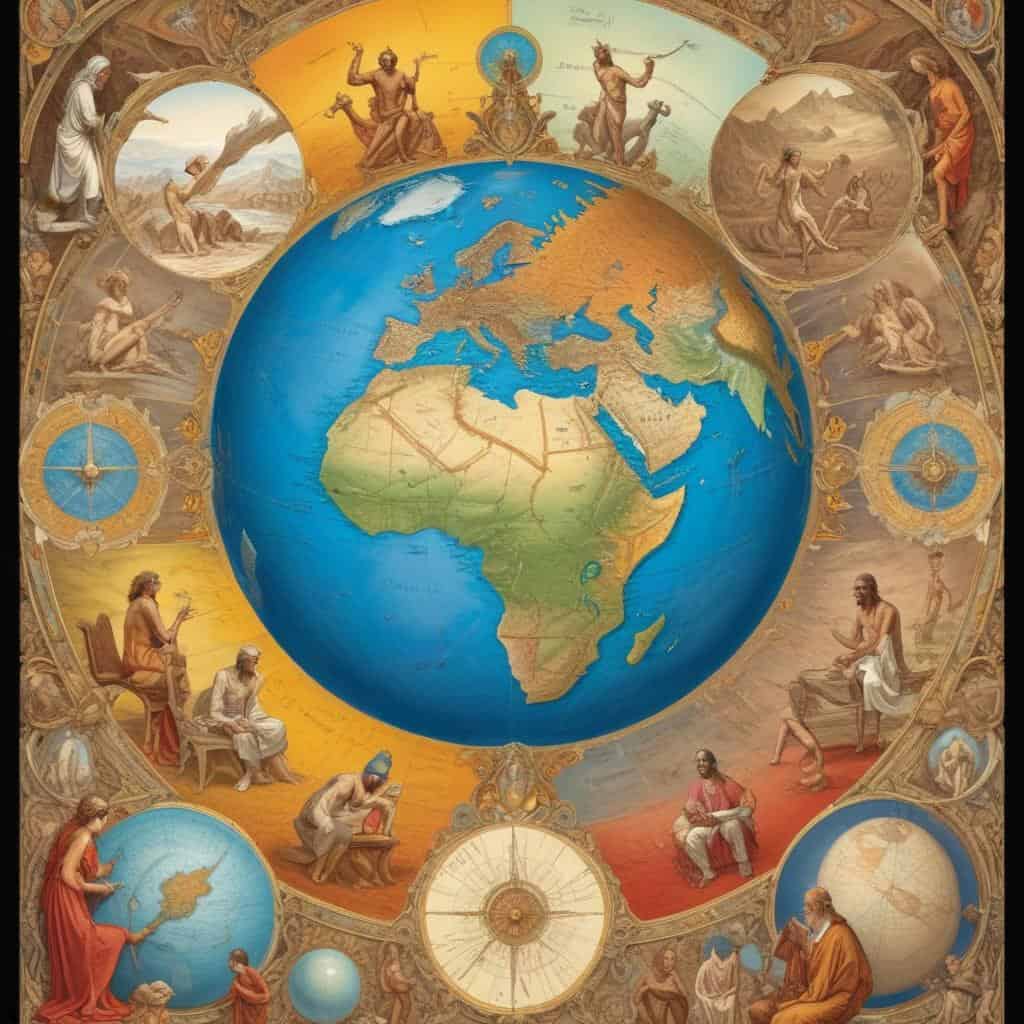
Introduction
Plato
Aristotle

Immanuel Kant

David Hume
Friedrich Nietzsche
1. The Foundation of Philosophy
2. Theories of Knowledge

3. Metaphysical Theories

4. Ethical Theories

5. Aesthetics and Philosophy

6. Political Philosophy

7. Existentialism and Phenomenology
8. Pragmatism and Analytic Philosophy

9. Eastern Philosophical Traditions
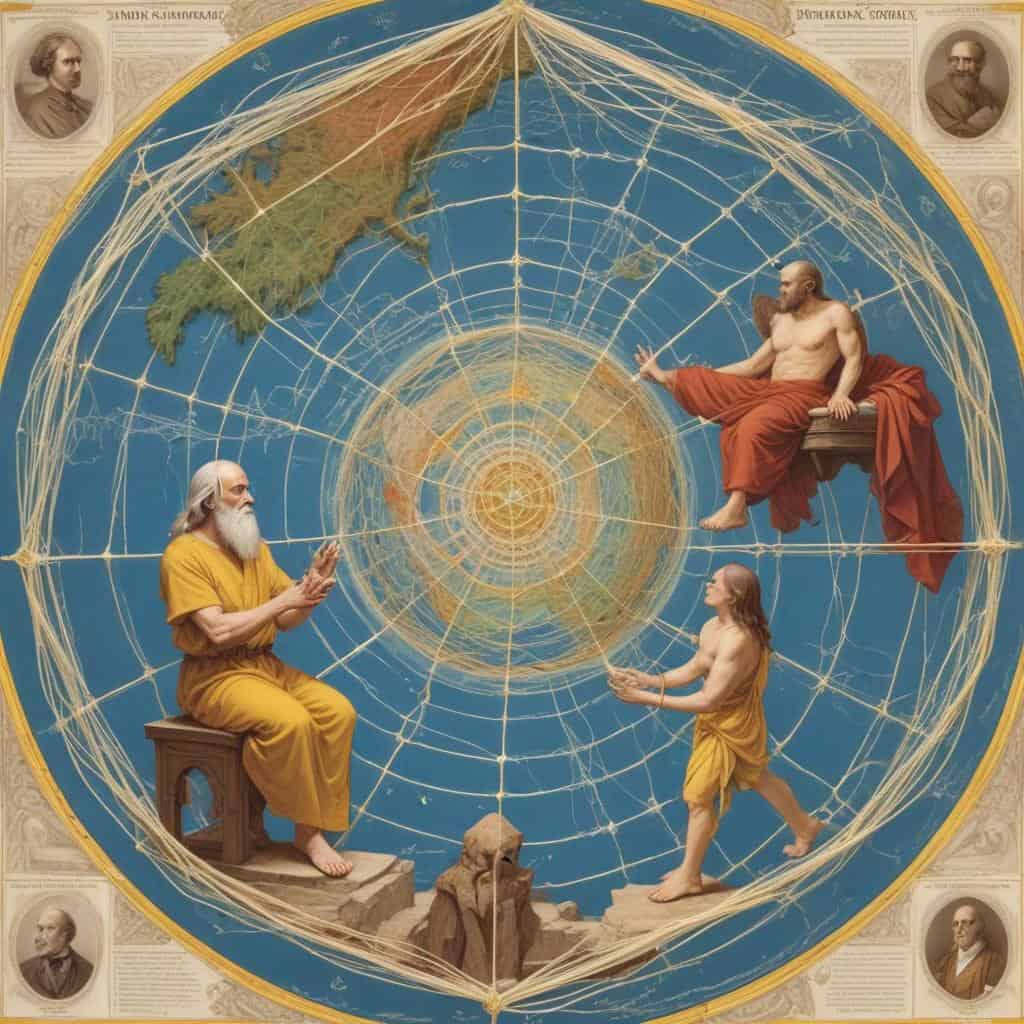
10. The Importance of Philosophy
Lesson Details & Resources
In a Nutshell
- Concept: A branch of philosophy that explores various theories and concepts to understand the nature of reality, knowledge, existence, and values.
- Thinkers: Plato, Aristotle, Descartes, Kant, Nietzsche, etc. Various time periods depending on the philosopher.
- Central Question: What is the nature of reality? What can we know? How should we live? What is the meaning of life?
- Core Implication: The quest for understanding fundamental truths about the world and our place in it, leading to different perspectives on life, morality, and the universe.
Timeline of Philosophical theories and concepts
Ancient Greek philosophy begins with the pre-Socratic philosophers
Socrates develops the Socratic method of questioning
Plato founds the Academy in Athens, promoting his theory of Forms
Aristotle establishes his own school, the Lyceum, and develops his theory of Ethics
Stoicism emerges as a major philosophical school in Ancient Greece
Epicureanism becomes a popular philosophical school in Ancient Greece
Neoplatonism develops as a synthesis of Platonic and Aristotelian philosophy
Medieval Scholasticism flourishes in Europe, blending Christian theology with Aristotelian philosophy
Renaissance Humanism emphasizes the study of classical texts and the potential of human beings
Enlightenment philosophy promotes reason, science, and individual rights as the basis of society
German Idealism, led by philosophers like Kant and Hegel, emphasizes the role of the mind in shaping reality
Existentialism emerges as a response to the absurdity and existential angst of modern life
Pragmatism, championed by philosophers like William James and John Dewey, focuses on the practical consequences of beliefs
Analytic philosophy becomes dominant in the English-speaking world, emphasizing logical analysis and clarity of language
Postmodernism challenges traditional notions of truth, reality, and authority in philosophy
Feminist philosophy critiques traditional philosophical frameworks for their exclusion of women's voices and perspectives
Environmental philosophy emerges as a response to the growing ecological crisis and the need for ethical considerations in relation to the environment
Neurophilosophy explores the relationship between the brain, consciousness, and philosophical questions
AI ethics becomes a significant area of philosophical inquiry as artificial intelligence technology advances
Global philosophy seeks to integrate diverse philosophical traditions from around the world into a more inclusive and holistic approach to philosophy
Vocabulary List
- Metaphysics
- In metaphysics, philosophers explore questions about the nature of existence and reality, such as whether the physical world is all that exists or if there are other dimensions beyond our perception.
- Epistemology
- Epistemology asks questions about how we come to know things, what counts as knowledge, and the limits of what we can know. It explores topics like perception, memory, and reasoning.
- Ethics
- Ethics examines moral principles, values, and virtues, and seeks to provide guidance on how individuals and societies should make decisions that are morally sound.
- Logic
- Logic is concerned with the rules of correct reasoning and how to distinguish between valid and invalid arguments. It is foundational to all areas of philosophy and critical thinking.
- Ontology
- Ontology is concerned with questions about what exists, how things exist, and the nature of reality itself. It explores concepts like identity, change, and causation.
Key Facts
This is the information used in the fact matching game
- The concept of the 'cogito' is central to René Descartes' philosophy, with his famous statement 'I think, therefore I am.'
- Utilitarianism is a consequentialist ethical theory that emphasizes maximizing overall well-being or happiness.
- Kant's categorical imperative is a moral principle that states one should act only according to maxims that can be universalized.
- Hegel's dialectical method involves the progression of thesis, antithesis, and synthesis to arrive at a higher truth.
- The concept of 'falsifiability' is essential to Karl Popper's philosophy of science, which argues that scientific theories should be able to be proven false.
- Existentialism emphasizes individual freedom, choice, and responsibility in creating one's own meaning in life.
- John Rawls' theory of justice revolves around the idea of a veil of ignorance, where individuals make decisions without knowing their own position in society.
- The concept of 'epistemic justification' is central to epistemology, the branch of philosophy that deals with knowledge and belief.
- David Hume's philosophy emphasizes the limitations of human knowledge and the role of empirical observation in understanding the world.
- Hedonism is a philosophical theory that posits pleasure as the ultimate good and goal of human life.
- The 'trolley problem' is a famous ethical dilemma that raises questions about moral responsibility and the greater good.
- Epictetus' Stoicism emphasizes the importance of distinguishing between what is within our control and what is outside our control.
- The 'Ship of Theseus' paradox raises questions about identity and persistence over time, asking if an object remains the same after all its parts are replaced.
- Phenomenology, developed by Edmund Husserl, focuses on the study of conscious experience and the structures of consciousness.
- The 'problem of induction' challenges the justification of inductive reasoning and the assumption that the future will resemble the past.
- Deontology, a moral theory associated with Immanuel Kant, emphasizes duties and obligations as the basis for ethical decision-making.
- Plato's theory of forms posits that abstract, ideal forms exist beyond the physical world and are the true reality.
- Simone de Beauvoir's concept of 'The Other' explores how social norms and structures create and perpetuate power dynamics and oppression.
- Aristotle's virtue ethics focuses on developing moral character through cultivating virtues and finding the mean between extremes.
- The 'ontological argument' for the existence of God, famously formulated by Anselm of Canterbury, posits that God is the greatest conceivable being.
Analysis & Significance
The Core Argument
Philosophical theories and concepts serve as the foundation of our understanding of the world and our place in it. They provide frameworks for analyzing complex ideas and help us make sense of the fundamental principles that govern our existence.
Criticisms and Counterarguments
However, these theories are not immune to criticism. Some argue that they are abstract and disconnected from real-world applications, while others question their validity in a constantly evolving society. Critics also point out the limitations of these theories in addressing the complexities of human experience and behavior.
Modern Relevance
Despite these criticisms, philosophical theories and concepts remain relevant in modern society. They continue to inform ethical debates, guide decision-making processes, and shape our understanding of morality and justice. In a world filled with technological advancements and ethical dilemmas, the study of philosophical theories provides a valuable framework for navigating the complexities of contemporary life.
Philosophical theories and concepts Games


Take Your Learning Offline
Want a convenient, print-ready study guide for this lesson? Become a Memory Wizards Pro member to unlock the downloadable " Memory Scrolls" for this topic and our entire library!
- ✓ Complete Vocabulary Lists
- ✓ Key Facts & Timelines
- ✓ Beautifully Formatted for Print & Mobile