
Exploring The Concept Of Existence
Are we merely dreamers in a cosmic symphony of existence?
How Do You Learn Best?
Learn by Reading
Immerse yourself in the 10-minute visual lesson for a comprehensive understanding of the topic.
Learn by Reviewing
Jump directly to the key facts, timeline, and vocabulary lists to build a solid foundation of details.
Learn by Doing
Challenge yourself! Jump straight into the interactive games to learn by trial, error, and discovery.
Exploring The Concept Of Existence in 10 Minutes

Introduction


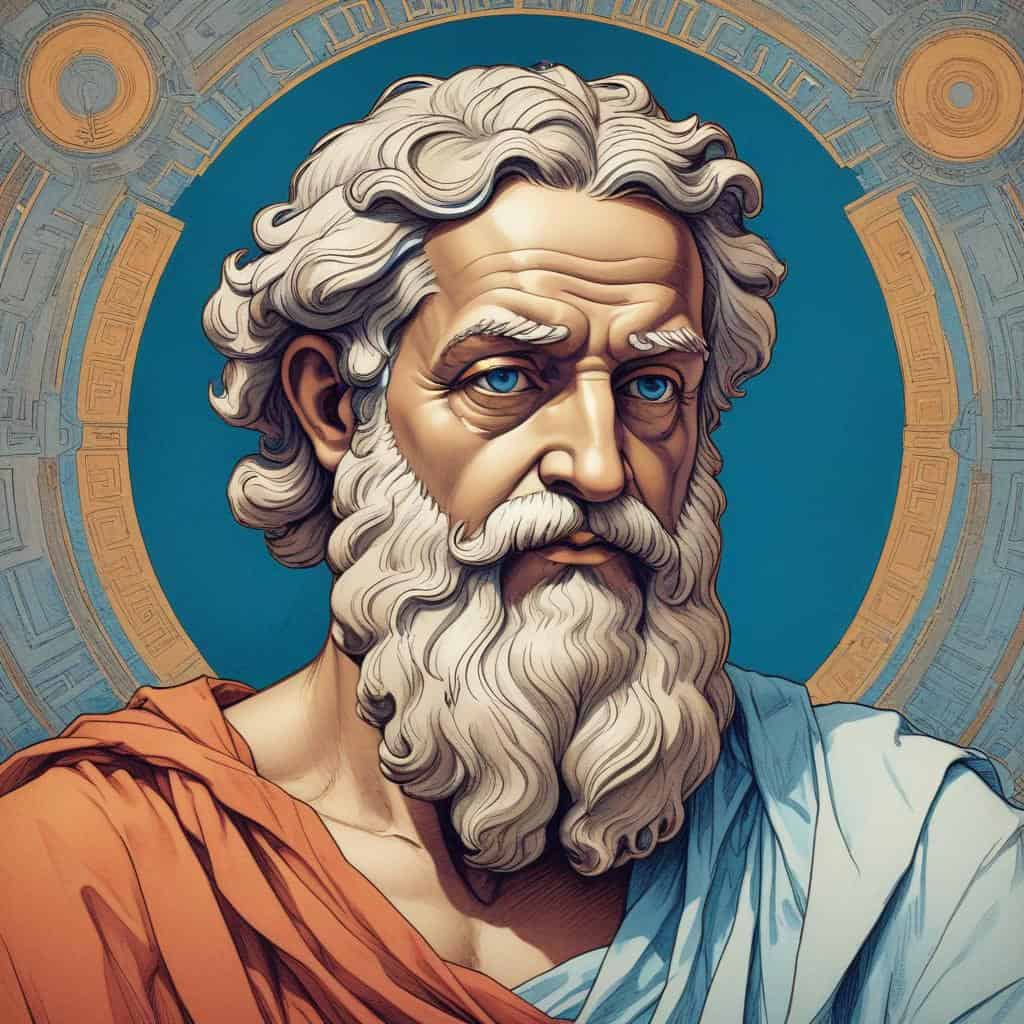
Plato

Rene Descartes

Martin Heidegger

Immanuel Kant
Exploring the concept of existence in Philosophy and metaphysics

The nature of being

Reality and perception

The mind-body problem

Existence beyond the physical world
Time and space

Causality and determinism

The search for meaning
Lesson Details & Resources
In a Nutshell
- Concept: The philosophical exploration of existence and reality.
- Thinkers: René Descartes, Immanuel Kant, Friedrich Nietzsche.
- Central Question: What does it mean to exist and how do we know that we exist?
- Core Implication: The nature of reality and our place within it is a fundamental aspect of human understanding and self-awareness.
Timeline of Exploring The Concept Of Existence
Ancient philosophers in Greece contemplate the concept of existence
Descartes' famous statement 'Cogito, ergo sum' (I think, therefore I am)
Kant's Critique of Pure Reason challenges traditional views on existence
Existentialism emerges as a philosophical movement
Martin Heidegger's 'Being and Time' redefines the concept of existence
Jean-Paul Sartre's 'Existentialism is a Humanism' popularizes existentialist ideas
Albert Camus' 'The Myth of Sisyphus' explores the absurdity of existence
Jean-Paul Sartre's play 'No Exit' introduces the famous line 'Hell is other people'
The field of phenomenology further explores the nature of existence
Postmodernism challenges traditional notions of existence and reality
The rise of artificial intelligence raises questions about the nature of existence
Quantum physics theories challenge our understanding of existence and reality
Advancements in neuroscience lead to new insights into the nature of consciousness and existence
Philosophers continue to debate the nature of existence in academic circles
Vocabulary List
- Existence
- The philosopher pondered the nature of existence.
- Reality
- He struggled to determine what was real and what was just a dream.
- Being
- She contemplated her own being and place in the universe.
- Existential
- The novel delved into deep existential questions about life and death.
- Consciousness
- He experienced a heightened sense of consciousness during his meditation practice.
- Phenomenon
- The strange lights in the sky were a mysterious phenomenon that puzzled scientists.
- Perception
- Her perception of reality was altered by the psychedelic drug.
- Subjectivity
- The artist's interpretation of the painting was highly subjective.
- Objective
- The scientist strove to maintain an objective viewpoint in his research.
Key Facts
This is the information used in the fact matching game
- The concept of existence is a fundamental philosophical question that has puzzled thinkers for centuries.
- Existence is typically defined as the state or fact of being real.
- Existence is often contrasted with non-existence, which refers to the state of not being real.
- Some philosophers argue that existence is a property that things possess, while others reject this view.
- The question of why anything exists at all is a central theme in many religious and philosophical traditions.
- The concept of existence is closely related to the concept of being, which is often used interchangeably in philosophical discussions.
- Existence is often thought of as a binary concept, where something either exists or it does not.
- Some philosophers argue that existence is a necessary property of all things, while others argue that existence is contingent.
- The question of whether existence is a predicate has been a topic of debate among philosophers since the time of Kant.
- The concept of existence is often tied to the concept of identity, as the question of what it means for something to exist is closely related to the question of what it means for something to be the same thing over time.
- Some philosophers argue that existence is a purely logical concept, while others argue that it is a metaphysical concept.
- The question of whether existence is a universal property that can be predicated of all things is a central topic in the history of philosophy.
- The concept of existence is closely tied to the concept of reality, as the question of what it means for something to exist is often framed in terms of what it means for something to be real.
- Some philosophers argue that existence is a necessary condition for any meaningful discourse or inquiry.
- The question of whether existence is a property that things have in virtue of their nature, or whether it is a property that is added to things by external forces, is a central topic in the philosophy of ontology.
- The concept of existence is often thought of as a purely abstract or theoretical concept, but it has profound implications for our everyday lives and our understanding of the world around us.
- Some philosophers argue that existence is an emergent property that arises from the interactions of more fundamental entities, while others argue that it is a fundamental aspect of reality.
- The question of whether existence is a predicate that can be meaningfully applied to all things is a central question in the philosophy of language and logic.
- The concept of existence is often thought of as a purely abstract or theoretical concept, but it has profound implications for our everyday lives and our understanding of the world around us.
- Some philosophers argue that existence is an emergent property that arises from the interactions of more fundamental entities, while others argue that it is a fundamental aspect of reality.
Analysis & Significance
The Core Argument
Exploring the concept of existence delves into the fundamental question of what it means to exist and the nature of reality. Philosophers have grappled with this concept for centuries, using thought experiments and logical reasoning to probe the essence of being.
Criticisms and Counterarguments
Critics argue that the concept of existence is subjective and cannot be fully understood through reason alone. Some philosophers question the validity of certain thought experiments, suggesting that they may not accurately capture the complexities of existence. Others argue that existence is a social construct influenced by cultural and historical contexts.
Modern Relevance
This philosophical idea remains relevant in modern society as it informs discussions on identity, consciousness, and ethics. In a world where technology blurs the lines between reality and virtuality, understanding the concept of existence becomes crucial in addressing ethical dilemmas related to artificial intelligence, virtual reality, and the nature of human consciousness.
Exploring The Concept Of Existence Games


Take Your Learning Offline
Want a convenient, print-ready study guide for this lesson? Become a Memory Wizards Pro member to unlock the downloadable " Memory Scrolls" for this topic and our entire library!
- ✓ Complete Vocabulary Lists
- ✓ Key Facts & Timelines
- ✓ Beautifully Formatted for Print & Mobile