
At a Glance - Infographic
How Do You Learn Best?
Learn by Listening
Start with the 3-minute audio summary to get the key facts and narrative highlights quickly.
Learn by Reading
Immerse yourself in the 10-minute visual lesson for a comprehensive understanding of the topic.
Learn by Reviewing
Jump directly to the key facts, timeline, and vocabulary lists to build a solid foundation of details.
Learn by Doing
Challenge yourself! Jump straight into the interactive games to learn by trial, error, and discovery.
The Masterpiece: Arrival Of The Normandy Train Monet

Deconstructing the Masterpiece
No composition analysis points available.
Audio Library
As one of our featured lessons, this topic includes premium audio guides.
Unlock the Wizard's Cram Session
This powerful audio study guide is a Pro-exclusive feature. Upgrade to Memory Wizards Pro to access this and all of our premium learning tools.
Upgrade to ProImpressionism and the Industrial Revolution: An Analysis in 10 Minutes
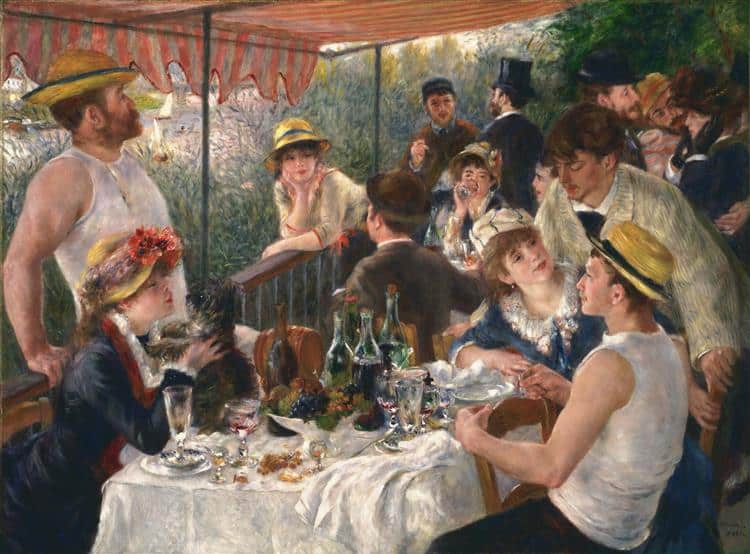
The Birth of Impressionism
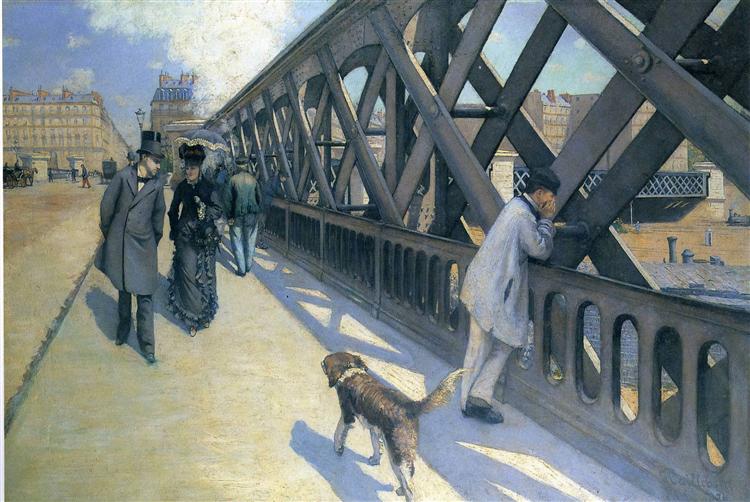
The Influence of the Industrial Revolution
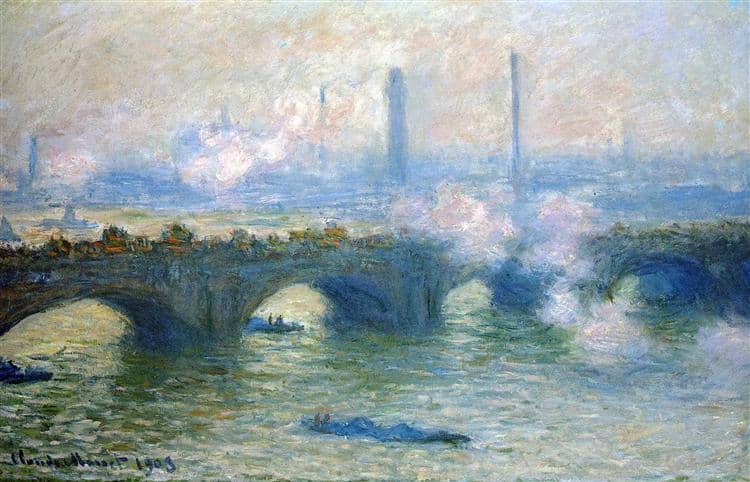
Breaking with Tradition
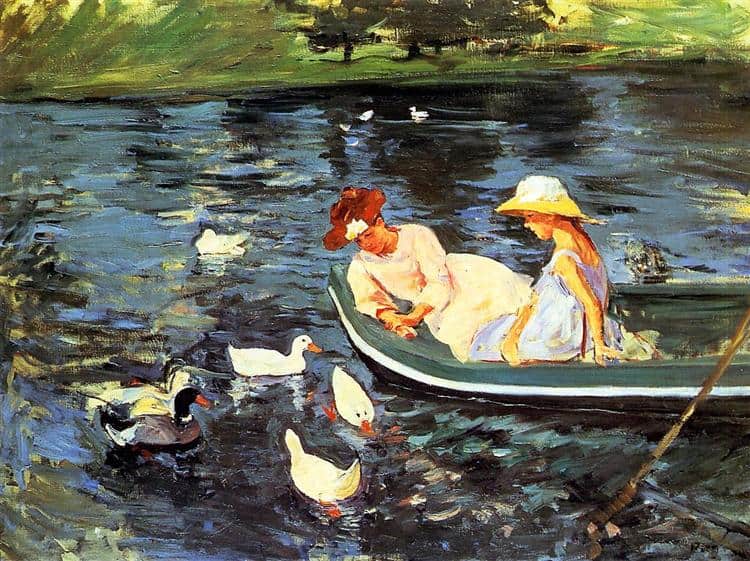
Capturing Light and Movement
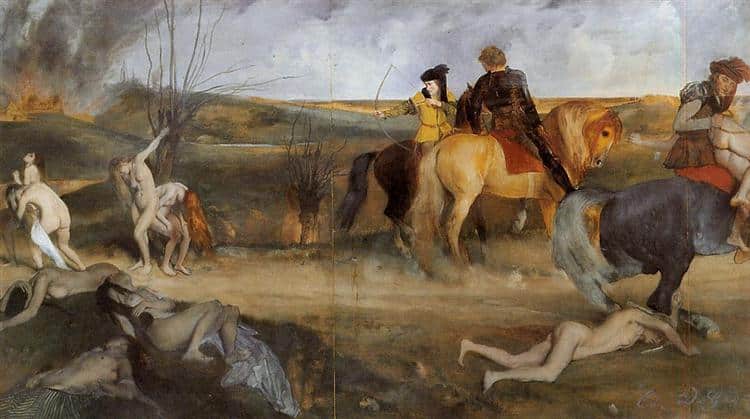
Popularizing Plein Air Painting
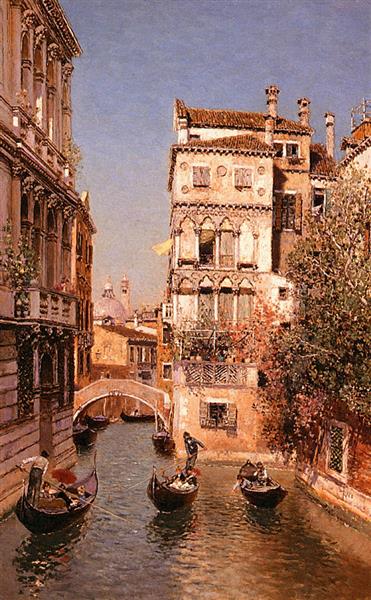
The Rise of Photography
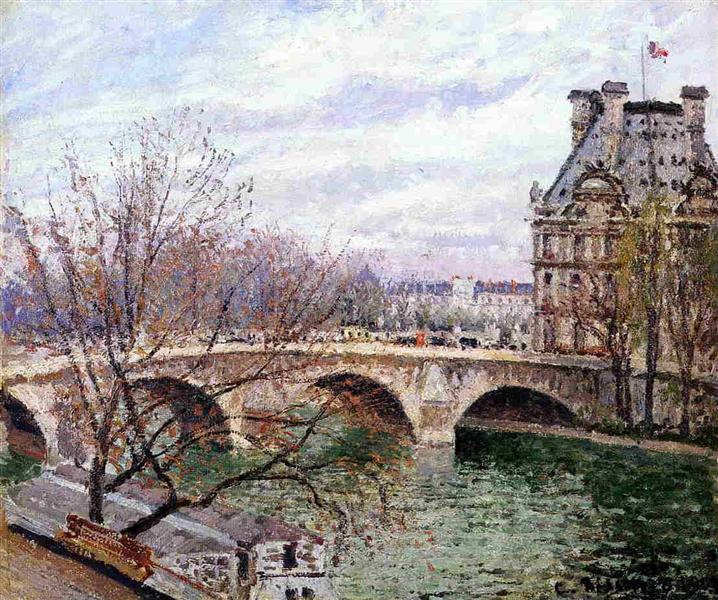
Impressionism Goes Global
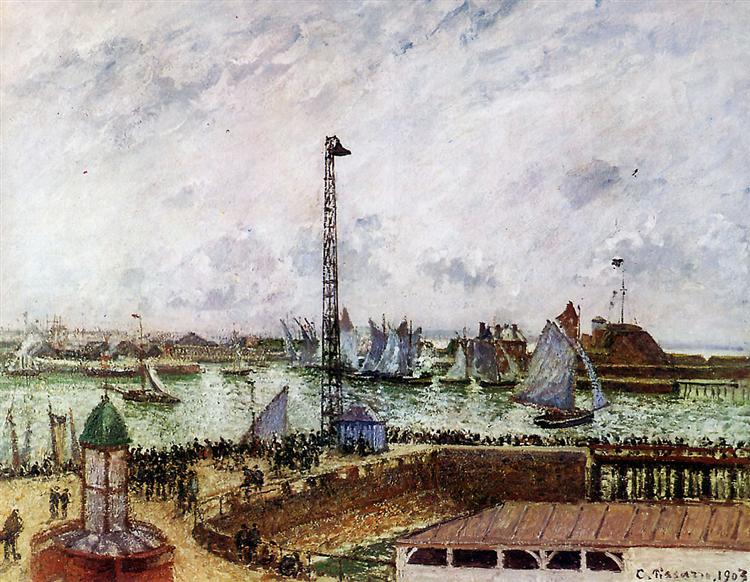
The Legacy of Impressionism
Lesson Details & Resources
In a Nutshell
- Artist: Vincent van Gogh
- Year: 1889
- Medium: Oil on canvas
- Location: Museum of Modern Art, New York City
Vocabulary List
- Impressionism
- The art movement that focused on capturing the impression of a scene rather than its exact details.
- Industrial Revolution
- The period of major industrialization and technological advancements that impacted society and art during the 18th and 19th centuries.
- Urbanization
- The process of cities growing in size and population, often due to industrialization.
- Mechanization
- The introduction of machinery and automation into production processes.
- Steam engine
- A type of engine that uses steam to generate power, which was crucial to the Industrial Revolution.
- Factory
- A large building where goods are manufactured using machinery and labor.
- Railroad
- A system of tracks and trains used for transporting goods and people, which expanded rapidly during the Industrial Revolution.
- Urban landscape
- The depiction of city scenes and architecture in art.
- Smokestacks
- Tall chimneys on industrial buildings that release smoke and pollutants into the air.
- Pollution
- The presence of harmful substances in the environment, often caused by industrial activities.
- Factory worker
- A person employed in a factory to operate machinery and produce goods.
- Labor conditions
- The working conditions experienced by employees, which were often harsh and unsafe during the Industrial Revolution.
- Proletariat
- The working class who sell their labor for wages, as depicted in many Impressionist paintings.
- Coal mining
- The extraction of coal from underground mines, a key industry during the Industrial Revolution.
- Textile industry
- The sector of the economy that produces fabrics and clothing, which saw significant growth during the Industrial Revolution.
- Social upheaval
- The disruption and change in society caused by industrialization and urbanization.
- New technology
- Advancements in machinery, transportation, and communication that transformed society and art.
- Modernization
- The process of adapting to new technologies and social structures, as seen in Impressionist paintings.
- Working class
- The group of people who perform manual labor and are typically paid hourly wages.
- Urban expansion
- The growth of cities and metropolitan areas, often driven by industrial development.
Timeline of Impressionism and the Industrial Revolution: An Analysis
Industrial Revolution begins in Britain
Impressionism movement emerges in France
First Impressionist exhibition held in Paris
Monet's 'Impression, Sunrise' painting exhibited
Renoir's 'Luncheon of the Boating Party' painted
Degas' 'The Dance Class' painted
Gauguin travels to Tahiti for inspiration
Van Gogh's 'Starry Night' painted
Cezanne's 'Mont Sainte-Victoire' series created
Seurat's 'A Sunday Afternoon on the Island of La Grande Jatte' painted
Pissarro's 'Boulevard Montmartre at Night' painted
Rise of industrialization in Europe
Impressionist artists influenced by new technology and urban landscapes
Impressionist paintings depict modern life and leisure activities
Impressionism challenges traditional artistic conventions
Industrial Revolution leads to urbanization and social change
Impressionism becomes a major art movement in Europe and beyond
Impact of Impressionism on future art movements and artists
Industrial Revolution impacts society, economy, and culture globally
Impressionism continues to influence art and culture in the modern era
Key Facts
This is the information used in the fact matching game
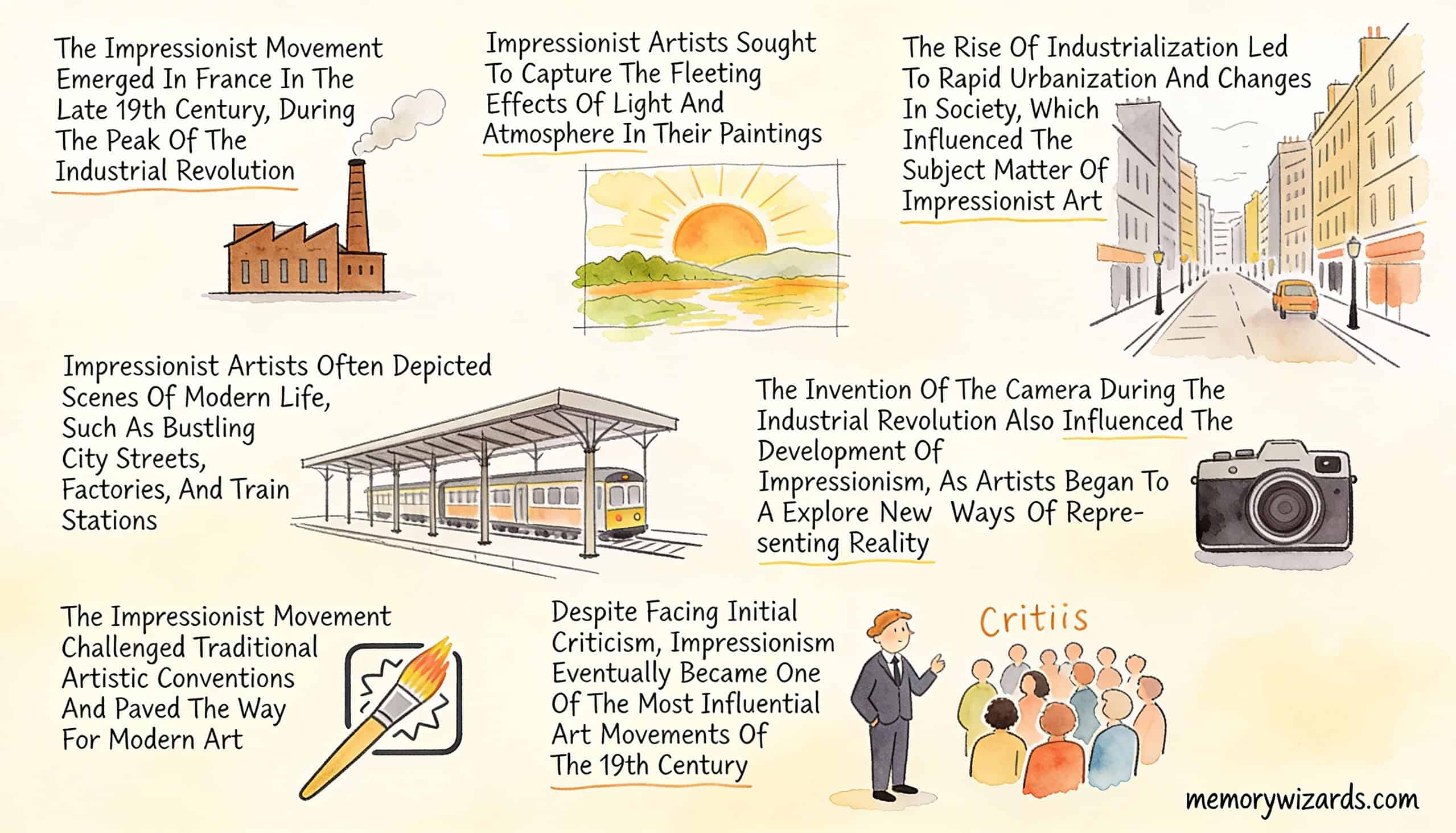
- Impressionism was a 19th-century art movement that originated in France.
- The Industrial Revolution had a significant impact on the development of Impressionism.
- Impressionist artists often depicted scenes of modern life, including factories and urban landscapes.
- Industrialization led to changes in society, culture, and the economy that influenced the subject matter of Impressionist art.
- Impressionist artists sought to capture the fleeting effects of light and atmosphere in their paintings.
- The rise of the middle class during the Industrial Revolution created a new market for art, which helped support the Impressionist movement.
- Impressionist painters often used loose brushwork and vibrant colors to convey a sense of spontaneity and immediacy in their work.
- The development of new pigments and paint materials during the Industrial Revolution allowed Impressionist artists to experiment with color and texture.
- Impressionism was met with resistance and criticism from traditional art institutions and critics during its early years.
- Some Impressionist artists, such as Claude Monet and Camille Pissarro, were inspired by the effects of industrialization on the natural landscape.
- Impressionist paintings often depict scenes of leisure and recreation in response to the rapid pace of industrialization.
- The development of photography during the Industrial Revolution influenced the composition and framing of Impressionist paintings.
- Impressionist artists rejected the academic conventions of painting and focused on capturing the sensory experience of the modern world.
- The Impressionist movement was characterized by its emphasis on capturing the effects of light and atmosphere in outdoor settings.
- Impressionist artists often painted en plein air, or outdoors, to observe and capture the changing effects of light on the landscape.
- The subject matter of Impressionist paintings often includes everyday scenes of urban life, such as cafes, parks, and boulevards.
- Impressionist artists were influenced by Japanese prints and other non-Western art forms that were introduced to Europe during the Industrial Revolution.
- The Impressionist movement laid the groundwork for modern art movements, such as Post-Impressionism and Fauvism.
- Despite initial criticism, Impressionism eventually became one of the most popular and influential art movements of the late 19th century.
- Many Impressionist artists, including Edgar Degas and Mary Cassatt, focused on depicting the social changes and challenges brought about by industrialization.
Analysis & Significance
Artistic Innovation
Impressionism revolutionized the art world by capturing the fleeting effects of light and atmosphere with loose brushwork and vibrant colors. This departure from traditional, detailed techniques brought a sense of spontaneity and movement to the canvas, reflecting the rapid changes of the industrial era.
Influence on Art History
Impressionism paved the way for modern art movements like Fauvism and Abstract Expressionism. By prioritizing emotional responses over realistic representation, it challenged conventional standards of beauty and paved the way for artists to explore new ways of interpreting the world around them.
Cultural Significance Today
Impressionist works continue to captivate audiences worldwide, with masterpieces by artists like Monet and Renoir fetching millions at auction. The movement’s focus on capturing fleeting moments and sensory experiences resonates with contemporary viewers, making Impressionism a timeless and beloved part of art history.
Impressionism and the Industrial Revolution: An Analysis Games


Take Your Learning Offline
Want a convenient, print-ready study guide for this lesson? Become a Memory Wizards Pro member to unlock the downloadable " Memory Scrolls" for this topic and our entire library!
- ✓ Complete Vocabulary Lists
- ✓ Key Facts & Timelines
- ✓ Beautifully Formatted for Print & Mobile