
How Do You Learn Best?
Learn by Reading
Immerse yourself in the 10-minute visual lesson for a comprehensive understanding of the topic.
Learn by Reviewing
Jump directly to the key facts, timeline, and vocabulary lists to build a solid foundation of details.
Learn by Doing
Challenge yourself! Jump straight into the interactive games to learn by trial, error, and discovery.
Odes in 10 Minutes
Introduction


Horace

Maecenas

Lalage

Augustus
1. Introduction to Odes
2. Structure of the Odes
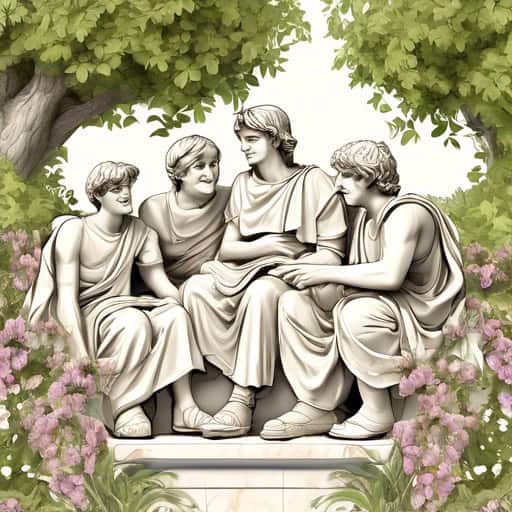
3. Themes in the Odes
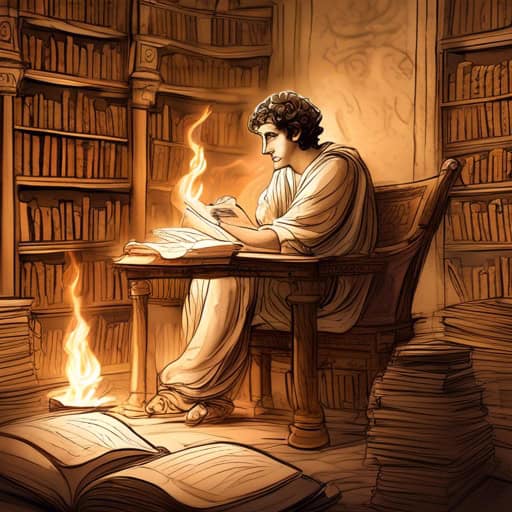
4. Influence of Greek Poetry
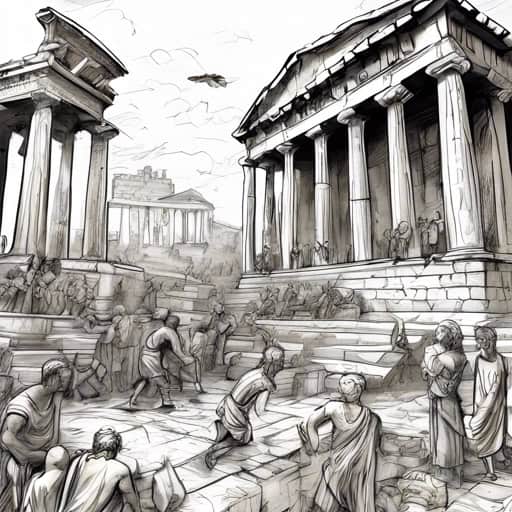
5. Political Commentary

6. Poetic Language

7. Legacy of the Odes
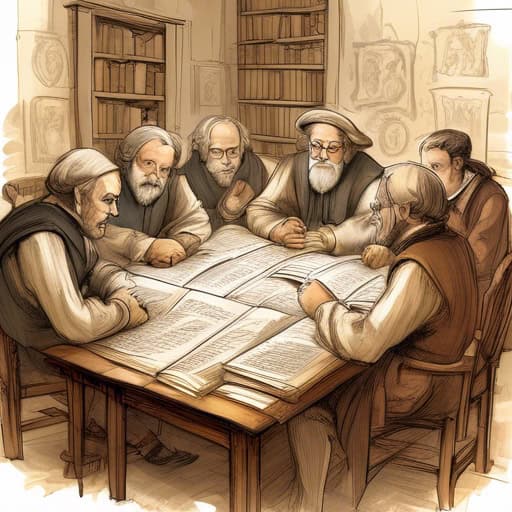
8. Reception and Interpretation

9. Influence on Later Poets

10. Conclusion

Lesson Details & Resources
In a Nutshell
- What: ‘Odes’ by Horace
- When: 23 BC
- Who: Horace
- Theme: Reflections on life, love, and morality
List of Characters in Odes
-
Horace
Horace, the Roman poet who wrote the Odes, a collection of lyrical poems
-
Maecenas
Maecenas, Horace's patron and a wealthy Roman statesman
-
Augustus
Augustus, the first Roman emperor and a friend of Horace
-
Virgil
Virgil, another Roman poet and friend of Horace
Timeline of Odes
Horace is born in 65 BC in Venusia, Italy.
Horace moves to Rome to study rhetoric and philosophy.
Horace joins the Roman army and fights in the Battle of Philippi.
Horace becomes a popular poet in Rome, known for his Odes.
Horace publishes his first book of Odes in 23 BC.
Horace becomes friends with the Roman Emperor Augustus.
Horace publishes his second book of Odes in 13 BC.
Horace dies in 8 BC at the age of 57.
Vocabulary List
- Odes
- The poems written by Horace that are characterized by their lyrical and celebratory nature.
- Lyric
- A type of poetry that expresses personal emotions or feelings, often in a song-like format.
- Horace
- The Roman poet known for his Odes, Satires, and Epistles, who lived during the reign of Emperor Augustus.
- Augustus
- The first Roman Emperor, under whose rule Horace wrote many of his Odes.
- Strophe
- A stanza in a poem or song that is repeated and alternated with another stanza, often used in odes.
- Meter
- The rhythmic structure of a poem, often used in Odes to create a sense of musicality.
- Praise
- To express admiration or approval for someone or something, a common theme in Odes.
- Imagery
- The use of vivid language to create mental pictures or sensations, often used in Odes to evoke emotions.
- Muse
- A source of inspiration for a poet, often invoked at the beginning of an ode to help guide the writing process.
- Elegy
- A poem or song that mourns the loss of someone or something, often contrasted with the celebratory tone of an Ode.
Key Facts
This is the information used in the fact matching game
- Horace's Odes are a collection of lyric poems written in Latin.
- The Odes were written between 23 and 13 BCE.
- Horace's Odes are divided into four books, each containing a different number of poems.
- The Odes cover a wide range of themes, including love, friendship, morality, and the passage of time.
- Horace was influenced by Greek lyric poetry in his writing of the Odes.
- Horace's Odes were written in a variety of meters, including the Alcaic and Sapphic meters.
- The Odes are considered some of the greatest works of Latin literature.
- Horace's Odes have been translated into many languages over the centuries.
- The Odes were written during a time of political and social upheaval in Rome.
- Horace's Odes are known for their wit, elegance, and philosophical depth.
- The Odes often explore the tension between the desire for pleasure and the pursuit of virtue.
- Horace's Odes have been a major influence on Western poetry and literature.
- The Odes reflect Horace's own personal experiences and beliefs.
- Horace's Odes were well-received in his own time and continue to be celebrated today.
- The Odes are written in a conversational style that engages the reader.
- Horace's Odes often explore the themes of time, mortality, and the fleeting nature of life.
- The Odes are characterized by their use of vivid imagery and precise language.
- Horace's Odes were highly regarded by later poets, including Dante and Petrarch.
- The Odes have been praised for their emotional depth and universal themes.
- Horace's Odes have been studied and analyzed by scholars for centuries.
Analysis & Significance
Impact on Literature
“Odes” by Horace has had a lasting impact on literature by setting a standard for lyric poetry. Its structured and refined style influenced later poets, such as Keats and Wordsworth, in their own works. The collection of odes also showcased Horace’s ability to blend personal reflection with universal truths, a technique that continues to inspire writers today.
Enduring Themes
The themes of love, friendship, virtue, and the passage of time explored in “Odes” are timeless and continue to resonate with modern audiences. Horace’s musings on the human experience and the complexities of emotions are still relevant today, making his work a classic that speaks to the universal aspects of the human condition.
Cultural Significance Today
“Odes” remains culturally significant today for its impact on poetry and its enduring popularity. The work has been translated into numerous languages and continues to be studied in academic settings. Its influence can be seen in contemporary poetry and music, reflecting the ongoing relevance of Horace’s insights and the enduring power of his words.
Odes Games


Take Your Learning Offline
Want a convenient, print-ready study guide for this lesson? Become a Memory Wizards Pro member to unlock the downloadable " Memory Scrolls" for this topic and our entire library!
- ✓ Complete Vocabulary Lists
- ✓ Key Facts & Timelines
- ✓ Beautifully Formatted for Print & Mobile