
How Do You Learn Best?
Learn by Reading
Immerse yourself in the 10-minute visual lesson for a comprehensive understanding of the topic.
Learn by Reviewing
Jump directly to the key facts, timeline, and vocabulary lists to build a solid foundation of details.
Learn by Doing
Challenge yourself! Jump straight into the interactive games to learn by trial, error, and discovery.
Epodes in 10 Minutes

Introduction
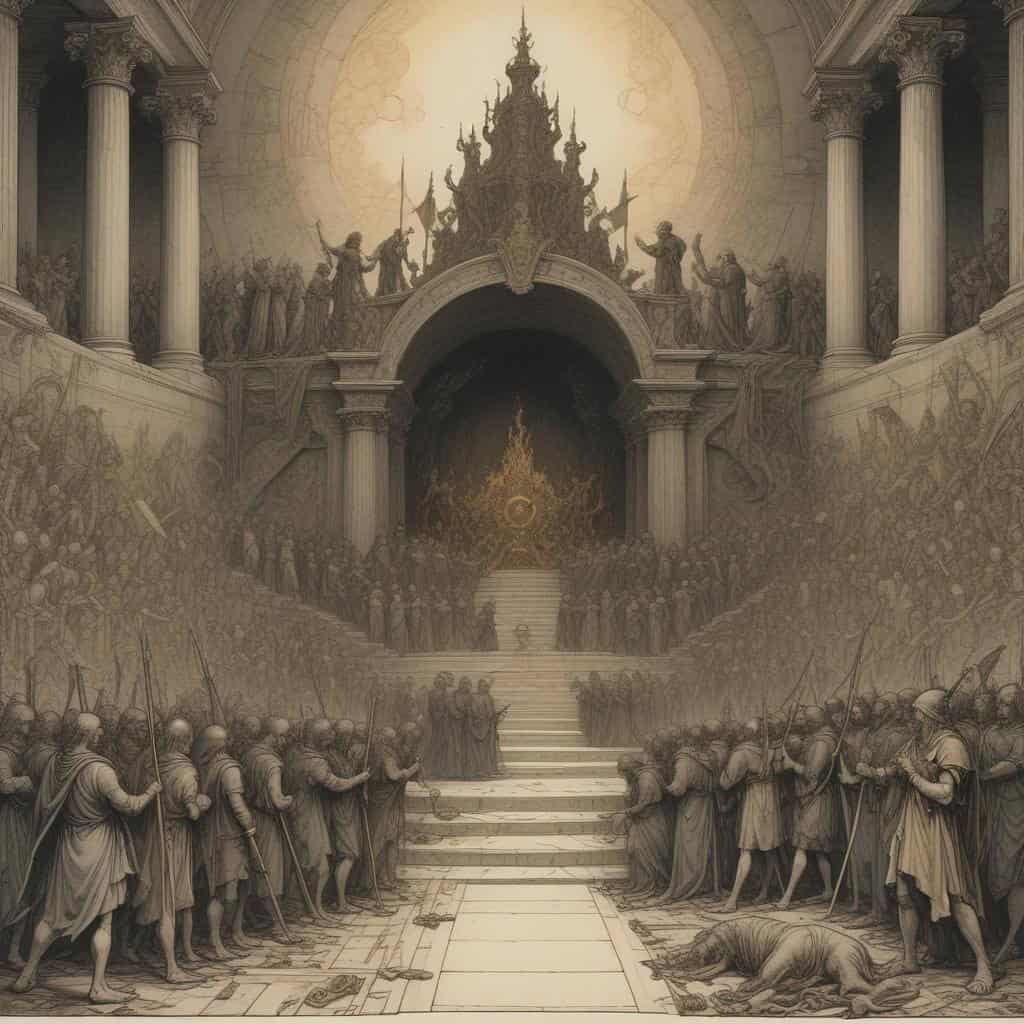
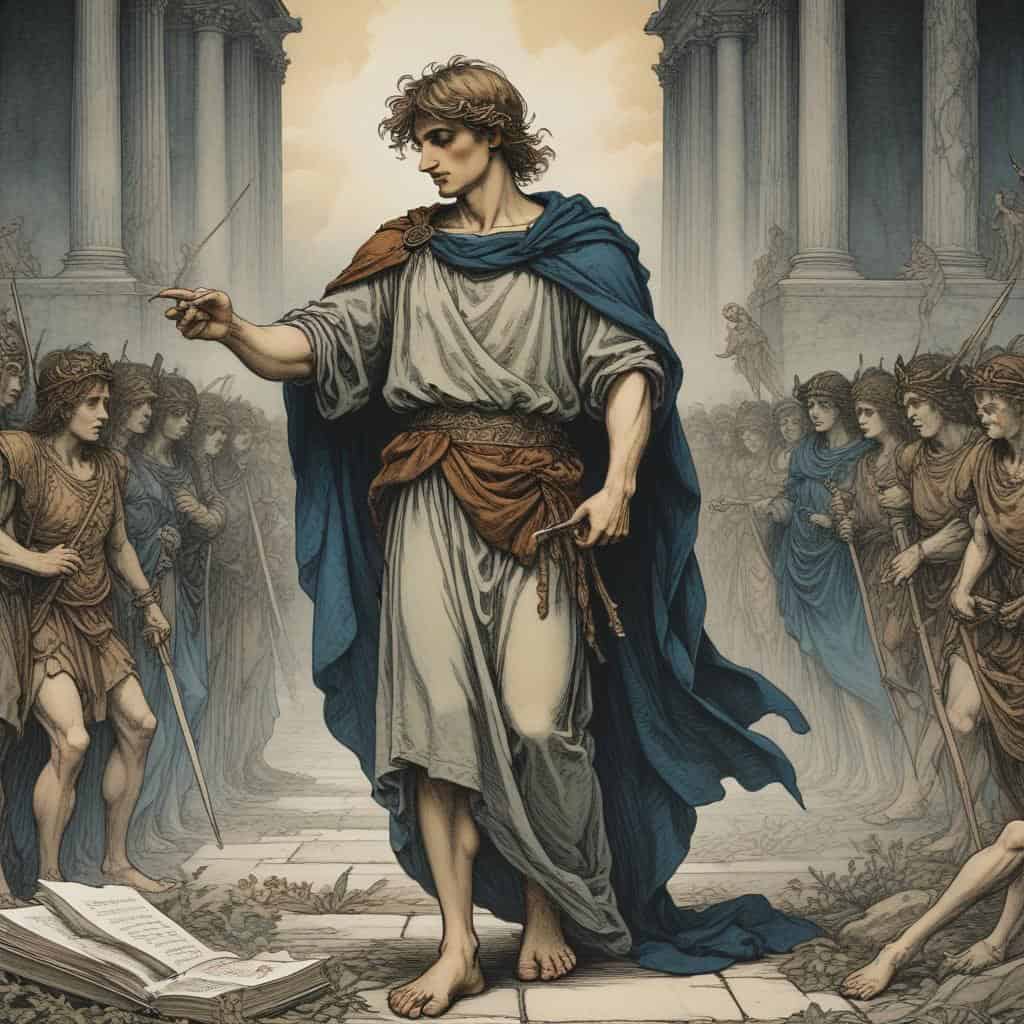

Horace

Maecenas

Cynthia

Canidia

Asterie

1. Introduction to Epodes
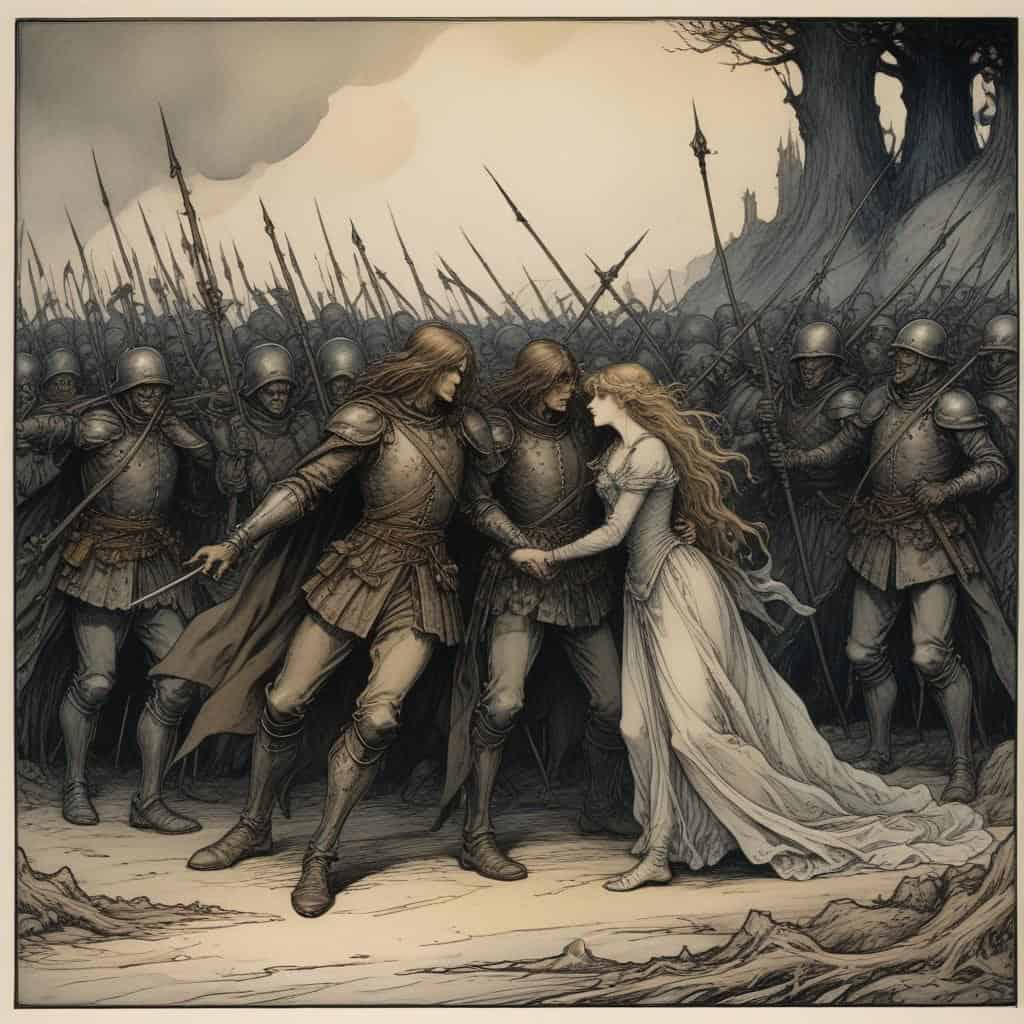
2. Theme of Love and War
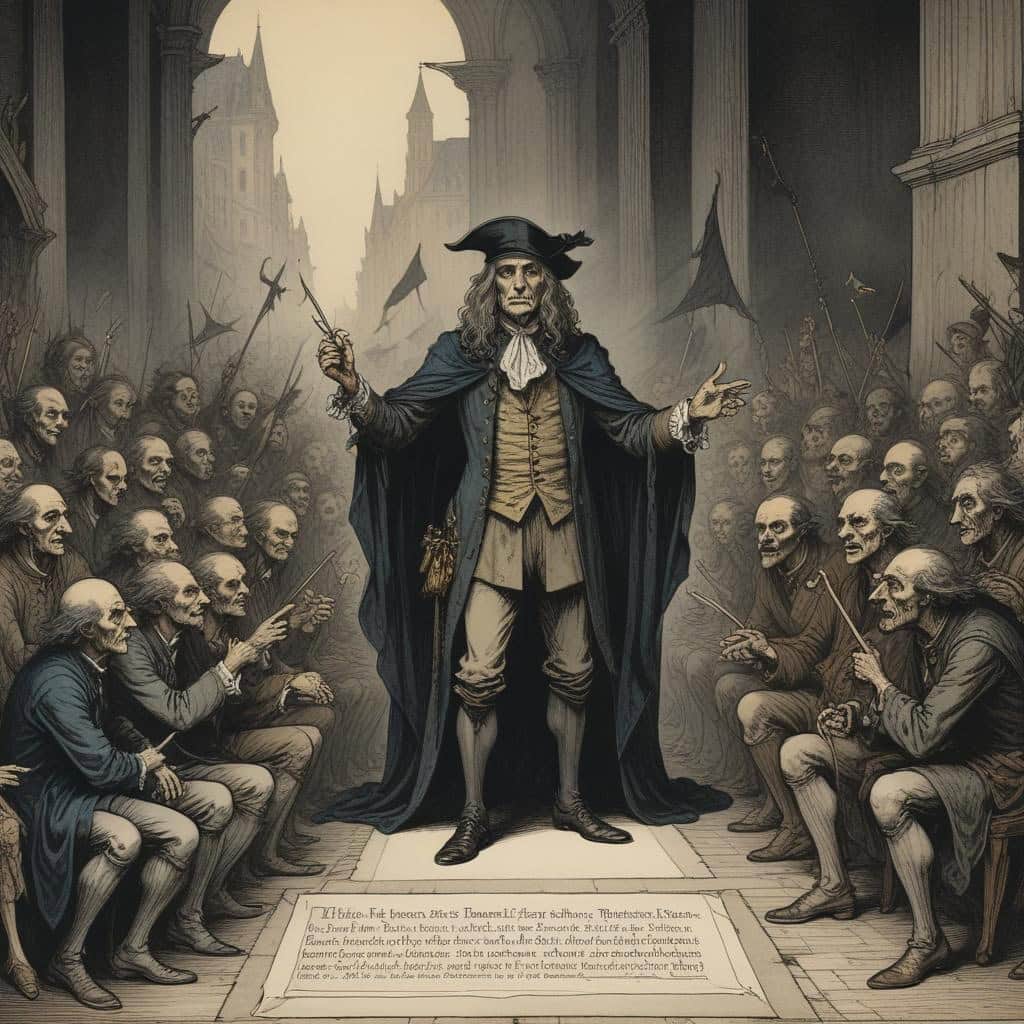
3. Satirical Elements
4. Influence of Greek Poetry

5. Structure and Form

6. Personal Reflections

7. Philosophical Themes
8. Influence on Later Writers
9. Legacy of Epodes
10. Conclusion

Lesson Details & Resources
In a Nutshell
- What: A collection of poems called 'Epodes' by Horace
- When: Written during the Roman era, around 30-13 BC
- Who: The main characters are not specified as 'Epodes' is a collection of poems
- Theme: The core theme of the work revolves around themes of love, war, and friendship, with a focus on personal and political commentary
List of Characters in Epodes
-
Horace
Horace is the Roman poet who wrote the Epodes, a collection of short poems that were meant to be sung or recited.
-
Maecenas
Maecenas is a patron of the arts and a friend of Horace, who supported him financially and encouraged his writing.
-
Cassius Severus
Cassius Severus is a character mentioned in one of the Epodes, known for his harsh and unyielding nature.
-
Thaliarchus
Thaliarchus is another character mentioned in the Epodes, possibly a friend or companion of Horace.
Timeline of Epodes
Horace publishes his first book of poetry, consisting of Satires and Epodes, in 35 BC.
Epodes are a collection of 17 short poems in a variety of meters, focusing on themes such as love, friendship, and political satire.
Horace's Epodes are written in a conversational and direct style, drawing on the literary traditions of Greek poetry.
The poems in Epodes cover a wide range of subjects, from personal vendettas to philosophical reflections on life.
Horace's Epodes were well-received by the Roman public, establishing him as a prominent poet in his time.
The Epodes showcase Horace's wit, humor, and keen observations of human nature, making them a lasting contribution to Latin literature.
Vocabulary List
- Epodes
- The collection of lyric poems written by Horace in the 1st century BCE.
- Iambic
- A type of poetic meter used in the Epodes, consisting of a short syllable followed by a long one.
- Satire
- Some of the Epodes are satirical in nature, poking fun at societal norms and conventions.
- Hexameter
- Another type of poetic meter used in the Epodes, consisting of six metrical feet per line.
- Lyric
- The Epodes are considered lyric poetry, expressing the poet's personal thoughts and emotions.
- Roman
- Horace was a Roman poet, and the Epodes reflect themes and cultural influences of Roman society.
Key Facts
This is the information used in the fact matching game
- Epodes is a collection of lyric poems written by the Roman poet Horace.
- Epodes was published around 30 BCE.
- The Epodes are written in iambic meter.
- The Epodes were likely composed to celebrate Octavian's victory at Actium in 31 BCE.
- The Epodes are known for their satirical and sometimes obscene content.
- Horace's Epodes were inspired by the Greek poet Archilochus.
- The Epodes were written during a turbulent period in Rome's history.
- Some of the Epodes are written in the form of dialogues between two speakers.
- Epodes 1-7 are more personal and emotional, while 8-17 are more satirical and political.
- Horace's Epodes have been influential on later poets, including Catullus and Juvenal.
- Epode 9 is a famous poem in which Horace curses a woman who has betrayed him.
- Epode 16 is a satirical poem criticizing the Roman general and statesman Mark Antony.
- Epode 17 is a poem in which Horace praises the virtues of moderation and self-control.
- The Epodes were originally performed at private gatherings among Horace's friends.
- Epode 5 is a poem in which Horace expresses his fear of witches and magic.
- Horace's Epodes are considered to be some of the earliest examples of Roman satire.
- Epode 7 is a poem in which Horace mocks a man who is overly concerned with his appearance.
- Epode 11 is a poem in which Horace criticizes the corruption of Roman society.
- The Epodes were later overshadowed by Horace's more famous work, the Odes.
- Despite their smaller size, the Epodes are still considered an important part of Horace's body of work.
Analysis & Significance
Impact on Literature
Horace’s ‘Epodes’ is a collection of lyric poems that greatly influenced the development of Roman poetry. The work’s innovative use of meter and language set a new standard for Roman poetry, inspiring future generations of poets to experiment with form and style. Horace’s bold and provocative themes challenged societal norms, paving the way for a more introspective and personal approach to poetry.
Enduring Themes
The themes of love, friendship, and political satire explored in ‘Epodes’ continue to resonate with modern audiences. Horace’s keen observations of human nature and his sharp wit make these themes feel timeless and universal. The work’s exploration of power dynamics and social commentary remains relevant in today’s society, making it a compelling read for contemporary readers.
Cultural Significance Today
‘Epodes’ remains a foundational work in the Western literary canon, with numerous adaptations and references in popular culture. Its influence can be seen in the works of later poets such as John Milton, Alexander Pope, and T.S. Eliot, who drew inspiration from Horace’s innovative style and themes. The work’s enduring relevance and cultural impact make it a must-read for anyone interested in the history of poetry.
Epodes Games


Take Your Learning Offline
Want a convenient, print-ready study guide for this lesson? Become a Memory Wizards Pro member to unlock the downloadable " Memory Scrolls" for this topic and our entire library!
- ✓ Complete Vocabulary Lists
- ✓ Key Facts & Timelines
- ✓ Beautifully Formatted for Print & Mobile