
How Do You Learn Best?
Learn by Reading
Immerse yourself in the 10-minute visual lesson for a comprehensive understanding of the topic.
Learn by Reviewing
Jump directly to the key facts, timeline, and vocabulary lists to build a solid foundation of details.
Learn by Doing
Challenge yourself! Jump straight into the interactive games to learn by trial, error, and discovery.
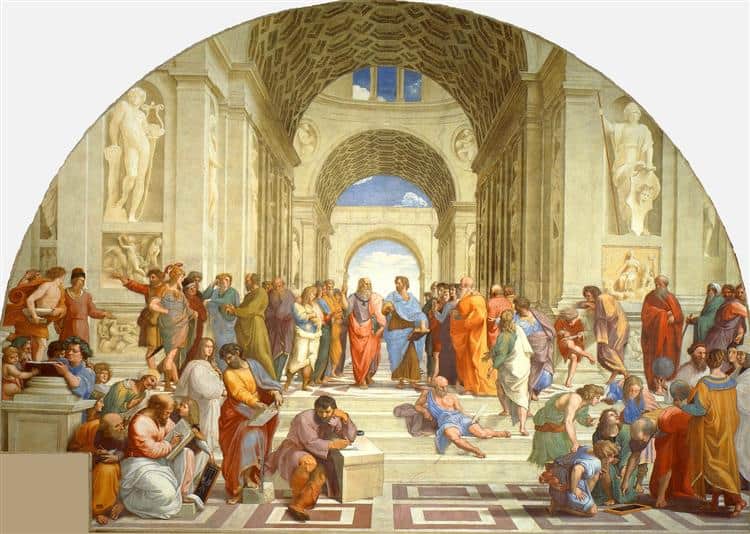
The Masterpiece: School of Athens by Raphael
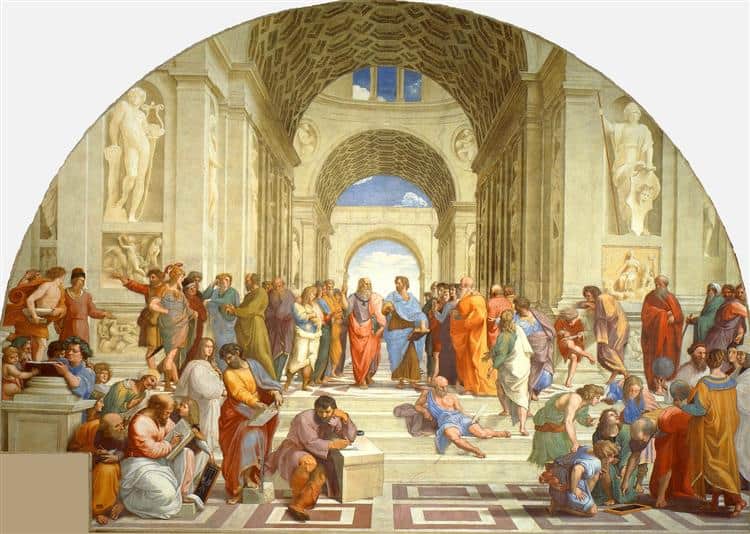
Deconstructing the Masterpiece
Central Figures
Plato and Aristotle at the center represent the harmony between philosophy and science, emphasizing the importance of knowledge and wisdom.
Architectural Space
The architectural setting with classical elements symbolizes the intellectual pursuits of ancient Greece, providing a backdrop for the gathering of great minds.
Gestures and Poses
Various gestures and poses of the figures convey different schools of thought and intellectual debates, adding depth and complexity to the composition.
Linear Perspective
The use of linear perspective creates depth and spatial relationships, guiding the viewer's eye through the intricate scene and enhancing the sense of realism.
Raphael: An Analysis in 10 Minutes
Introduction

Leonardo da Vinci

Michelangelo

Pope Julius II

Raphaels Early Life

Move to Florence
Commissioned Works

Friendship with Michelangelo

Death of Raphael
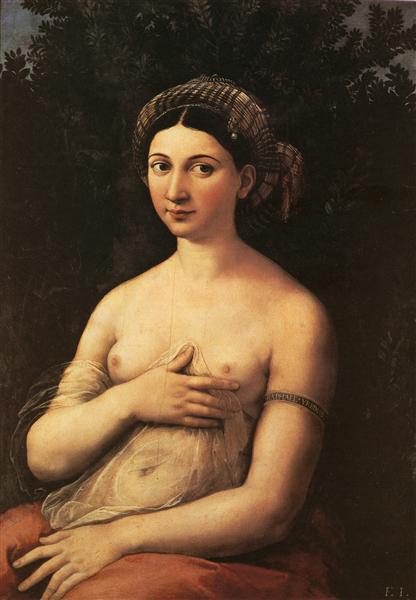
Legacy of Raphael
Artistic Style
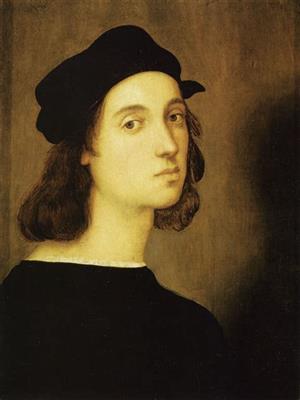
Impact on Art History
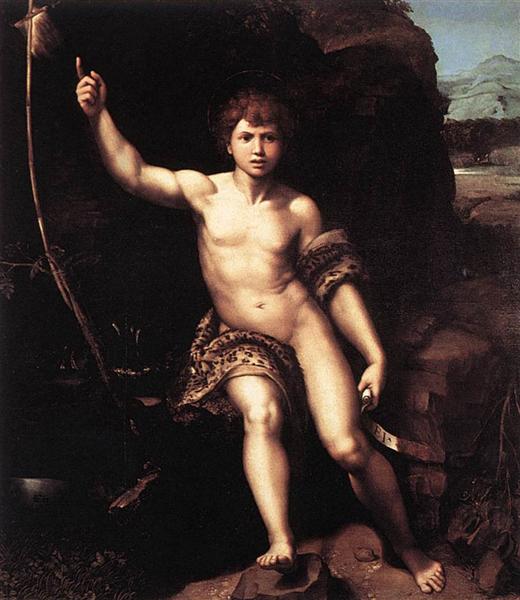
Recognition and Honors
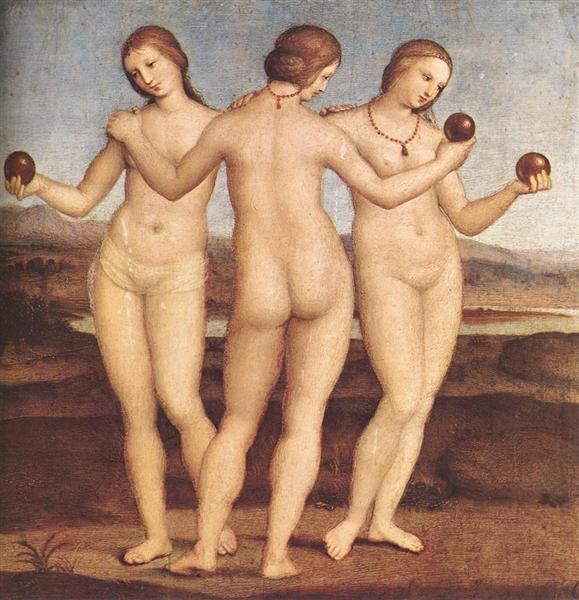
Continued Influence
Lesson Details & Resources
In a Nutshell
- Artist: Raphael
- Year: 1505
- Medium: Oil on wood
- Location: Louvre Museum, Paris
Vocabulary List
- Renaissance
- Raphael was a prominent artist during the Renaissance period.
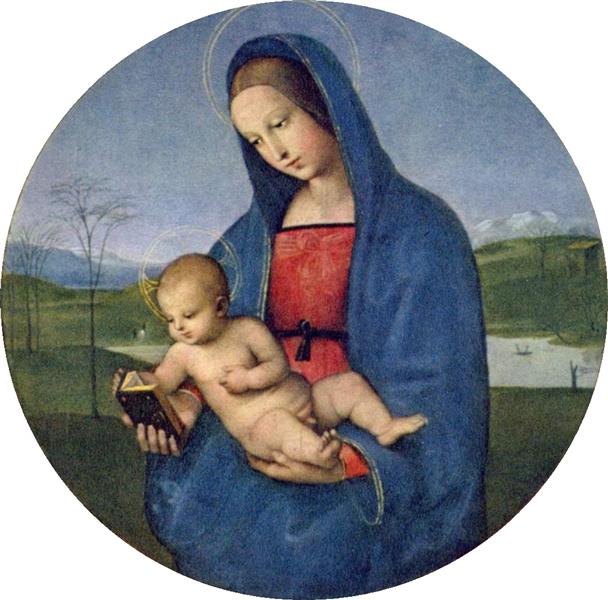
- Madonna
- Raphael's paintings often depicted the Madonna and Child.
- Sistine Chapel
- Raphael worked alongside Michelangelo in the Sistine Chapel.
- Vatican
- Many of Raphael's works can be found in the Vatican museums.
- Chiaroscuro
- Raphael used chiaroscuro to create depth and dimension in his paintings.
- Florentine
- Raphael spent time studying and working in Florence.
- Sfumato
- Raphael employed sfumato to soften edges and create a sense of atmosphere in his paintings.
- Altarpiece
- Raphael created several altarpieces for churches in Italy.
- Cartoon
- Raphael created cartoons as preparatory drawings for his tapestries.
- Classicism
- Raphael's work is often associated with the principles of classicism.
- Commission
- Raphael received many commissions from wealthy patrons.
- Architect
- Raphael was not only a painter but also an accomplished architect.
- Drawing
- Raphael was known for his exquisite drawings and sketches.
- Portraiture
- Raphael's portraits are highly regarded for their realism and attention to detail.
- Villa
- Raphael was involved in the design of several villas in Italy.
- Fresco
- Raphael was skilled in the technique of fresco painting.
- Virgin
- The Virgin Mary is a common subject in Raphael's artwork.
- Mannerism
- Raphael's work had a significant influence on the development of Mannerism.
- Raphaelite
- Artists who were influenced by Raphael's style are often referred to as Raphaelites.
- Neoplatonism
- Raphael's work reflects the Neoplatonic ideals of beauty and harmony.
Timeline of Raphael: An Analysis
Key Facts
This is the information used in the fact matching game
- Raphael's full name was Raffaello Sanzio da Urbino.
- He was born on April 6, 1483, in Urbino, Italy.
- Raphael is considered one of the great masters of the High Renaissance.
- He was known for his harmonious compositions and use of light and shadow.
- Raphael's most famous works include 'The School of Athens' and 'The Sistine Madonna'.
- He was a favorite artist of Pope Julius II and Pope Leo X.
- Raphael was influenced by the works of Leonardo da Vinci and Michelangelo.
- He was a prolific painter, producing numerous religious works, portraits, and frescoes.
- Raphael's early works show the influence of his teacher, Perugino.
- He was appointed as the chief architect of St. Peter's Basilica in Rome by Pope Julius II.
- Raphael died on April 6, 1520, at the age of 37.
- His burial place is in the Pantheon in Rome.
- Raphael's art is characterized by its grace, beauty, and idealized forms.
- He was known for his skillful use of perspective and foreshortening.
- Raphael's work had a significant impact on later artists, including the Mannerists and Baroque painters.
- His paintings are known for their serene and harmonious compositions.
- Raphael's work is celebrated for its balance and clarity.
- He was also a skilled draftsman and produced many drawings and sketches.
- Raphael's legacy continues to influence artists and art lovers around the world.
- His art is considered a pinnacle of Renaissance painting.
Analysis & Significance
Artistic Innovation
Raphael’s innovative use of perspective, composition, and idealized figures marked a significant departure from the traditional style of his time. His ability to combine classical beauty with emotional depth and grace set a new standard for Renaissance art, influencing generations of artists to come.
Influence on Art History
Raphael’s work not only defined the High Renaissance but also laid the foundation for future artistic movements. His harmonious compositions, balanced proportions, and exquisite attention to detail became a model for artists like Michelangelo and inspired the development of Mannerism and Baroque art.
Cultural Significance Today
Raphael’s masterpieces continue to be celebrated for their timeless beauty and technical excellence. His paintings, such as “The School of Athens” and “The Sistine Madonna,” are revered as masterpieces of Western art, attracting art enthusiasts and scholars from around the world. Raphael’s legacy as one of the greatest artists in history endures, making his work a cornerstone of art history education and appreciation.
Raphael: An Analysis Games


Take Your Learning Offline
Want a convenient, print-ready study guide for this lesson? Become a Memory Wizards Pro member to unlock the downloadable " Memory Scrolls" for this topic and our entire library!
- ✓ Complete Vocabulary Lists
- ✓ Key Facts & Timelines
- ✓ Beautifully Formatted for Print & Mobile