
Summary of The Roman conquest of Greece in 146 BC
Uncover the ancient clash that reshaped history: Rome meets Greece.
How Do You Learn Best?
Learn by Reading
Immerse yourself in the 10-minute visual lesson for a comprehensive understanding of the topic.
Learn by Reviewing
Jump directly to the key facts, timeline, and vocabulary lists to build a solid foundation of details.
Learn by Doing
Challenge yourself! Jump straight into the interactive games to learn by trial, error, and discovery.
The Roman conquest of Greece in 146 BC in 10 Minutes

Introduction

Flamininus
Perseus
Aemilius Paullus
Philopoemen

Andriscus

The Roman Conquest of Greece Begins

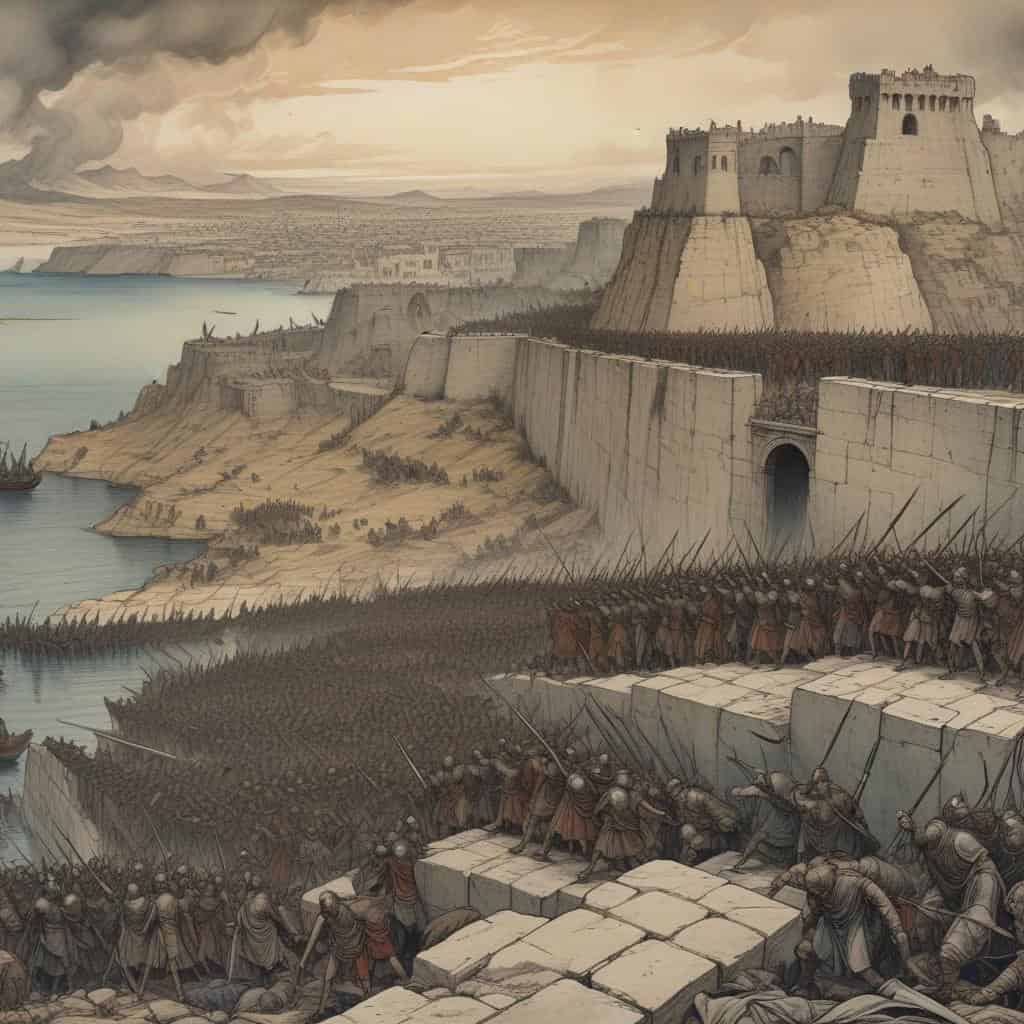
The Fall of Corinth

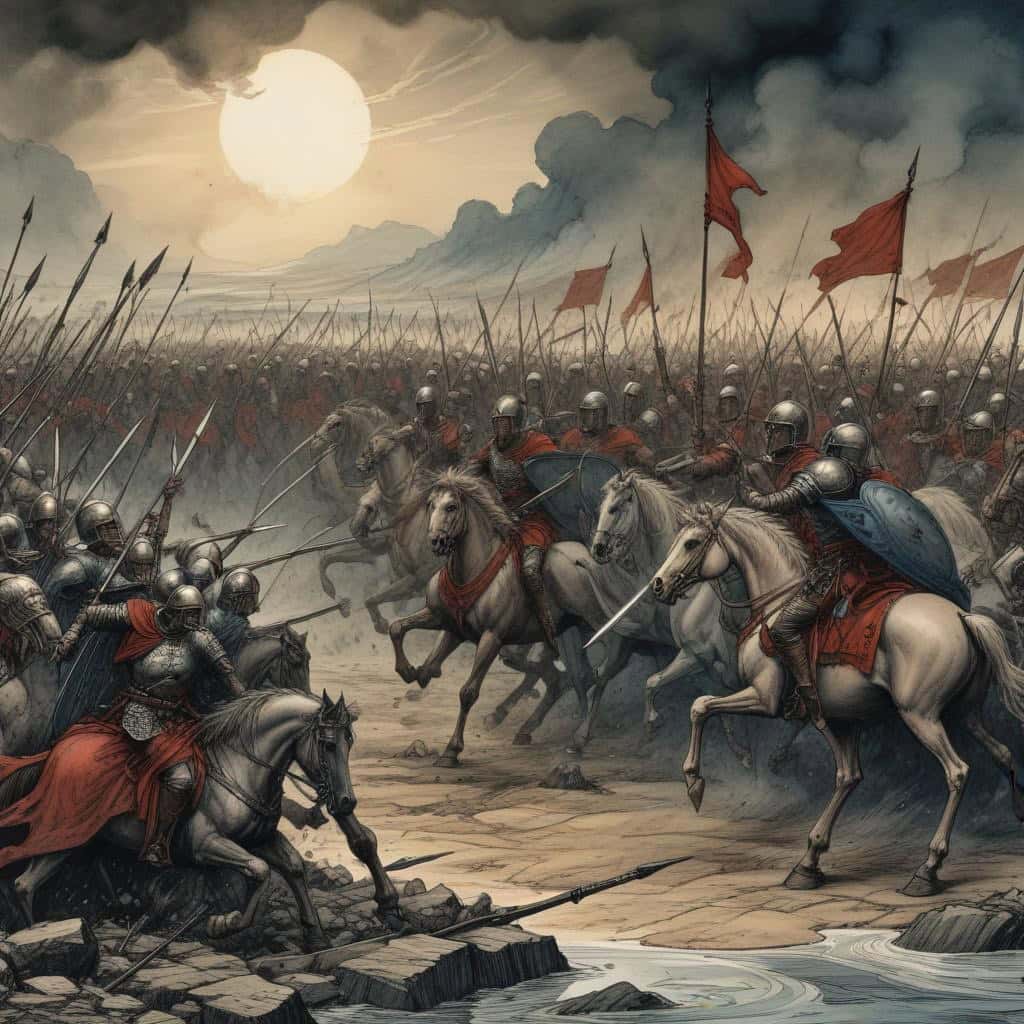
The Battle of Chaeronea

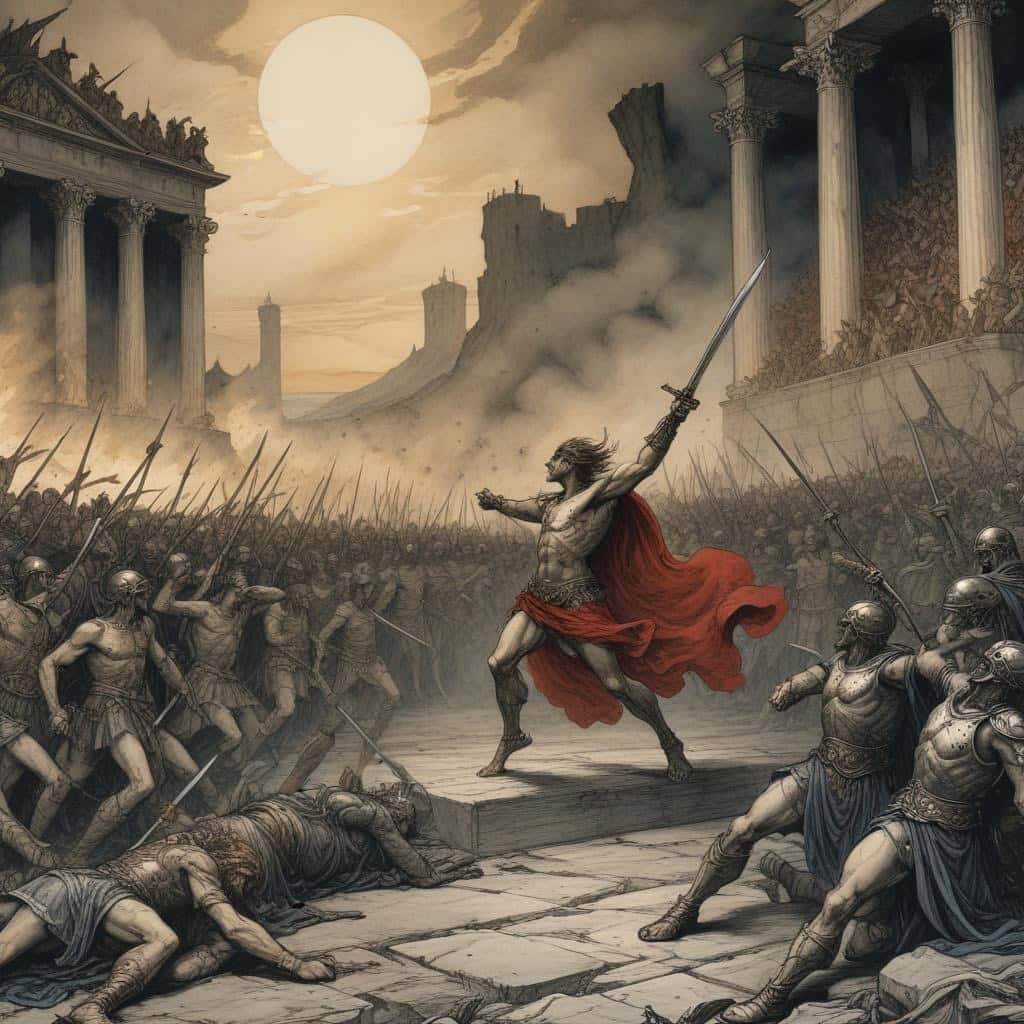
The Sack of Corinth

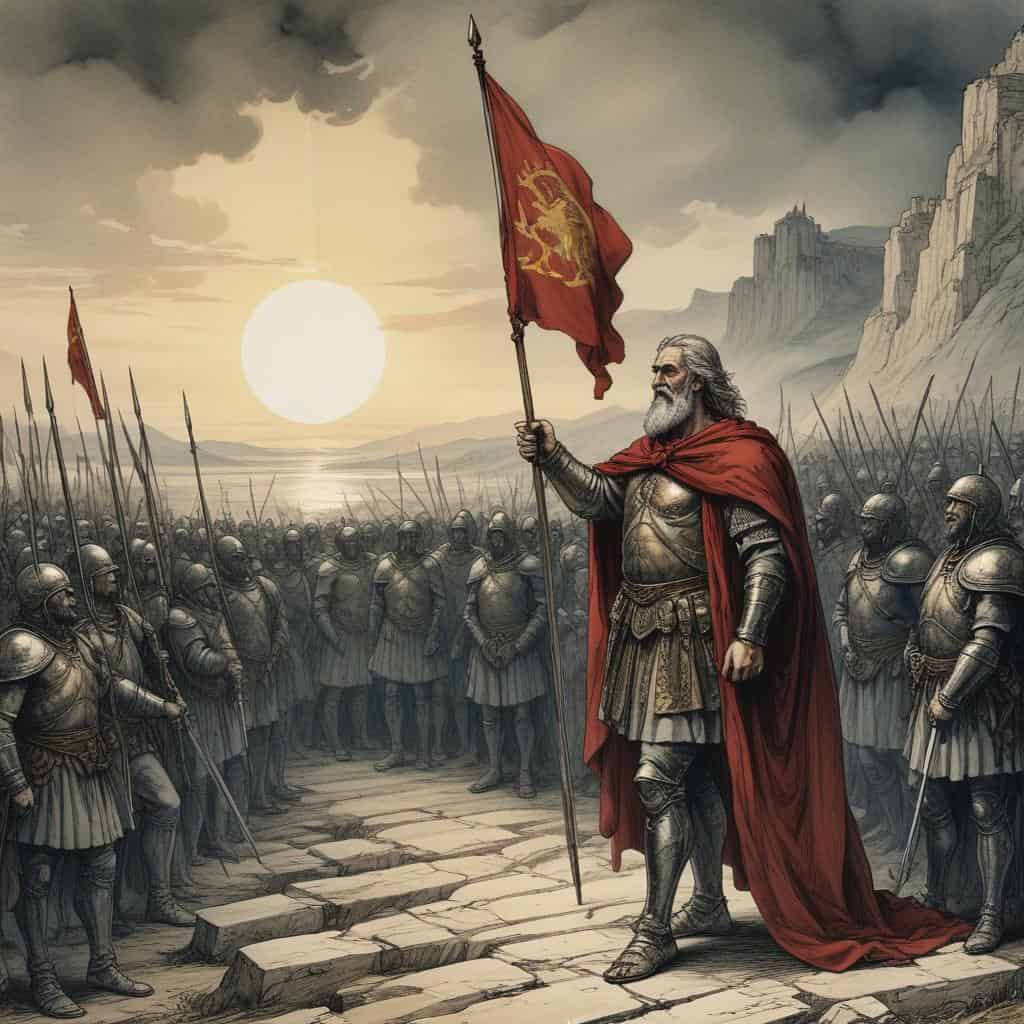
The End of Greek Independence

The Legacy of the Roman Conquest

Lesson Details & Resources
In a Nutshell
- What: The Roman conquest of Greece in 146 BC
- When: 146 BC
- Who: Roman Empire, Greek city-states
- Outcome: Greece became a province of the Roman Empire, marking the end of Greek independence
Famous Figures in the The Roman conquest of Greece in 146 BC
-
Scipio Africanus
Scipio Africanus was a Roman general who played a key role in the Roman conquest of Greece, particularly during the Battle of Pydna in 168 BC.
-
Polybius
Polybius was a Greek historian who chronicled the events leading up to and during the Roman conquest of Greece, providing valuable insight into the political and military strategies employed.
-
Perseus of Macedon
Perseus of Macedon was the last king of the Antigonid dynasty and was defeated by the Romans in the decisive Battle of Pydna, marking the end of Macedonian independence.
-
Lucius Mummius Achaicus
Lucius Mummius Achaicus was the Roman general who led the conquest of Corinth in 146 BC, marking the final stage of the Roman conquest of Greece.
Timeline of The Roman conquest of Greece in 146 BC
Roman forces, led by Lucius Mummius Achaicus, defeat the Achaean League at the Battle of Corinth
Corinth is sacked and destroyed by the Romans
Roman forces conquer the city of Athens
The Greek city-state of Thebes is razed to the ground by the Romans
The Roman general Quintus Caecilius Metellus defeats the Macedonian army at the Battle of Pydna
The Roman Senate declares Macedonia a Roman province
Macedonia is fully incorporated into the Roman Republic
Greece is officially annexed by Rome as the province of Achaea
The Roman Senate proclaims the end of the Greek independence and the beginning of Roman rule in Greece
Romanization of Greece begins as Roman culture and institutions are imposed on the conquered territories
Roman legions establish garrisons throughout Greece to maintain control and prevent uprisings
The Greek city-states are forced to pay tribute and provide soldiers for the Roman army
The Roman Senate appoints proconsuls to govern the newly acquired territories in Greece
The Greek city of Delphi is looted by the Romans
The Roman conquest of Greece marks the end of Greek independence and the beginning of Roman hegemony in the region
The Hellenistic period comes to an end with the Roman conquest of Greece
Greek culture and language continue to influence Roman society, art, and literature
The Roman Empire expands its territory and influence in the eastern Mediterranean with the conquest of Greece
The Greek city-states are subjected to Roman law and administration
The Roman conquest of Greece paves the way for the establishment of the Roman Empire
Vocabulary List
- Macedonia
- The Roman conquest of Greece in 146 BC marked the end of Macedonian independence.
- Hellenistic
- The Hellenistic kingdoms of Greece were gradually absorbed into the Roman Empire after the conquest.
- Corinth
- The city of Corinth was destroyed by the Romans in 146 BC as part of their conquest of Greece.
- Achaean League
- The Achaean League, a federation of Greek city-states, was dissolved by the Romans after their conquest of Greece.
- Peloponnese
- The Peloponnese peninsula in southern Greece was a major battleground during the Roman conquest.
- Hoplite
- The hoplite warriors of Greece were no match for the Roman legions during the conquest.
- Cleopatra
- Cleopatra, the last ruler of the Ptolemaic Kingdom of Egypt, was a key player in the aftermath of the Roman conquest of Greece.
Key Facts
This is the information used in the fact matching game
- The Roman conquest of Greece in 146 BC marked the end of Greek independence and the beginning of Roman rule in the region.
- Greece had previously been under the control of the Macedonian Empire before falling to Roman rule.
- The Roman conquest of Greece was part of the larger Roman expansion in the Mediterranean region.
- The Roman conquest of Greece was a result of the Roman victory in the Third Macedonian War.
- The Roman general Lucius Mummius led the Roman forces in the conquest of Greece.
- The city of Corinth was destroyed by the Romans in 146 BC as a punishment for its role in the Achaean League.
- The destruction of Corinth by the Romans sent a message to other Greek cities about the consequences of defying Roman authority.
- The Roman conquest of Greece led to the establishment of the province of Achaea in the region.
- Greece became a key part of the Roman Empire after its conquest, providing important resources and manpower for the Roman military.
- The Roman conquest of Greece marked the end of the Hellenistic period in the region.
- The Roman conquest of Greece had a profound impact on Greek culture and society, leading to the spread of Roman customs and traditions in the region.
- The Roman conquest of Greece also led to the spread of Christianity in the region, as Roman officials and soldiers introduced the new religion to the Greek population.
- The Roman conquest of Greece paved the way for the establishment of the Roman Empire as a dominant political and military force in the Mediterranean region.
- The Roman conquest of Greece brought an end to the long history of Greek city-states and their rivalry for power and influence in the region.
- The Roman conquest of Greece resulted in the integration of Greek culture and traditions into the Roman Empire, leading to a rich blending of Greek and Roman influences in art, architecture, and literature.
- The Roman conquest of Greece marked a turning point in the history of the Mediterranean world, as Roman power and influence expanded to encompass the entire region.
- The Roman conquest of Greece was met with resistance from some Greek cities and states, but ultimately the Roman military superiority proved decisive in the outcome of the conflict.
- The Roman conquest of Greece led to the decline of the Greek language as the dominant language of the region, with Latin becoming the official language of the Roman Empire.
- The Roman conquest of Greece had long-lasting consequences for the region, shaping its political, cultural, and social development for centuries to come.
- The Roman conquest of Greece was a major milestone in the history of the ancient world, marking the beginning of a new era of Roman dominance in the Mediterranean region.
Analysis & Significance
Immediate Consequences
The immediate consequence of the Roman conquest of Greece in 146 BC was the end of Greek independence and the establishment of the Roman Empire as the dominant power in the region. The destruction of Corinth and the enslavement of its population sent shockwaves throughout the Greek world, marking the end of an era.
Long-Term Impact
The long-term impact of this event was the fusion of Greek and Roman cultures, leading to the development of a new Greco-Roman civilization. Greek philosophy, art, and literature influenced Roman society, shaping the foundations of Western civilization for centuries to come.
Cultural Significance Today
The Roman conquest of Greece continues to be remembered as a turning point in history, symbolizing the transition from the ancient to the classical world. The legacy of this event can be seen in modern architecture, political systems, and even in the way we think about democracy and citizenship. It serves as a reminder of the interconnectedness of civilizations and the enduring impact of conquest and cultural exchange.
The Roman conquest of Greece in 146 BC Games


Take Your Learning Offline
Want a convenient, print-ready study guide for this lesson? Become a Memory Wizards Pro member to unlock the downloadable " Memory Scrolls" for this topic and our entire library!
- ✓ Complete Vocabulary Lists
- ✓ Key Facts & Timelines
- ✓ Beautifully Formatted for Print & Mobile