
How Do You Learn Best?
Learn by Reading
Immerse yourself in the 10-minute visual lesson for a comprehensive understanding of the topic.
Learn by Reviewing
Jump directly to the key facts, timeline, and vocabulary lists to build a solid foundation of details.
Learn by Doing
Challenge yourself! Jump straight into the interactive games to learn by trial, error, and discovery.
Shooting an Elephant in 10 Minutes
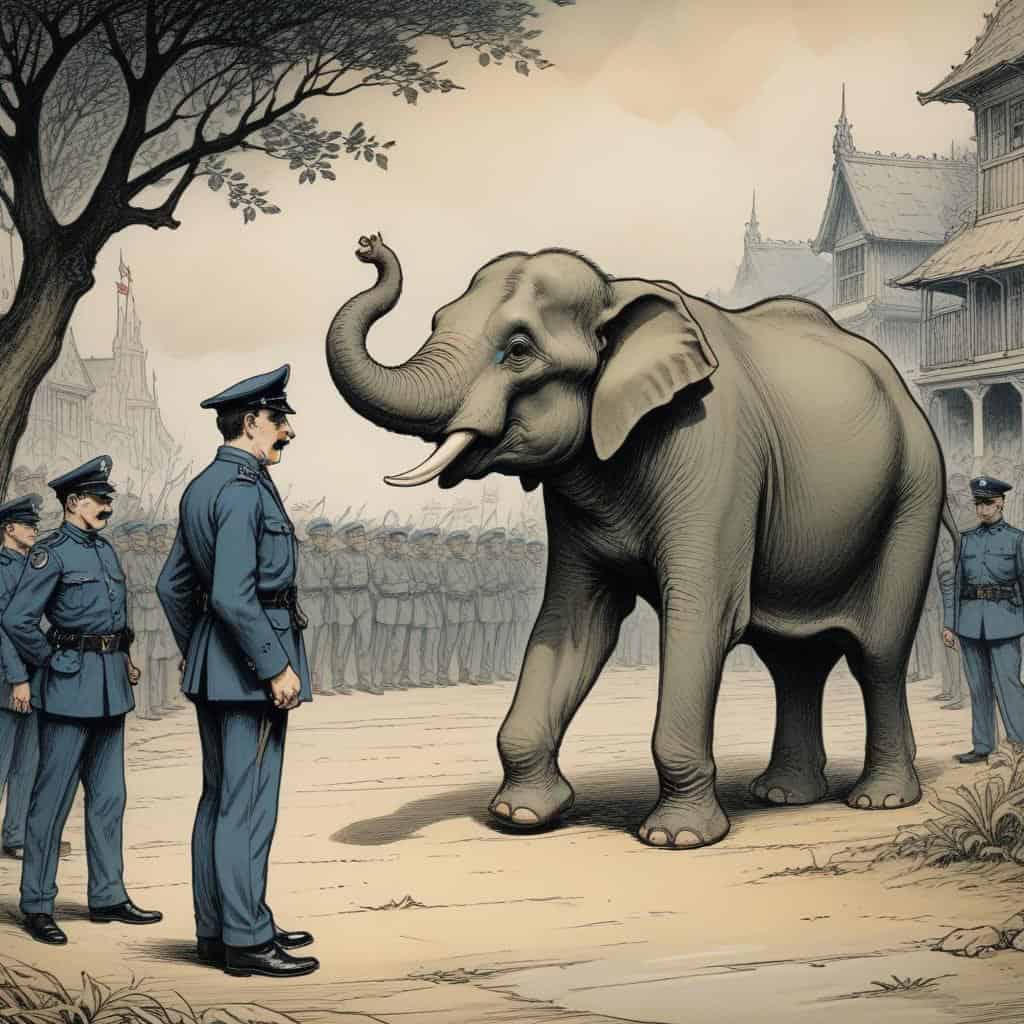
Introduction
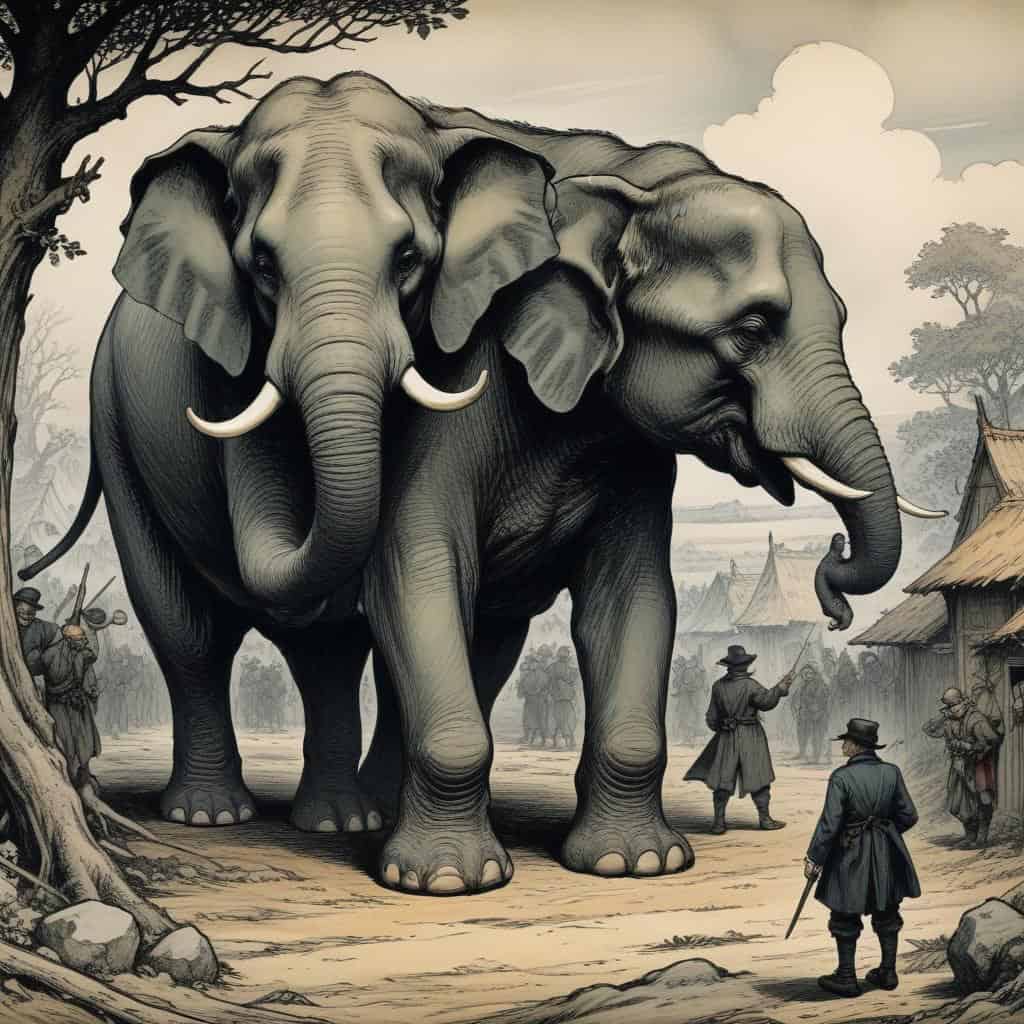


George Orwell

The Narrator

The Elephant

The Burmese People
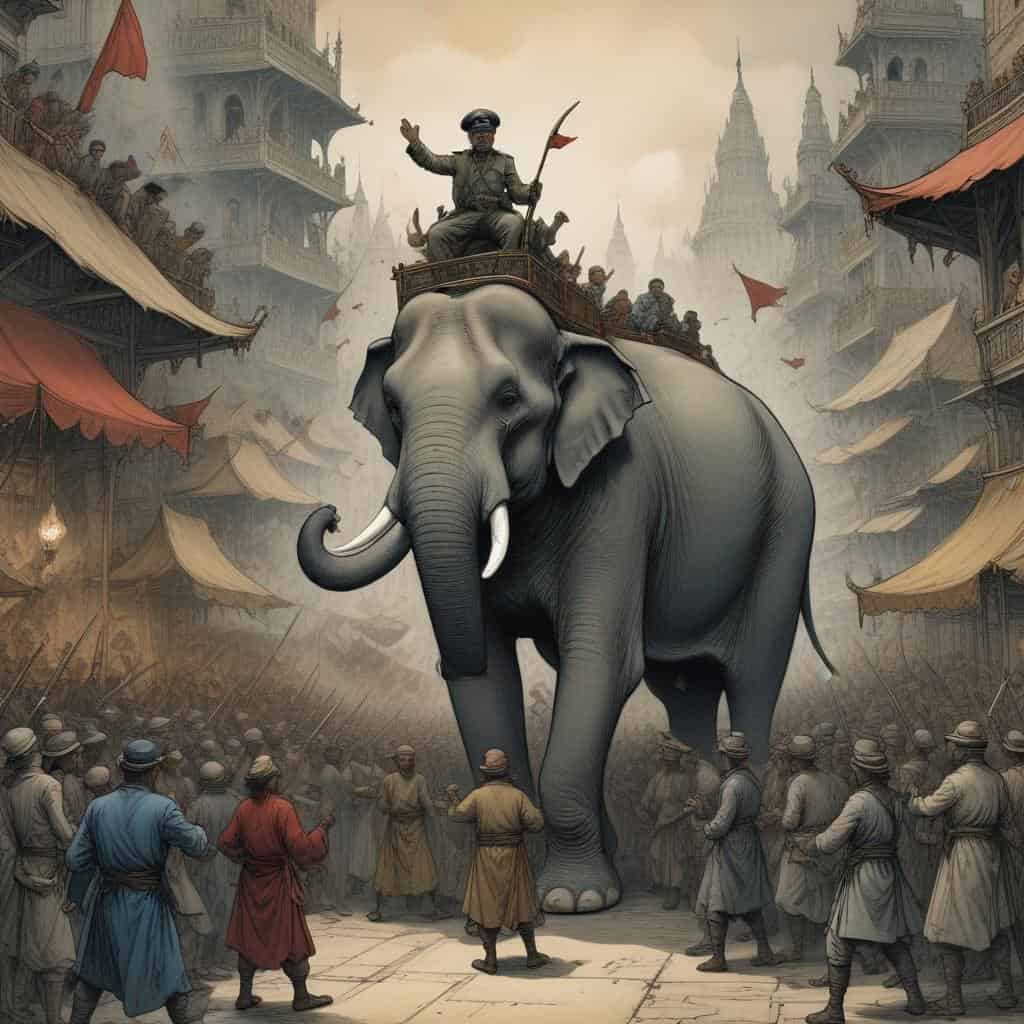
The Arrival of the Elephant
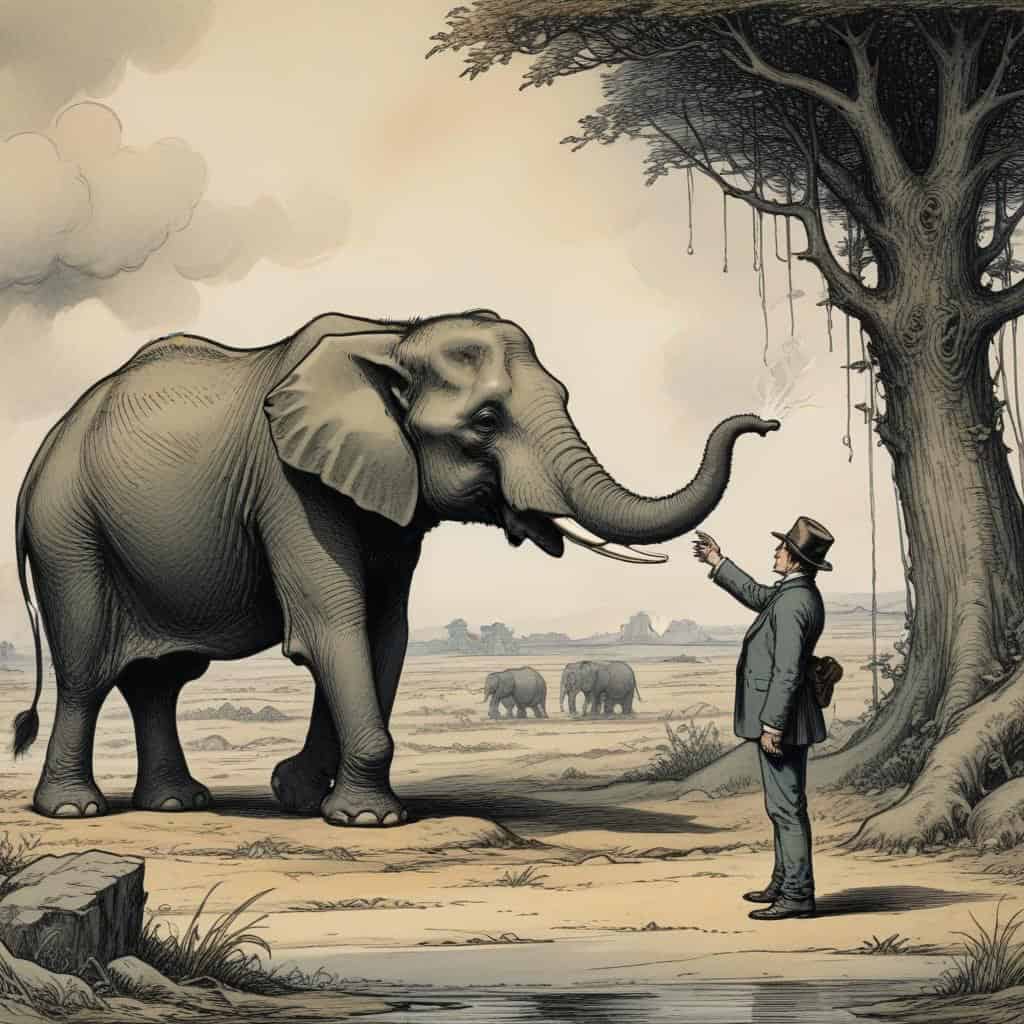
The Decision to Shoot
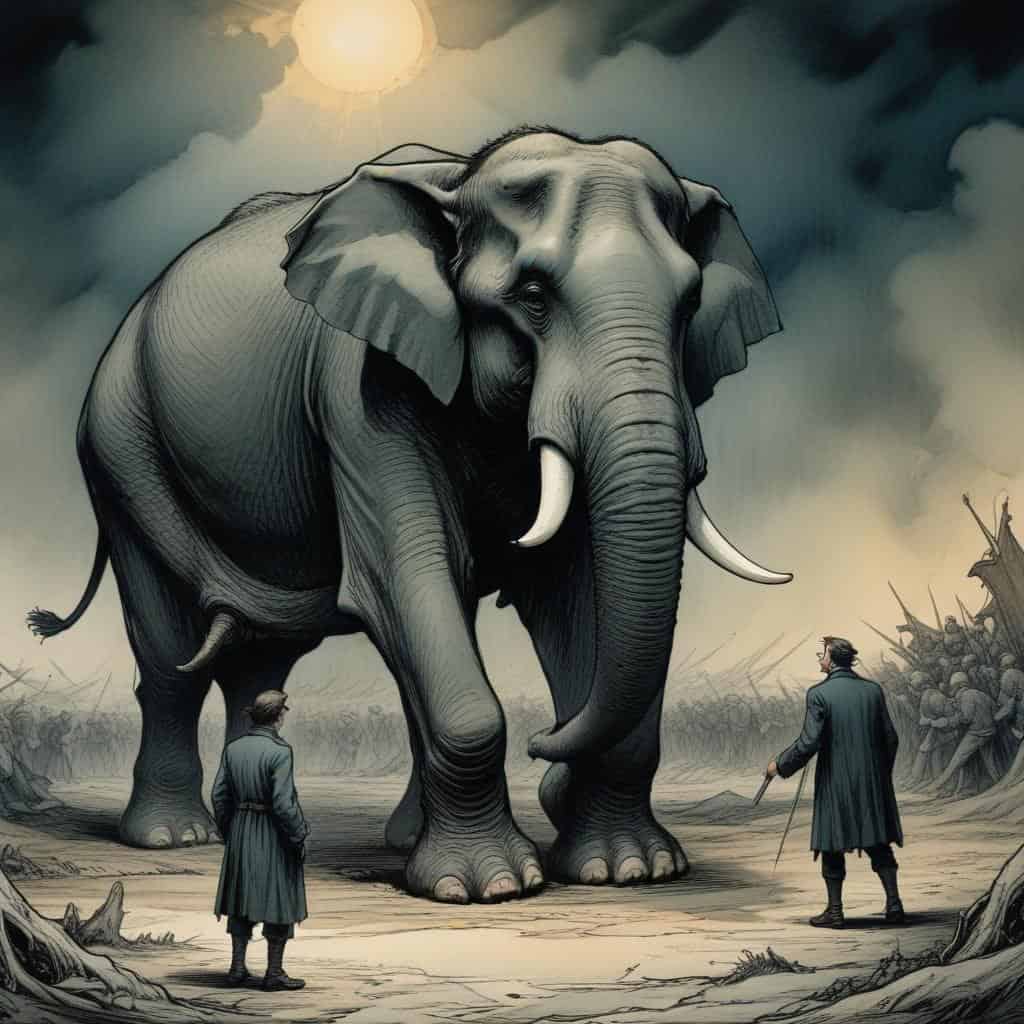
The Struggle Within
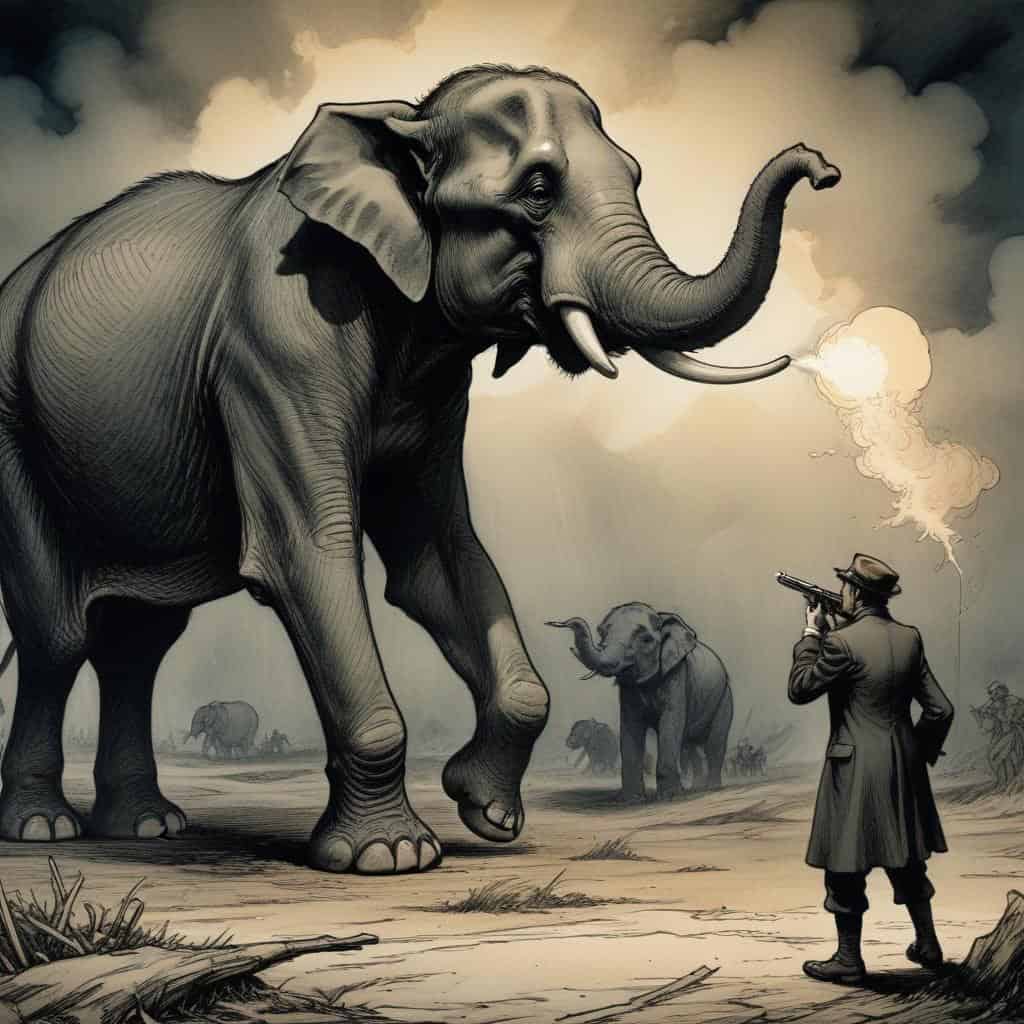
The Fatal Shot
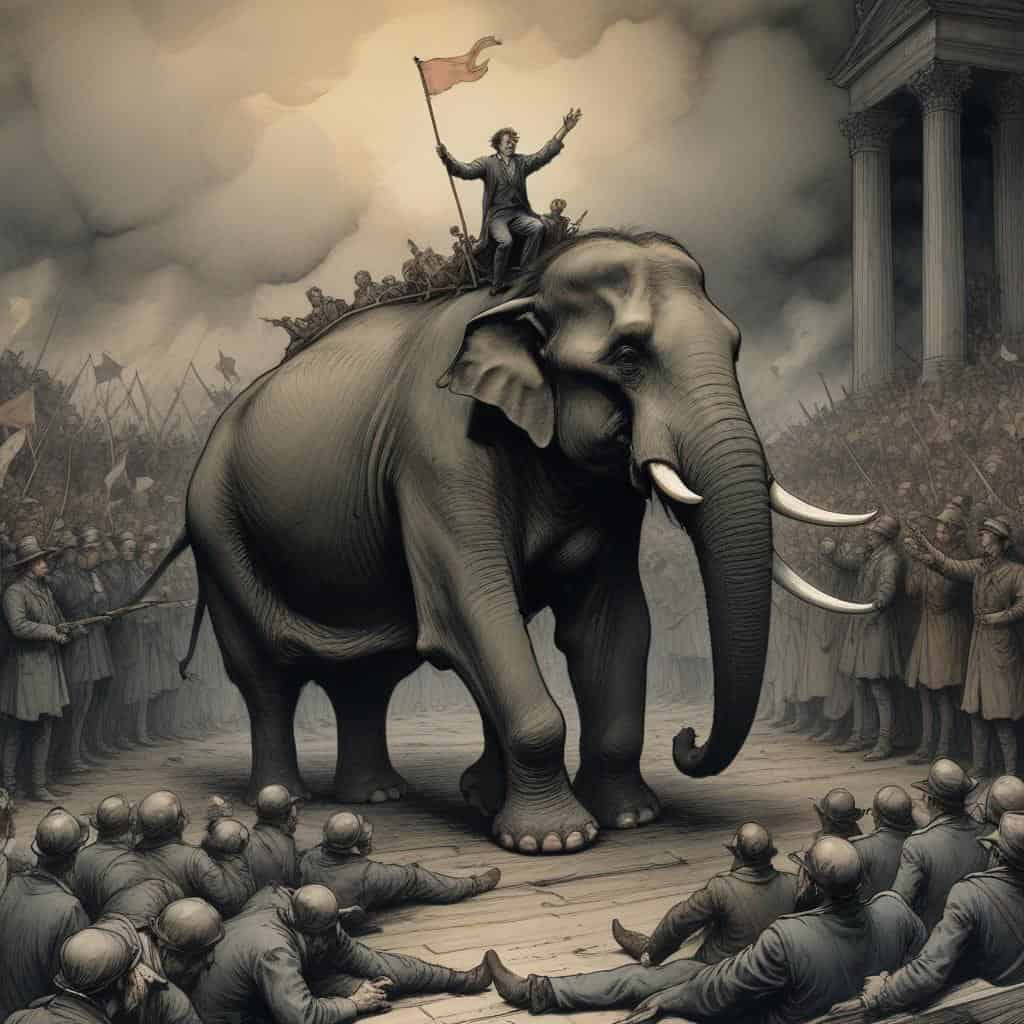
The Aftermath
The Burden of Power
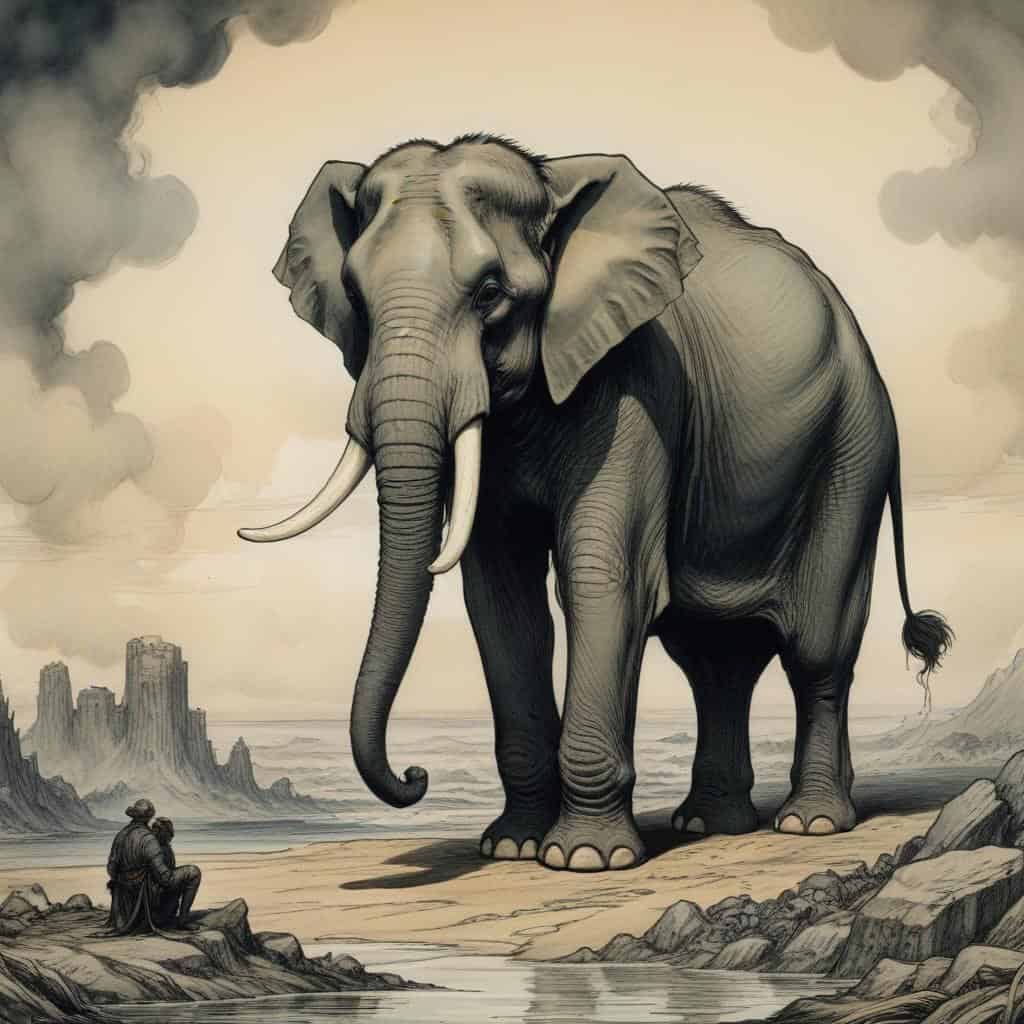
The Symbolism of the Elephant
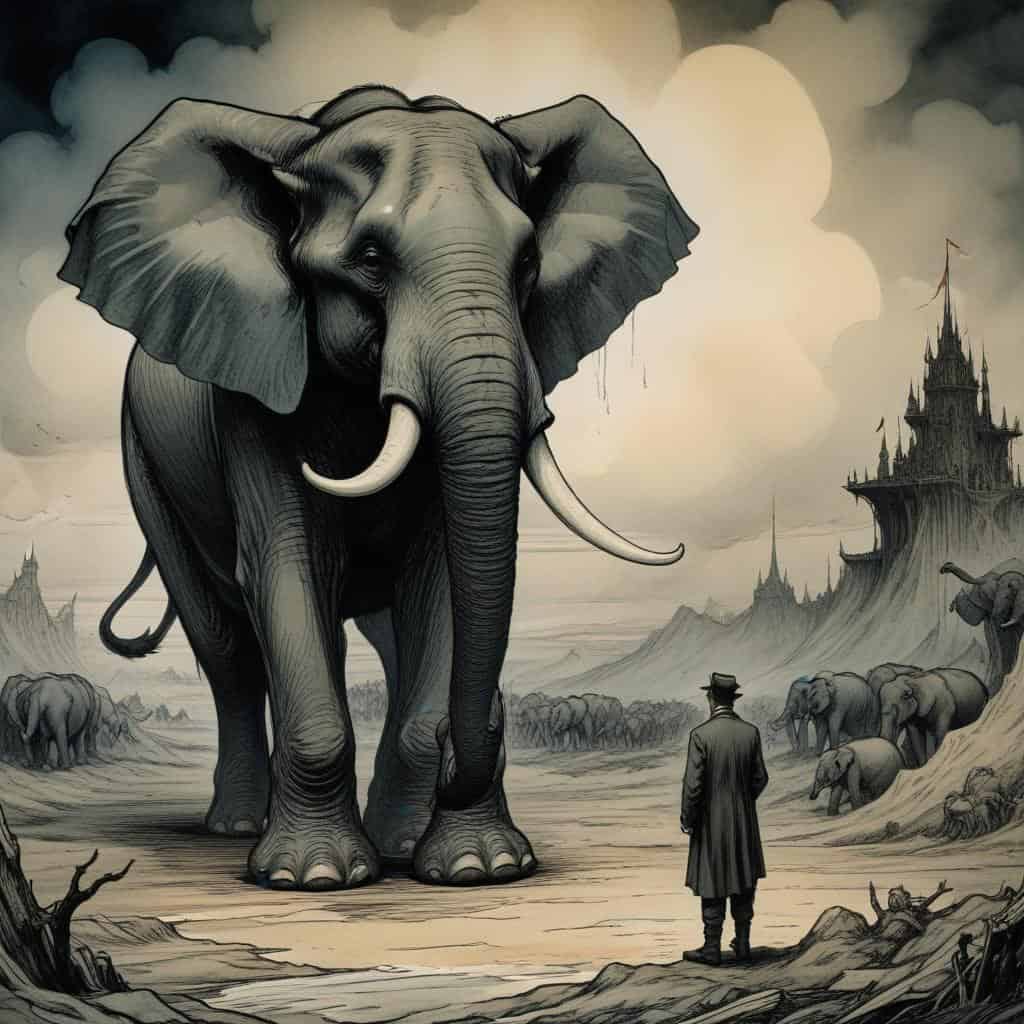
The Loss of Innocence

The Ripple Effect
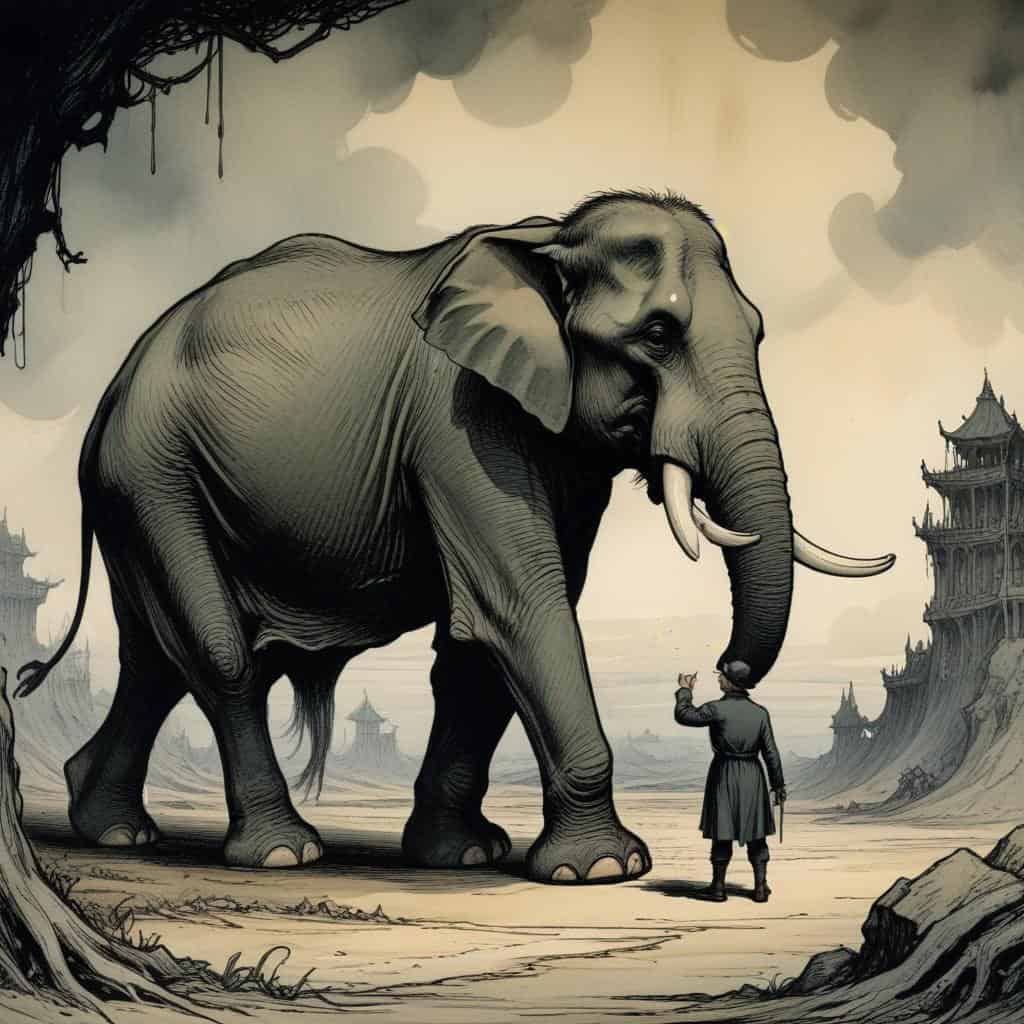
The Unforgettable Lesson
Lesson Details & Resources
In a Nutshell
- What: An essay by George Orwell
- When: Written in the 1930s
- Who: The main character is Orwell himself
- Theme: The abuse of power and the moral dilemma of imperialism
List of Characters in Shooting an Elephant
-
The narrator (George Orwell)
The narrator is a British police officer in colonial Burma who is torn between his personal morals and his duty to uphold the oppressive British empire.
-
The elephant
The elephant is a symbol of the colonial power that the narrator represents, and its killing represents the destruction and futility of imperialism.
-
The Burmese people
The Burmese people represent the colonized population who resent and resist British rule, but are also complicit in perpetuating the system.
-
The British imperial police officers
The British imperial police officers represent the oppressive force of colonialism and the dehumanizing effect it has on both the colonizers and the colonized.
Timeline of Shooting an Elephant
The narrator, an Englishman, is serving as a sub-divisional police officer in Burma.
The narrator receives a call about an elephant that has gone on a rampage and killed a man.
The narrator grabs his rifle and heads towards the location where the elephant is causing chaos.
The narrator encounters a large crowd of Burmese people following him as he approaches the elephant.
The narrator finds the elephant peacefully eating grass and decides to wait for it to calm down.
The narrator realizes that he is being pressured by the crowd to shoot the elephant and feels compelled to do so.
The narrator shoots the elephant several times, but it takes a while for the animal to die.
The narrator observes the elephant's slow and agonizing death, feeling guilty and remorseful.
The news of the elephant's death spreads quickly, and the crowd begins to loot its meat.
The narrator reflects on the absurdity and futility of colonialism and the injustices he witnessed in Burma.
Vocabulary List
- Imperialism
- The story illustrates the impact of British imperialism in Burma.
- Colonialism
- The narrator is a representative of British colonial authorities in Burma.
- Oppression
- The Burmese people are oppressed by the British colonial regime.
- Conformity
- The narrator feels pressured to conform to the expectations of his role as a colonial officer.
- Conflict
- There is a conflict between the narrator's personal beliefs and his duties as a colonial officer.
- Morality
- The story raises questions about the morality of imperialism and the use of violence.
- Shame
- The narrator feels shame and guilt for his actions in shooting the elephant.
- Power
- The story explores the dynamics of power between the colonizers and the colonized.
- Authority
- The narrator struggles with his authority as a colonial officer and the expectations placed upon him.
- Cultural clash
- The story depicts the cultural clash between the British colonizers and the Burmese people.
Key Facts
This is the information used in the fact matching game
- - The story is based on Orwell's experience as a police officer in British-ruled Burma.
- - Orwell originally wrote the story in 1936 while he was still in Burma.
- - The story was first published in 1936 in the literary magazine New Writing.
- - The protagonist of the story is an unnamed police officer.
- - The story explores themes of imperialism, power, and the moral dilemma faced by the protagonist.
- - Orwell uses the metaphor of the elephant to symbolize both the Burmese people and the oppressive nature of imperialism.
- - The incident with the elephant takes place in Moulmein, a town in Burma.
- - The elephant is known to have killed a native, which intensifies the pressure on the protagonist to take action.
- - The protagonist is reluctant to shoot the elephant, as he sees it as unnecessary and cruel.
- - The protagonist feels obligated to shoot the elephant due to the pressure from the local crowd.
- - Orwell uses vivid descriptions to depict the suffering and death of the elephant.
- - The shooting of the elephant becomes an act of performance for the protagonist, to maintain his authority.
- - The protagonist feels a deep sense of guilt and shame after shooting the elephant.
- - The story reflects Orwell's own conflicted feelings about his role in the British Empire.
- - Orwell portrays the Burmese people as oppressed and resentful towards the British.
- - The story explores the dehumanizing effects of imperialism on both the colonizers and the colonized.
- - Orwell's experience in Burma shaped his perspective and influenced his later works on social and political injustice.
- - "Shooting an Elephant" is considered one of Orwell's most famous essays.
- - The story has been widely studied and analyzed for its themes and literary techniques.
- - Orwell's use of first-person narrative gives the story a personal and introspective tone.
Analysis & Significance
Impact on Literature
George Orwell’s “Shooting an Elephant” is a seminal work in the literary canon, known for its powerful commentary on imperialism and the moral dilemmas faced by individuals in positions of authority. The work has influenced modern storytelling by showcasing the complexities of power dynamics and the internal struggles of individuals caught in oppressive systems.
Enduring Themes
The themes of power, imperialism, and the loss of personal autonomy explored in “Shooting an Elephant” continue to resonate with modern audiences. Orwell’s exploration of the psychological impact of imperialism and the dehumanizing effects of oppressive systems remains relevant in today’s world, sparking discussions on the ethics of power and moral responsibility.
Cultural Significance Today
“Shooting an Elephant” remains culturally significant today due to its exploration of themes that are still relevant in contemporary society. The work has been adapted into various forms, including film and theater, further solidifying its legacy as a poignant commentary on the complexities of power and the struggle for individual agency in the face of oppressive systems.
Shooting an Elephant Games


Take Your Learning Offline
Want a convenient, print-ready study guide for this lesson? Become a Memory Wizards Pro member to unlock the downloadable " Memory Scrolls" for this topic and our entire library!
- ✓ Complete Vocabulary Lists
- ✓ Key Facts & Timelines
- ✓ Beautifully Formatted for Print & Mobile