
How Do You Learn Best?
Learn by Reading
Immerse yourself in the 10-minute visual lesson for a comprehensive understanding of the topic.
Learn by Reviewing
Jump directly to the key facts, timeline, and vocabulary lists to build a solid foundation of details.
Learn by Doing
Challenge yourself! Jump straight into the interactive games to learn by trial, error, and discovery.
Reflections on Gandhi in 10 Minutes
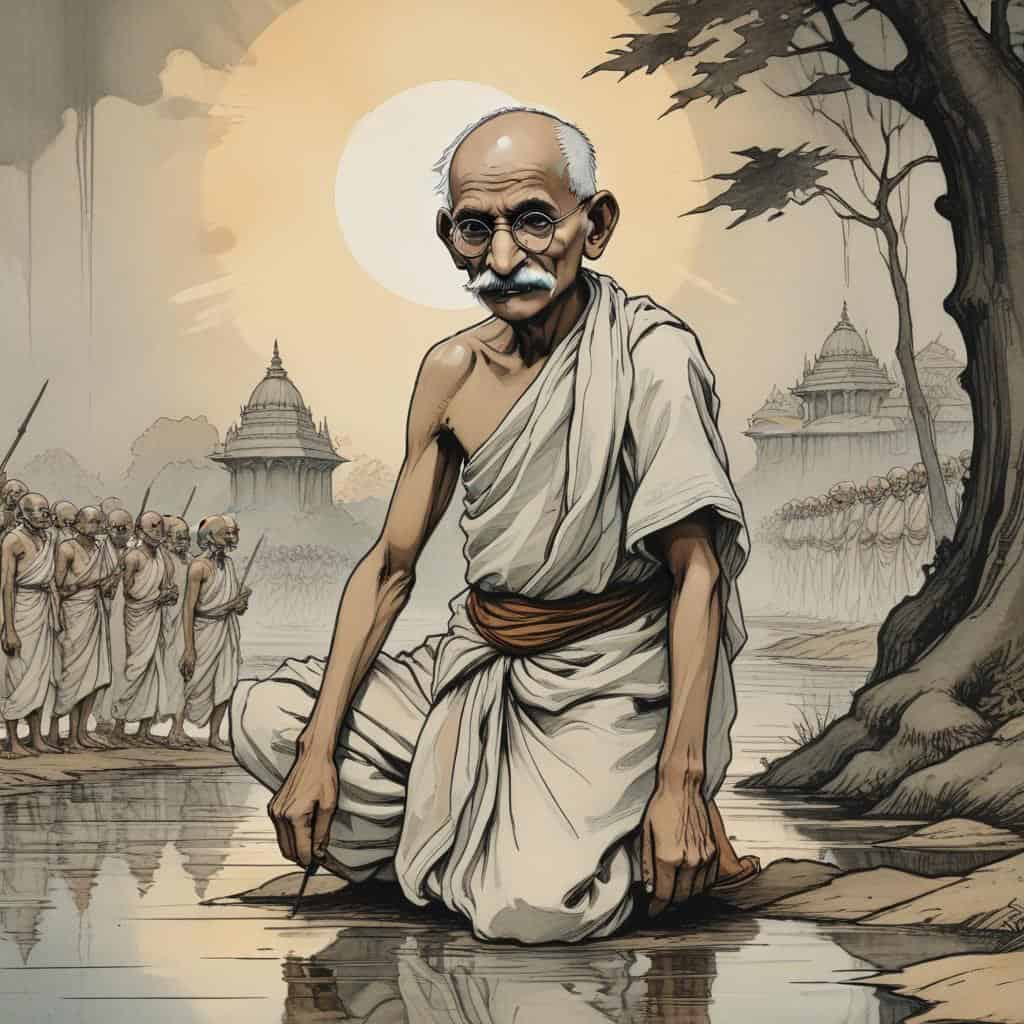
Introduction
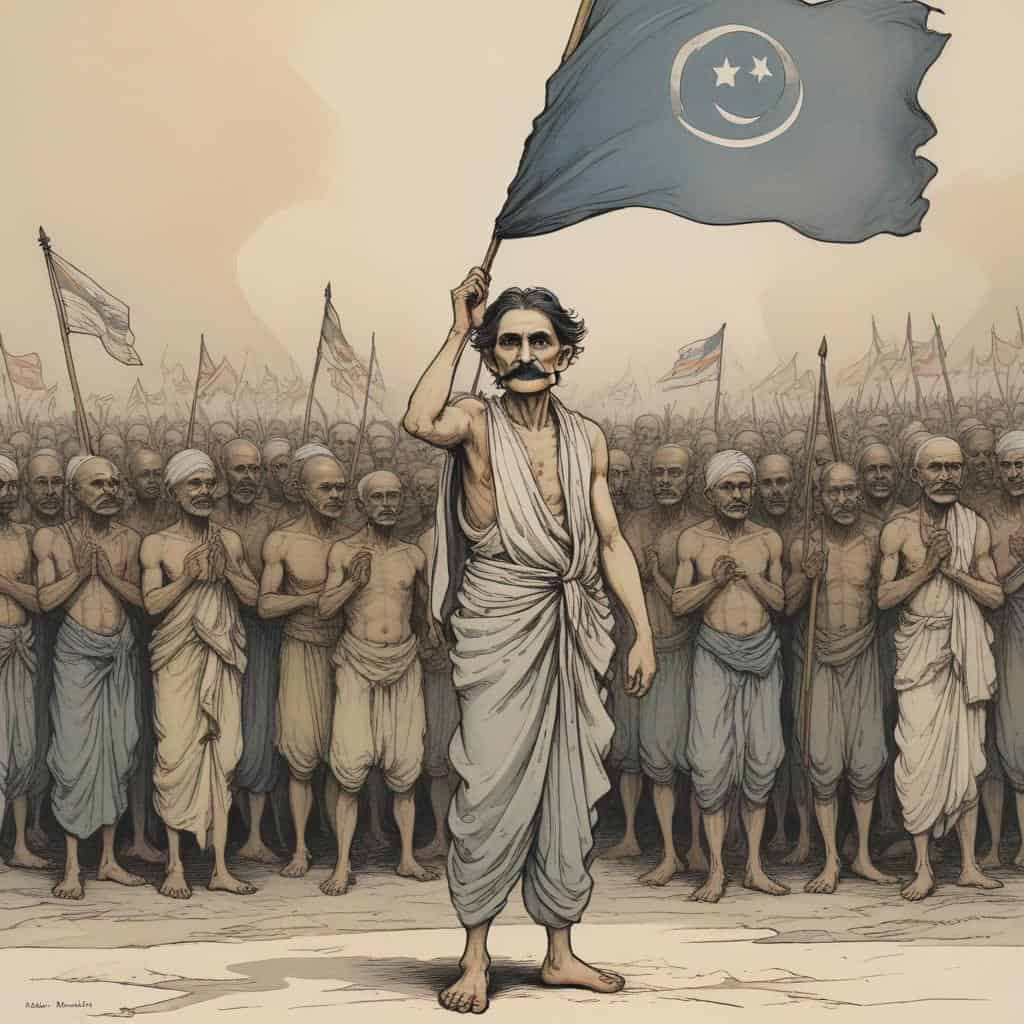
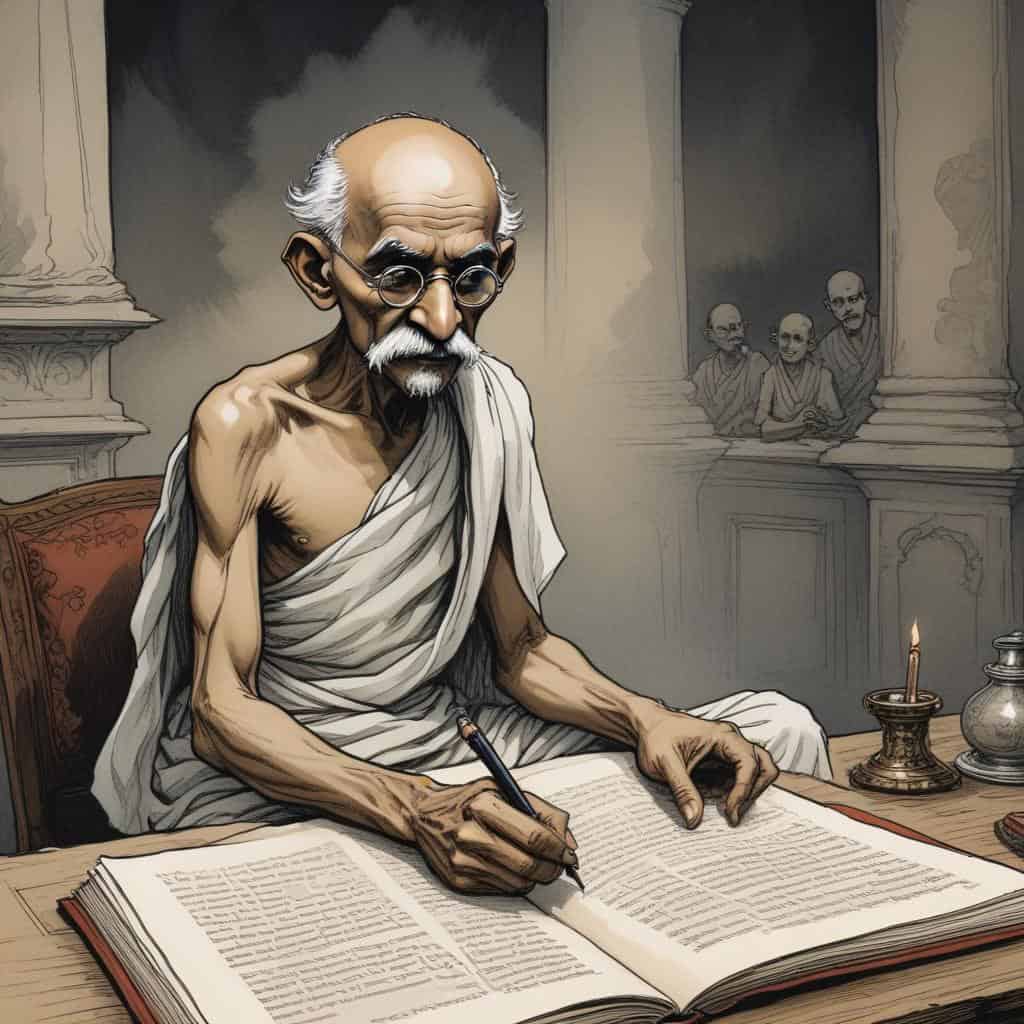

Mahatma Gandhi

George Orwell

British Imperialists

Indian Nationalists
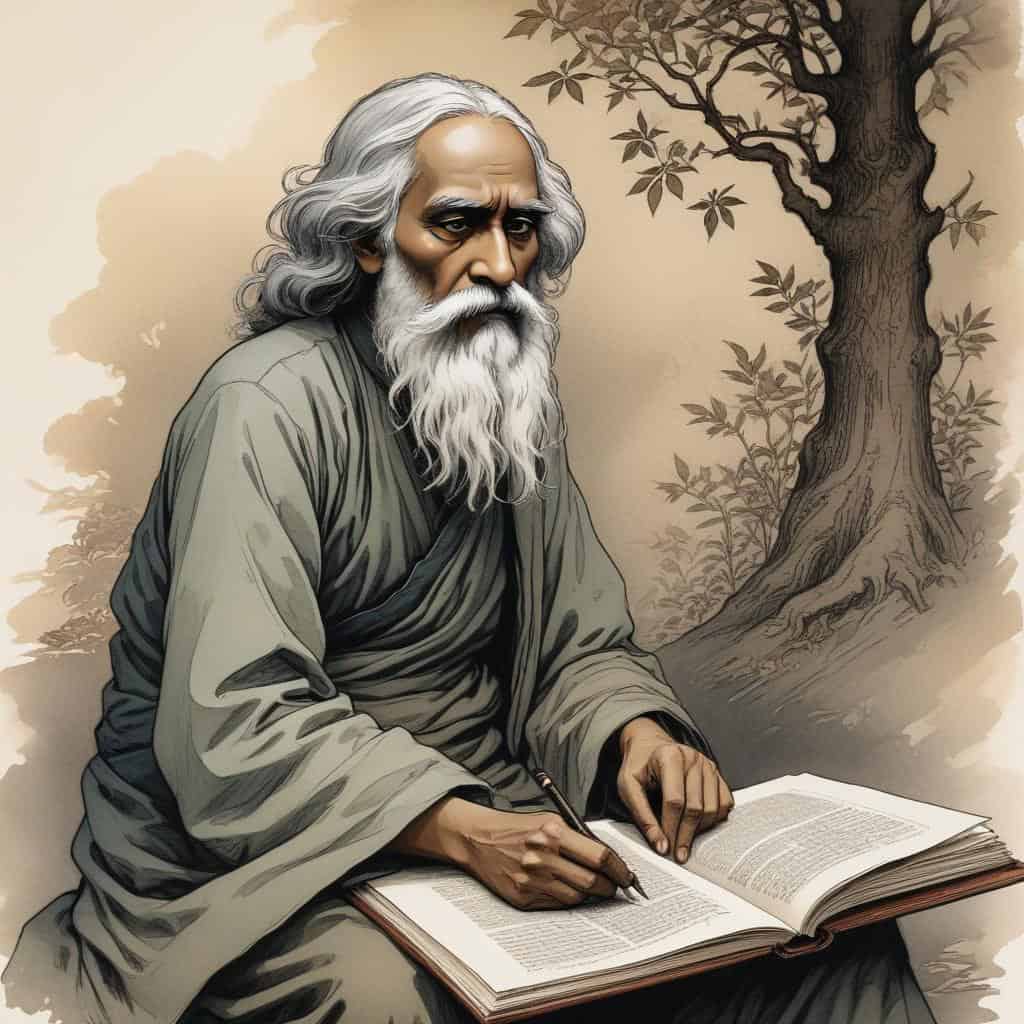
Rabindranath Tagore

Indian peasants

Western intellectuals

Indian politicians

Indian religious leaders
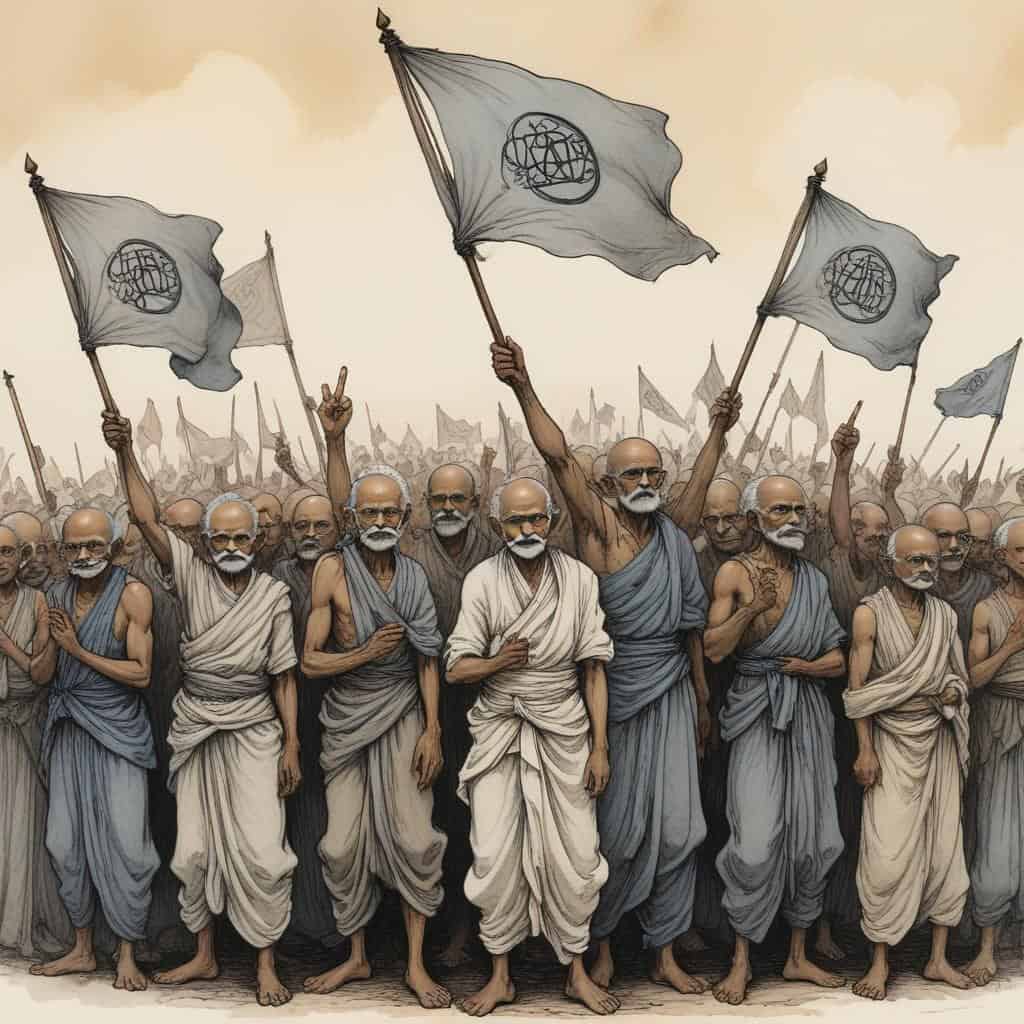
Fellow activists
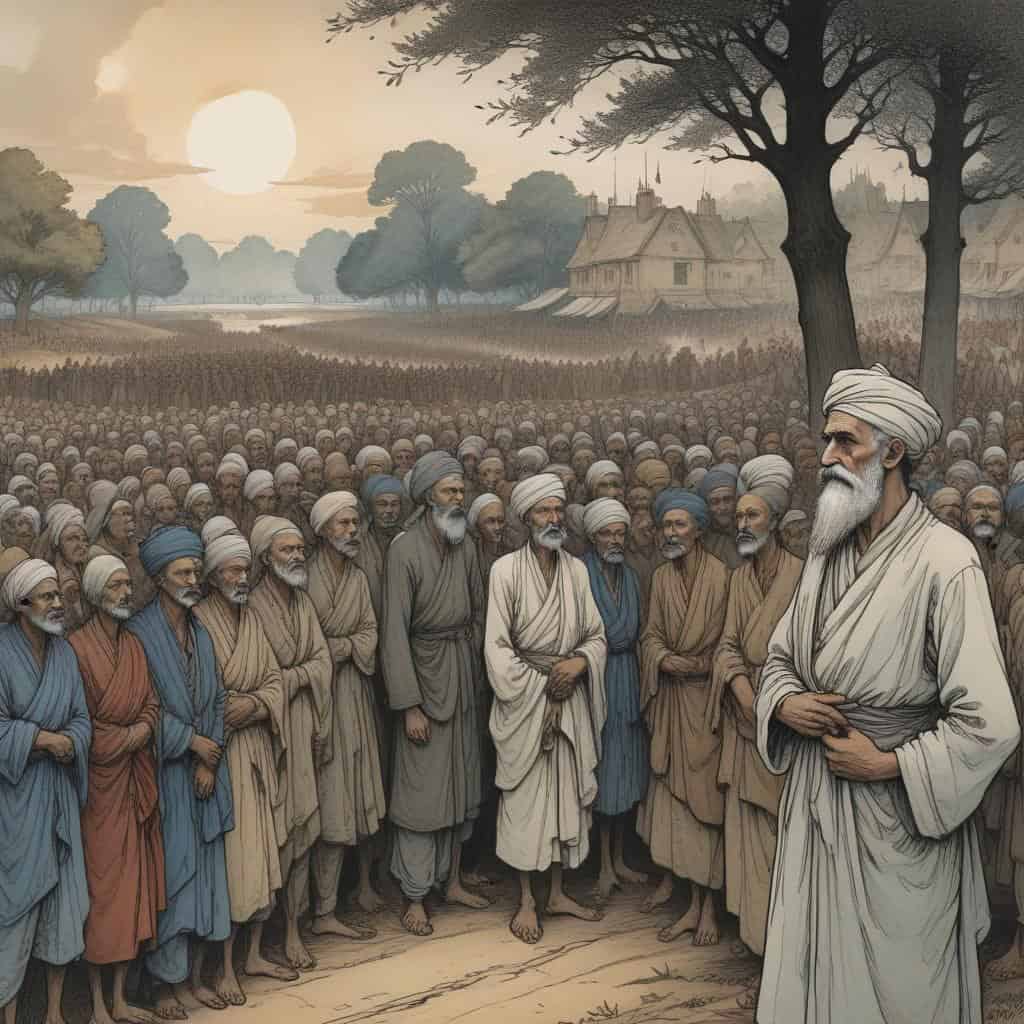
1. Orwells Initial Impressions of Gandhi
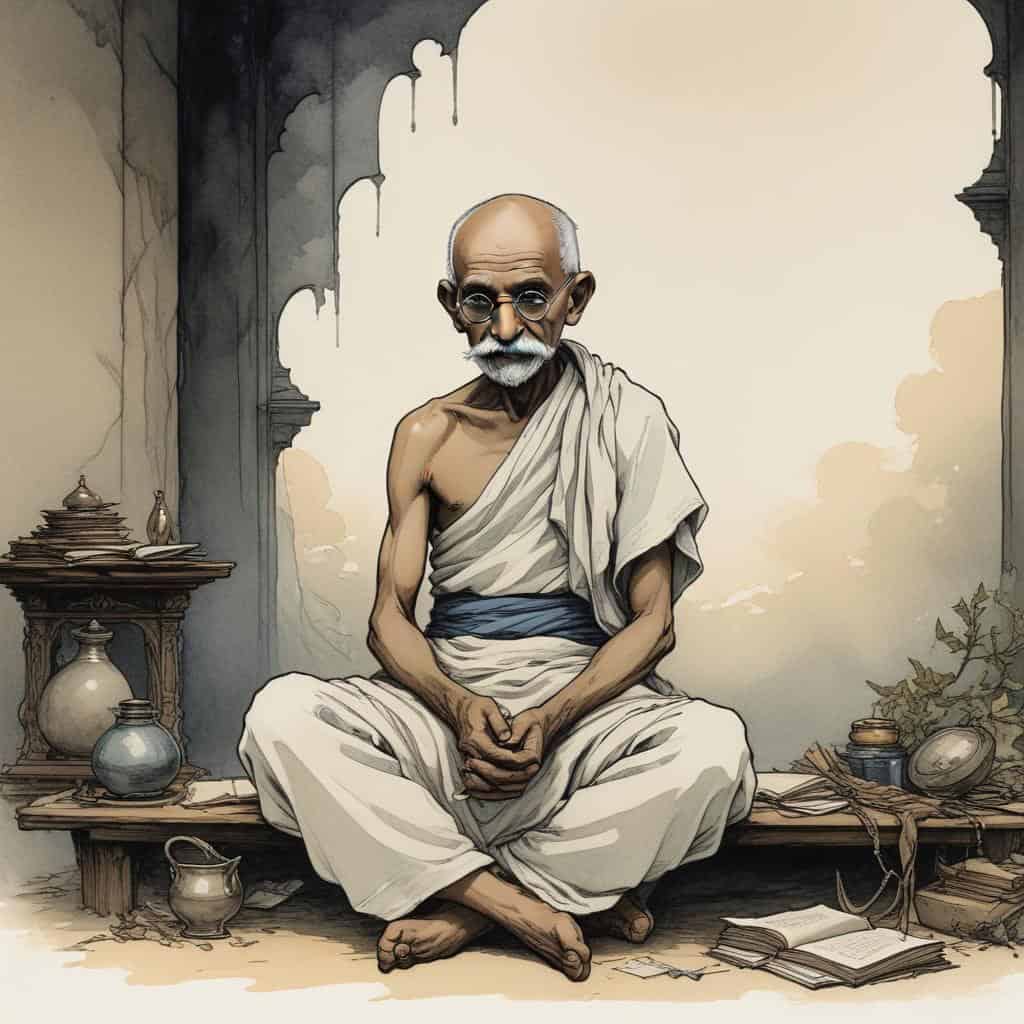
2. Gandhis Unconventional Lifestyle
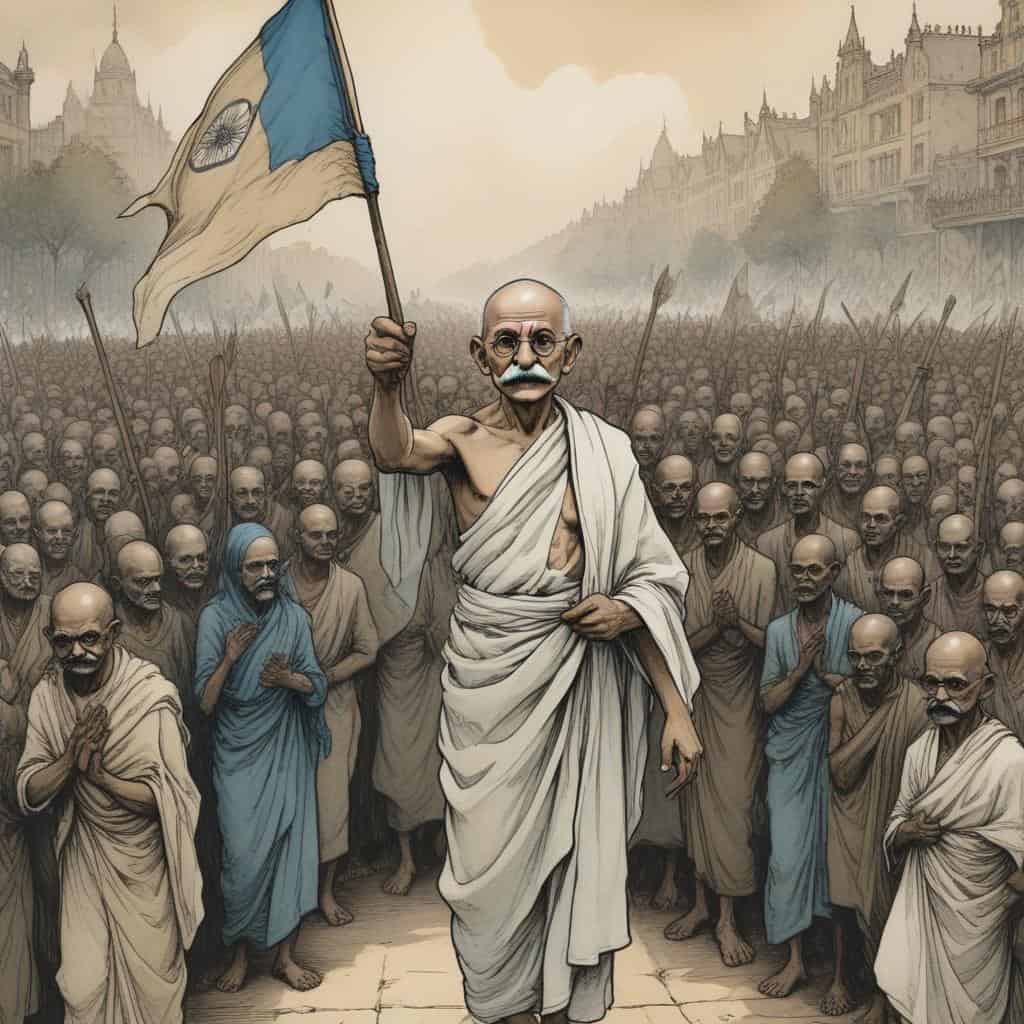
3. Gandhis Political Strategies
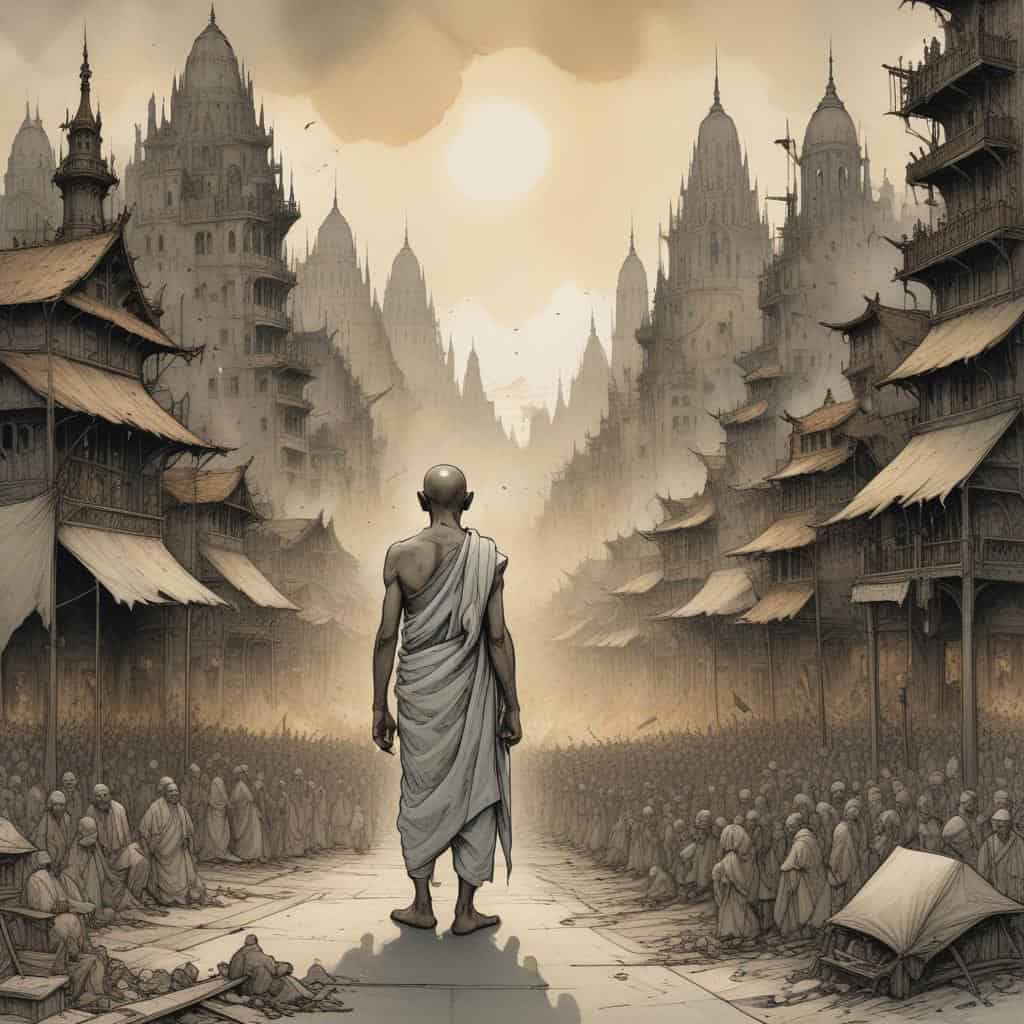
4. Gandhis Critique of Modern Civilization
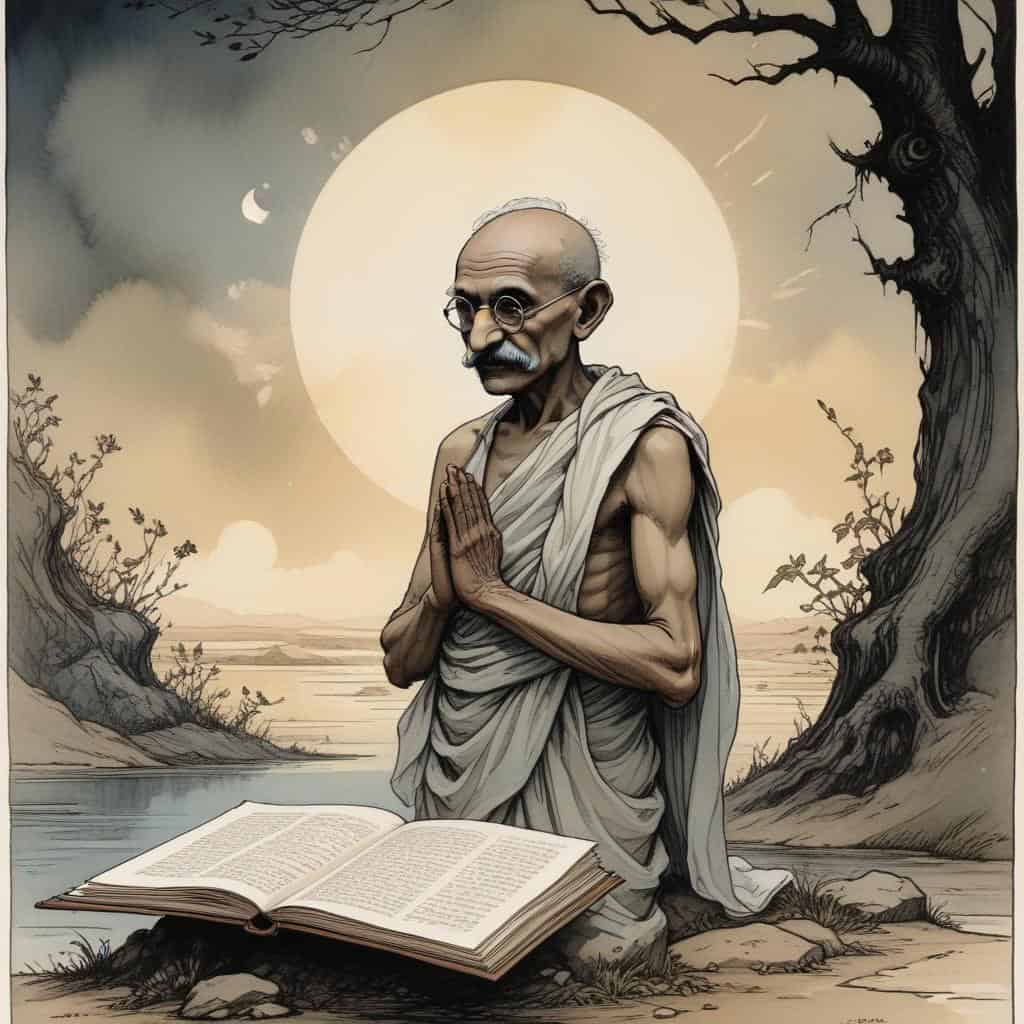
5. Gandhis Influence on Orwells Thinking
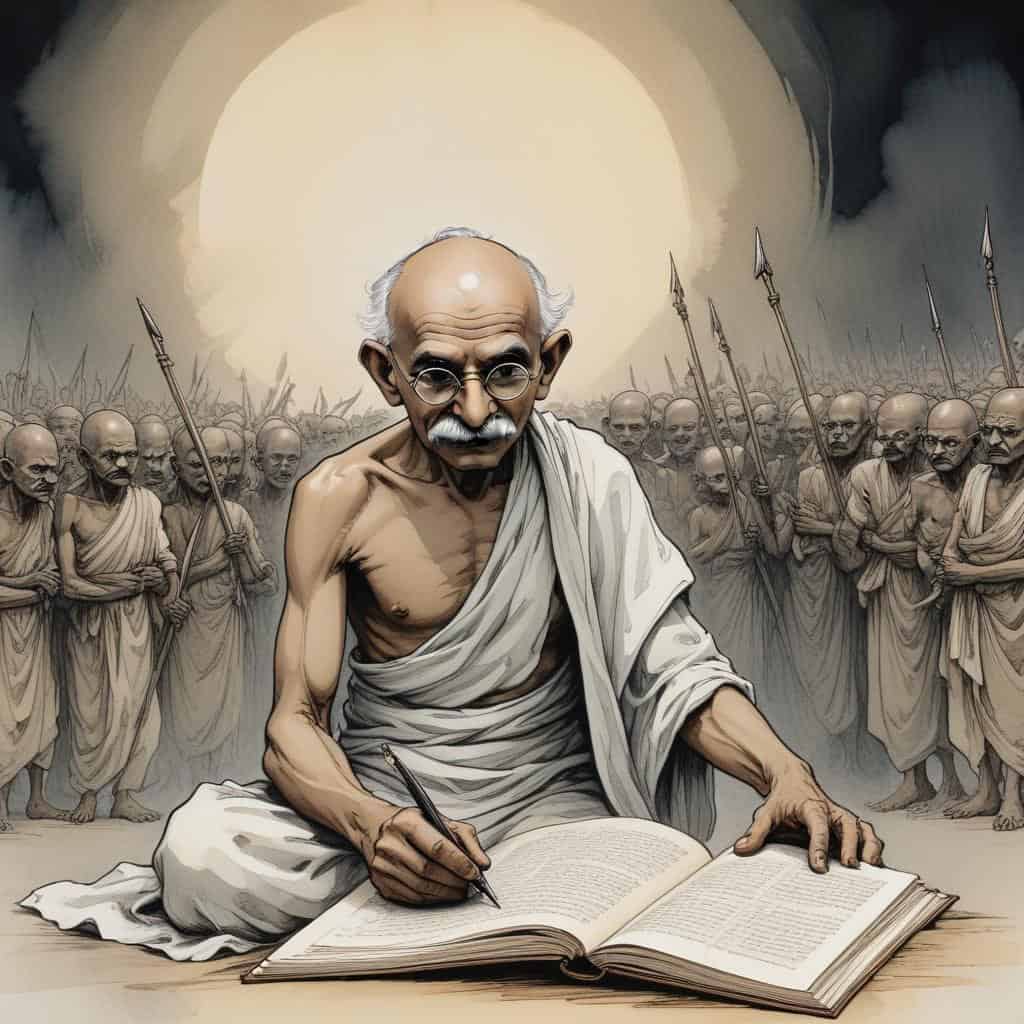
6. Gandhis Contradictions

7. Gandhis Legacy
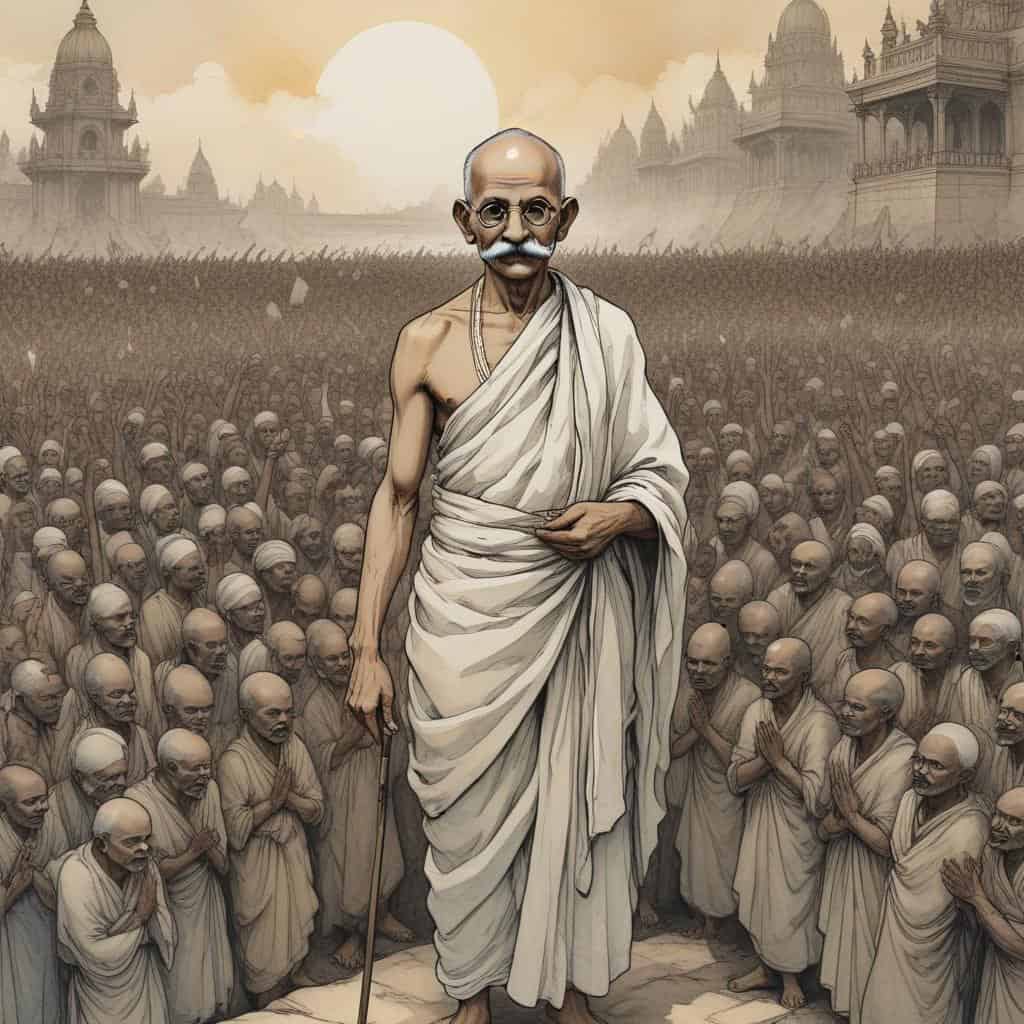
8. Gandhis Impact on India
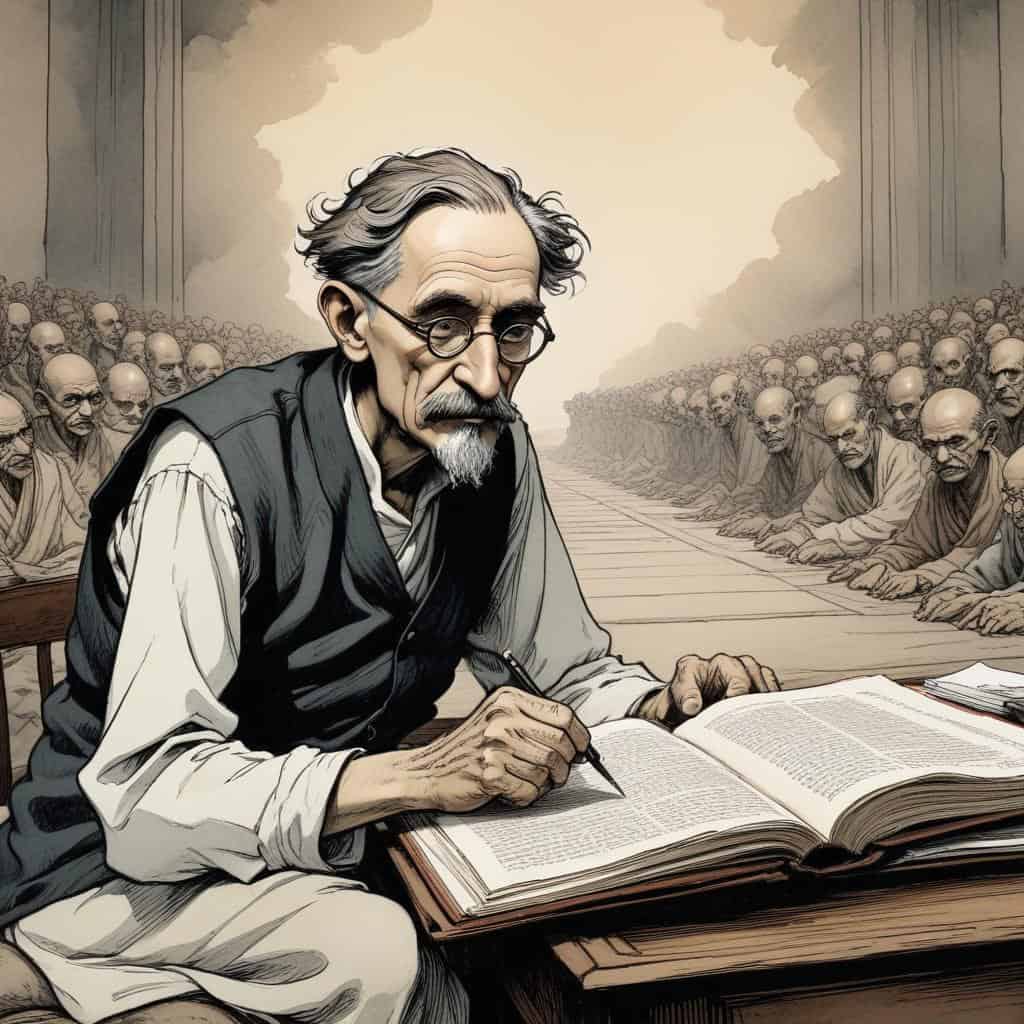
9. Gandhis Relevance Today

10. Orwells Final Thoughts on Gandhi

Lesson Details & Resources
In a Nutshell
- What: Essay by George Orwell
- When: 1949
- Who: Mahatma Gandhi
- Theme: Critique of Gandhi's life and beliefs
List of Characters in Reflections on Gandhi
-
George Orwell
George Orwell is the author of the essay 'Reflections on Gandhi'.
-
Mahatma Gandhi
Mahatma Gandhi was a prominent leader of the Indian independence movement.
-
Adolf Hitler
Adolf Hitler was the dictator of Nazi Germany during World War II.
-
Joseph Stalin
Joseph Stalin was the leader of the Soviet Union during World War II.
Timeline of Reflections on Gandhi
Orwell describes meeting a beggar who resembles Gandhi and feels a strong connection to him.
Orwell discusses the popular image of Gandhi as a saintly figure and questions its accuracy.
Orwell reflects on his personal encounter with Gandhi during his time in India.
Orwell recounts witnessing a demonstration where the crowd is roused to violence by Gandhi’s speech.
Orwell describes Gandhi’s physical appearance, including his thinness and his simple attire.
Orwell recalls Gandhi’s efforts to promote celibacy and his own conflicting thoughts on the matter.
Orwell reflects on Gandhi’s political beliefs and his role in the Indian independence movement.
Orwell discusses Gandhi’s views on technology and his rejection of modern conveniences.
Orwell examines Gandhi’s philosophy of non-violence and its implications in reality.
Orwell ponders on Gandhi’s influence and the legacy he left behind.
Vocabulary List
- Saint
- Orwell describes Gandhi as a 'saint' who was able to live a life of poverty and simplicity.
- Pacifist
- Gandhi was known for his pacifist beliefs and commitment to nonviolent resistance.
- Hypocrisy
- Orwell criticizes Gandhi for his perceived hypocrisy, particularly in his views on sex and his treatment of his wife.
- Ahimsa
- Gandhi's principle of ahimsa, or nonviolence, was central to his philosophy and actions.
- Nationalist
- Gandhi was a nationalist leader who fought for Indian independence from British colonial rule.
- Satyagraha
- Gandhi's concept of satyagraha, or truth force, emphasized the power of nonviolent resistance in achieving social and political change.
- Ascetic
- Gandhi lived an ascetic lifestyle, practicing self-discipline and simplicity in his personal habits.
- Colonialism
- Orwell reflects on the impact of British colonialism in India and the role Gandhi played in the fight for independence.
- Legacy
- Gandhi's legacy as a leader and activist continues to inspire movements for social justice and equality around the world.
- Critique
- Orwell's essay serves as a critique of Gandhi's character and beliefs, offering a nuanced perspective on his influence.
- Moral
- Gandhi's moral principles guided his actions and decisions, shaping his vision for a just and peaceful society.
Key Facts
This is the information used in the fact matching game
- - George Orwell wrote "Reflections on Gandhi" in 1949.
- - The essay was originally published in Partisan Review.
- - Orwell had a complex opinion of Gandhi, admiring some aspects while criticizing others.
- - The essay explores Gandhi's political and moral beliefs.
- - Orwell describes Gandhi as a saintly figure who inspired millions.
- - He discusses Gandhi's nonviolent resistance and civil disobedience methods.
- - Orwell highlights Gandhi's simplicity and his rejection of material possessions.
- - The essay examines Gandhi's views on sex and his experiments with celibacy.
- - Orwell questions Gandhi's effectiveness as a political leader.
- - He criticizes Gandhi's stance on nuclear weapons and national defense.
- - Orwell argues that Gandhi's nonviolence would not have worked against Hitler.
- - The essay delves into Gandhi's political strategies during the Indian independence movement.
- - Orwell addresses Gandhi's position on the caste system and untouchability.
- - He discusses Gandhi's influence on British public opinion and the Indian masses.
- - Orwell explores the contradictions in Gandhi's personal life and political philosophy.
- - The essay reflects Orwell's own views on pacifism and political activism.
- - Orwell acknowledges Gandhi's genuine commitment to his beliefs.
- - He suggests that Gandhi's methods may not be applicable in all situations.
- - The essay ends with Orwell questioning whether Gandhi's principles can survive in a world dominated by power politics.
- - "Reflections on Gandhi" provides a nuanced analysis of a complex historical figure.
Analysis & Significance
Impact on Literature
‘Reflections on Gandhi’ by George Orwell is a powerful essay that has had a lasting impact on the way writers approach political and social commentary. Orwell’s insightful reflections on Gandhi’s philosophy and actions have influenced countless writers to delve deeper into the complexities of ethical and moral dilemmas in their own work.
Enduring Themes
The timeless themes explored in ‘Reflections on Gandhi’ still resonate with modern audiences today. From the struggle for social justice to the complexities of nonviolent resistance, Orwell’s essay continues to provoke thought and discussion on important issues that remain relevant in our contemporary society.
Cultural Significance Today
Orwell’s ‘Reflections on Gandhi’ remains a seminal work in the study of political and social activism. Its legacy can be seen in the countless adaptations and references to Gandhi’s teachings in popular culture, as well as in the ongoing debates surrounding the effectiveness of nonviolent protest as a means of creating meaningful change in the world.
Reflections on Gandhi Games


Take Your Learning Offline
Want a convenient, print-ready study guide for this lesson? Become a Memory Wizards Pro member to unlock the downloadable " Memory Scrolls" for this topic and our entire library!
- ✓ Complete Vocabulary Lists
- ✓ Key Facts & Timelines
- ✓ Beautifully Formatted for Print & Mobile