
How Do You Learn Best?
Learn by Reading
Immerse yourself in the 10-minute visual lesson for a comprehensive understanding of the topic.
Learn by Reviewing
Jump directly to the key facts, timeline, and vocabulary lists to build a solid foundation of details.
Learn by Doing
Challenge yourself! Jump straight into the interactive games to learn by trial, error, and discovery.
Politics and the English Language in 10 Minutes
Introduction

George Orwell

Winston Smith

Big Brother

Newspeak
Orwells Critique of Modern Political Language
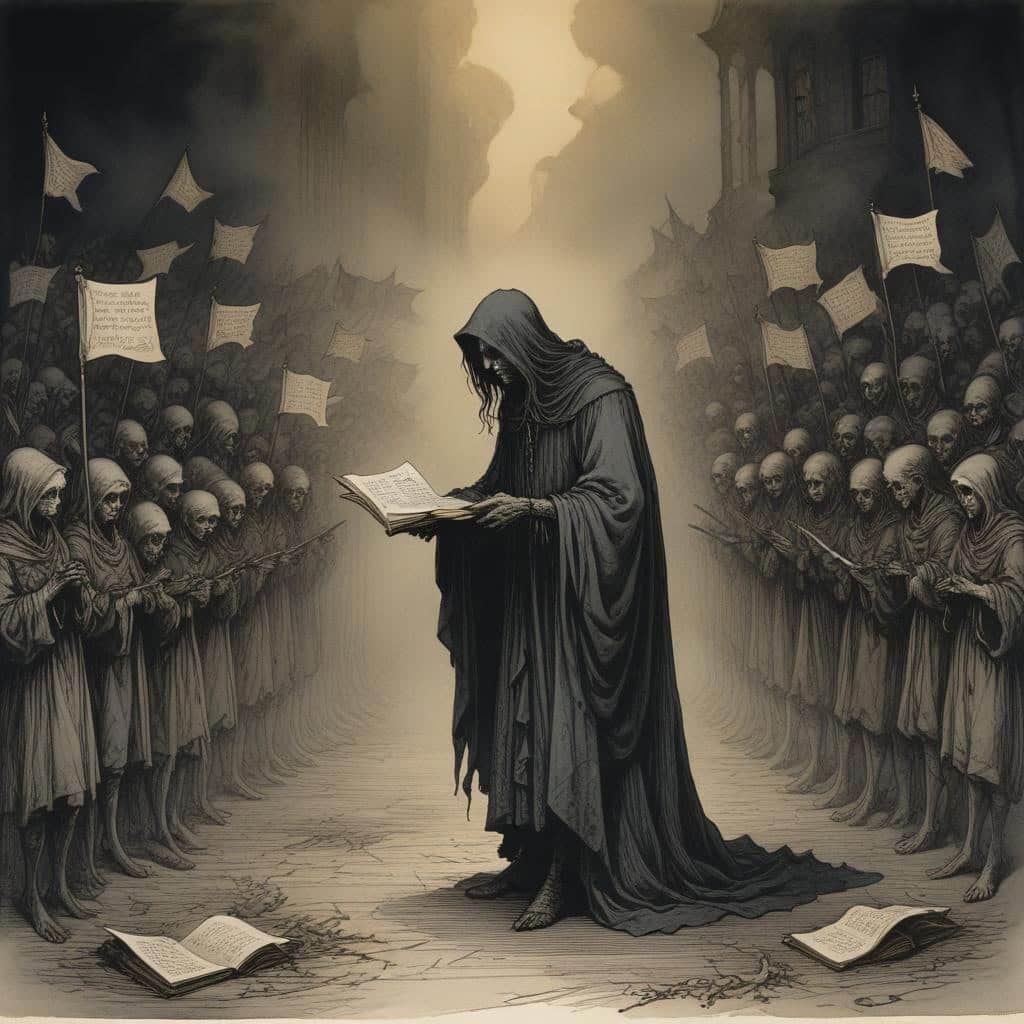
The Impact of Poor Language on Society
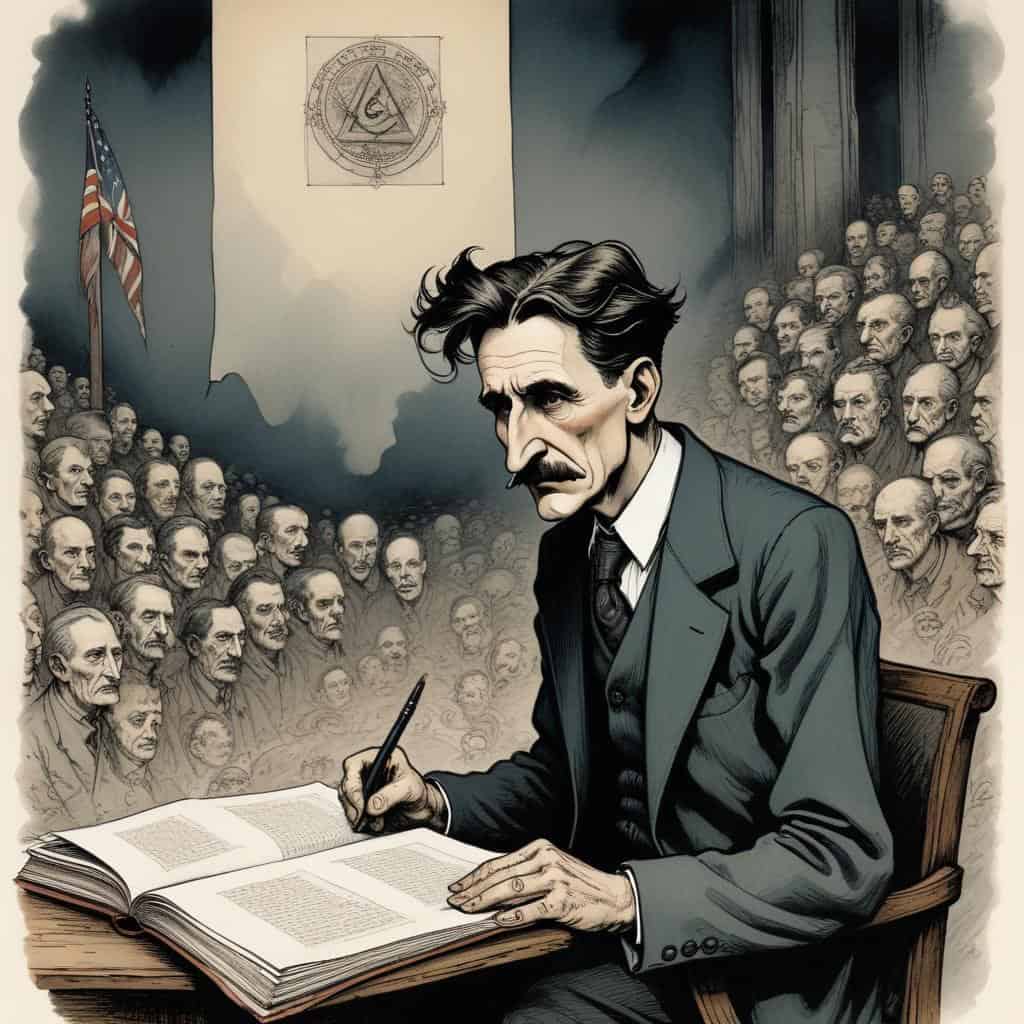
The Importance of Clarity in Language
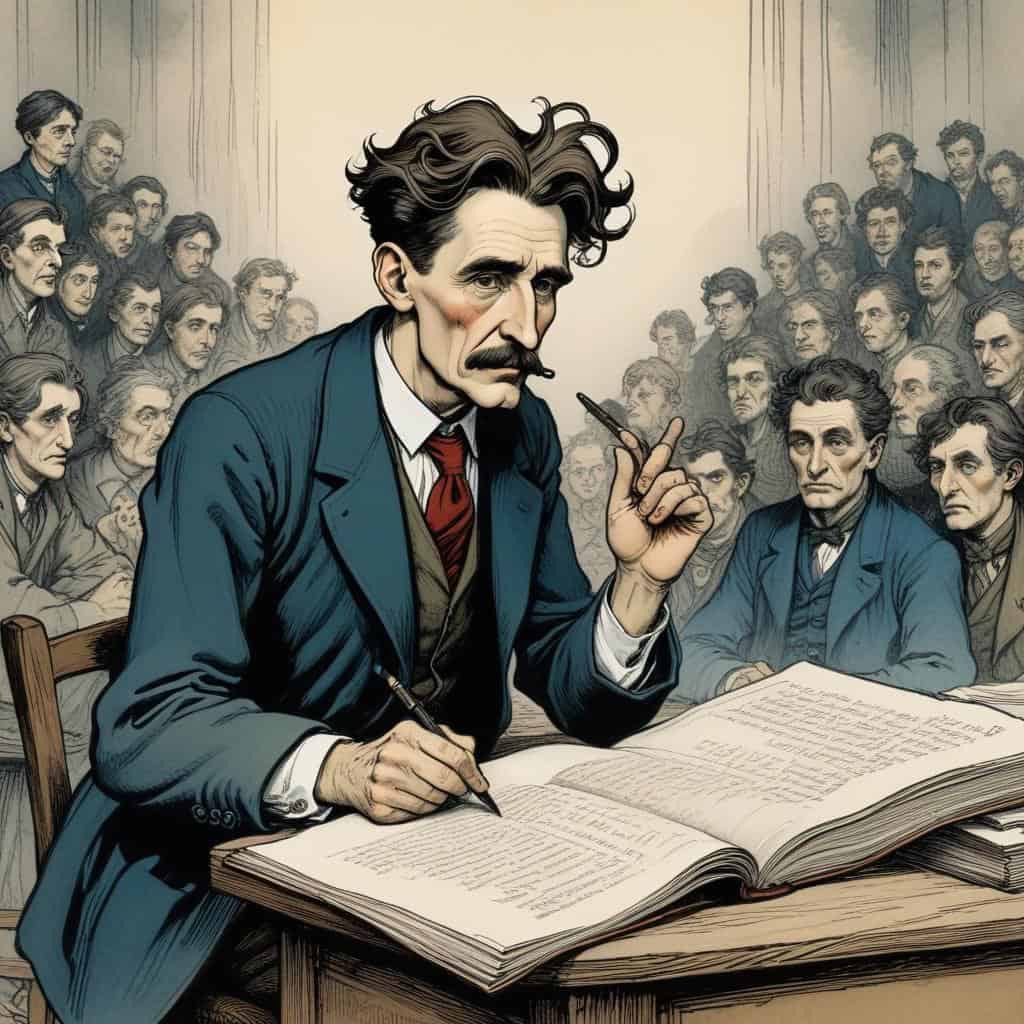
The Role of Writers and Intellectuals

The Relationship Between Language and Thought
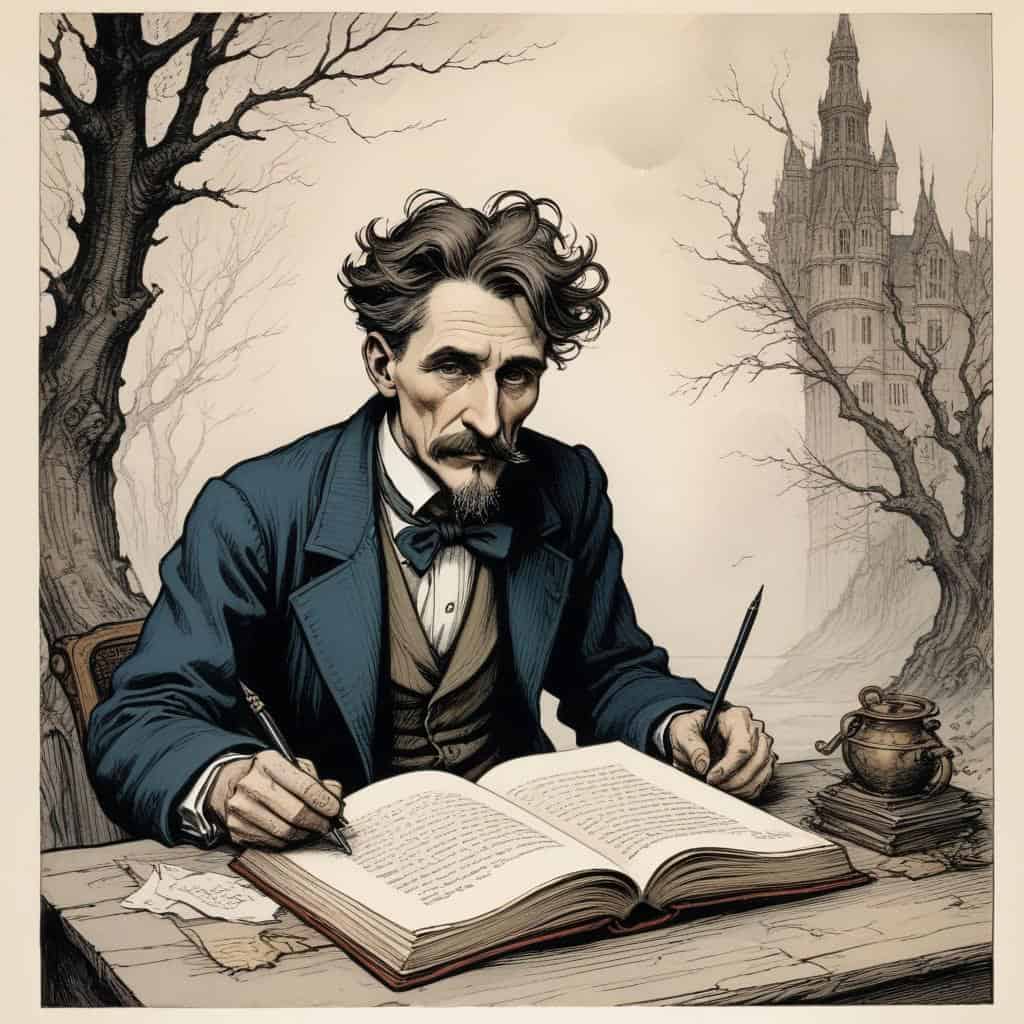
The Need for Language Reform

The Power of Language to Shape Reality
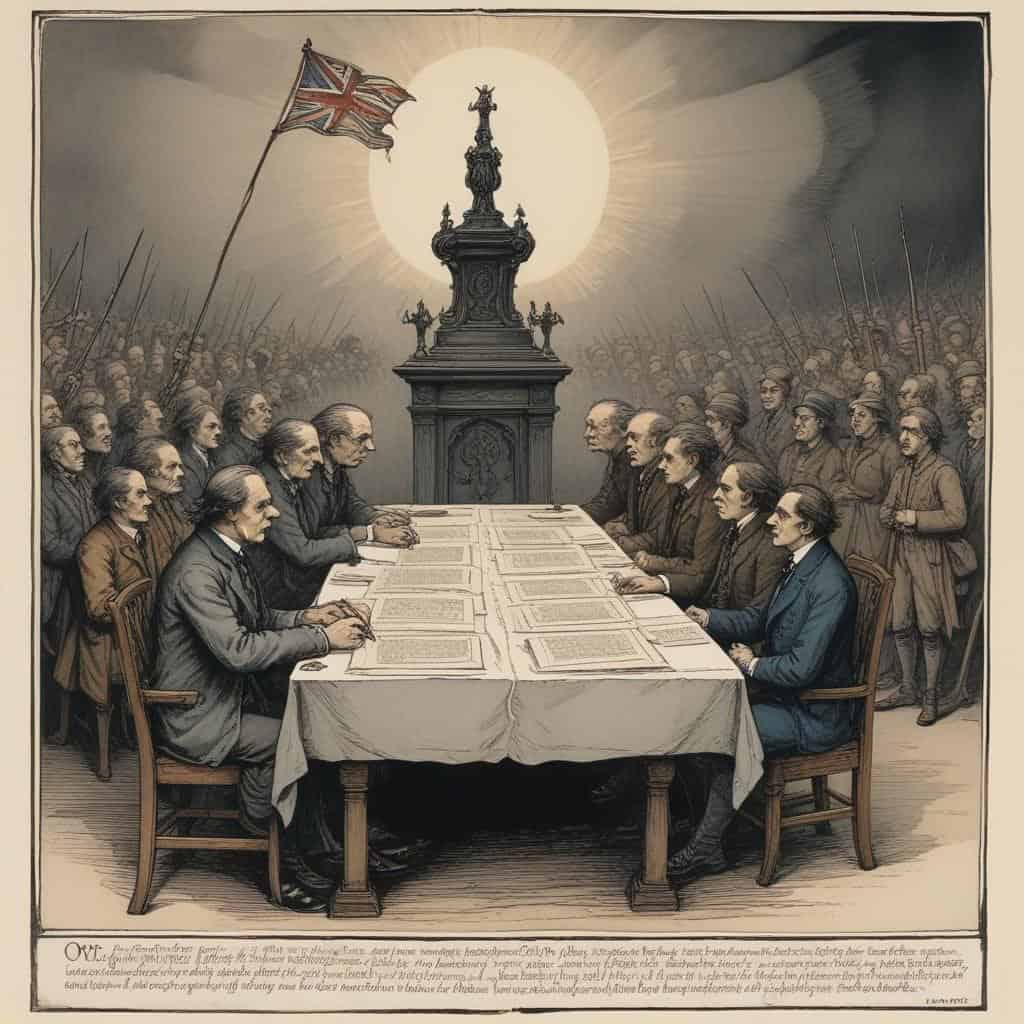
The Connection Between Language and Politics

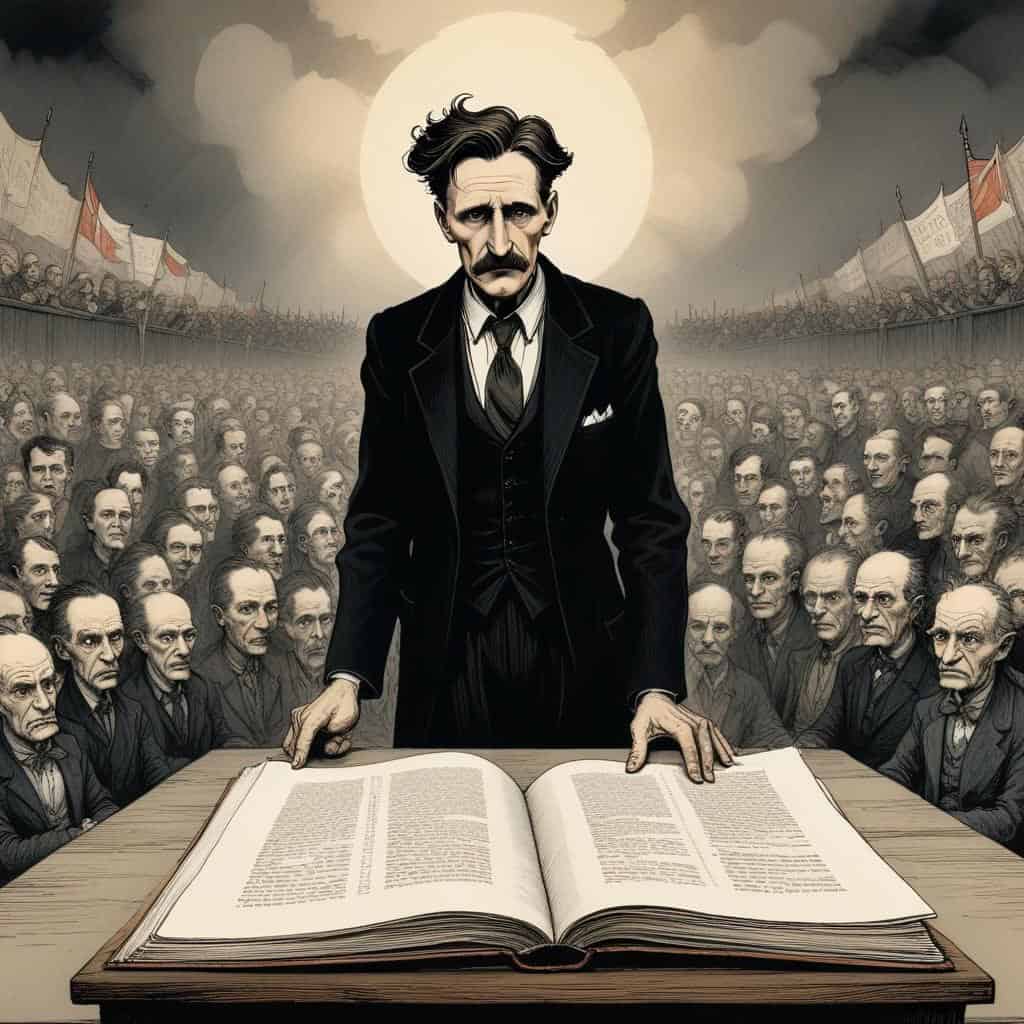
The Need for Vigilance and Critical Thinking
Lesson Details & Resources
In a Nutshell
- What: Essay by George Orwell
- When: 1946
- Who: N/A
- Theme: Language and politics
List of Characters in Politics and the English Language
-
George Orwell
George Orwell is the author of the essay Politics and the English Language.
-
Winston Smith
Winston Smith is the protagonist of Orwell's novel 1984, which explores themes of propaganda and language manipulation.
-
Big Brother
Big Brother is the leader of the totalitarian regime in 1984, where language is used as a tool for control.
-
Emmanuel Goldstein
Emmanuel Goldstein is a figurehead of the resistance in 1984, whose beliefs challenge the Party's manipulation of language.
Timeline of Politics and the English Language
Orwell introduces the relationship between politics and language
He criticizes the degradation of the English language in political discourse
Orwell analyzes various examples of political language and their harmful effects
He emphasizes the importance of clarity and precision in writing
Orwell discusses the use of meaningless words and phrases
He explains how political language is used to deceive and manipulate
Orwell highlights the role of clichés and their detrimental impact on communication
He argues against the use of foreign words and jargon in political writing
Orwell proposes six rules for writing effectively and honestly
He concludes by urging writers to resist the corruption of language in politics.
Vocabulary List
- Euphemism
- In Politics and the English Language, George Orwell criticizes the use of euphemisms to obscure the truth in political discourse.
- Propaganda
- Orwell discusses the role of propaganda in shaping public opinion and manipulating language.
- Doublespeak
- Orwell warns against the use of doublespeak, or language that is deliberately deceptive or misleading.
- Jargon
- Orwell cautions against the use of jargon and specialized language that alienates readers and obscures meaning.
- Cliché
- Orwell urges writers to avoid clichés and tired expressions that weaken the impact of their writing.
- Verbosity
- Orwell criticizes verbosity and the use of excessive words that obscure meaning rather than clarify it.
- Rhetoric
- Orwell argues that clear, honest rhetoric is essential for effective communication in politics and beyond.
- Manipulation
- Orwell highlights the dangers of language manipulation and how it can be used to control and deceive the masses.
- Clarity
- Orwell emphasizes the importance of clarity in language as a means of promoting understanding and truth.
- Deception
- Orwell condemns the use of deception in language, particularly in the realm of politics where it can be used to manipulate and mislead the public.
Key Facts
This is the information used in the fact matching game
- - George Orwell wrote "Politics and the English Language" in 1946.
- - The essay criticizes the decline of the English language in political discourse.
- - Orwell argues that unclear and vague language is used to deceive and manipulate.
- - He believes that political language is often used to hide unpleasant truths.
- - Orwell emphasizes the importance of clear and concise language in conveying meaning.
- - The essay suggests that political language is often designed to sound impressive without actually saying anything meaningful.
- - Orwell coins the term "pretentious diction" to describe unnecessarily complex language.
- - He argues that this type of language creates a barrier between the writer and the reader.
- - Orwell warns against the use of clichés and overused phrases that lack originality.
- - The essay explores the link between language and thought, suggesting that unclear language hinders clear thinking.
- - Orwell provides examples of political language from various sources, including newspapers and official documents.
- - He criticizes the use of euphemisms to soften the impact of harsh realities.
- - Orwell encourages writers to strive for simplicity and clarity in their language.
- - The essay suggests that political language is often used to manipulate public opinion.
- - Orwell believes that the misuse of language contributes to a decline in democratic values.
- - He argues that political language should be honest and straightforward.
- - Orwell advises writers to choose concrete words over abstract ones.
- - The essay highlights the importance of avoiding excessive use of passive voice.
- - Orwell emphasizes the need for writers to think critically about the words they use.
- - "Politics and the English Language" remains a widely studied and influential essay.
Analysis & Significance
Impact on Literature
‘Politics and the English Language’ by George Orwell has had a profound impact on literature by emphasizing the importance of clear and concise writing. Orwell’s essay has influenced writers to strive for clarity in their language, avoiding vague or meaningless phrases. This work has encouraged a shift towards more effective communication in literature and beyond.
Enduring Themes
The timeless themes of language manipulation, propaganda, and the power of words explored in ‘Politics and the English Language’ continue to resonate with modern audiences. Orwell’s critique of political language and its impact on society remains relevant today, serving as a cautionary reminder of the dangers of linguistic manipulation.
Cultural Significance Today
‘Politics and the English Language’ continues to hold cultural significance today as a seminal work in the study of language and communication. Its teachings on the importance of clarity and honesty in writing have been widely embraced and adapted in various fields, from journalism to academia. Orwell’s insights on language continue to shape discourse and influence how we communicate in the modern world.
Politics and the English Language Games


Take Your Learning Offline
Want a convenient, print-ready study guide for this lesson? Become a Memory Wizards Pro member to unlock the downloadable " Memory Scrolls" for this topic and our entire library!
- ✓ Complete Vocabulary Lists
- ✓ Key Facts & Timelines
- ✓ Beautifully Formatted for Print & Mobile