
How Do You Learn Best?
Learn by Reading
Immerse yourself in the 10-minute visual lesson for a comprehensive understanding of the topic.
Learn by Reviewing
Jump directly to the key facts, timeline, and vocabulary lists to build a solid foundation of details.
Learn by Doing
Challenge yourself! Jump straight into the interactive games to learn by trial, error, and discovery.
Inside the Whale and Other Essays in 10 Minutes

Introduction
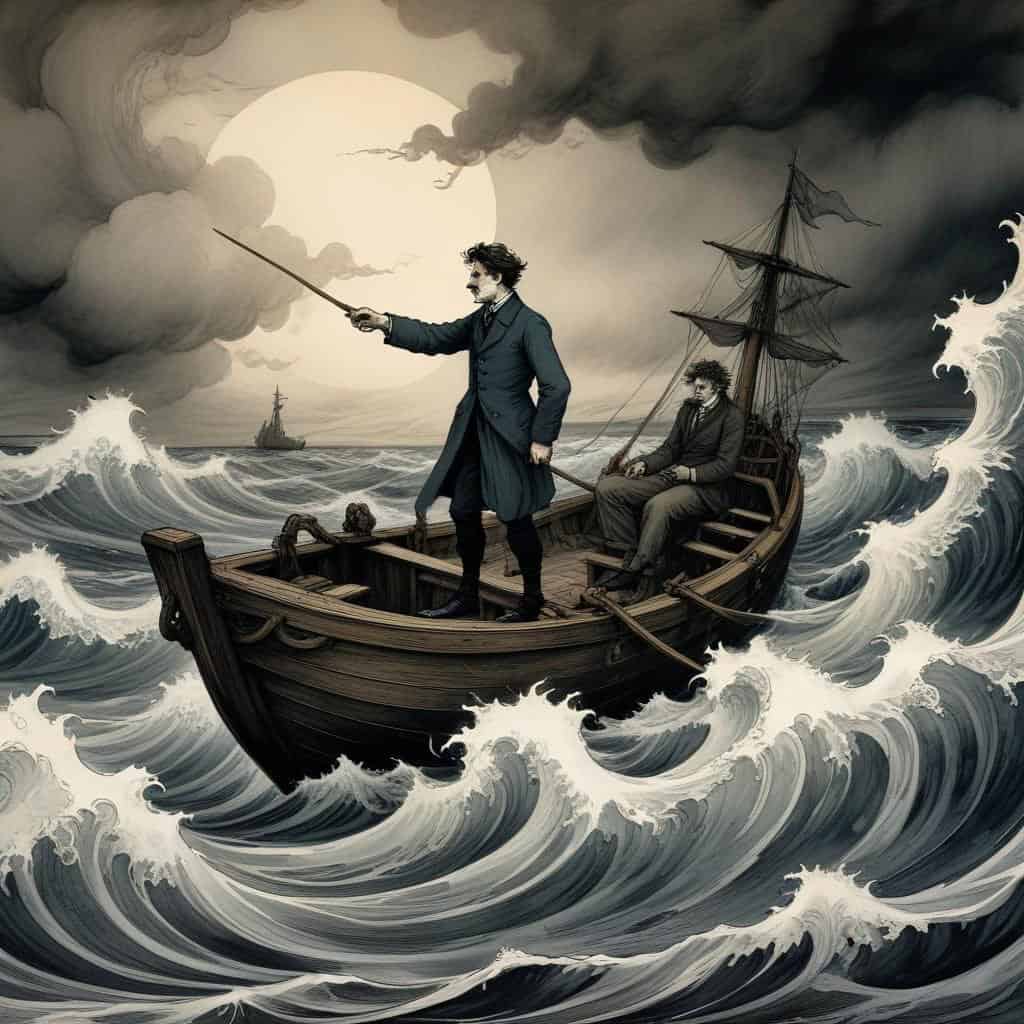


George Orwell

Henry Miller

Charles Dickens

Salvador Dali

Leon Trotsky

1. Orwells Reflection on World War II

2. Analysis of Literature and Politics

3. Critique of Henry Millers Work

4. Exploration of Modernist Literature

5. Orwells Views on Popular Culture
6. Themes of Alienation and Disillusionment

7. Orwells Personal Reflections
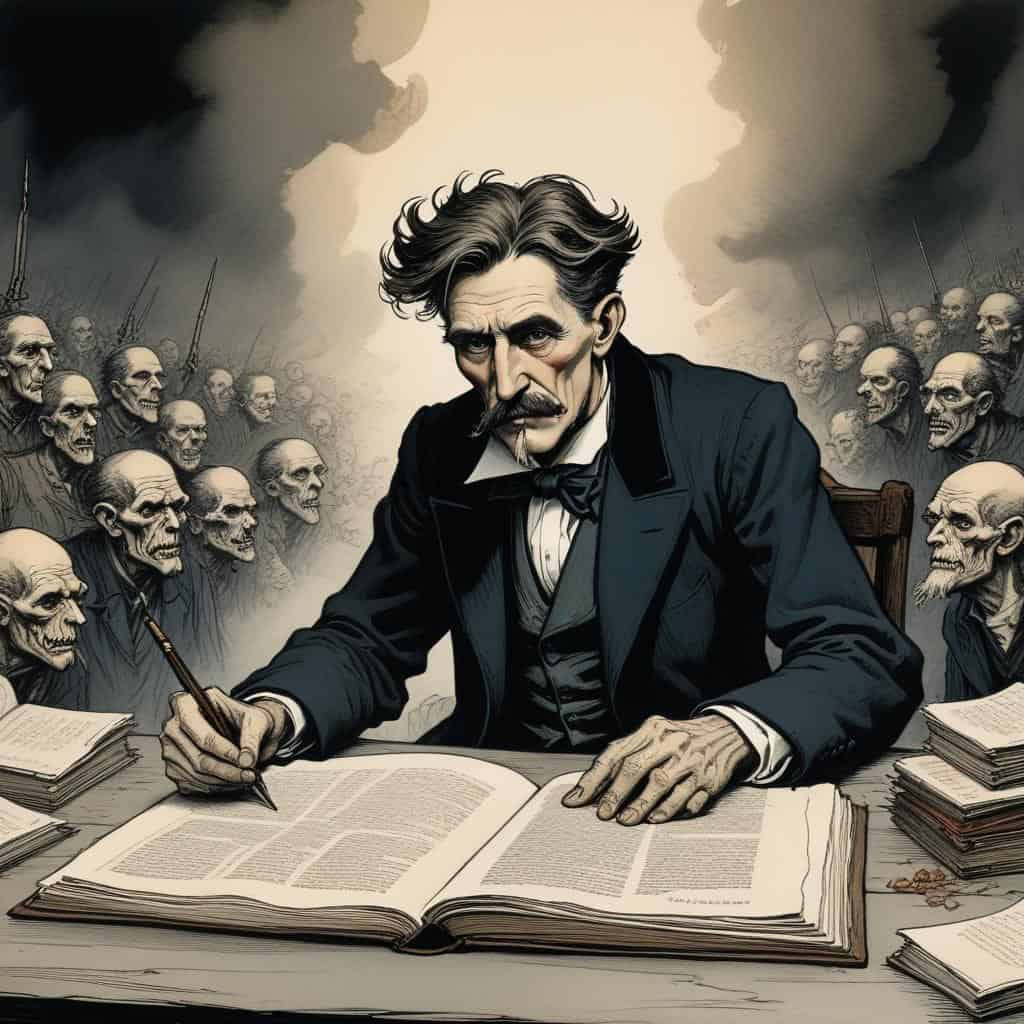
8. Critique of Mass Culture
9. Orwells Vision for the Future
10. Legacy of Inside the Whale
Lesson Details & Resources
In a Nutshell
- What: Collection of essays by George Orwell
- When: Written in the late 1930s and early 1940s
- Who: George Orwell
- Theme: Reflections on political and social issues of the time
List of Characters in Inside the Whale and Other Essays
-
George Orwell
George Orwell is the author of Inside the Whale.
-
Henry Miller
Henry Miller is mentioned in the context of his controversial book 'Tropic of Cancer'.
-
Eliot
Eliot is referenced for his views on the role of literature in society.
-
Graham Greene
Graham Greene is mentioned as a writer who Orwell admires.
-
Evelyn Waugh
Evelyn Waugh is discussed for his satirical novels.
Timeline of Inside the Whale and Other Essays
Orwell describes his experience of being inside a whale while on a fishing trip in the Mediterranean.
He discusses the political and social climate of the 1930s and the rise of fascism.
Orwell analyzes the works of notable writers such as Henry Miller, Salvador Dali, and T. S. Eliot.
He reflects on the challenges of being a writer and the impact of political events on literature.
Orwell recounts his time fighting in the Spanish Civil War and his disillusionment with the communist cause.
He explores the theme of nationalism and its influence on individuals and societies.
Orwell criticizes the British ruling class and their lack of understanding of the working class.
He discusses the decline of the English language and the abuse of political language.
Orwell reflects on the role of literature and the responsibility of writers in society.
He examines the idea of truth and the manipulation of information by those in power.
Vocabulary List
- Totalitarianism
- Orwell explores the dangers of totalitarianism in his essay Inside the Whale.
- Propaganda
- The government uses propaganda to control the population in Orwell's Inside the Whale.
- Dystopia
- Inside the Whale depicts a dystopian society where freedom is restricted.
- Conformity
- The citizens in Inside the Whale are forced to conform to the government's strict rules.
- Censorship
- Censorship plays a major role in controlling information in Inside the Whale.
- Surveillance
- The government uses surveillance to monitor the citizens in Inside the Whale.
- Oppression
- The citizens in Inside the Whale face oppression from the ruling regime.
- Rebellion
- Some characters in Inside the Whale attempt to rebel against the oppressive government.
- Prophecy
- Orwell's Inside the Whale serves as a prophecy of the dangers of totalitarianism.
- Dissent
- Voicing dissent against the government is dangerous in Inside the Whale.
Key Facts
This is the information used in the fact matching game
- - "Inside the Whale and Other Essays" is a collection of essays by George Orwell.
- - The book was first published in 1940.
- - The title essay, "Inside the Whale," discusses the decline of literature during the 1930s.
- - Orwell explores the impact of political events on literary works in the essays.
- - The essays cover a wide range of topics, including literature, politics, and social criticism.
- - Orwell reflects on the Spanish Civil War and its influence on his writing in some essays.
- - The collection also includes essays on notable authors like Charles Dickens and Henry Miller.
- - Orwell discusses the role of propaganda and the manipulation of language in politics.
- - He explores the concept of nationalism and its effects on society.
- - The book critiques the rise of totalitarianism and its dangers.
- - Orwell's writing style is straightforward and accessible, making complex ideas understandable.
- - The essays provide insights into Orwell's own political beliefs and experiences.
- - "Inside the Whale" argues against the view that art should be politically engaged.
- - Orwell examines the nature of power and its abuse in several essays.
- - The collection includes personal anecdotes and reflections on Orwell's life and experiences.
- - Orwell explores the social and economic conditions of the time and their impact on society.
- - The essays often contain Orwell's signature wit and dry humor.
- - Orwell criticizes the British ruling class and their indifference to the working class.
- - The book offers a glimpse into the intellectual climate of the 1930s and 1940s.
- - "Inside the Whale and Other Essays" remains a significant work in Orwell's literary legacy.
Analysis & Significance
Impact on Literature
‘Inside the Whale and Other Essays’ by George Orwell has had a significant impact on literature by challenging traditional forms of storytelling and sparking critical discussions on politics, culture, and society. Orwell’s insightful essays have influenced writers and intellectuals to engage in social commentary and explore the complexities of human nature in their works.
Enduring Themes
The timeless themes explored in ‘Inside the Whale and Other Essays’ still resonate with modern audiences today. Orwell’s reflections on power, truth, and language continue to be relevant in contemporary society, prompting readers to question authority, examine propaganda, and reflect on the nature of freedom and individuality.
Cultural Significance Today
Orwell’s work continues to have a lasting cultural significance, with his essays being studied in academic settings and referenced in popular culture. His ideas on totalitarianism, surveillance, and political manipulation are still cited in discussions on government and media, making ‘Inside the Whale and Other Essays’ a timeless and influential piece of literature that continues to shape our understanding of the world.
Inside the Whale and Other Essays Games


Take Your Learning Offline
Want a convenient, print-ready study guide for this lesson? Become a Memory Wizards Pro member to unlock the downloadable " Memory Scrolls" for this topic and our entire library!
- ✓ Complete Vocabulary Lists
- ✓ Key Facts & Timelines
- ✓ Beautifully Formatted for Print & Mobile