
How Do You Learn Best?
Learn by Reading
Immerse yourself in the 10-minute visual lesson for a comprehensive understanding of the topic.
Learn by Reviewing
Jump directly to the key facts, timeline, and vocabulary lists to build a solid foundation of details.
Learn by Doing
Challenge yourself! Jump straight into the interactive games to learn by trial, error, and discovery.
Down and Out in Paris and London in 10 Minutes

Introduction
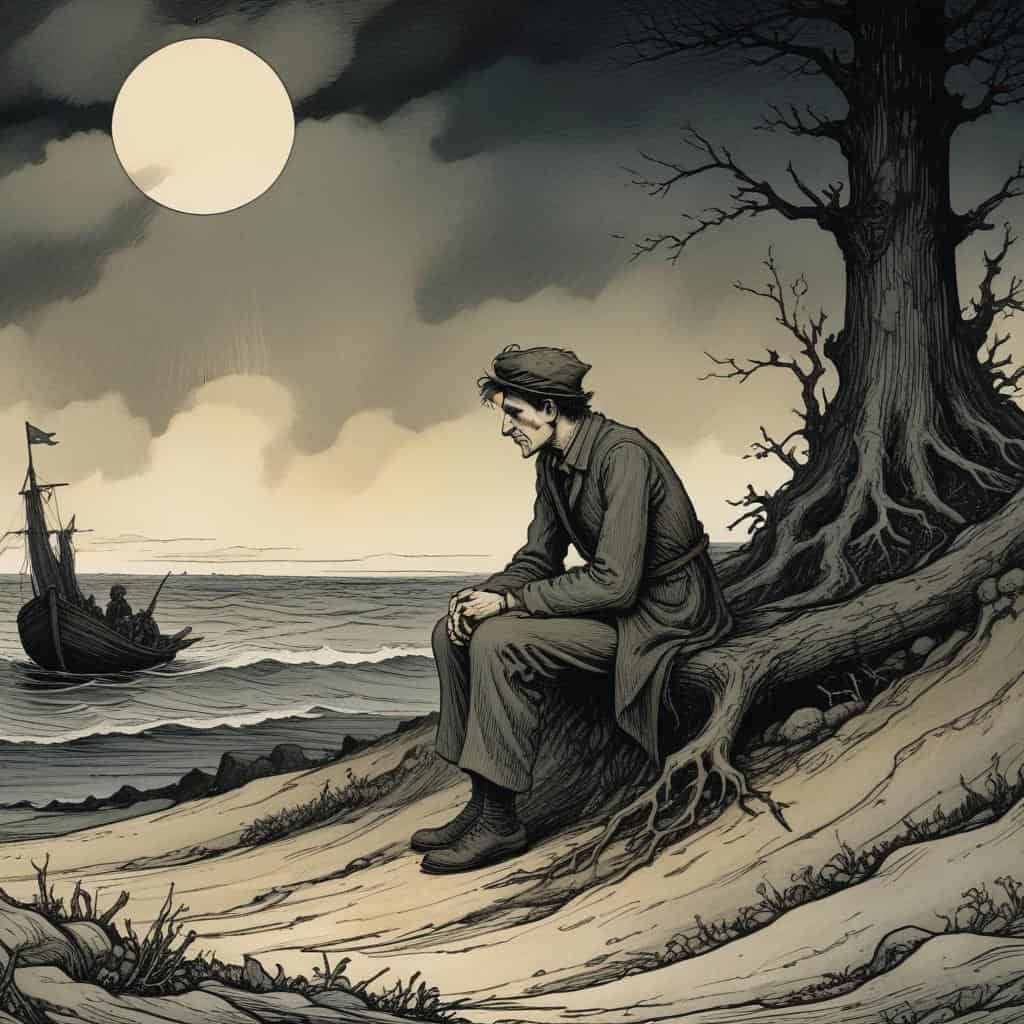


George Orwell

Paddy

Boris

London Tramps

Struggling in Paris
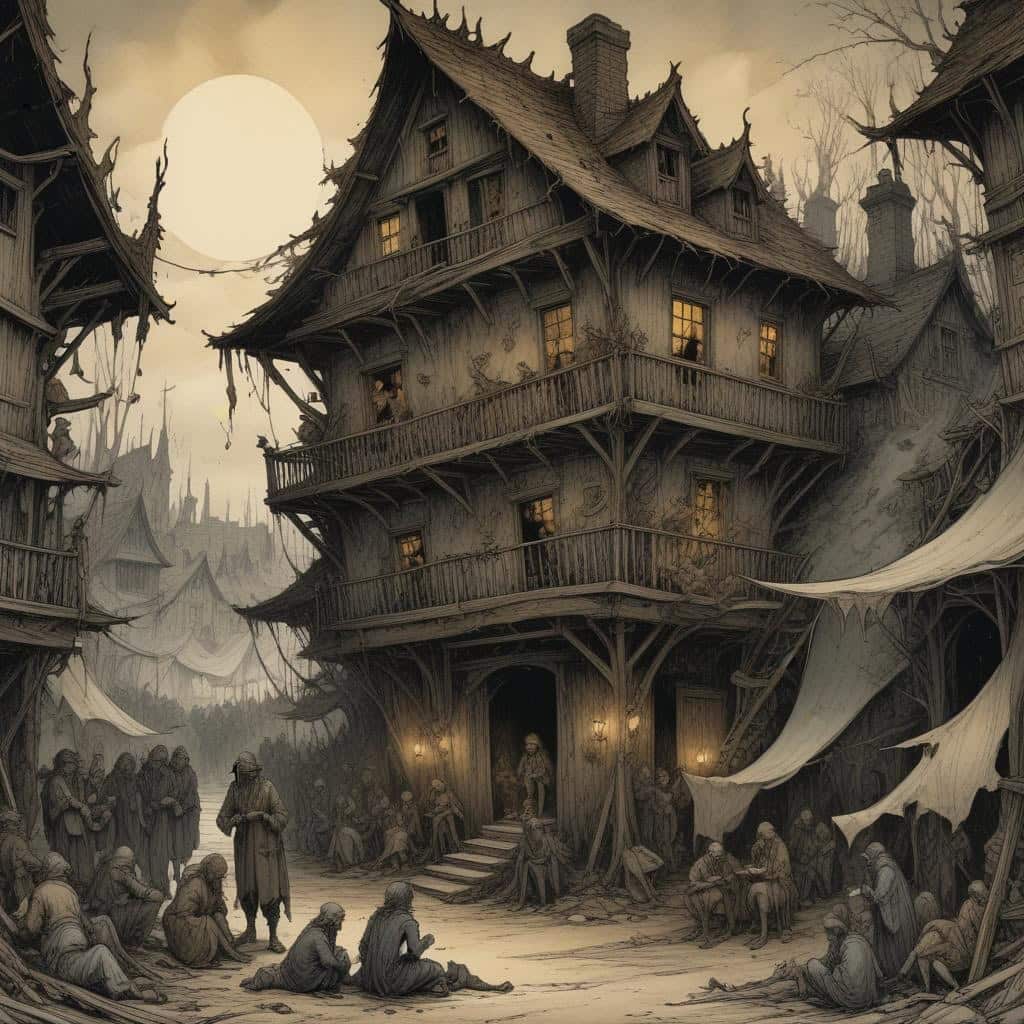
Living in a Flophouse
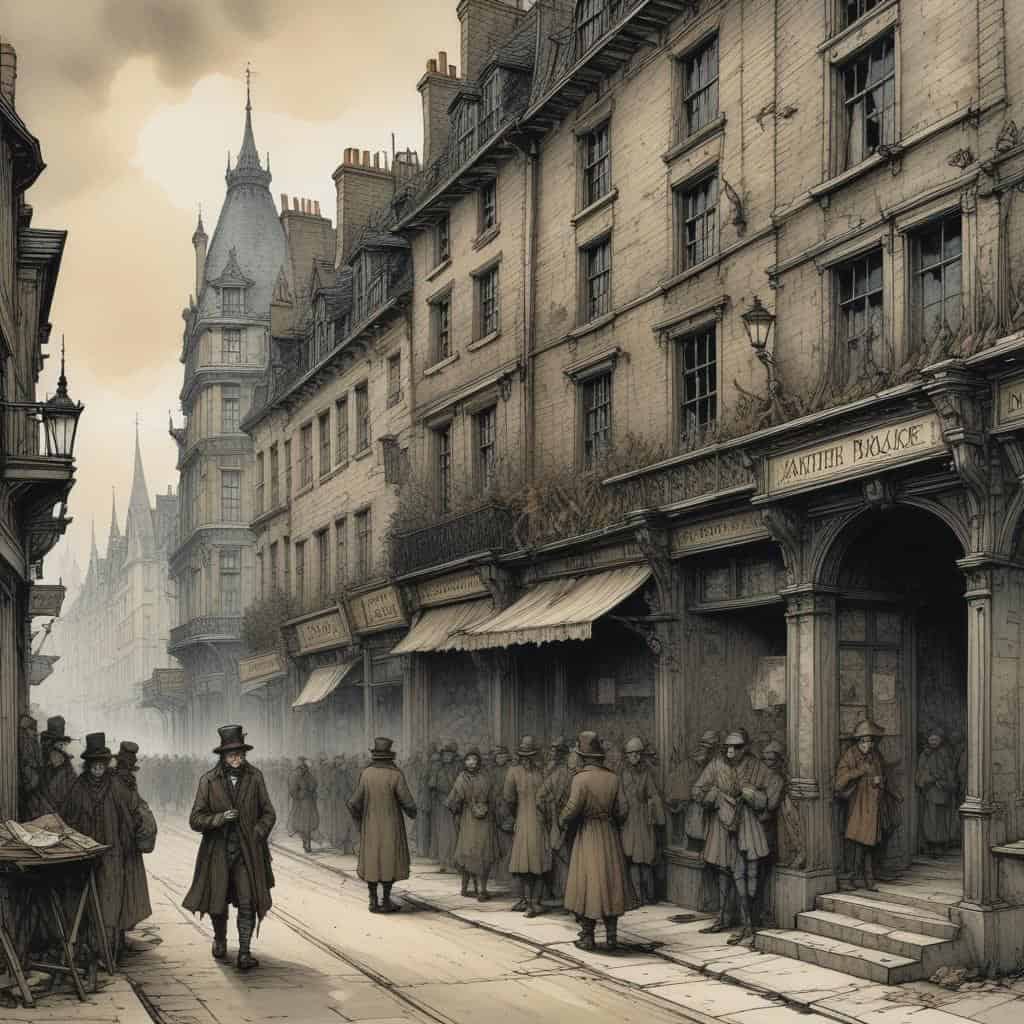
Escape to London

Working in the Kitchen
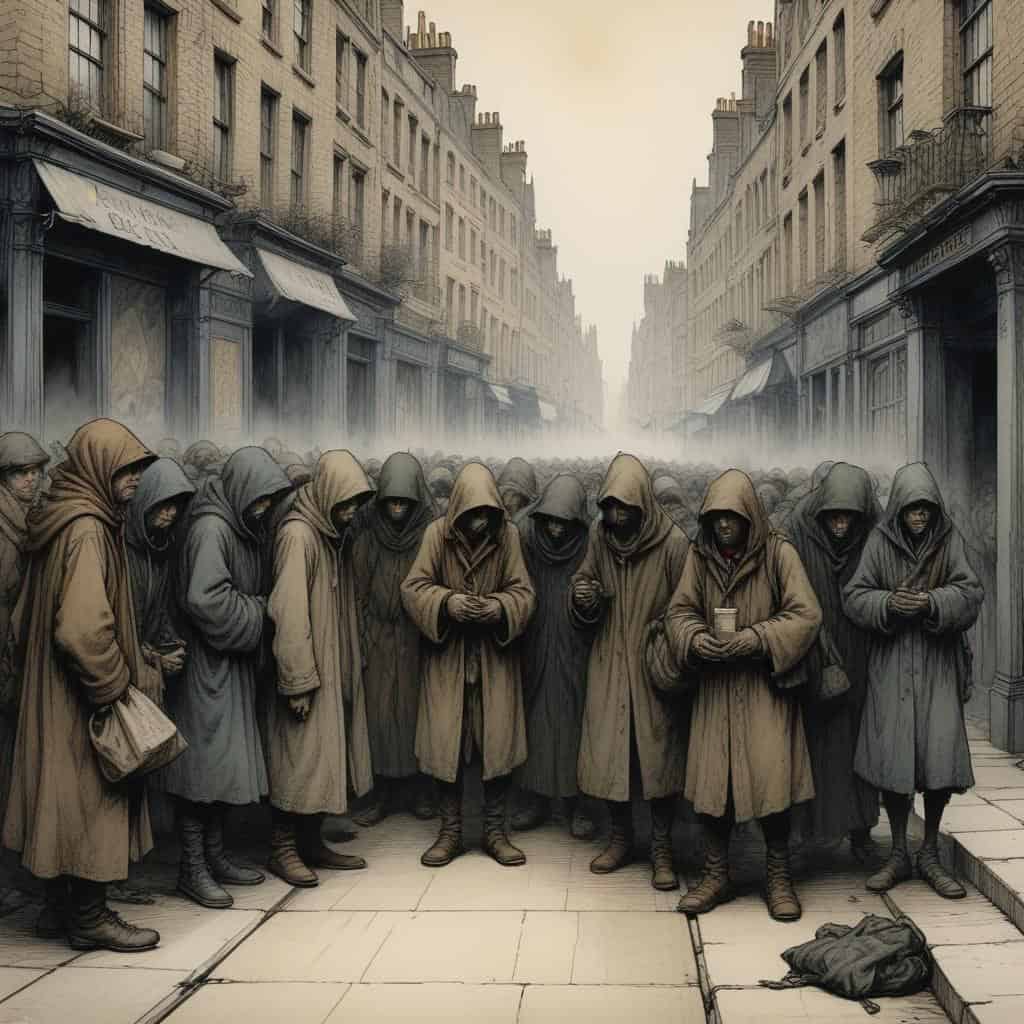
Encountering the Homeless

Reflections on Poverty
Lesson Details & Resources
In a Nutshell
- What: ‘Down and Out in Paris and London’ by George Orwell
- When: Written in the 1930s
- Who: Main characters: George Orwell
- Theme: The exploration of poverty and social inequality in urban settings
List of Characters in Down and Out in Paris and London
-
George Orwell
George Orwell is the author of the book and also a character in the story.
-
Boris
Boris is a Russian waiter who befriends Orwell in Paris.
-
Paddy
Paddy is a young Irish tramp who Orwell meets in London.
-
Bozo
Bozo is a French tramp who Orwell befriends in Paris.
-
Charlie
Charlie is a British ex-soldier who Orwell encounters in London.
-
Anatole
Anatole is a Russian chef who helps Orwell find work in Paris.
Timeline of Down and Out in Paris and London
The narrator, an English writer, moves to Paris and becomes a dishwasher in a hotel.
He experiences the harsh working conditions and low wages of the hotel industry.
The narrator befriends Boris, a Russian waiter, who introduces him to the world of tramps and beggars in Paris.
The narrator loses his job and ends up homeless, living in squalid conditions.
He befriends Paddy, an old tramp, and they begin their journey as beggars in the streets of Paris.
The narrator and Paddy struggle to find shelter and food, often relying on charity or stealing.
They encounter various characters from the tramp community, such as Bozo and Charlie, who teach them survival techniques.
The narrator eventually decides to return to England, hoping for better opportunities.
In London, the narrator stays in a doss house, where he witnesses the poverty and desperation of the residents.
He works as a dishwasher again but faces similar exploitative conditions as in Paris.
The narrator befriends a street peddler named Pat, who explains the hardships faced by the lower classes in London.
He joins a group of London tramps and experiences their daily struggles and survival tactics.
The narrator gets arrested during a police raid on a lodging house and spends time in jail.
After his release, the narrator reflects on the dehumanizing effects of poverty and the stark divide between social classes.
He resolves to write about his experiences and expose the injustices faced by the poor.
The story ends with the narrator determined to fight against the system that keeps people down and out.
Vocabulary List
- Poverty
- The characters in 'Down and Out in Paris and London' struggle with the harsh realities of poverty.
- Homelessness
- The protagonist experiences bouts of homelessness while living in Paris and London.
- Destitution
- The novel explores themes of destitution and the challenges of living on the margins of society.
- Squalor
- The living conditions described in the book are characterized by squalor and decay.
- Desperation
- The characters resort to desperate measures in order to survive in their dire circumstances.
- Degradation
- The protagonist faces various forms of degradation and humiliation as a result of his poverty.
- Resilience
- Despite their struggles, the characters demonstrate resilience and determination in the face of adversity.
Key Facts
This is the information used in the fact matching game
- - The novel was first published in 1933 under the pseudonym George Orwell.
- - It is a semi-autobiographical work based on Orwell's experiences of poverty in Paris and London in the late 1920s.
- - Orwell initially wrote the book in an attempt to earn money, as he was struggling financially at the time.
- - The story follows the protagonist, George, as he lives among destitute and marginalized individuals in both cities.
- - Orwell vividly describes the squalor and harsh living conditions of the poor in Paris and London.
- - The book explores themes of poverty, social inequality, and the dehumanizing effects of capitalism.
- - Orwell worked various menial jobs during his time in both cities, including as a dishwasher, a kitchen porter, and a hotel plongeur (a low-ranking kitchen worker).
- - The novel offers a critique of the exploitative nature of the hotel and restaurant industry.
- - Orwell's experiences in the book are often grim and bleak, depicting the daily struggles and humiliations faced by the impoverished.
- - The author highlights the loss of individual identity and dignity that can result from living in extreme poverty.
- - Orwell also delves into the lives and stories of the people he encountered during his time among the destitute.
- - The book includes vivid descriptions of the characters' hardships, such as hunger, homelessness, and illness.
- - Orwell's writing style in this work is straightforward and journalistic, reflecting his background as a journalist.
- - Down and Out in Paris and London was not initially well-received, but it gained critical acclaim over time.
- - The book is considered an important social commentary and a precursor to Orwell's later works, such as "Animal Farm" and "1984."
- - Orwell's experiences in Paris and London deeply influenced his political beliefs and his commitment to exposing social injustice.
- - The novel offers insights into the class divide and the systemic issues that perpetuate poverty.
- - Orwell's firsthand experiences and empathetic portrayal of the characters make the book a compelling and thought-provoking read.
- - Down and Out in Paris and London remains a significant work in Orwell's literary canon.
- - The book continues to resonate with readers as a powerful critique of societal inequities and a testament to the resilience of the human spirit.
Analysis & Significance
Impact on Literature
‘Down and Out in Paris and London’ by George Orwell is a seminal work in the genre of autobiographical fiction, blending elements of social commentary with personal narrative. Its raw depiction of poverty and societal injustice has influenced countless writers to explore themes of class struggle and inequality in their own works.
Enduring Themes
The timeless themes of poverty, survival, and resilience in ‘Down and Out in Paris and London’ still resonate with modern audiences. Orwell’s vivid portrayal of the struggles faced by the lower class continues to shed light on the harsh realities of poverty and the human spirit’s ability to endure in the face of adversity.
Cultural Significance Today
The legacy of ‘Down and Out in Paris and London’ is evident in its continued relevance to contemporary discussions on poverty and social justice. The book has been adapted into various forms, including stage productions and radio dramas, further cementing its place in literary history and popular culture.
Down and Out in Paris and London Games


Take Your Learning Offline
Want a convenient, print-ready study guide for this lesson? Become a Memory Wizards Pro member to unlock the downloadable " Memory Scrolls" for this topic and our entire library!
- ✓ Complete Vocabulary Lists
- ✓ Key Facts & Timelines
- ✓ Beautifully Formatted for Print & Mobile