
How Do You Learn Best?
Learn by Reading
Immerse yourself in the 10-minute visual lesson for a comprehensive understanding of the topic.
Learn by Reviewing
Jump directly to the key facts, timeline, and vocabulary lists to build a solid foundation of details.
Learn by Doing
Challenge yourself! Jump straight into the interactive games to learn by trial, error, and discovery.
Coming Up for Air in 10 Minutes

Introduction
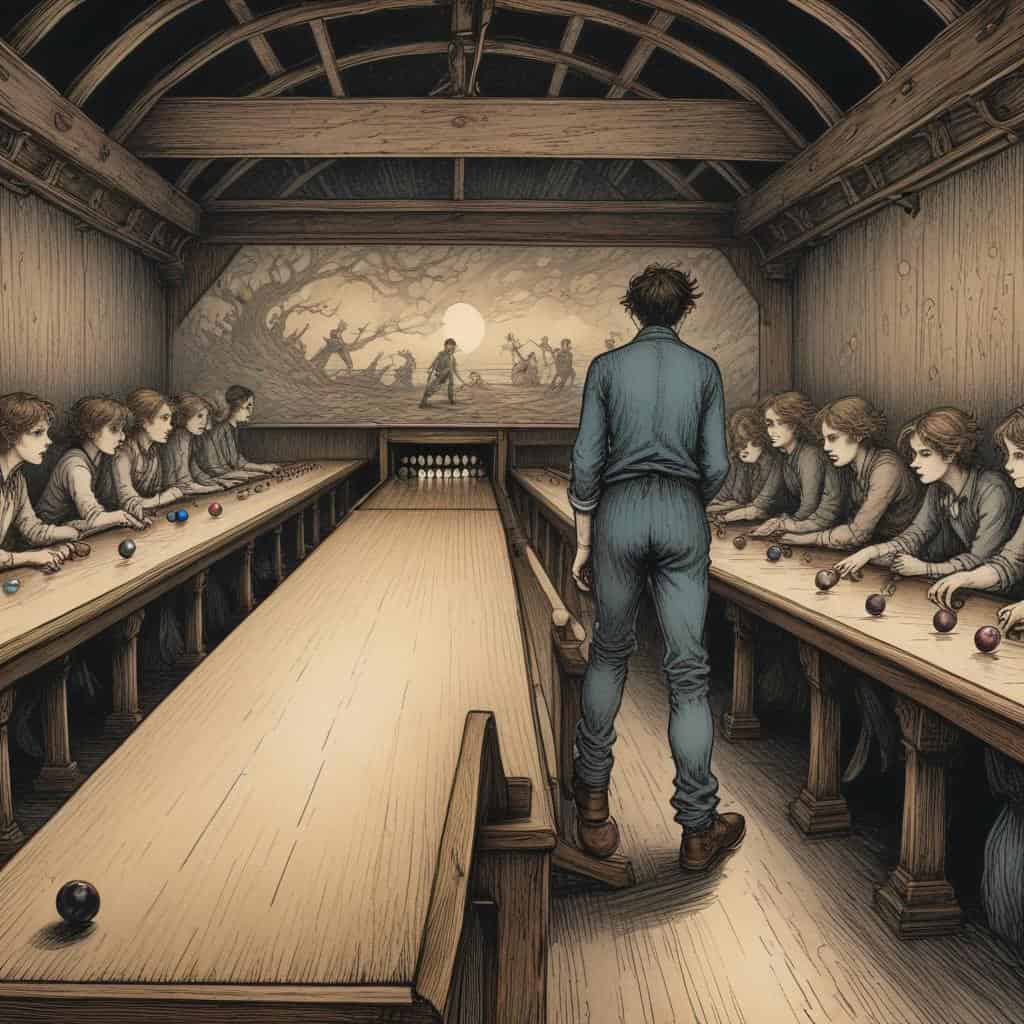


George Bowling

Hilda Bowling

Connie Bowling

Old Porteous

Mr. Creighton
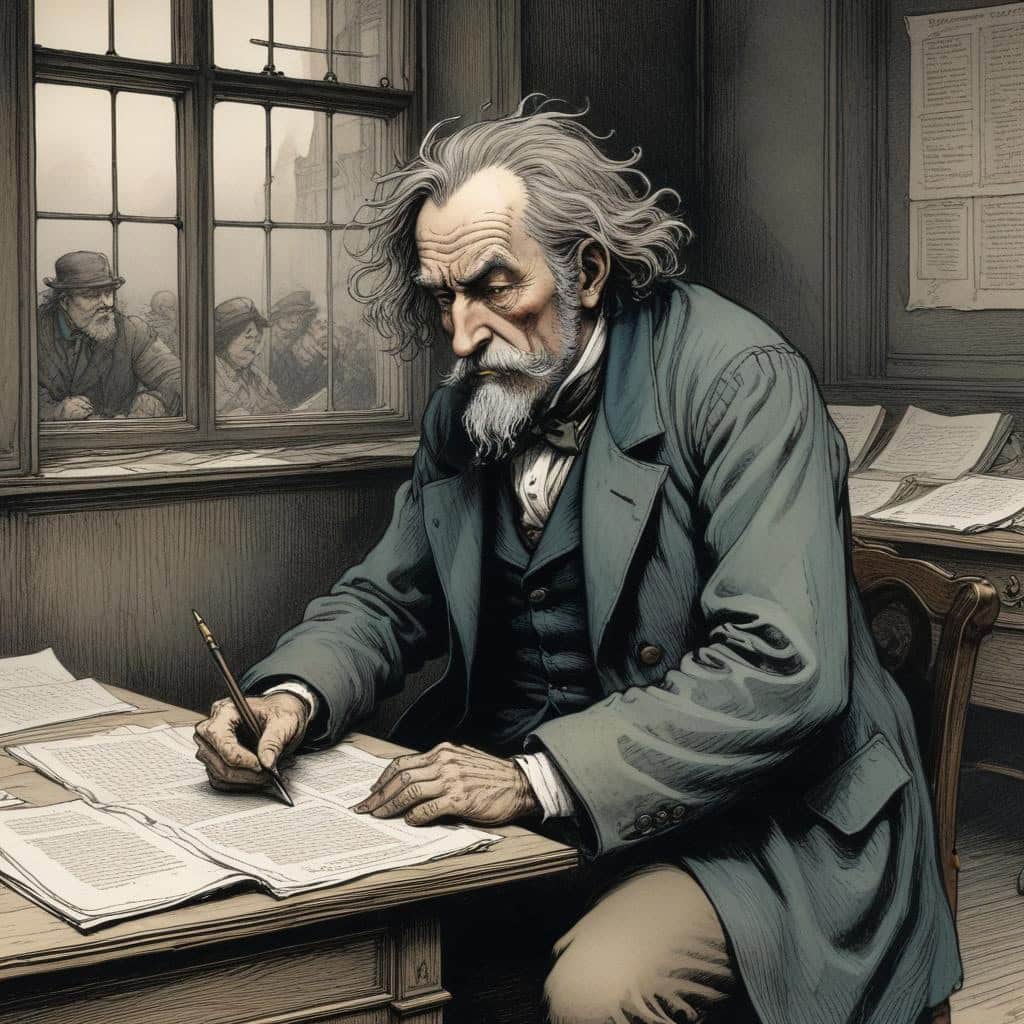
1. Main Character: George Bowling
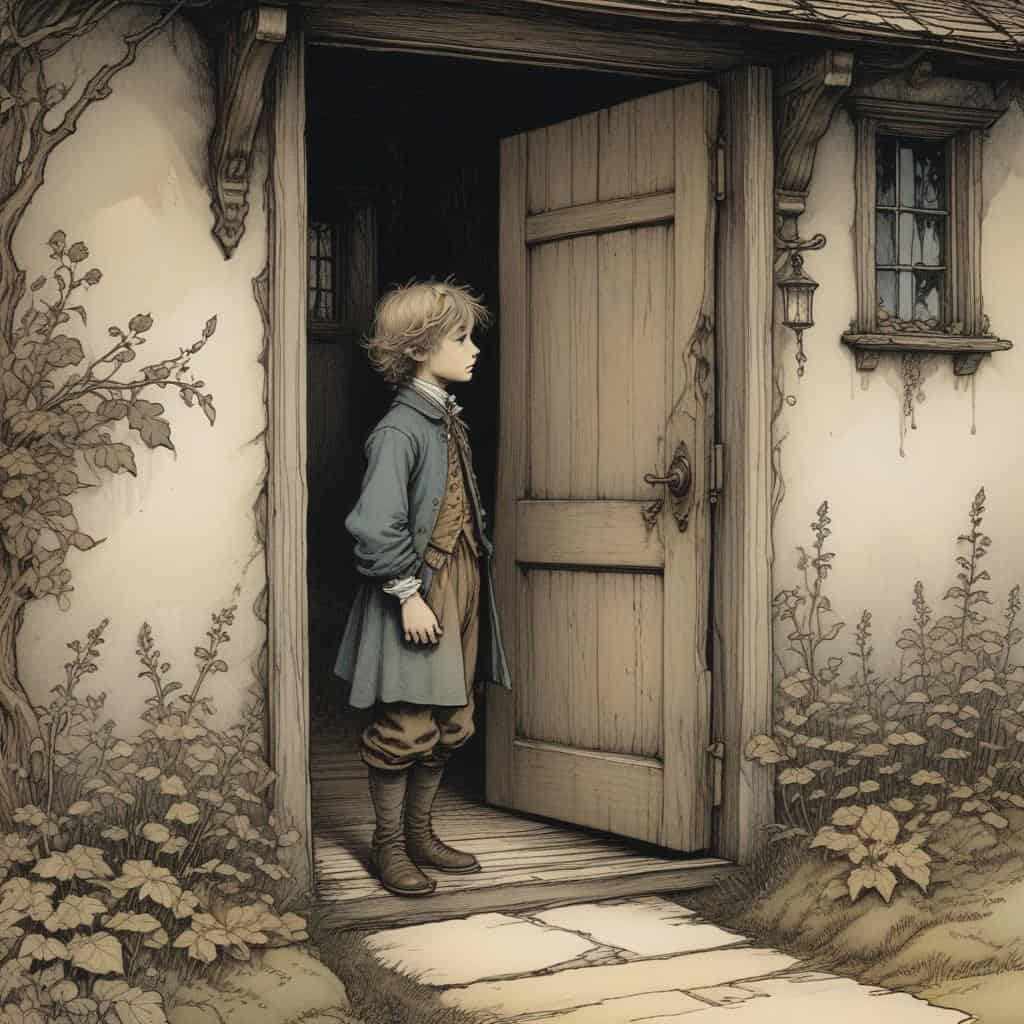
2. Midlife Crisis

3. Revisiting the Past
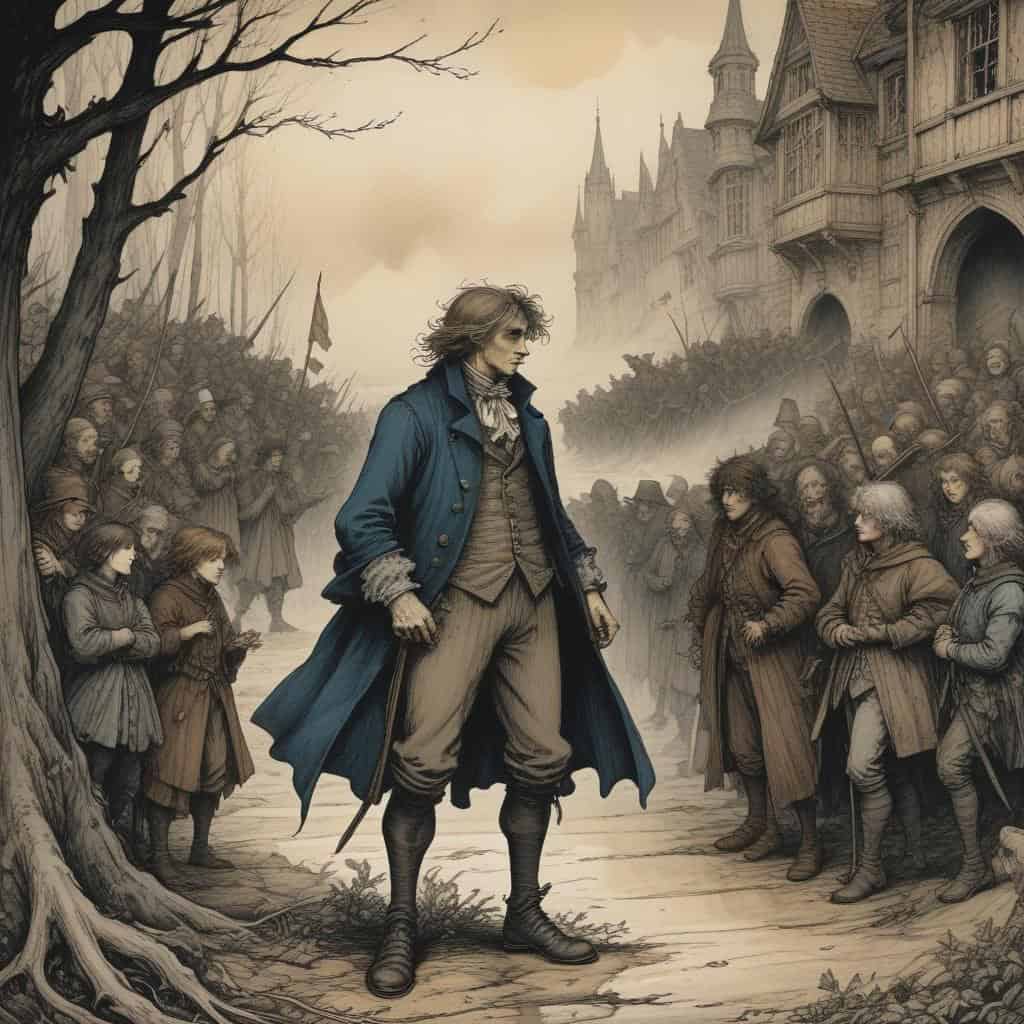
4. Encounters from the Past
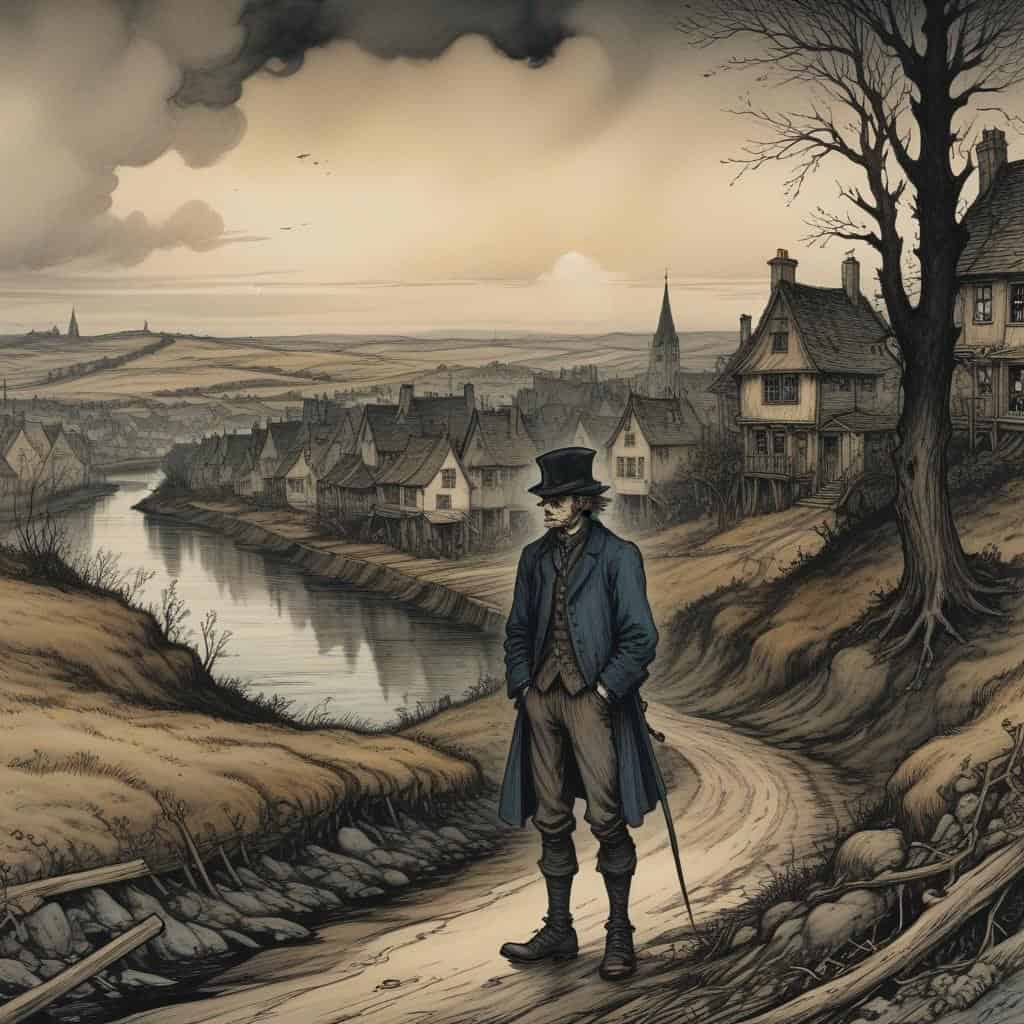
5. Reflection on Society

6. Desire for Escape

7. Temptation of a New Life

8. Reality Check
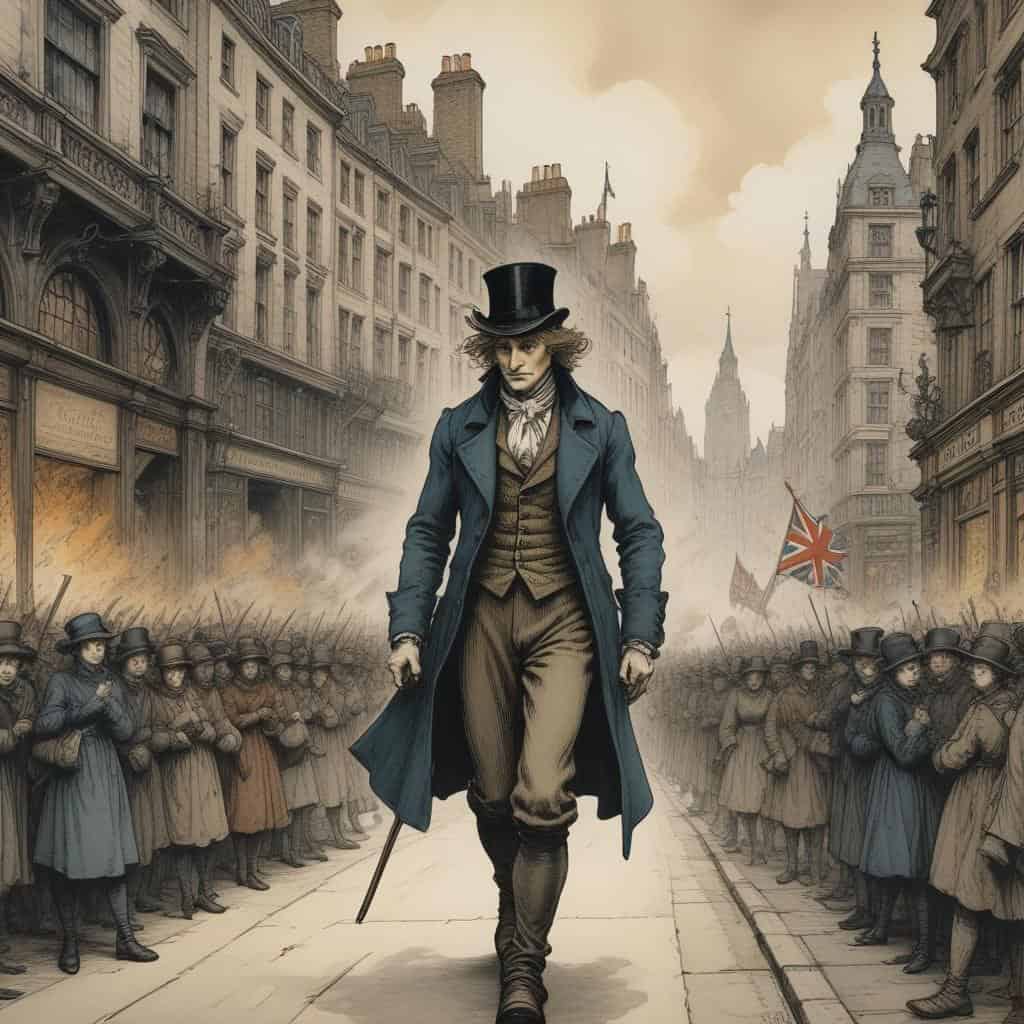
9. Return to Reality

10. Coming Up for Air

Lesson Details & Resources
In a Nutshell
- What: Novel by George Orwell
- When: Written in the 1930s
- Who: George Bowling
- Theme: Nostalgia and the search for lost innocence
List of Characters in Coming Up for Air
-
George Bowling
George Bowling is the main character of the story, a middle-aged man who is dissatisfied with his life and longs for the past.
-
Hilda Bowling
Hilda Bowling is George's wife, who is portrayed as nagging and unsupportive.
-
Connie Bowling
Connie Bowling is George's daughter, a young girl who is growing up in a changing world.
-
Mrs. Welch
Mrs. Welch is George's neighbor, who is portrayed as nosy and judgmental.
-
Ravelston
Ravelston is George's friend, a wealthy socialist who offers George a glimpse of a different way of living.
-
Mr. Cheeseman
Mr. Cheeseman is George's boss, who represents the monotony and mundanity of George's everyday life.
Timeline of Coming Up for Air
The protagonist, George Bowling, reminisces about his childhood and life in the small town of Lower Binfield.
Bowling feels suffocated by his mundane job and monotonous routine in London.
Bowling decides to escape from his urban life and return to Lower Binfield, hoping to relive his past and find a sense of peace and authenticity.
Bowling travels to Lower Binfield and observes the changes that have taken place in the town over the years.
Bowling visits his childhood home and reflects on his past experiences, including his relationships with his family and friends.
Bowling encounters his childhood sweetheart, Elsie, who is now married and has children.
Bowling spends time with his old friend, Old Porteous, and reminisces about their youthful adventures.
Bowling becomes disillusioned as he realizes that Lower Binfield has also succumbed to modernization and lost its charm.
Bowling witnesses the destruction of the local countryside due to industrialization and the expansion of the city.
Bowling's nostalgia is shattered when he is confronted with the reality of his own mortality and the inevitability of change.
Bowling returns to London, feeling defeated and longing for the past that can never be recaptured.
Vocabulary List
- Nostalgia
- The protagonist, George Bowling, experiences nostalgia for his childhood and the simplicity of life in the past.
- Suburban
- The novel is set in a suburban town in England, highlighting the contrast between urban and rural life.
- Innocence
- George reflects on the innocence of his youth and the loss of innocence as he has grown older.
- Escapism
- George's daydreams of escaping his mundane life and responsibilities represent a form of escapism.
- Regret
- George grapples with feelings of regret for the choices he has made in life and wonders if he should have taken a different path.
- Identity
- The novel explores themes of identity as George questions who he has become and whether he is living authentically.
- Conformity
- George struggles with the pressures to conform to societal expectations and desires to break free from the constraints of conformity.
- Alienation
- George feels a sense of alienation from his family, friends, and society as he grapples with his own internal struggles.
- Introspection
- The novel delves into George's introspective thoughts and reflections on his past, present, and future.
- Disillusionment
- George experiences a sense of disillusionment with the world around him, leading him to question his beliefs and values.
Key Facts
This is the information used in the fact matching game
- - The story was written by George Orwell and published in 1939.
- - The protagonist is a middle-aged man named George Bowling.
- - The novel is set in the year 1938, just before the outbreak of World War II.
- - George Bowling works in advertising and is dissatisfied with his monotonous life.
- - He is haunted by memories of his idyllic childhood in the small town of Lower Binfield.
- - George fears the impending destruction of his hometown due to urbanization and modernization.
- - He decides to revisit Lower Binfield to recapture the sense of nostalgia and escape his current life.
- - The novel explores themes of nostalgia, the passage of time, and the loss of traditional values.
- - George encounters old acquaintances and reflects on the changes that have occurred in the town.
- - He reminisces about his former love interest, Hilda, and wonders what happened to her.
- - George becomes disillusioned with his idealized memories of the past, realizing they were flawed.
- - He discovers that Hilda is now married and living a mundane life, much like his own.
- - George's journey becomes a quest for meaning and a realization that he cannot escape the present.
- - The novel also touches on political themes, with George's awareness of the impending war.
- - Orwell's writing style in the novel is characterized by vivid descriptions and introspection.
- - Coming Up for Air is considered one of Orwell's most autobiographical works.
- - The novel received mixed reviews upon its release, but has since gained critical acclaim.
- - Orwell's portrayal of the loss of traditional values resonated with readers during a time of rapid change.
- - The book explores the tension between individual desires and societal expectations.
- - Coming Up for Air serves as a critique of modern society and the loss of personal freedom.
Analysis & Significance
Impact on Literature
‘Coming Up for Air’ by George Orwell is a seminal work that showcases the author’s keen ability to dissect societal norms and values. The novel’s exploration of the loss of innocence and the struggle to reconcile the past with the present has had a lasting impact on the way contemporary literature delves into the complexities of human nature.
Enduring Themes
The themes of nostalgia, disillusionment, and the search for authenticity in ‘Coming Up for Air’ continue to resonate with modern audiences. Orwell’s portrayal of the protagonist’s yearning for a simpler time and the harsh realities of the present still strike a chord with readers grappling with their own sense of identity and belonging in an ever-changing world.
Cultural Significance Today
The legacy of ‘Coming Up for Air’ is evident in its continued relevance in today’s society. The novel’s themes of escapism, conformity, and the impact of industrialization on the individual are still widely discussed and analyzed in both academic and popular culture. The book’s influence can also be seen in various adaptations and references in contemporary art, film, and literature.
Coming Up for Air Games


Take Your Learning Offline
Want a convenient, print-ready study guide for this lesson? Become a Memory Wizards Pro member to unlock the downloadable " Memory Scrolls" for this topic and our entire library!
- ✓ Complete Vocabulary Lists
- ✓ Key Facts & Timelines
- ✓ Beautifully Formatted for Print & Mobile