
The Role Of Virtue In Happiness
What virtues lead the way to true happiness within us?
How Do You Learn Best?
Learn by Reading
Immerse yourself in the 10-minute visual lesson for a comprehensive understanding of the topic.
Learn by Reviewing
Jump directly to the key facts, timeline, and vocabulary lists to build a solid foundation of details.
Learn by Doing
Challenge yourself! Jump straight into the interactive games to learn by trial, error, and discovery.
The Role Of Virtue In Happiness in 10 Minutes

Introduction



Socrates
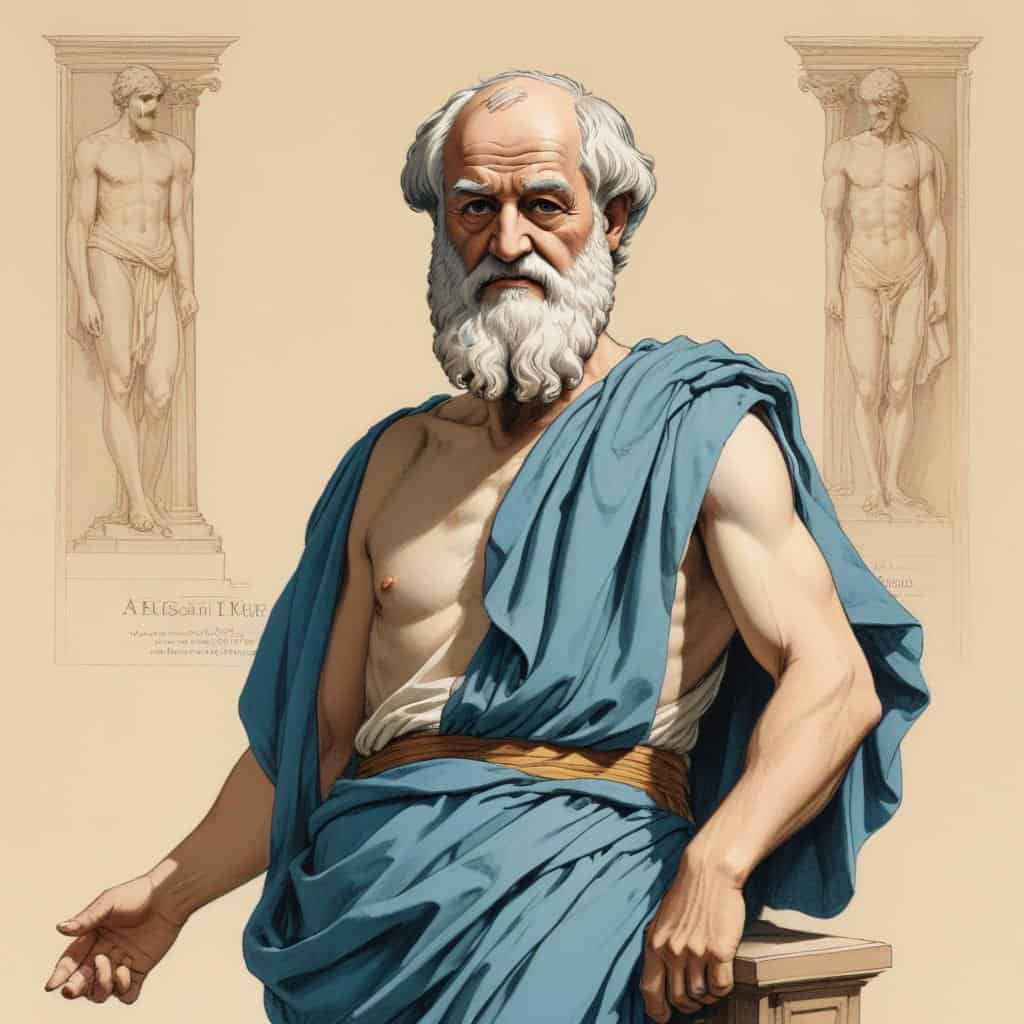
Aristotle

Plato

Epictetus

1. The Foundation of Virtue

2. Aristotles Perspective

3. The Connection Between Virtue and Happiness

4. The Importance of Character

5. The Role of Reason

6. Virtue as a Habit

7. The Contrast with Hedonism

8. The Role of Community

9. The Practice of Virtue

10. The End Goal of Virtue


Lesson Details & Resources
In a Nutshell
- Concept: The Role of Virtue in Happiness
- Thinkers: Aristotle, 4th Century BC
- Central Question: How can virtue lead to a happy and fulfilling life?
- Core Implication: Virtue is essential for achieving true happiness and flourishing as a human being.
Timeline of The Role Of Virtue In Happiness
Aristotle's Nicomachean Ethics introduces the concept of eudaimonia, or flourishing, as the highest good achievable through virtuous living
Plato's Republic discusses the importance of virtue in achieving a just and harmonious society
Epictetus' Discourses emphasizes the role of virtue in achieving inner peace and tranquility
Stoicism emerges as a philosophical school that emphasizes the cultivation of virtue for attaining happiness
Thomas Aquinas integrates Aristotelian ethics with Christian theology, stressing the importance of virtue in leading a moral life
The Enlightenment period sees a revival of interest in virtue ethics, with thinkers like David Hume and Adam Smith exploring the connection between virtue and happiness
Immanuel Kant's Groundwork of the Metaphysics of Morals argues that moral worth is based on the intention to act from duty, rather than the consequences of actions
John Stuart Mill's Utilitarianism challenges traditional virtue ethics by prioritizing the pursuit of happiness as the ultimate goal of moral action
Friedrich Nietzsche critiques traditional notions of virtue and morality, advocating for a personal ethics based on individual will to power
Alasdair MacIntyre's After Virtue calls for a return to Aristotelian virtue ethics as a way to address the moral confusion of modern society
Martha Nussbaum's The Fragility of Goodness explores the relationship between virtue and vulnerability in achieving a meaningful life
Philippa Foot and Elizabeth Anscombe contribute to the revival of virtue ethics in the 20th century, challenging the dominance of consequentialist and deontological ethical theories
The Positive Psychology movement, led by Martin Seligman, emphasizes the importance of virtues like gratitude, kindness, and resilience in promoting well-being and happiness
Vocabulary List
- Virtue
- Virtue is often seen as an essential component of achieving happiness in philosophy.
- Happiness
- Many philosophers argue that true happiness can only be achieved through the practice of virtue.
- Ethics
- Ethics plays a crucial role in determining what virtues are necessary for achieving happiness.
- Eudaimonia
- In ancient Greek philosophy, eudaimonia is considered the ultimate goal of human life, achieved through virtuous living.
- Aristotle
- Aristotle's Nicomachean Ethics is a key text in understanding the role of virtue in happiness in philosophy.
Key Facts
This is the information used in the fact matching game
- Virtue is seen as essential for achieving happiness in philosophy.
- The concept of eudaimonia, or flourishing, is central to understanding the relationship between virtue and happiness in philosophy.
- Virtue ethics emphasizes the importance of moral character in achieving happiness.
- According to Aristotle, virtue is a means to achieve eudaimonia, or human flourishing.
- Virtue is often defined as a trait or quality that is deemed morally good.
- In philosophy, happiness is often viewed as the ultimate end that virtuous actions aim to achieve.
- Virtue is believed to be necessary for living a fulfilling and meaningful life.
- The Stoics believed that virtue is the only true good and that it leads to a life of tranquility and happiness.
- According to Kant, virtue is acting in accordance with moral duty, which ultimately leads to happiness.
- Virtue is often contrasted with vice, which is seen as leading to unhappiness and moral degradation.
- Plato believed that virtue is knowledge and that ignorance is the root of vice.
- In the Nicomachean Ethics, Aristotle discusses the importance of virtuous actions in achieving happiness.
- The role of virtue in happiness philosophy is often debated among different philosophical schools.
- Virtue is often seen as a means to achieving a state of well-being and contentment.
- Happiness in philosophy is not simply a state of pleasure, but a state of overall well-being and fulfillment that is closely tied to virtue.
- The concept of the golden mean, or finding a balance between extremes, is important in understanding the role of virtue in achieving happiness.
- Virtuous actions are often seen as contributing to the greater good and the well-being of society as a whole.
- The role of virtue in happiness philosophy is not just about personal fulfillment, but also about living a morally good and virtuous life.
- The relationship between virtue and happiness is complex and varies among different philosophical traditions and thinkers.
- Virtue is often seen as a necessary condition for achieving lasting happiness and well-being in life.
Analysis & Significance
The Core Argument
The core argument behind the role of virtue in happiness is rooted in the idea that living a virtuous life leads to a more fulfilling and meaningful existence. Philosophers like Aristotle have argued that cultivating virtues such as courage, wisdom, and justice not only leads to personal excellence but also contributes to overall well-being and happiness.
Criticisms and Counterarguments
Some critics argue that the pursuit of virtue can be impractical or idealistic in the face of real-world challenges and temptations. Others question whether virtue alone can guarantee happiness, pointing to examples of virtuous individuals who still experience suffering or adversity. Additionally, there are debates about what constitutes virtue and whether it is culturally relative.
Modern Relevance
In today’s society, the concept of virtue and its connection to happiness remains relevant in discussions about ethics, character development, and personal fulfillment. The emphasis on cultivating virtues like honesty, compassion, and integrity can be seen in various fields such as business ethics, leadership development, and mental health. The idea that living a virtuous life is essential for individual well-being continues to shape ethical debates and personal choices in the modern world.
The Role Of Virtue In Happiness Games


Take Your Learning Offline
Want a convenient, print-ready study guide for this lesson? Become a Memory Wizards Pro member to unlock the downloadable " Memory Scrolls" for this topic and our entire library!
- ✓ Complete Vocabulary Lists
- ✓ Key Facts & Timelines
- ✓ Beautifully Formatted for Print & Mobile