
Epicureanism And Pleasure
Can true happiness be found in the pursuit of pleasure?
How Do You Learn Best?
Learn by Reading
Immerse yourself in the 10-minute visual lesson for a comprehensive understanding of the topic.
Learn by Reviewing
Jump directly to the key facts, timeline, and vocabulary lists to build a solid foundation of details.
Learn by Doing
Challenge yourself! Jump straight into the interactive games to learn by trial, error, and discovery.
Epicureanism And Pleasure in 10 Minutes

Introduction

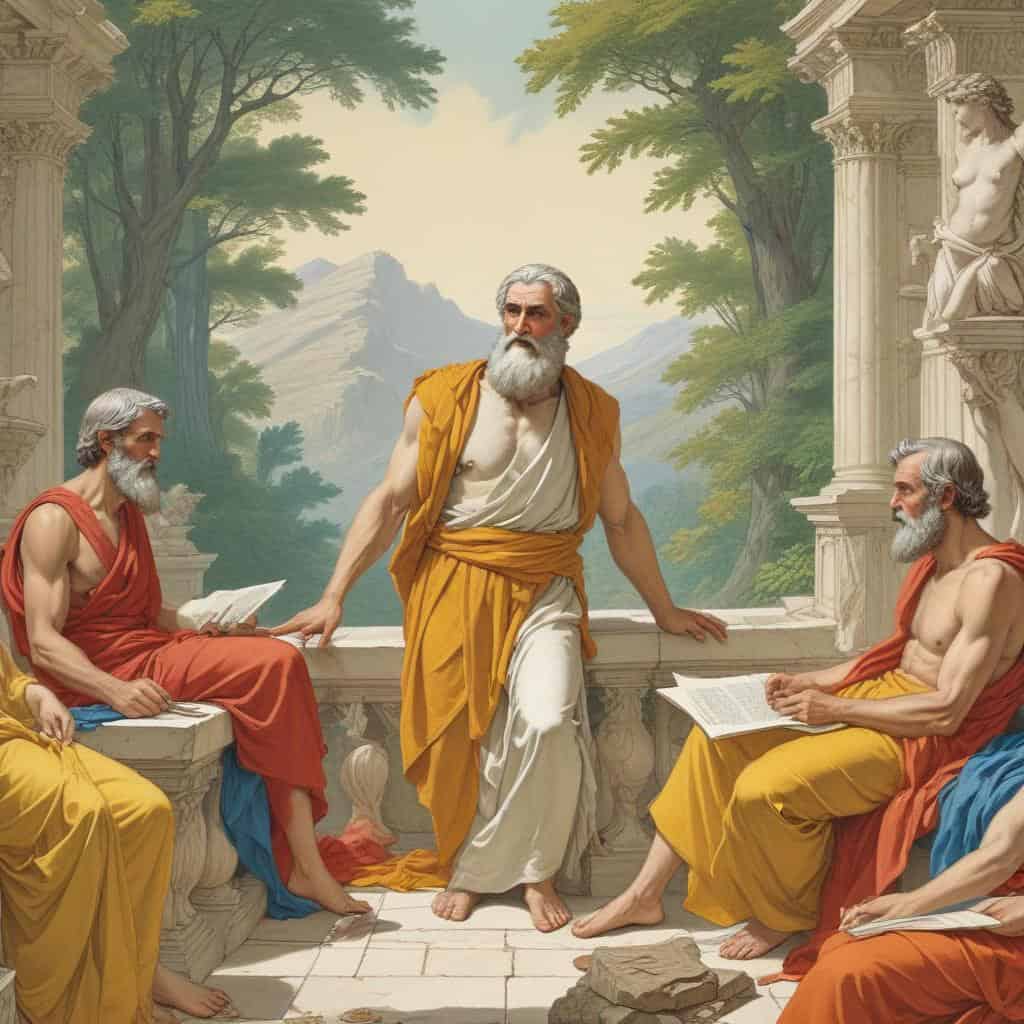

Aristippus of Cyrene

Epicurus

John Stuart Mill

Sigmund Freud

The Ancient Roots

The Stoic Perspective

The Utilitarian Theory

The Modern Debate

The Psychological Perspective

The Ethical Dilemma

The Cultural Influence

The Intersection with Religion

The Personal Journey


Lesson Details & Resources
In a Nutshell
- Concept: A philosophical school of thought that emphasizes the pursuit of pleasure and the avoidance of pain as the highest good.
- Thinkers: Epicurus, 4th-3rd Century BCE
- Central Question: How can we achieve a life of tranquility and happiness?
- Core Implication: The key to a fulfilling life is to seek simple pleasures and avoid unnecessary desires that lead to pain and anxiety.
Timeline of Epicureanism And Pleasure
Vocabulary List
- Hedonism
- Some philosophers argue that hedonism leads to a shallow and unfulfilling life, as the pursuit of pleasure can be fleeting and short-lived.
- Eudaimonia
- Aristotle believed that achieving eudaimonia required living a virtuous life rather than simply seeking pleasure.
- Utilitarianism
- Utilitarianism is often criticized for reducing ethics to a simple calculation of pleasure and pain, neglecting other moral considerations.
- Pleasure Principle
- Freud's pleasure principle is often seen as a basic motivator for human behavior, influencing our choices and actions.
- Epicureanism
- Epicureanism advocates for a simple and modest life in order to achieve a state of ataraxia, or freedom from disturbance.
Key Facts
This is the information used in the fact matching game
- The pursuit of pleasure is a central theme in ancient Greek philosophy, particularly in the works of Epicurus and the Cyrenaics.
- Epicurus believed that pleasure was the highest good and the ultimate goal of life.
- The Cyrenaics, on the other hand, believed that pleasure was the only intrinsic good and that it should be pursued at all costs.
- In modern philosophy, utilitarianism is a theory that advocates for the pursuit of pleasure and the minimization of pain as the basis for ethical decision-making.
- The pursuit of pleasure is often contrasted with the pursuit of virtue in philosophical discussions.
- Some philosophers argue that the pursuit of pleasure can lead to a shallow and hedonistic life, devoid of meaning and purpose.
- Others believe that pleasure can be a valuable guide in life, helping individuals make decisions that lead to greater happiness and fulfillment.
- The pursuit of pleasure is often associated with the concept of hedonism, which emphasizes the importance of pleasure and the avoidance of pain.
- The hedonistic calculus is a method for determining the moral worth of an action by calculating the amount of pleasure it produces.
- The pursuit of pleasure is a common theme in literature, art, and popular culture, reflecting its enduring appeal to human beings.
- Some philosophers argue that the pursuit of pleasure can lead to a self-centered and narcissistic outlook on life, prioritizing one's own happiness above all else.
- Others believe that the pursuit of pleasure can be a means of self-discovery and personal growth, leading to a deeper understanding of oneself and the world.
- The pursuit of pleasure is often intertwined with the pursuit of happiness, as pleasure is seen as a key component of a fulfilling and meaningful life.
- Some philosophers argue that the pursuit of pleasure should be balanced with other values, such as virtue, wisdom, and justice, in order to lead a truly good life.
- The pursuit of pleasure can take many forms, including sensory pleasures, intellectual pleasures, emotional pleasures, and social pleasures.
- Some philosophers argue that the pursuit of pleasure should be tempered by reason and moderation to avoid excess and harm.
- The pursuit of pleasure is often depicted as a fundamental human drive, motivating individuals to seek out experiences that bring them joy and satisfaction.
- The pursuit of pleasure is a complex and multifaceted concept that has been explored by philosophers from various schools of thought throughout history.
- Some philosophers argue that the pursuit of pleasure is a natural and instinctual human impulse that should be embraced and celebrated.
- Others believe that the pursuit of pleasure should be approached with caution and discernment, as it can sometimes lead to negative consequences and harm.
Analysis & Significance
The Core Argument
Epicureanism, as a philosophical concept, emphasizes the pursuit of pleasure and the avoidance of pain as the highest good in life. It suggests that by seeking simple pleasures and tranquility, individuals can achieve a state of contentment and happiness.
Criticisms and Counterarguments
Critics argue that Epicureanism’s focus on pleasure may lead to hedonism and a disregard for moral values. They question whether a life solely dedicated to pleasure-seeking can lead to true fulfillment and ethical growth. Additionally, some philosophers contend that the pursuit of pleasure may overlook the importance of virtues and personal development.
Modern Relevance
In today’s fast-paced and consumer-driven society, the principles of Epicureanism can offer valuable insights on how to navigate the complexities of modern life. By encouraging individuals to prioritize mental well-being and cultivate meaningful relationships, Epicureanism can serve as a reminder to focus on what truly brings joy and satisfaction, rather than getting caught up in materialistic pursuits. It also prompts reflection on the balance between hedonistic pleasures and long-term fulfillment in the pursuit of happiness.
Epicureanism And Pleasure Games


Take Your Learning Offline
Want a convenient, print-ready study guide for this lesson? Become a Memory Wizards Pro member to unlock the downloadable " Memory Scrolls" for this topic and our entire library!
- ✓ Complete Vocabulary Lists
- ✓ Key Facts & Timelines
- ✓ Beautifully Formatted for Print & Mobile