
Summary of Second Battle of Worcester (1651)
Uncover the secrets of the Second Battle of Worcester (1651)
How Do You Learn Best?
Learn by Reading
Immerse yourself in the 10-minute visual lesson for a comprehensive understanding of the topic.
Learn by Reviewing
Jump directly to the key facts, timeline, and vocabulary lists to build a solid foundation of details.
Learn by Doing
Challenge yourself! Jump straight into the interactive games to learn by trial, error, and discovery.
Second Battle of Worcester in 10 Minutes
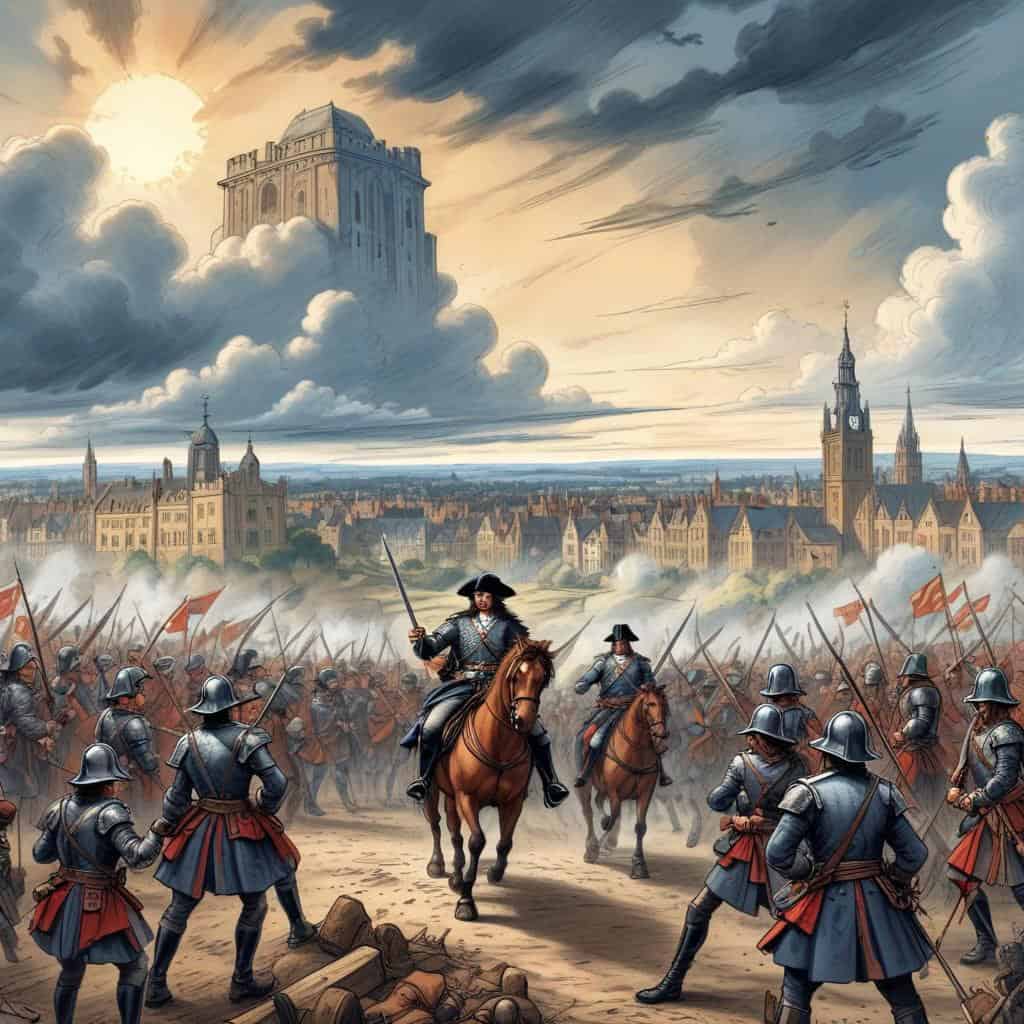
Introduction

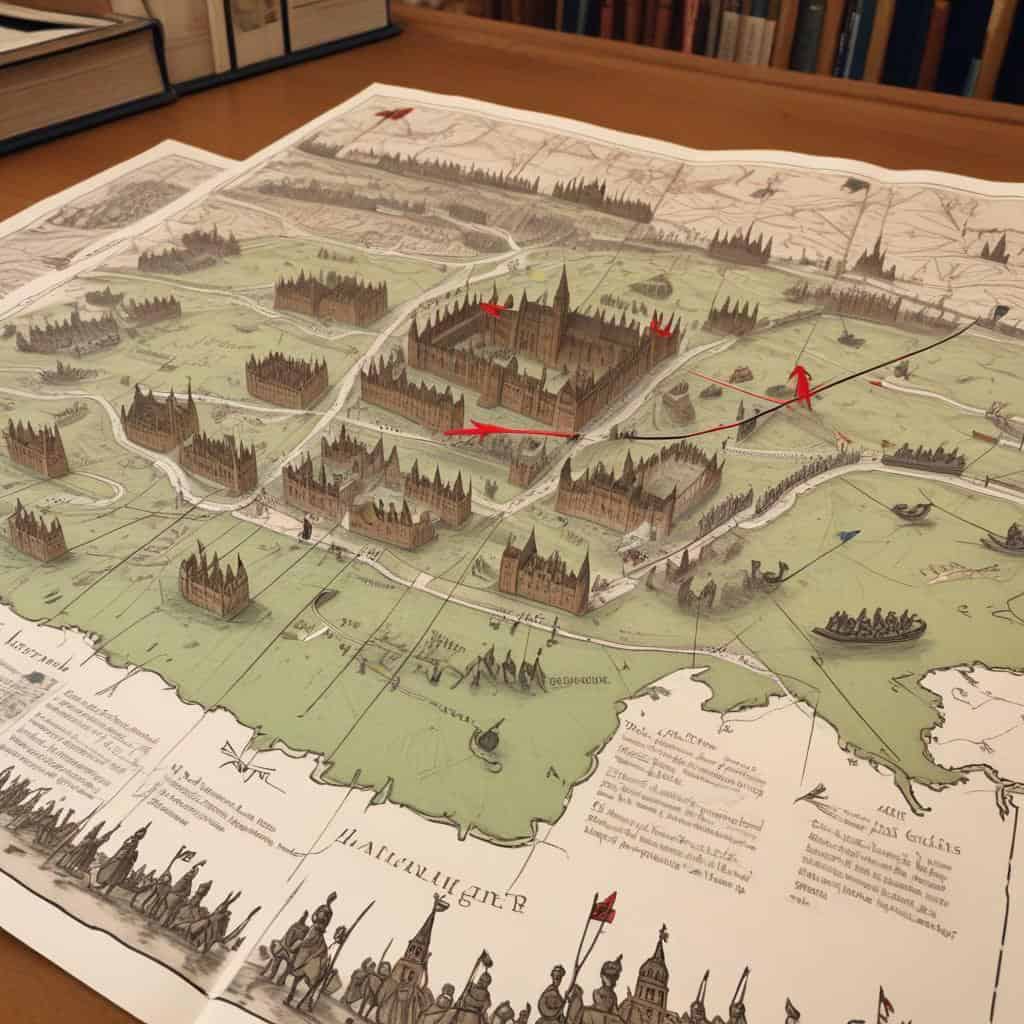
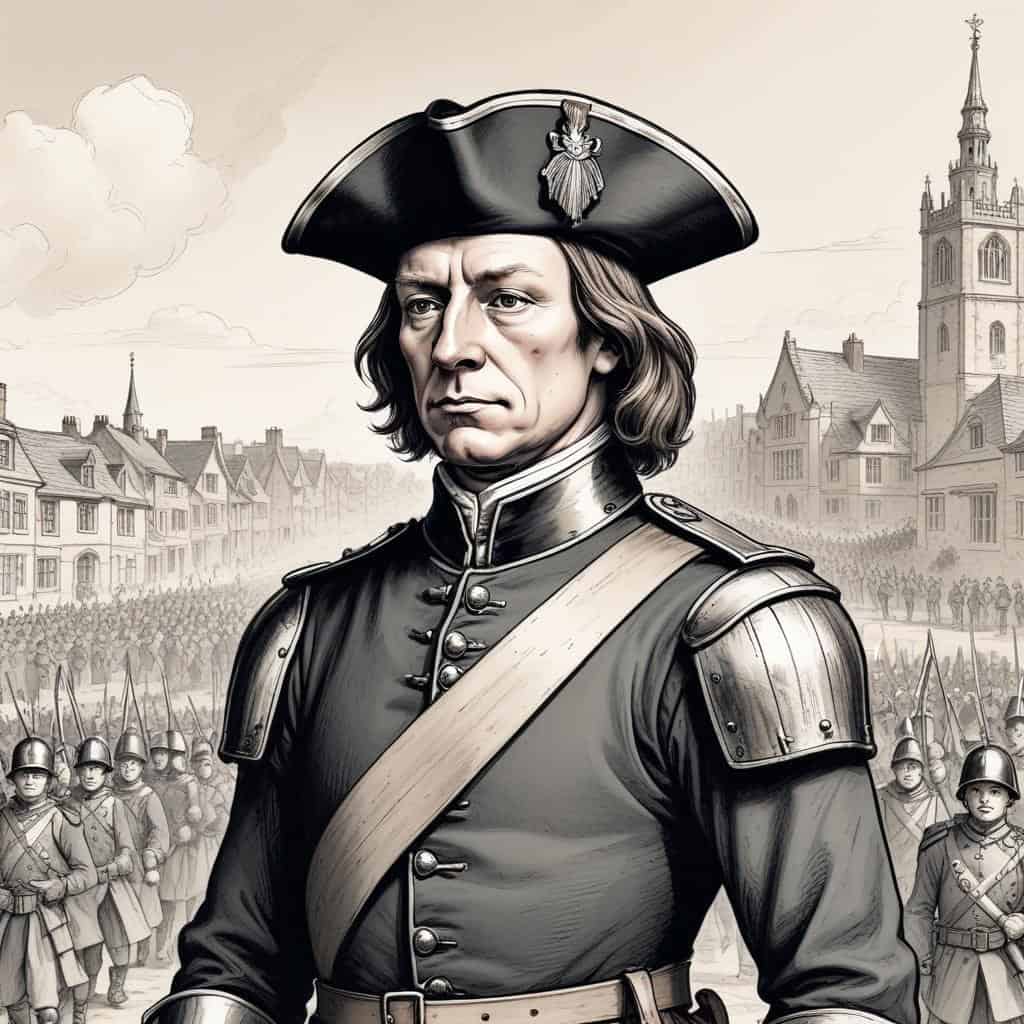
Oliver Cromwell
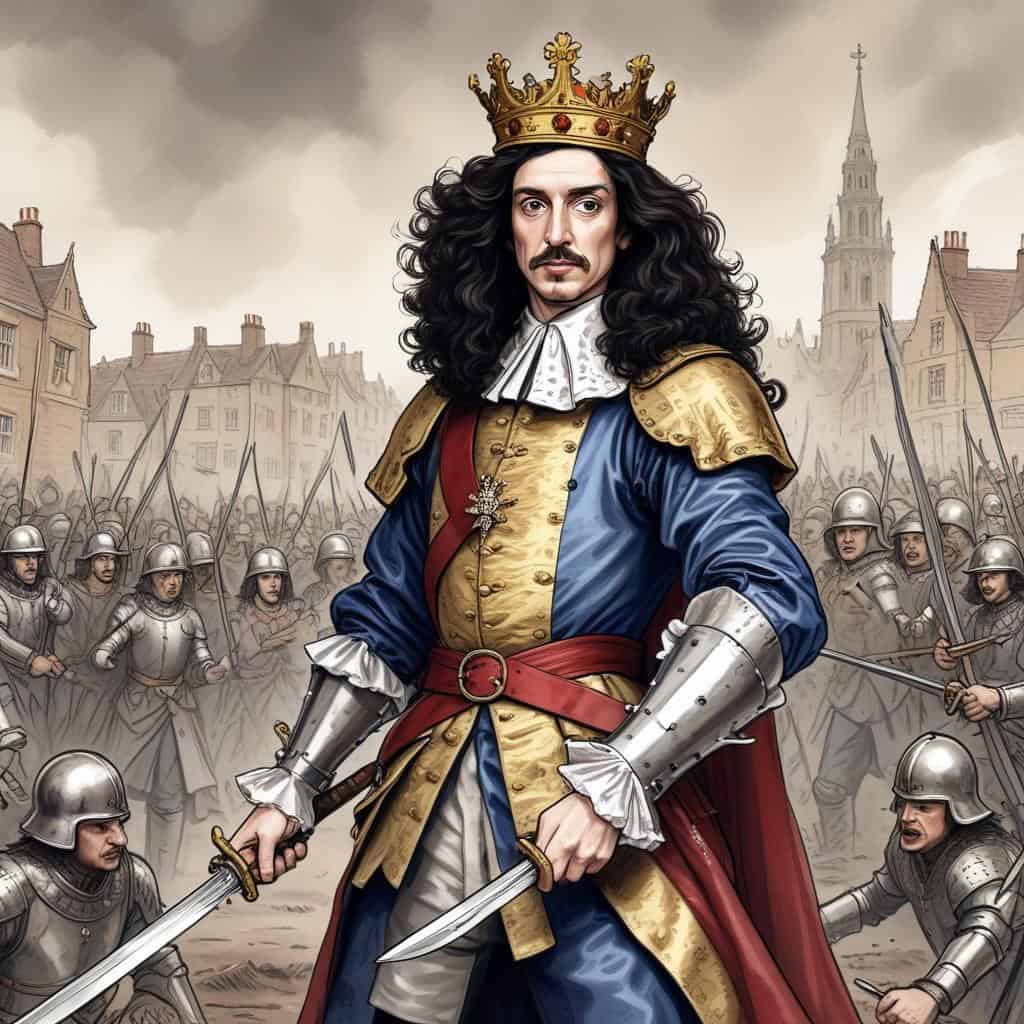
Charles II
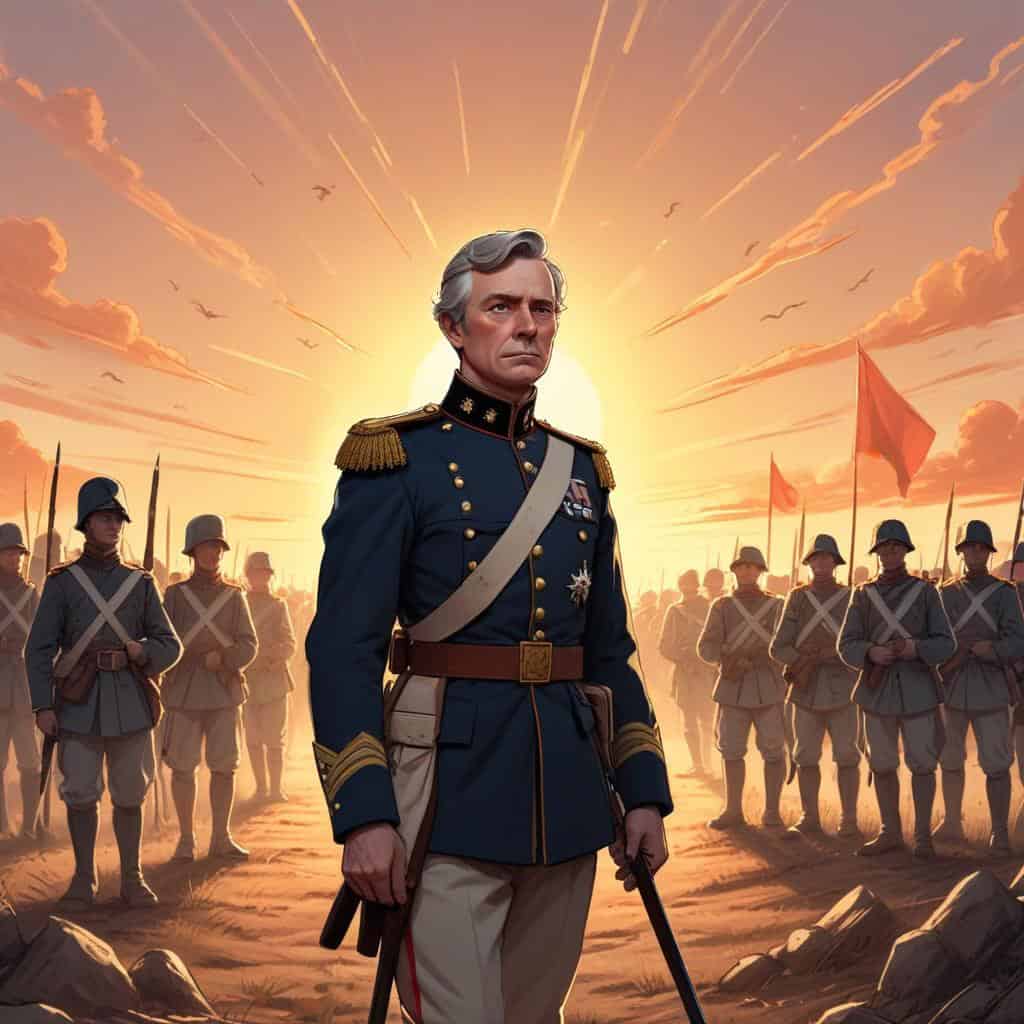
John Lambert
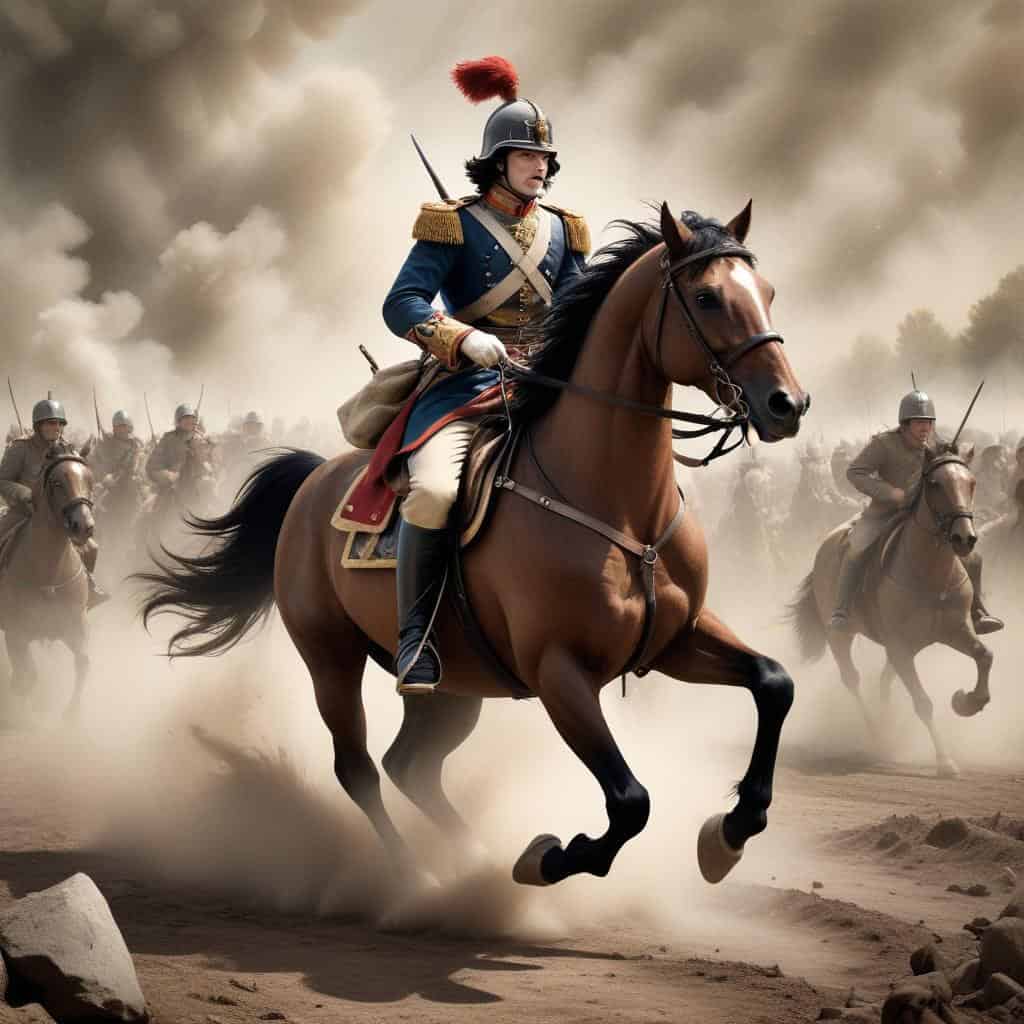
Prince Rupert of the Rhine
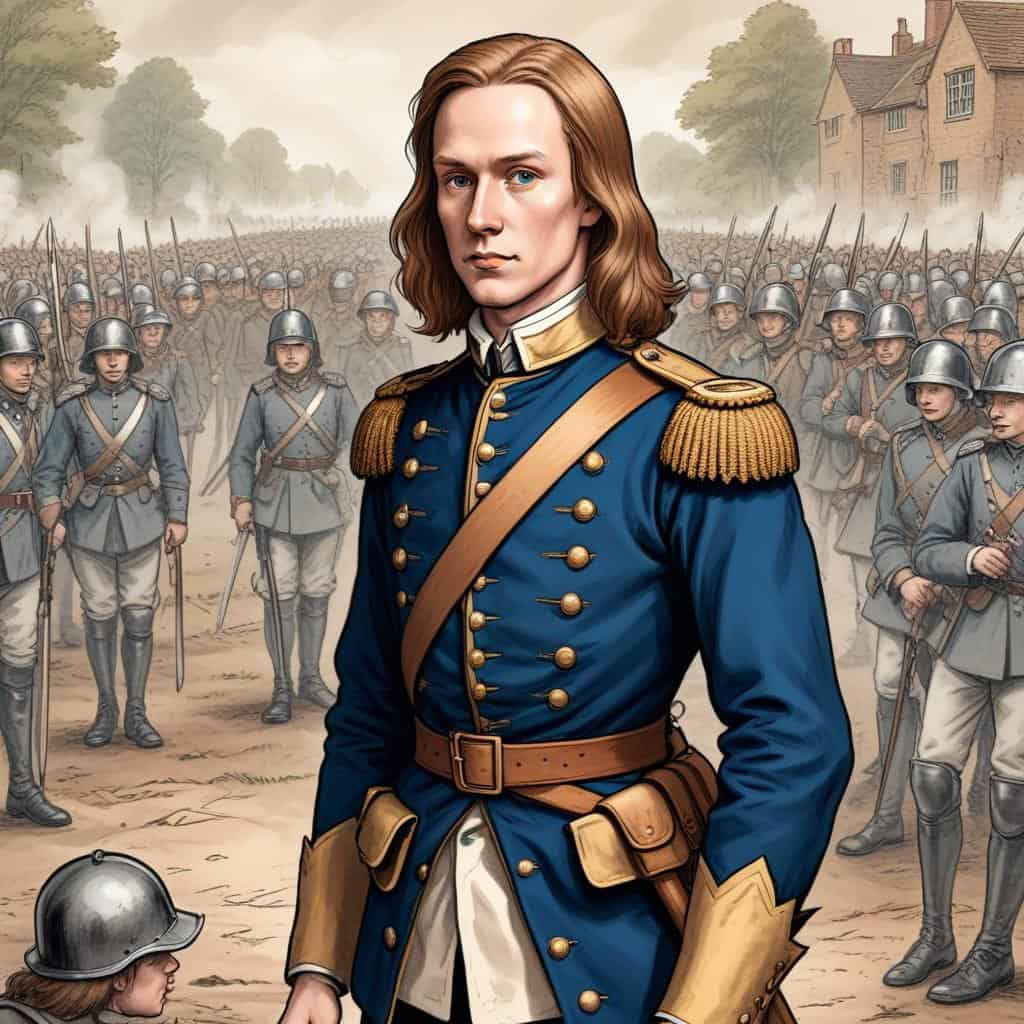
Richard Cromwell

The Battle Begins

Cromwells Strategy

Charles IIs Forces

The Fight for Fort Royal Hill

Royalist Retreat

Cromwells Victory

Aftermath of the Battle

Legacy of the Battle

Historical Significance

Remembering the Fallen
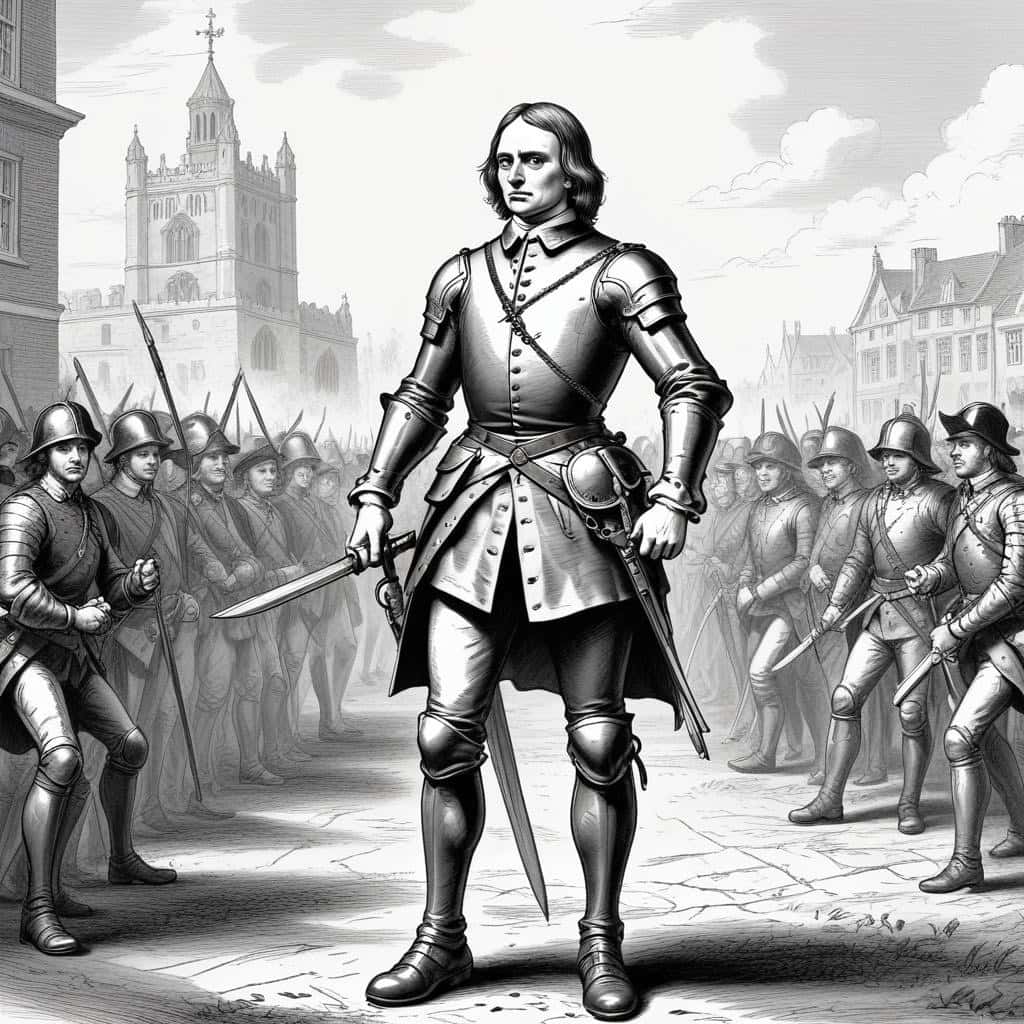
Lesson Details & Resources
In a Nutshell
- What: The final battle of the Third English Civil War, where the Royalists were defeated by the Parliamentarians.
- When: September 3, 1651
- Who: Oliver Cromwell and Charles II
- Outcome: Decisive Parliamentarian victory, leading to the end of the English Civil War.
Famous Figures in the Second Battle of Worcester
-
Oliver Cromwell
Oliver Cromwell was a prominent military and political leader, serving as Lord Protector of England, Scotland, and Ireland during the Commonwealth of England. He played a crucial role in the victory of the Parliamentarian forces at the Second Battle of Worcester.
-
Charles II of England
Charles II of England, also known as the Merry Monarch, was the King of England, Scotland, and Ireland during the Restoration period. He was defeated at the Second Battle of Worcester, leading to his exile and later return to the throne.
-
John Lambert
John Lambert was a Parliamentarian general and key military commander during the English Civil War. He played a significant role in the Battle of Worcester and later became a prominent political figure during the Commonwealth of England.
-
Edward Whalley
Edward Whalley was a Parliamentarian general and one of the regicides who signed the death warrant of King Charles I. He fought in the Second Battle of Worcester and played a crucial role in the victory of the Parliamentarian forces.
-
William Goffe
William Goffe was a Parliamentarian general and regicide who participated in the Second Battle of Worcester. After the Restoration, he fled to New England, where he remained in hiding and became known as one of the 'regicides in America.'
-
John Dixwell
John Dixwell was a Parliamentarian general and regicide who fought in the Second Battle of Worcester. Like William Goffe, he fled to New England after the Restoration, where he lived under a false identity to avoid capture.
-
Thomas Harrison
Thomas Harrison was a Parliamentarian general and one of the regicides who signed the death warrant of King Charles I. He played a significant role in the Battle of Worcester and was later executed following the Restoration.
-
Sir Henry Slingsby
Sir Henry Slingsby was a Royalist commander who fought for King Charles I during the English Civil War. He was captured at the Battle of Worcester and later executed for his loyalty to the Crown.
-
Sir Arthur Hesilrige
Sir Arthur Hesilrige was a Parliamentarian colonel and politician who fought in the Second Battle of Worcester. He played a crucial role in the Parliamentarian victory and later became a member of the Council of State.
-
Sir John Gell
Sir John Gell was a Parliamentarian commander during the English Civil War. He fought in the Battle of Worcester and was known for his military tactics and leadership skills.
Timeline of Second Battle of Worcester
Cromwell's Parliamentarian army defeats the Royalist army at the Battle of Worcester
King Charles II flees the battlefield and goes into hiding
Charles II disguises himself as a servant and escapes to France
Cromwell's forces occupy Worcester and secure the city
Parliament declares Cromwell the Lord Protector of the Commonwealth of England
Charles II lands in Scotland and is proclaimed king
Cromwell's army marches towards Worcester, preparing for battle
Cromwell's forces besiege Worcester, cutting off supplies to the city
Royalist forces attempt to break the siege but are repelled by Cromwell's army
Cromwell's army launches a full-scale assault on Worcester, leading to a decisive victory
Charles II sends a letter of surrender to Parliament, officially ending the conflict
Cromwell's army captures key Royalist leaders, including Charles II's brother, the Duke of York
Parliamentarian forces begin the process of demobilizing and returning home
Cromwell is hailed as a hero in England for his victory at Worcester
Charles II seeks refuge in various European countries, including the Netherlands and Spain
Cromwell consolidates his power in England, establishing a new government and military structure
The Battle of Worcester is seen as the final major engagement of the English Civil War
Cromwell's victory at Worcester cements his reputation as a formidable military leader and politician
The legacy of the Battle of Worcester shapes the future of England's government and monarchy
Vocabulary List
- Battle
- The Second Battle of Worcester was a significant battle during the English Civil War.
- Worcester
- The Second Battle of Worcester took place in the city of Worcester, England.
- English Civil War
- The Second Battle of Worcester was a major conflict that occurred during the English Civil War.
- Royalists
- The Royalists, who supported King Charles II, fought against the Parliamentarians in the Second Battle of Worcester.
- Parliamentarians
- The Parliamentarians, who supported the English Parliament, fought against the Royalists in the Second Battle of Worcester.
- Cromwell
- Oliver Cromwell, a prominent Parliamentarian leader, played a crucial role in the Second Battle of Worcester.
- King Charles II
- King Charles II, the leader of the Royalists, was defeated in the Second Battle of Worcester.
- Siege
- Before the battle, Worcester was under siege by the Parliamentarians.
- Victory
- The Parliamentarians achieved a decisive victory in the Second Battle of Worcester.
- Prisoners
- After the battle, many Royalist soldiers were taken as prisoners by the Parliamentarians.
Key Facts
This is the information used in the fact matching game
- The Second Battle of Worcester took place on September 3, 1651.
- It was a decisive battle in the English Civil War.
- The battle was fought between the Parliamentarians, led by Oliver Cromwell, and the Royalists, led by Charles II.
- Charles II was attempting to regain the throne of England during the battle.
- The Royalist forces were significantly outnumbered, with around 16,000 Parliamentarian troops against 12,000 Royalists.
- The Parliamentarians achieved a decisive victory, effectively ending the Royalist cause in the English Civil War.
- Charles II narrowly escaped capture and managed to flee to France.
- The battle resulted in the capture of approximately 10,000 Royalist soldiers.
- The Parliamentarians also seized a vast amount of weapons, supplies, and artillery.
- The city of Worcester suffered significant damage during the battle.
- The battle marked the final major engagement of the English Civil War.
- It was a turning point in English history, leading to the establishment of the Commonwealth of England under Cromwell's rule.
- The Parliamentarians pursued and defeated the remaining Royalist forces in the following weeks, fully consolidating their control over England.
- The battle was also known as the Battle of Worcester and the Battle of Worcester Field.
- Charles II was later restored to the throne in 1660, following the collapse of the Commonwealth.
- The battle is commemorated annually in Worcester with a reenactment event.
- The exact location of the battle is now occupied by the city of Worcester in England.
- The battle had a significant impact on the outcome of the English Civil War and the future of the monarchy in England.
- Several historical accounts and diaries provide detailed descriptions of the battle and its aftermath.
- The battle site has been preserved as a historic landmark and is open to visitors.
Analysis & Significance
Immediate Consequences
The Second Battle of Worcester in 1651 resulted in a decisive victory for the Parliamentarian forces led by Oliver Cromwell. The defeat of the Royalist army marked the end of the English Civil War and led to the capture of King Charles II, who was forced into exile.
Long-Term Impact
The outcome of the battle had a profound impact on the course of English history. It solidified Cromwell’s power and paved the way for the establishment of the Commonwealth. The defeat of the Royalists also marked the beginning of the end of absolute monarchy in England, leading to significant political reforms.
Cultural Significance Today
The Second Battle of Worcester is remembered as a critical moment in the transition of power from the monarchy to the Parliament in England. It symbolizes the struggle for democracy and the limitations of royal authority. The battle continues to be studied and commemorated as a pivotal event in the shaping of modern British society and politics.
Second Battle of Worcester Games


Take Your Learning Offline
Want a convenient, print-ready study guide for this lesson? Become a Memory Wizards Pro member to unlock the downloadable " Memory Scrolls" for this topic and our entire library!
- ✓ Complete Vocabulary Lists
- ✓ Key Facts & Timelines
- ✓ Beautifully Formatted for Print & Mobile