
Summary of Battle of Naseby (1645)
Uncover the secrets of the pivotal clash that shaped English history.
How Do You Learn Best?
Learn by Reading
Immerse yourself in the 10-minute visual lesson for a comprehensive understanding of the topic.
Learn by Reviewing
Jump directly to the key facts, timeline, and vocabulary lists to build a solid foundation of details.
Learn by Doing
Challenge yourself! Jump straight into the interactive games to learn by trial, error, and discovery.
Battle of Naseby in 10 Minutes
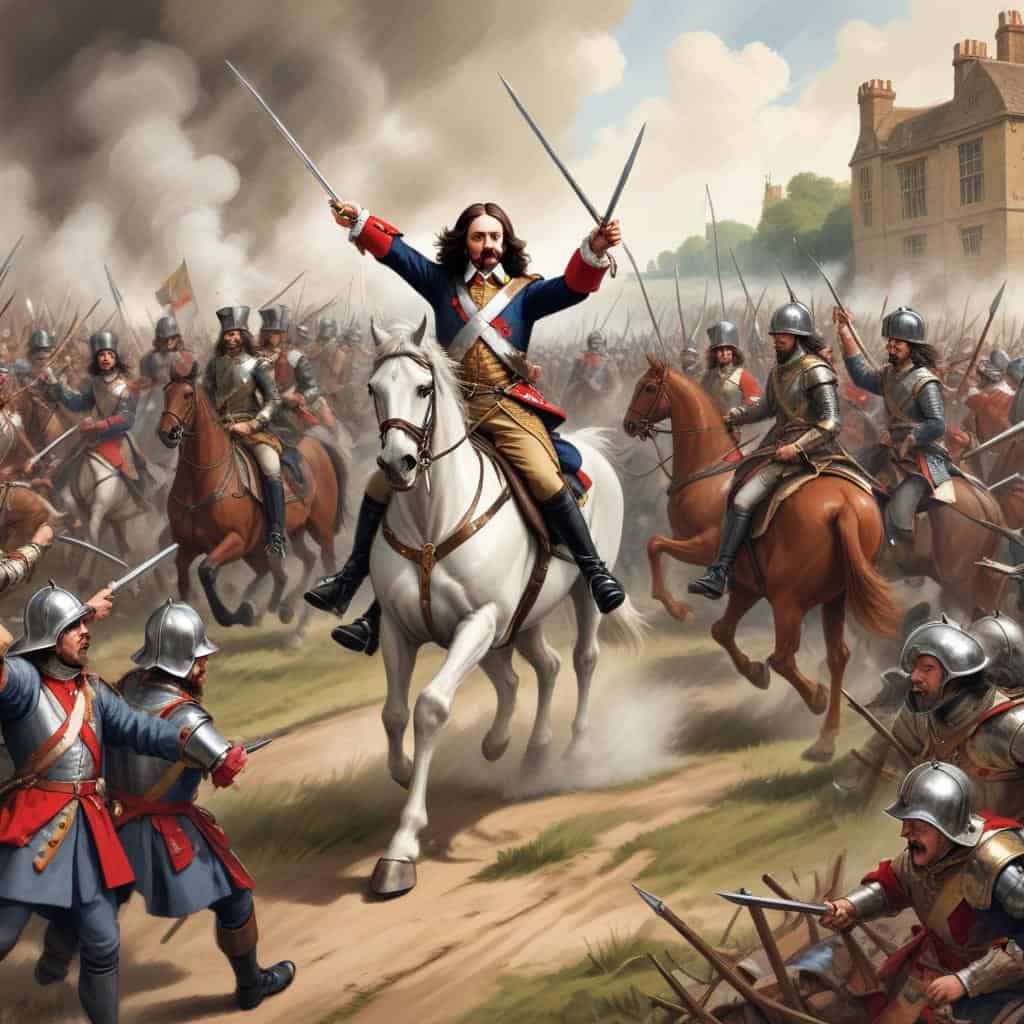
Introduction
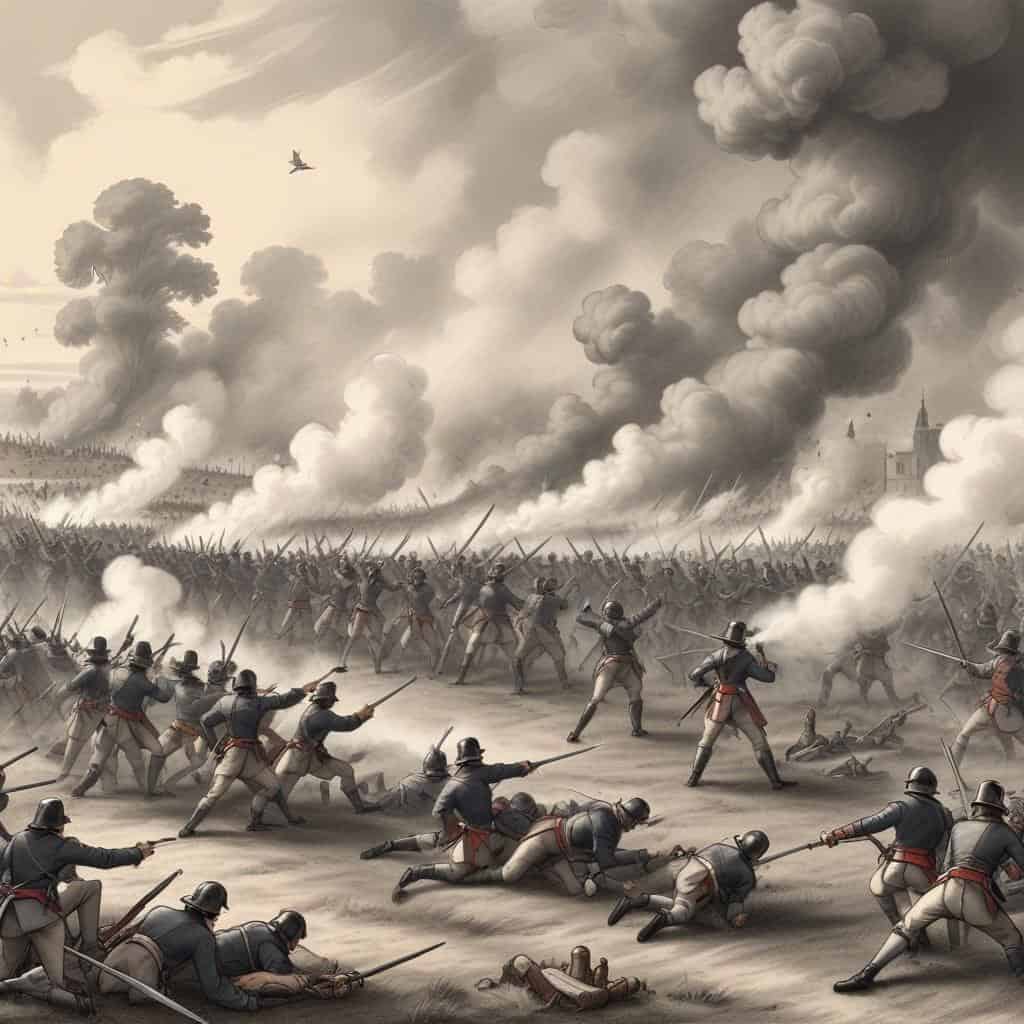
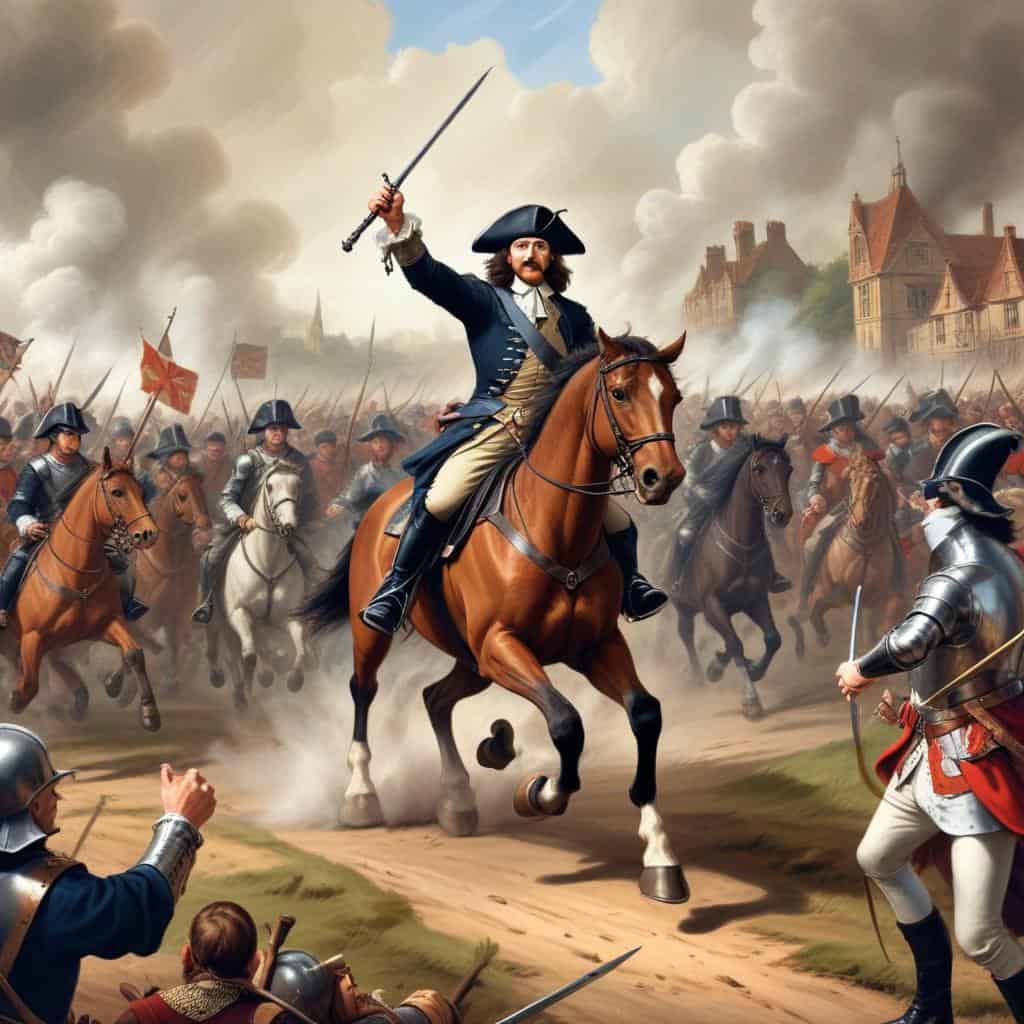
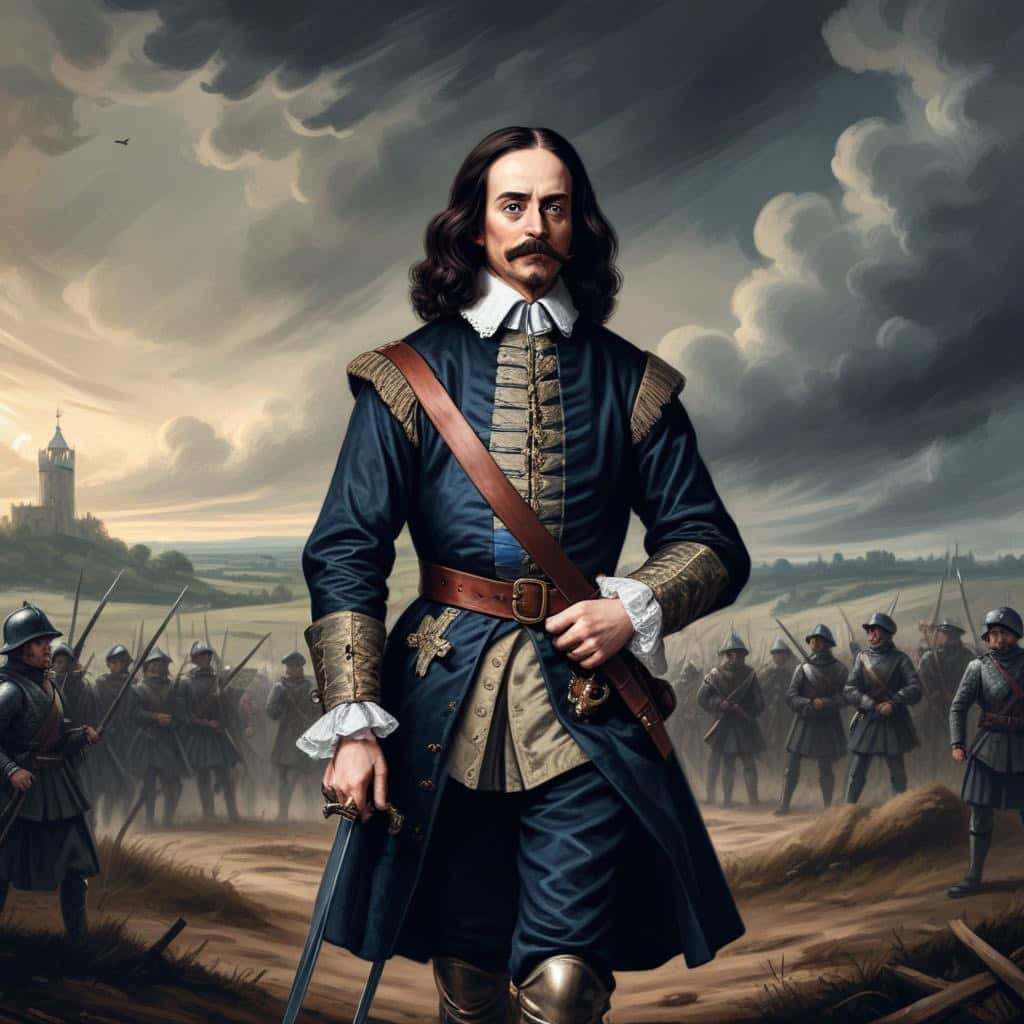
King Charles I
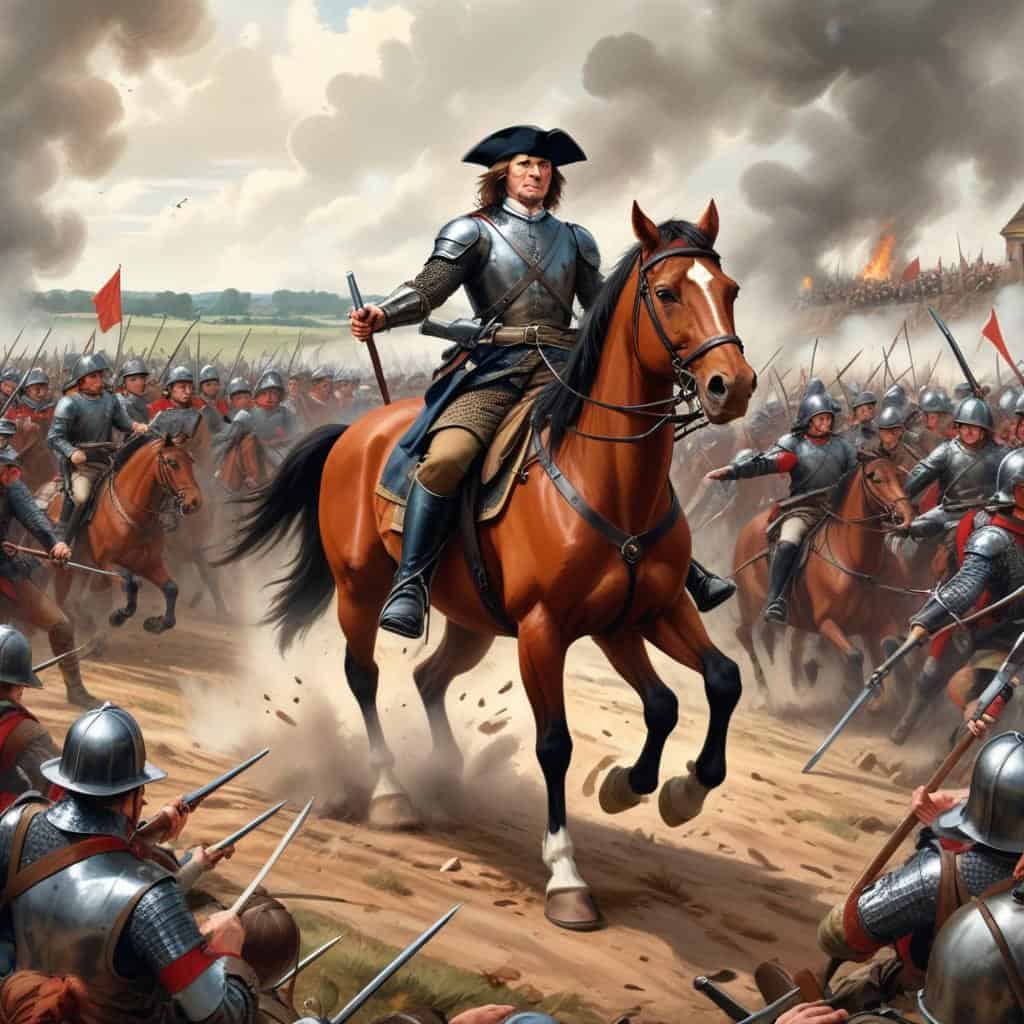
Oliver Cromwell
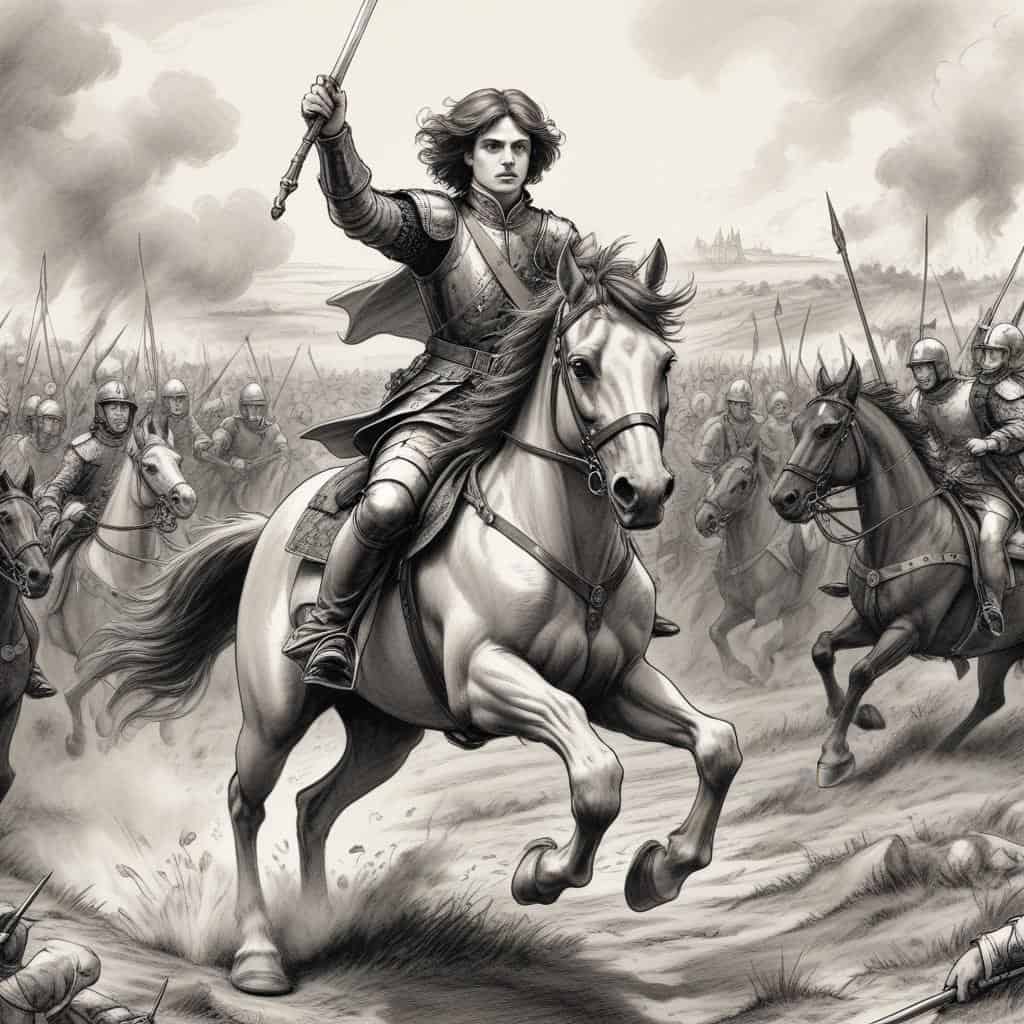
Prince Rupert of the Rhine
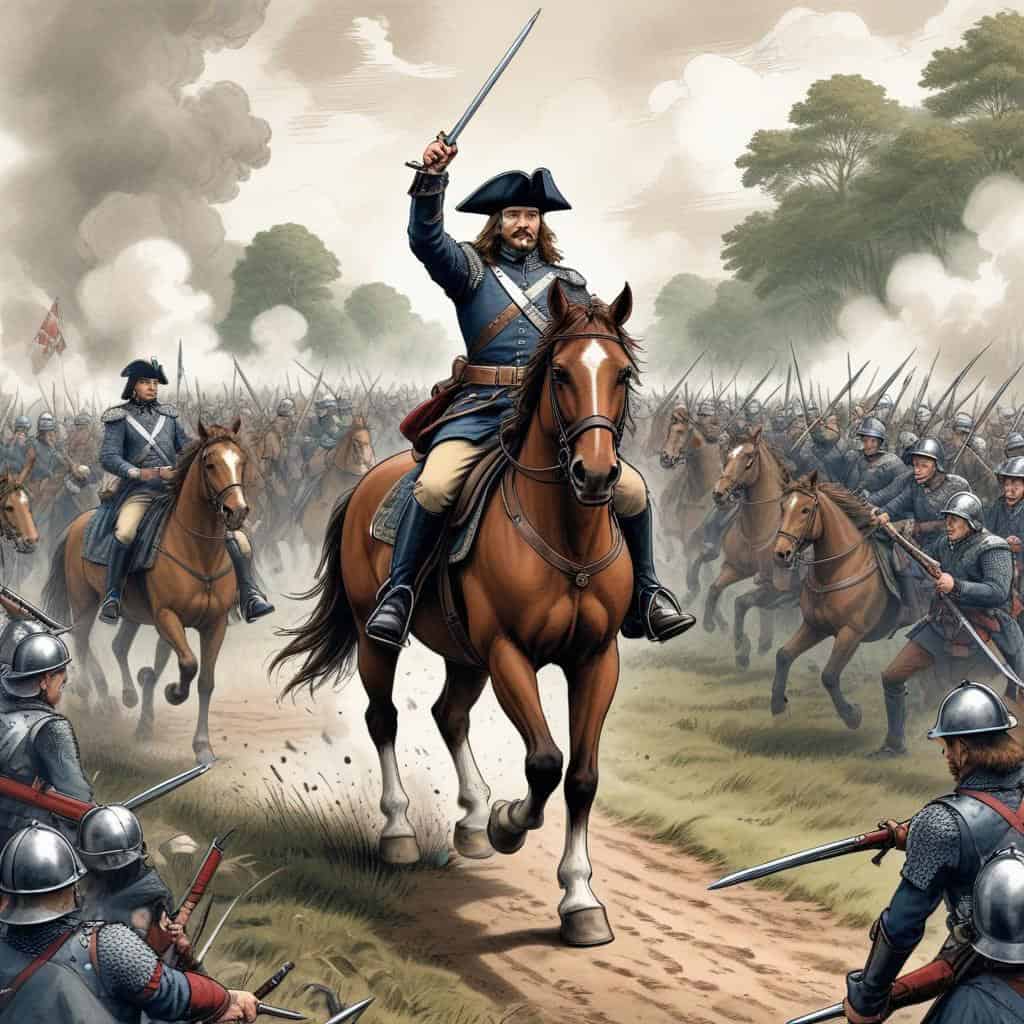
Sir Thomas Fairfax

The Royalists vs. Parliamentarians

Strategic Planning

The Battle Begins

The Turning Point

Defeat for the Royalists

Aftermath of the Battle

Impact on the War

Legacy of Naseby

Remembering the Fallen
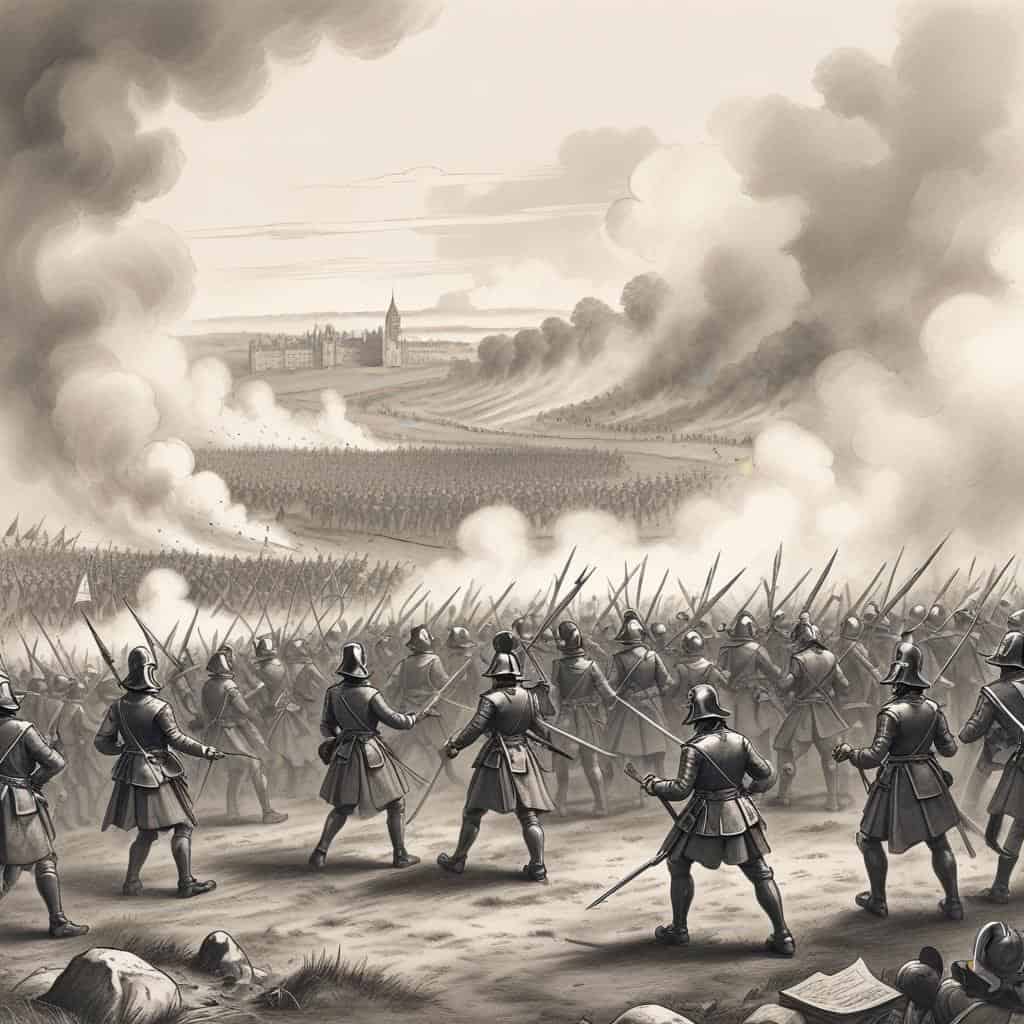
Lesson Details & Resources
In a Nutshell
- What: A key battle in the English Civil War, pitting Royalist forces against Parliamentarian forces.
- When: June 14, 1645
- Who: King Charles I of England and his Royalist army vs. Parliamentarian forces led by Sir Thomas Fairfax and Oliver Cromwell.
- Outcome: Decisive Parliamentarian victory, leading to the collapse of the Royalist cause and paving the way for the ultimate victory of the Parliamentarians in the English Civil War.
Famous Figures in the Battle of Naseby
-
Oliver Cromwell
Oliver Cromwell - A key figure in the English Civil War, he led the Parliamentarian forces to victory at the Battle of Naseby. Later became Lord Protector of England.
-
Charles I
Charles I - The King of England during the English Civil War. He commanded the Royalist forces at the Battle of Naseby but suffered a crushing defeat.
-
Prince Rupert of the Rhine
Prince Rupert of the Rhine - A prominent Royalist commander and nephew of Charles I. He played a significant role in the Battle of Naseby.
-
Thomas Fairfax
Thomas Fairfax - Commander-in-Chief of the Parliamentarian New Model Army. Led the Parliamentarian forces alongside Cromwell in the Battle of Naseby.
-
Henry Ireton
Henry Ireton - A Parliamentarian general and son-in-law of Oliver Cromwell. He played a crucial role in the Battle of Naseby.
-
David Leslie
David Leslie - A Scottish Parliamentarian general who commanded the cavalry at the Battle of Naseby. His tactical decisions were vital to the Parliamentarian victory.
Timeline of Battle of Naseby
Parliamentarian forces under Sir Thomas Fairfax defeat Royalist forces under Prince Rupert at the Battle of Naseby
Parliamentarian victory at Naseby marks a turning point in the English Civil War
King Charles I's nephew, Prince Rupert, is captured during the battle
Parliamentarian forces capture the Royalist baggage train, including the King's correspondence and personal items
King Charles I retreats to Leicester after the defeat at Naseby
Parliamentarian forces pursue the Royalists after the battle, capturing key cities and strongholds
King Charles I sends a letter to Parliament proposing peace negotiations after the defeat at Naseby
Parliament rejects King Charles I's peace proposals and continues military campaign against the Royalists
Parliamentarian forces besiege and capture the city of Bristol, a key Royalist stronghold
King Charles I's wife, Queen Henrietta Maria, escapes to France to seek support for the Royalist cause
Parliamentarian forces under Oliver Cromwell defeat Royalist forces at the Battle of Langport in Somerset
Parliament passes the Self-Denying Ordinance, requiring all military officers to resign their commissions and reapply for reappointment
Parliament establishes the New Model Army, a professional and disciplined military force under the command of Sir Thomas Fairfax and Oliver Cromwell
Royalist forces under Prince Rupert and Lord Astley defeat Parliamentarian forces at the Battle of Stratton
Parliamentarian forces under Sir William Waller defeat Royalist forces at the Battle of Cheriton
Parliamentarian forces under Sir William Waller are defeated by Royalist forces at the Battle of Cropredy Bridge
King Charles I raises his royal standard at Nottingham, officially declaring war on Parliament
Parliament establishes the Committee of Both Kingdoms to coordinate military strategy with the Scottish Covenanters
Royalist forces under Prince Rupert defeat Parliamentarian forces at the Battle of Edgehill, the first major battle of the English Civil War
Parliamentarian forces under Sir William Waller defeat Royalist forces at the Battle of Roundway Down, securing control of the West Country
Vocabulary List
- Battle of Naseby
- The Battle of Naseby was a decisive engagement in the English Civil War, fought on June 14, 1645.
- English Civil War
- The Battle of Naseby was a significant event in the context of the English Civil War, a series of conflicts between the Parliamentarians (Roundheads) and the Royalists (Cavaliers) in the 17th century.
- Parliamentarians
- The Parliamentarians, also known as the Roundheads, were the supporters of the English Parliament during the English Civil War. They opposed the rule of King Charles I.
- Royalists
- The Royalists, also known as the Cavaliers, were the supporters of King Charles I during the English Civil War. They opposed the Parliamentarians.
- Decisive engagement
- The Battle of Naseby is considered a decisive engagement because it resulted in a significant victory for the Parliamentarians and marked a turning point in the war.
- Turning point
- The Battle of Naseby was a turning point in the English Civil War as it weakened the Royalist cause and strengthened the Parliamentarians' position.
- June 14, 1645
- The Battle of Naseby took place on June 14, 1645, near the village of Naseby in Northamptonshire, England.
Key Facts
This is the information used in the fact matching game
- The Battle of Naseby took place on June 14, 1645.
- It was a decisive battle of the English Civil War.
- The forces of the Parliamentarians (Roundheads) faced the Royalists (Cavaliers).
- The Parliamentarian army was led by Sir Thomas Fairfax and Oliver Cromwell.
- The Royalist army was commanded by King Charles I.
- The battle took place near the village of Naseby in Northamptonshire, England.
- The Parliamentarian army outnumbered the Royalists by around 2 to 1.
- The Parliamentarians had approximately 14,000 soldiers while the Royalists had around 7,500.
- The Royalists were initially positioned on a ridge, overlooking the battlefield.
- The decisive moment of the battle came when Oliver Cromwell launched a successful cavalry charge against the Royalist infantry.
- The Royalist forces were caught off-guard and suffered heavy losses.
- King Charles I attempted to rally his troops but was forced to flee the battlefield.
- The Parliamentarians emerged victorious, inflicting a major defeat on the Royalists.
- The battle marked a turning point in the English Civil War, leading to the eventual defeat of the Royalist cause.
- Many Royalist officers were captured, including the King's nephew, Prince Rupert.
- The Parliamentarians captured a significant amount of Royalist artillery and supplies.
- The Royalists lost over 1,000 soldiers, while the Parliamentarians suffered around 400 casualties.
- The Battle of Naseby effectively ended the Royalist hope of victory in the English Civil War.
- It led to the capture and eventual execution of King Charles I in 1649.
- The battlefield at Naseby is now a protected historic site.
Analysis & Significance
Immediate Consequences
The Battle of Naseby in 1645 marked a decisive victory for Parliamentarian forces over the Royalists during the English Civil War. King Charles I’s army suffered a devastating defeat, leading to the capture of many key leaders and the collapse of the Royalist cause in the Midlands.
Long-Term Impact
The outcome of the Battle of Naseby had far-reaching consequences, ultimately leading to the defeat of the Royalists and the execution of King Charles I. This event played a significant role in shaping the future of England, paving the way for the establishment of a Commonwealth under Oliver Cromwell’s leadership.
Cultural Significance Today
The Battle of Naseby remains a pivotal moment in English history, symbolizing the struggle for power between the monarchy and parliament. Its legacy is still remembered in commemorations and historical reenactments, highlighting the enduring impact of this decisive battle on the evolution of democracy and governance in Britain.
Battle of Naseby Games


Take Your Learning Offline
Want a convenient, print-ready study guide for this lesson? Become a Memory Wizards Pro member to unlock the downloadable " Memory Scrolls" for this topic and our entire library!
- ✓ Complete Vocabulary Lists
- ✓ Key Facts & Timelines
- ✓ Beautifully Formatted for Print & Mobile