
Summary of The Treaty of Nonsuch
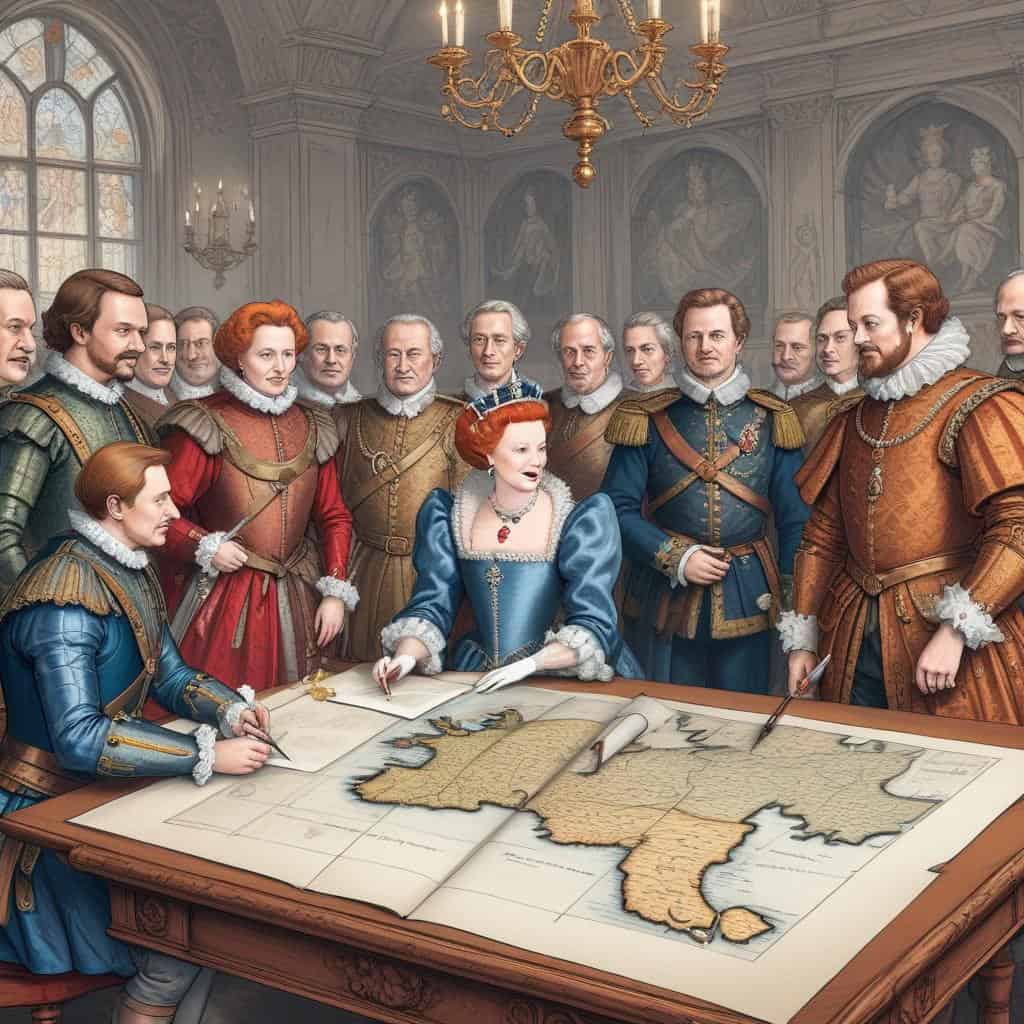
Uncover the secrets of the historic Treaty of Nonsuch with the Dutch.
How Do You Learn Best?
Learn by Reading
Immerse yourself in the 10-minute visual lesson for a comprehensive understanding of the topic.
Learn by Reviewing
Jump directly to the key facts, timeline, and vocabulary lists to build a solid foundation of details.
Learn by Doing
Challenge yourself! Jump straight into the interactive games to learn by trial, error, and discovery.
The Treaty of Nonsuch in 10 Minutes
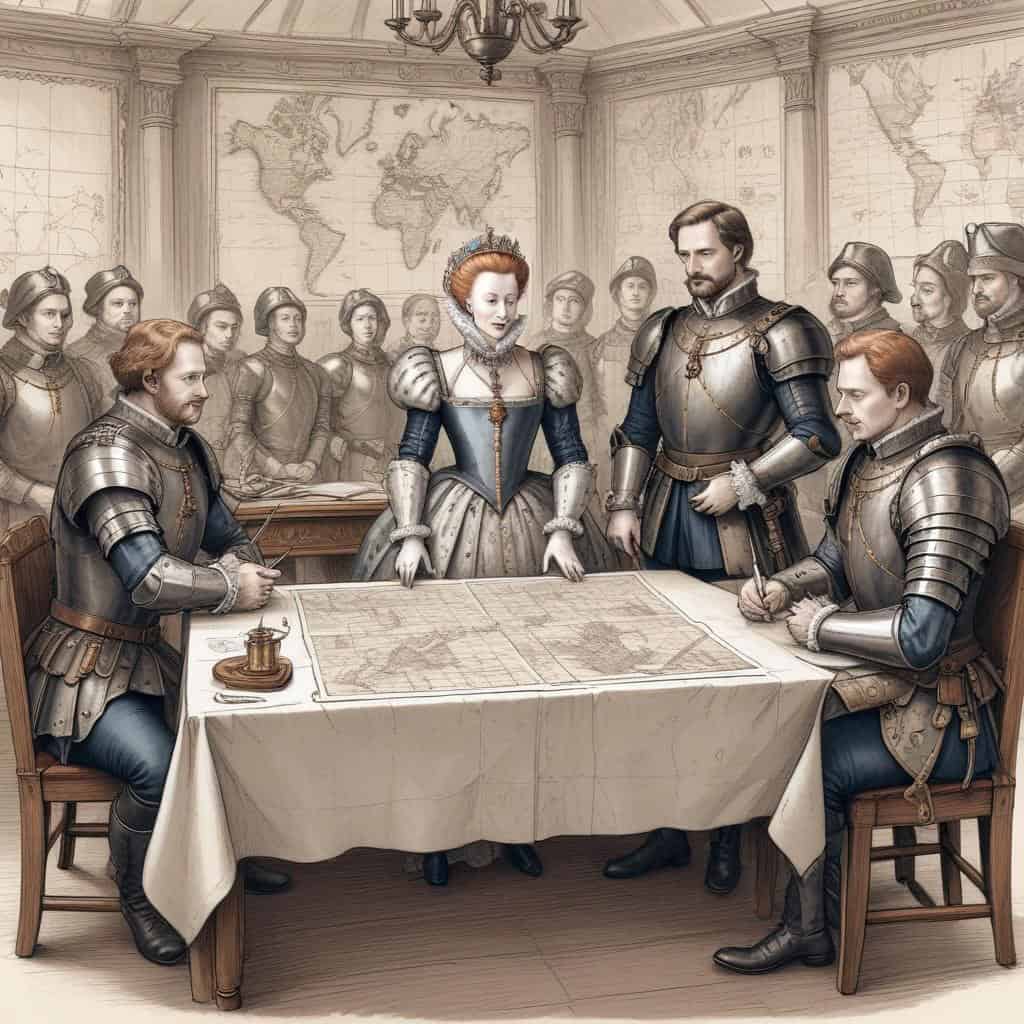
Introduction
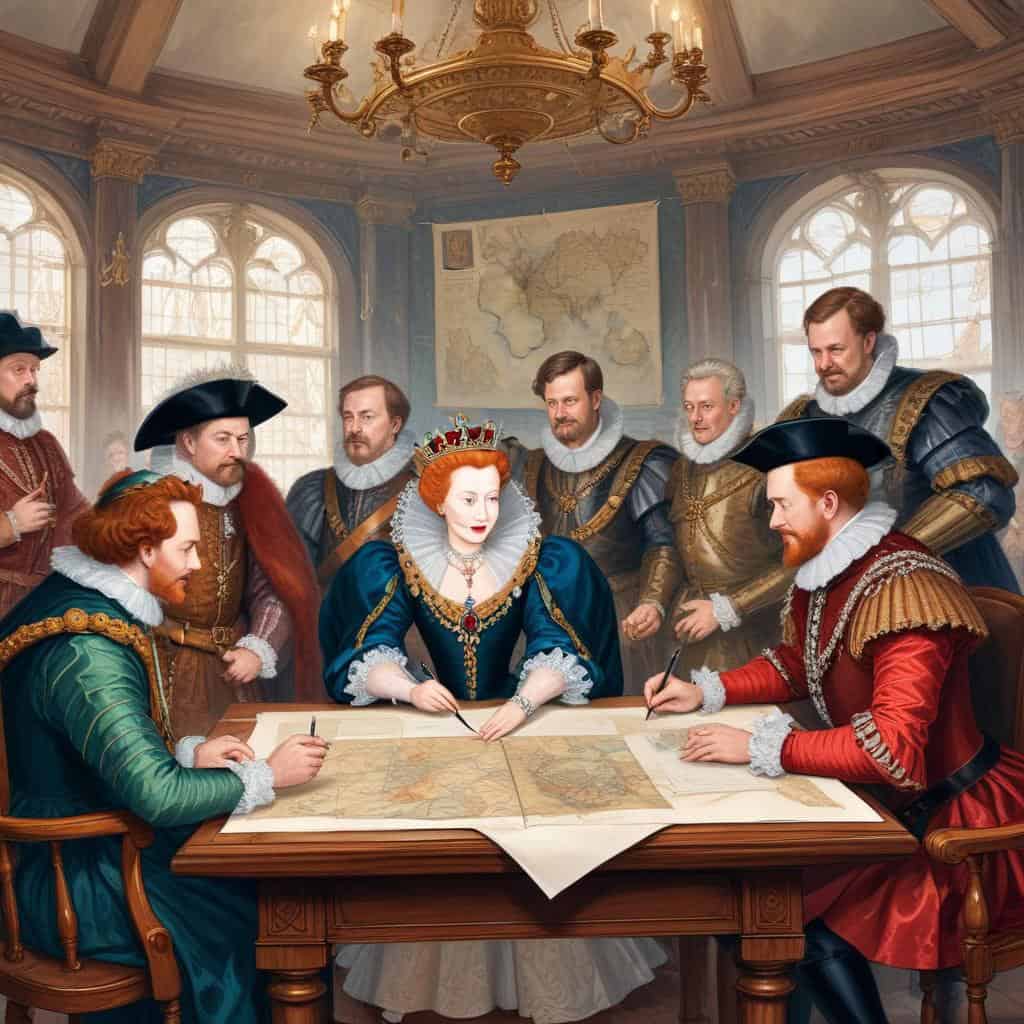
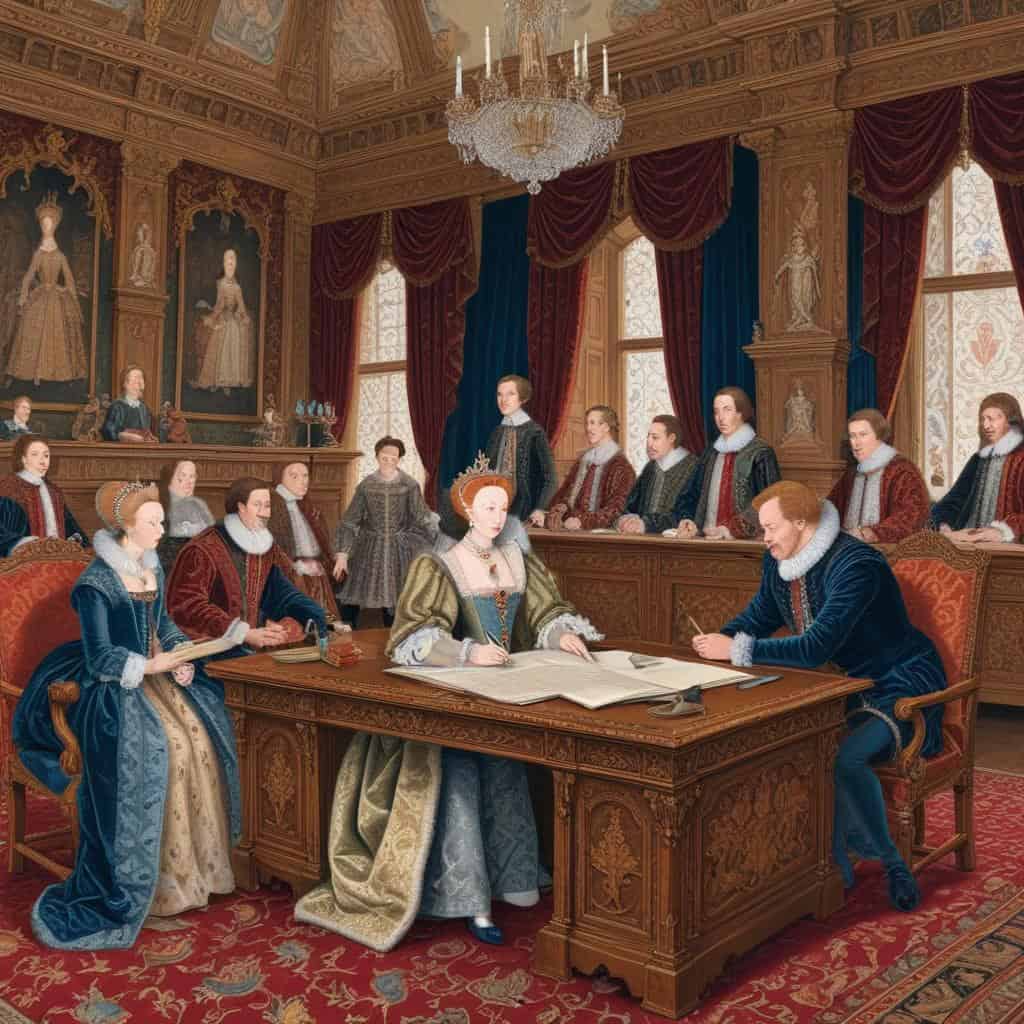
Queen Elizabeth I
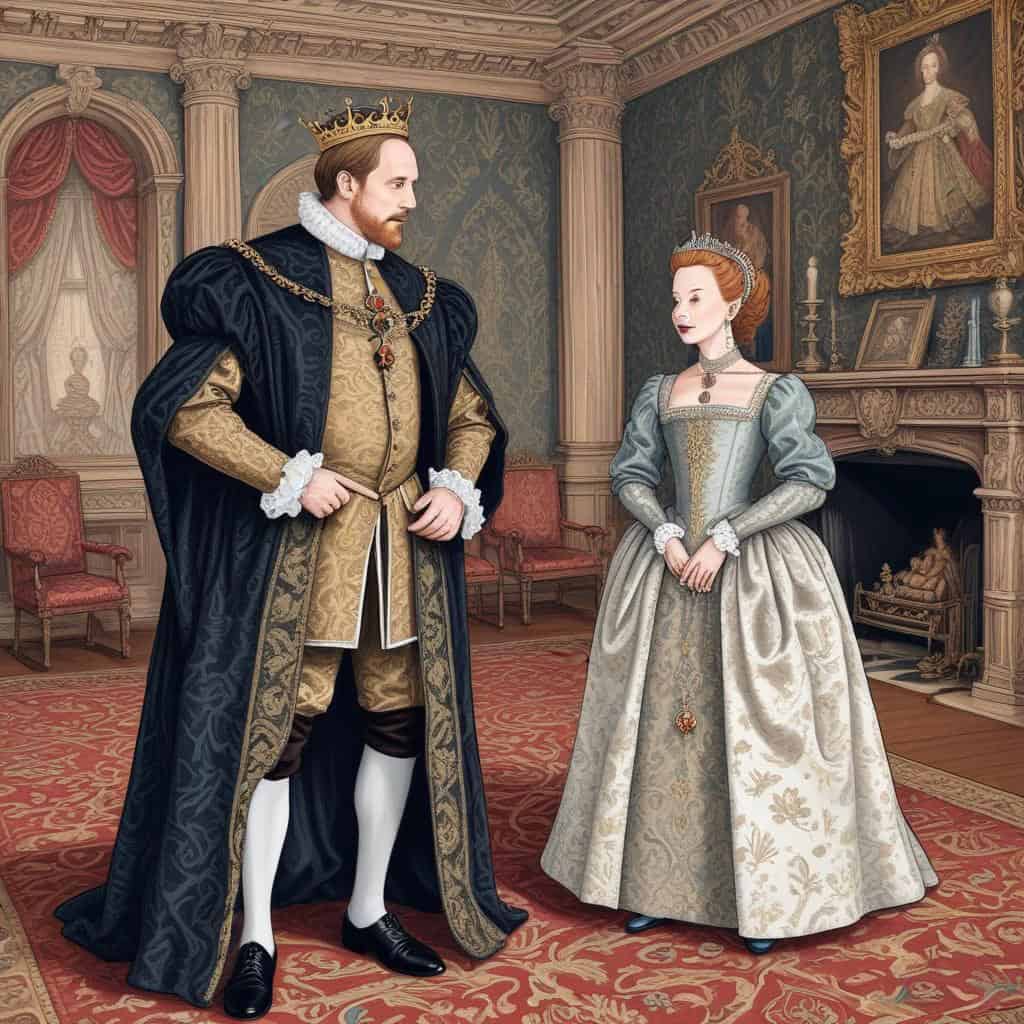
William the Silent
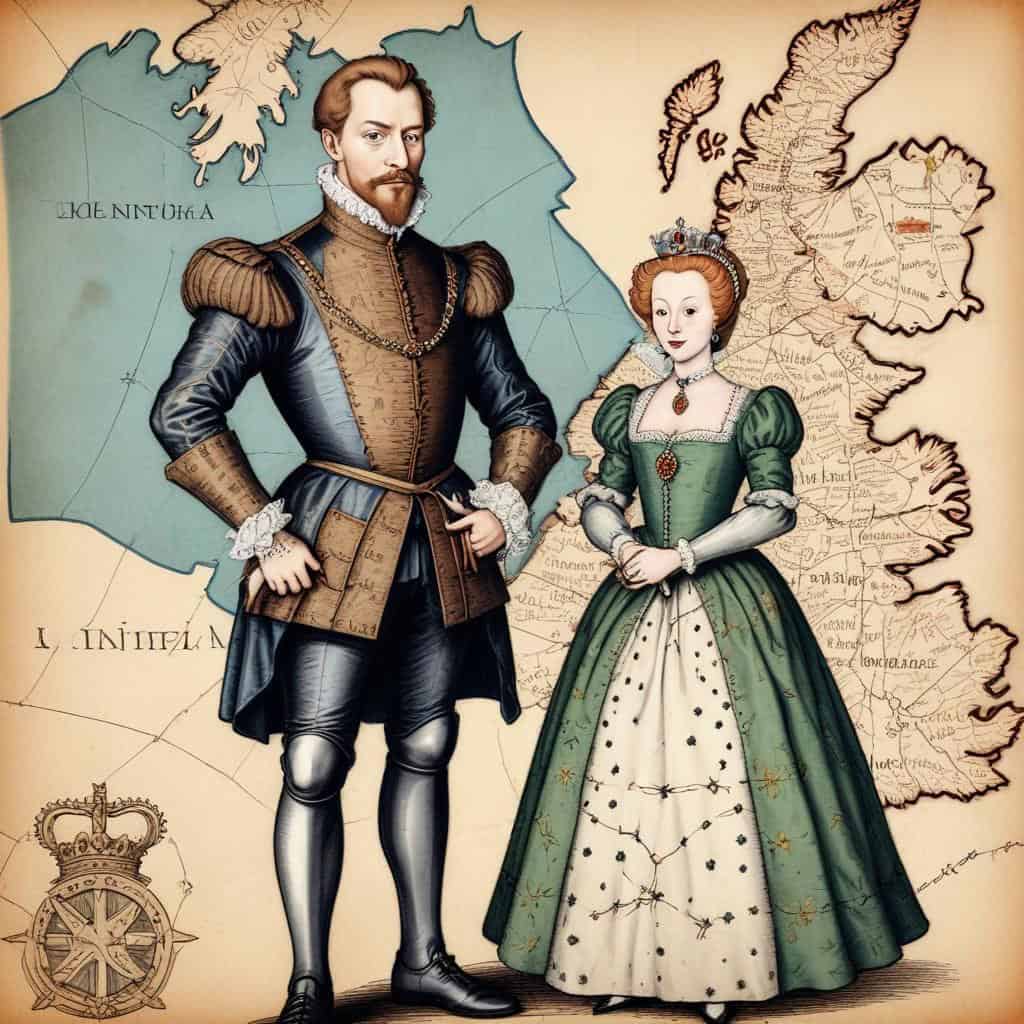
Robert Dudley, 1st Earl of Leicester

Philip II of Spain

1. Negotiations Begin

2. Military Support

3. English Intervention
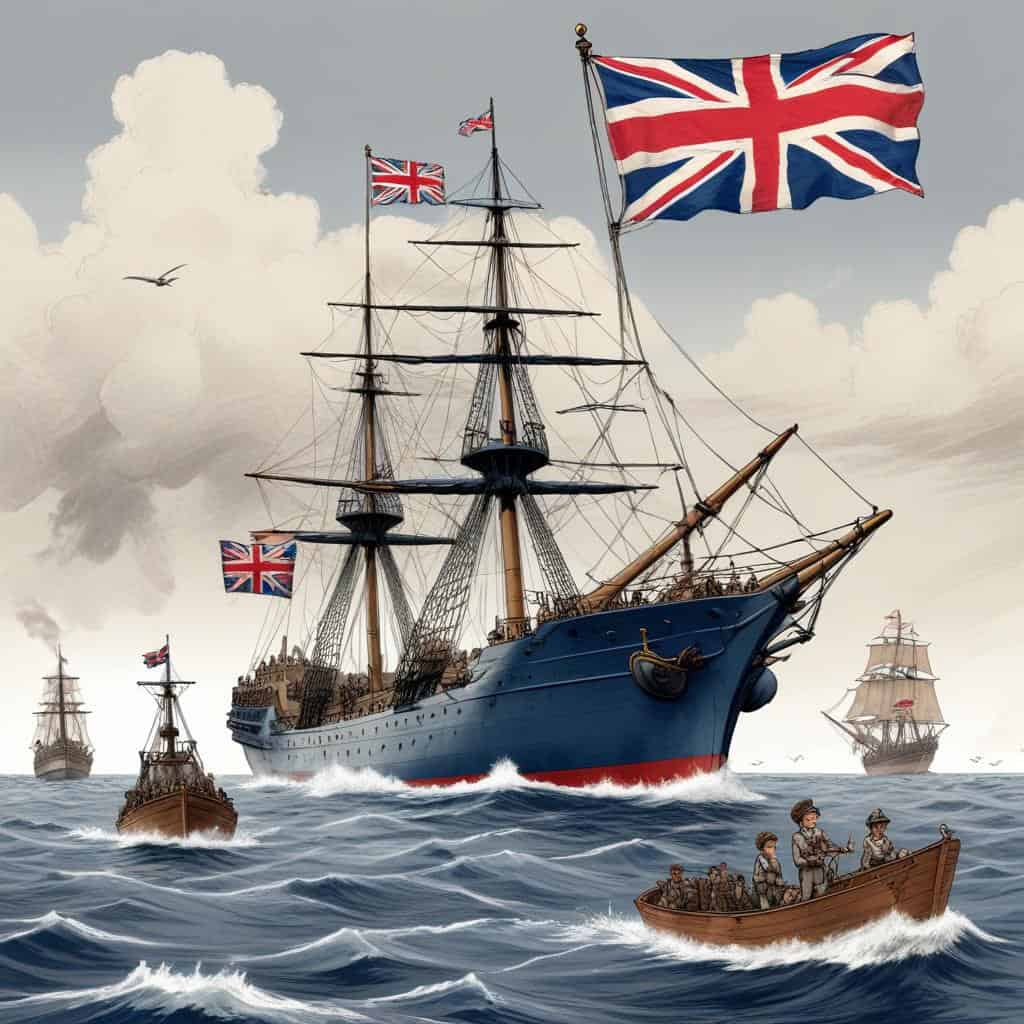
4. Naval Blockade

5. Siege of Antwerp

6. Spanish Response
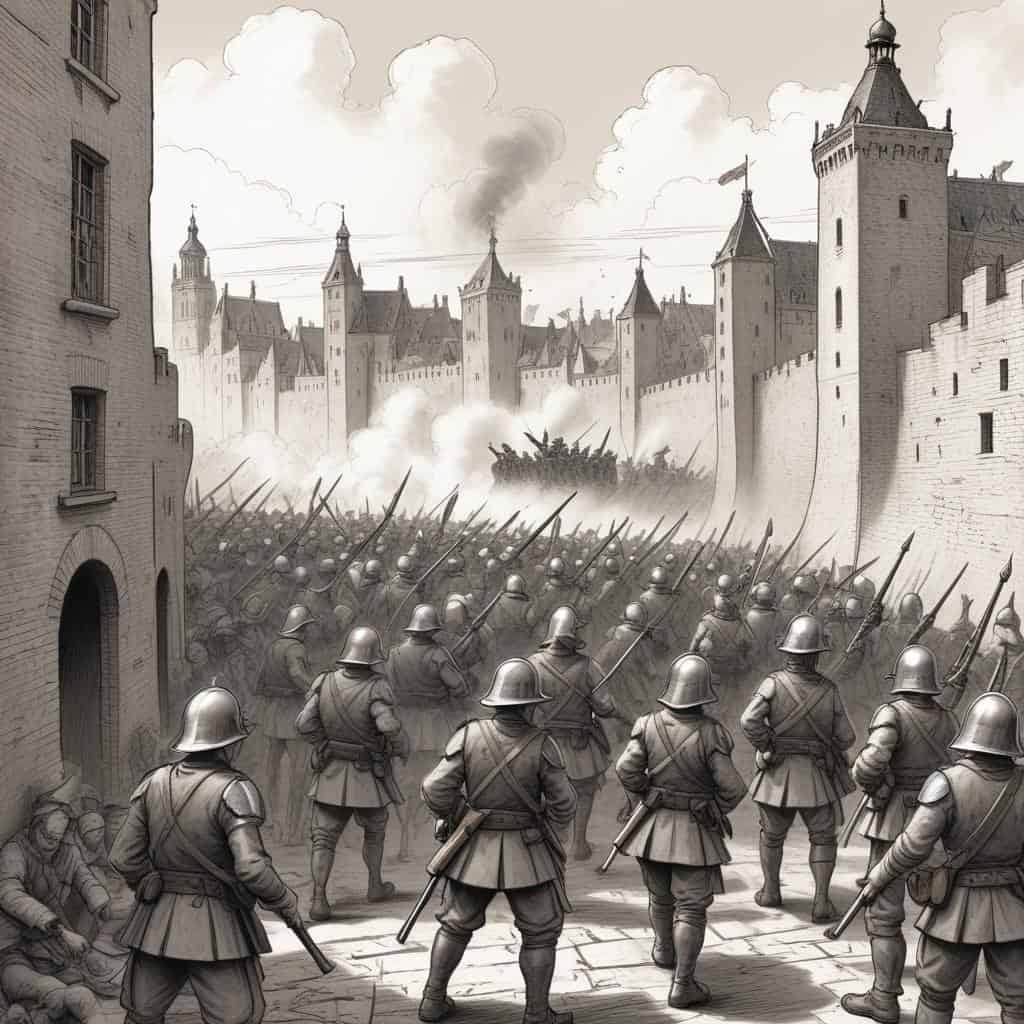
7. Lifting the Siege of Leiden

8. End of the Eighty Years War

9. Legacy of the Treaty

10. Importance of the Alliance
Lesson Details & Resources
In a Nutshell
- What: The Treaty of Nonsuch with the Dutch Republic solidified military support and financial aid for the Dutch in their fight against Spanish rule.
- When: 1585
- Who: Queen Elizabeth I of England, Dutch Republic
- Outcome: The treaty marked a significant turning point in the Anglo-Spanish War and helped the Dutch achieve independence from Spanish control.
Famous Figures in the The Treaty of Nonsuch
-
Queen Elizabeth I
Queen Elizabeth I: The queen of England who signed The Treaty of Nonsuch with the Dutch Republic in 1585. She supported the Dutch in their fight against Spanish control.
-
Robert Dudley
Robert Dudley: A trusted advisor and close friend of Queen Elizabeth I. He played a significant role in negotiating the Treaty of Nonsuch.
-
Robert Devereux
Robert Devereux: Also known as the Earl of Essex, he was a prominent English statesman and military leader who supported the Dutch cause and fought against Spanish forces.
-
Philip II of Spain
Philip II of Spain: The King of Spain during the time of The Treaty of Nonsuch. He opposed the Dutch Republic's fight for independence and considered it a rebellion.
-
Francis Drake
Francis Drake: An English sea captain and privateer who played a crucial role in the English naval victory against the Spanish Armada. He also supported the Dutch Republic in their struggle for independence.
-
William the Silent
William the Silent: Also known as William of Orange, he was the leader of the Dutch Revolt against Spanish rule. He sought support from Queen Elizabeth I, leading to the signing of The Treaty of Nonsuch.
Timeline of The Treaty of Nonsuch
Elizabeth I signs the Treaty of Nonsuch with the Dutch Republic
The treaty is negotiated by Robert Dudley, Earl of Leicester
The Dutch Republic seeks assistance from England in their war against Spain
Mary, Queen of Scots is executed
The Spanish Armada is defeated by the English navy
England officially declares war on Spain
English troops under Robert Dudley arrive in the Dutch Republic
Leicester becomes the Governor-General of the Dutch Republic
Leicester captures the town of Zutphen
The Siege of Sluis takes place
The Spanish capture the town of Venlo
Leicester is recalled to England
Leicester is replaced by William of Orange as Governor-General
The Spanish capture the town of Geertruidenberg
The Siege of Bergen op Zoom takes place
The Dutch Republic gains a decisive victory against Spain at the Battle of Turnhout
The Twelve Years' Truce is signed between the Dutch Republic and Spain
The Treaty of Nonsuch is seen as a turning point in the Dutch struggle for independence
The Dutch Republic receives financial and military support from England
The Dutch Republic gains control over several strategic towns and regions
Vocabulary List
- Treaty
- The Treaty of Nonsuch was a diplomatic agreement between England and the Dutch Republic.
- Nonsuch
- The treaty was named after the palace of Nonsuch, where Queen Elizabeth I resided.
- Dutch Republic
- The treaty was made with the Dutch Republic, a federation of seven provinces in the Low Countries.
- 1585
- The Treaty of Nonsuch was signed in the year 1585.
- Diplomatic agreement
- The Treaty of Nonsuch was a diplomatic agreement between England and the Dutch Republic.
- England
- The Treaty of Nonsuch was signed by England, represented by Queen Elizabeth I.
- Queen Elizabeth I
- Queen Elizabeth I represented England in the Treaty of Nonsuch.
- Low Countries
- The Dutch Republic was located in the Low Countries, which encompassed present-day Netherlands, Belgium, and Luxembourg.
- Federation
- The Dutch Republic was a federation of seven provinces.
- Provinces
- The Dutch Republic consisted of seven provinces, each with its own government.
Key Facts
This is the information used in the fact matching game
- The Treaty of Nonsuch was signed on 20 August 1585.
- It was a treaty between Queen Elizabeth I of England and the Dutch Republic.
- The treaty was signed in response to the Spanish invasion of the Netherlands.
- Queen Elizabeth I agreed to send military aid to the Dutch Republic.
- The English forces were led by Robert Dudley, 1st Earl of Leicester.
- The Treaty of Nonsuch marked the beginning of England's direct involvement in the Eighty Years' War.
- The treaty was also aimed at weakening the power of Spain in Europe.
- The English military aid included troops, ships, and money.
- The Treaty of Nonsuch was a defensive alliance between England and the Dutch Republic.
- The Spanish Armada was launched in response to England's support of the Dutch Republic.
- The Treaty of Nonsuch laid the foundation for a long-lasting Anglo-Dutch alliance.
- The English military aid helped the Dutch Republic to resist Spanish domination.
- The Treaty of Nonsuch was part of Elizabethan England's strategy to maintain a balance of power in Europe.
- The Dutch Republic was a Protestant state, while Spain was a Catholic power.
- The Treaty of Nonsuch helped to secure England's position as a major European power.
- The treaty also aimed to protect English trading interests in the Netherlands.
- The Treaty of Nonsuch was a response to the Duke of Parma's successful military campaigns in the Netherlands.
- The Dutch were grateful for England's support and named several cities after Queen Elizabeth I.
- The Treaty of Nonsuch was a significant turning point in the history of Anglo-Dutch relations.
- The English military aid helped to prevent the Dutch Republic from falling to Spanish control.
Analysis & Significance
Immediate Consequences
The Treaty of Nonsuch with the Dutch Republic in 1585 immediately solidified the alliance between England and the Dutch in their fight against Spain. This led to increased military support for the Dutch Revolt against Spanish rule, bolstering their efforts and strengthening their position in the conflict.
Long-Term Impact
The long-term impact of the Treaty of Nonsuch was significant as it laid the foundation for the eventual defeat of the Spanish Armada in 1588. By providing crucial support to the Dutch Republic, England weakened the Spanish Empire’s naval power, ultimately shifting the balance of power in Europe and marking a turning point in history.
Cultural Significance Today
The Treaty of Nonsuch holds cultural significance today as a symbol of resistance against oppression and tyranny. It serves as a reminder of the importance of alliances and unity in the face of adversity. The legacy of this treaty continues to influence diplomatic relations and strategies in modern times, showcasing the enduring impact of historical events on contemporary society.
The Treaty of Nonsuch Games


Take Your Learning Offline
Want a convenient, print-ready study guide for this lesson? Become a Memory Wizards Pro member to unlock the downloadable " Memory Scrolls" for this topic and our entire library!
- ✓ Complete Vocabulary Lists
- ✓ Key Facts & Timelines
- ✓ Beautifully Formatted for Print & Mobile