
How Do You Learn Best?
Learn by Reading
Immerse yourself in the 10-minute visual lesson for a comprehensive understanding of the topic.
Learn by Reviewing
Jump directly to the key facts, timeline, and vocabulary lists to build a solid foundation of details.
Learn by Doing
Challenge yourself! Jump straight into the interactive games to learn by trial, error, and discovery.
The Raven in 10 Minutes
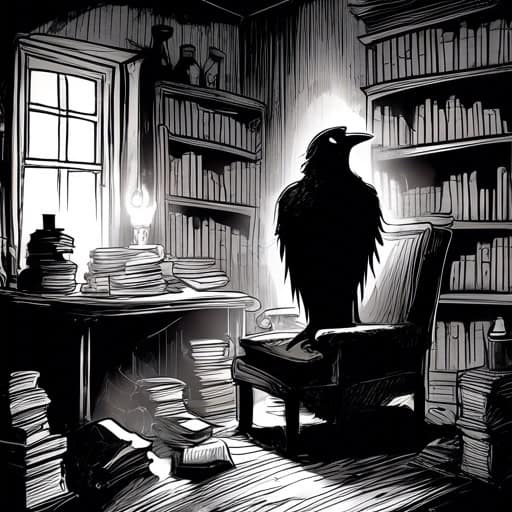
Introduction
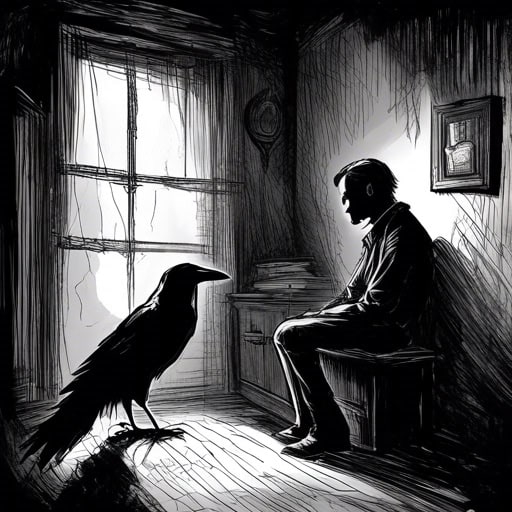

The Narrator

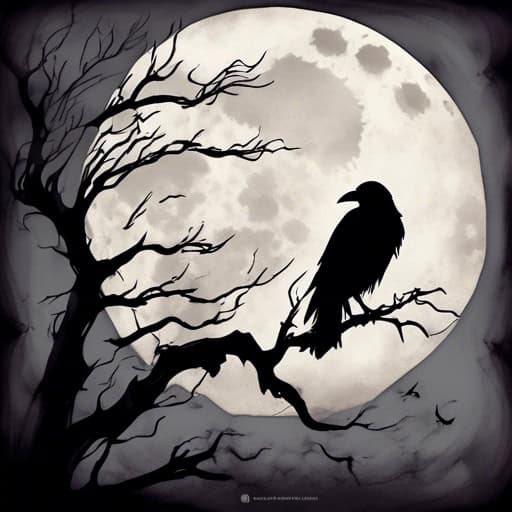
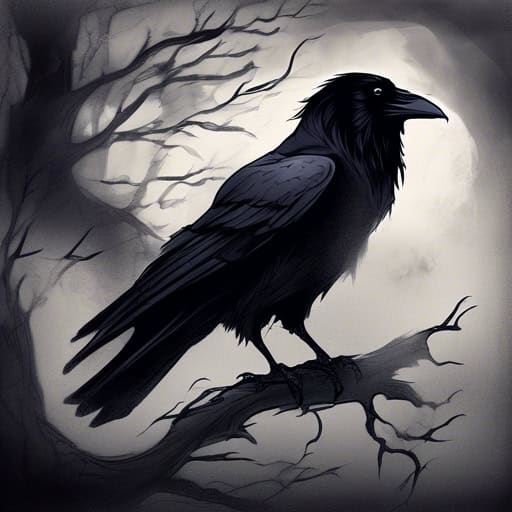
The Raven

Lenore

Pallas
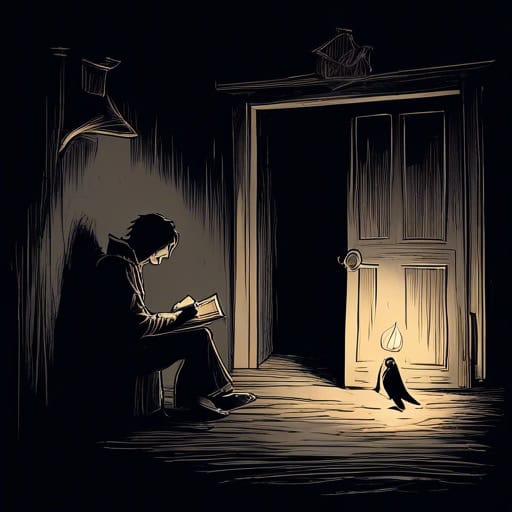
The Raven: A Brief Overview
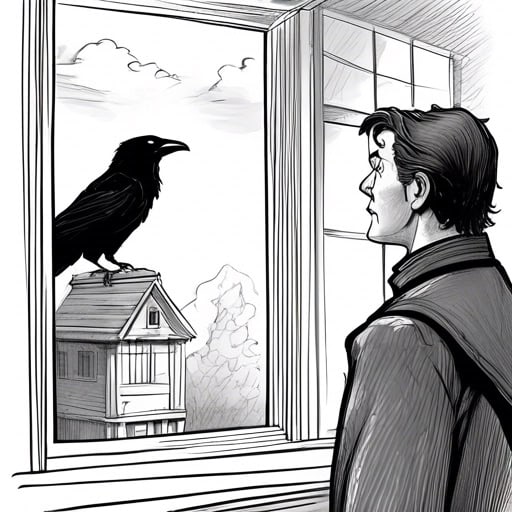
The Arrival of the Raven
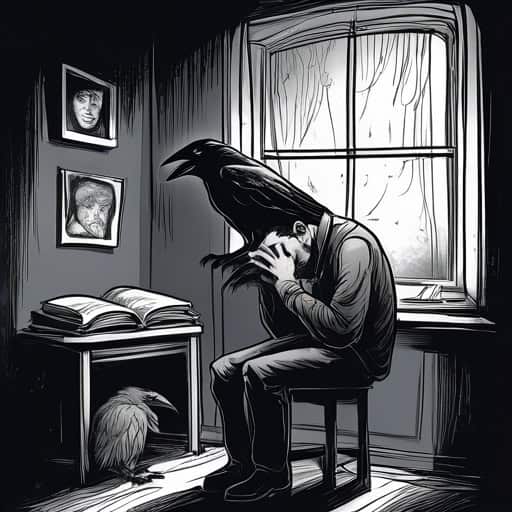
The Mans Despair
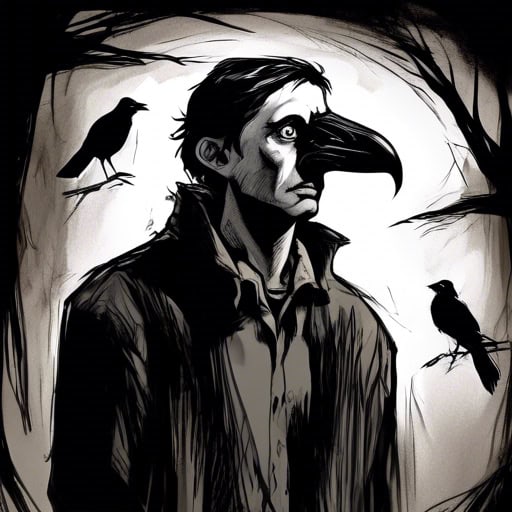
The Mans Madness
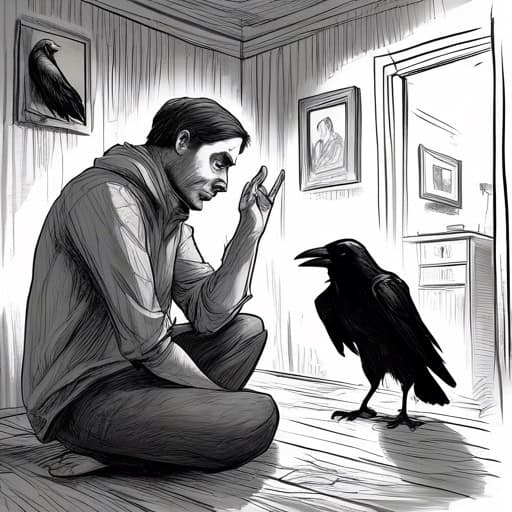
The Mans Desperation
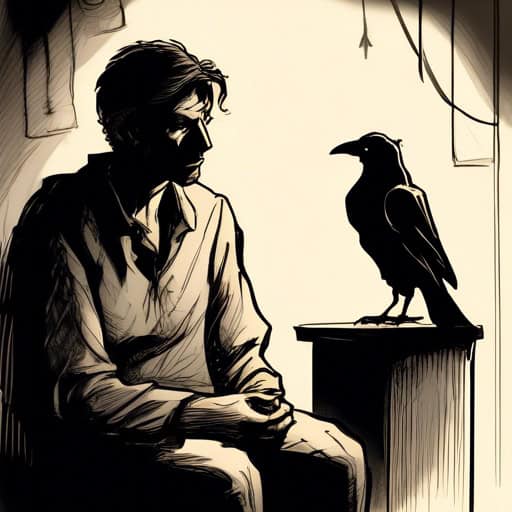
The Mans Acceptance
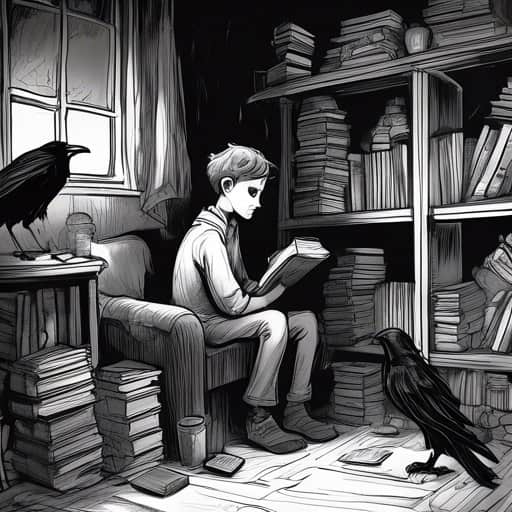
The Mans Isolation
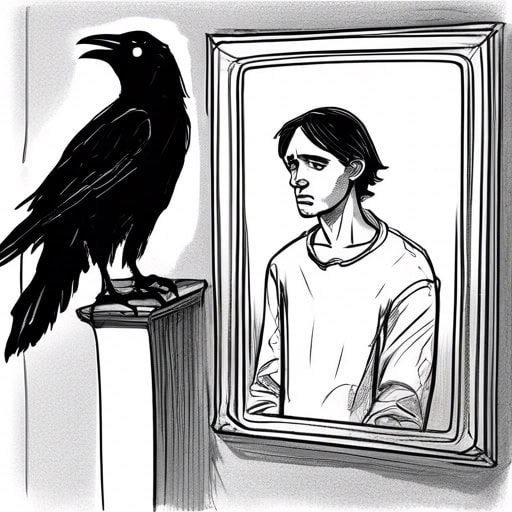
The Mans Reflection
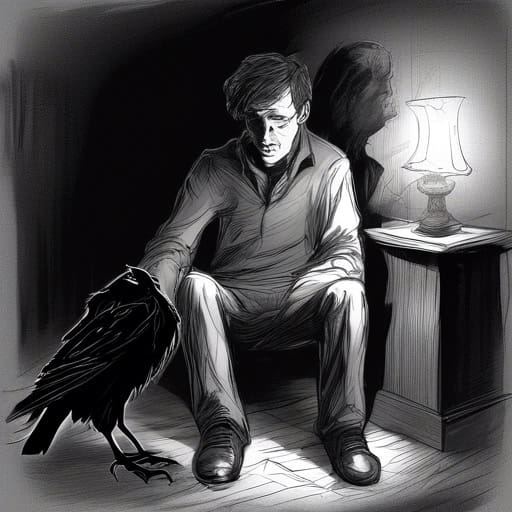
The Mans Ongoing Torment
The Legacy of The Raven
Lesson Details & Resources
In a Nutshell
- What: Poem ‘The Raven’ by Edgar Allan Poe
- When: Written in the 19th century
- Who: The main character is the narrator who is visited by a mysterious raven
- Theme: The theme of loss, mourning, and the supernatural
List of Characters in The Raven
-
The Narrator
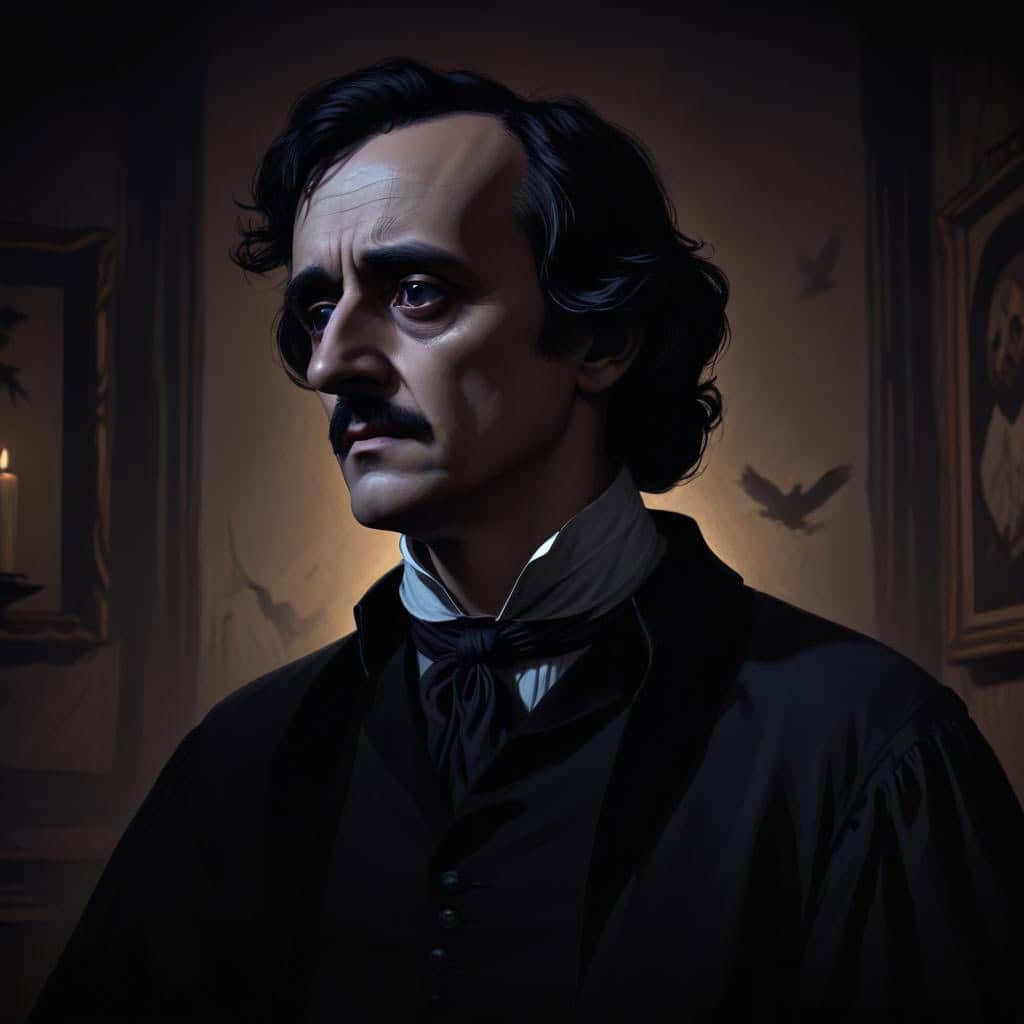
The Narrator is a grieving man who is visited by a mysterious talking raven.
-
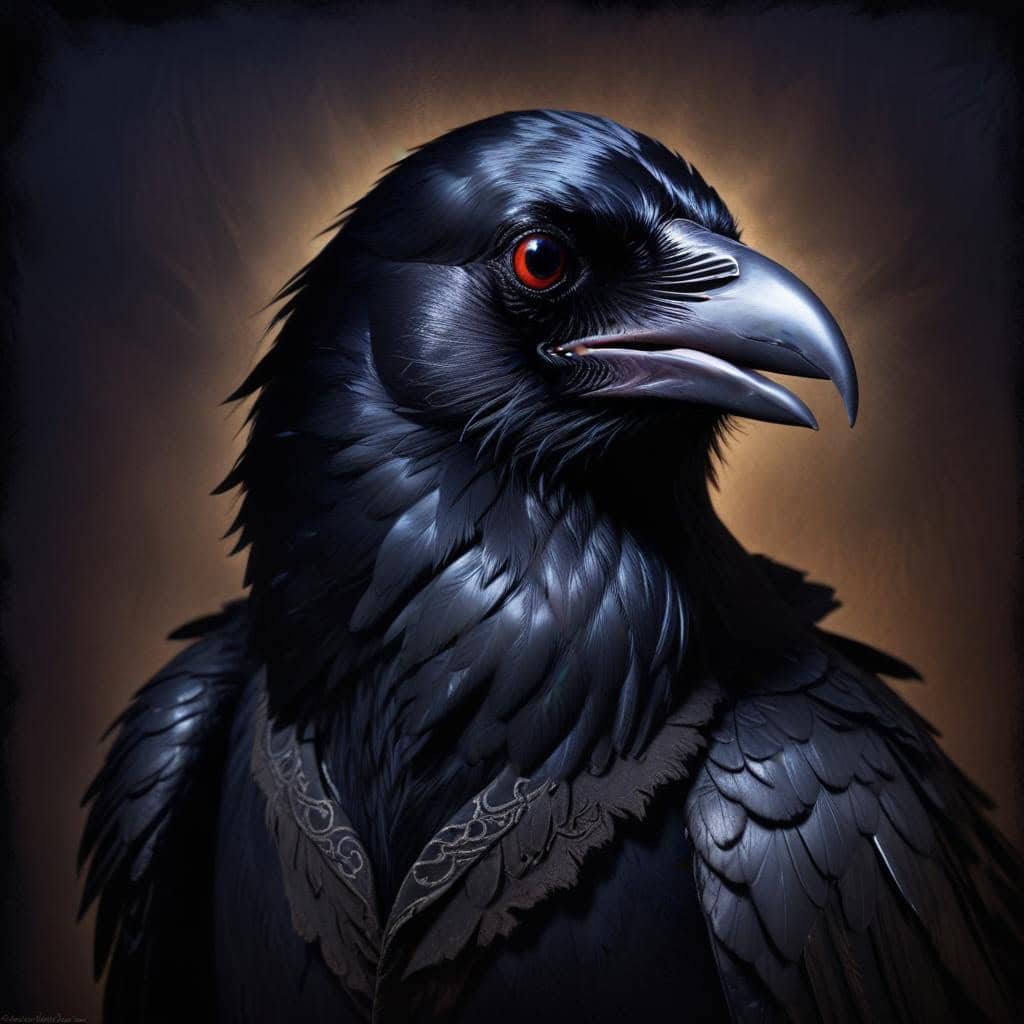
The Raven
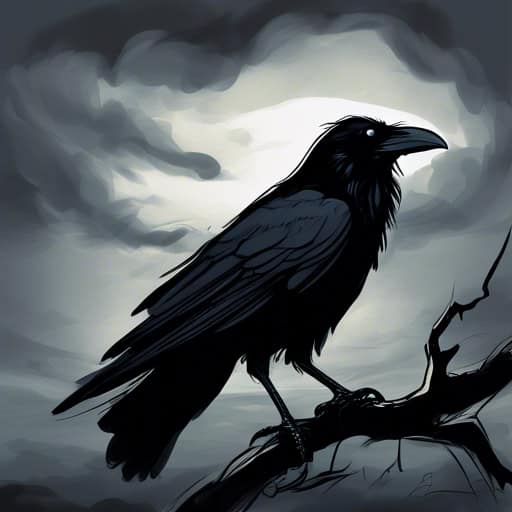
The Raven is a bird that enters the narrator's chambers and repeatedly says the word 'Nevermore'.
-
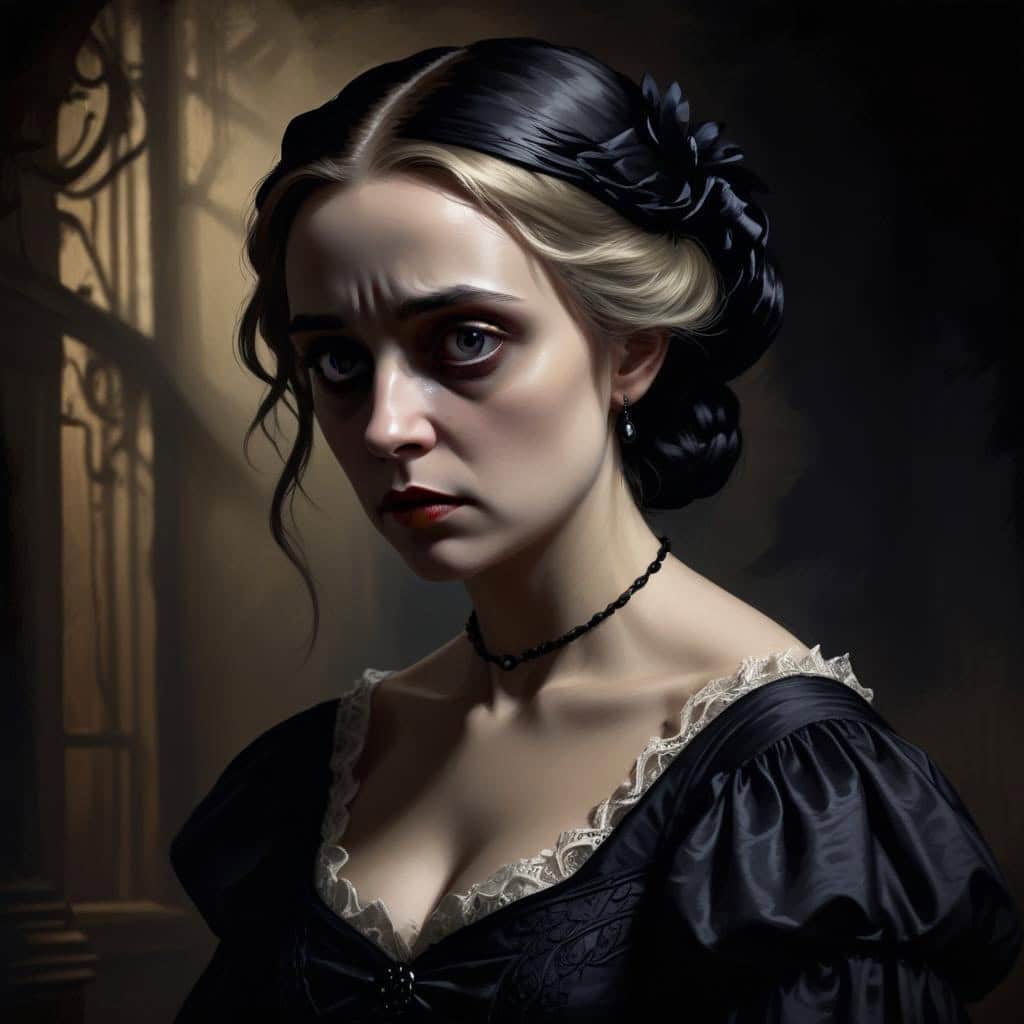
Lenore
Lenore is the narrator's deceased lover, whose memory haunts him throughout the poem.
Timeline of The Raven
The narrator is reading in his chamber late at night.
The narrator hears a tapping at his chamber door.
The narrator opens the door but finds nothing outside.
The tapping continues at the window, and the narrator opens it.
A raven flies into the narrator's chamber and perches above the door.
The narrator asks the raven questions, to which it responds with the word "Nevermore."
The narrator speculates on the meaning behind the raven's word.
The narrator believes the raven was sent by the devil.
The narrator becomes obsessed with the raven and its ominous presence.
The narrator starts questioning the raven about his lost love, Lenore.
The raven's constant response of "Nevermore" torments the narrator.
The narrator sinks into despair and madness.
The narrator imagines the raven's shadow forming a pallor over his soul.
The narrator accepts that he will never find solace from his grief.
The poem ends with the narrator stating that his soul will be lifted "Nevermore."
Vocabulary List
- Raven
- The titular bird in the poem that visits the narrator and symbolizes death and despair.
- Quoth
- An archaic word meaning 'said' or 'spoke,' used frequently by the raven in the poem.
- Lenore
- The name of the narrator's lost love, whose memory haunts him throughout the poem.
- Nevermore
- The repeated refrain of the raven, symbolizing the narrator's descent into hopelessness and despair.
- Pallas
- A reference to the ancient Greek goddess of wisdom, symbolizing the narrator's search for knowledge and understanding.
- Bust
- A sculpture or statue of a person's head and shoulders, mentioned in the poem as a symbol of the narrator's lost love.
- Ebony
- A dark, black color often associated with death and mourning, used to describe the raven's feathers in the poem.
- Ominous
- Foreboding or threatening, used to describe the atmosphere created by the raven's presence in the poem.
- Seraphim
- Angelic beings in Christian theology, referenced in the poem as a contrast to the darkness and despair of the raven.
- Prophet
- One who foretells or predicts the future, a title given to the raven in the poem for its cryptic messages to the narrator.
Key Facts
This is the information used in the fact matching game
- - The Raven is a narrative poem written by Edgar Allan Poe.
- - It was first published in 1845 and is considered one of Poe's most famous works.
- - The poem tells the story of a man who is visited by a talking raven.
- - The protagonist is mourning the loss of his beloved Lenore.
- - The raven repeatedly utters the word "Nevermore," driving the protagonist to madness.
- - The poem explores themes of grief, loss, and the human psyche.
- - Poe wrote The Raven in a form known as trochaic octameter, giving it a rhythmic and haunting quality.
- - The poem is known for its use of symbolism and dark imagery.
- - It is often interpreted as an allegory for the narrator's descent into madness.
- - The raven itself has been interpreted as a symbol of death, the supernatural, or the narrator's own subconscious.
- - The poem's refrain of "Nevermore" creates a sense of despair and hopelessness.
- - The Raven is known for its melancholic tone and its exploration of the macabre.
- - It has been widely studied and analyzed by literary scholars and critics.
- - The poem's popularity helped solidify Poe's reputation as a master of the macabre.
- - It has been referenced and parodied in various forms of popular culture, including literature, music, and film.
- - The Raven was an immediate success upon its publication and brought Poe both fame and financial stability.
- - The poem's eerie atmosphere and psychological depth continue to captivate readers to this day.
- - The Raven is often included in collections of Poe's works and is regarded as a classic of American literature.
- - It remains one of the most well-known and celebrated poems ever written.
- - The legacy of The Raven has had a lasting impact on the horror and gothic genres in literature.
Analysis & Significance
Impact on Literature
‘The Raven’ by Edgar Allan Poe has had a profound impact on literature, particularly in the realm of gothic poetry. Its dark and haunting themes, along with its innovative use of symbolism and rhythm, have inspired countless poets and writers to explore similar themes of grief, loss, and madness in their own works.
Enduring Themes
The timeless themes of ‘The Raven’ still resonate with modern audiences today. The poem’s exploration of the human psyche, the nature of death, and the overwhelming power of grief continue to captivate readers and provoke thought on the human condition and the mysteries of existence.
Cultural Significance Today
‘The Raven’ remains a cultural touchstone, with its iconic lines and imagery referenced in popular culture, from films to music to literature. The poem’s influence can be seen in various adaptations and reinterpretations, solidifying its place as a classic work of American literature that continues to captivate and inspire audiences worldwide.
The Raven Games


Take Your Learning Offline
Want a convenient, print-ready study guide for this lesson? Become a Memory Wizards Pro member to unlock the downloadable " Memory Scrolls" for this topic and our entire library!
- ✓ Complete Vocabulary Lists
- ✓ Key Facts & Timelines
- ✓ Beautifully Formatted for Print & Mobile
Dive Deeper

A Quiet Madness: A Biographical Novel of Edgar Allan Poe
This captivating biographical novel delves into the enigmatic life of Edgar Allan Poe, offering a deep and immersive exploration of the man behind the haunting tales and poems.
View on Amazon
The Raven
This classic poem by Edgar Allan Poe is a must-read for anyone interested in delving into the dark and haunting themes of Gothic literature.
View on AmazonTo help us keep Memory Wizards running and create more magical learning content, we are a participant in the Amazon Associates Program. If you make a purchase through the links on this page, we may earn a small commission at no extra cost to you. We only recommend resources we believe in.