
Summary of The Year of the 4 Emperors
Unveiling the tumultuous power struggles that shook ancient Rome.
How Do You Learn Best?
Learn by Reading
Immerse yourself in the 10-minute visual lesson for a comprehensive understanding of the topic.
Learn by Reviewing
Jump directly to the key facts, timeline, and vocabulary lists to build a solid foundation of details.
Learn by Doing
Challenge yourself! Jump straight into the interactive games to learn by trial, error, and discovery.
The Year of the 4 Emperors in 10 Minutes
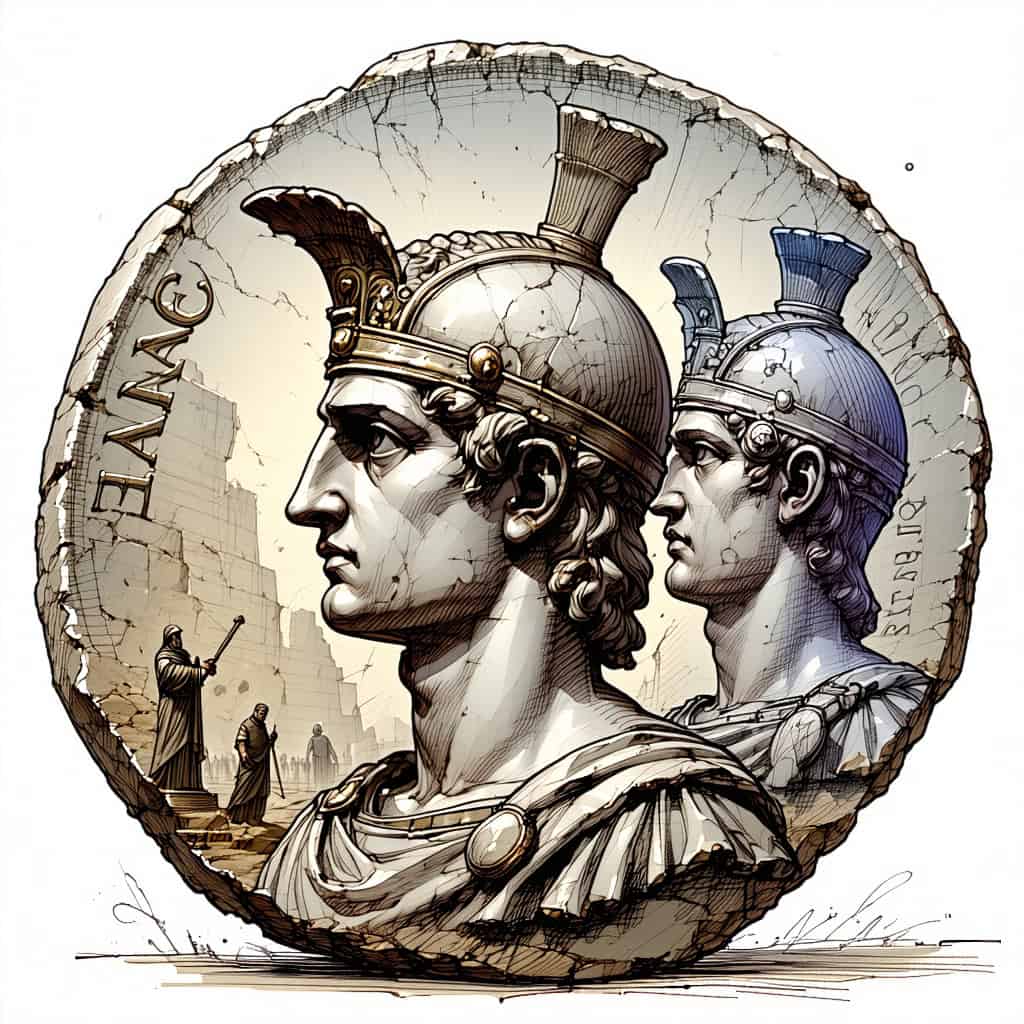
Introduction
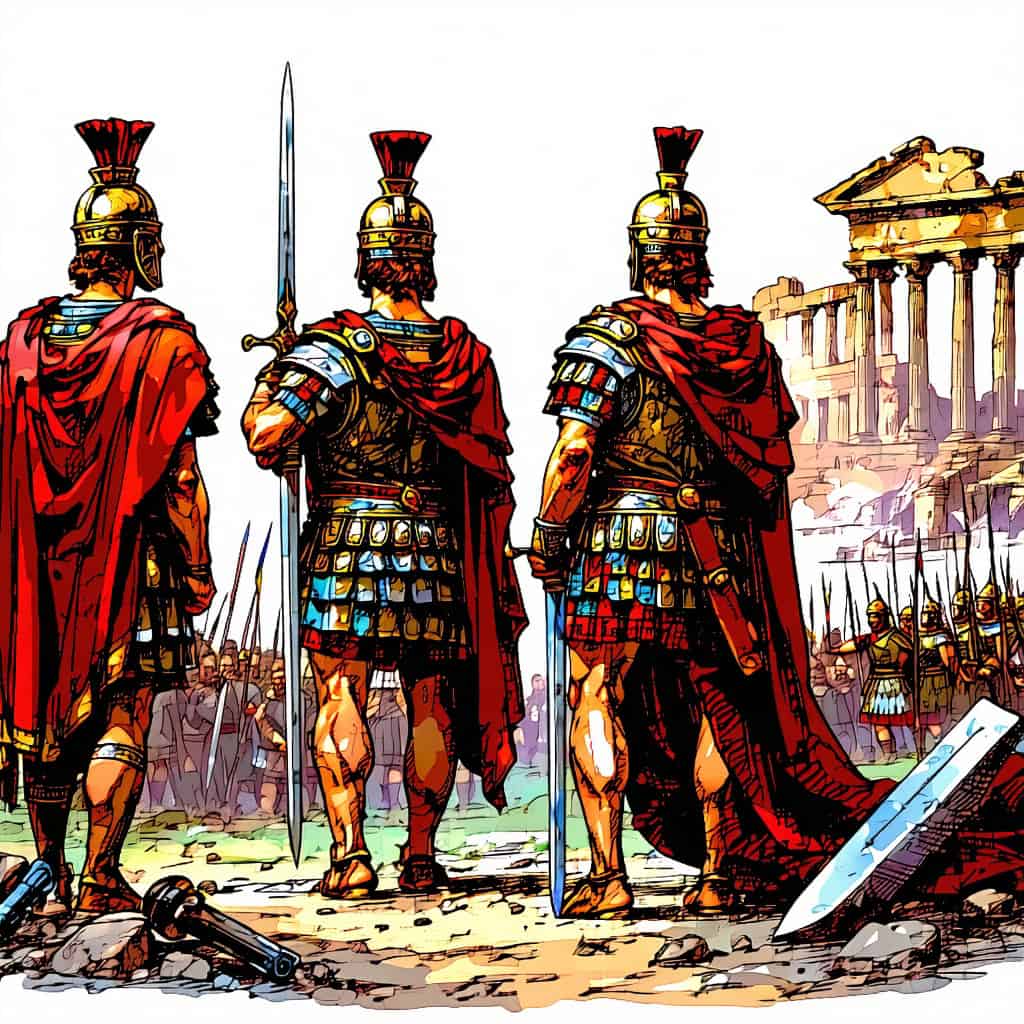

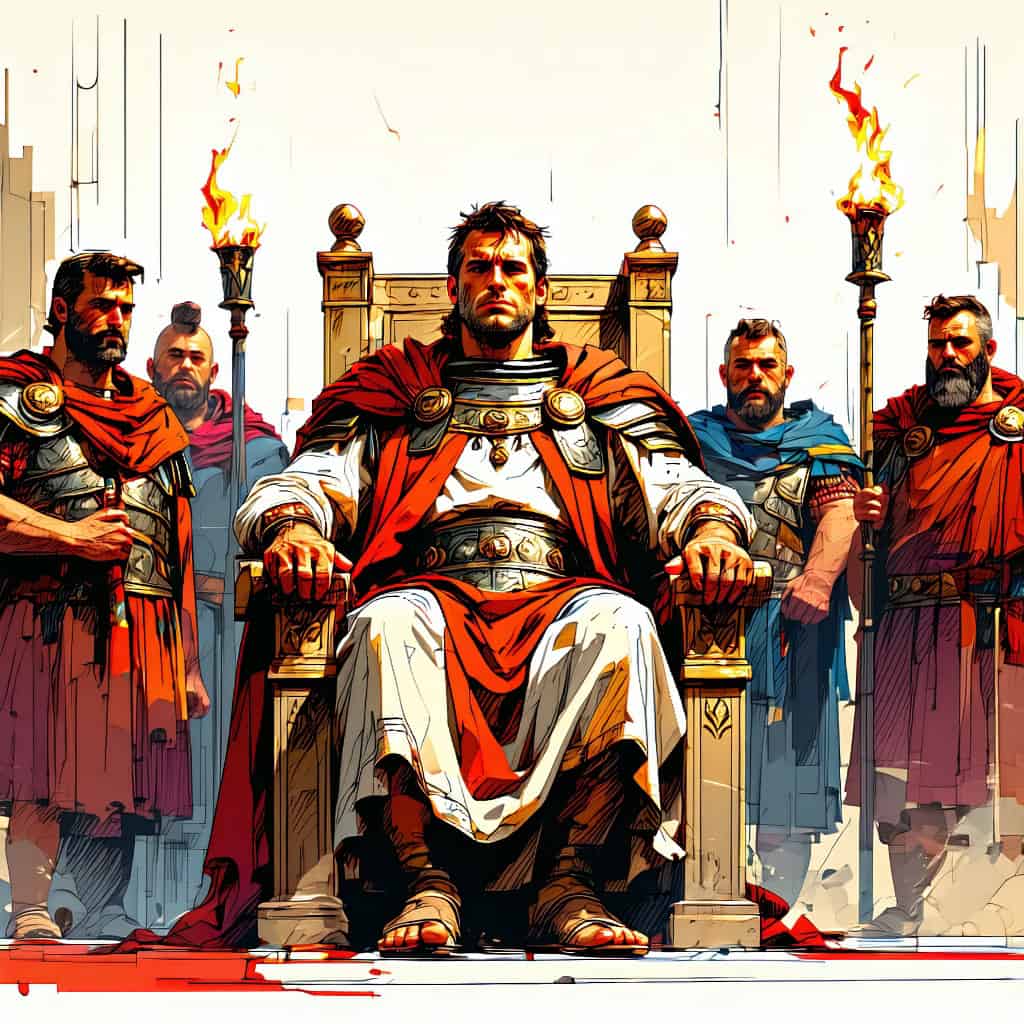
Galba
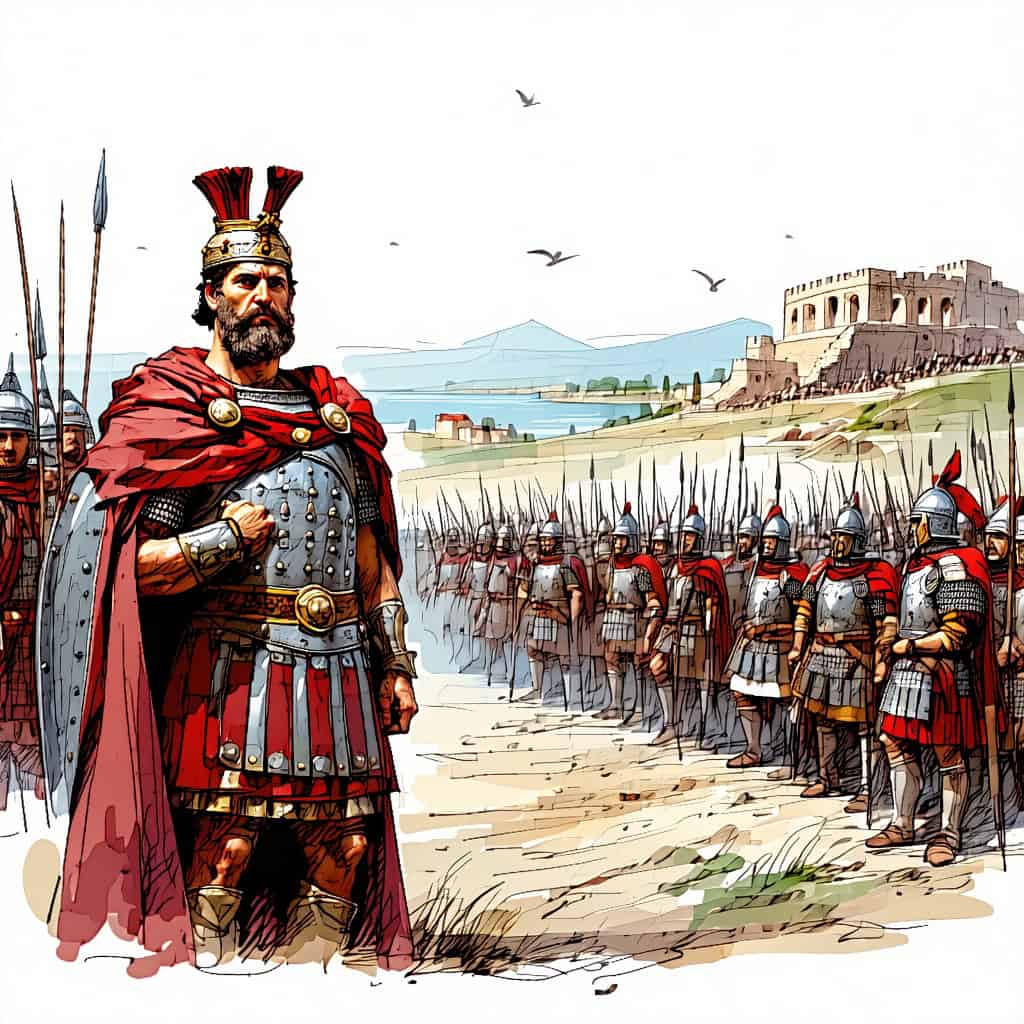
Otho
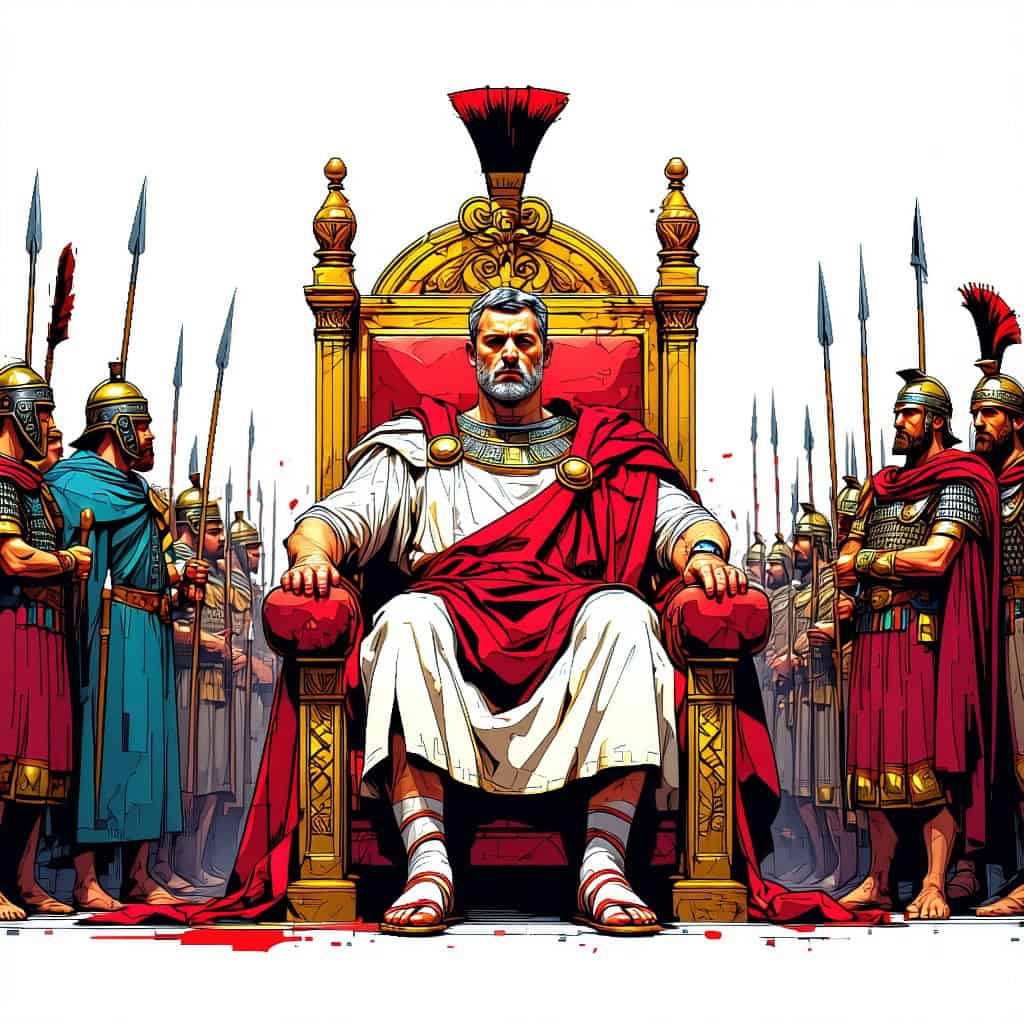
Vitellius
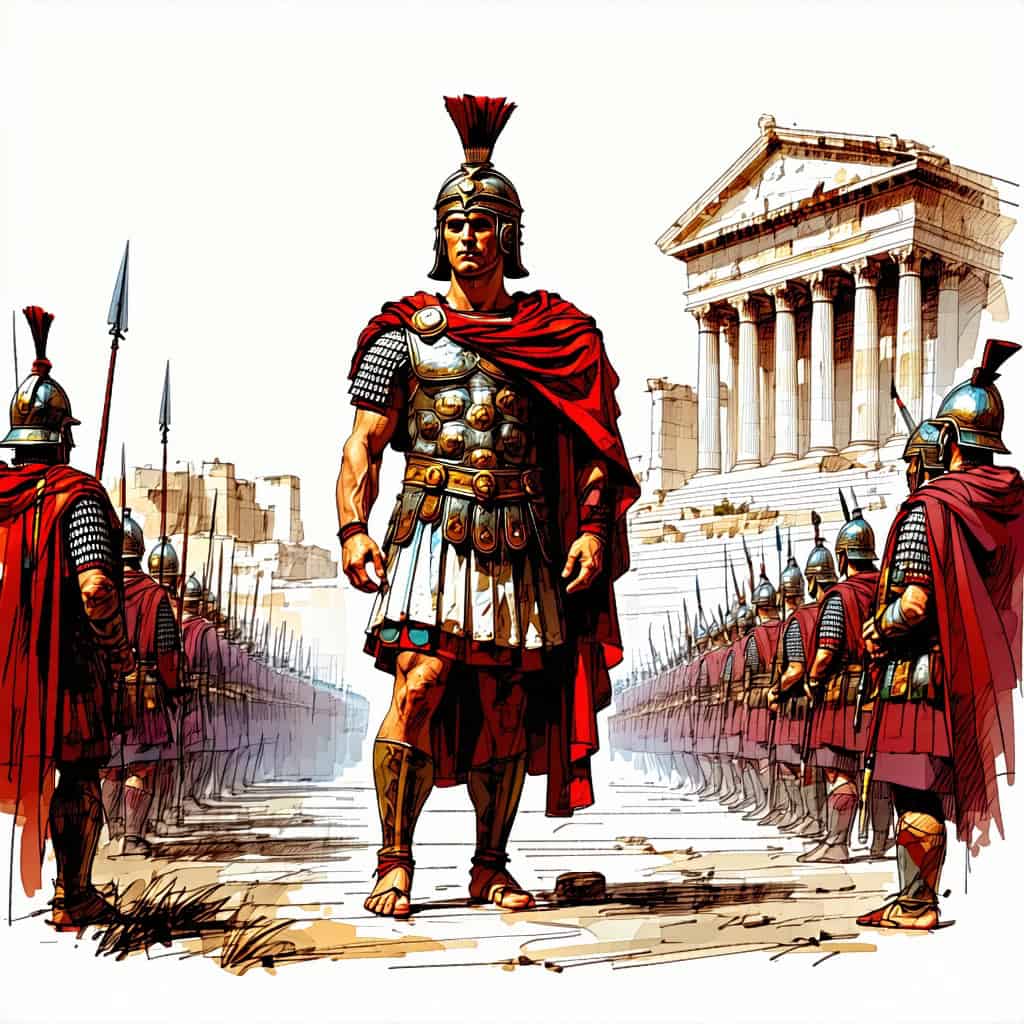
Vespasian

1. Death of Emperor Nero

2. Galbas Rise to Power

3. Othos Rebellion

4. Vitellius Claim to the Throne

5. Vespasians Rebellion

6. Battle of Cremona

7. Vespasians Reign

8. Legacy of the Year of the 4 Emperors

9. Impact on Roman Society

10. Lessons Learned
Lesson Details & Resources
In a Nutshell
- What: A period in ancient Roman history marked by the rapid succession of four emperors in the year 69 AD.
- When: Year 69 AD
- Who: Galba, Otho, Vitellius, and Vespasian
- Outcome: The instability and chaos of the Year of the Four Emperors eventually led to the establishment of the Flavian dynasty with Vespasian as the new emperor.
Famous Figures in the The Year of the 4 Emperors
-
Vindex
A Roman governor who rebelled against Nero's rule and initiated a revolt.
-
Galba
A Roman general who became the first emperor in the Year of the Four Emperors.
-
Otho
A Roman nobleman who briefly ruled as emperor after Galba's assassination.
-
Vitellius
A Roman general who was proclaimed emperor by his troops, leading to the downfall of Otho.
-
Vespasian
A Roman general who eventually became the emperor after the Year of the Four Emperors.
-
Titus
The successor of Vespasian, known for his military accomplishments and completed the Colosseum.
-
Domitian
The youngest son of Vespasian, who succeeded his brother Titus as the emperor of Rome.
-
Nero
The last emperor of the Flavian dynasty who faced numerous revolts during his reign.
-
Aulus Vitellius
A Roman general and senator who assumed the imperial power after the death of Otho.
-
Servius Sulpicius Galba
A Roman general and senator who became the emperor after the assassination of Galba.
Timeline of The Year of the 4 Emperors
Death of Emperor Nero
Galba declared Emperor
Otho declared Emperor
Vitellius declared Emperor
Vespasian declared Emperor
Battle of Bedriacum
Galba assassinated
Otho commits suicide
Vitellius takes control of Rome
Vespasian's forces capture Rome
Vitellius executed
Vespasian officially becomes Emperor
Construction of the Colosseum begins
Titus becomes Vespasian's heir
Fire breaks out in Rome
Completion of the Colosseum
Destruction of the Temple of Jerusalem
Death of Vespasian
Titus becomes Emperor
Eruption of Mount Vesuvius
Vocabulary List
- Year of the 4 Emperors
- Refers to the year 69 AD when four emperors ruled in quick succession after the downfall of Nero
- Galba
- The first emperor during the Year of the 4 Emperors, ruled for a short period before being assassinated
- Otho
- Succeeded Galba as emperor but also faced opposition and committed suicide
- Vitellius
- Became the next emperor after Otho but was eventually overthrown by Vespasian
- Vespasian
- The fourth and final emperor during the Year of the 4 Emperors, established the Flavian dynasty
- Flavian dynasty
- The dynasty established by Vespasian and his sons which ruled the Roman Empire from 69 to 96 AD
- Nero
- The emperor preceding the Year of the 4 Emperors, known for his tyrannical rule and eventual suicide
- Civil War
- The conflict and power struggle among the various factions and generals during the Year of the 4 Emperors
- Legions
- The Roman military units that played a crucial role in the support and overthrow of the emperors
- Rome
- The capital city of the Roman Empire, where most of the events related to the Year of the 4 Emperors took place
Key Facts
This is the information used in the fact matching game
- The Year of the Four Emperors occurred in ancient Rome in 69 AD
- It was a period of civil war and political instability
- The four emperors who ruled that year were Galba, Otho, Vitellius, and Vespasian
- Galba was the first emperor of the year, ruling from January to April
- Otho succeeded Galba but only reigned for three months before committing suicide
- Vitellius took power after Otho's death but was eventually defeated by Vespasian's forces
- Vespasian emerged as the final emperor of the year, establishing the Flavian dynasty
- The civil war was triggered by the suicide of Emperor Nero in 68 AD
- The unrest and power struggles were fueled by rival military factions and the discontent of the Roman legions
- Each of the four emperors faced challenges and opposition from different parts of the Roman Empire
- The Year of the Four Emperors marked the end of the Julio-Claudian dynasty
- It was a chaotic and violent time, with battles and conflicts taking place across the empire
- The Roman Senate played a significant role in the rise and fall of these emperors
- Vitellius was known for his lavish banquets and excessive lifestyle
- Vespasian's victory in the civil war marked the beginning of a stable period in Roman history
- Vespasian's rule was characterized by military success, infrastructure projects, and financial reforms
- The Colosseum in Rome, one of the most iconic Roman landmarks, was built during Vespasian's reign
- The Year of the Four Emperors had a profound impact on the Roman Empire, leading to significant political and social changes
- The civil war exposed the vulnerability and fragility of the imperial system
- The events of this year were chronicled by several ancient historians, including Tacitus and Suetonius.
Analysis & Significance
Immediate Consequences
The Year of the 4 Emperors, a period of civil war in ancient Rome, resulted in political instability and chaos. The rapid succession of four different emperors within a year led to widespread uncertainty and unrest among the Roman people.
Long-Term Impact
This turbulent year had a lasting impact on the Roman Empire, as it highlighted the weakness of the imperial system and the potential for power struggles. It also set the stage for future civil wars and further destabilized the political landscape of Rome.
Cultural Significance Today
The Year of the 4 Emperors is remembered as a pivotal moment in Roman history, illustrating the dangers of political instability and leadership crises. It serves as a cautionary tale about the consequences of power struggles and the importance of strong leadership in maintaining the stability of a society. Its legacy continues to influence discussions on governance and politics in modern times.
The Year of the 4 Emperors Games


Take Your Learning Offline
Want a convenient, print-ready study guide for this lesson? Become a Memory Wizards Pro member to unlock the downloadable " Memory Scrolls" for this topic and our entire library!
- ✓ Complete Vocabulary Lists
- ✓ Key Facts & Timelines
- ✓ Beautifully Formatted for Print & Mobile