
Summary of The Siege of Jerusalem (70 AD)
Uncover the ancient city's epic fall through the eyes of history.
How Do You Learn Best?
Learn by Reading
Immerse yourself in the 10-minute visual lesson for a comprehensive understanding of the topic.
Learn by Reviewing
Jump directly to the key facts, timeline, and vocabulary lists to build a solid foundation of details.
Learn by Doing
Challenge yourself! Jump straight into the interactive games to learn by trial, error, and discovery.
The Siege of Jerusalem in 10 Minutes
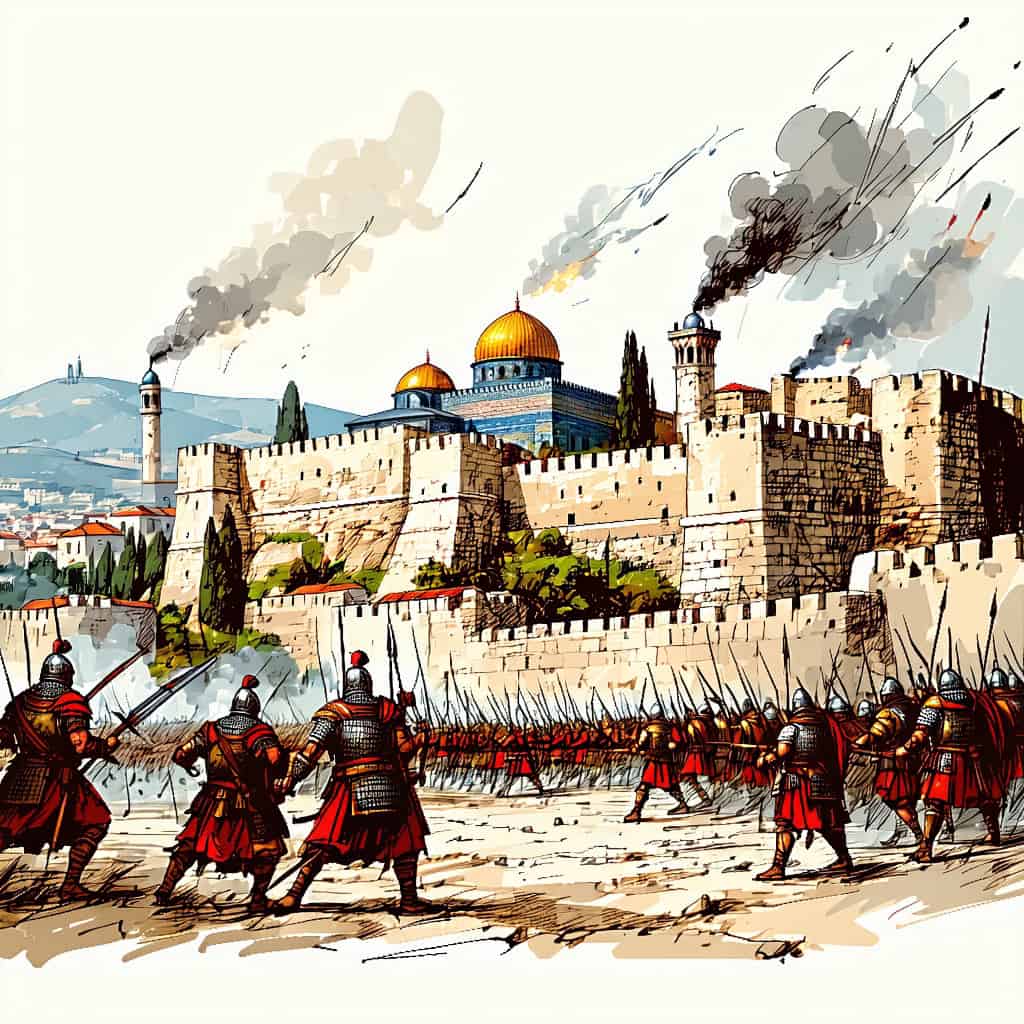
Introduction
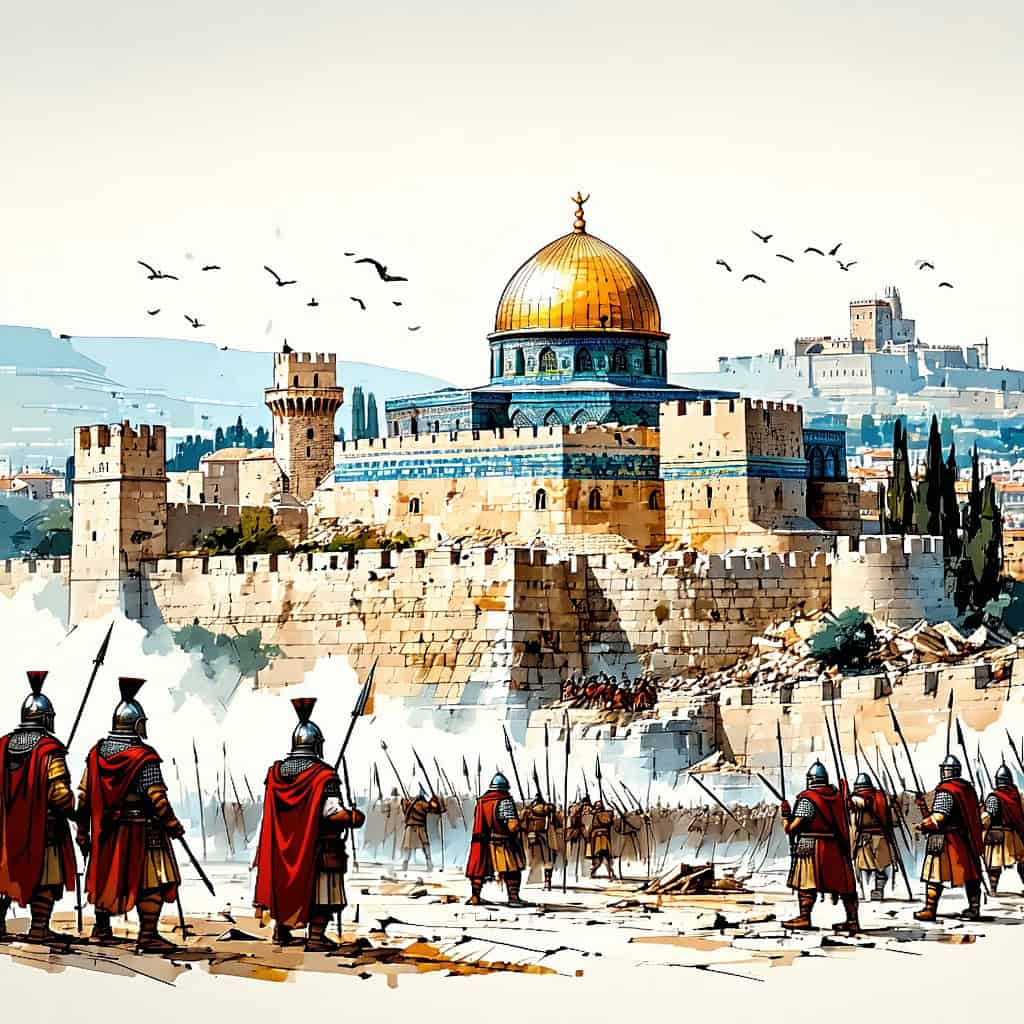
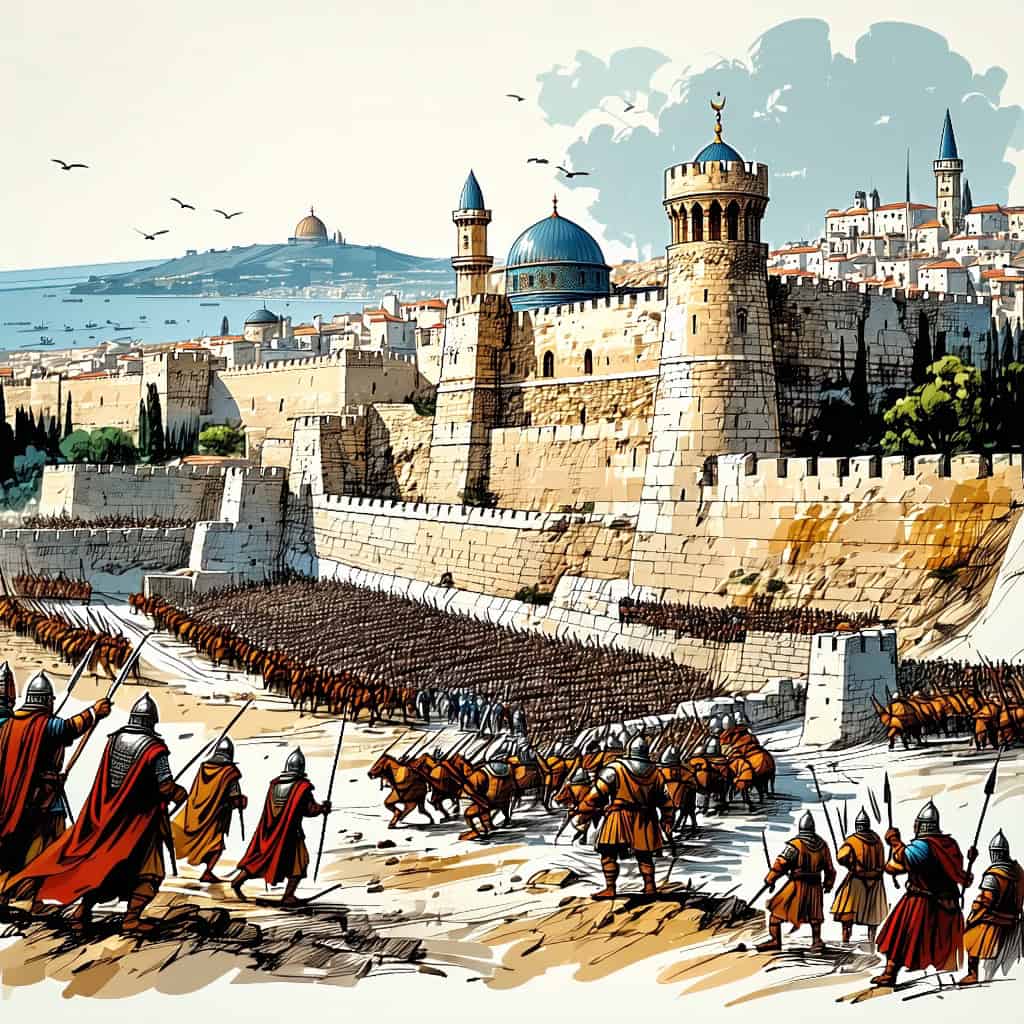
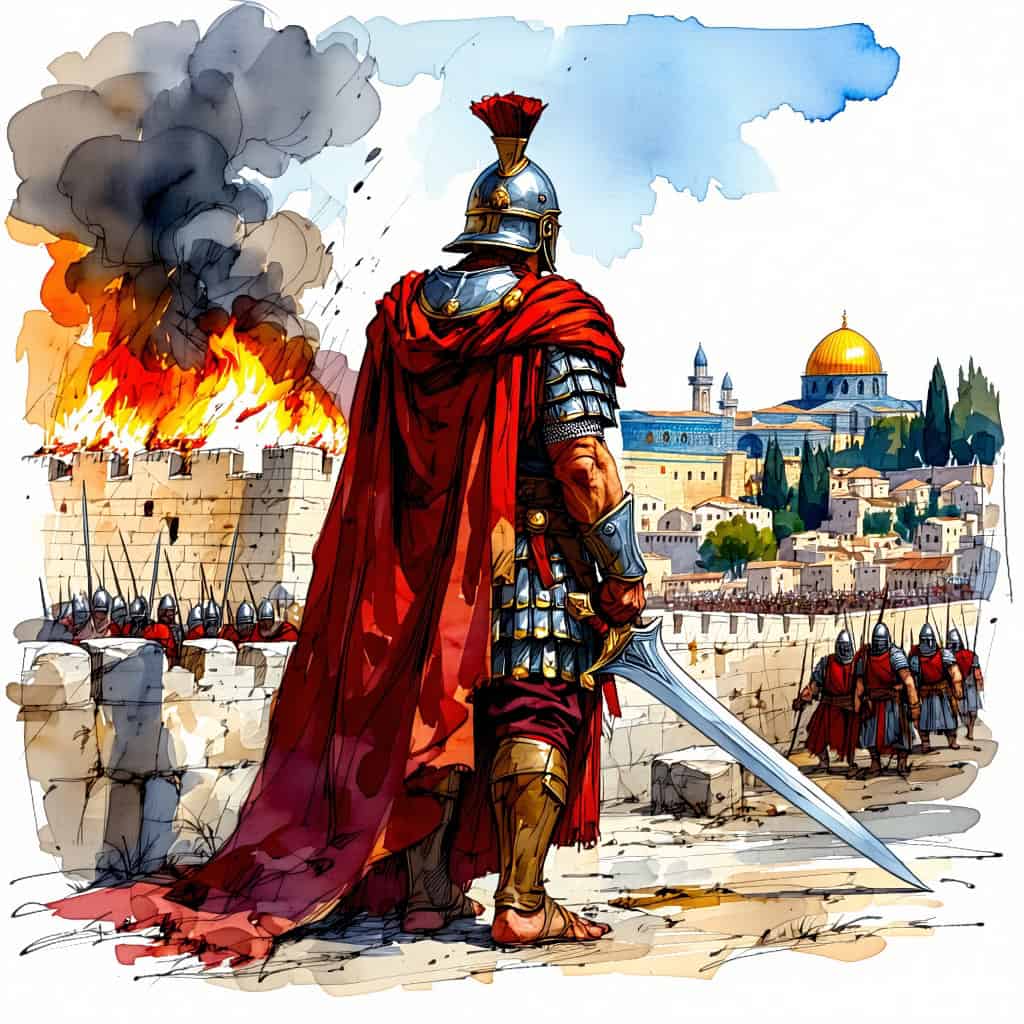
Titus
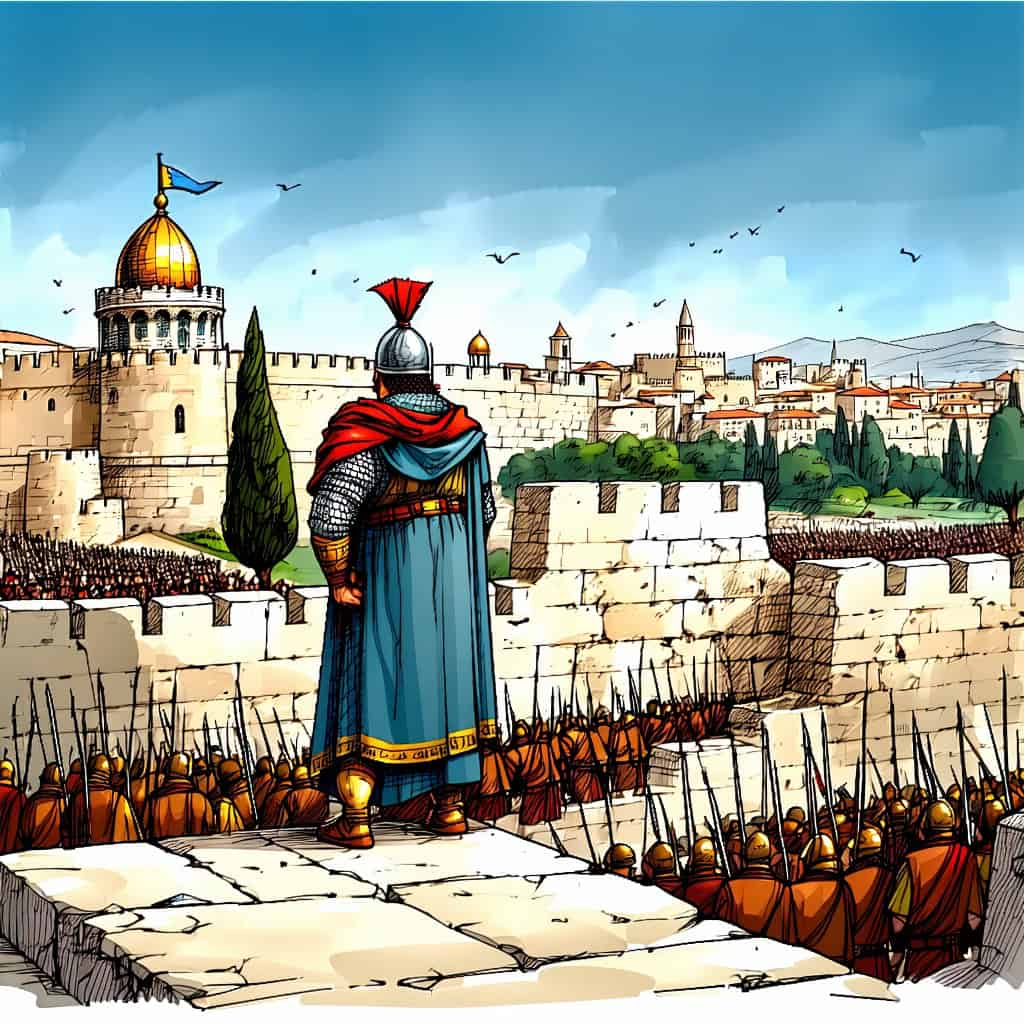
Josephus
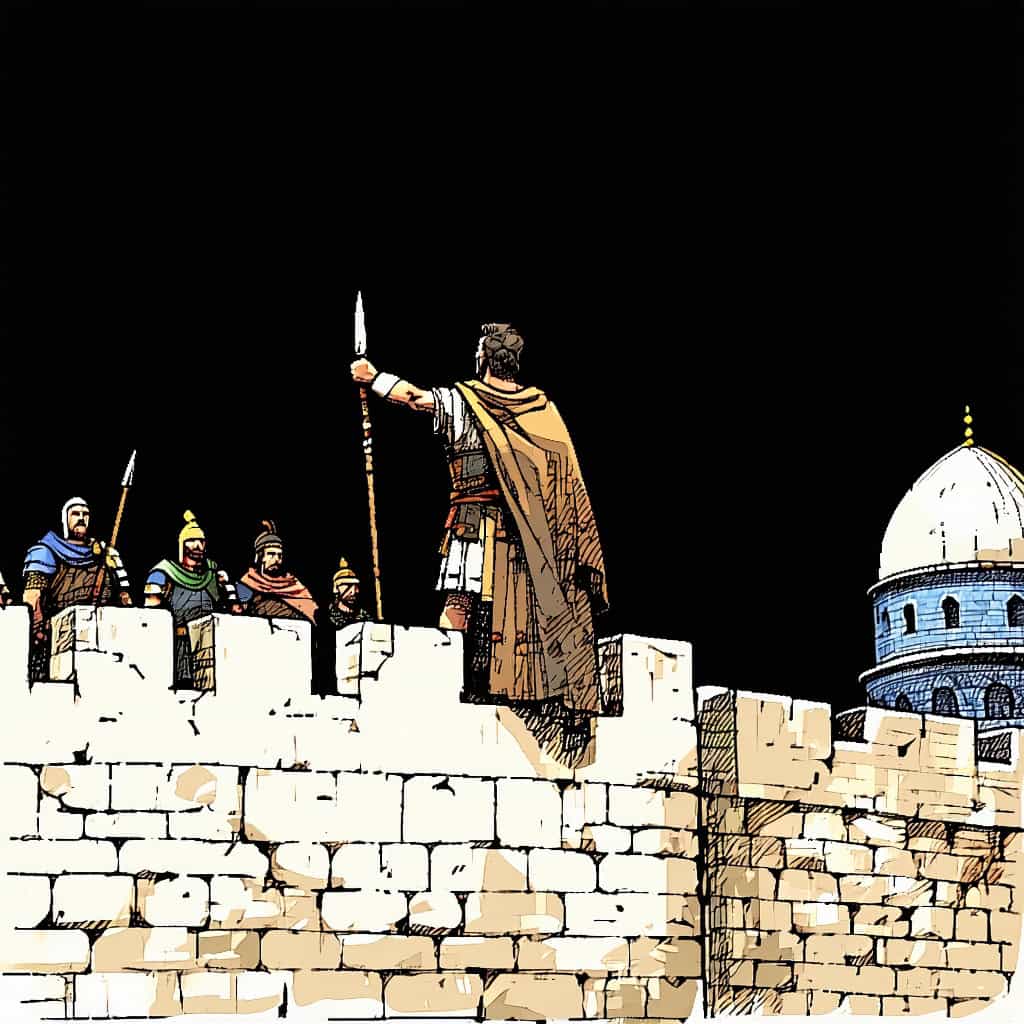
Simon bar Giora
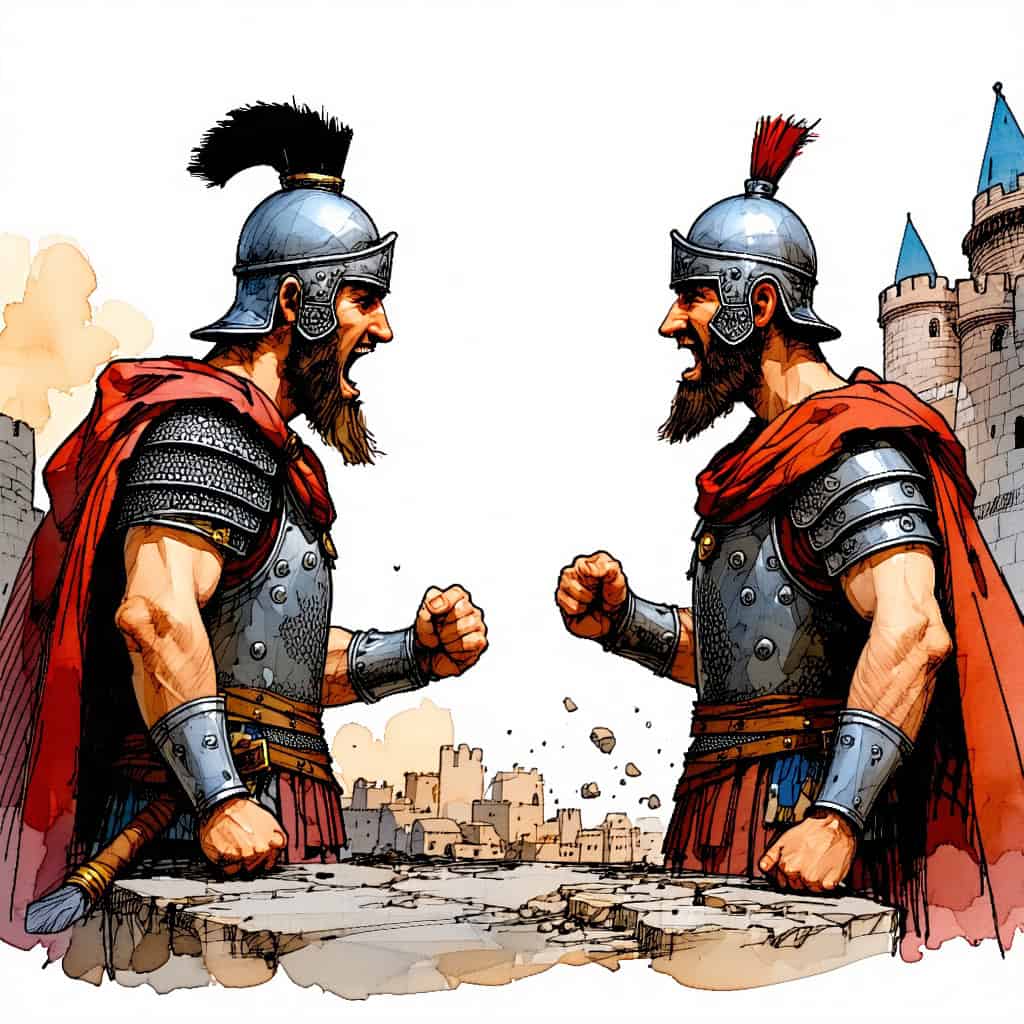
John of Giscala
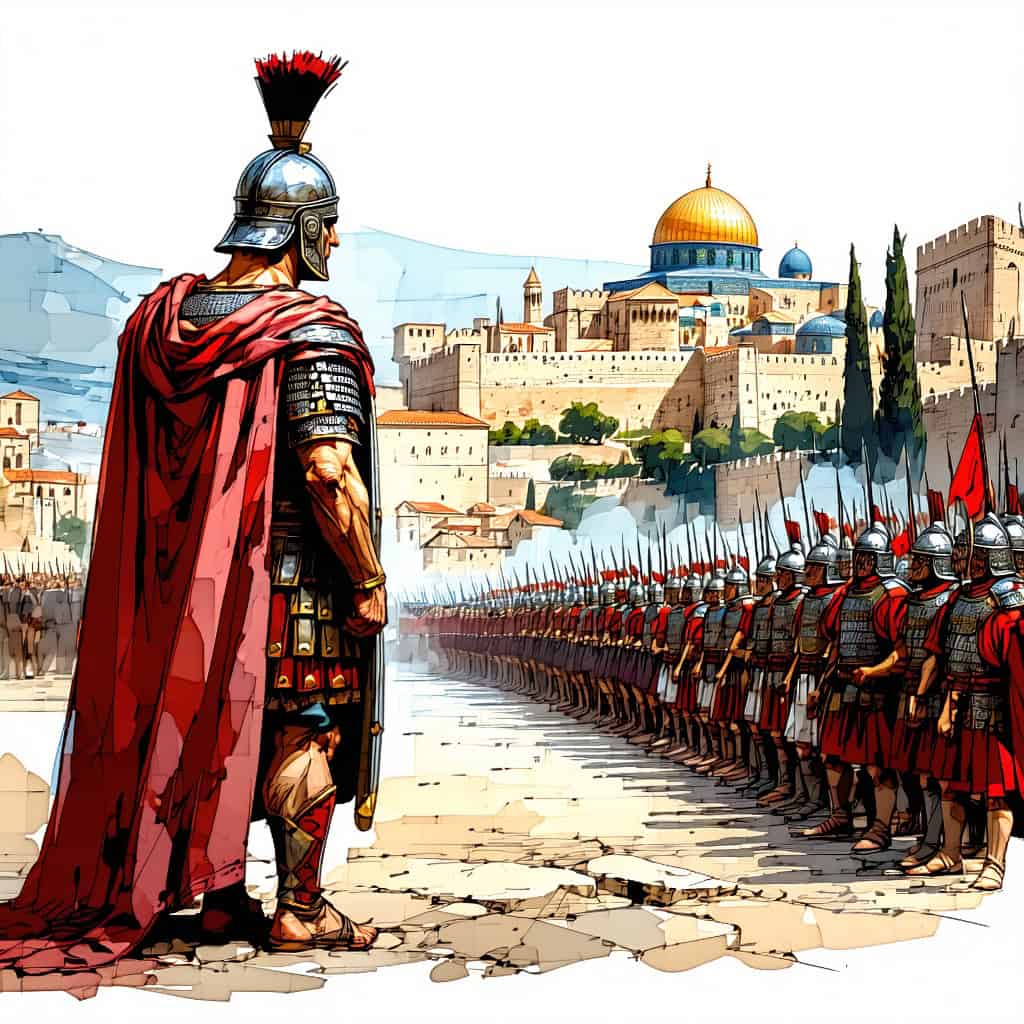
Emperor Vespasian

The Roman Army Surrounds Jerusalem

The Siege Begins

The Destruction of the Temple

The Fall of the City
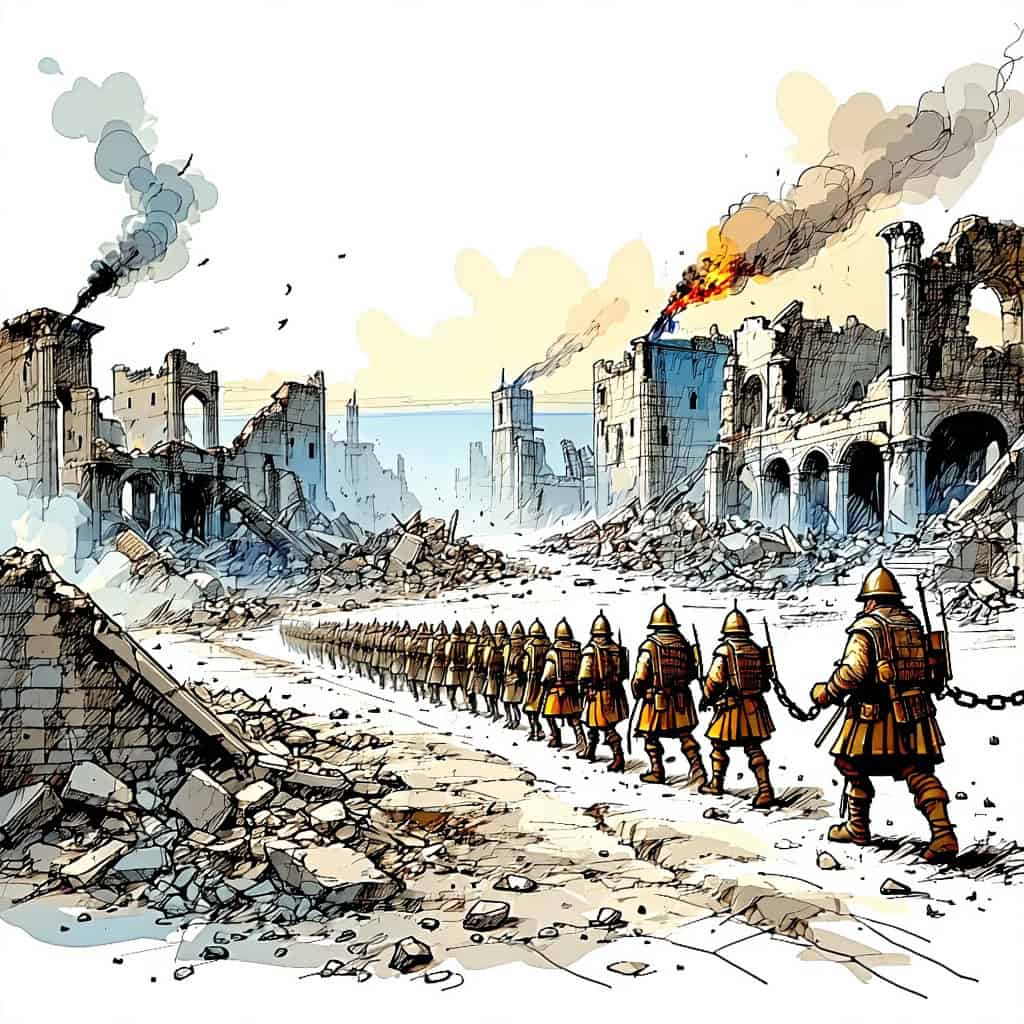
The Aftermath

The End of the Jewish Rebellion

The Impact on Jewish History

The Legacy of the Siege

Remembering the Siege

Conclusion
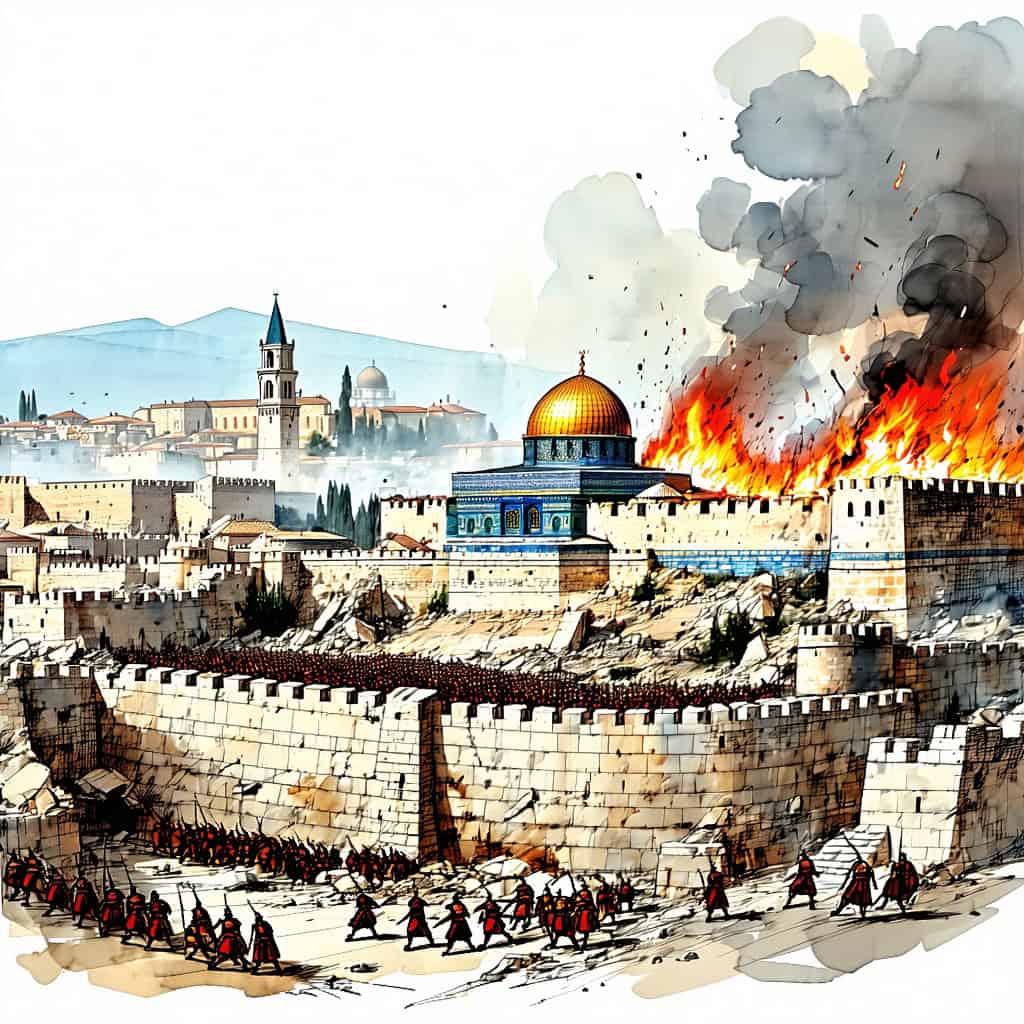
Lesson Details & Resources
In a Nutshell
- What: A significant event in the First Jewish-Roman War.
- When: 70 AD
- Who: Roman Empire, Jewish rebels, Titus
- Outcome: Destruction of the Second Temple in Jerusalem and the city itself.
Famous Figures in the The Siege of Jerusalem
-
Titus Flavius Josephus
Titus Flavius Josephus was a first-century Romano-Jewish scholar and historian who witnessed and documented the events of the Siege of Jerusalem.
-
Simon bar Giora
Simon bar Giora was a Jewish military leader who played a prominent role in the defense of Jerusalem against the Roman forces.
-
John of Giscala
John of Giscala was a Jewish Zealot leader who led a faction against both the Roman forces and other Jewish groups during the Siege of Jerusalem.
-
Yohanan ben Zakkai
Yohanan ben Zakkai was a Jewish sage who managed to escape Jerusalem during the siege and negotiated with the Roman general Vespasian, securing permission to establish a center for Jewish learning in Yavne.
-
Titus
Titus was the Roman military commander who led the siege and eventual destruction of Jerusalem.
-
Vespasian
Vespasian was the Roman Emperor who initially sent his son Titus to suppress the Jewish rebellion and later became the ruler of the Roman Empire.
Timeline of The Siege of Jerusalem
Roman General Titus surrounds Jerusalem
Jerusalem's food supplies are cut off
Siege ramps are built by the Romans
First breaches in Jerusalem's outer walls
Roman soldiers capture the Antonia Fortress
Jerusalem's Second Wall is breached
Roman soldiers enter the Temple Mount
The Holy Temple is set on fire
Massacre of Jewish defenders and civilians
Roman soldiers destroy the rest of Jerusalem's walls
Jerusalem is completely under Roman control
Roman soldiers begin to demolish the city
End of the Siege of Jerusalem
Jerusalem's Temple Mount is leveled
Roman forces leave Jerusalem
Roman Emperor Vespasian celebrates victory in Rome
Jewish prisoners are paraded in Rome during Triumph
Construction of Roman military camps in Jerusalem
Jerusalem's population is expelled or sold into slavery
Jewish resistance movements continue in other regions
Vocabulary List
- Siege
- The Siege of Jerusalem refers to the military blockade of the city by the Roman Empire in 70 AD.
- Jerusalem
- Jerusalem was the capital city of the Jewish kingdom and the primary target of the Roman siege.
- Roman Empire
- The Roman Empire was the ruling power that initiated the siege on Jerusalem.
- Jewish Kingdom
- The Jewish Kingdom encompassed the region where Jerusalem was located and faced the Roman siege.
- Military Blockade
- The siege involved the establishment of a military blockade around Jerusalem, cutting off supplies and isolating the city.
- Titus
- Titus was the Roman general who led the siege on Jerusalem.
- Destruction
- The siege resulted in the eventual destruction of Jerusalem and the Second Temple.
- Second Temple
- The Second Temple in Jerusalem was the central religious structure that was destroyed during the siege.
- Masada
- Masada was a fortress near Jerusalem that held out against the Roman siege for a longer period.
- Rebellion
- The siege was a result of the Jewish rebellion against Roman rule in the region.
Key Facts
This is the information used in the fact matching game
- The Siege of Jerusalem took place in 70 AD during the First Jewish-Roman War.
- The Roman army, led by Titus, besieged Jerusalem and eventually breached its walls.
- The Jewish defenders, known as Zealots, fought fiercely against the Roman forces.
- The siege lasted for several months, resulting in a severe food shortage within the city.
- The Romans built a wall around Jerusalem to isolate the city and prevent supplies from entering.
- The Zealots destroyed the food supplies within the city to demonstrate their commitment to resistance.
- Jerusalem's population swelled due to the influx of Jewish pilgrims arriving for the Passover festival.
- The city's crowded conditions during the siege contributed to the spread of disease.
- The Romans used battering rams and siege towers to breach the city's defenses.
- The Jewish resistance included guerrilla warfare tactics and tunneling under the Roman fortifications.
- The Romans captured the outer walls of Jerusalem and set fire to the city.
- The destruction of Jerusalem resulted in the complete devastation of the Second Temple.
- The Temple's treasures, including the menorah, were plundered by the Romans.
- Thousands of Jewish prisoners were taken captive by the Romans during the siege.
- The fall of Jerusalem marked the end of Jewish independence for nearly 2,000 years.
- The Arch of Titus in Rome depicts the triumphal procession after the siege, showcasing looted treasures.
- The Siege of Jerusalem is considered one of the most significant events in ancient Jewish history.
- The events of the siege were extensively documented by the Jewish historian Josephus.
- The Romans destroyed the city walls of Jerusalem, leaving only the Western Wall standing.
- The Siege of Jerusalem had a profound impact on the Jewish diaspora and shaped their religious beliefs.
Analysis & Significance
Immediate Consequences
The Siege of Jerusalem in 70 AD resulted in the destruction of the city and the Second Temple, leading to the dispersal of the Jewish population and the end of Jewish self-rule in Judea.
Long-Term Impact
This event marked a turning point in Jewish history, as it solidified the Jewish diaspora and set the stage for the development of Rabbinic Judaism. It also had significant implications for Christian theology, as the destruction of the Second Temple influenced the shift towards a more spiritual understanding of religion.
Cultural Significance Today
The Siege of Jerusalem continues to hold cultural and religious significance today, serving as a symbol of resilience and perseverance in the face of adversity. It also reminds us of the importance of understanding historical context and the impact of ancient events on modern society.
The Siege of Jerusalem Games


Take Your Learning Offline
Want a convenient, print-ready study guide for this lesson? Become a Memory Wizards Pro member to unlock the downloadable " Memory Scrolls" for this topic and our entire library!
- ✓ Complete Vocabulary Lists
- ✓ Key Facts & Timelines
- ✓ Beautifully Formatted for Print & Mobile