
Summary of the destrution of Pompeii
Uncover the tragic fate of Pompeii, frozen in time forever.
How Do You Learn Best?
Learn by Reading
Immerse yourself in the 10-minute visual lesson for a comprehensive understanding of the topic.
Learn by Reviewing
Jump directly to the key facts, timeline, and vocabulary lists to build a solid foundation of details.
Learn by Doing
Challenge yourself! Jump straight into the interactive games to learn by trial, error, and discovery.
the destrution of Pompeii in 10 Minutes

Introduction
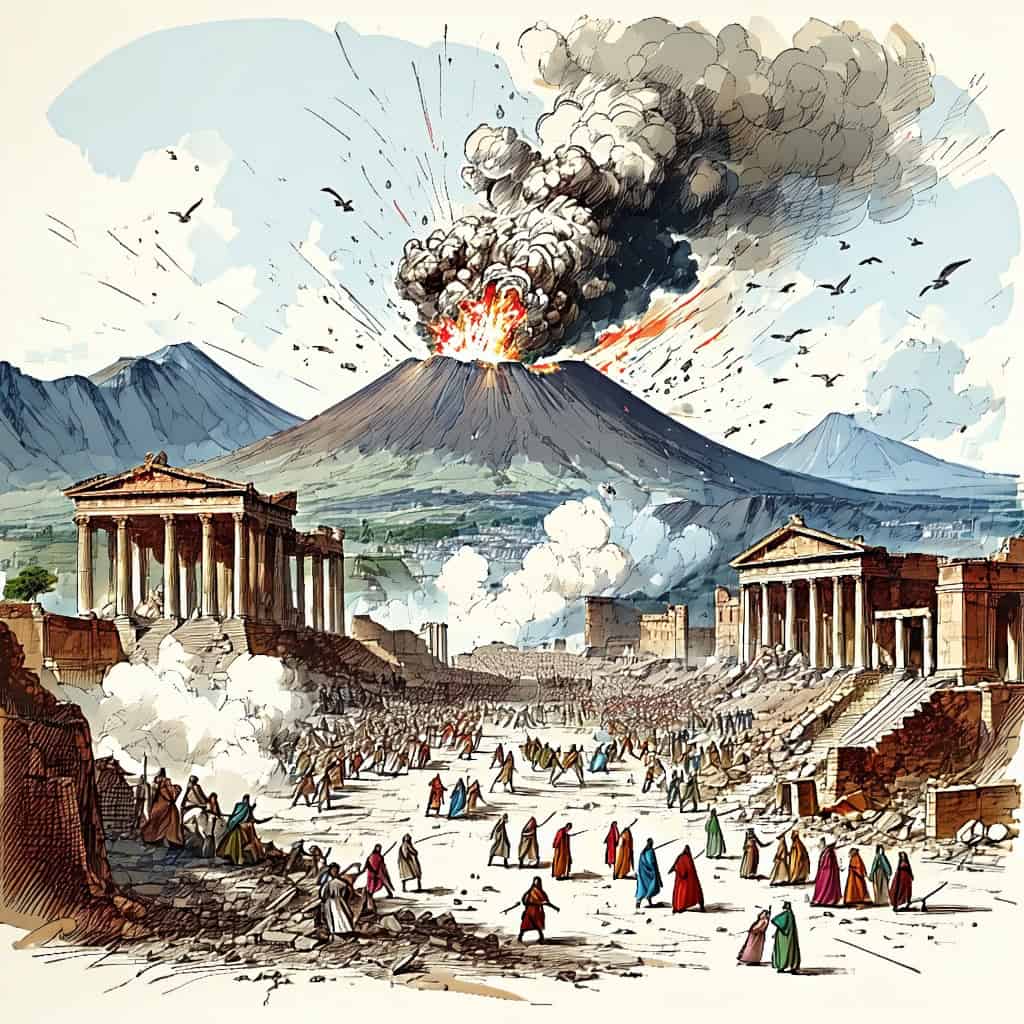

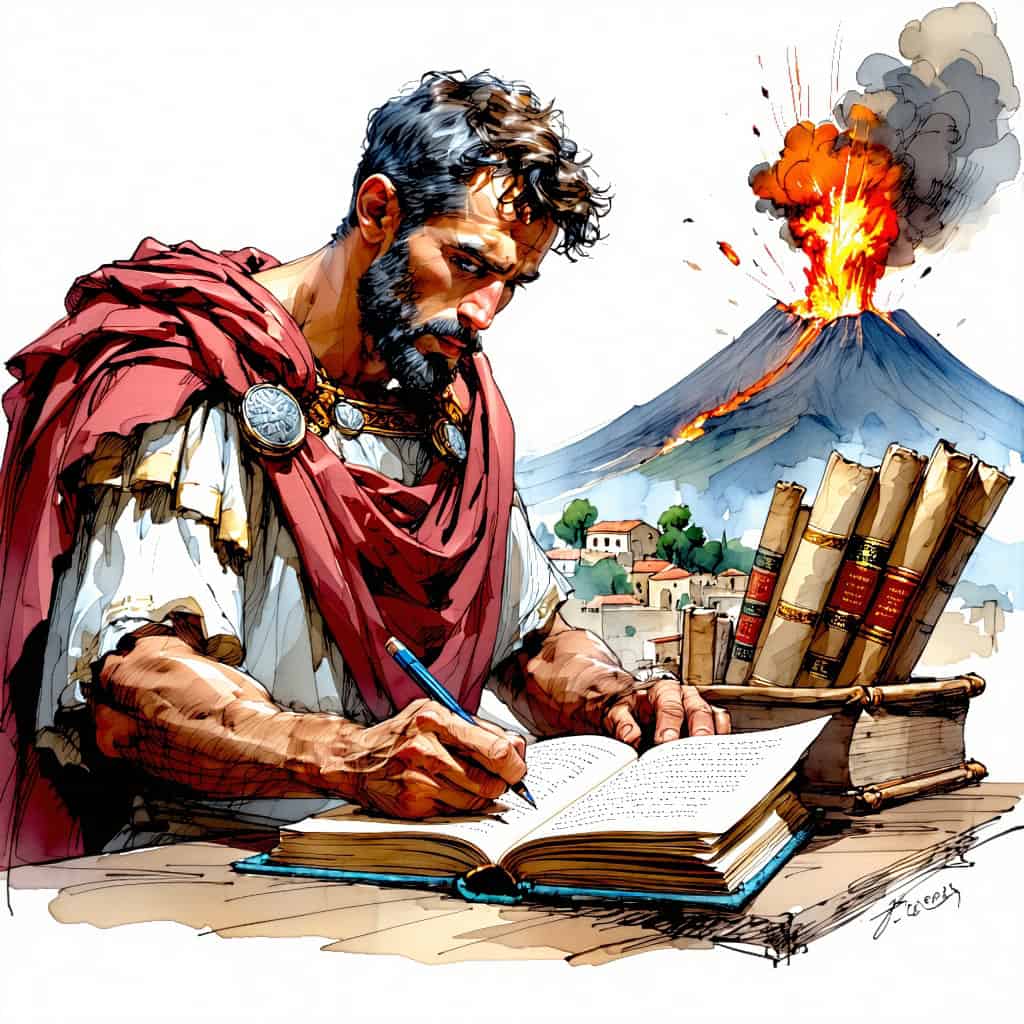
Pliny the Elder
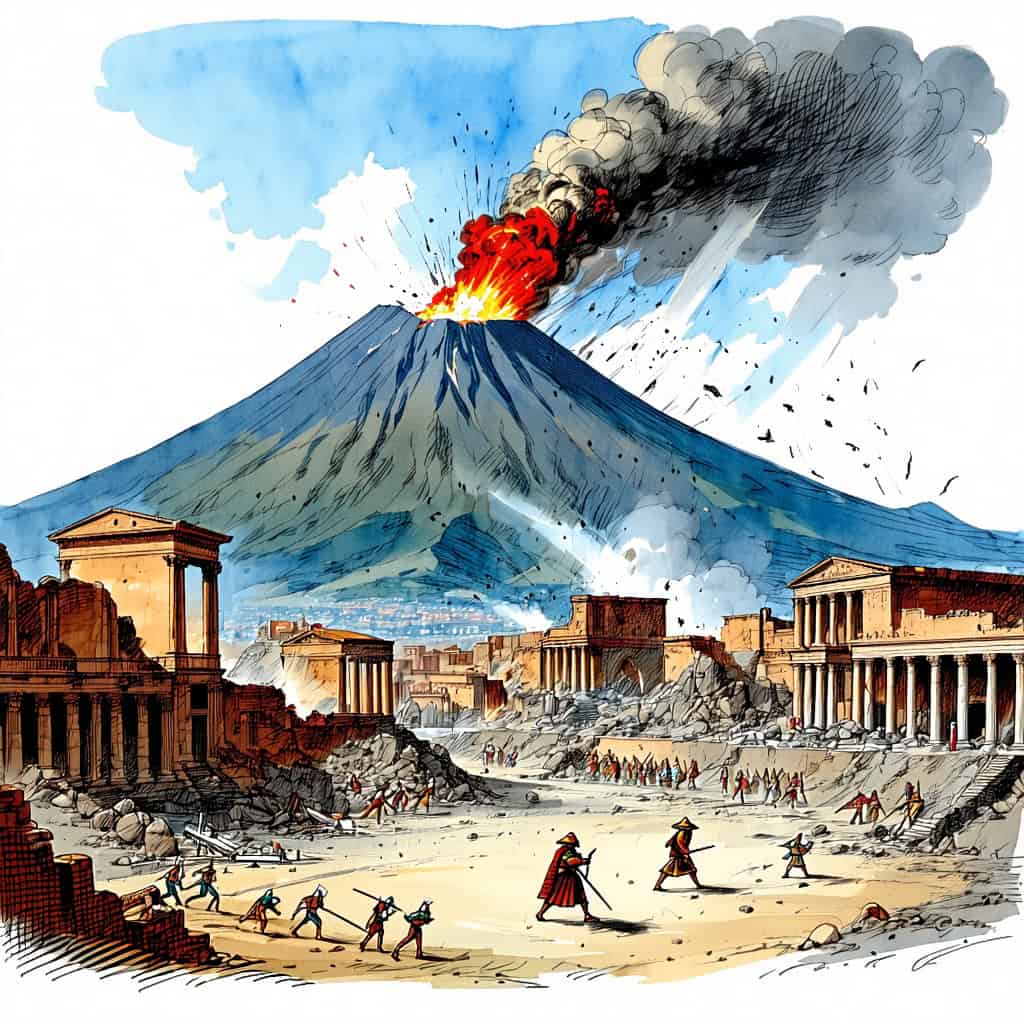
The Eruption of Mount Vesuvius

The Burial of Pompeii
The Destruction of Herculaneum

The Uncovering of Pompeii

The Tragic Fate of the Residents

The Preservation of Pompeii
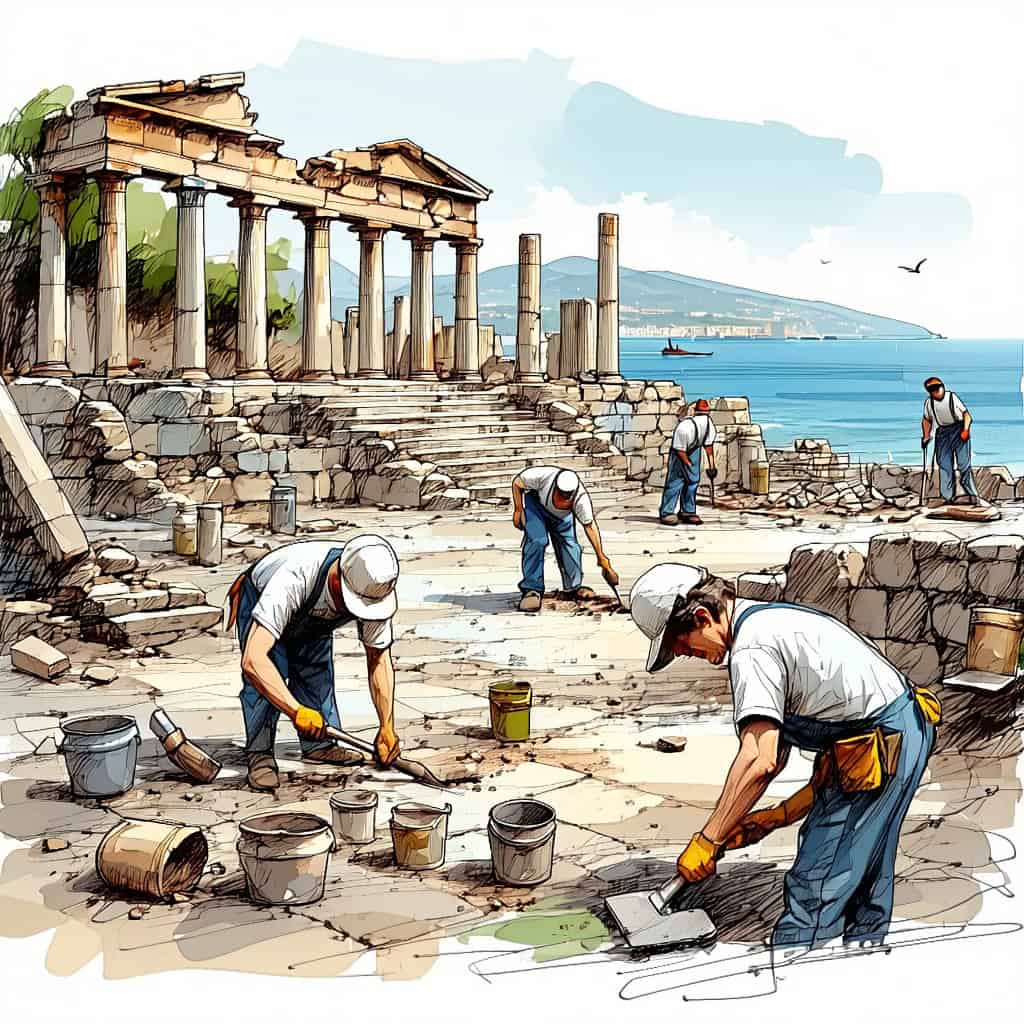
The Rediscovery of Herculaneum
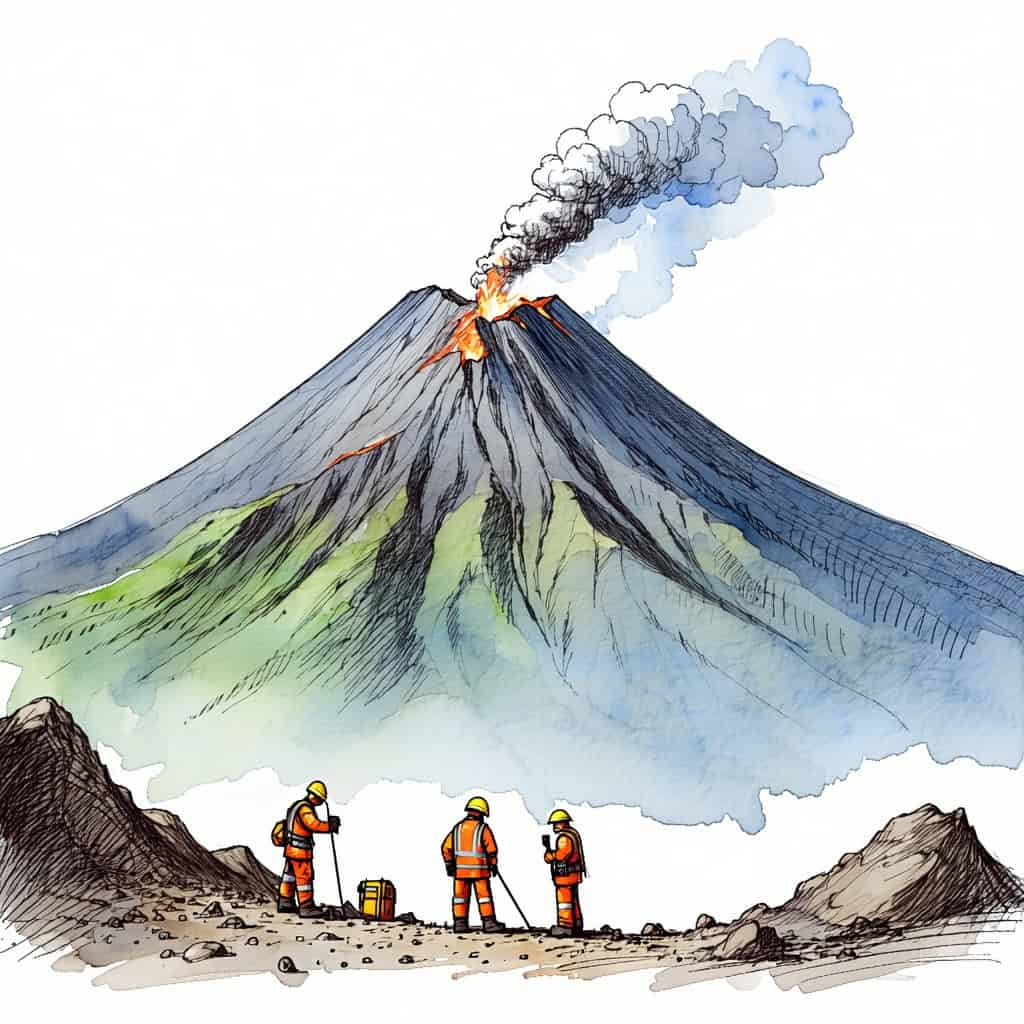
The Ongoing Threat of Vesuvius

The Legacy of Pompeii and Herculaneum

Lesson Details & Resources
In a Nutshell
- What: A devastating eruption that buried the Roman city of Pompeii in volcanic ash and pumice.
- When: August 24, 79 AD
- Who: The residents of Pompeii, Mount Vesuvius
- Outcome: The city of Pompeii was destroyed, preserving a snapshot of Roman life for archaeologists to study.
Famous Figures in the the destrution of Pompeii
-
Pliny the Elder
Pliny the Elder was a Roman author and natural philosopher who perished in the eruption of Vesuvius while trying to rescue people.
-
Pliny the Younger
Pliny the Younger witnessed the eruption of Vesuvius and wrote detailed accounts of the event.
-
Tacitus
Tacitus was a Roman historian who described the destruction of Pompeii and Herculaneum in his works.
-
Suetonius
Suetonius was a Roman biographer and historian who documented the impact of the Vesuvius eruption on the Roman Empire.
-
Seneca the Younger
Seneca the Younger was a Roman philosopher who mentioned the destruction of Pompeii and Herculaneum in his letters.
-
Gaius Petronius
Gaius Petronius was a Roman courtier and author who may have perished in the eruption of Vesuvius.
-
Pompeii Mosaic Artist
The Pompeii Mosaic Artist created intricate and beautiful mosaics that were preserved by the eruption of Vesuvius.
-
Herculaneum Sculptor
The Herculaneum Sculptor crafted exquisite sculptures that were buried under the ash of Vesuvius.
-
Pliny the Elder's Nephew
Pliny the Elder's Nephew accompanied him on his ill-fated rescue mission during the eruption of Vesuvius.
-
Lucius Calpurnius Piso
Lucius Calpurnius Piso was a Roman senator who may have owned property in Pompeii or Herculaneum at the time of the eruption.
Timeline of the destrution of Pompeii
Vesuvius erupts, burying Pompeii and Herculaneum
Pyroclastic flows engulf the cities
Ash and pumice rain down on Pompeii and Herculaneum
Buildings collapse under the weight of volcanic debris
Inhabitants attempt to flee or seek shelter
Vesuvius releases a massive column of ash and gas
Lava flows down the slopes of Vesuvius
Darkness covers the cities as ash cloud blocks the sun
Pompeii and Herculaneum are completely buried
Cities are abandoned and forgotten
Excavations of Pompeii begin
Archaeologists uncover preserved buildings and artifacts
Remains of victims are discovered in ash
Pompeii's Forum is excavated
Significant frescoes and mosaics are found
The Villa of the Mysteries is discovered
Herculaneum's Theatre is unearthed
Famous Herculaneum papyri are found
Pompeii and Herculaneum become popular tourist destinations
Ongoing preservation and restoration efforts continue
Vocabulary List
- Ash
- The powdery residue left after the burning of a substance
- Eruption
- A sudden and violent outburst, especially of a volcano
- Volcano
- A mountain or hill with a crater or vent through which lava, rock fragments, hot vapor, and gas are or have been erupted from the earth's crust
- Lava
- Magma that reaches the earth's surface during a volcanic eruption
- Pyroclastic flow
- A fast-moving current of hot gas and volcanic matter that flows along the ground during a volcanic eruption
- Destruction
- The act or process of causing extensive damage or ruin
- Buried
- Covered or overwhelmed by a large amount of something, such as debris or soil
- Archeological
- Relating to the study of human history and prehistory through the excavation of artifacts and structures
- Excavation
- The act or process of digging, especially to uncover ancient remains
- Preservation
- The action of keeping something in its original or existing state
- Plaster
- A mixture of lime, sand, and water that hardens on drying and is used for coating walls
- Fresco
- A painting technique in which watercolors are applied to wet plaster
- Artifact
- An object made by a human being, typically of cultural or historical interest
- Preserved
- Maintained in its original condition
- Ruins
- The remains of a building, city, or other structure that has been destroyed or decayed
- Preserved
- Kept intact or in a good condition
- Archaeologist
- A person who studies human history and prehistory through the excavation of artifacts and structures
- Excavate
- To dig or unearth (an object or remains) by making a hole or tunnel
- Discovery
- The act or process of finding something new or previously unknown
- Tragedy
- A disastrous event or calamity, often resulting in great suffering or loss.
Key Facts
This is the information used in the fact matching game
- The eruption of Mount Vesuvius in 79 AD buried the cities of Pompeii and Herculaneum under layers of volcanic ash and pumice
- The eruption was one of the deadliest volcanic eruptions in history
- The cities were rediscovered in the 18th century, revealing remarkably preserved ruins
- The eruption occurred on August 24th, 79 AD
- The eruption lasted for approximately 24 hours
- The cities were completely buried under nearly 20 feet of ash
- The eruption released a pyroclastic surge that engulfed the cities, instantly killing many inhabitants
- The eruption was preceded by a series of earthquakes in the region
- The eruption column from Vesuvius reached a height of approximately 20 miles
- The cities were prosperous and densely populated at the time of the eruption
- The eruption killed an estimated 2,000 of Pompeii's residents
- The ash and debris preserved buildings, artifacts, and even human remains, providing valuable insights into ancient Roman life
- The cities were Roman settlements located in the Bay of Naples
- The eruption also affected other nearby towns and villages
- Pompeii and Herculaneum were important trading centers
- The cities were popular vacation spots for wealthy Romans
- Herculaneum was located closer to the volcano and was impacted by a surge of superheated gases and ash
- The eruption caused widespread devastation and significant loss of life in the area
- The event had a long-lasting impact on the region, as the cities were never rebuilt
- Today, Pompeii and Herculaneum are UNESCO World Heritage Sites and attract millions of visitors each year.
Analysis & Significance
Immediate Consequences
The immediate consequences of the destruction of Pompeii were devastating. The eruption of Mount Vesuvius in 79 AD buried the city under a thick layer of volcanic ash and pumice, killing thousands of residents and preserving the city in a state of frozen time.
Long-Term Impact
The long-term impact of Pompeii’s destruction is profound. The city’s preservation has provided invaluable insights into ancient Roman life, architecture, and culture. It has also served as a cautionary tale about the destructive power of natural disasters and the importance of disaster preparedness.
Cultural Significance Today
Pompeii’s cultural significance today is evident in its status as a UNESCO World Heritage Site and its popularity as a tourist destination. The site continues to inspire artists, historians, and archaeologists, shedding light on the daily lives of ancient Romans and serving as a reminder of the fragility of human civilization in the face of natural forces.
the destrution of Pompeii Games


Take Your Learning Offline
Want a convenient, print-ready study guide for this lesson? Become a Memory Wizards Pro member to unlock the downloadable " Memory Scrolls" for this topic and our entire library!
- ✓ Complete Vocabulary Lists
- ✓ Key Facts & Timelines
- ✓ Beautifully Formatted for Print & Mobile