
Summary of The Fire of Rome (80 AD)
Unravel the mystery of Nero's role in the Great Fire.
How Do You Learn Best?
Learn by Reading
Immerse yourself in the 10-minute visual lesson for a comprehensive understanding of the topic.
Learn by Reviewing
Jump directly to the key facts, timeline, and vocabulary lists to build a solid foundation of details.
Learn by Doing
Challenge yourself! Jump straight into the interactive games to learn by trial, error, and discovery.
The Fire of Rome in 10 Minutes
Introduction
Nero
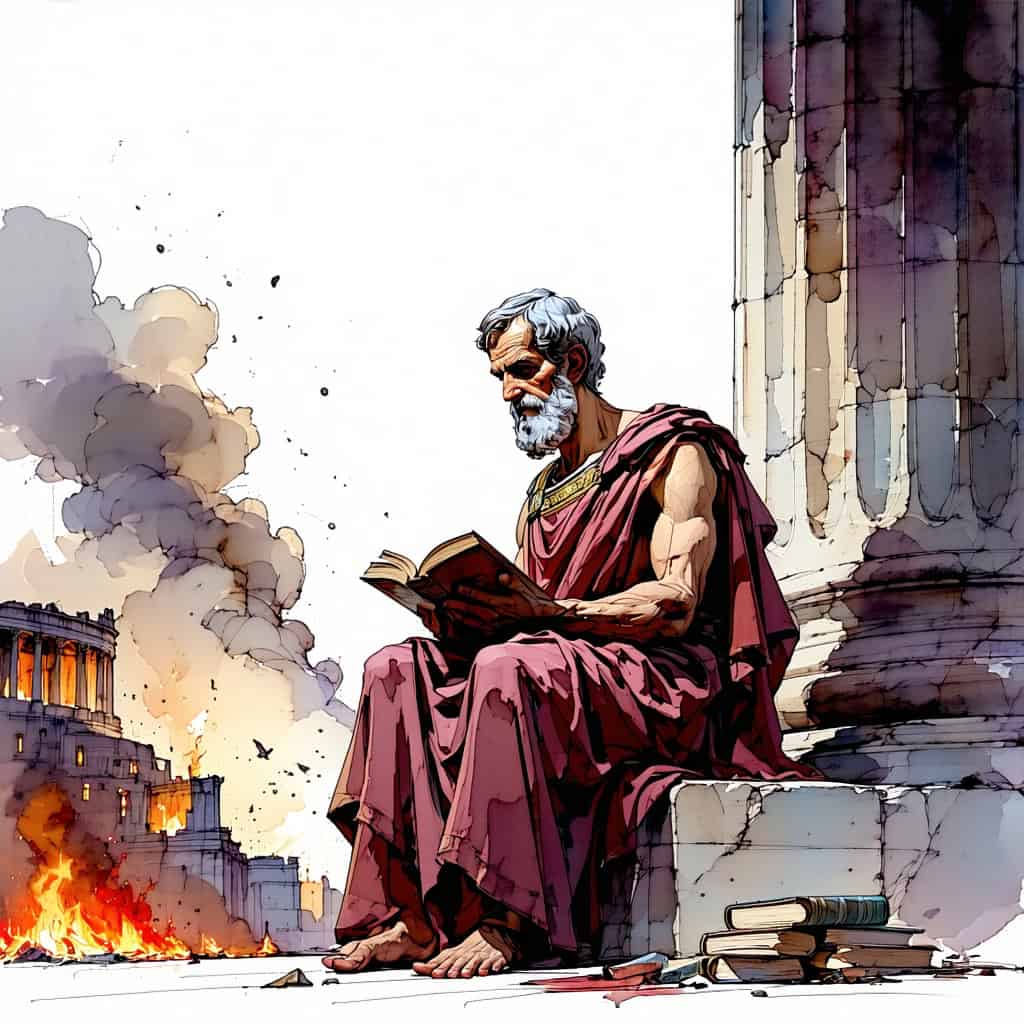
Seneca
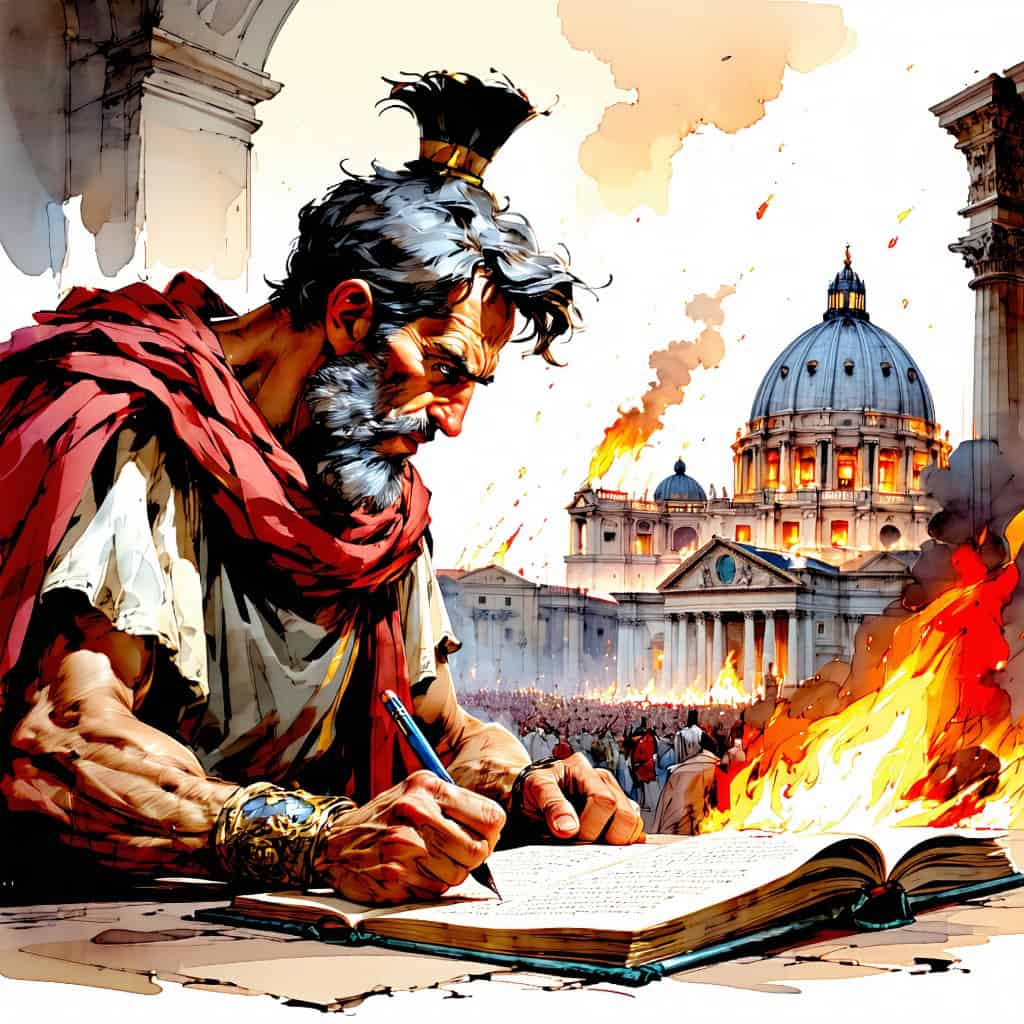
Lucan
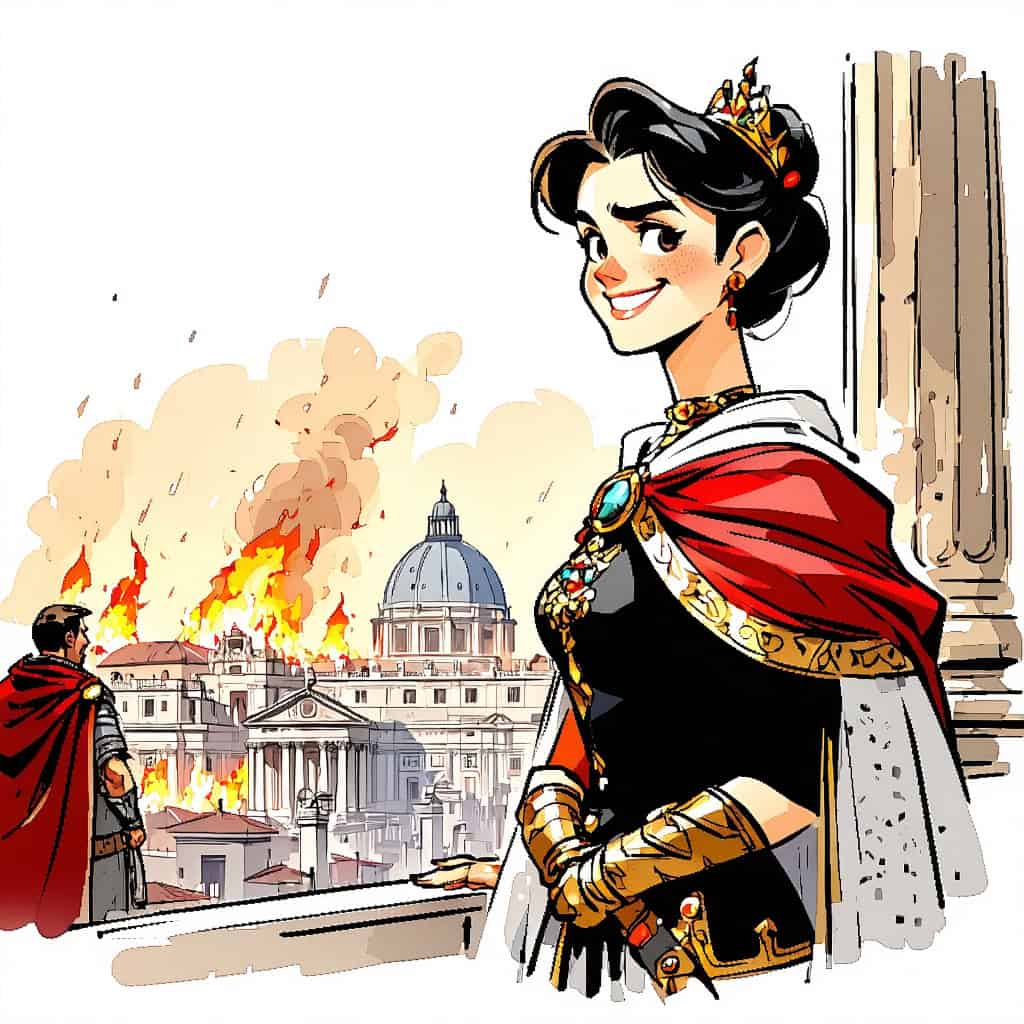
Poppea Sabina
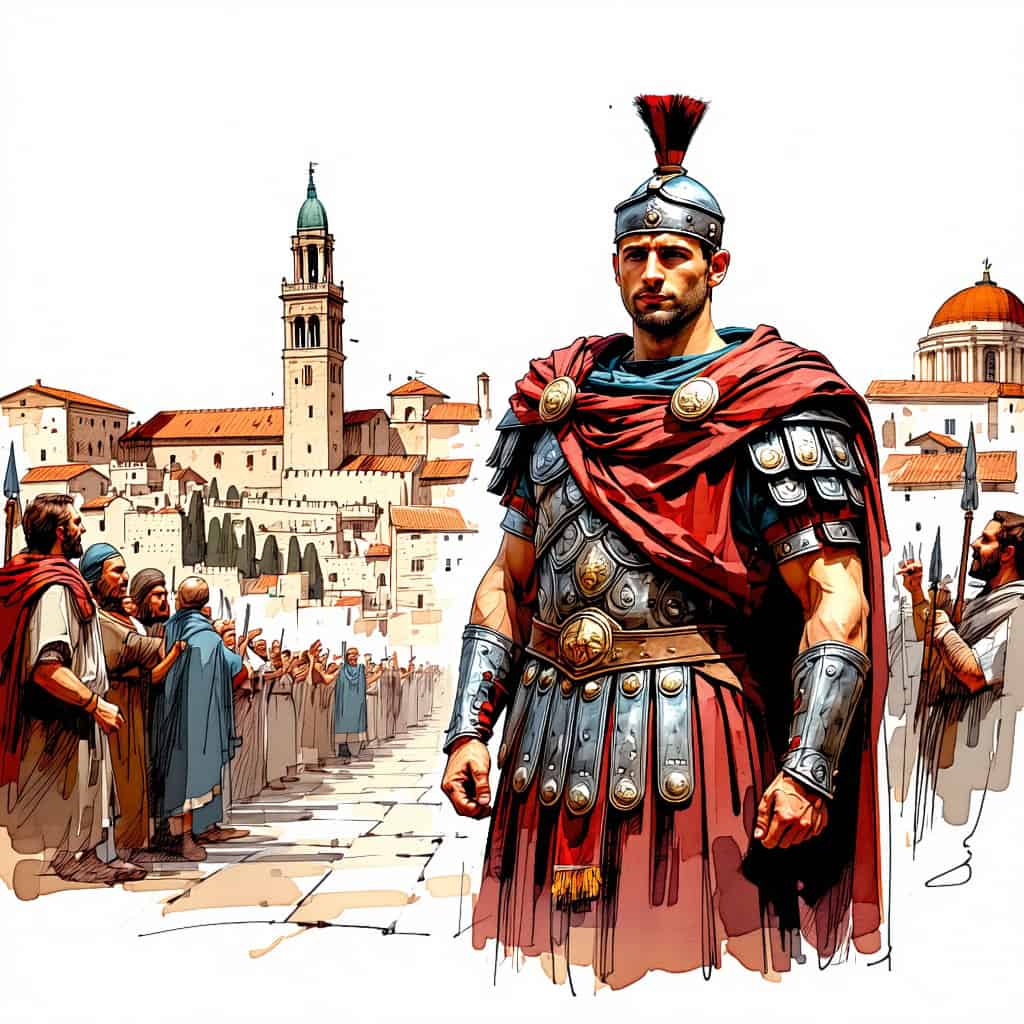
Titus Flavius

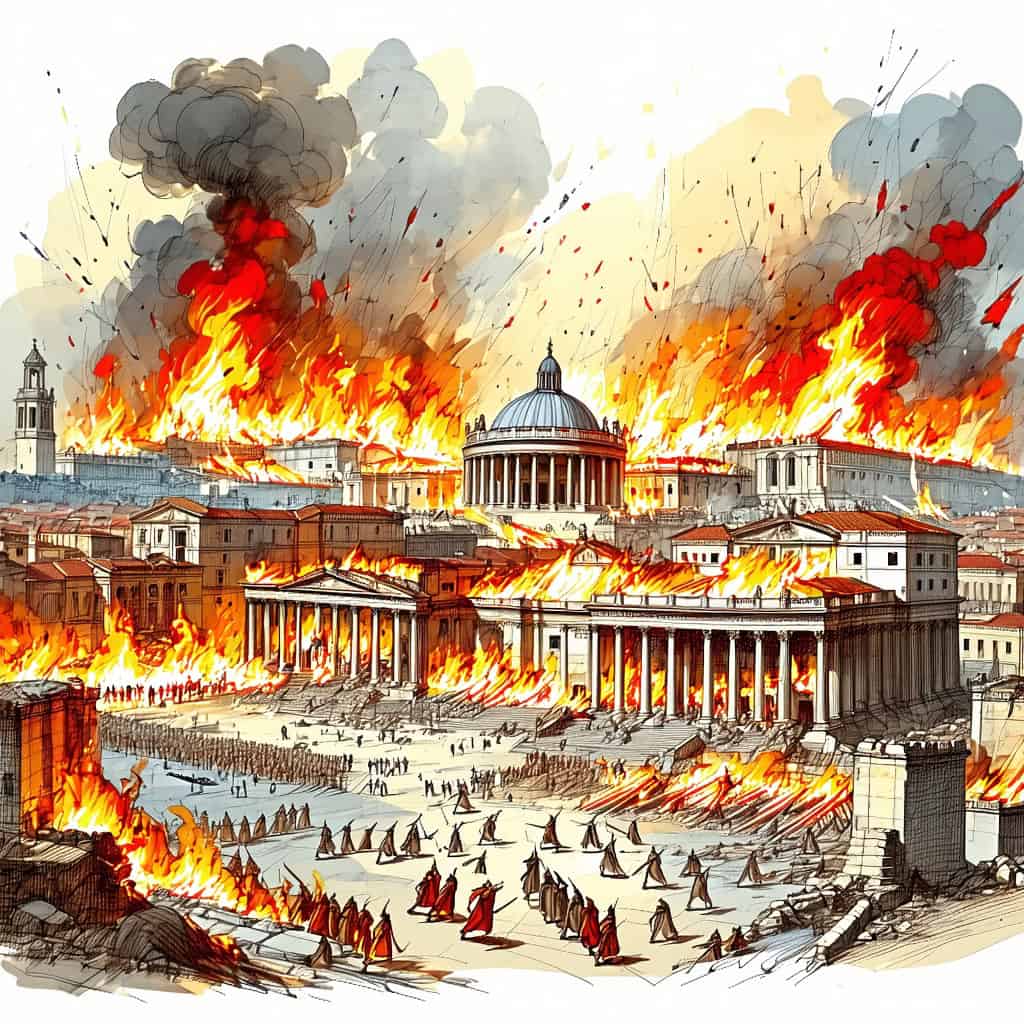
The Great Fire of Rome Begins

The Spread of the Fire

Neros Reaction
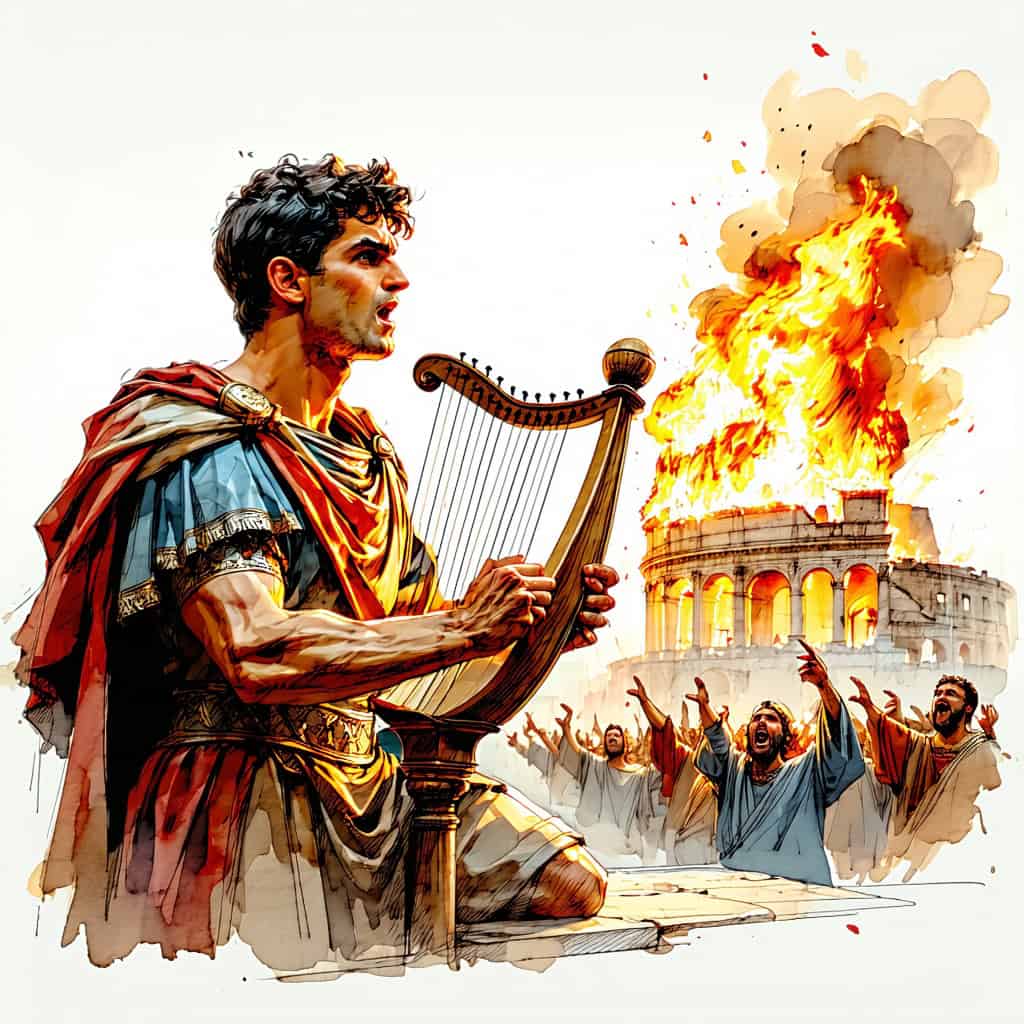
Accusations Against Nero

Rebuilding Rome

Christian Persecution

Historical Accounts

Archaeological Evidence

Legacy of the Fire

Remembering the Tragedy
Lesson Details & Resources
In a Nutshell
- What: A devastating fire that swept through the city of Rome
- When: July 18-19, 64 AD
- Who: Roman Emperor Nero, Roman citizens
- Outcome: Nero blamed Christians for the fire, leading to persecution of Christians in the Roman Empire
Famous Figures in the The Fire of Rome
-
Emperor Nero
Emperor Nero was the ruler of the Roman Empire at the time of the Great Fire of Rome. He faced criticism for allegedly initiating the fire to clear space for his grandiose building projects.
-
Seneca the Younger
Seneca the Younger was a prominent Stoic philosopher and advisor to Emperor Nero. He played a role in the aftermath of the fire, helping in the relief efforts and advocating for the affected citizens.
-
Tacitus
Tacitus was a Roman historian who chronicled the events of Rome, including the Great Fire. His Annals provide valuable insights into the fire and its immediate aftermath.
-
Pliny the Elder
Pliny the Elder was a renowned naturalist and naval commander who witnessed the Great Fire of Rome. He documented the event in his work Naturalis Historia.
-
Suetonius
Suetonius was a Roman historian and biographer who wrote extensively about the lives of the emperors, including Nero. His work includes accounts of the fire and its impact.
Timeline of The Fire of Rome
The Great Fire of Rome begins
The fire spreads rapidly due to strong winds
Fire engulfs the Circus Maximus
The fire reaches the Palatine Hill
Nero returns to Rome and organizes relief efforts
Nero opens his palaces to accommodate the homeless
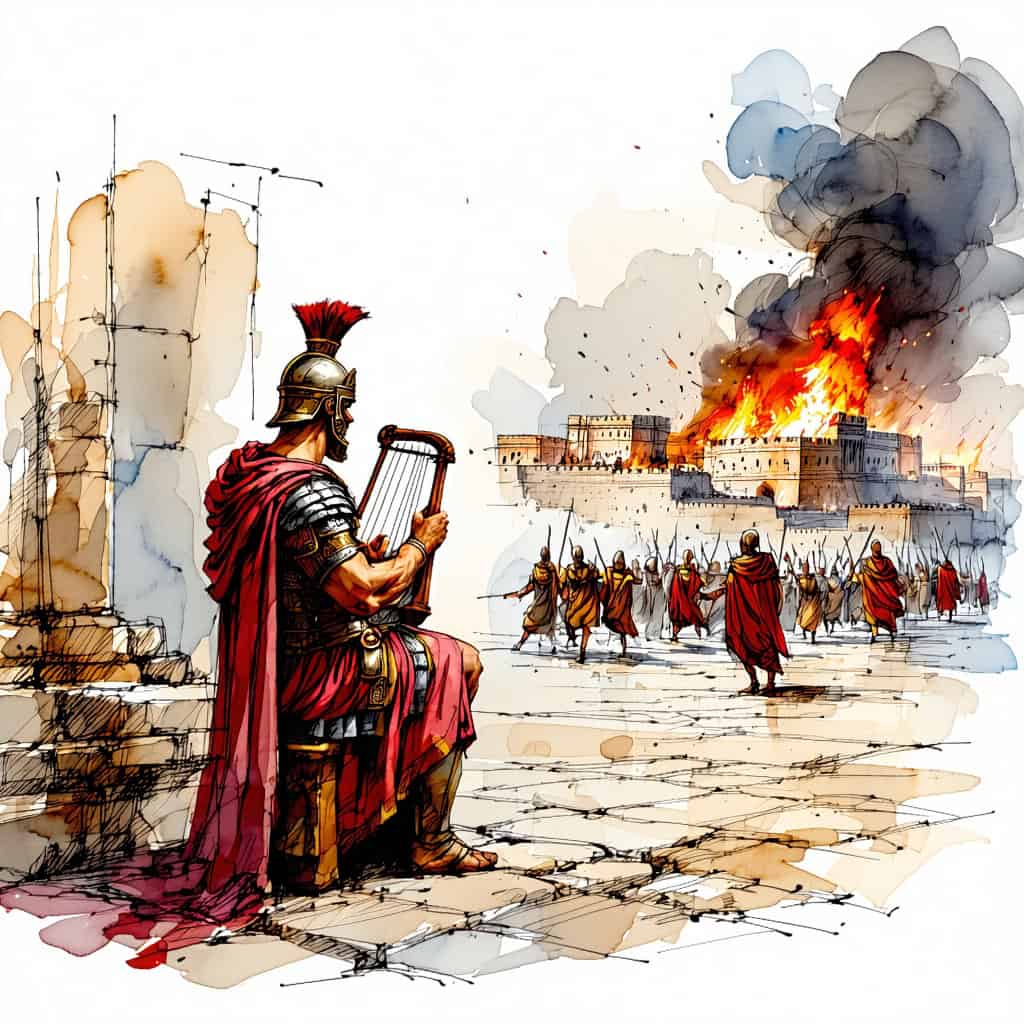
Rumors of Nero playing the lyre while Rome burns
Nero blames Christians for starting the fire
Persecution of Christians begins in Rome
Fire finally brought under control
Rebuilding efforts begin in Rome
Nero establishes new building regulations for fire prevention
Construction of the Domus Aurea (Golden House) begins
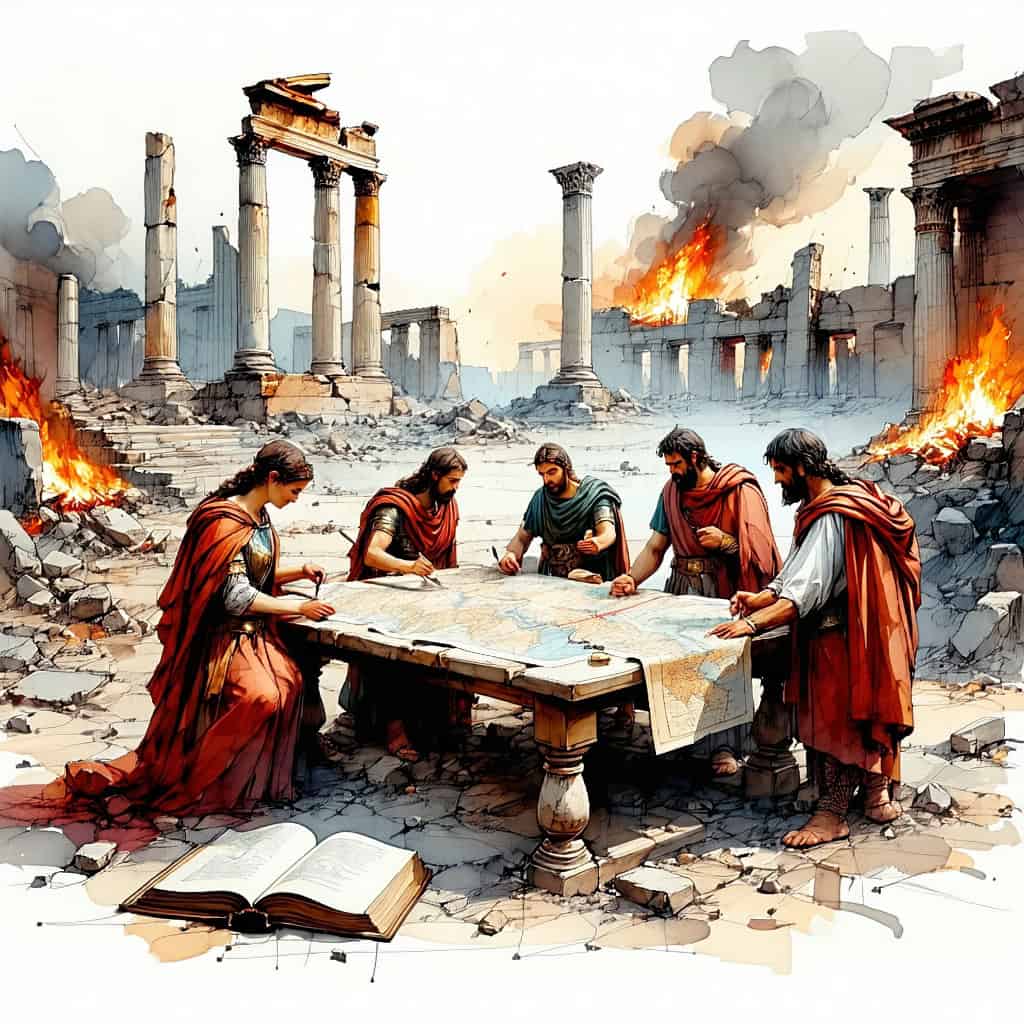
Nero unveils plans for the new city layout
Nero's artistic projects gain popularity
Large-scale reconstruction efforts continue
Seneca resigns as Nero's advisor
Nero organizes lavish games and spectacles to distract from the fire
Rebuilding of the Temple of Jupiter begins
Nero declares Rome's reconstruction complete
Vocabulary List
- Nero
- Nero was the Roman Emperor during the time of the Great Fire of Rome in 80 AD.
- Great Fire of Rome
- The Great Fire of Rome was a massive fire that devastated the city of Rome in 80 AD. It lasted for six days and caused widespread destruction.
- Arson
- There were rumors that Nero ordered the arson that caused the Great Fire of Rome.
- Persecution
- After the Great Fire of Rome, Nero blamed the Christians and initiated a wave of persecution against them.
- Destruction
- The Great Fire of Rome caused extensive destruction to many buildings, including the famous Circus Maximus and the Temple of Jupiter.
- Urban planning
- After the fire, Nero implemented urban planning reforms to rebuild Rome, including widening streets and creating firebreaks.
- Tyranny
- Nero's response to the Great Fire of Rome was seen by many as a display of his tyrannical rule.
- Myth
- There is a myth that Nero played the fiddle while Rome burned during the Great Fire, although historical accuracy of this claim is debated.
- Displacement
- The Great Fire of Rome resulted in the displacement of thousands of people who lost their homes and belongings.
- Reconstruction
- After the fire, Rome underwent a massive reconstruction effort to rebuild the city and restore its grandeur.
Key Facts
This is the information used in the fact matching game
- The Fire of Rome occurred in 64 AD during the reign of Emperor Nero.
- The fire lasted for six days and seven nights, destroying large parts of the city.
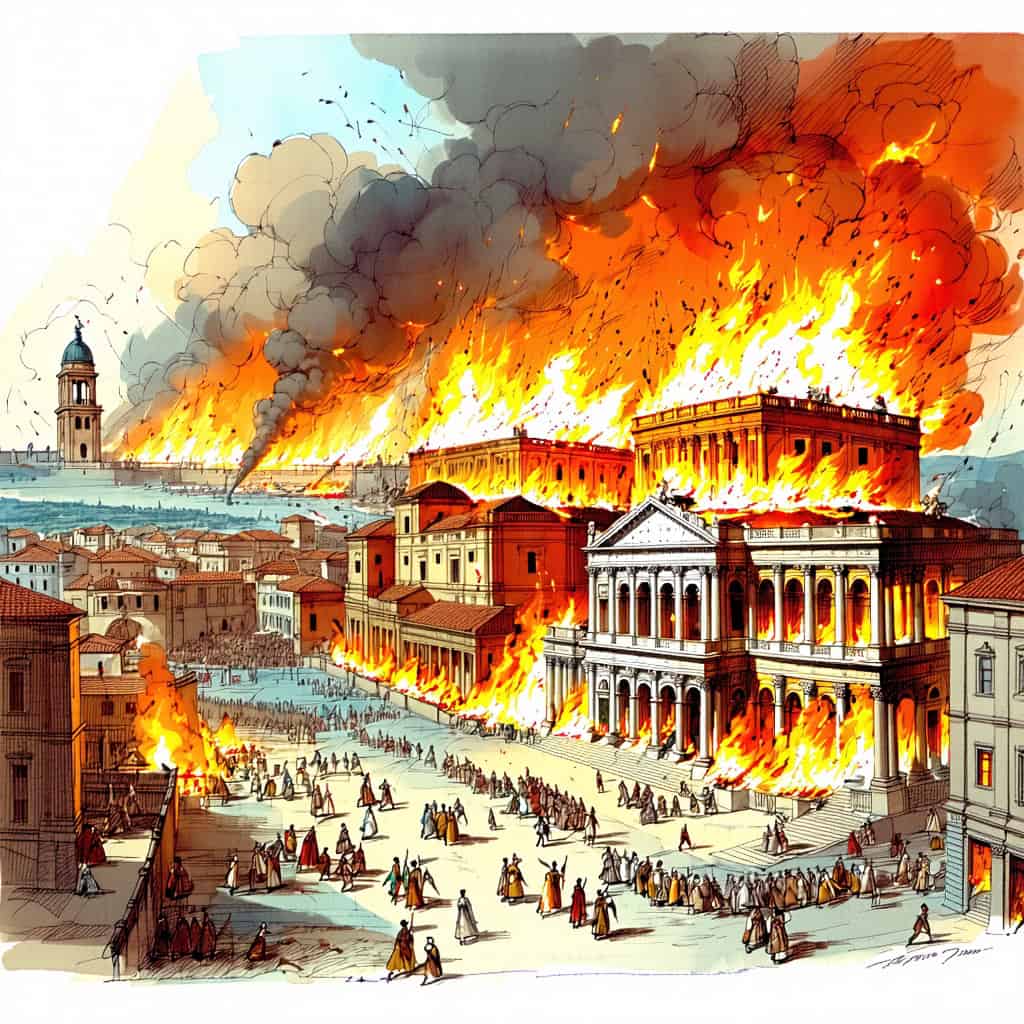
- The fire started in the area of the Circus Maximus and quickly spread throughout the city.
- Emperor Nero was blamed for the fire by the Roman citizens.
- Nero blamed the Christians for the fire and initiated a persecution against them.
- The fire resulted in the deaths of many people and the displacement of thousands of Romans.
- After the fire, Nero used the cleared land to construct his grand palace, the Domus Aurea.
- The fire was a turning point in Nero's reign, leading to increased discontentment among the Roman population.
- Nero organized relief efforts for the affected citizens and provided them with temporary shelter.
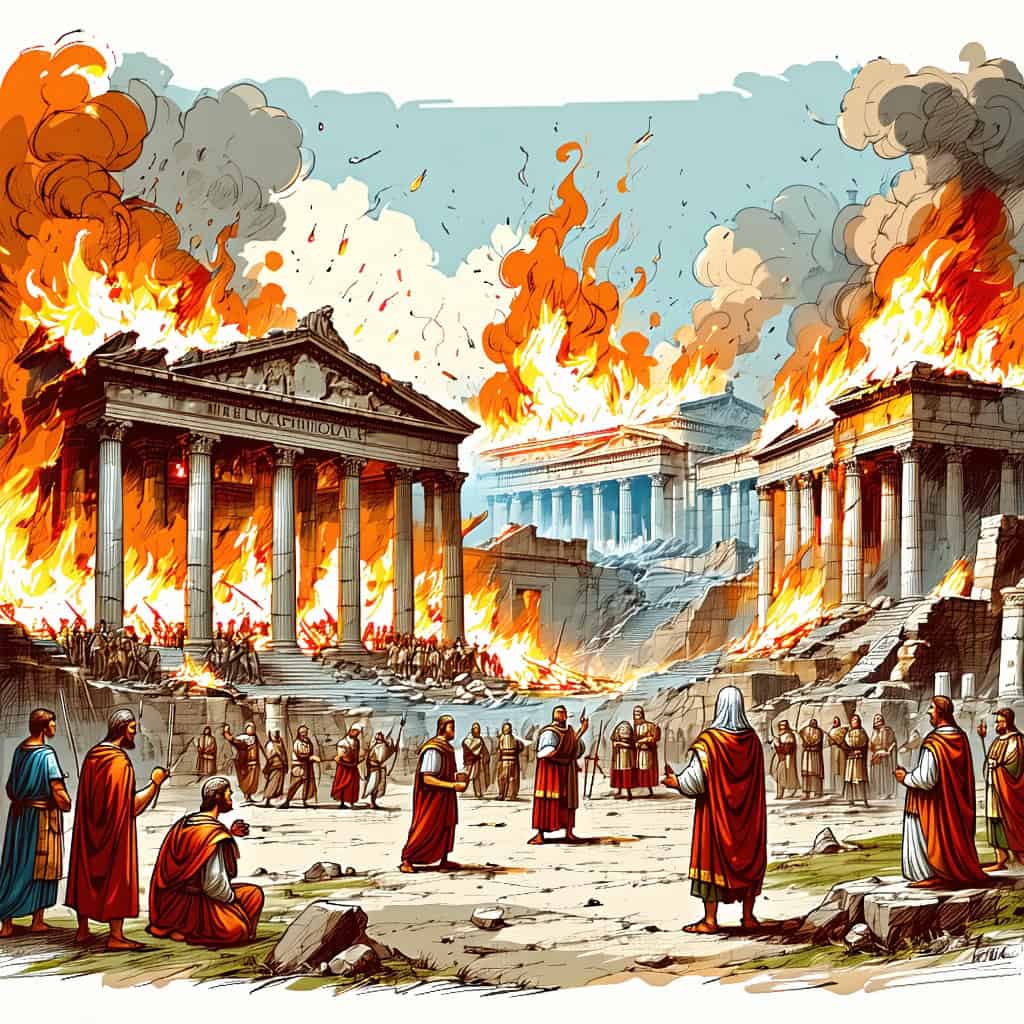
- The fire destroyed many important buildings, including the Temple of Jupiter Stator and the Atrium Vestae.
- The fire also consumed a large portion of the Roman Forum, the commercial and political center of Rome.
- Many valuable works of art and literature were lost in the fire, leading to a significant cultural loss.
- The fire sparked rumors that Nero himself had started it to fulfill his architectural ambitions.
- Nero took measures to prevent future fires, including the establishment of a fire brigade and stricter building codes.
- The Fire of Rome had a lasting impact on the city's urban planning and architectural development.
- The fire led to the construction of wider streets and the use of more fire-resistant materials in buildings.
- The reconstruction efforts after the fire provided employment opportunities for many Romans.
- The Fire of Rome became a symbol of destruction and disaster in Roman history.
- The fire marked the decline of Nero's popularity and ultimately contributed to his downfall.
- The Fire of Rome paved the way for future urban planning and fire prevention measures in cities worldwide.
Analysis & Significance
Immediate Consequences
The fire of Rome in 80 AD resulted in widespread destruction, leaving thousands homeless and many dead. Emperor Nero faced backlash from the Roman people who believed he had set the fire himself to clear space for his grand palace.
Long-Term Impact
This event marked a turning point in Nero’s reign, as his reputation never recovered. The fire also led to urban planning reforms in Rome, including wider streets and mandatory fire breaks between buildings to prevent future disasters.
Cultural Significance Today
The fire of Rome has become a symbol of destruction and chaos in popular culture. It serves as a cautionary tale about the abuse of power and the consequences of negligence. The legacy of the fire continues to resonate, reminding us of the importance of responsible leadership and disaster preparedness.
The Fire of Rome Games


Take Your Learning Offline
Want a convenient, print-ready study guide for this lesson? Become a Memory Wizards Pro member to unlock the downloadable " Memory Scrolls" for this topic and our entire library!
- ✓ Complete Vocabulary Lists
- ✓ Key Facts & Timelines
- ✓ Beautifully Formatted for Print & Mobile